Tracksuit Manufacturing
Tracksuit manufacturing uses two garment patterns: one jacket pattern and one pants pattern. The set is produced in the specified shell fabric, color, trims and finishing.
FashionMe starts Stock Match at 10 pieces and Made to Order at 50 pieces. Current sportswear lead times are 7–10 days for Stock Match and 15–20 days for Made to Order.
Stock Match
10 pcs MOQ
7–10 days lead time
Made to Order
50 pcs MOQ
15–20 days lead time

Main Fabric
The bulk shell fabric is identified by supplier article number.
The tracksuit fabric specification contains:
- fiber composition
- GSM
- knit or woven construction
- stretch direction
- color
- finish
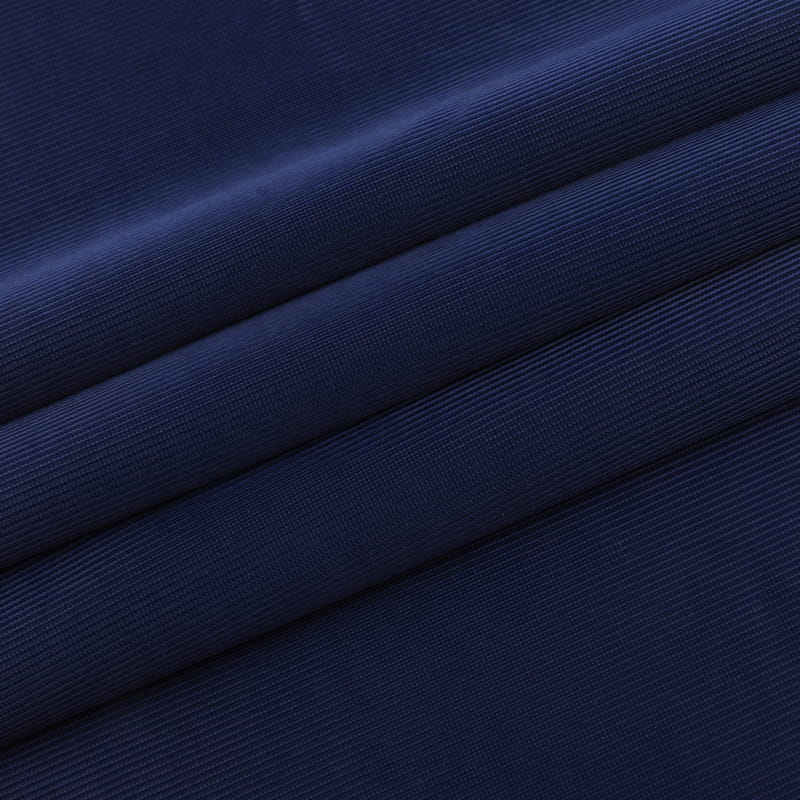
These fields are already part of FashionMe’s Made to Order sportswear specification.
Jacket and pants made from the same shell use the approved material reference from the production file.
Mesh, lining, pocket bags, rib and contrast panels are recorded separately when they use different materials.
FashionMe’s cut-and-sew production rules keep final material approval with the actual bulk material.
Tracksuit Jacket Pattern
A full-zip tracksuit jacket pattern contains the front, back, sleeve, collar or hood, pocket pieces and any contrast panels used by the style.
The finished jacket specification records:

Measured from the stated upper-body reference to the finished hem.
Measured straight across at the specified point below the armhole.
Recorded for set-in and dropped-shoulder constructions.
Measured with the method assigned to the sleeve construction.
Recorded in the finished relaxed state.
Measured after the hem, rib or elastic construction is complete.
Center-Front Zipper
The center-front zipper length is taken from the approved jacket opening.
The bulk BOM identifies:
- zipper supplier or article
- zipper type
- zipper length
- tape color
- slider
- puller
- quantity per garment
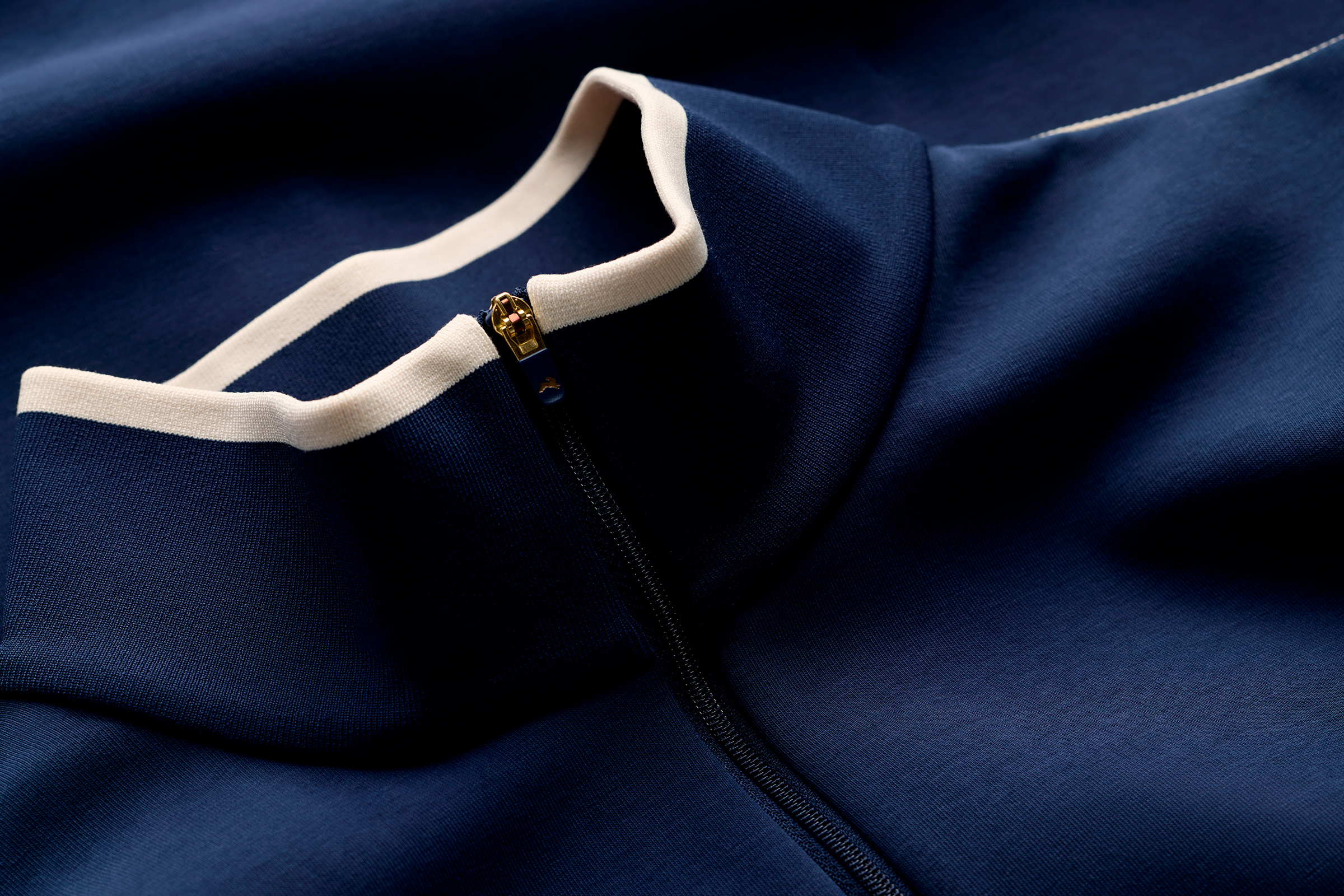
The top ends finish at the approved collar or neck position. The bottom ends finish at the approved hem position.
Bulk jackets with an offset left and right front, damaged slider, failed zipper travel or incorrect zipper length are held during inspection.
FashionMe already includes zipper operation in final sportswear inspection.
Collar, Rib and Cuffs
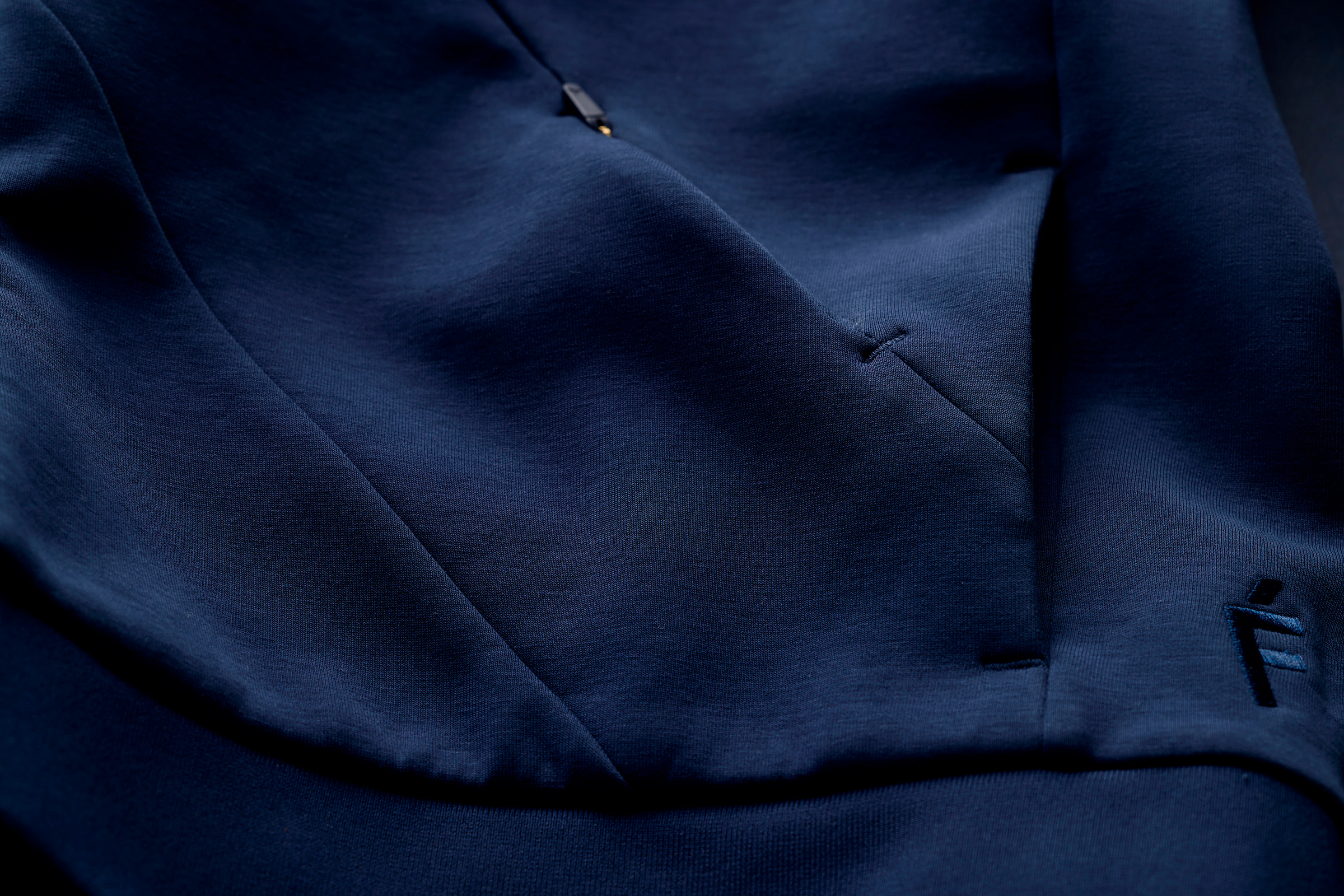
Track jackets can use self-fabric collars, stand collars, rib collars or hoods.
Rib specifications identify the actual rib article used at the collar, cuff or bottom band.
Finished cuff width and cuff opening are recorded from the approved sample.
The jacket bottom is released as one defined construction:
- open self-fabric hem
- rib band
- elasticated hem
- drawcord hem
Tracksuit Pants Pattern
The production chart includes:
Finished waistband measurement using the written relaxed measurement method.
Measured from the crotch intersection to the top waistband edge.
Measured from the crotch intersection to the top waistband edge at center back.
Measured at the fixed production level below the waistband.
Measured at the specified distance below the crotch.
Measured at the fixed production point.
Measured from crotch intersection to finished bottom along the inside-leg seam.
Measured across the finished hem or cuff.

FashionMe’s cut-and-sew production guidance treats waist, rises, hip, thigh, knee, hem and inseam as separate trouser production measurements.
Straight, Tapered, Wide and Flared Track Pants
A straight track pant carries the approved width through the lower leg.
A tapered track pant reduces width from knee toward the ankle.
A wide-leg track pant retains the specified width through knee and hem.
A flared track pant uses the approved knee point and increases width below that point.
Every sale size receives its own thigh, knee and leg-opening targets.
Elastic Waistband
An elastic-waist track pant BOM records the elastic article and elastic cut length.
The production file also records:
- waistband height
- finished relaxed waist
- elastic width
- drawcord where used
- eyelet or buttonhole construction
- drawcord end treatment
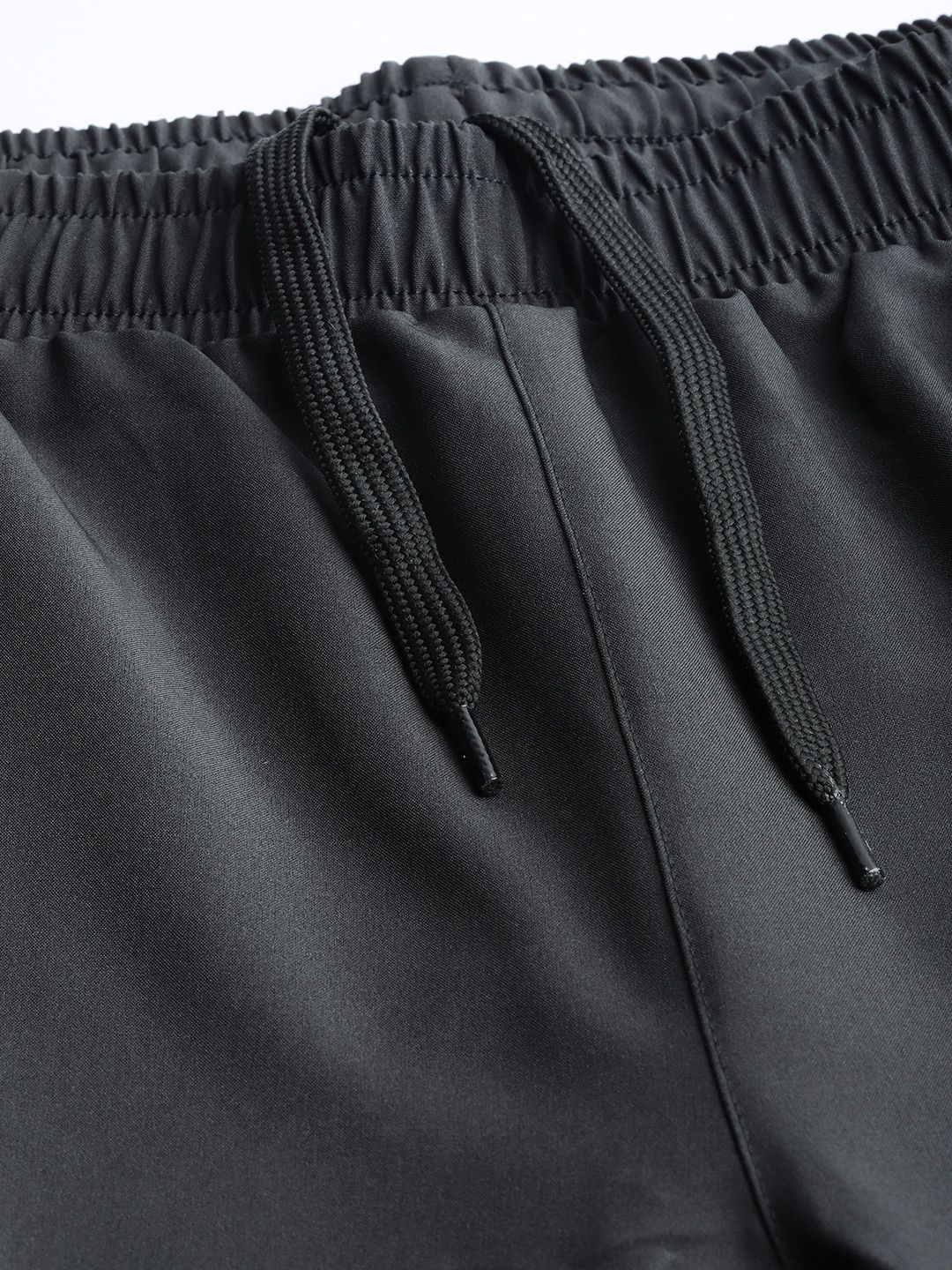
Twisted elastic, incomplete stitching, incorrect drawcord exit, damaged eyelets and waist measurements outside the written tolerance fail the inspection point.
Side Stripe Construction

Cut-and-Sew Stripe
The stripe is a separate pattern component.
Its pattern contains:
- finished stripe width
- seam allowance
- top position
- bottom position
- taper where specified
Applied Tape
The production file fixes:
- tape article
- tape width
- tape color
- distance from the reference seam
- top endpoint
- bottom endpoint
Two-stripe and three-stripe layouts also carry the spacing between adjacent tapes.
Left and right garments use the same placement references.
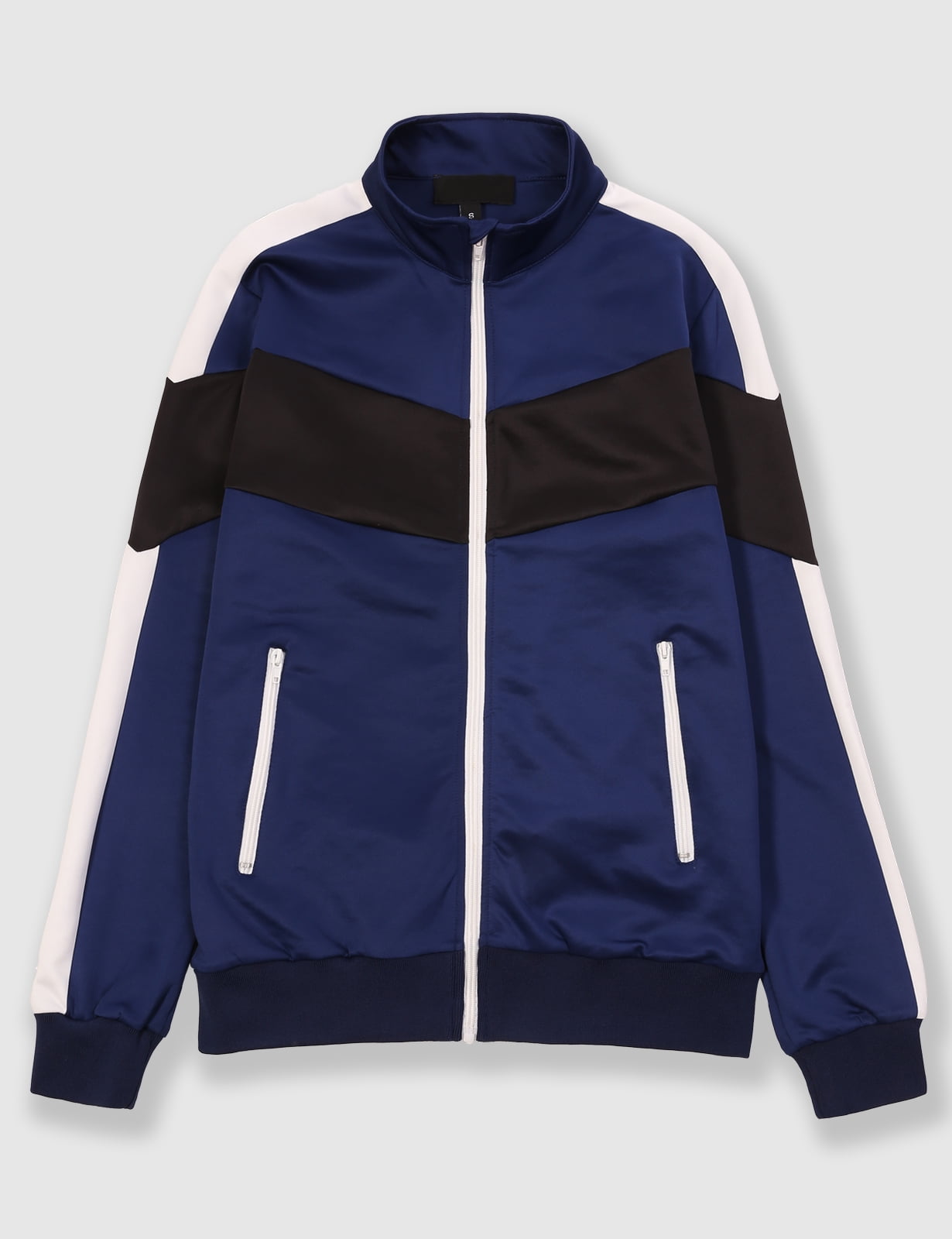
Contrast Panels
Contrast shoulder panels, sleeve panels and pants side panels are individual pattern pieces.
Panel width and shape change through grading when the approved design requires the panel to maintain its proportion across the size range.
The panel material receives its own BOM line when it differs from the main shell.
Jacket Pockets
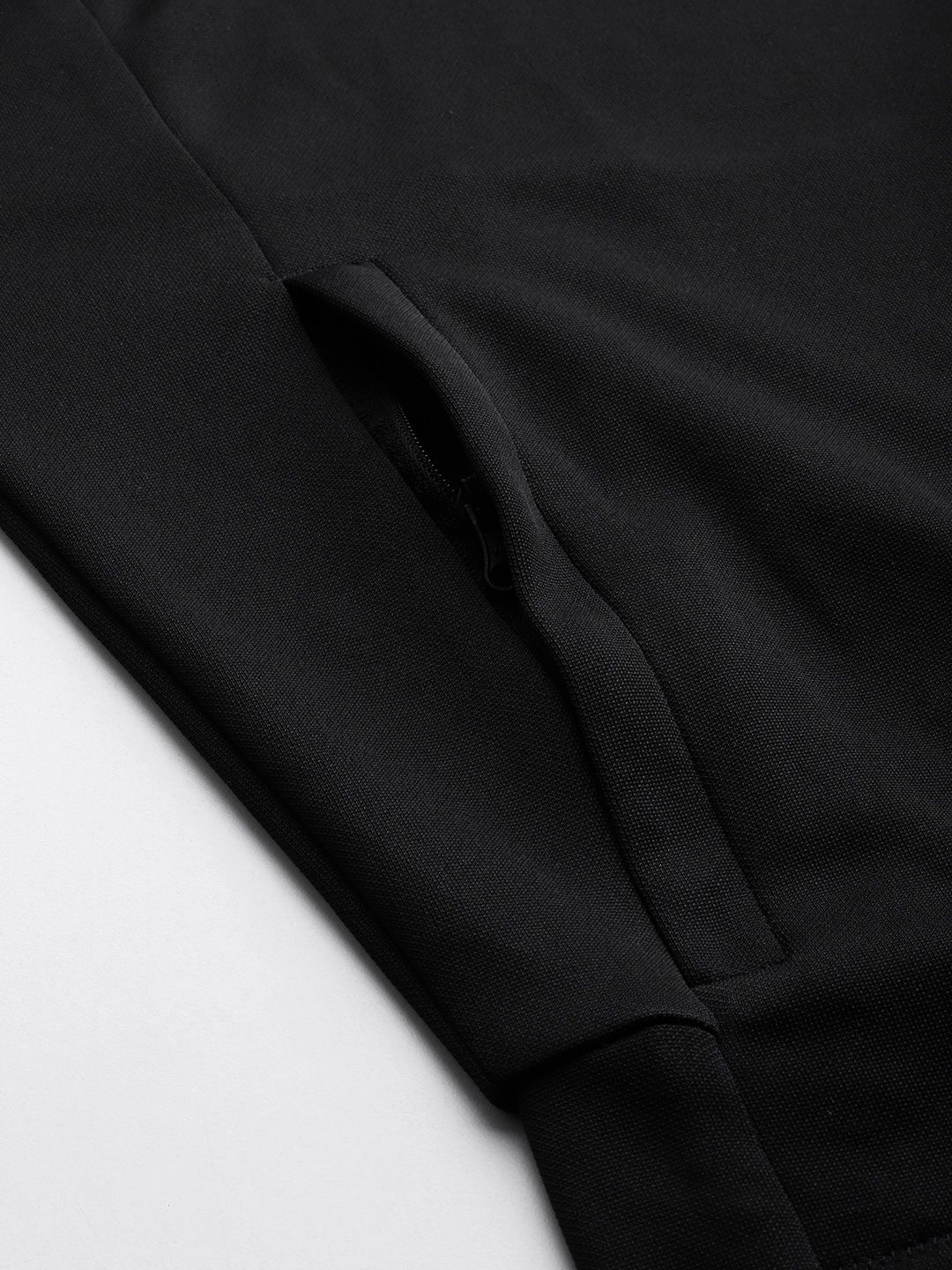
A jacket welt or zip pocket has a fixed finished opening.
The production file records the pocket position from named garment references such as center front, side seam and hem.
A zip pocket also carries the closure article and zipper length.
The internal pocket bag is cut as a separate component.
Pants Pockets

Pants pockets are located from the waistband, side seam or another fixed pattern reference.
The released file identifies:
- opening length
- opening position
- pocket-bag shape
- pocket-bag depth
- zipper or snap where used
Back pockets receive their own width, height and placement values when present.
Cargo pockets and other external pockets become separate cut components and separate inspection points.
Logo, Print and Embroidery Placement
A jacket chest logo uses fixed references from the finished pattern.
A pants thigh logo uses fixed waistband and side-seam references.
A back graphic uses center back and the stated vertical reference.
The approved artwork file identifies:
- artwork version
- finished width
- finished height
- color
- print or embroidery method
- placement

FashionMe final sportswear QC already checks printing and embroidery against the production specification.
Sewing Assembly
Jacket
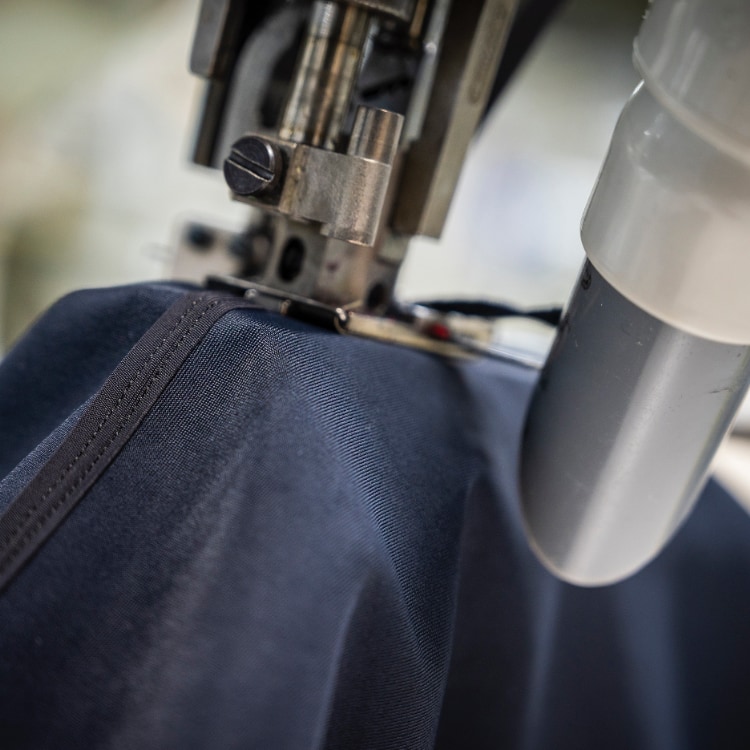
The jacket sewing file covers the actual construction used for:
- shoulder or raglan seams
- sleeve attachment
- side seams
- center-front zipper
- collar or hood
- pockets
- cuffs
- bottom hem or band
- decorative panels
- topstitching
Pants
The pants sewing file covers:
- front and back rise
- inseam
- outseam
- pockets
- waistband
- elastic
- drawcord
- side panels or tape
- cuffs or hem
Finished Measurements
A tracksuit receiving washing, dyeing or another dimension-changing finish is measured after that process.
A jacket length change is corrected in the jacket pattern.
A pants inseam change is corrected in the pants pattern.
A waistband change is corrected in the waistband or upper pants block according to the measured result.
One shrinkage result is not copied across both garments.

Jacket and Pants Shade

A matching tracksuit is inspected with both garments together.
The final set is checked for visible agreement between:
- jacket shell
- pants shell
- rib
- zipper tape
- drawcord
- side tape
- contrast panels
A visibly mismatched jacket and pants pair is not packed as a passing set.
Size Grading
Jacket grading covers the jacket measurement points, including chest, length, shoulder where applicable, sleeve, cuff and bottom opening.
Pants grading covers waist, hip, front rise, back rise, thigh, knee, inseam and leg opening.
Pocket positions move from the graded garment references.
Side panels and tape positions follow the graded pattern.
Artwork coordinates are checked on the graded sizes.
Zipper lengths are matched to the graded center-front openings.
FashionMe’s cut-and-sew production guidance requires target measurements and tolerances for the sale sizes rather than treating the approved base size as approval of the entire range.
Bulk Cutting
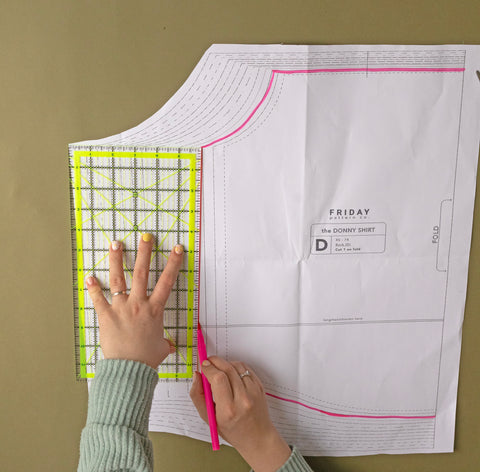
The cutting package identifies:
- jacket pattern revision
- pants pattern revision
- sale sizes
- order quantity by size
- shell article
- contrast materials
- rib
- stripe panels
- pocket components
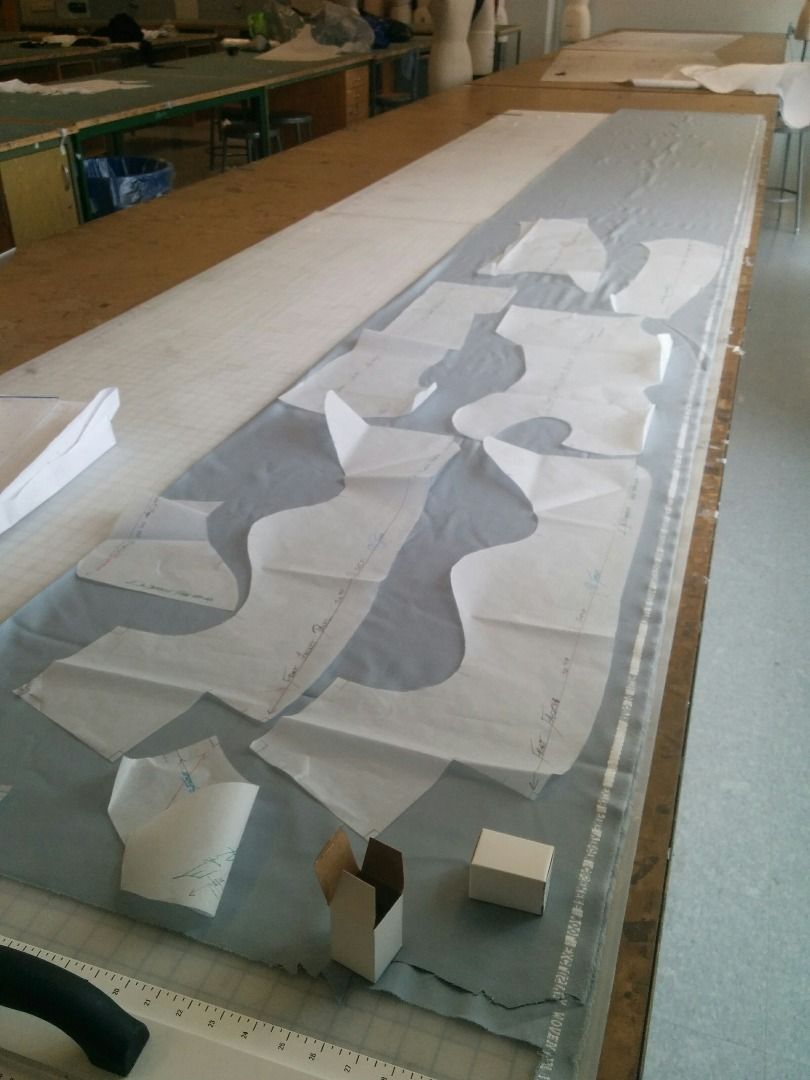
A revised pattern replaces the previous revision before the marker is released for cutting.
Tracksuit Final Inspection
The jacket is checked in the finished state for measurements, zipper operation, pocket construction, left-right balance, cuff openings, hem construction, stripe or panel placement and artwork.
The pants are checked for waist, rises, hip, thigh, knee, inseam, leg opening, waistband recovery, drawcord, pockets, leg balance and decoration.
The jacket and pants are then checked as one set for:
- correct style
- correct size pairing
- matching shell shade
- matching trims
- correct artwork
- correct labels
FashionMe includes 100% final inspection for Made to Order sportswear. Stock Match uses sample-pull inspection as standard, and full inspection is available.
Tracksuit Production Routes
Stock Match Tracksuit Manufacturing
Stock Match starts from an existing production tracksuit.
The existing product supplies the jacket pattern, pants pattern, main fabric, construction, available colors and available size range.
Brand labels, hangtags and packaging can be applied to the selected product within the confirmed Stock Match scope.
Made to Order Tracksuit Manufacturing
- jacket pattern
- pants pattern
- shell fabric
- custom color
- rib
- zipper
- waistband
- drawcord
- pockets
- side stripes
- contrast panels
- printing
- embroidery
- labels
- grading
- finished measurements
FashionMe’s published sportswear route currently lists 10 pieces / 7–10 days for Stock Match and 50 pieces / 15–20 days for Made to Order.
Custom fabric colors, embroidery, printing, washing and custom components can carry their own supplier minimums or setup charges in addition to the garment MOQ.