Pants Rise From High to Low
Pants rise is measured from the crotch seam to the top edge of the waistband. It controls how much of the lower torso the garment covers before the legs begin, so a change of two or three inches can noticeably alter the upper proportion of a pair of pants.
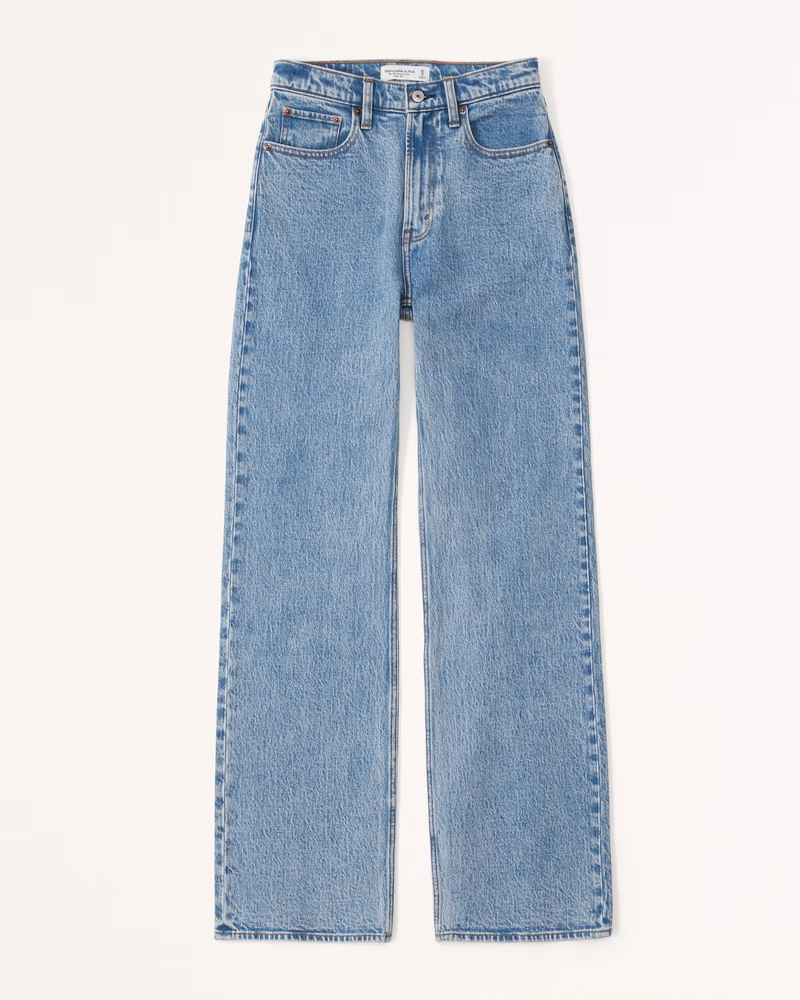
Levi’s women’s size 27 gives a useful scale. The Superlow Bootcut has an 8⅝-inch front rise, Low Loose measures 9⅛ inches, Baggy Dad reaches 10¼ inches, and Ribcage Straight Ankle measures 12⅛ inches. The distance from Superlow to Ribcage is 3½ inches above the crotch.
Inseam begins at the crotch and continues down the inside leg. Superlow Bootcut pairs its 8⅝-inch rise with a 32-inch inseam. Ribcage Straight Ankle uses a 12⅛-inch rise and a 27-inch inseam.
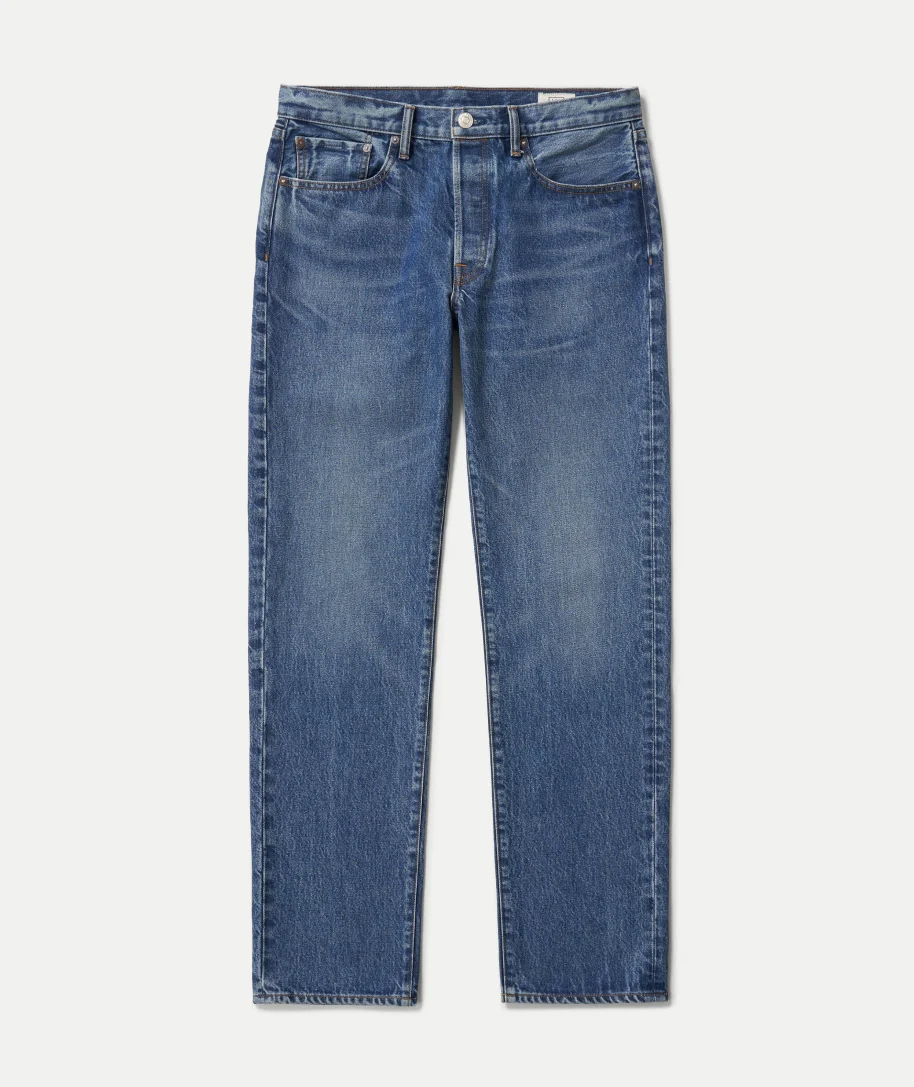
Measuring Rise on Finished Pants
Fasten the pants and lay them flat without pulling the waistband or stretching the crotch seam. Find the point where the front and rear crotch seams meet between the legs, then follow the center-front seam from that junction to the top edge of the waistband.
Keep the seam in its relaxed shape during measurement. Pulling a curved crotch straight changes the path followed by the tape and can increase the reading.
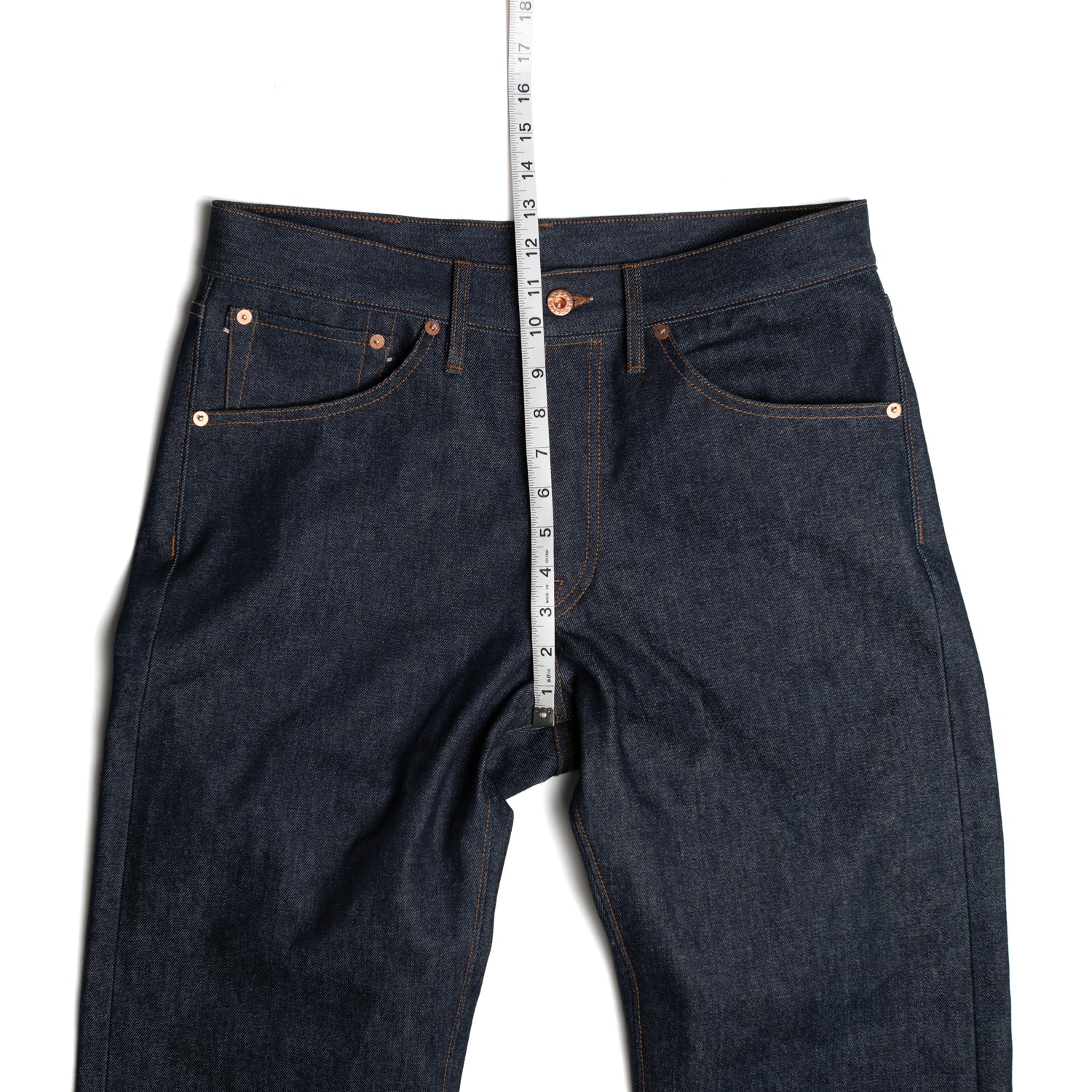
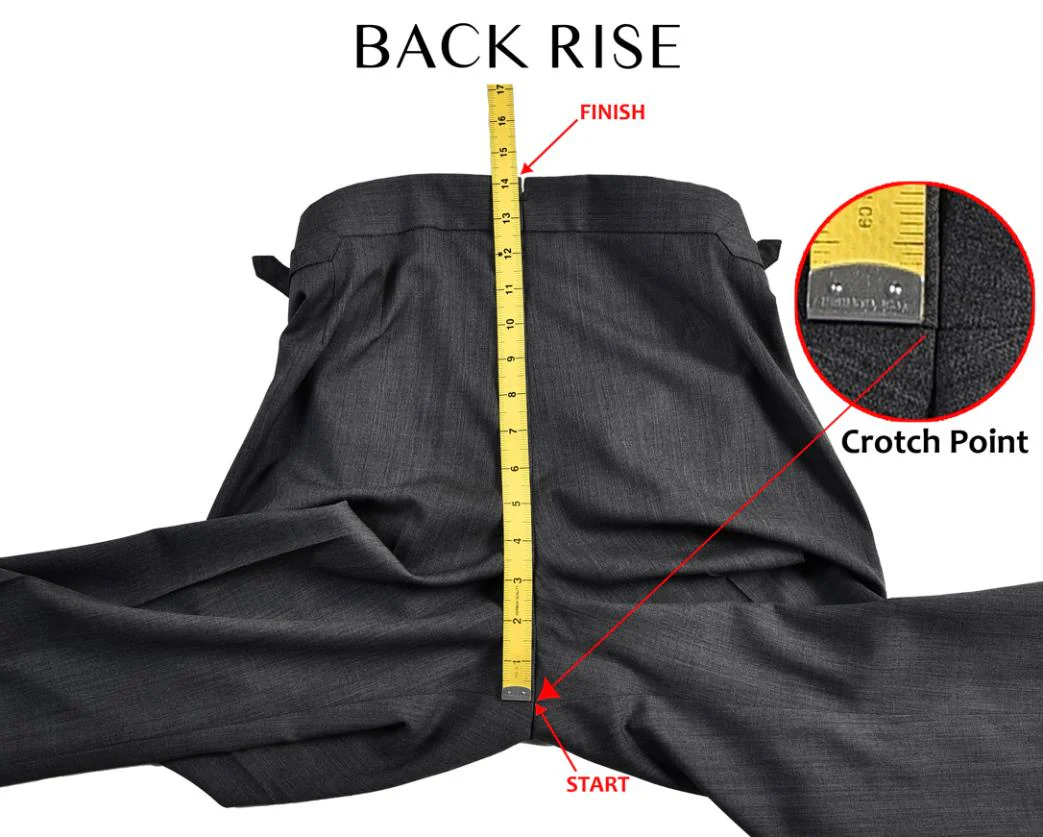
Back rise starts at the same crotch junction and continues around the rear crotch to the top of the center-back waistband. TravisMathew’s Open to Close Performance Pant lists a 10-inch front rise and a 14½-inch back rise in size 32.
Measurement endpoints need to stay consistent because a pattern specification that stops at the waistband seam excludes the waistband depth included by a finished-garment measurement taken to the top edge.
High, Mid and Low Rise in Actual Jeans
Brands do not divide high, mid and low rise at one common set of measurements.
Levi’s places an 8⅝-inch front rise in its Superlow range and a 9⅛-inch rise in Low Loose. Baggy Dad is sold as mid rise at 10¼ inches in size 27. Ribcage Straight Ankle reaches 12⅛ inches and sits at the high end of the range.
Lee describes many of its women’s high-rise jeans as measuring around 9 to 11 inches at the front, a range that overlaps measurements used for lower-waisted products elsewhere.
For cross-brand shopping, record the finished front-rise number together with the brand’s category name. Where a 10-inch rise lands on the wearer also depends on torso length, abdomen shape, seat volume, waistband construction and the way the fabric settles.
Men’s Rise Numbers
Levi’s 501 Original measures 11¼ inches at the front in size 32. J.Crew’s 770 straight-fit chino is around 11 inches in size 32/32. Peter Millar’s Mariner Sea Island Flat Front Chino uses a 10-inch front rise.
Spier & Mackay’s SS24 contemporary high-rise trouser chart lists a 33.5-inch waist, 41.5-inch hip and 11.5-inch front rise at size 32.
Back Rise When Sitting
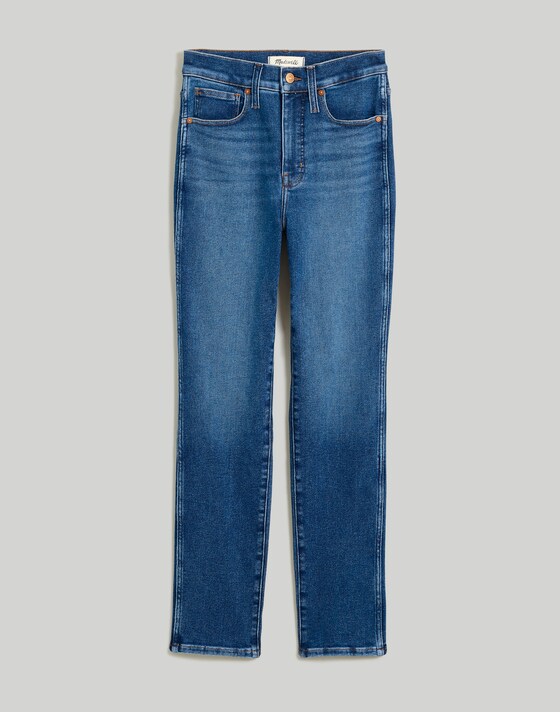
Sitting rotates the pelvis and increases the distance the rear of the pants has to cover from the crotch, over the seat and up to the waistband. A rear section with insufficient length can pull the center-back waistband downward or load the upper seat and rear crotch seam.
Williamsburg Garment Company’s women’s Driggs Avenue jean lists size 27 with a 10½-inch front rise and a 14½-inch back rise. The same size has a 30-inch relaxed waistband, 31 inches at the top edge, a 39-inch seat measured 7½ inches below the waistband seam, and a 33-inch inseam.
During fitting, the rear crotch can be checked seated upright and again with the torso leaning forward because pelvic position changes the amount of fabric required over the seat.
Rise, Crotch Depth and Crotch Length
Front rise runs from the crotch junction to the top of the front waistband. Back rise follows the rear crotch seam to the back waistband. Total crotch length continues from the front waist, underneath the body and up to the rear waist.
Crotch depth is a vertical body measurement. New Mexico State University’s pants-fitting method takes it with the wearer seated on a firm surface and measures from the waist reference to the sitting surface.
That drafting method adds ½ to ¾ inch of ease to crotch depth, front crotch length and back crotch length. Its high-hip measurement is taken 3 inches below the waist and receives ¼ to 1 inch of ease. The full hip receives 2 inches in the same system.
Crotch Extension
On a flat trouser pattern, the crotch projects away from the main body section before reaching the inseam. That projection supplies space underneath the body and is normally deeper at the rear.
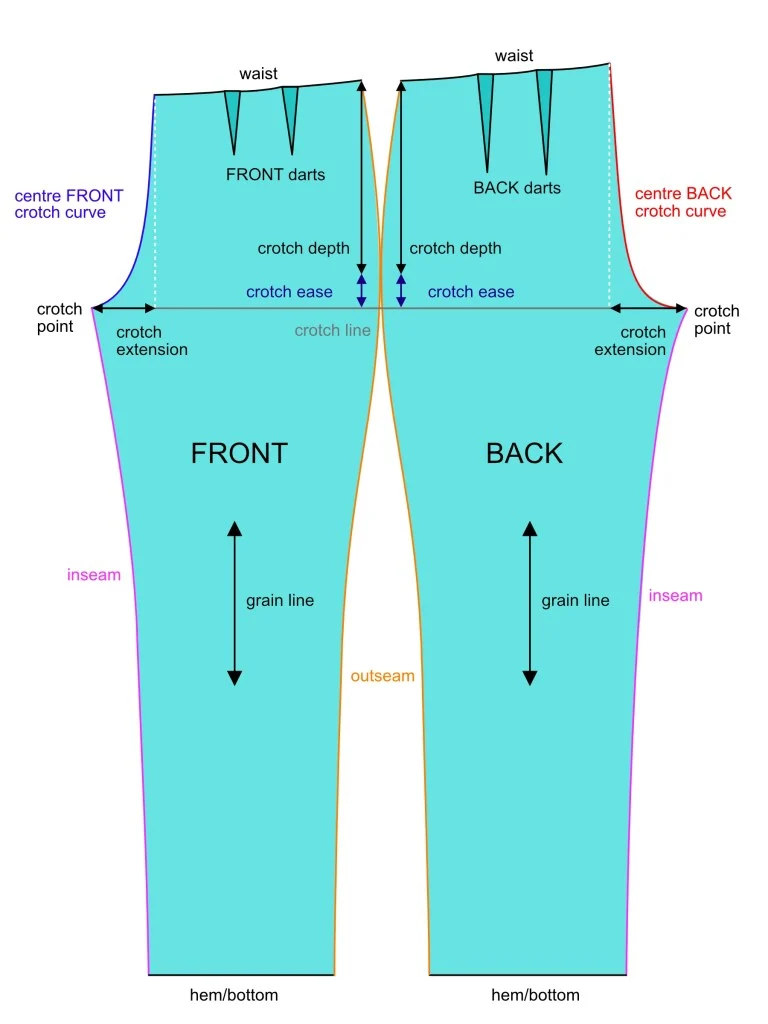
One published shorts-drafting method using a 98 cm hip measurement calculates the front crotch extension as hip divided by 16, giving 6.125 cm. Its rear calculation uses hip divided by 8 and gives 12.25 cm.
Those values belong to that drafting method. Other trouser blocks can use different proportions according to fit, body shape, fabric and intended crotch position.
Lowering the Waistline
Moving the waistband farther down the torso places its top edge around a different body circumference. The upper pattern has to be redrawn around the level where the waistband will actually sit.
Dearborn Denim’s high-rise chino lists size 32 with a 33-inch garment waist, 40.75-inch hip and 10.75-inch front rise. Size 34 is listed with a 35-inch waist, 43-inch hip and 11-inch front rise.
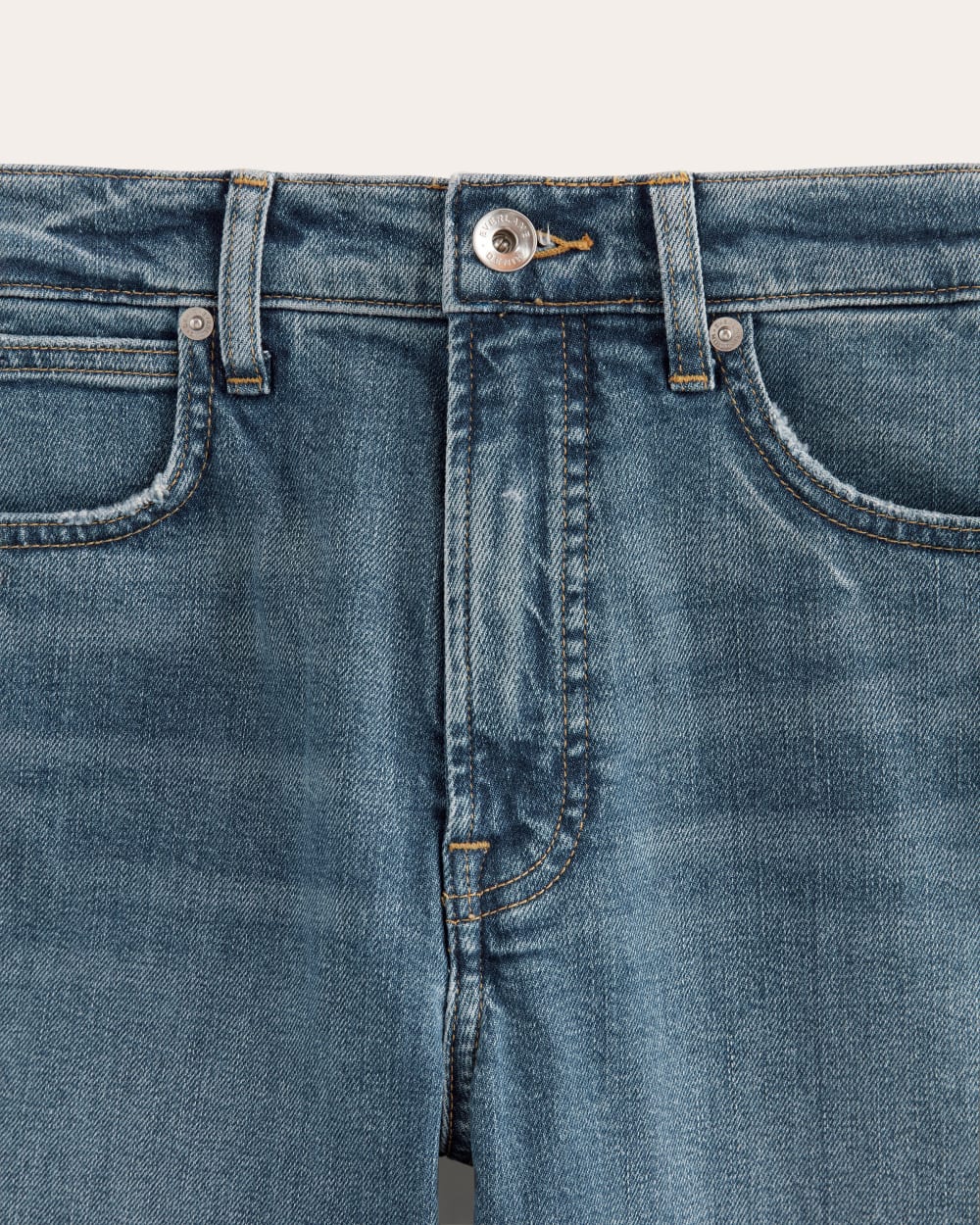
At the lower waist position, the side seam reaches the top edge at a new width. Dart intake, yoke depth and waistband curvature may all need adjustment.
Less vertical distance also remains between the waistband and crotch, reducing the room available for the fly and upper pocket construction.
Fly Length
YKK’s heavy-duty JEAN Article 16 closed-bottom zipper is offered in 5-inch, 7-inch and 9-inch lengths in the referenced range.
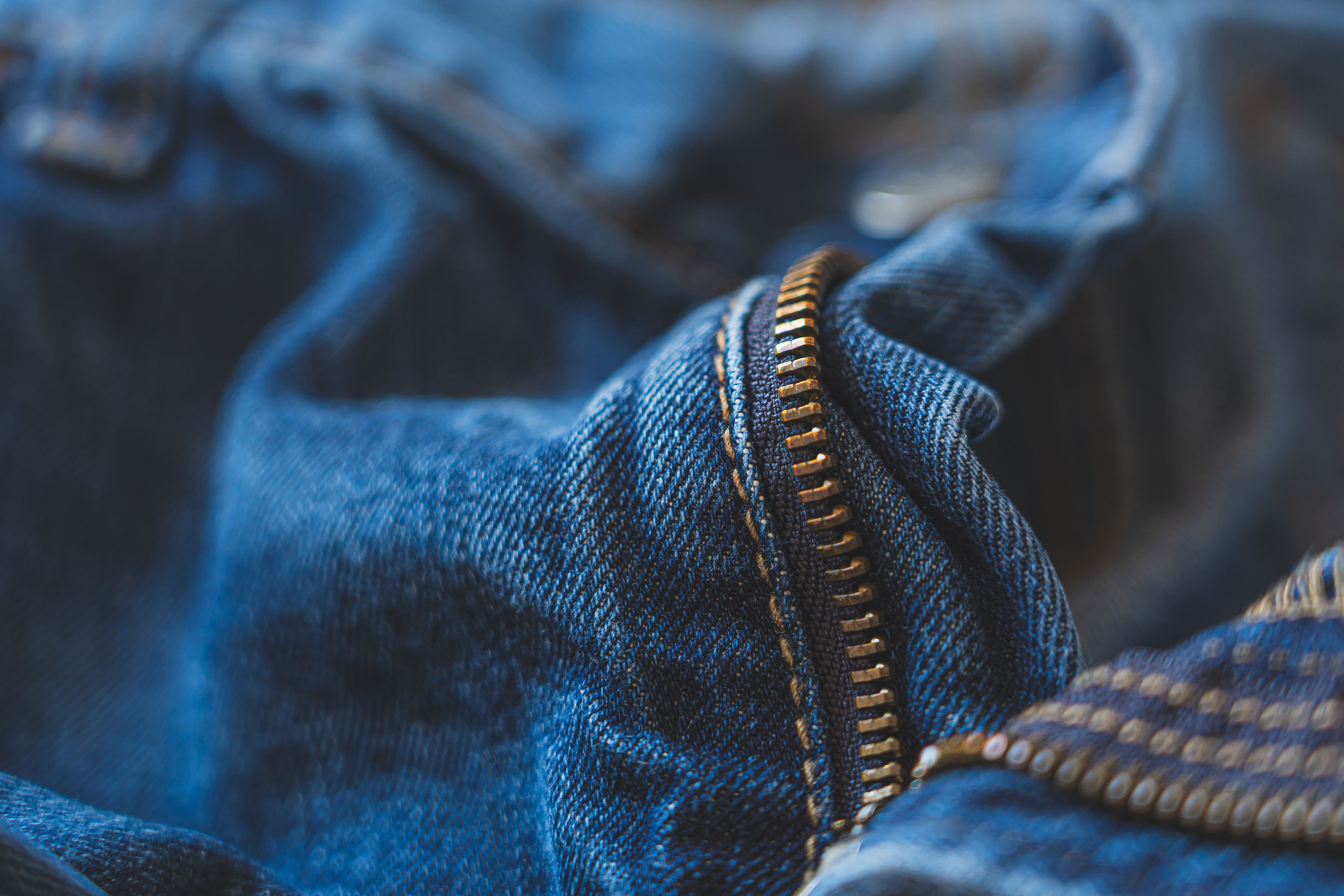
The selected zipper has to fit inside the actual fly opening. A lower waistband shortens the upper front of the pattern, so zipper length, the lower zipper stop, fly shield and crotch seam position need to be checked from the same sample.
Pocket Space on a Low-Rise Jean
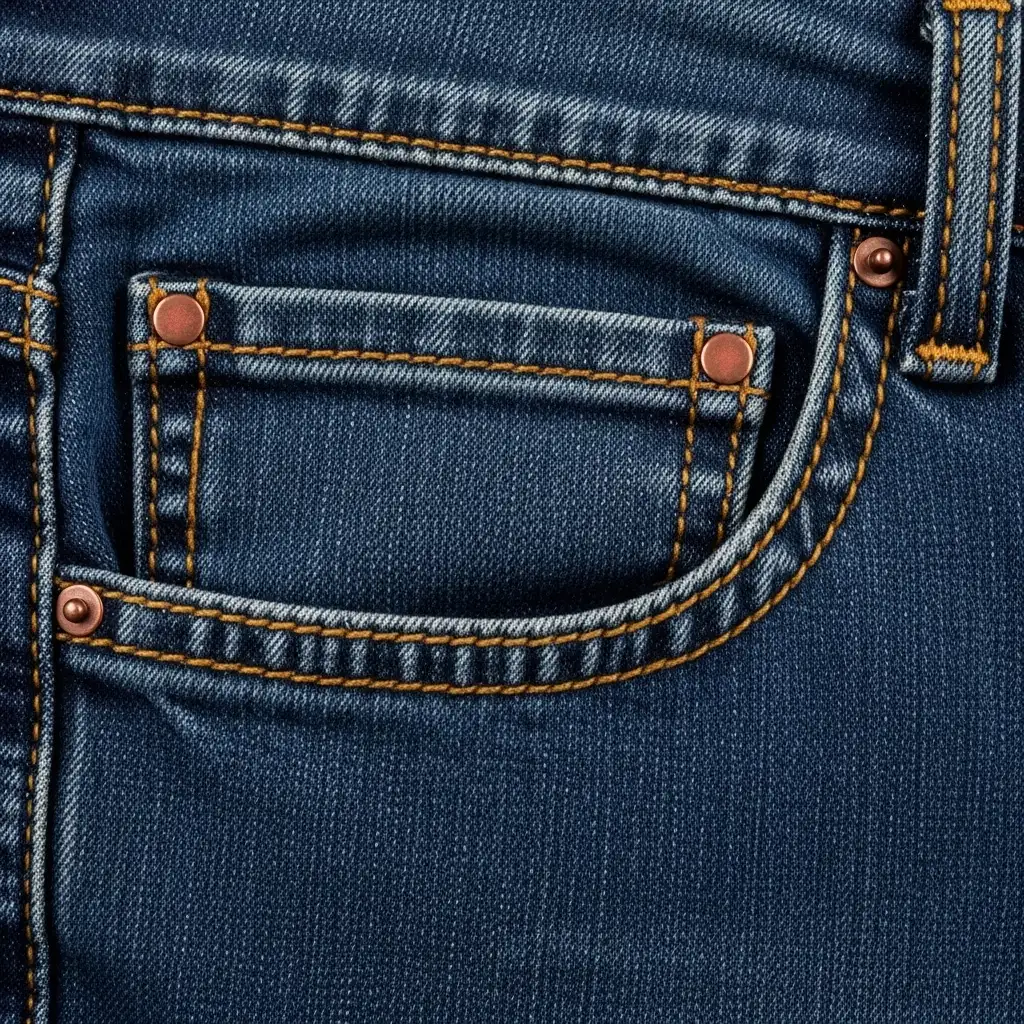
A five-pocket jean places the fly, main pocket openings, pocket bags, coin pocket, rivets and belt loops inside the area above the crotch.
The 3½-inch rise difference between Levi’s Superlow and Ribcage changes how much vertical room is available there. A lower pattern may require a revised pocket opening, shallower pocket bag or shorter fly.
Production specifications can record pocket-opening length, pocket-bag depth and the distance from the waistband to the pocket opening as separate points of measure.
Rise and Inseam
Levi’s Superlow Bootcut in size 27 is listed with an 8⅝-inch front rise, 32-inch inseam and 18-inch leg opening. Ribcage Straight Ankle reaches 12⅛ inches at the front and uses a 27-inch inseam.
Rise measures the garment above the crotch. Inseam starts at the crotch and follows the inside leg to the hem. A long inseam can be paired with a low rise, and an ankle-length jean can carry considerably more fabric above the crotch.
Stretch Denim Around the Waist and Hip
Fiber composition does not give the finished stretch percentage of a denim. A Levi’s Superlow Bootcut version uses 85% cotton, 14% polyester and 1% LYCRA. Ribcage versions are available with small amounts of LYCRA, and Low Loose and Baggy Dad can also be found in rigid constructions.
Actual extension depends on yarn structure, weave, finishing and test direction. For development work, the useful figure comes from a supplier stretch specification or a physical extension test carried out in the required direction.
The result matters at the waist and hip because extension during wear can change where the waistband settles and how much tension reaches the crotch seam.
Chinos
J.Crew’s 770 straight-fit stretch chino lists an 11-inch front rise in size 32/32. Outerknown’s Nomad Chino also publishes an 11-inch front rise in size 32, together with a 32-inch inseam and 15-inch leg opening.
Peter Millar’s Mariner Sea Island chino uses a 10-inch rise in size 32. Calvin Klein’s Tech Slim Stretch Woven Chino is listed around 11.5 inches at the front with a 32-inch inseam in the referenced size.
Chinos commonly use slanted front pockets, darts and shaped waistbands. Those parts establish a different upper pattern from a five-pocket jean even when the published front-rise number is similar.
Deep-Rise Dress Trousers
Spier & Mackay’s SS24 contemporary high-rise trouser chart gives the following measurements:
| Size | Waist | Hip | Front Rise |
|---|---|---|---|
| 30 | 31.5 in | 39.5 in | 11.4 in |
| 32 | 33.5 in | 41.5 in | 11.5 in |
| 34 | 35.5 in | 43.5 in | 11.8 in |
| 36 | 37.5 in | 45.5 in | 11.9 in |
| 40 | 41.5 in | 49.5 in | 12.3 in |
Some trouser patterns extend much farther above and behind the crotch. Fullcount’s USN Herringbone Seamen’s Trouser lists size 32 with a 13½-inch front rise and 17½-inch back rise. MotivMfg’s Pleat Denim Trouser publishes a 14-inch front rise and 18½-inch back rise in size 32.
Dropped Crotch
Baggy pants can gain extra body depth by placing the crotch seam below the wearer’s natural crotch level. The resulting crotch-to-waistband distance can be long even when the waistband itself sits around the upper hip.
During fitting, waistband level and crotch level need separate reference points so the additional depth is built into the pattern deliberately instead of appearing as accidental excess through the seat and inseam.
Rise Grading
Williamsburg Garment Company’s Driggs Avenue chart uses a regular ¼-inch rise progression through the sizes shown:
| Size | Front Rise | Back Rise |
|---|---|---|
| 24 | 9¾ in | 13¾ in |
| 25 | 10 in | 14 in |
| 26 | 10¼ in | 14¼ in |
| 27 | 10½ in | 14½ in |
| 28 | 10¾ in | 14¾ in |
Dearborn Denim’s high-rise chino uses front rises of 10.25 inches at size 30, 10.75 inches at size 32, 11 inches at size 34, 11.25 inches at size 36 and 11.5 inches at size 38.
The grade therefore has to come from the pattern block used for that product rather than from a fixed rise value applied to every size.
Production Tolerance
Spier & Mackay’s SS24 high-rise trouser chart states a manufacturing tolerance of ±0.5 inch for trouser rise and length.
The point of measure needs the same precision. Williamsburg’s chart places the seat measurement 7½ inches below the waistband seam, the thigh 1 inch below the crotch seam and the knee 12½ inches below the crotch seam. Sampling and bulk inspection can then use the same locations instead of leaving each operator to decide where the tape should sit.
Using a Pair You Already Own
A pair that already fits well gives you a personal rise reference without relying on a retail label.
Fasten the pants, lay them flat and measure from the crotch junction to the top edge of the front waistband. If the pair measures 10¼ inches and sits at the position you want, record 10¼ inches as the reference for the next pair.
Using Levi’s size-27 measurements as a scale, Low Loose at 9⅛ inches is 1⅛ inches shorter in front rise than a 10¼-inch reference. Ribcage Straight Ankle at 12⅛ inches adds 1⅞ inches to that reference.
The full difference between Superlow Bootcut at 8⅝ inches and Ribcage at 12⅛ inches is 3½ inches of garment length above the crotch.