Cardigans Manufacturing
Cardigan production starts with an approved sample, yarn specification, knitting program and finished measurement chart. The same file carries the front-band construction, neckline, rib, sleeves, pockets, buttons, buttonholes and finishing requirements used for bulk production.
FashionMe offers Stock Match from 10 pieces and Made to Order from 50 pieces.
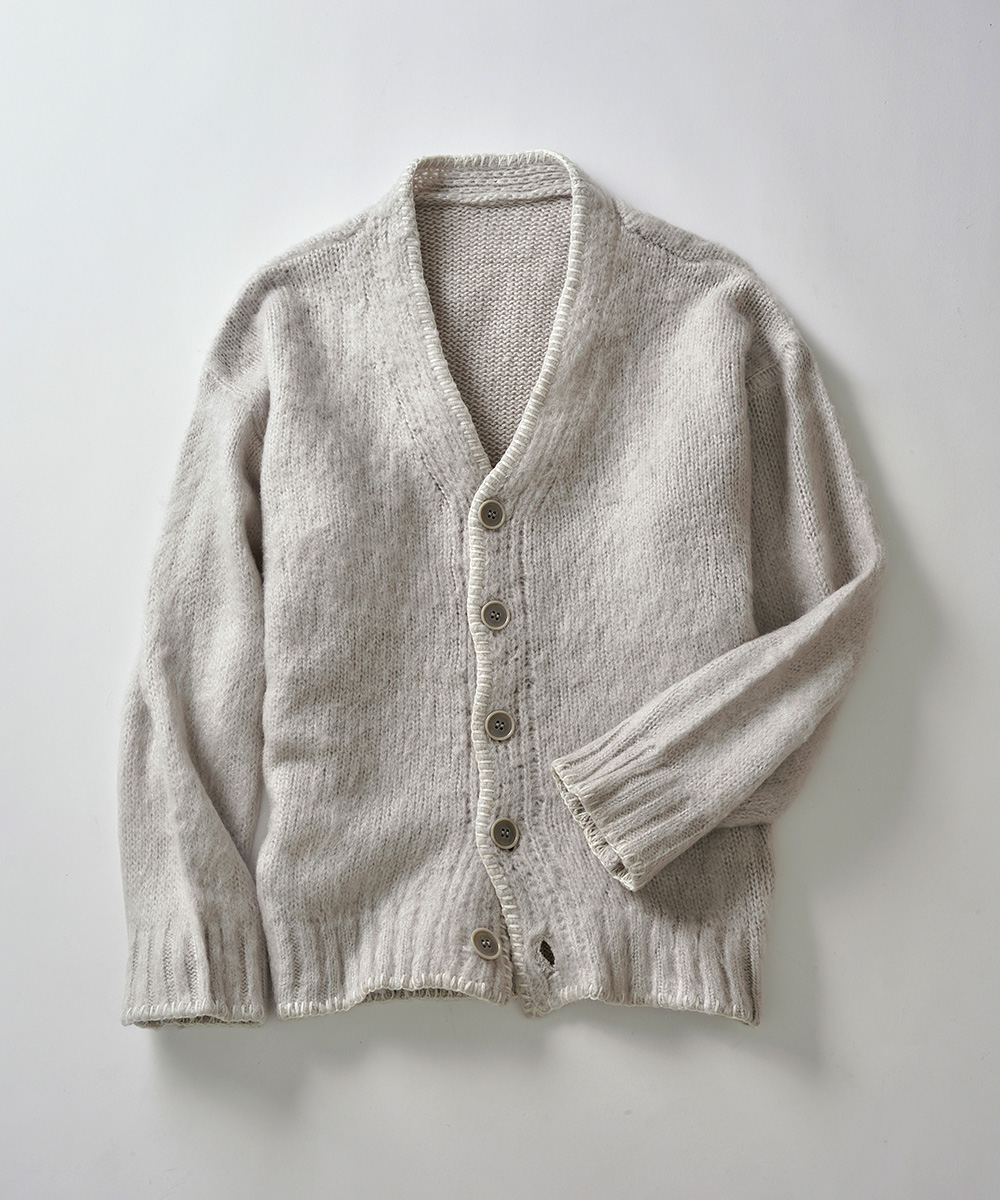
Yarn and Knitting Setup
The yarn record covers composition, count, ply, color, dye lot and the number of ends fed into the machine. Body yarn, rib yarn and contrast yarn are listed separately when they differ.
A production swatch is knitted with the same yarn, stitch pattern and machine setup planned for the cardigan. It is washed, dried and allowed to relax before the final stitch and row counts are recorded.
Those finished counts are used for the cardigan program. Widths such as chest, hem, sleeve and front band are set by stitch count. Lengths such as body, armhole, neckline and sleeve are set by row count.
Bulk knitting does not continue when the finished swatch falls outside the approved density.
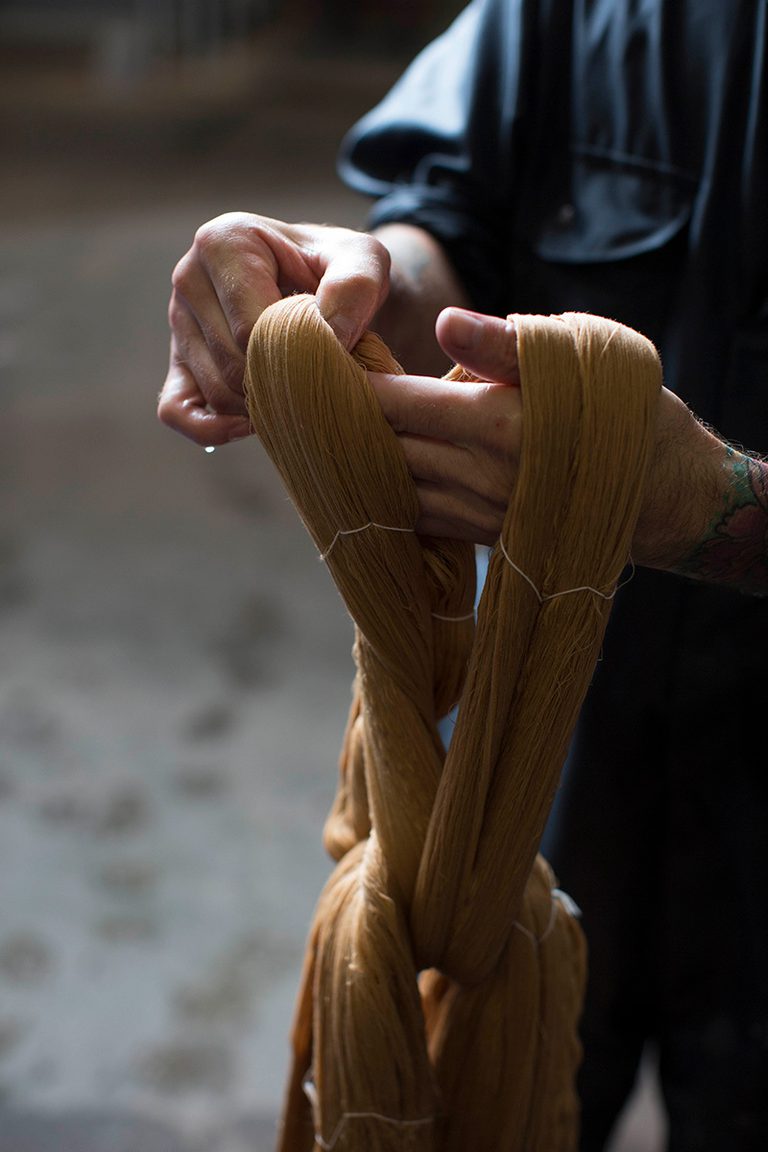
Front and Back Panels
The left front, right front and back are knitted from the program prepared for each size.
Body width, body length, armhole shaping, shoulder width and neckline shaping are already built into fully fashioned panels.
Both fronts are checked together before linking. Their hem level, armhole start, shoulder position, neckline start and front-opening length need to match.
V-neck cardigans use mirrored shaping on the two fronts. A difference in neckline height or shaping is corrected before the panels move into assembly.

Front Bands
The front band may be knitted together with the front panel or produced as a separate knitted piece.
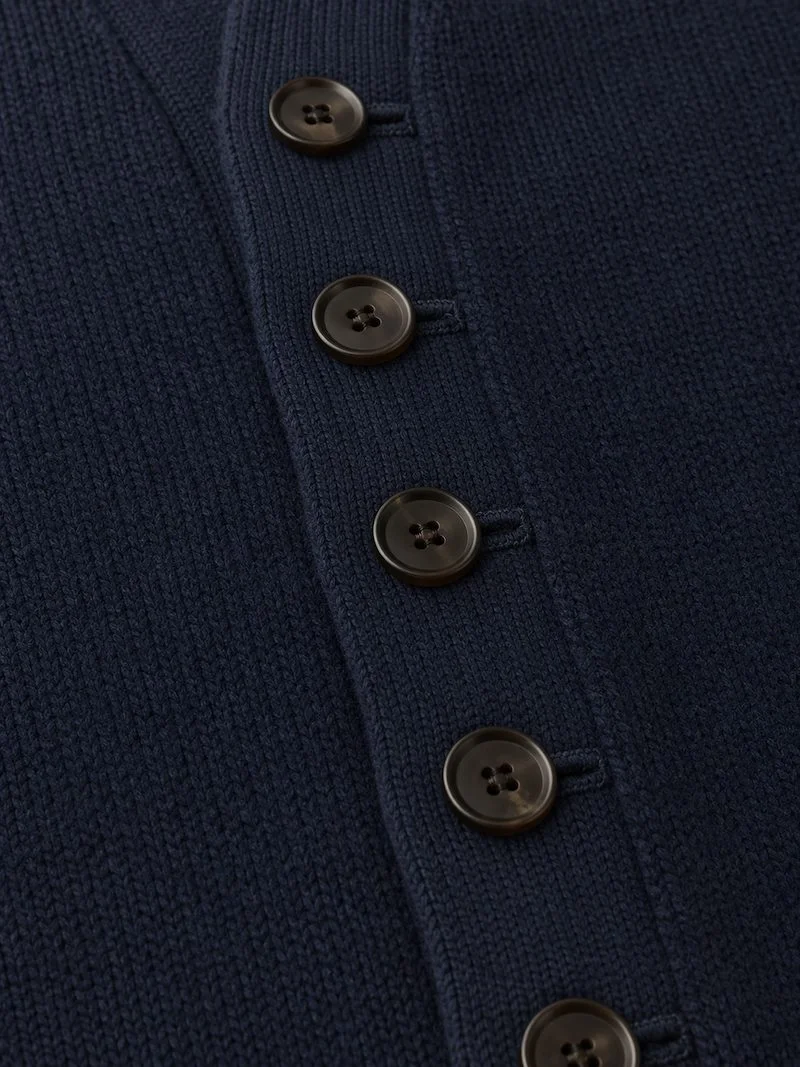
Separate bands have their own knit structure, width and finished length. Their length is checked after the same finishing process used for the cardigan body.
Both bands are compared before buttons are attached. The bottom ends need to finish level with the hem, and the upper ends need to meet the neckline at the same height.
A short band pulls the front edge upward. A long band can wave or drop below the hem. Both are corrected before the cardigan is finished.
Buttons and Buttonholes
The cardigan specification records the button style, diameter, thickness, quantity and buttonhole size.
Buttonholes are placed from the approved front-band measurements. Buttons on the opposite side are positioned against the finished buttonholes with the cardigan closed.
A change in button size also changes the buttonhole check.
The finished front is fastened and checked for straight button placement, even overlap, matching front lengths and level lower corners.
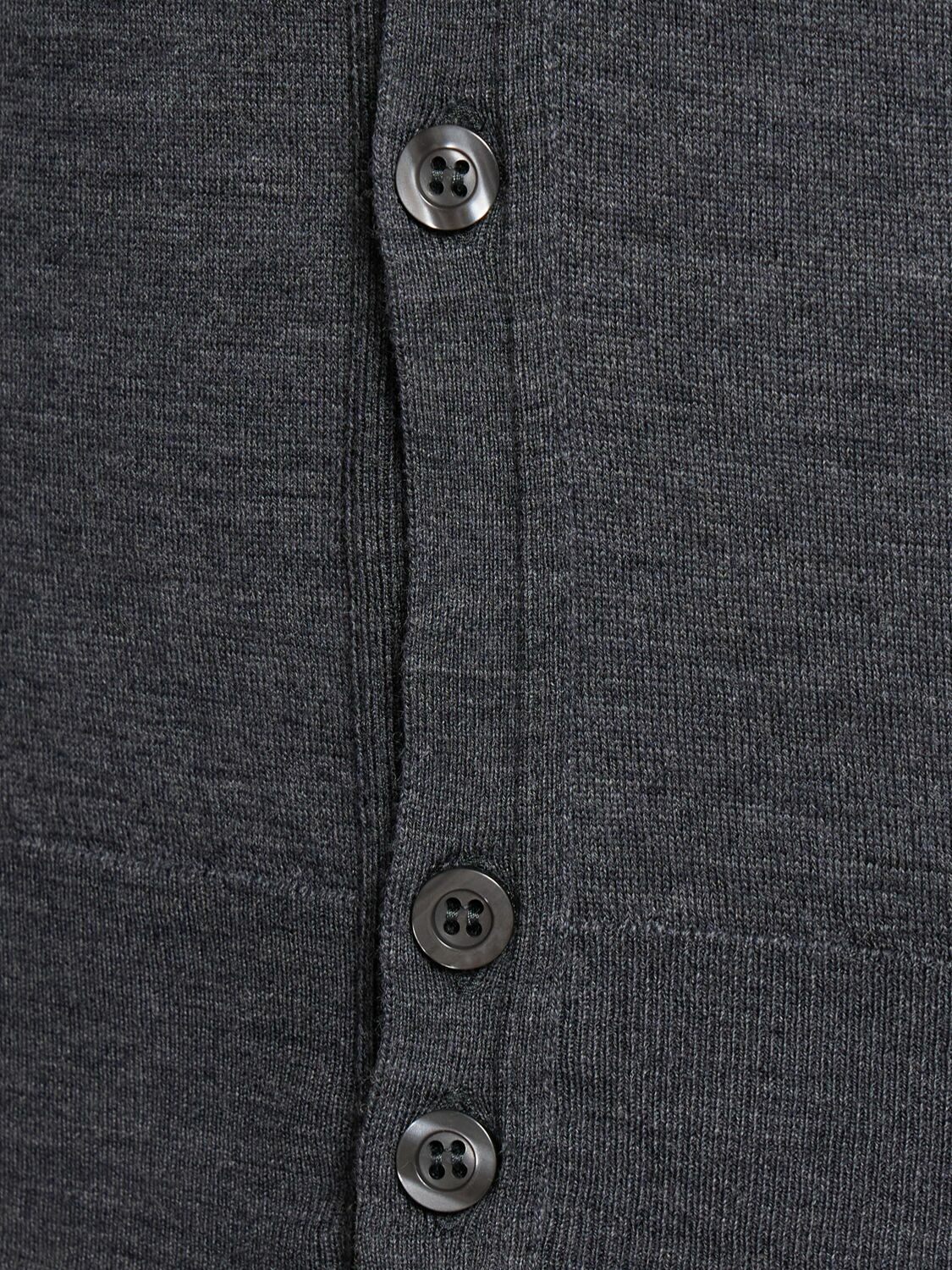
Sleeves and Cuffs
The two sleeves are knitted from the same size program and checked as a pair.
Sleeve length, upper-arm width, cuff width and cuff depth are measured before assembly.

Set-in sleeves use the cap shape made for the cardigan armhole. Drop-shoulder styles use a straighter sleeve top and join lower on the body.
The two sleeves must finish at the same length with matching cuff openings before they are attached to the body.
Hem and Rib
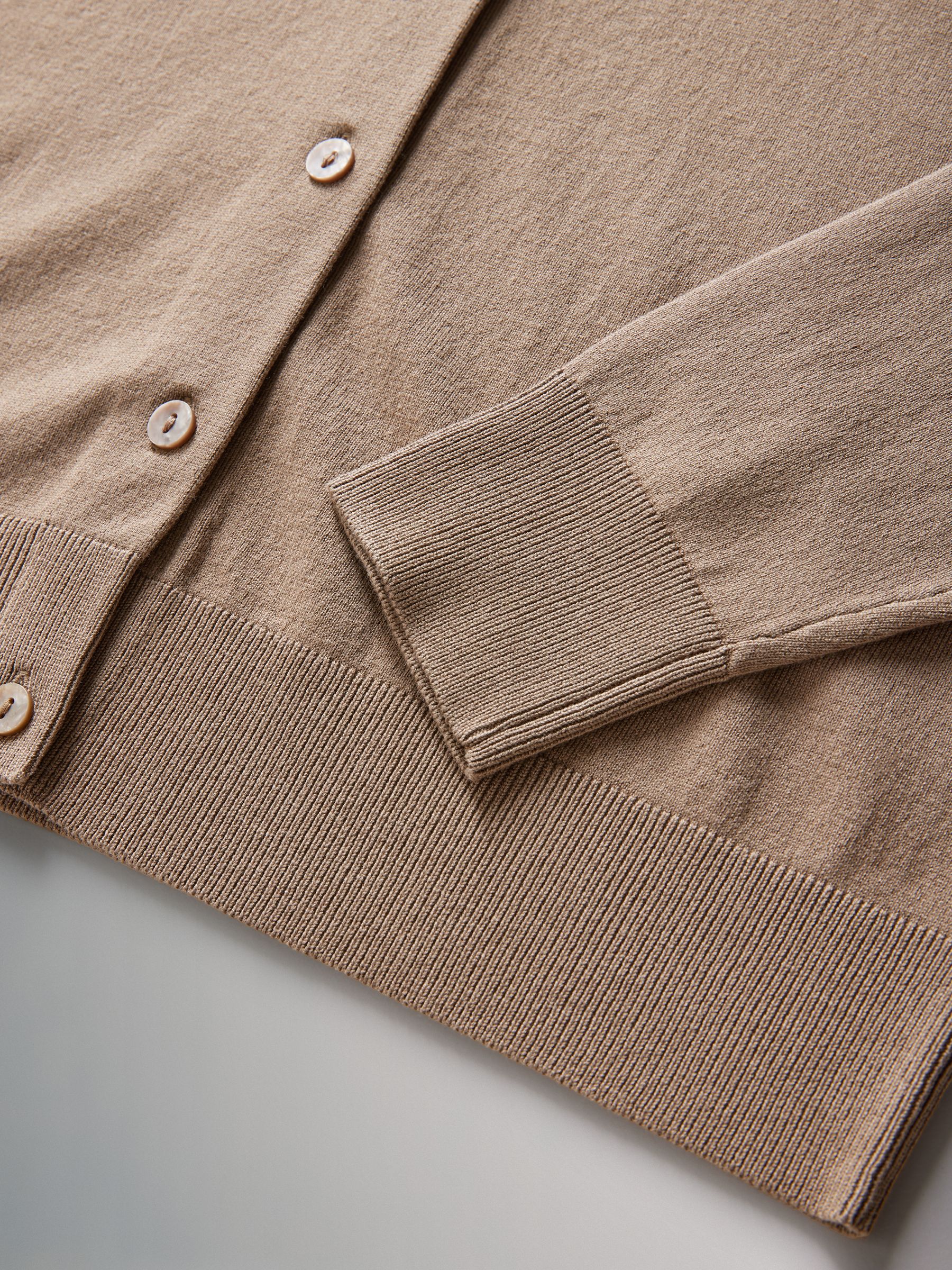
Hem rib and cuff rib are measured separately from the main body.
A 1x1 rib, 2x2 rib or another approved rib pattern is written into the knitting program together with its depth and stitch count.
Cuffs are measured in their relaxed state after finishing. The same applies to the hem opening.
A cardigan can have the correct body length and still fail at the hem if the rib finishes too wide or too tight.
Stripes, Cables and Jacquard
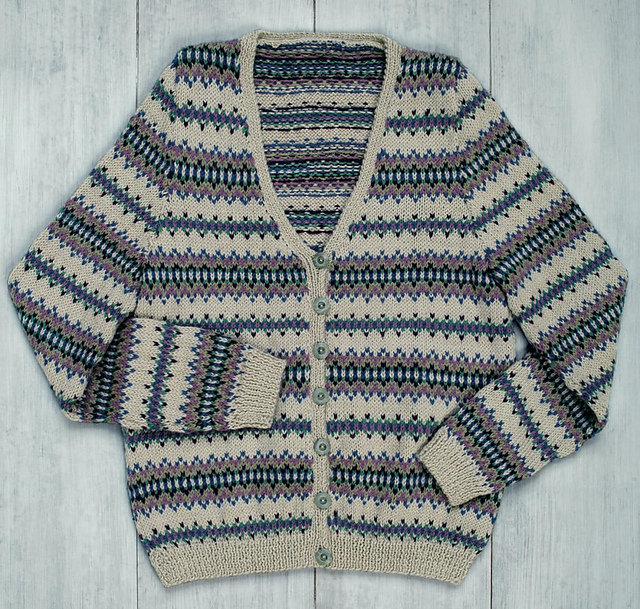
Striped cardigans use fixed color changes at specific rows. The two fronts are checked side by side and again with the cardigan closed so the stripes meet at the center front.
Cable patterns are positioned from the front edge and neckline. Their width, crossing direction and repeat stay fixed through the shaped parts of the panel.
Jacquard is checked from both sides. The outside is inspected for missing stitches and misplaced motifs. The inside is checked for broken yarns, loose floats and unfinished ends.
Pattern faults are corrected before the panels are joined whenever possible.
Linking and Assembly
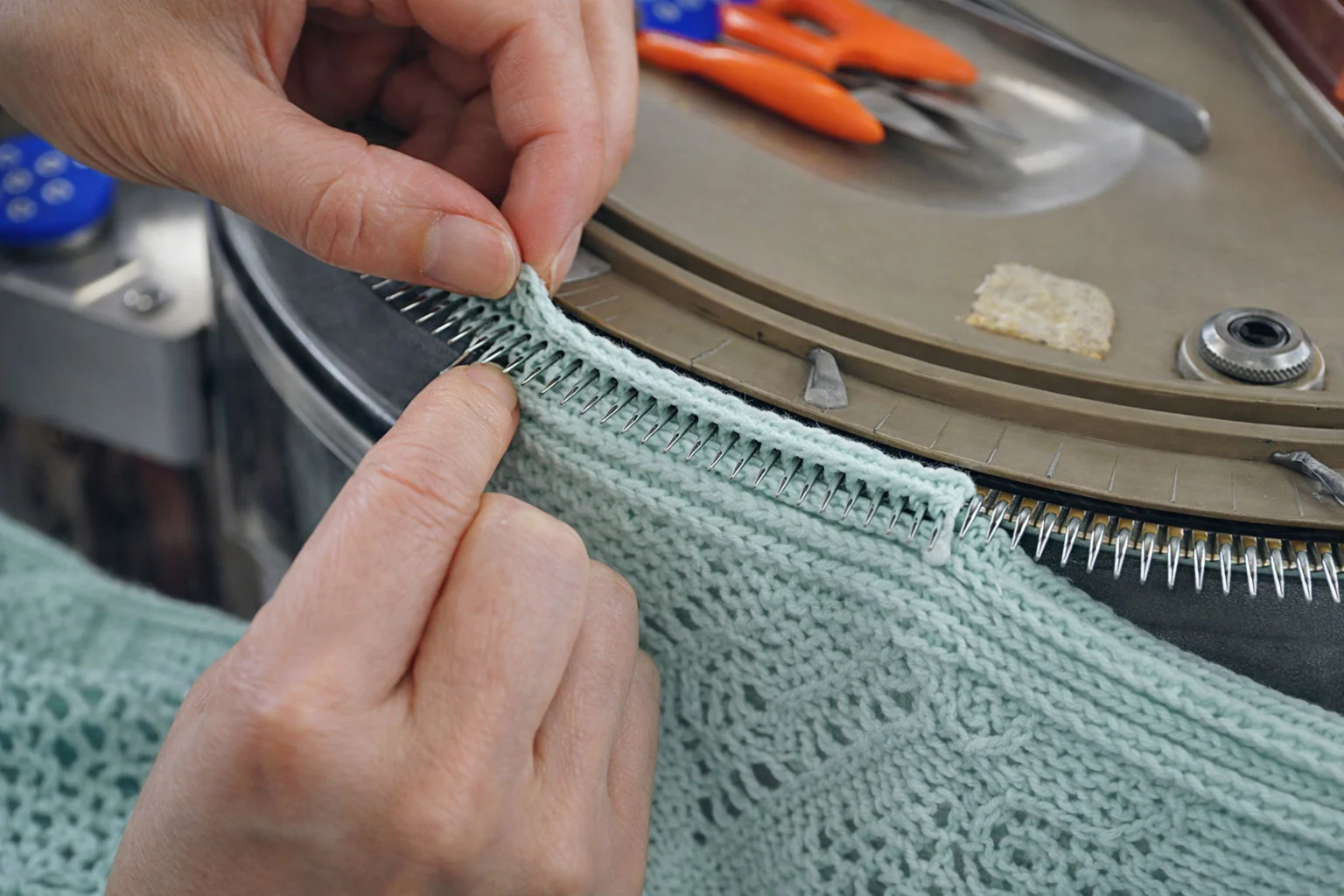
The knitted panels are joined after panel inspection.
Shoulder seams, sleeve attachment and side seams are linked or sewn according to the cardigan construction. Separate neck trims and front bands are attached during the same assembly stage where the style requires them.
Missed loops, open seams and loose yarn ends are repaired before washing.
The underarm area receives an extra check after the sleeve and side seam meet.
Patch pockets are positioned from measured points at the hem and center front. A matched pair finishes at the same height and the same distance from the front opening.
Washing and Finishing
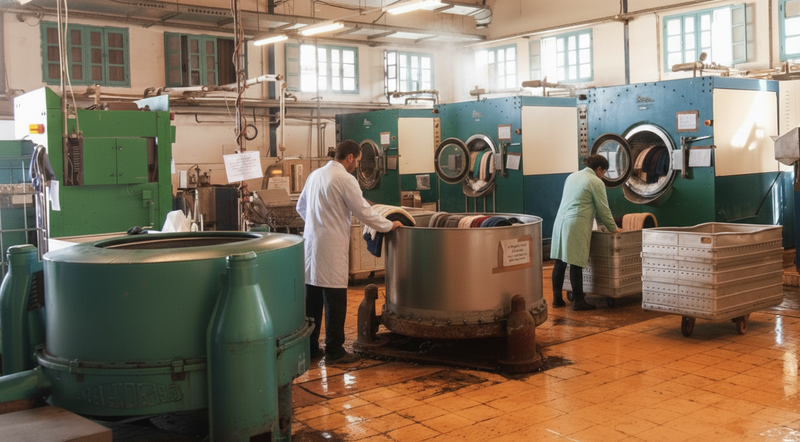
Assembled cardigans go through the approved washing, drying and relaxation process.
The garment is measured again after finishing because the body, rib, sleeves and front bands do not always relax by the same amount.
Checks include body width, body length, sleeve length, cuff opening, hem opening and front-band length.
A front band that finishes too short pulls the front upward. A hem rib that opens too much changes the lower width. Uneven sleeve relaxation produces a visible difference between the two sleeves.
These problems are corrected before the rest of the order moves forward.
Size Grading
Each size uses its own knitting program.
Chest, hem and sleeve widths change through stitch count. Body length, sleeve length, armhole depth and neckline depth change through row count.
The front opening changes with the body length, so buttonhole positions are checked for each size.
Pocket height, stripe position, cable position and jacquard placement also follow the measurements of the graded size.
Finished Measurements
The cardigan is laid flat without stretching the knit. Button-front styles are fastened before chest and hem measurements are taken.
| Measurement | How It Is Checked |
|---|---|
| Body length | High point of shoulder to finished hem |
| Half chest | Straight across the specified chest position |
| Shoulder | Across the finished shoulder area |
| Sleeve length | Shoulder point to finished cuff |
| Upper-arm width | Across the sleeve at the specified position |
| Cuff opening | Relaxed finished width |
| Hem opening | Relaxed finished width |
| Front band | Width and finished length on both sides |
| Pocket position | Distance from hem and center front |
| Buttonholes | Size, quantity and position |
Measurements outside tolerance are corrected and checked again.
Final Inspection

The finished cardigan is checked open and fastened.
The body is checked for length, chest width, hem width and twisting. The two fronts are checked for matching band length, even overlap and level lower corners.
Sleeves are compared for length, upper-arm width and cuff opening. Buttons are checked against their buttonholes. Pockets are checked for matching position.
The knit surface is inspected for dropped stitches, broken yarns, holes, snags and visible repairs. Linking seams are checked for missed loops and open sections.
Striped cardigans are checked for stripe alignment. Cable cardigans are checked for complete and correctly placed crossings. Jacquard cardigans are checked on both the outside and inside.
Any repaired area is checked again before packing.