Jeans Manufacturing
Jeans Manufacturing
Jeans shrink in the garment wash after they’re sewn, and the same wash shows up any leg twist left by skewed denim or off-grain cutting. FashionMe drafts your pattern from the measurements of a washed sample and cuts bulk only once that sample passes. Stock Match skips the pattern work: you order a style a factory already has in production.
Denim Release
The shrinkage allowance in your pattern comes from how the fit-sample denim behaved in the wash. If you switch to another article after that sample, the new denim needs a fresh wash trial and skew check before bulk cutting.
Sanforizing at the mill cuts wash shrinkage from as much as 10% to about 2–3%. The pattern allowance can’t be set until you’ve said which kind of denim you’re buying.
A stretch-denim pair can pass its measurements straight out of the wash and still bag at the knees once it’s worn. Request growth and recovery results from the mill under ASTM D3107 before you approve the fabric. FashionMe measures recovery a second time on the washed sample.
Under ASTM’s denim specification, D6554, indigo denim needed grade 3 dry and 1.5 wet on a crocking scale where 5 means no color transfer; other colors needed 4 dry. Those figures come with a footnote that they may not be relevant once the denim is garment washed. ASTM withdrew the specification in 2023. Test crocking on your washed sample and agree dry and wet grades with the mill for that wash.
Article ID
The mill’s or supplier’s reference for the exact bulk fabric. Quote it on every reorder.
Composition
Fiber percentages of the body fabric. Any elastane, even 1%, makes it stretch denim that needs the growth and recovery results above.
Weight
Ounces per square yard or gsm; 12 oz/yd² equals 407 gsm.
Twill
Right-hand, left-hand or broken, as woven for the bulk rolls.
Wash result
Finished shade, and the dimensional change measured in the production wash trial.
Skew result
Skew movement after a wash test, as a percentage of the cuttable width.
Pattern Compensation
Shrinkage % = (before wash − after wash) ÷ before wash × 100
82.0 cm inseam before wash → 80.0 cm after wash
Length loss = 2.0 cm
Shrinkage = 2.0 ÷ 82.0 × 100 = 2.44%
The next sample needs a pre-wash inseam of about 84.1 cm to finish at 82 cm, as long as the denim and wash recipe stay the same:
82 ÷ (1 − 0.0244) ≈ 84.1 cm
Ask for that before-and-after measurement across the whole size chart, and for the pattern to be corrected from the difference.
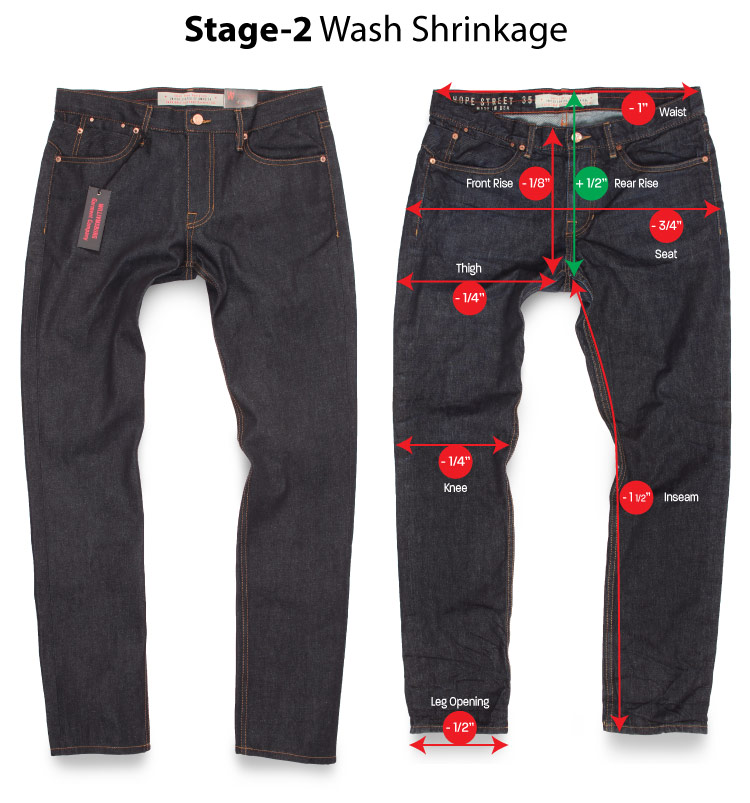
Waist
If the washed waist, measured buttoned, misses your tolerance, expect a redrawn upper pattern and another washed sample before approval.
Inseam
Correct length from the shrinkage of the finished inside leg. A roll figure comes from an unsewn swatch and leaves out the seams.
Knee and hem
Use the width change measured on the sample for these. The 2.44% length figure doesn’t apply to them.
The 2.44% is factory-wash shrinkage. Shrinkage after your customers wash the jeans at home is a separate test on the finished garment. AATCC TM150 has four wash temperatures and four drying procedures to choose from; name the ones on your care label. Raise stretch styles with the lab first: the method may not suit some stretch fabrics.
Jeans Block
Settle the seat and crotch on the washed sample before anyone reshapes the leg. A back rise that’s too short pulls the seat tight however much width is added to the thigh.
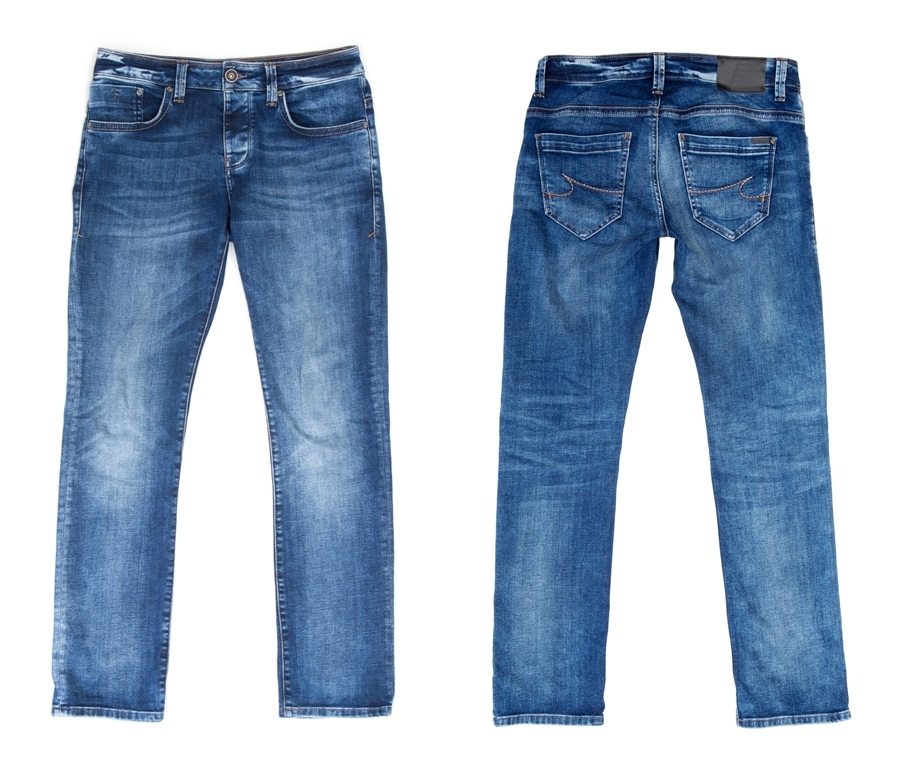
Front
The front crotch curve runs into the fly and the front pockets. A change to front balance means redrawing all three.
Back
Seat room comes from the back rise and crotch extension. The yoke shapes the top of the seat.
More back rise and back crotch room, then a second wash and fitting before you approve.
The back crotch extension or back rise is longer than the seat needs. Shorten it on the pattern and check the next washed sample.
Add width at the knee and hem points only and leave the approved upper block alone.
Bring in the knee point and redraw the leg line down to the existing hem measurement.
Production Measurements
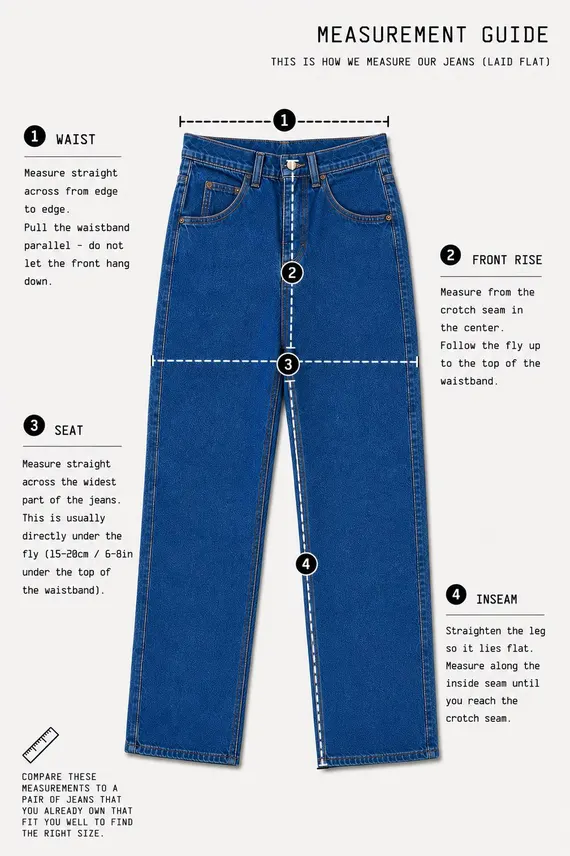
Rise measured to the top of the waistband comes out a full band height longer than rise stopped at the seam below it. Name the end point on your size chart and mark every width as flat (half) or full circumference. QC measures bulk pairs by the method written there.
Button it, line up the top edges and run the tape along the top of the band. Record half the width.
Half low hip, at the distance below the waistband seam given on your chart.
From the end point you named, down the curve of the front seam to the crotch seam.
The same path along the back seam.
Across the front leg at the lowest point of the rise seam, parallel to the leg opening, as a half measurement.
Choose a fixed distance from the crotch or from the hem and keep the same one in all sizes.
Crotch seam to the bottom of the leg, following the inseam.
Hem laid flat and measured edge to edge for the half opening.
Five-Pocket Construction
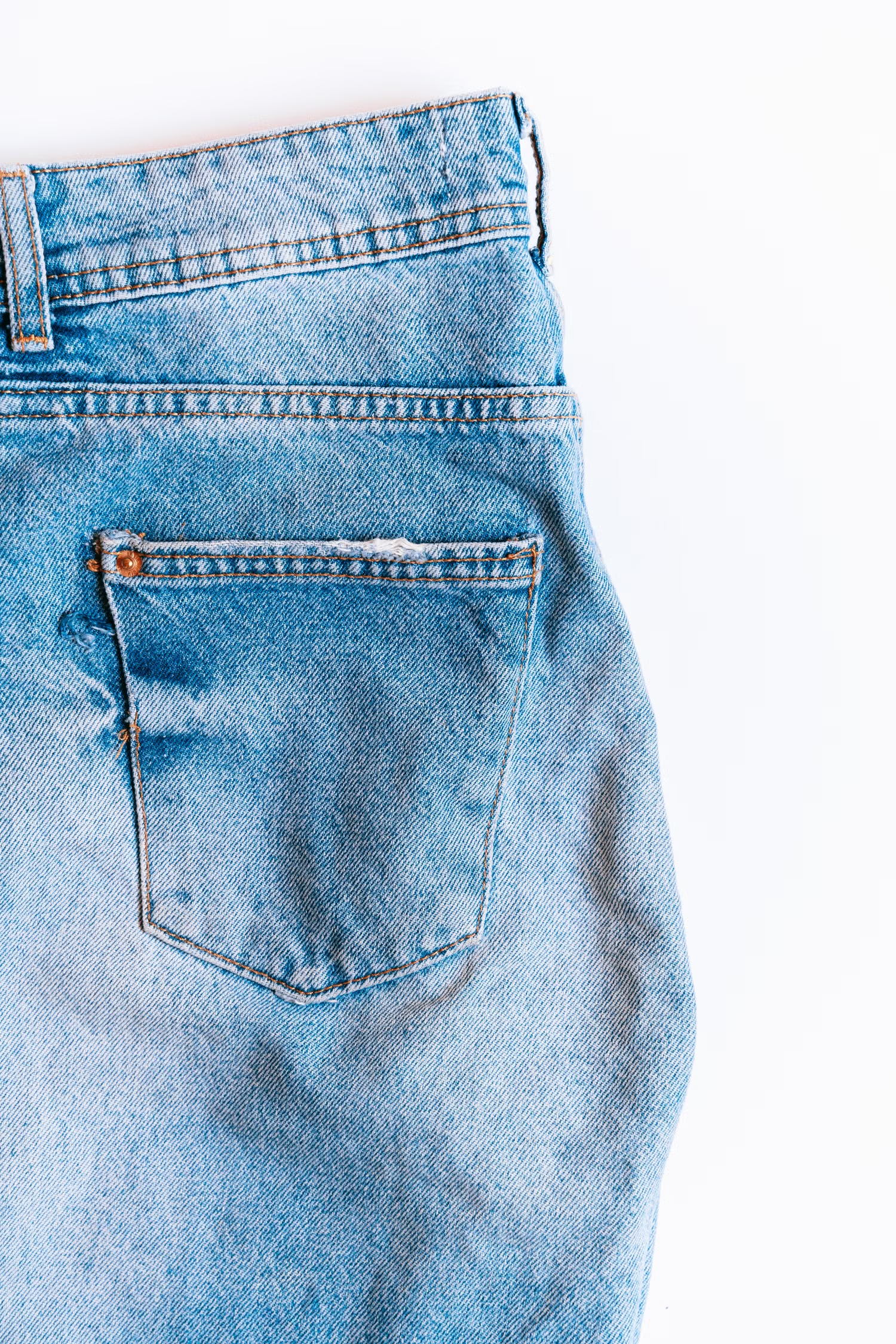
Approve pocket positions on the pattern before sewing starts. The front-pocket opening is part of the front-leg piece, and the back pockets are stitched onto the back panels before the seat seam is closed. A position change after that costs you a new sample.
Front-pocket opening
Give the finished length and curve of the opening. Bag depth is measured from the opening down to the lowest point of the bag.
Back-pocket position
Measure from the yoke seam and center-back seam, and record size and angle for the left and right pocket separately.
Pair spacing
Move the two back pockets 1 cm farther from center back and the gap between them grows by 2 cm. The seat looks different even though the pockets haven’t changed size.
Finished size and position inside the front pocket.
Set at the reinforced pocket points on your spec, after the seam layers are assembled.
Back-pocket positions follow the yoke. A new yoke shape means new positions on the next sample, and graded sizes take theirs from the graded yoke. A position copied from the base size ends up out of place on larger and smaller panels.
Fly, Seams & Hardware
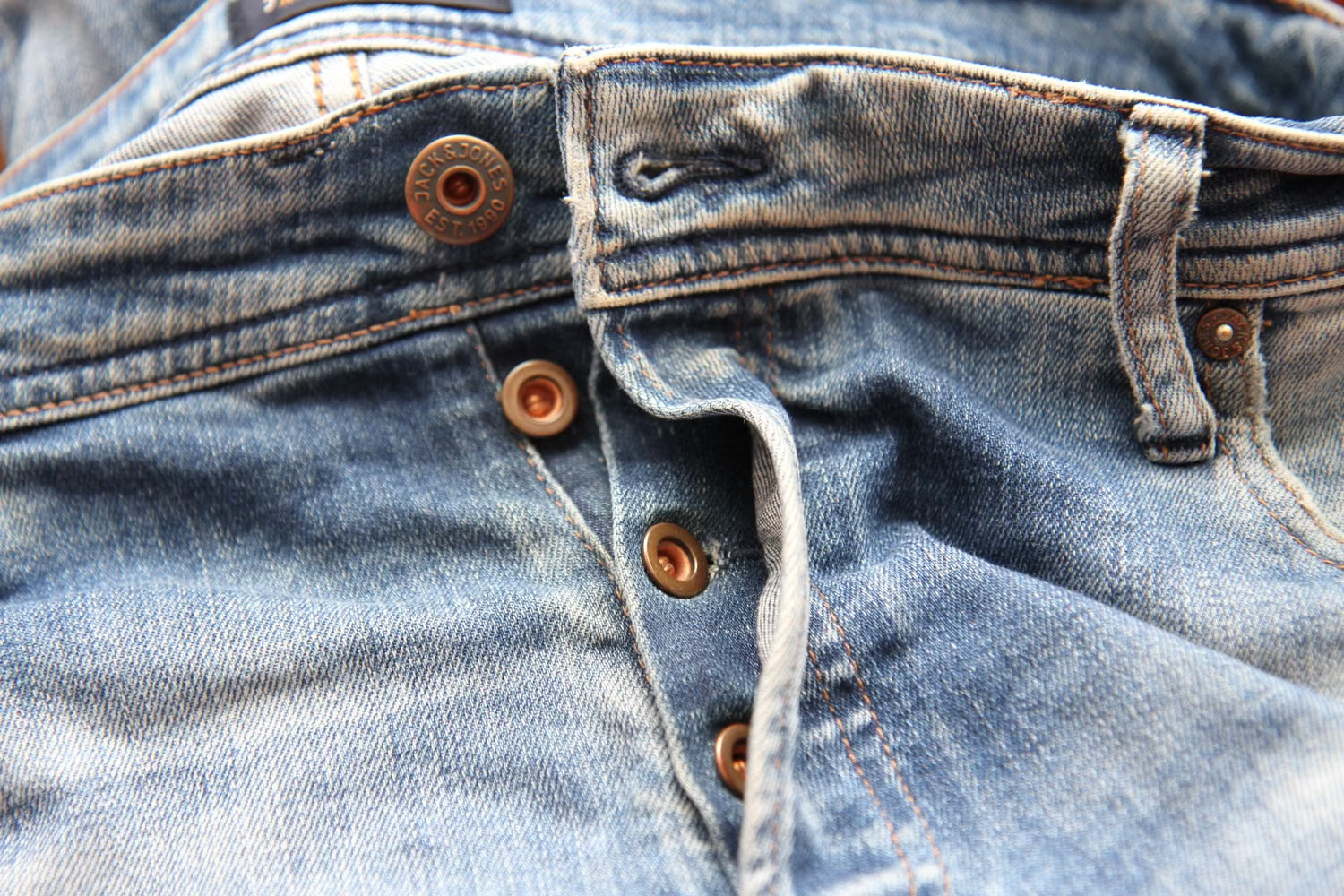
Build the final wash sample with the fly, hardware, back patch and seams planned for bulk. Stand-ins can’t show what the wash does to the real parts, from the roping on a chain-stitched hem to the hold of a tack button.
Fly depth comes from the front pattern. Match the zipper or button-fly length to that opening before bulk closures are ordered.
Have the tack button and other hardware on the washed sample pull-tested, with the result back before bulk cutting. Anything that shifts is reset and tested again.
Specify the seam type and the allowance the pattern was built with. A seam sewn deeper than that allowance takes width out of the finished leg along it.
The spec for topstitched seams has four entries: thread color, thread size, stitches per inch and edge distance.
Roping comes from a chain-stitched hem sewn on a plain-feed machine such as the Union Special 43200G; the hem twists into a roped look that shows more after the wash. Machines with a walking foot or differential feed move the top and bottom layers at the same rate and rope less. Name the machine type in your spec if the look matters.
Fix the number and position of the loops before wash approval.
Denim Finishing
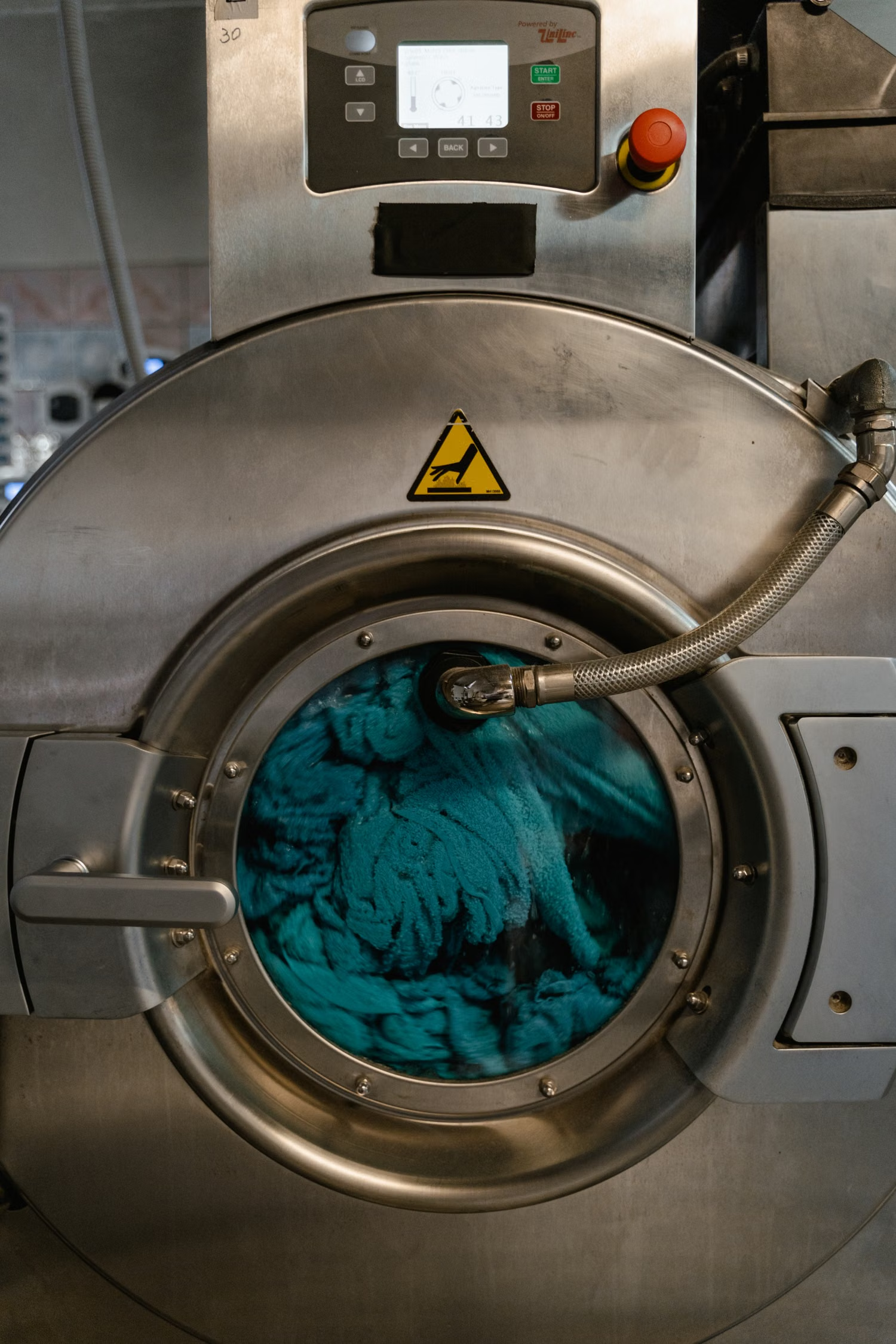
Write the finishing steps into your spec in the order the wash house runs them, and judge shade and measurements only after the last one. Hand sanding, if your look has it, comes before the wash. A typical stonewash then runs in this order:
Removes the starch, PVA or CMC sizing the mill put on the warp yarns for weaving. Sizing left in the fabric keeps the denim harsh and rigid.
Pumice stones abrade the fabric, and cellulase enzymes polish it by breaking down the fiber surface. A standard load runs one hour in the machine; a heavy stonewash takes four to six.
Clears loose indigo after the stones. Extra rinses help keep that indigo from settling back on the white weft yarns, a fault called backstaining.
Sodium perborate in an alkaline bath, about 15 minutes at 180°F, adds contrast between the light and dark areas. A lighter shade needs a sodium hypochlorite bleach and an anti-chlor neutralization first.
Cationic softeners give a fluffy, silky hand. Nonionic polyethylene or silicone softeners are the alternatives.
Skew & Leg Twist
Untreated denim skews in the direction of its twill line, and mills correct for it in finishing by angling the weave the opposite way, usually by 4–10%. Skew that remains turns into leg twist in the finished pair and shows more after washing.
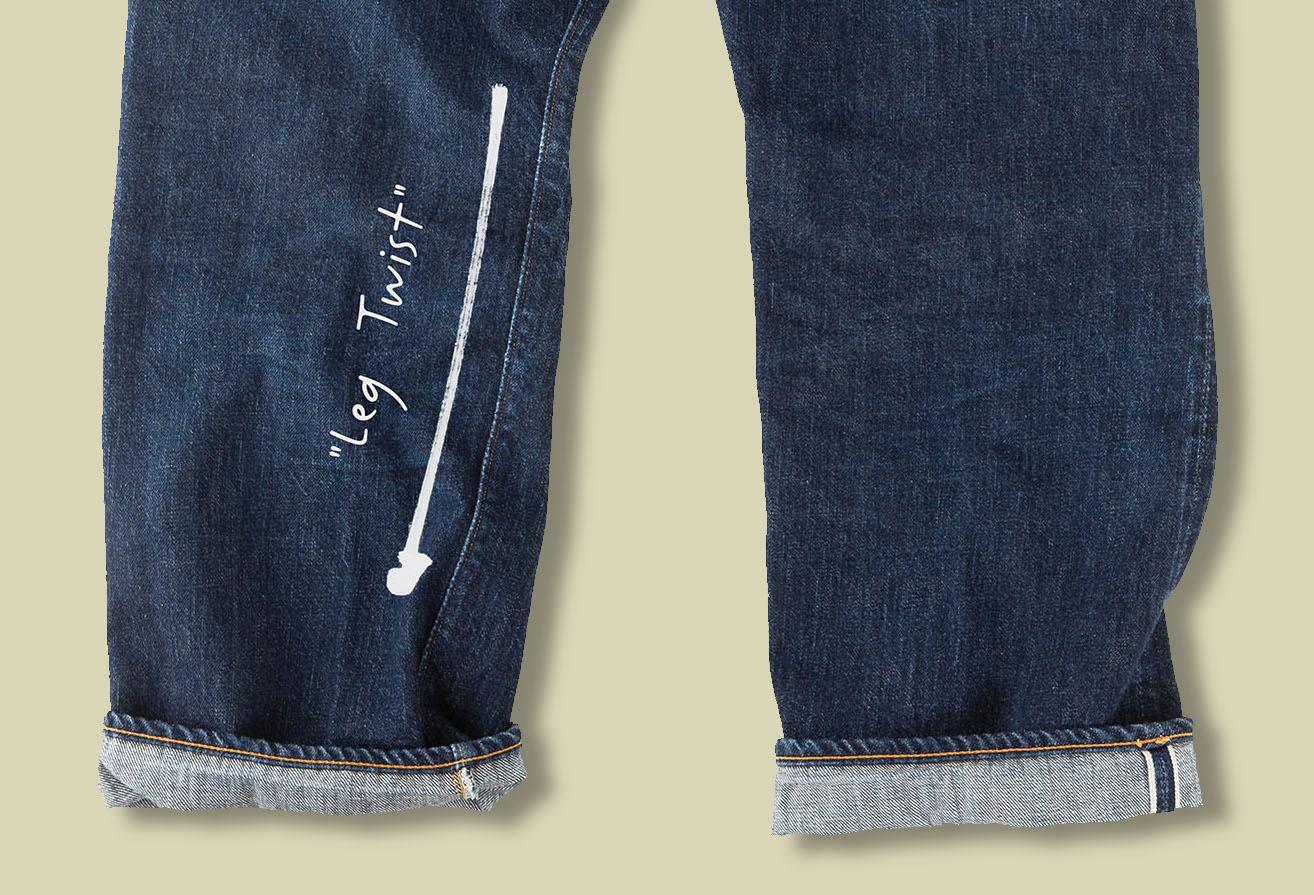
Set a limit of 3% skew movement in the fabric result; at that level, legs don’t twist. Require the cutting room to cut the leg panels for a pair in one direction and lay them no more than 1 degree off the straight grain. Off-grain or mixed-direction panels twist even on well-corrected denim.
Judge twist on the washed pair, laid flat and relaxed, by how far the inseam and outseam have rotated around the lower leg. A pair counts as twisted once the leg fabric moves more than 2.54 cm (1 inch) out of line between knee and hem.
Size Grading
Grade the size chart point by point, from waist and hip down to the leg opening. Grading ends with a size set, and bulk waits for its approval.
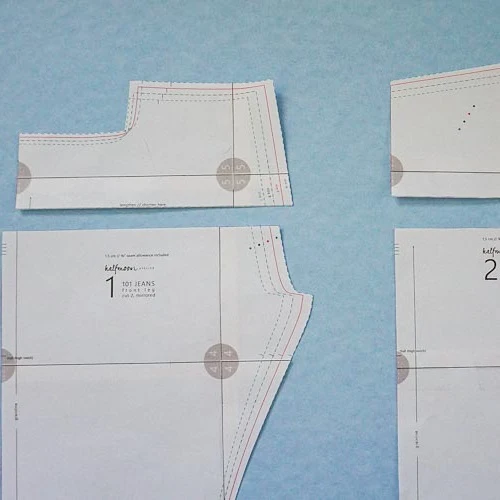
They can share one step or take two. Write the steps as flat or full measurements: a 2 cm step in flat hip width is 4 cm around the hip.
Grade them separately. The back rise is the longer seam and shapes the seat.
Give all three a target in the graded chart. A constant ratio between them keeps a tapered leg tapered up to the largest size.
Fly depth follows the graded front rise. Adjacent sizes often share one zipper length; confirm the size groupings before trims are ordered.
Pairs in the graded sizes, cut from bulk denim and measured after the production wash. Include at least the smallest and largest sizes. Measuring positions stay the same from first sample through size set approval to final inspection.
Bulk Release Gate
Hold bulk cutting on a Made to Order style until these seven items are signed off:
Shrinkage, and skew movement within 3%, for the bulk article. On stretch denim, growth and recovery results.
Your written approval of fit and wash look on the washed sample.
Recovery measured again on the washed sample, for stretch styles.
Dry and wet grades from the washed sample, against the grades you agreed with the mill.
Your approval of the graded pairs, signed after you’ve seen their washed measurements.
No leg on the washed sample or the size set more than 2.54 cm out of line between knee and hem.
Tack button and other hardware through the pull test, and zipper lengths confirmed against the size set.
Bulk Jeans Inspection
Made to Order: every pair inspected against the approved specification before shipment.
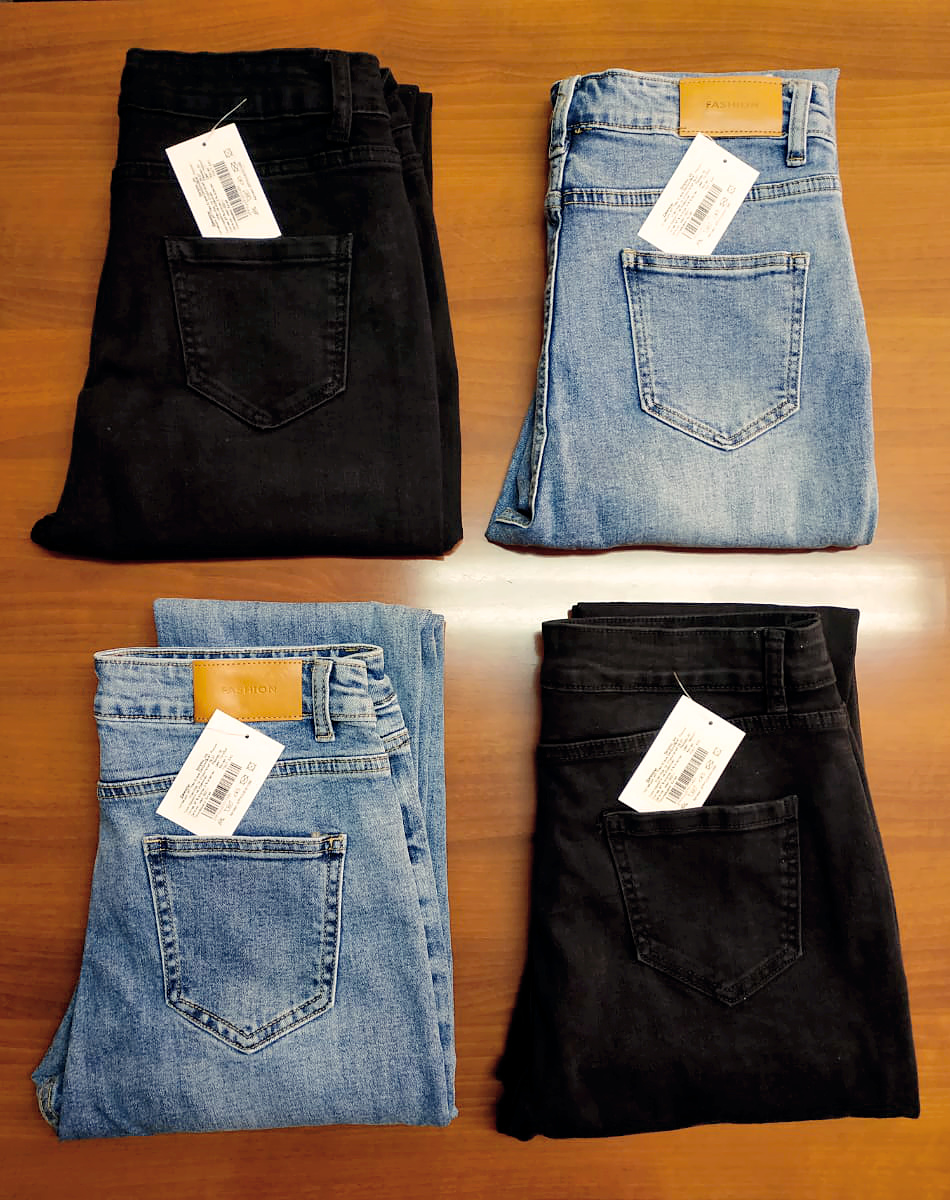
Stock Match: a sample pull under ISO 2859-1 at General Inspection Level II, AQL 2.5 for major defects and 4.0 for minor, or 100% inspection at $0.18 a pair.
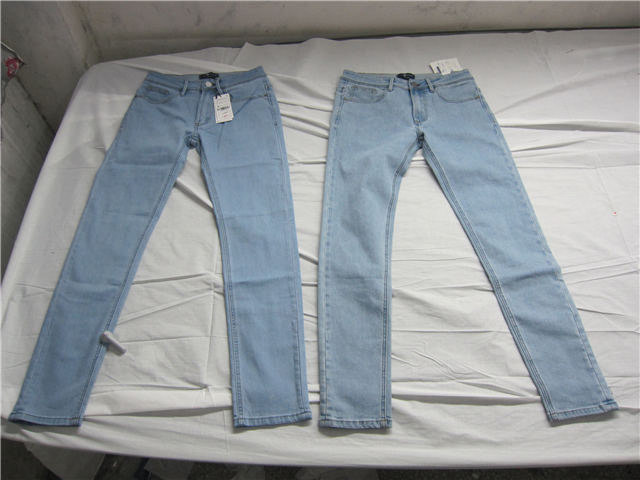
Inspectors measure the jeans by the method on your size chart and judge the wash look across the lot against your approved sample. Send a list of the faults you count as major, such as an open seam at the crotch, with the order.
You can review the inspection record and QC photos before the shipment is released. Agree beforehand what happens to a lot that fails.
| Step | 200-pair lot |
|---|---|
| Sample size code, Level II | G |
| Pairs pulled | 32 |
| Major defects accepted (AQL 2.5) | Up to 2 |
| Minor defects accepted (AQL 4.0) | Up to 3 |
Production Route
Stock Match
You get the jeans as the factory already makes them, in the colors and size range it has in production. The style moves to Made to Order once you change any of these:
- Rise or leg shape
- Denim
- Pockets or hardware
- Wash
Made to Order
The pattern is drafted to your finished measurement targets, and bulk follows the approved washed sample. Relabeling and branded packaging cost nothing extra on this route.
Cut-and-sew sampling runs 7–12 days and covers one or two revision rounds. Production then takes 15–20 days. A style approved within those rounds finishes 22–32 days after sampling starts, before freight. The production wash is part of jeans sampling; check whether it fits inside the 7–12 days.
| Goods invoice | Fee |
|---|---|
| Under $5,000 | 12% |
| $5,000–$20,000 | 9% |
| $20,000–$50,000 | 7% |
| $50,000+ | 5%, custom quote |
| Extra | Per pair |
|---|---|
| Brand label swap, 50-pair minimum per style | $0.35 |
| Custom hang tag | $0.25 |
| Branded polybag, mailer or box | $0.45 |
| 100% inspection | $0.18 |
| Stage | Price |
|---|---|
| Pattern and sample development | $150–$280 |
| Production per pair, at 300–500 pairs | $9.00–$16.00 |
The per-pair range on the pricing page covers 300–500 pairs, and orders from 1,000 pairs are priced lower. No figure is published for 50 pairs. Quotes come priced at several order quantities; ask for 50 and 300 on the same quote to see the difference.
The $150–$280 development fee weighs more on a small run. At $280, it adds $5.60 a pair to a 50-pair order and $0.56 to a 500-pair one.
The longer machine time of a heavy stonewash shows up in the wash price. Supplier and process minimums for a new dye lot, custom hardware or the wash are covered on the low-MOQ page.
Freight and duties are billed at cost on Stock Match orders; confirm how they’re charged on a Made to Order quote.
Jeans Project
Request a jeans manufacturing quote
Send the quantity you’re thinking of and whatever you have on the jeans, from a photo or video to a full tech pack. Prices for several order sizes come back within 24 hours. For a Made to Order style, list the parts you’ve already fixed:
- Finished measurement targets
- Denim requirement
- Wash reference
- Pocket construction
- Hardware