Sweaters Manufacturing
FashionMe supplies pullover sweaters to clothing brands through a network of more than 120 audited factories. You can start at 10 pieces with a sweater a factory already makes, or at 50 with one knitted to your design.
| Stock Match | Made to Order | |
|---|---|---|
| Colors and sizes | Whatever the factory has in stock | Yours to choose |
| Design | As the factory already makes it | Knitted to your design |
| Time | 7–10 days to ship | 7–12 days sampling plus 15–20 days production (22–32 days of factory time) |
Unless the quote says otherwise, a style has to reach the minimum order quantity (MOQ) by itself. Freight and duties come on top on both routes.
What a Sweater Order Costs
On Made to Order you pay for pattern and sample development first. For a pullover that’s $180–$320. The published production price is $12.00–$22.00 a piece on an order of 300–500, and it drops further from 1,000 pieces. For 50–299 pieces, the price comes in the quote.
Where your sweater lands in that range comes down to the yarn and the gauge. At 300 pieces, production costs $3,600–$6,600. Add the sample and you’re at $3,780–$6,920. Your labels and branded packaging are already included.
On Stock Match you pay the factory’s invoice for the goods, plus a sourcing fee worked out on that invoice.
| Supplier invoice total | Fee |
|---|---|
| Under $5,000 | 12% |
| $5,000–$20,000 | 9% |
| $20,000–$50,000 | 7% |
| $50,000 and up | 5%, quoted case by case |
| Add-on | Per piece |
|---|---|
| Your woven or printed label in place of the factory’s, from 50 pieces per style | $0.35 |
| Hang tag printed with your artwork | $0.25 |
| Branded polybag, mailer or box | $0.45 |
| Full inspection in place of the sample pull | $0.18 |
Say the factory invoice for 60 sweaters of one style comes to $900. The 12% fee adds $108. Your label and a hang tag on all 60 add another $36.00, for $1,044 before freight and duties.
Yarn, Gauge and Density
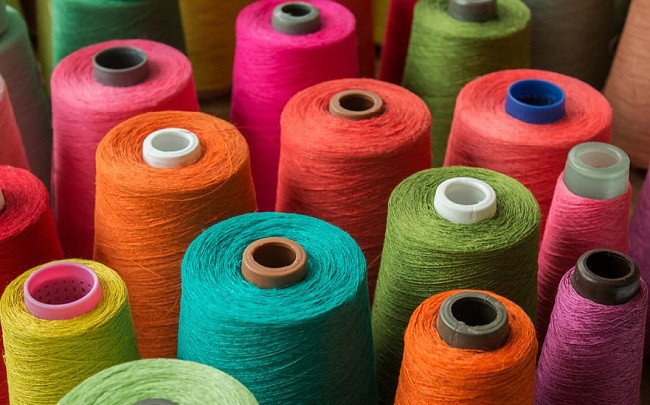
FashionMe records the yarn’s composition, color and lot for production. If your spec names a count, ply or supplier article, that goes on the record too.
The biggest factor in how a wool sweater feels is fineness, measured in microns. Lambswool from a sheep’s first shearing runs 16.5–20 microns, while adult merino goes up to 21.5. Cashmere is softer because its fibers have fewer scales, though they’re shorter than most merino. Cotton knits feel cool to the touch and trap less heat.
In the US, a sweater can only be labeled cashmere if the fiber averages 19 microns or less, with a coefficient of variation no higher than 24%. No more than 3% of the fiber by weight may average over 30 microns.
Don’t approve a color on raw yarn. The factory first makes a knit-down: a swatch from the production yarn on the production gauge and stitch, washed or steamed the way bulk will be. You judge color, surface, density and hand (how the knit feels) on that swatch.
Colors can carry separate minimums. The quote shows the quantity per color next to the order total. Two dye lots of one color can also differ in shade. Before a new lot joins an order that’s already running, it’s compared with the approved one.
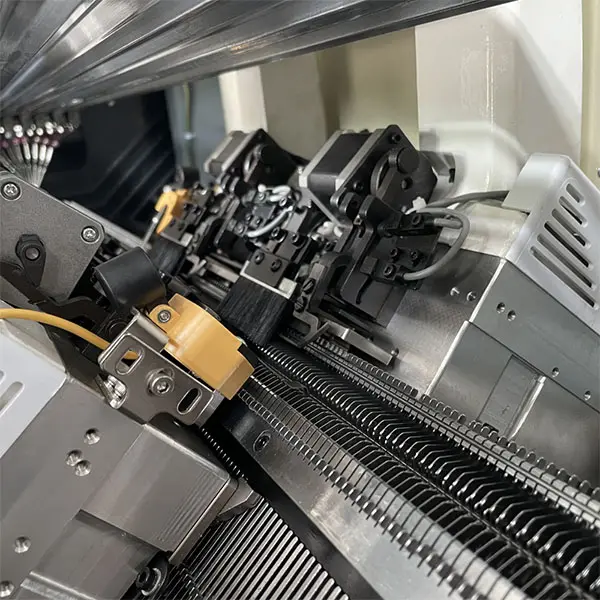
Gauge, written gg, tells you how tightly the knitting machine’s needles are spaced. Flat knitting machines run from gauge 3 up to 18. Knits from 3 to 12 gauge are the heavier autumn and winter weights. Twelve gauge and up gives lightweight spring and summer knits, and 12 gauge is the classic all-year weight. FashionMe’s knitwear information gives 7gg chunky knits and 12gg fine knits as examples.
Density decides the size: stitches and rows per centimeter in the finished knit. Take a front panel 250 stitches wide. If the approved sample finishes at 5 stitches per centimeter, the panel comes out 50 cm across. At 5.2 stitches per centimeter, the same 250 stitches measure 48.1 cm. The factory holds bulk to the approved sample’s finished density, for rows as well as stitches.
Necklines
A pullover goes on over the head. Its neck has to stretch wide enough for that and then sit close again.
Name the neckline in your tech pack and give it numbers. Every neckline needs the neck opening, both relaxed and fully stretched, plus the front neck drop.
| Neckline | Also specify |
|---|---|
| Crew neck | Rib depth |
| V-neck | Rib depth and how the rib meets at the point of the V |
| Mock neck | Collar height |
| Turtleneck | Full collar height before it folds over |
| Polo collar | Collar size and the button placket |
The neck rib is graded with the neck opening, size by size. If a neckline waves once it’s linked, the factory rechecks the rib’s length and density and the linking tension.
Front and Back Panels
Front and back panels come off the machine with the armholes and neckline already shaped, following the knitting program for the size. Any pattern or artwork on the front needs a fixed reference for its position. Give every motif a distance from center front or from the neckline. Inspectors measure from that same point.
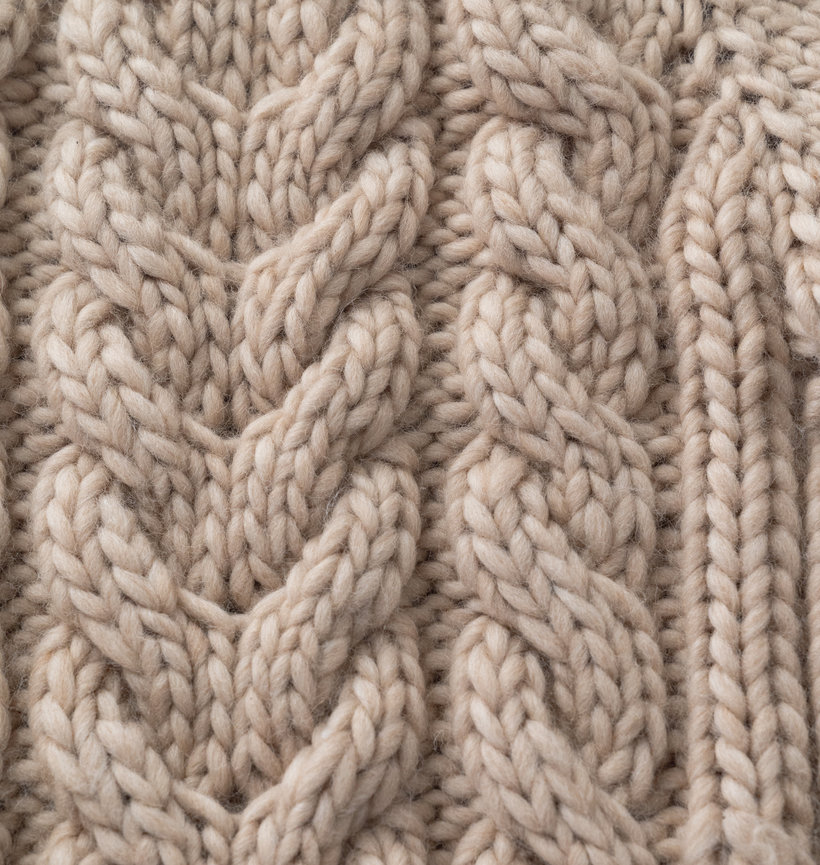
On a cable sweater, the knitting program fixes where the cables sit and which way they cross. Pointelle gets its openwork from stitches moved between needles, and a missed transfer shows up as an opening in the wrong place. Near the neckline, armholes and side seams, cable and pointelle panels switch to solid knit for linking.
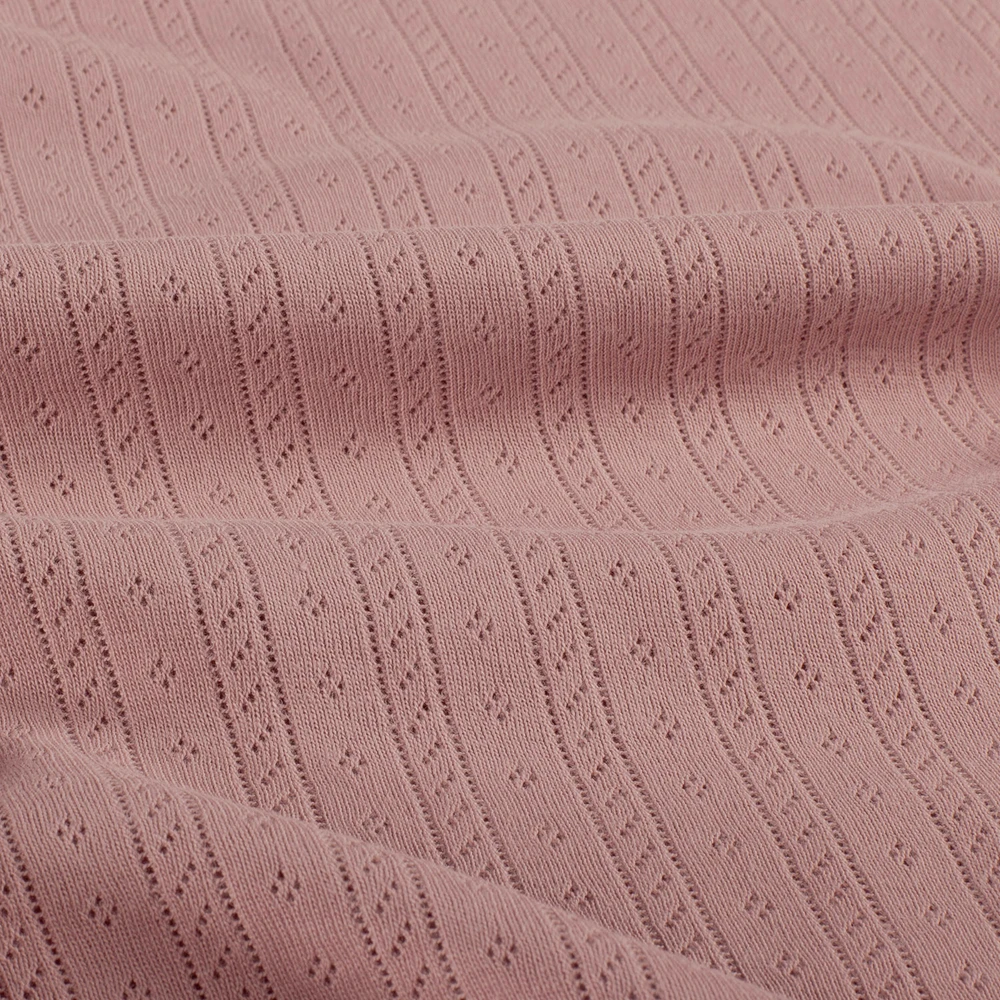
A jacquard carries all its colors across the full row, with the spare yarns held on the back. Intarsia knits color blocks from separate yarns that meet only at the joins. Stripe, jacquard and intarsia styles keep a reference for each yarn color. When one panel mixes yarn types, its width, length and shape get a second check after finishing, because different yarns can shrink by different amounts.
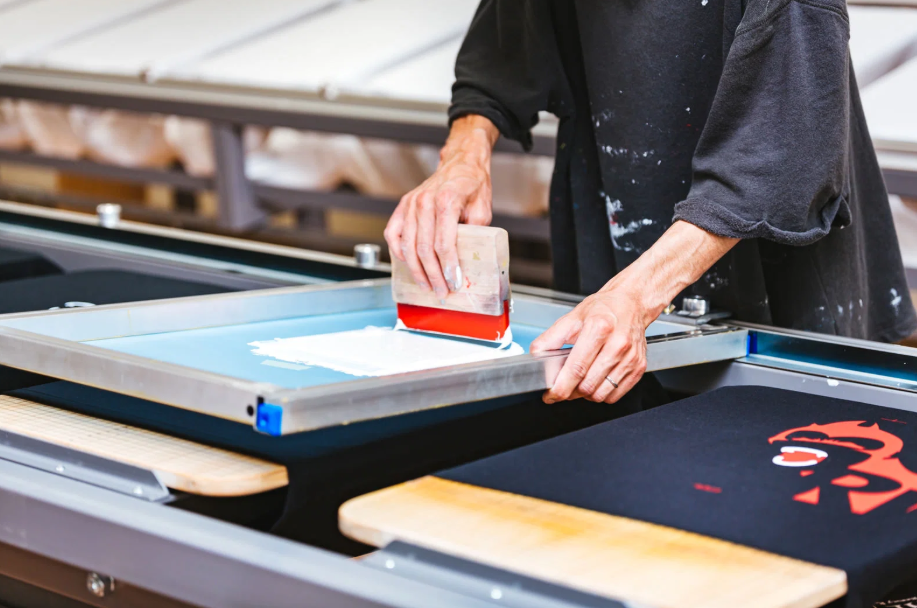
Embroidery and printing carry process minimums, separate from the garment MOQ. Ask for that figure in the quote before you plan a small decorated run.
Sleeves, Cuffs and Hem
How the sleeve joins the body changes both the sleeve’s shape and the fit across the shoulder. Your tech pack should name one of these.
| Set-in | A shaped sleeve cap that fits the armhole |
|---|---|
| Dropped shoulder | A sleeve shaped for the body’s extended shoulder line |
| Raglan | Diagonal edges on body and sleeve that have to match |
The cuffs and the bottom rib hold the sweater in at the wrist and hip. The spec gives each one a finished depth and a relaxed opening or width, plus the length of edge it joins. If a bottom rib pulls the body in harder than on the sample, or a cuff finishes too open, the factory looks first at the rib’s stitch count and density.

Sizing and Measurements
A knitted sweater is graded in the knitting program, where stitch and row counts change from size to size. On a 5-stitch-per-centimeter knit, a 2 cm step in half chest between sizes adds 10 stitches across the front panel.
Tolerances are agreed style by style on the size chart. Garment measurements are taken on the finished sweater, after washing and steaming. Before that, the panels are only measured as panels.
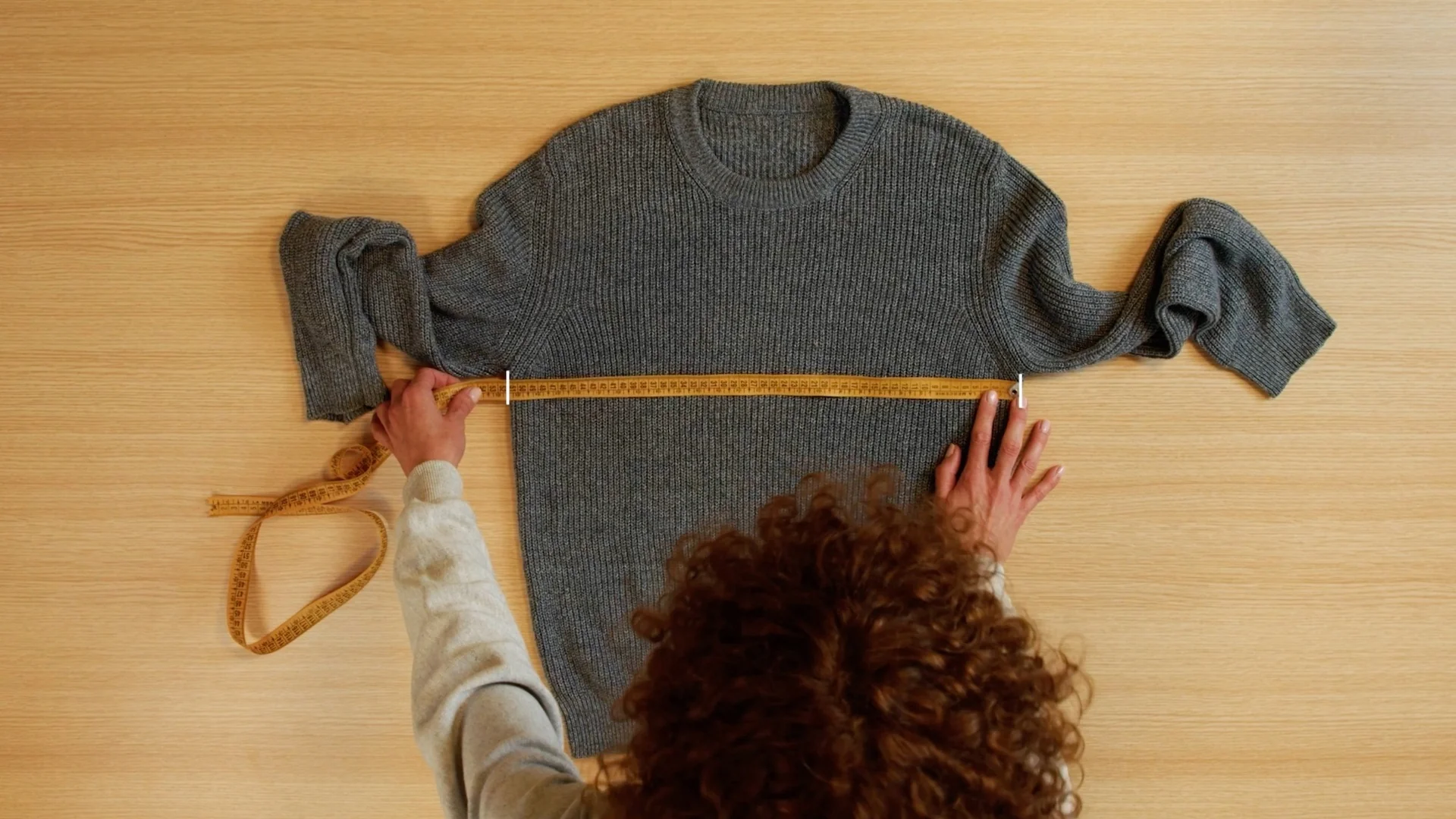
| Measurement | How it’s taken |
|---|---|
| Body length | From the reference point on the size chart down to the hem |
| Half chest | Straight across at the chest line |
| Shoulder | Shoulder point to shoulder point |
| Sleeve length | From the reference point down to the cuff edge |
| Upper arm | Across the sleeve at the bicep line |
| Cuff opening | Across the cuff, relaxed |
| Bottom width | Across the hem, relaxed |
| Neck opening | Across the finished neckline, relaxed and fully stretched |
| Rib depth | Top of the rib to its edge |
What to Check on the Sample
Bulk is knitted to match the sample you approve. Anything you want changed has to go into the knitting program before bulk starts. Plan for the sample’s trip to you and your review, and for another round if the first sample needs changes. Industry-wide, brands average 5–7 sampling rounds before bulk, moving from a proto sample through fit and size-set samples to a pre-production sample made on the production line. Fit samples come in whatever size you request, and your base size is the one to ask for.
Put the sample on a body or a form before you judge it. Does the neckline lie flat, and does it pull over the head without strain? Do the cuffs and hem rib spring back after a stretch? Measure it against your size chart, and feel the knit. Its hand should match the washed knit-down you approved for the yarn.
Check the gauge and density too. A sample knitted at the wrong density can look close and still come out a size off.
Linking and Finishing
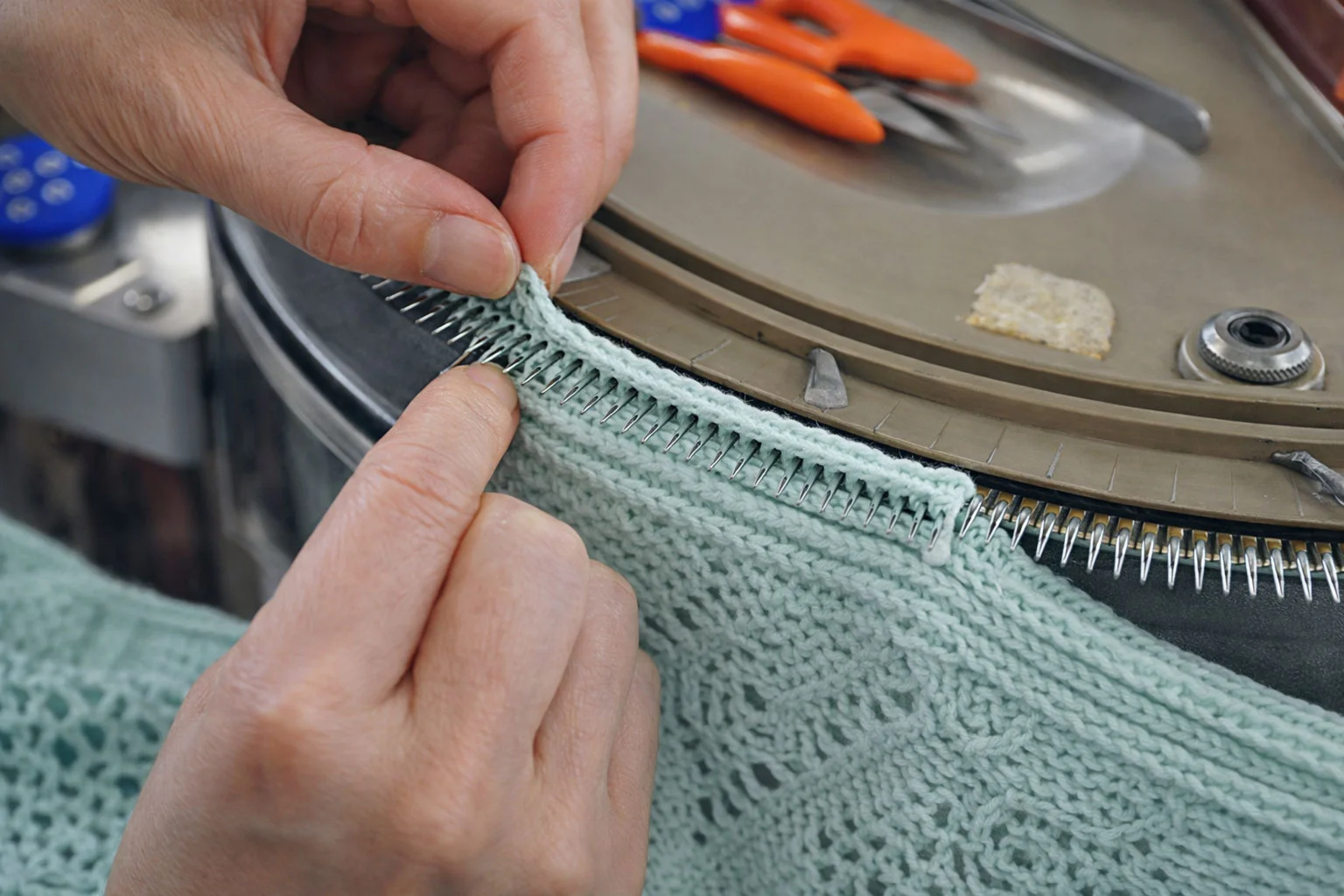
Shaped panels need no cutting. A linking machine joins them loop to loop: each edge loop goes onto one of the machine’s points and is chained to the matching loop of the next piece. The machine’s setup has to suit the garment’s gauge.
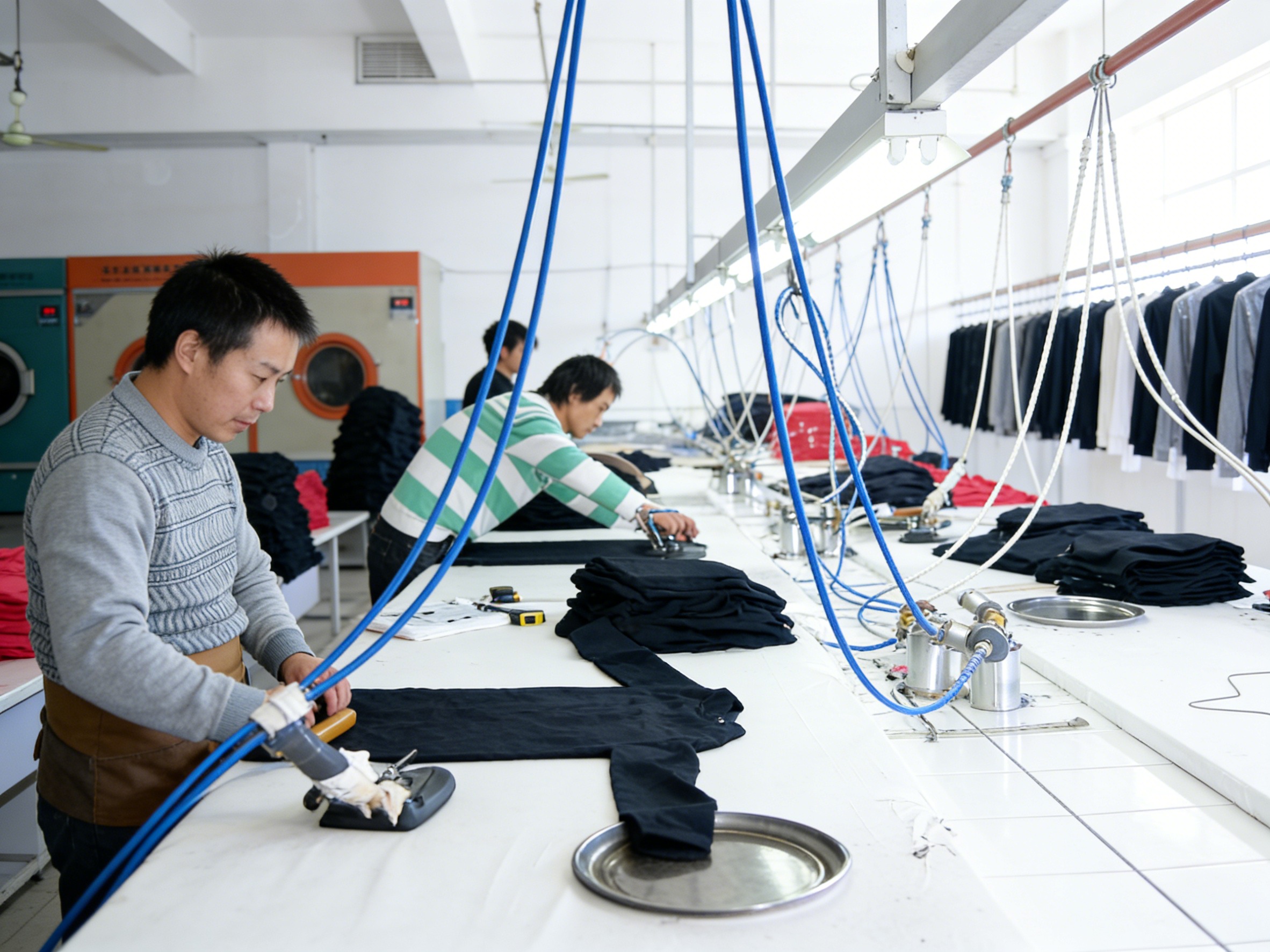
The linked sweater is then washed and steamed on the settings recorded for the approved style. Cardigans follow the same route plus their buttons or zippers, covered on the cardigan manufacturing page.
Shrinkage and Pilling Tests
FashionMe’s knitwear QC covers shrinkage and pilling. It doesn’t apply one limit to every order; your spec sets the limits. A named test method makes them testable.
For shrinkage, a lab can take the wash and dry procedure from ISO 6330, a list of domestic washing and drying procedures for textile testing. The dimensional change is then worked out under ISO 5077. A body that goes from 70 cm long to 67.2 cm after that wash has shrunk 4%. Your spec states the procedure and the most shrinkage you’ll accept in length and width.
Pilling has a separate family of tests. ISO 12945-1 tumbles specimens in a rotating pilling box. The surface is then judged by eye under ISO 12945-4, which covers most woven and knitted fabrics. ISO 12945-2 runs the pilling test on a modified Martindale machine instead. In the US there’s also ASTM D3512, a random tumble test rated from 5 (no pilling) down to 1 (very severe pilling). Pick the method and the lowest grade you’ll accept.
One published benchmark covers both. The 2016 Woolmark AK-1 specification for knitted apparel sets length-shrinkage limits by product category, at 3%, 5%, 8% or 10% after its TM31 wash test. Growth after washing can’t pass 5%. Dry-clean-only knitwear has to stay within 5% either way after three cleaning cycles under ISO 3175. Pilling is tested and reported, with no pass or fail.
Inspection
Made to Order sweaters are inspected one by one. A Stock Match order gets a sample pull under ISO 2859-1, General Inspection Level II, with an acceptance quality limit (AQL) of 2.5 for major defects and 4.0 for minor ones.
| Pieces in the order | Major defects (AQL 2.5) | Minor defects (AQL 4.0) | ||
|---|---|---|---|---|
| Checked | Allowed | Checked | Allowed | |
| 10–25 | 5 | 0 | 3 | 0 |
| 26–50 | 5 | 0 | 13 | 1 |
| 51–90 | 20 | 1 | 13 | 1 |
| 91–150 | 20 | 1 | 20 | 2 |
| 151–280 | 32 | 2 | 32 | 3 |
| 281–500 | 50 | 3 | 50 | 5 |
| 501–1,200 | 80 | 5 | 80 | 7 |
| 1,201–3,200 | 125 | 7 | 125 | 10 |
| 3,201–10,000 | 200 | 10 | 200 | 14 |
On a 40-piece order, inspectors look at 5 sweaters for major defects. One major defect among them fails the pull. Minor defects are counted across 13, and 1 is allowed. Above 90 pieces both kinds are judged on the same sample. A 120-piece order passes with up to 1 major and 2 minor defects in 20 sweaters.
FashionMe doesn’t publish what happens after a failed pull. If it happens, ask for the lot to be held and sorted into good, bad and unsure pieces. The good ones can ship while the bad ones are reworked or remade, and the re-inspection that follows is normally charged to the manufacturer.
On Made to Order, inspection happens at two points. Panels are looked over before linking, while a faulty piece can still be swapped out. Then the finished sweater gets its turn.
Panels before linking, against the knitting instructions
- chest, shoulder and bottom widths
- body length
- armhole and neckline shape
- left-right symmetry
- holes and dropped stitches
- broken yarn
- missed transfers
- stray tuck stitches
- stripe order and motif position
- shade differences between yarn lots
Finished sweaters
- measurements against the size chart
- neckline and shoulder alignment
- open or loose linking seams
- ribs that don’t spring back
- stains
- labels and trims
A sweater that can be repaired goes back to the step that caused the fault, then through inspection again before packing.
Labels
For the US, the FTC requires the fiber content on the label as generic fiber names with percentages by weight, largest first. That’s the composition from your yarn record. The country of origin goes on the front of the label. The company name or its Registered Identification Number (RN) has to appear as well. Care instructions fall under a separate rule, the Care Labeling Rule.
Swapping a Stock Match factory label for yours is allowed. The new label has to keep every required disclosure and show the name or RN of the company that relabels. That company keeps a record of the original label for three years.
Request a Sweater Quote
Upload up to six files of the sweater you want: photos, videos, sketches or a tech pack. Mention the yarn you have in mind, how many you need in each color and how the sweater will be washed. Within 24 hours you get back a tiered quote with a price, MOQ and lead time for each option.