Streetwear Manufacturing
FashionMe makes oversized tees, hoodies, cargo trousers and jeans for clothing labels in 120+ audited factories. Stock Match is for styles one of them already has in production. A new pattern or wash goes through Made to Order and starts with a sample.
Made to Order production at 300–500 pieces costs from $3.50 for a tee up to $16 for jeans. Pattern and sample are billed separately. From 1,000 pieces the price per piece comes down.
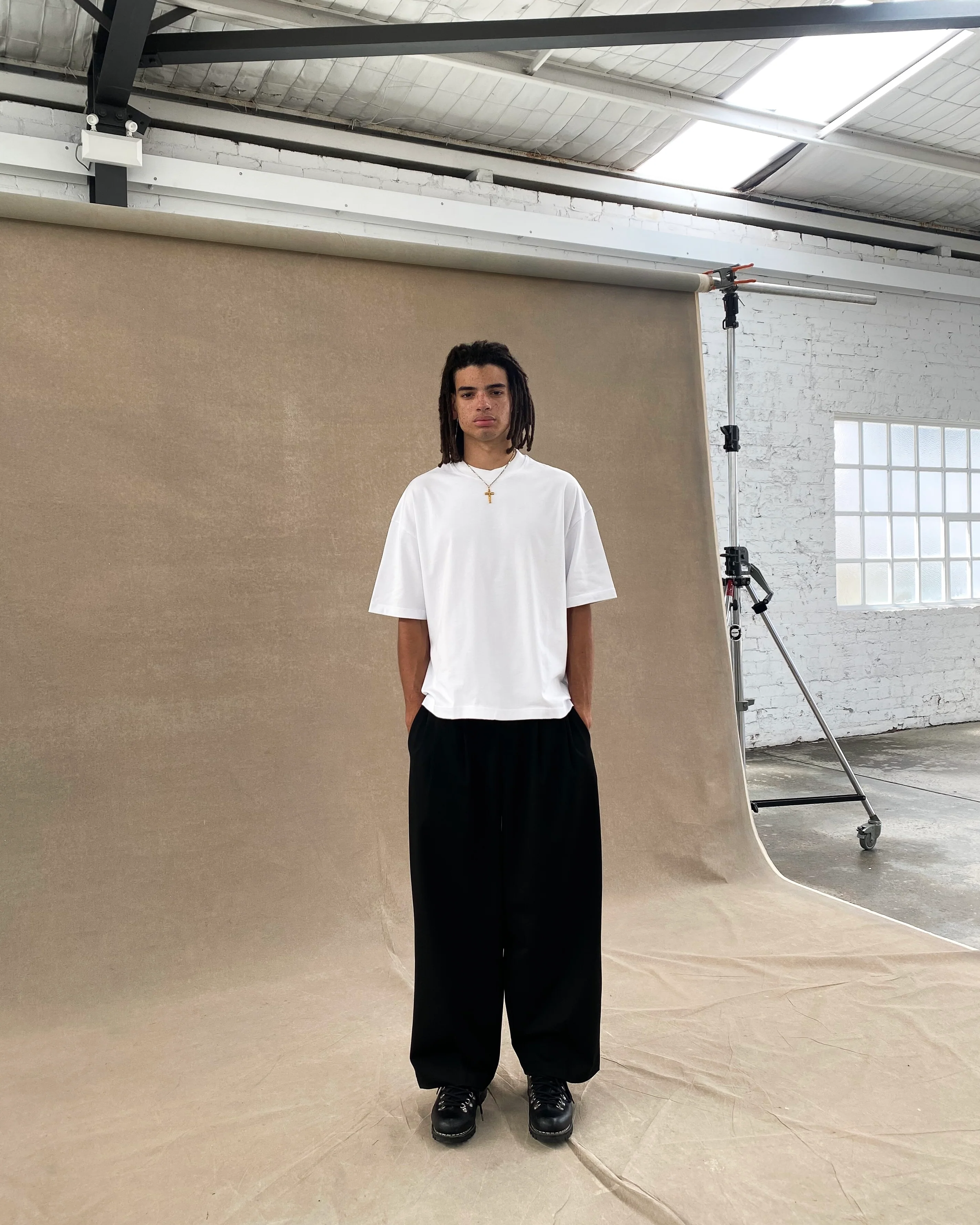
The Measurements That Set the Fit
A Made to Order style can start from a full tech pack or from nothing more than a photo or a garment you like. If you send a garment, list the changes you want with it.
An oversized tee gets its look from a wide chest and from a drop-shoulder seam that sits partway down the arm. Sleeve length is measured from that lowered seam. For a cropped look, the body length comes down.
Hoodie specs add the height of the hood and the width of its opening. On trousers of any kind, give the front rise and the back rise as two separate figures.
- Chest width
- Body length
- Shoulder drop
- Sleeve length
- Hood height
- Front & back rise
- Thigh & knee
- Leg opening
Fabric Weight by Garment
Tees come in 180–240 gsm combed cotton from stock, or anywhere from 160 to 280 gsm on Made to Order.
Hoodie fleece runs 350 to 500 gsm with a loopback or brushed back. Sweatsuit sets use the same cloth as the hoodies, and their zip-up styles come in a lighter French terry of around 220–280 gsm.
Ordering a Wash or Garment Dye
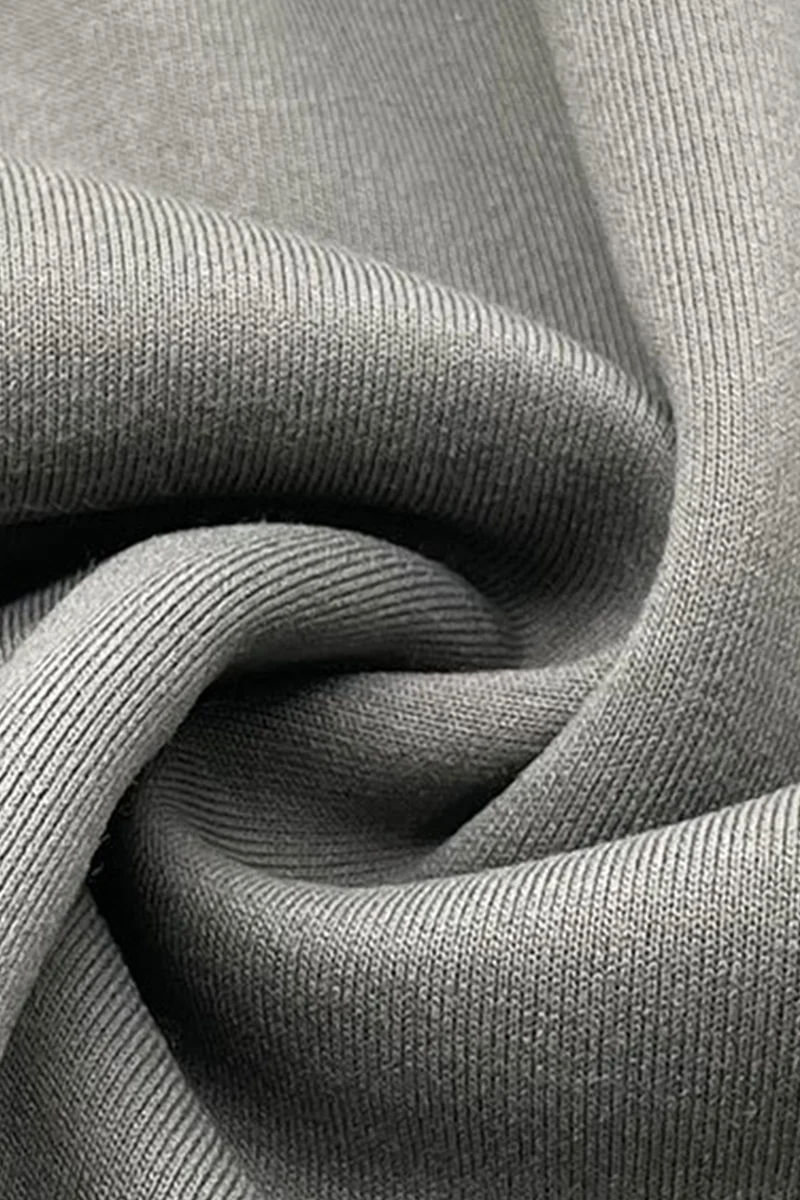
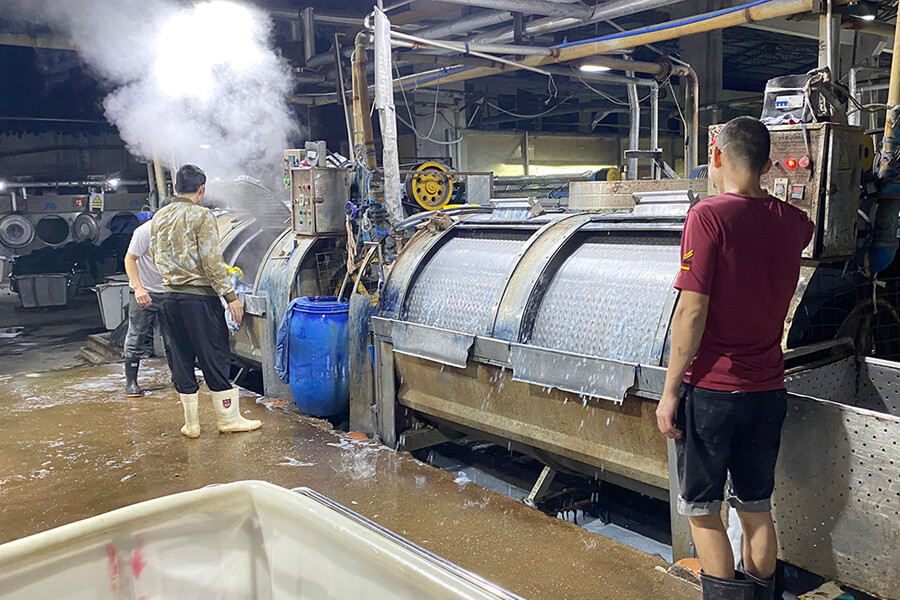
FashionMe can garment-dye streetwear or give it a stone wash, an acid wash or a vintage sun-fade. On hoodies, the wash you choose is guaranteed from Made to Order volume up. A garment-dyed or vintage piece bought through Stock Match has to come from what a factory is already producing.
Because washing changes a hoodie’s shade and measurements, the sample you approve is the washed one. Garment dyeing usually adds a week or two to production.
Speccing Cargo Trousers
Every cargo pocket on the spec needs its size and a position measured from a fixed point, such as the side seam or the waistband. Pocket height and knee placement only show properly when someone wears the sample.
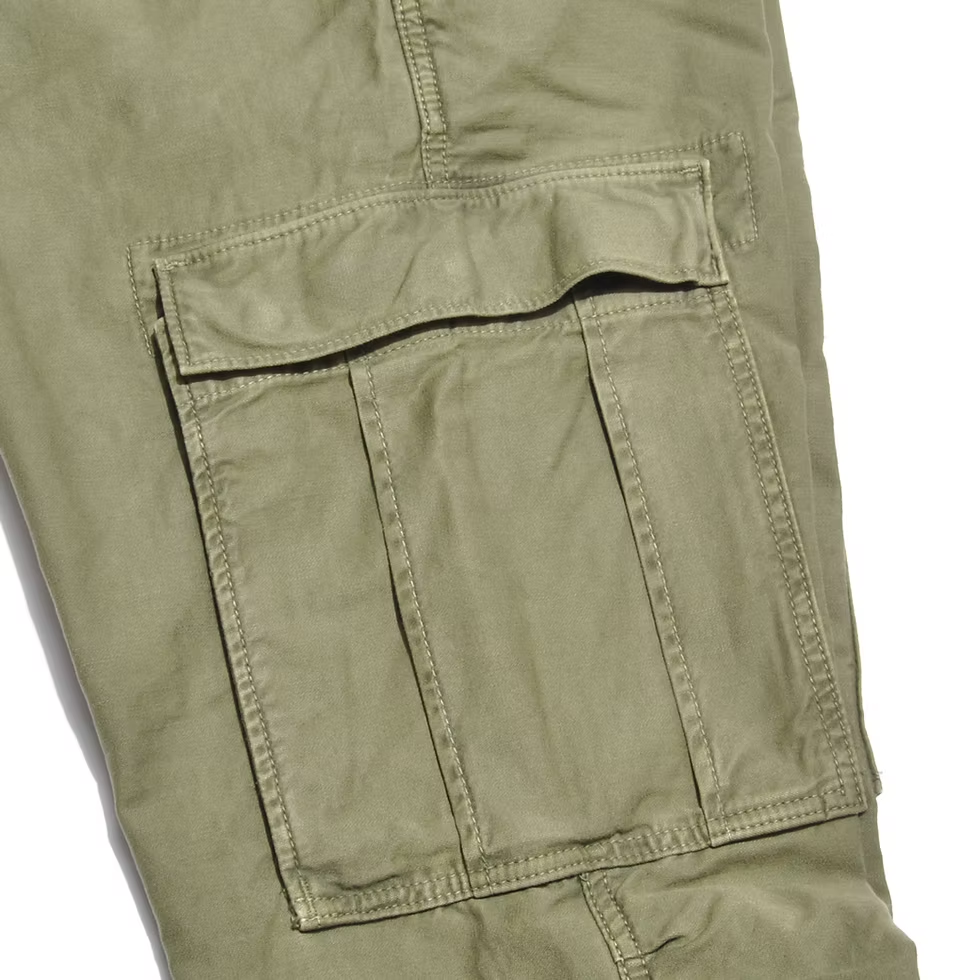
- Pocket width and height
- Bellows pleat depth
- Flap, cut as its own piece
- Zip length
- Pocket bag size
- Knee darts for articulated knees
- Cloth
- Fabric weight
The Jeans Spec
Stock jeans are sold in the sizes and washes a factory has at the time. A change to the garment itself, from the rise to the wash, makes them a Made to Order style.
Wide-leg and flared jeans are shaped by the thigh and knee measurements relative to the leg opening.
How much the finished jeans shrink depends on the cloth: sanforized denim, which has been pre-shrunk, loses about 2–3% in the wash, and unsanforized denim as much as 10%. Custom hardware, a denim lot woven to order or a special finishing process may bring a separate supplier or process minimum.
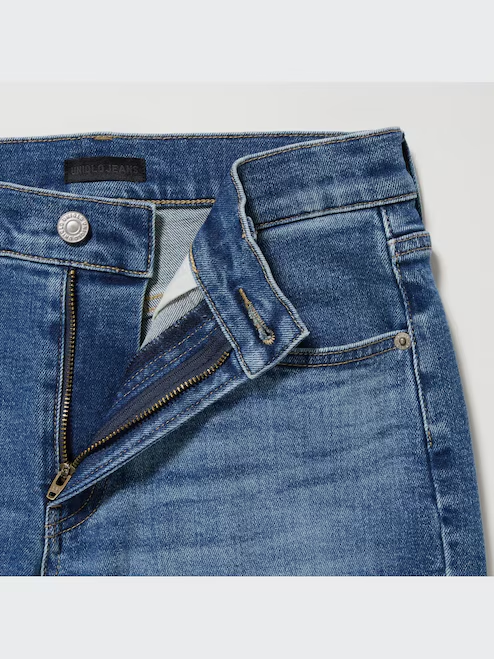
- Denim weight (12 oz ≈ 407 gsm)
- Sanforized or not
- Stretch content
- Wash
- Zip or button fly
- Tack button
- Rivets
- Back pocket stitching
Printing Large Graphics
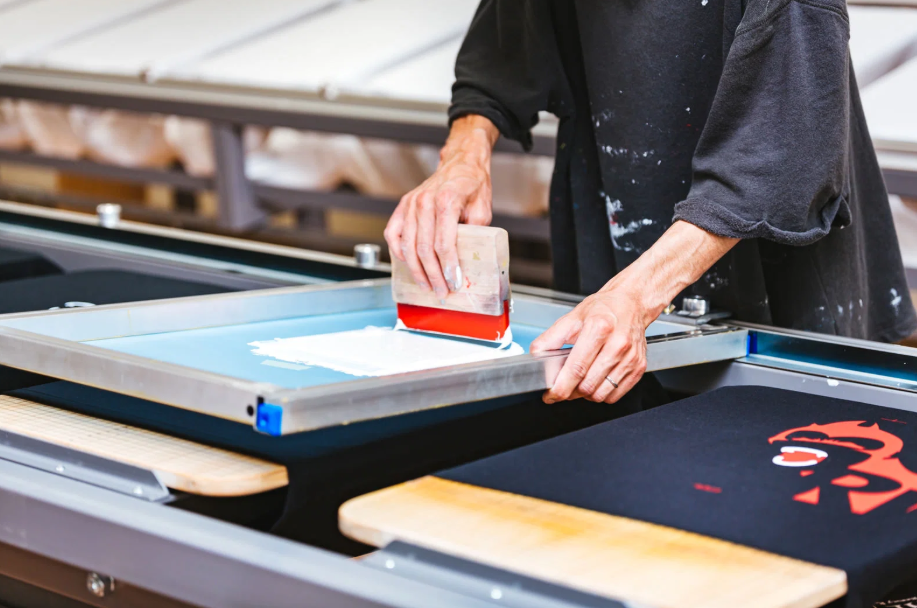
Printing is done in-house by screen or DTF. All-over designs need Made to Order volumes.
Screen printing uses one screen per color per print location: a five-color back graphic needs five. Across the industry a screen typically costs $30–40 in labor and materials. DTF skips that setup, and on large solid prints in particular you can feel the thin film it leaves on the fabric.
Check every graphic’s finished size against the back of your smallest size. Mark the zipper line on zip-hoodie artwork.
Embroidery and 3D Puff
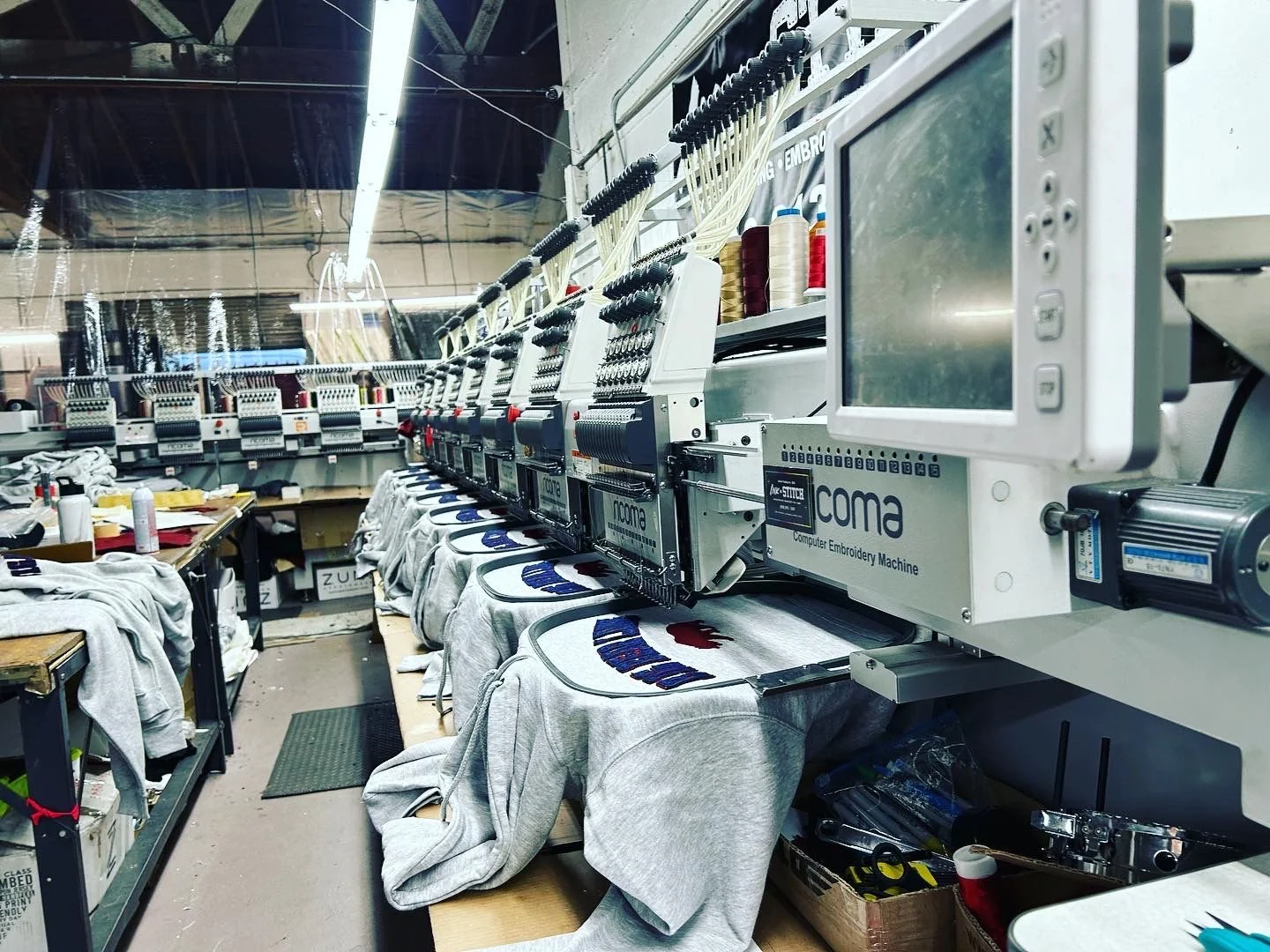
FashionMe does flat and 3D puff embroidery in-house. In 3D puff, the stitches go over a layer of foam that lifts the design off the garment. Puff holds up best with satin stitches at least 3 mm wide; at 2 mm it works on some designs and flattens the foam on others.
Include thread colors and placement with the embroidery artwork. A large back piece is worth sampling at full size on the bulk fabric.
The Sample Round
You get one or two rounds of revisions on the sample, and nothing goes into production until you approve it. Grading across your size range is part of Made to Order.
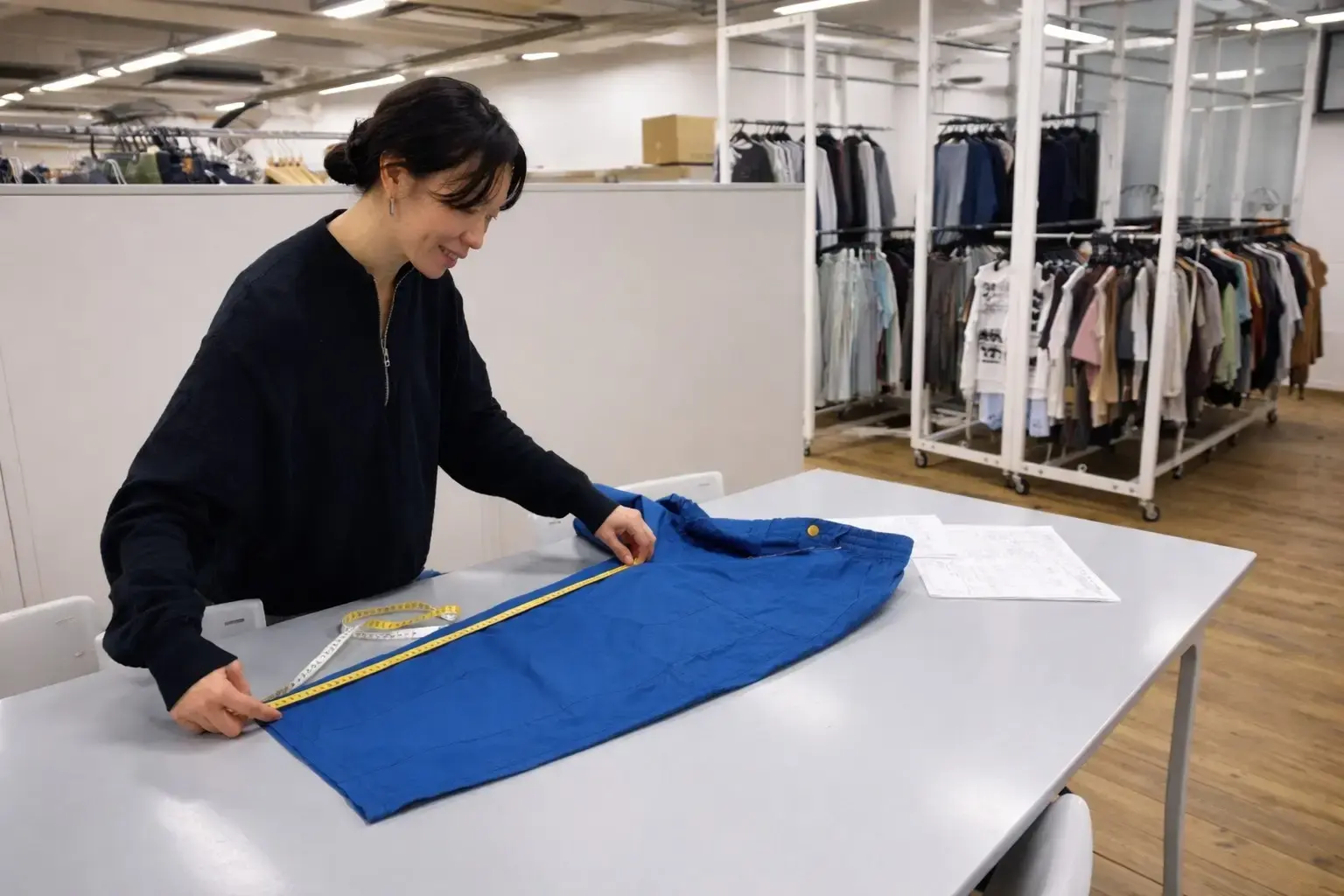
Put tolerances on the measurements before the sample arrives. A tolerance sets how far bulk can drift from the approved sample; on a knit chest, ±0.75–1.5 cm is common.
Stock Match or Made to Order
Tracksuits count by the set on Stock Match: ten jackets with their matching pants meet the 10-piece minimum.
| Item | Stock Match | Made to Order |
|---|---|---|
| Minimum | Stock Match: 10 pieces per style | Made to Order: 50 pieces per style; tees can split that across colorways, tracksuits need 50 per color |
| Timing | Stock Match: 7–10 days | Made to Order: 7–12 days sampling, then 15–20 days production |
| What you can change | Stock Match: Labels, tags, packaging and extra QC; the garment itself stays as the factory makes it | Made to Order: Pattern, grading, fabric and wash |
| Color | Stock Match: Colors the factory has available | Made to Order: Your own color, once it clears the minimum at the mill or dye house |
| Inspection | Stock Match: A sample pull; full inspection is $0.18 a piece | Made to Order: Every piece |
| What you pay | Stock Match: The supplier invoice plus a sourcing fee of 12% under $5,000, 9% to $20,000 and 7% to $50,000 (5% above, on a custom quote); freight and duties at cost | Made to Order: A pattern and sample fee, then a price per piece |
Made to Order prices
| Garment | Pattern and sample | Per piece, 300–500 pcs |
|---|---|---|
| T-shirts | $80–150 | $3.50–6.00 |
| Hoodies and sweatshirts | $120–220 | $8.00–14.00 |
| Jeans and trousers | $150–280 | $9.00–16.00 |
Branding and CMT Orders
If you already buy your own fabric, FashionMe can cut and sew it for you as CMT production. Whatever you supply has to match the approved sample and the production spec.
Stock Match charges for relabeling and branded packaging at the prices below; Made to Order includes them.
| Stock Match add-on | Price |
|---|---|
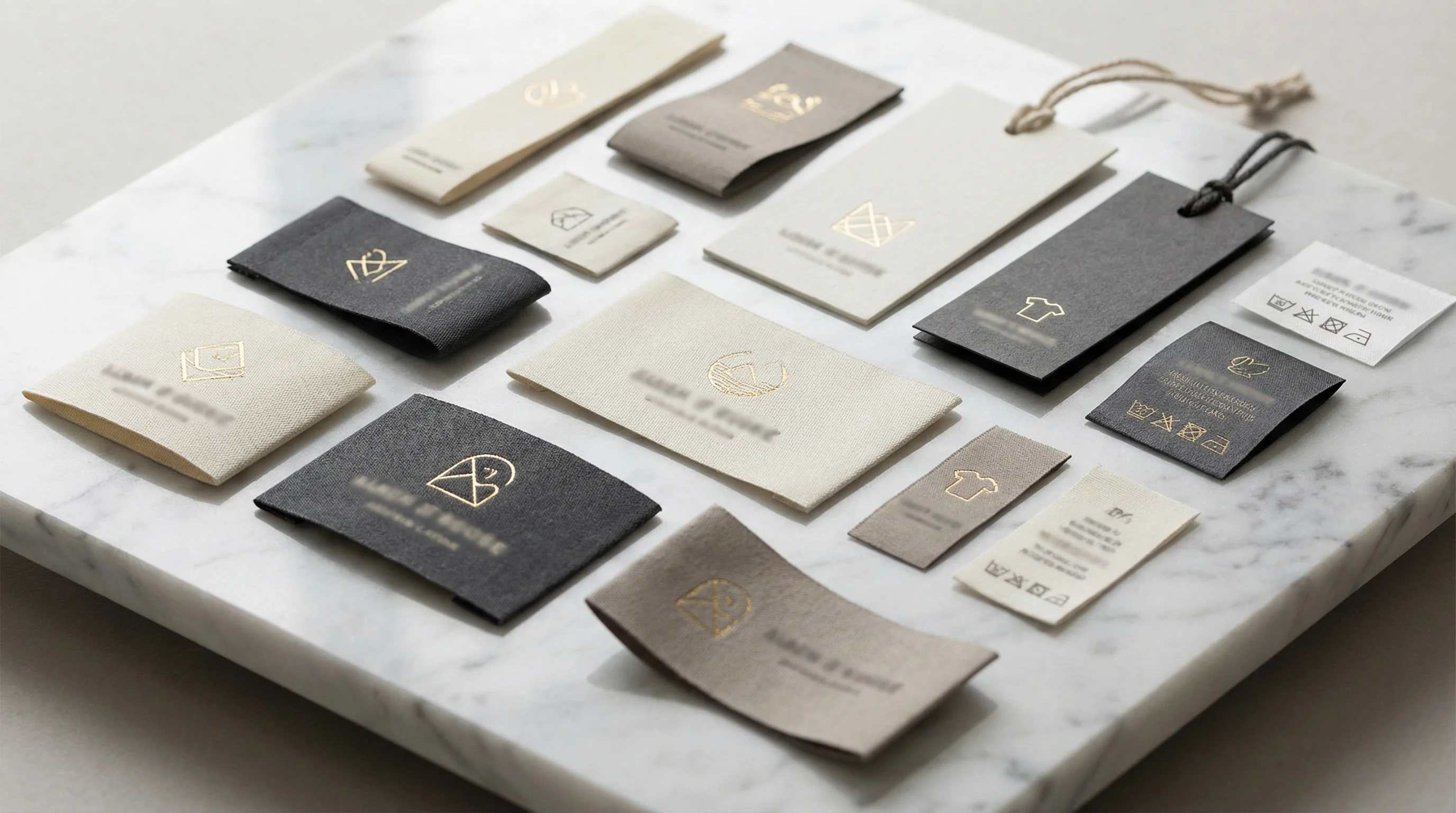
| Your own neck label (from 50 pieces per style) | $0.35 a piece |
| Hang tag | $0.25 a piece |
| Branded polybag, mailer or box | $0.45 a piece |
Every order includes a Launch Kit: six images made from your batch’s QC photos (five for listings, one creative) and a video of about 10 seconds.
Checking the Bulk Before It Ships
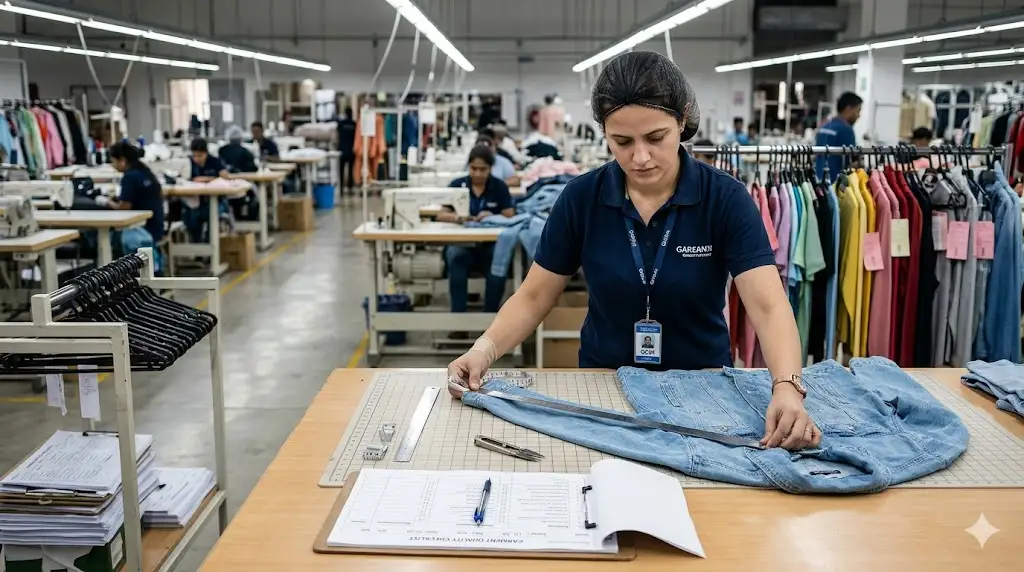
One FashionMe case study covers a streetwear label that sold more than 5,000 units a season and found defects in over 4% of what it received. Most were misregistered prints, and nobody caught them until the shipments had reached the US. Once every unit was checked at the factory for print registration and stitch quality, the defect rate across the next three runs fell to 0.4%.
Before shipment, FashionMe sends photos of the goods from your batch for you to approve.
Send the Styles You Want to Make
Upload up to six files and a tiered quote comes back within a day. It lists price, MOQ and lead time by option. Printing and embroidery appear on it as a cost per garment. List every style in a mixed drop with its colors and quantities; fabric weight and wash help where you know them. Any artwork has to be yours: FashionMe won’t copy another label’s logos or graphics.
Request a streetwear quote