Types of Dresses: How to Recognize 20 Dress Styles
Dresses are worn for work, everyday errands, parties, and formal events. The cut and fabric determine how a dress sits on the body, including how the skirt moves around the legs. Its neckline and hem length also affect the proportions of a complete outfit.
The position of a waist seam changes the proportions of a dress. Below it, fabric can fall close to the legs, gather into soft folds, or open into a wide skirt.
Several dress names can describe one garment, such as an A-line halter midi. Its skirt widens toward a hem between the knee and ankle, with fabric rising from the bodice to fasten around the neck.
1. A-Line Dress
The red dress below gets wider from the upper body to the hem, drawing the outline that gives an A-line dress its name. The flare can begin near the shoulders or lower down around the waist. This COS mini carries it through a continuous front, with a rounded neckline above the broad skirt.
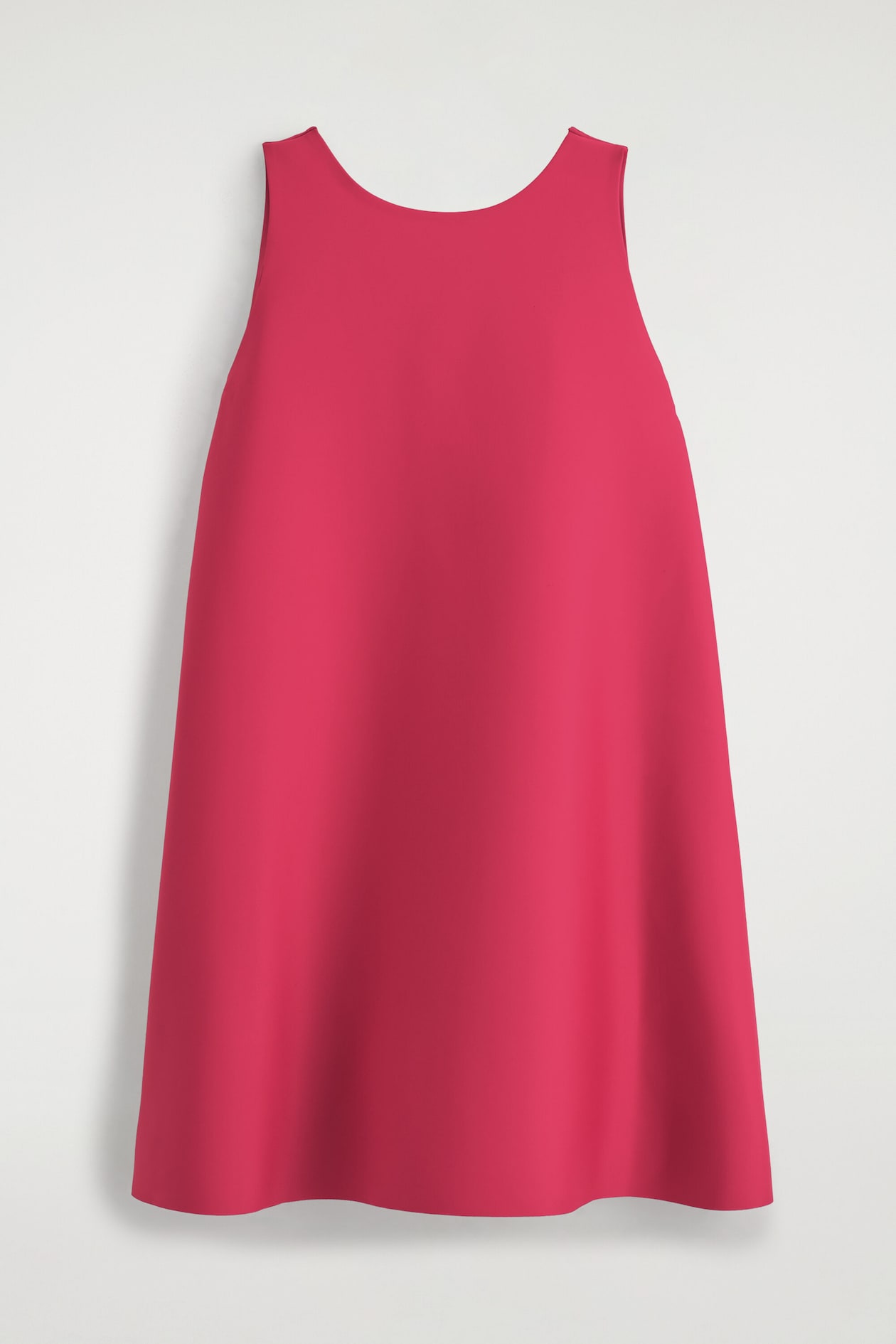
The same outline takes different forms in different fabrics:
| Fabric | How the flare falls |
|---|---|
| Dense scuba | Supports a skirt that stands away from the legs, with a rounded lower edge. |
| Cotton poplin | Forms distinct folds as the skirt opens, particularly around gathers and pleats. |
| Soft crepe | Drapes into narrower vertical folds, bringing the fabric closer to the body between them. |
2. Shift Dress
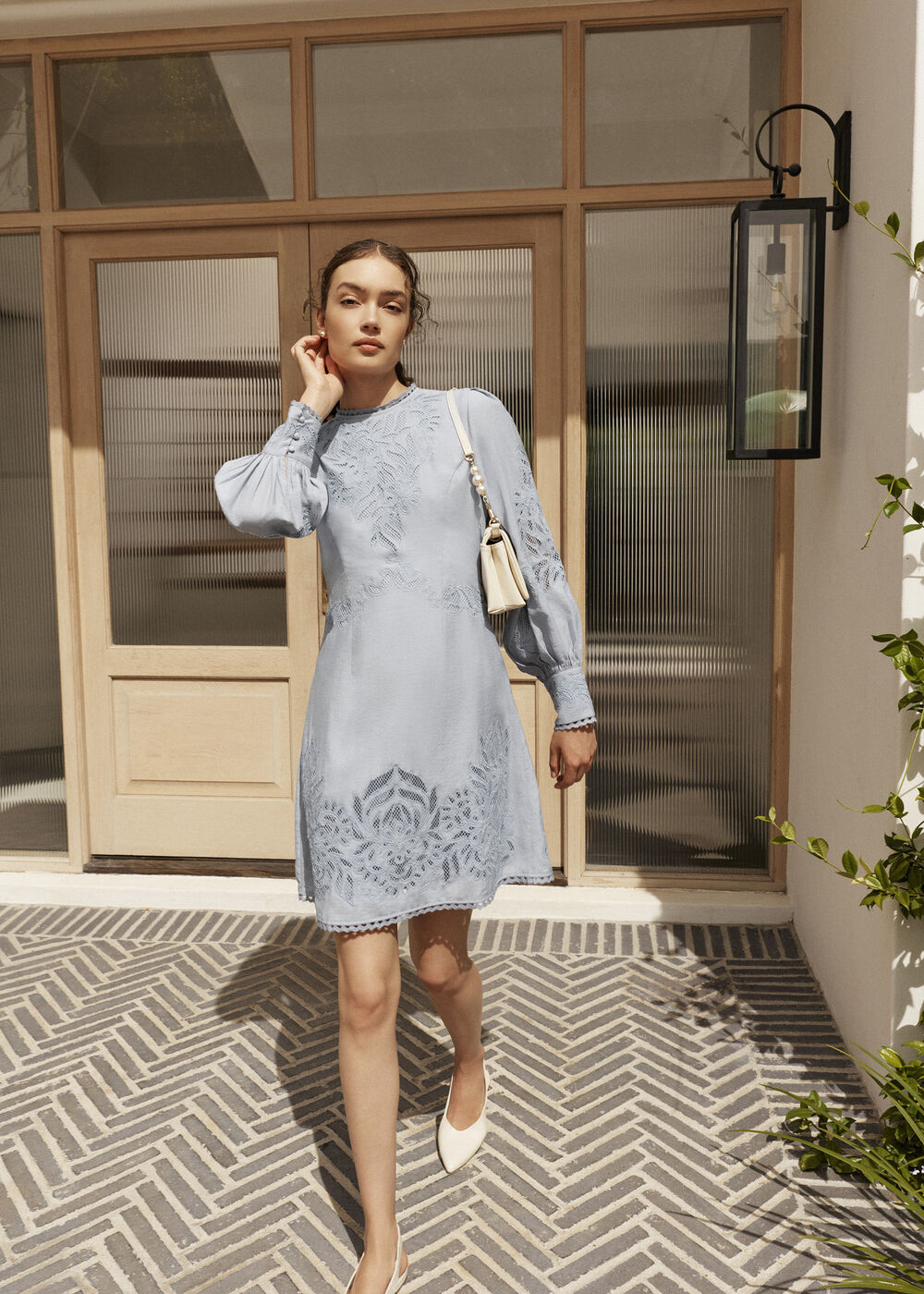
A shift hangs fairly straight from the shoulders, with room around the waist. Its finished length is usually given from the shoulder or side of the neck to the hem, covering the whole body of the dress.
Hobbs lists the Witley dress at 92.5 cm from the side neck point to the hem. That measurement can be compared with a dress measured from the same point. Where it falls on the leg depends on the wearer’s height and proportions.
The embroidered motifs sit close to the scalloped hem. Shortening a dress with decoration in that position also changes how much fabric remains below the pattern.
3. Sheath Dress
A back slit gives the narrow skirt of a sheath dress room for a walking stride. The rest of that skirt follows the hips closely. Above it, darts and curved seams shape the fabric over the bust and into the waist.
Taking in a woven sheath at the waist means reshaping the side or panel seams through that area. The new seam line tapers gradually into the original stitching toward the hip, where the skirt needs room to hang from the fullest part of the body. Stretch crepe also has some give as the wearer moves.
Sitting raises the skirt and draws fabric across the hips. The bust and upper back also need enough room for the arms to reach forward.
The panel seams of this Lauren crepe sheath continue down its fitted body. A narrow belt follows the waist beneath the folded neckline.

4. Wrap Dress
A wrap dress opens at the front so the fabric can be brought across the body and fastened at the waist. An inner tie, button, or small opening at the side holds the first panel in place as the outer panel crosses over it. Bringing the ties around the waist secures the overlapping fabric.
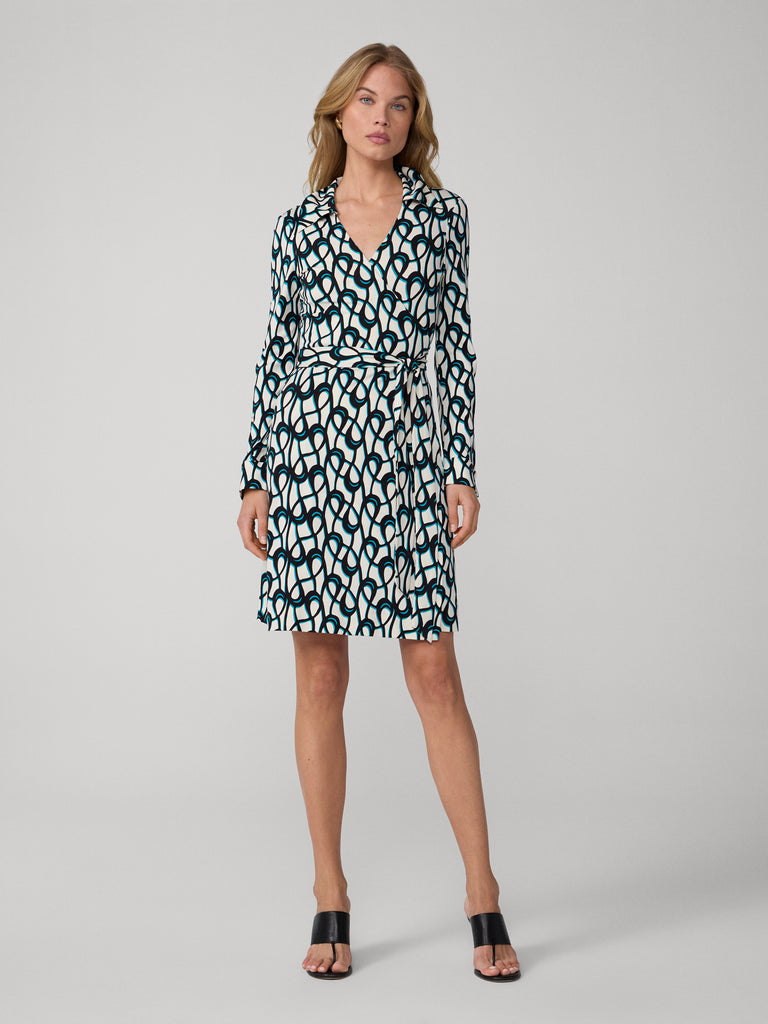
Pulling the ties draws the panels toward the waist, changing the amount of overlap and the depth of the neckline as the fabric settles. Soft folds collect beside the tie on the silk jersey DVF Jeanne dress, whose collar follows the crossed front. The designer’s earlier work includes a wrap dress dated 1974 in MoMA’s collection.
In a faux-wrap construction, a seam secures the crossed front as part of a bodice that opens with a zipper, buttons, or stretch fabric. The sewn bodice sets the finished waist measurement.
5. Shirt Dress
A roomy sweater in a fine knit layers over a cotton shirt dress with space for folds at the waist. Pulling the collar over the sweater’s neckline keeps it visible around the face. The dress’s skirt extends below the knit.
The dress extends the construction of a button-up shirt through the skirt, with a placket that can run toward the hem. Buttoned cuffs finish many long-sleeved versions. The Everlane cotton midi below has pleats that draw the waist inward before the skirt opens out.
Worn on its own with leather sandals and a canvas tote, that pleated waist remains visible. A belt gives a straight-cut shirt dress another option: it gathers some of the loose fabric into the waist, leaving folds above and below the fastening.

6. Slip Dress

A slip dress has the fine straps and light, fluid body of a lingerie slip. Descriptions often add words such as silk, satin, and bias-cut. Each supplies a different piece of information about the garment.
The Bec + Bridge Maison mini uses viscose-and-silk crepe de Chine, a lightweight fabric with a fine texture. Silk is a fiber that can be woven into crepe de Chine or other fabrics, including satin. A satin weave produces the smooth, light-catching surface often seen on slip dresses.
Bias cutting concerns the direction of the pattern pieces. Placing them diagonally across the grain helps a woven fabric drape around the body. Madeleine Vionnet developed dresses around this effect in the early 1920s, as documented by the V&A. A product description will usually state when a modern slip uses that cut.
Here, black boots reach almost to the knees beneath the short brown skirt. Their smooth leather repeats in the handheld bag. Lace marks the neckline and hem, keeping the lingerie details visible across the outfit.
7. Bodycon Dress

The modal rib of this SKIMS dress follows the waist and hips from fine shoulder straps to a long hem. That close fit is what bodycon describes. Stretch allows many bodycon dresses to follow the figure through movement. The cut is made in several lengths and sleeve shapes.
Fine jersey follows the surface beneath it closely. A slip worn under the dress provides a continuous layer over underwear seams and waistbands, with a close fit that keeps its fabric near the body. The edges of the slip sit within the dress’s neckline and hem.
8. Fit-and-Flare Dress
The fitted bodice of a fit-and-flare dress meets a full skirt at the waist. As that skirt widens toward the hem, it can also form an A-line outline.
The skirt’s width can be built in several ways.

- Gathers draw a wide piece of fabric into the waist seam, producing small folds that spread down the skirt.
- Pleats fold the extra width into defined sections. Each pleat opens as the skirt moves.
- A circle skirt is cut around a curved waist opening, allowing the fabric to spread into a sweeping hem.
A short dress with a fitted waist and especially full skirt is often called a skater dress. Floral stripes run through the bodice and skirt of the Boden midi pictured.
9. Empire-Waist Dress
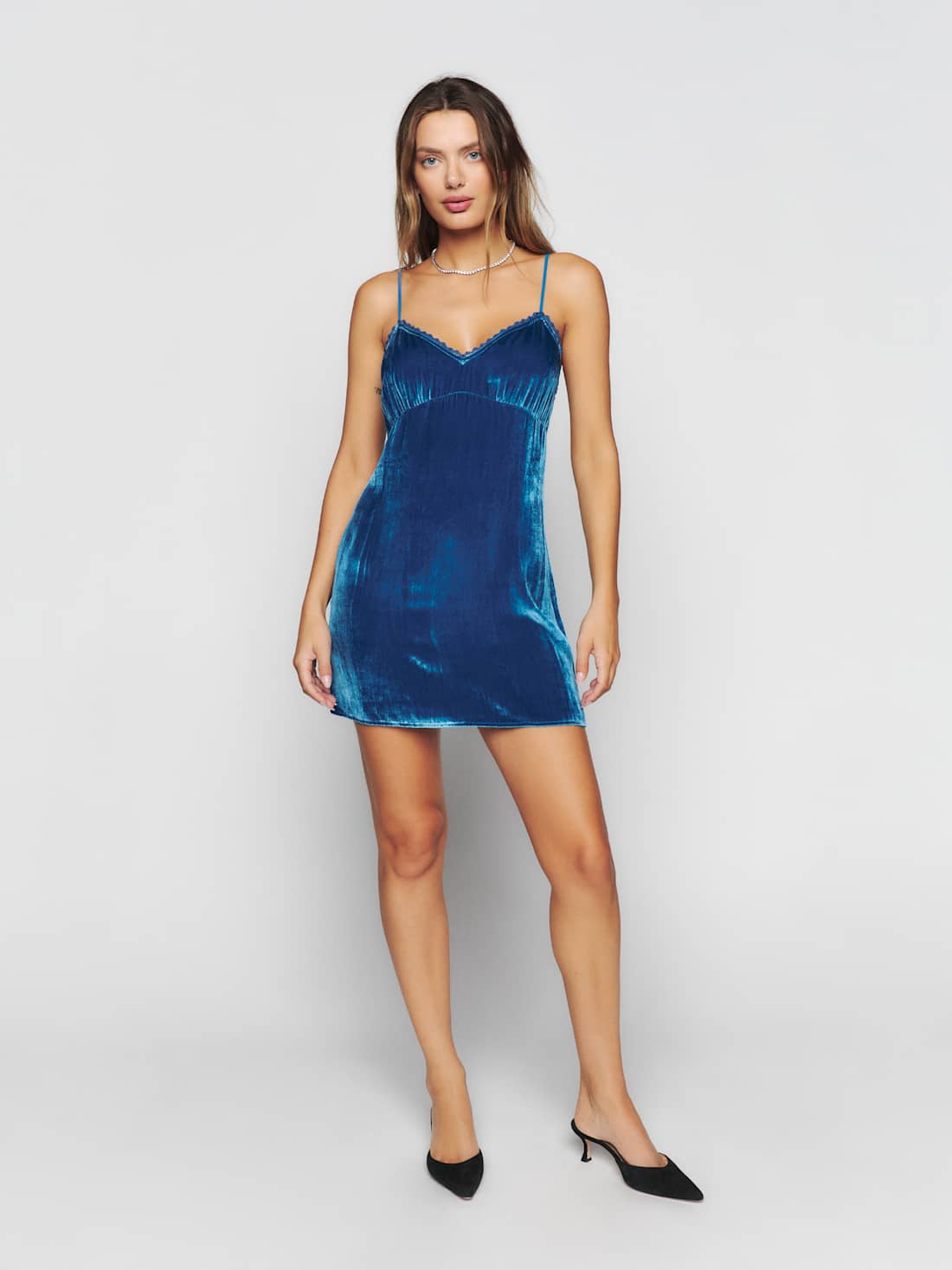
The underbust seam on a strapped empire-waist dress rests against the ribcage. Adjusting the straps positions that seam beneath the bust, with the bodice supported from the shoulders.
This high joining line is the empire waist. Most of the dress’s length falls from it, including the fabric covering the lower torso.
Cup depth comes from the bodice pattern. On Reformation’s Laine mini, gathers rise from a curved seam to create that depth in the velvet cups. The seam also joins the bodice to the smooth front of the skirt.
10. Drop-Waist Dress
Lowering the point where bodice and skirt meet gives more of a dress’s length to the upper body. On a drop-waist dress, that junction sits below the natural waist, often around the upper hips.
Fabric gathered into that seam opens around the upper hips. Pleats organize the fullness into folds that can extend down a long skirt. A short ruffle attached at the dropped seam can form the lower portion of a mini. The bodice may hang loosely from the shoulders into the join.
The fitted bodice and narrow skirt of Reformation’s Elina dress use the low junction in a close column shape. The front seam dips downward, extending the bodice toward the center of the hips.


11. Babydoll Dress
The black babydoll dress has a gathered skirt that starts high under the bust and finishes at the upper thigh. Textured matelassé holds the fabric outward around the hips, with short sleeves adding volume at the shoulders. An empire waist can form part of the same cut. In Cecilie Bahnsen’s Britney dress, the raised floral pattern is visible across the black surface. Socks and small flat leather shoes carry the color down to the feet.
12. Smock Dress
Cotton hangs from the gathered neckline of Damson Madder’s Noemie mini, leaving room around the waist and hips. This loose body is characteristic of a smock dress. A yoke can also hold gathers across the chest, releasing the fabric into the skirt. Noemie comes with a removable tie that can gather the body at the waist.
Smocking refers to rows of stitching that gather fabric into a textured area. It can sit across a bodice, at a cuff, or in a panel at the back. Elasticated versions allow the stitched area to expand. A dress described as a “smocked sundress” may therefore have a close, stretchy bodice above a full skirt.

13. T-Shirt Dress
The black T-shirt dress, ballet flats, and tan tote form a complete daytime outfit. Cotton jersey extends the construction of a tee into the long, loose body of the dress. The roomy upper body has a V-neck and sleeves reaching toward the elbows.
The tote hangs beside the skirt, its dark handles and edging picking up the black of the flats. A slit opens the dress around one leg, giving the straight midi hem room for a stride. The flats keep the ankles visible below it.
Canvas low-tops and short socks also work with the midi length. A small crossbody bag worn at the hip leaves both hands free.

14. Sweater Dress
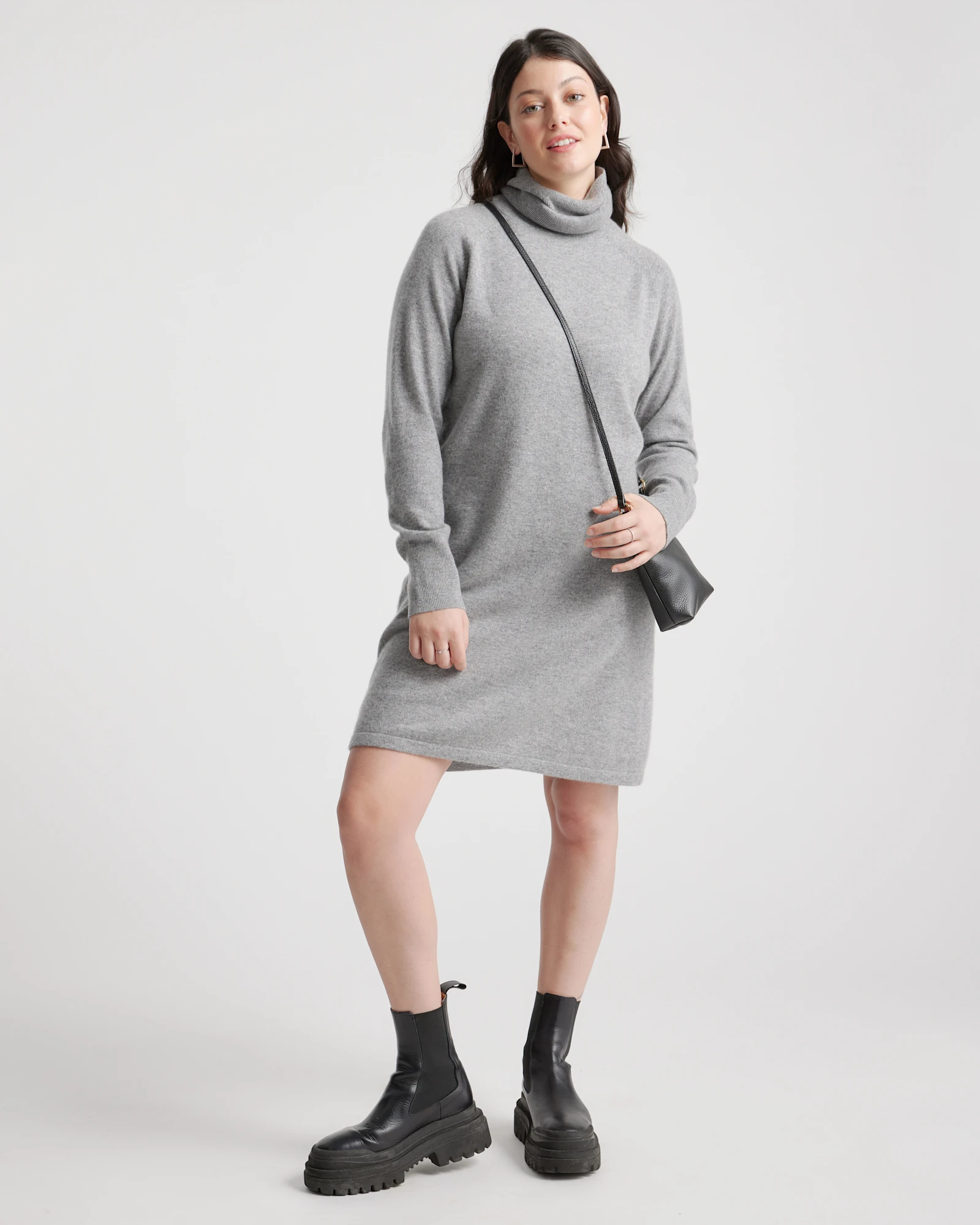
Folded storage supports the weight of a sweater dress across its long knitted body. Ribbing, cables, or plain knitting can continue from the neckline to the hem.
Yarn and stitch density determine its thickness. Fine cotton knitting produces a light dress for mild weather. The Quince dress pictured uses cashmere, with a folded turtleneck and ribbed cuffs.
Black boots and a small crossbody bag accompany its short grey skirt. Tall boots extend coverage up the legs. A long coat covers the dress and some of the area below the hem; its sleeves need room for the knitted sleeves inside.
15. Halter Dress
The back view supplies useful information when choosing a halter dress. Fabric may cover the upper back, cross it in straps, or leave it open down to the waist. Those details determine where an undergarment or another layer can sit.
The halter fastening goes around the neck, leaving the shoulders exposed. A tie, clasp, or continuous band can secure a high, V-shaped, or draped cowl neckline.
The cobalt Bec + Bridge Charlize dress has an open back. Its gathered front panels continue into draping at the waist, with an inbuilt bodice beneath the mesh outer fabric for support.


16. Off-the-Shoulder Dress
A pendant rests against the ruffled edge of this brown dress, below the exposed collarbones. The neckline crosses the upper arms beneath the shoulder points. This is the off-the-shoulder position, and it can be formed with folded fabric, gathered elastic, or a shaped bodice.
Sleeves move with the arms, carrying any attached neckline fabric upward with them. The long, sheer sleeves on the Self-Portrait dress gather into cuffs, continuing the small folds in its crinkled fabric. Some off-the-shoulder dresses use separate sleeves, each fitted around the upper arm as an individual piece.
17. Blazer Dress
Six bright buttons run in two columns down this black blazer dress. Its peaked lapels lead up to lightly padded shoulders, where the long sleeves are set into the body. The short skirt continues below the jacket-style fastening.
The Good American dress stocked by Reiss is made from stretch ponte knit. Its tailored outline comes from the shaped body, lapels, and shoulders.
Below the waist, the overlapping front panels also form the skirt. An internal fastening can hold the underlapping panel against the body as the front is buttoned across it.

18. Sundress
Sundresses come in mini, midi, and maxi lengths. The name describes warm-weather clothing, often with an open neckline and a light skirt. The length word locates the hem:
| Length | Where the hem falls |
|---|---|
| Mini | Above the knee, often around the thigh. Most of the legs remain visible beneath the skirt. |
| Midi | Below the knee and above the ankle. The gap between the hem and the shoes varies with the dress and the wearer’s height. |
| Maxi | Around the ankle or near the floor. Shoe height affects how far the skirt clears the ground. |
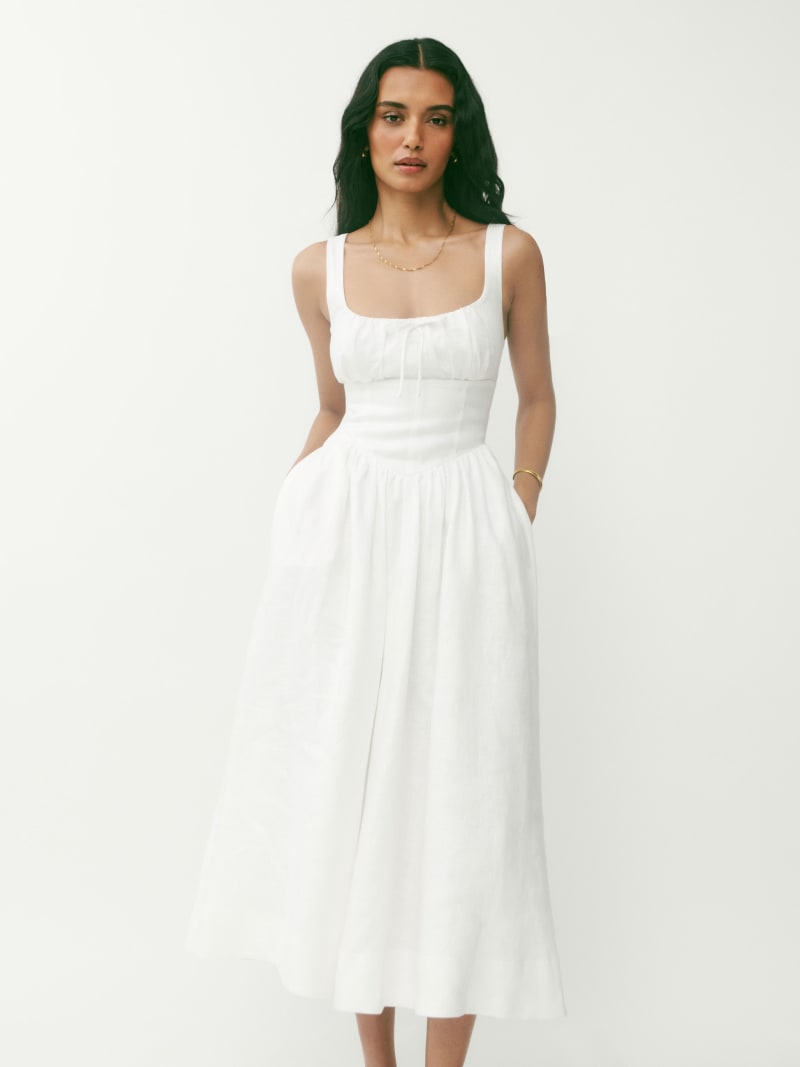
The linen outer fabric and full skirt of the white Reformation Balia dress suit a summer outfit with flat sandals. Narrow red straps add color around the ankles. The dress is lined, adding a second layer beneath the pale fabric.
19. Mermaid Dress

The flared hem of a mermaid dress can be cut into the main skirt panels or added through wedge-shaped inserts called godets. The extra width opens around the knees or below them, beneath a close fit through the hips and thighs. Some versions extend the back into a train.
A close fit through the thighs calls for a shorter stride. The length of that fitted section and the amount of stretch in the fabric affect how the dress moves. Walking and sitting in the dress reveal how much room it provides.
The blue gown has a softly bloused upper body above its fitted hips and flared lower skirt. Mermaid describes that skirt shape. A strapless bodice, halter neckline, or long-sleeved top can form the upper part of the same silhouette.

20. Ball Gown
A ball gown’s full skirt needs its intended underskirt and shoes in place when the hem is fitted. The skirt hangs from a fitted bodice, with pleats or gathers at the waist seam allowing the fabric to spread over the underlayers.
A petticoat can hold layers of tulle around the legs to support the skirt’s volume. As the outer fabric spreads over it, the hem rises. The chosen underlayers go on first so the dress hangs over the shape it will have when worn.
The shoes establish the distance from the waist to the floor. With the bodice fastened and the skirt settled, the hem can be marked around the full circumference.
The printed Mikado of the Sachin & Babi Marta gown holds deep folds beneath a separate belt. It also has a full lining. During a hem alteration, the lining is shortened to sit inside the finished outer hem.