Silhouette and How It Defines a Garment
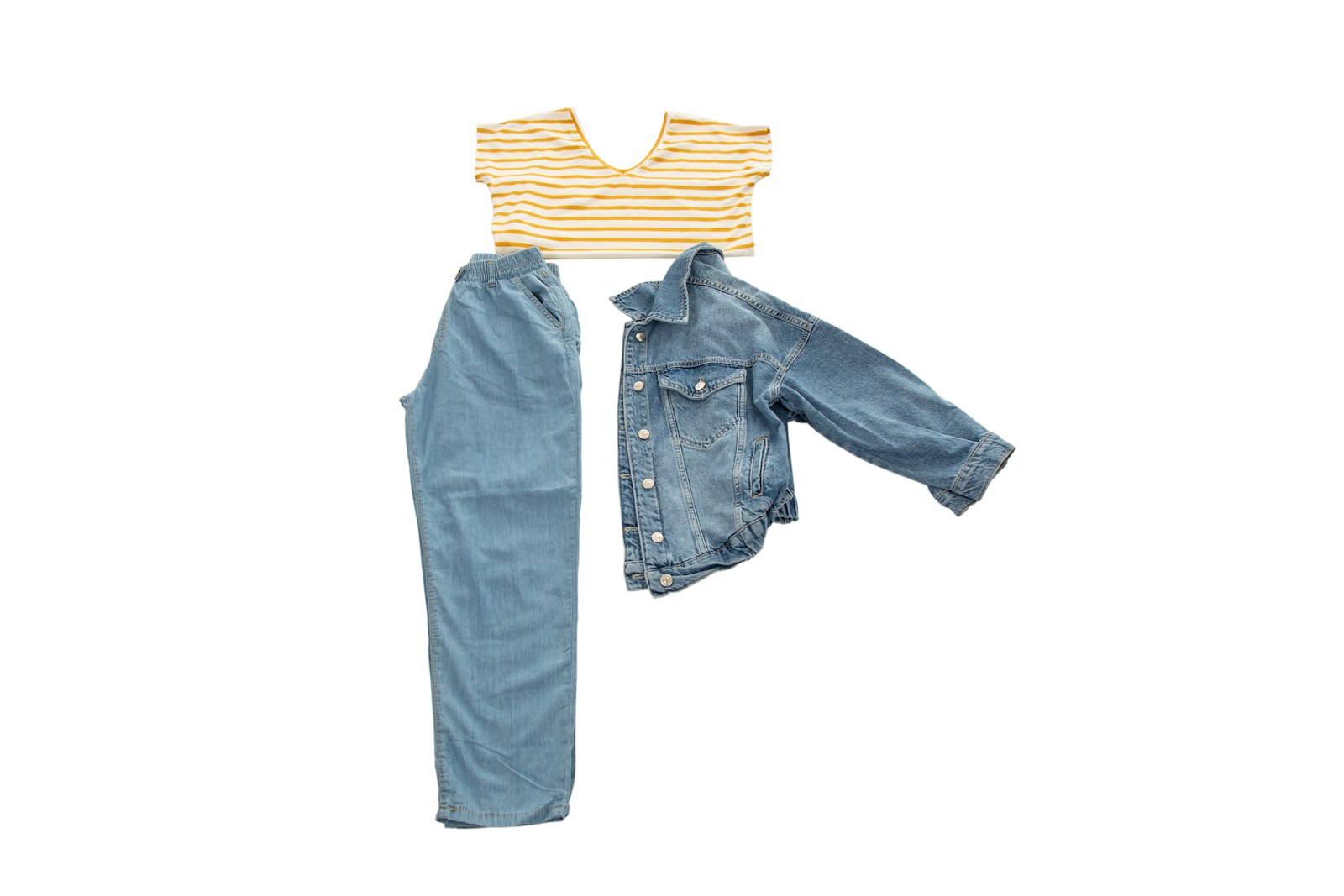
A garment’s silhouette is the overall shape it creates around the body when worn. Stand a few metres away and details such as buttons, topstitching and pocket construction quickly become less noticeable. Shoulder width, sleeve volume, body length, waist position and the path of the hem are still easy to read because they determine how much space the garment occupies.
That larger shape is often what makes one piece immediately feel different from another. A cropped jacket with a broad upper body occupies the wearer differently from a calf-length coat with a narrow sleeve and a long, straight body, even when the fabric and hardware are similar.
The paper pattern supplies the basic dimensions. Once the garment is assembled, the cloth begins to bend under its own weight, seams control where volume can move, internal components support selected areas, and the wearer gives the whole piece its three-dimensional form.
What Silhouette Actually Describes
Fit tells you how much room a garment has around the body at a particular point. A shirt can feel generous through the chest and much closer around the upper arm.
Proportion becomes visible when several dimensions are considered together. A wide shoulder takes on more visual weight when it sits above a short body. Carry the same shoulder width through a longer garment and the balance changes.
Silhouette is the complete shape that appears once those dimensions are worn together.
The Merchant & Mills Cawley dress gives a useful real example. In size 12, it is drafted for a 91 cm body bust, 74 cm waist and 99 cm hip. The finished garment measures 120 cm at the bust, 168 cm around the waist area and 172.4 cm at the hip, with a centre-back length of 110.1 cm.
Calling it a loose dress does not explain where all that volume goes. The finished measurements show that fullness continues through the middle and lower body instead of disappearing into a shaped waist.
Read the Garment From the Outside Edge
Ignore the pockets, graphics and trim for a moment. Start at the neckline and follow the garment’s outside edge through the shoulder, sleeve, torso and hem.
A nearly vertical side creates a straight or column-like outline. When the edge begins travelling outward lower down, the shape moves toward an A-line. A dress that narrows through the middle before opening below produces a fit-and-flare shape. A cocoon carries more volume through the centre and closes inward again near the bottom.
Boxy garments usually concentrate noticeable width into a shorter body, which is why a cropped boxy T-shirt can look broad even before you know its chest measurement.
The name of the silhouette only describes the general direction of the shape. A pattern still has to establish exactly where that line starts changing.
Real Measurements Show Where the Volume Sits
The Cawley’s size-12 finished bust is 120 cm. Its waist area reaches 168 cm and the hip 172.4 cm. Finished biceps circumference is 42.7 cm, with an underarm sleeve length of 45.5 cm including the cuff.
Those measurements describe a garment that remains generous well below the bust. The sleeves add visible width of their own, so the front silhouette extends beyond the torso.
A single chest number would leave most of that shape unexplained.
Why a Shorter T-Shirt Can Look Wider
AS Colour’s Heavy Faded Minus Tee 5086 is a useful example because the shorter body is an actual part of the style rather than an imaginary pattern exercise.
It uses 7.1 oz carded cotton, roughly 241 GSM, with a dropped shoulder and boxy oversized fit. The Minus version is about 2 inches, or 5.1 cm, shorter through the body than its standard reference.
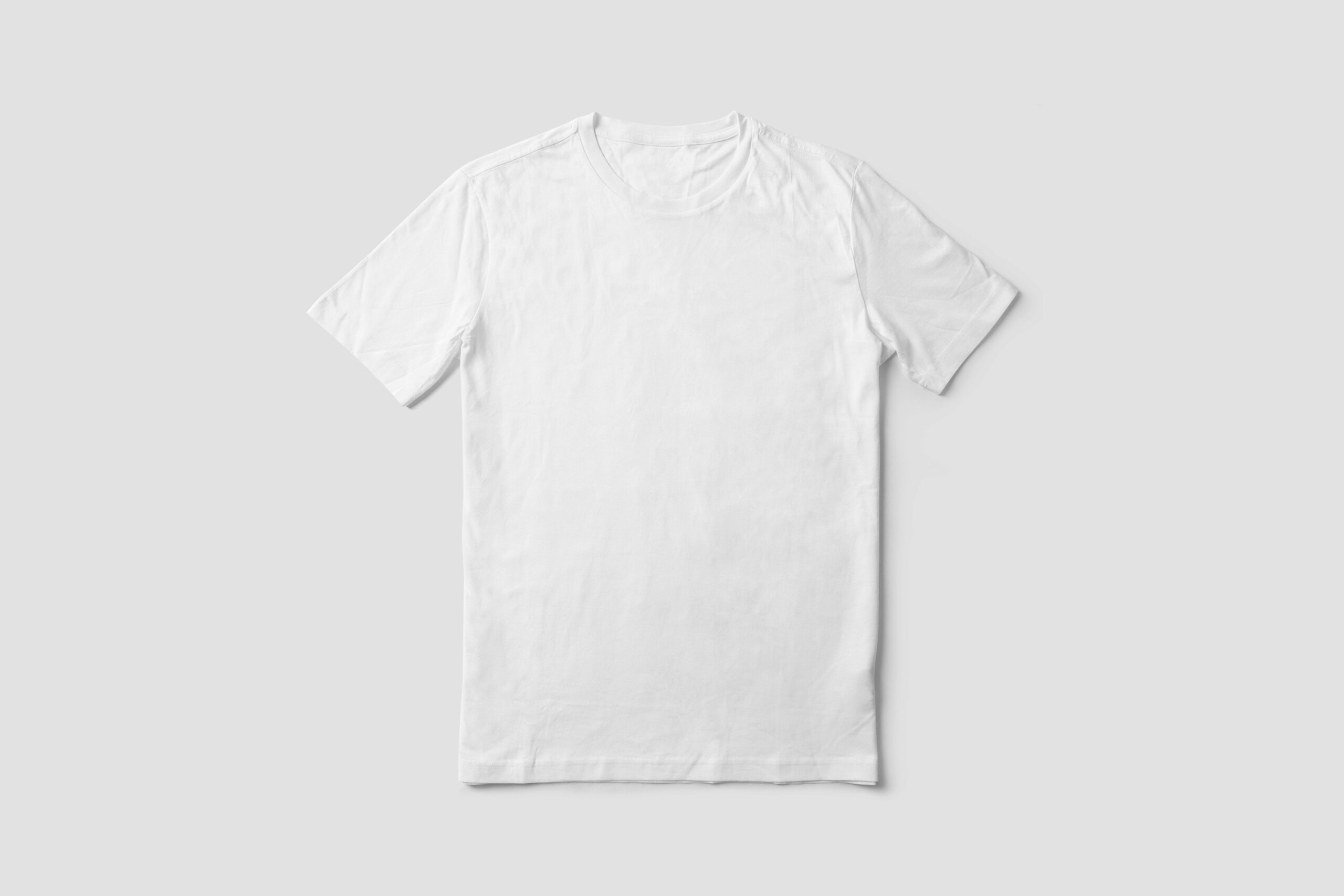
The shorter body brings the hem closer to the waist and leaves more of the trousers and upper hip visible. The width across the upper body is therefore concentrated into less vertical space.
AS Colour’s Heavy Tee 5080 uses 8.2 oz carded cotton, around 278 GSM, with a boxy relaxed fit and dropped shoulders. The different weight is useful product information, although the broad appearance of the garment also comes from how shoulder position and body length are combined.
Where the Shoulder Ends
A dropped shoulder extends the body past the wearer’s natural shoulder point before the separate sleeve begins.
During fitting, marking the natural shoulder point makes the extension easy to see. The sleeve join can then be compared with that mark while the arm hangs normally.
The measuring route needs to be stated clearly. A straight measurement across the upper garment and a tape running from the side neck along the shoulder seam do not travel the same path.
Armhole depth should remain a separate measurement. The shoulder can move outward without the underarm moving down by the same amount.
Sleeve Volume Extends the Garment Beyond the Torso
Part of the width seen in a front photograph can come from the sleeves.
More room through the biceps pushes the garment away from the arm, while taper and cuff opening control what happens farther down. A full sleeve gathered into a narrow cuff keeps much of its fabric above the wrist. A large opening leaves more of the lower sleeve visible.
The armhole also decides where this sleeve volume begins. Set-in construction establishes the join close to the shoulder. A drop shoulder moves the transition farther down the arm. Raglan construction carries the seam diagonally toward the neckline.
For a style built around large sleeves, chest width alone will never describe the full front silhouette.
When the Waist Is in the Wrong Place
A fitted sample may return with the requested waist circumference and still look short through the torso.
The narrowest section can simply be sitting too high.
Moving that shaping downward changes how much visual length remains above the waist. The circumference itself does not need to change.
Where the pattern removes volume also affects the result. Side-seam shaping alters the outside edge directly. Darts work farther inside the body, princess seams distribute shaping over a longer vertical section, and elastic keeps visible fullness around the smaller opening.
If waist placement defines the style, its vertical position needs a fixed measuring route.
Flare Starts Above the Hem
A large finished hem does not tell you where the skirt begins to open.
Panel seams can start moving outward shortly below the hip. Godets introduce additional width from a lower point. Pleats can keep considerable circumference folded into the garment until movement separates them.
The measuring method needs to be clear as well. A flat half-hem and full circumference are not interchangeable, and curved hems need an agreed path for the tape.
Fabric Can Change the Shape Without Changing the Pattern
Fabric weight is one of the first numbers people look at, but it does not explain the whole silhouette.
AS Colour’s Heavy Tee 5080 uses roughly 278 GSM carded cotton, while the Heavy Faded Minus Tee 5086 is closer to 241 GSM. Those values tell you how much the fabric weighs per unit area. They do not tell you exactly how strongly the fabric resists bending or how readily it falls into folds.
The Cawley makes the difference easier to imagine because the pattern can be sewn in materials including linen, Tencel, Tencel-linen blends, corduroy and denim. Merchant & Mills has also shown versions in 9 oz Organic Half Panama and 8 oz Organic Sanded Twill.
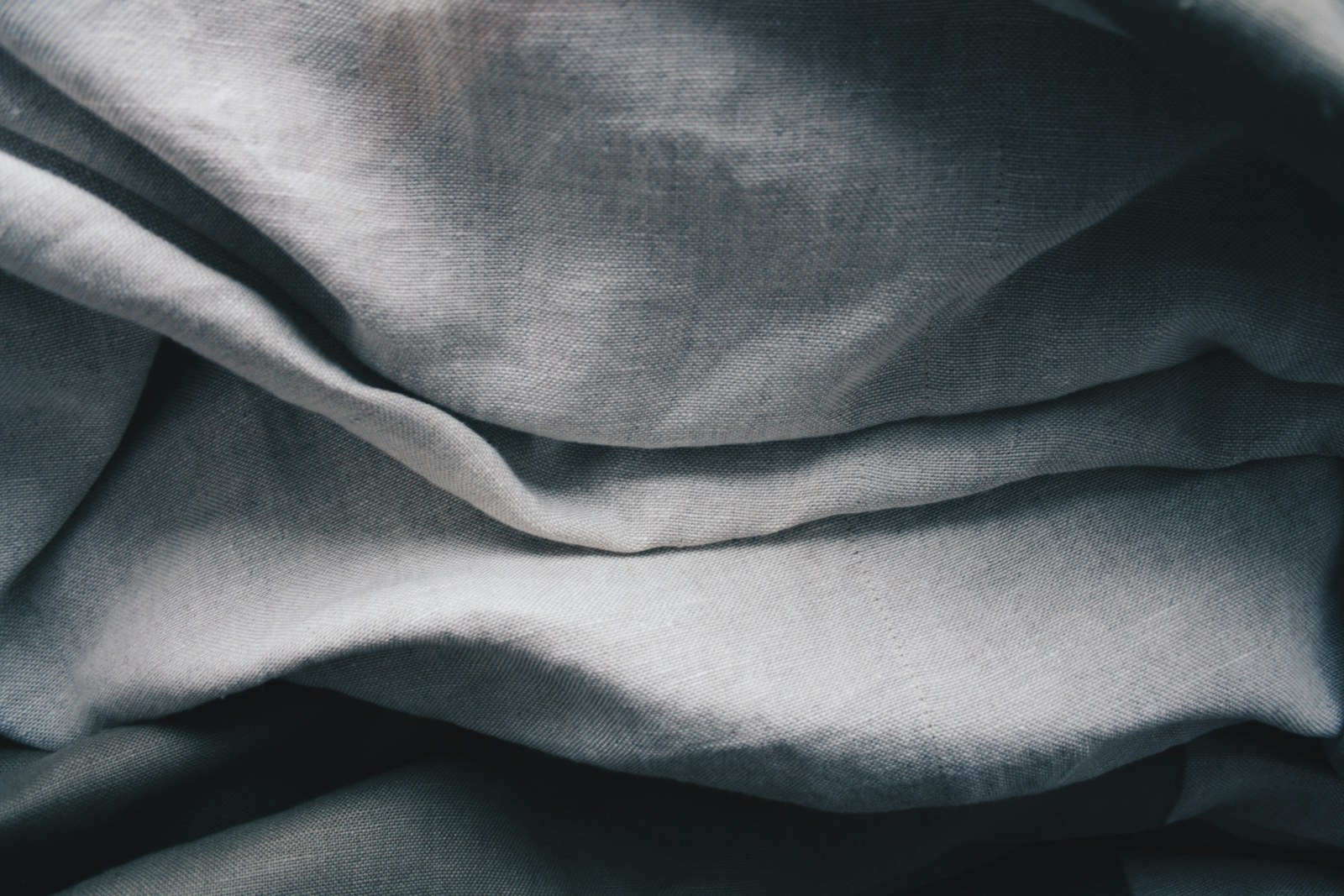
On a broad garment, cloth that bends easily can pull some of the available width into long vertical folds. The side edge then settles closer to the wearer. A more resistant material can keep the same drafted width visibly farther away from the body.
Large sleeves make this particularly obvious. A sleeve can contain a great deal of fabric on the pattern and still fall close to the arm if the cloth collapses easily. The same applies to wide hems, where much of the circumference may collect into a few deep folds.
Thickness, stretch, recovery, yarn structure and finishing all affect the result. Two fabrics with similar GSM can therefore produce noticeably different silhouettes.
Keeping the approved swatch beside the confirmed sample gives the factory a physical reference for qualities that are difficult to reduce to one number.
A Jacket Changes as It Is Built
Merchant & Mills’ Denham jacket is intended for fabrics including 8–12 oz denim, wool, corduroy, cotton twill and canvas. Around 0.9 m of interfacing is recommended for most fabrics.
An early shell may look softer than the finished jacket because some of the components that support its shape have not yet been added.
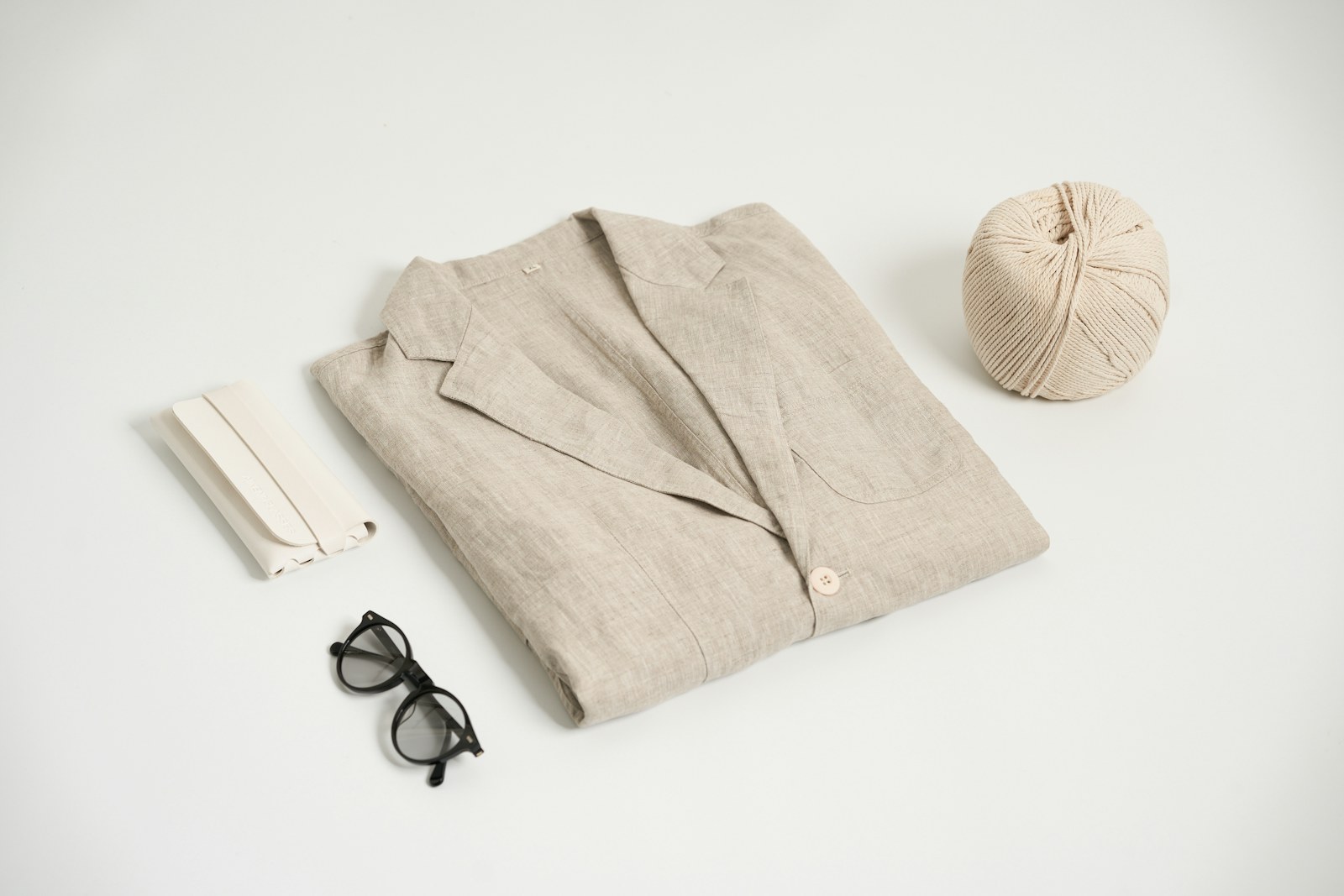
Interfacing can stabilize the front. Structure around the shoulder and sleeve head influences the transition into the arm. Hem construction can affect how firmly the lower edge sits away from the body.
Approving the silhouette before those elements are present can mean judging a shape the finished garment will never actually have.
Layering Changes the Space Inside a Coat
Outerwear has to accommodate the clothes worn underneath it, and that extra material does not distribute itself evenly.
AS Colour’s Relax Hood 5161 is a useful reference for a substantial underlayer. It uses 9.4 oz fleece, approximately 319 GSM, with a relaxed fit, dropped shoulder and self-fabric-lined hood. Under a coat, the hood adds thickness behind the neck, the fleece occupies space across the chest and upper back, and the sweatshirt sleeves take up room through the armhole and biceps.
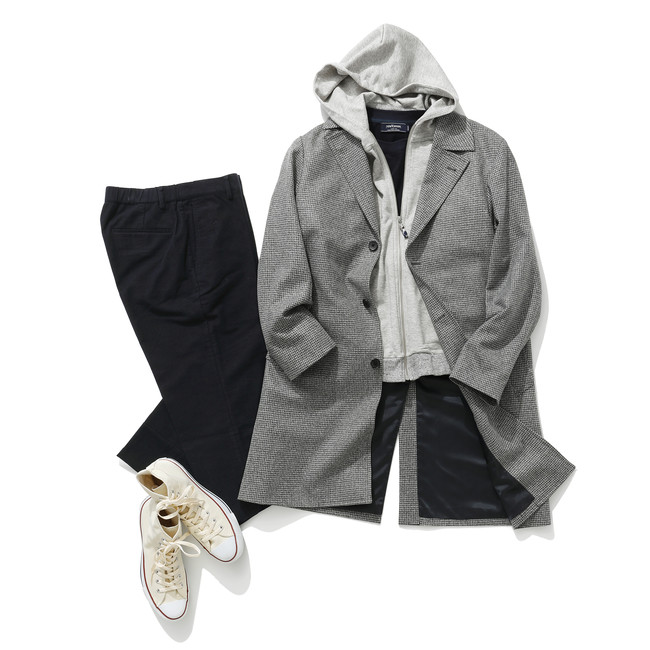
Merchant & Mills’ Sunday Coat Addition gives a real pattern example. In size M, the listed body chest is 106 cm and the finished coat chest is 127.5 cm. The body hip is 114 cm, with a finished coat measurement of 132 cm. The top-of-front-shoulder-to-hem length is 118.5 cm.
The coat version also uses a sleeve developed for thicker fabrics and calls for about 1.5 m of interfacing.
Fitting a winter coat over a lightweight T-shirt and approving it from that condition can miss the way the intended underlayer changes the upper body. For repeatable sampling, the fitting record should state what was worn underneath.
The Side View Shows Where Length Is Being Used
A coat can look straight from the front and still carry considerable projection around the chest, upper back or seat.
Fabric has to travel over those areas. That uses length as well as circumference.
If the front needs more length over the chest or abdomen, the hem may rise. A long shirt can lift over the seat at the back. The side seam may also move away from the route it followed on the flat pattern.
Looking from the side makes these changes easier to locate because the gap between the body and the garment is visible along its height.
During fitting, a horizontal hem reference can be marked before the garment is worn. Centre front, side and centre back can then be compared with the same level to see where the balance has shifted.
Silhouette Changes During Movement
A wide skirt may hang in narrow folds while the wearer stands still and open much farther during a normal walking step.
In a sweatshirt, raising the arms rotates the sleeves through the armholes and can carry part of the body upward. Long outerwear moves again when the wearer sits, as fabric settles around the seat, lap and bent legs.
Movement tests are easier to compare when the same positions are repeated in every sample round. Arms held forward at shoulder height, an overhead reach and a seated position cover several common changes without turning the fitting into a long list of arbitrary poses.
If the centre-front hem rises during an overhead reach, its displacement can be measured from a reference mark. Pressure in the sleeve can be marked directly on the fitting sample. Photographs taken at the same distance and angle help show whether a revision actually changed the behaviour.
The acceptable result depends on the garment and its use. There is no useful universal hem-rise limit that applies equally to a cropped sweatshirt and a work jacket.
Grading Can Change the Silhouette if the Proportions Drift
The Cawley size chart shows how differently width and length can develop through a size range.
Finished bust increases from 115 cm in size 10 to 120 cm in size 12. The waist moves from 163 cm to 168 cm and the hip from 167.4 cm to 172.4 cm.
Centre-back length changes by only 0.5 cm, from 109.6 cm to 110.1 cm. Underarm sleeve length remains 45.5 cm, while finished biceps circumference increases from 41.5 cm to 42.7 cm.
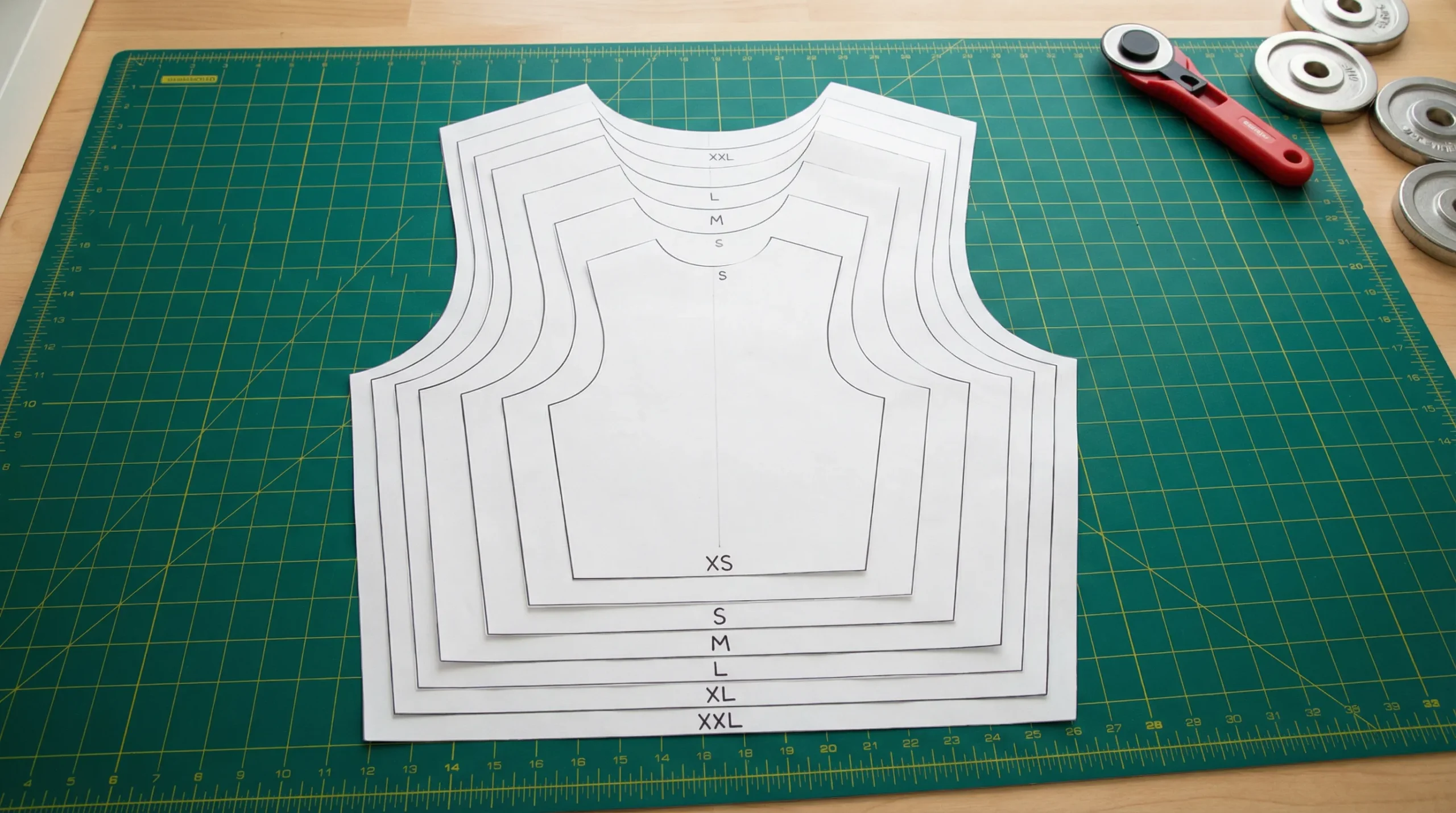
The garment is gaining much more circumference than vertical length across that size step. If every dimension grew at the same percentage, the proportions would begin drifting away from the original design.
A base-size fitting cannot show that problem. Selected smaller and larger samples are needed to see whether the relationship between body width, sleeve volume, length and hem spread still looks right.
Turning the Silhouette Into a Factory Specification
The measurements needed depend on the garment.
For a boxy dropped-shoulder T-shirt, body width, shoulder or sleeve-join position, body length, armhole depth, biceps, sleeve opening and hem width usually control most of what is visible from the outside.
A fitted dress needs more information about where the bust and waist shaping sit vertically, along with hip levels and the point where the lower body begins to open. A flared skirt needs the finished sweep and the height where that expansion starts.
Outerwear also needs a defined fitting condition because the intended underlayer changes the available room around the neck, upper back, chest and sleeves.
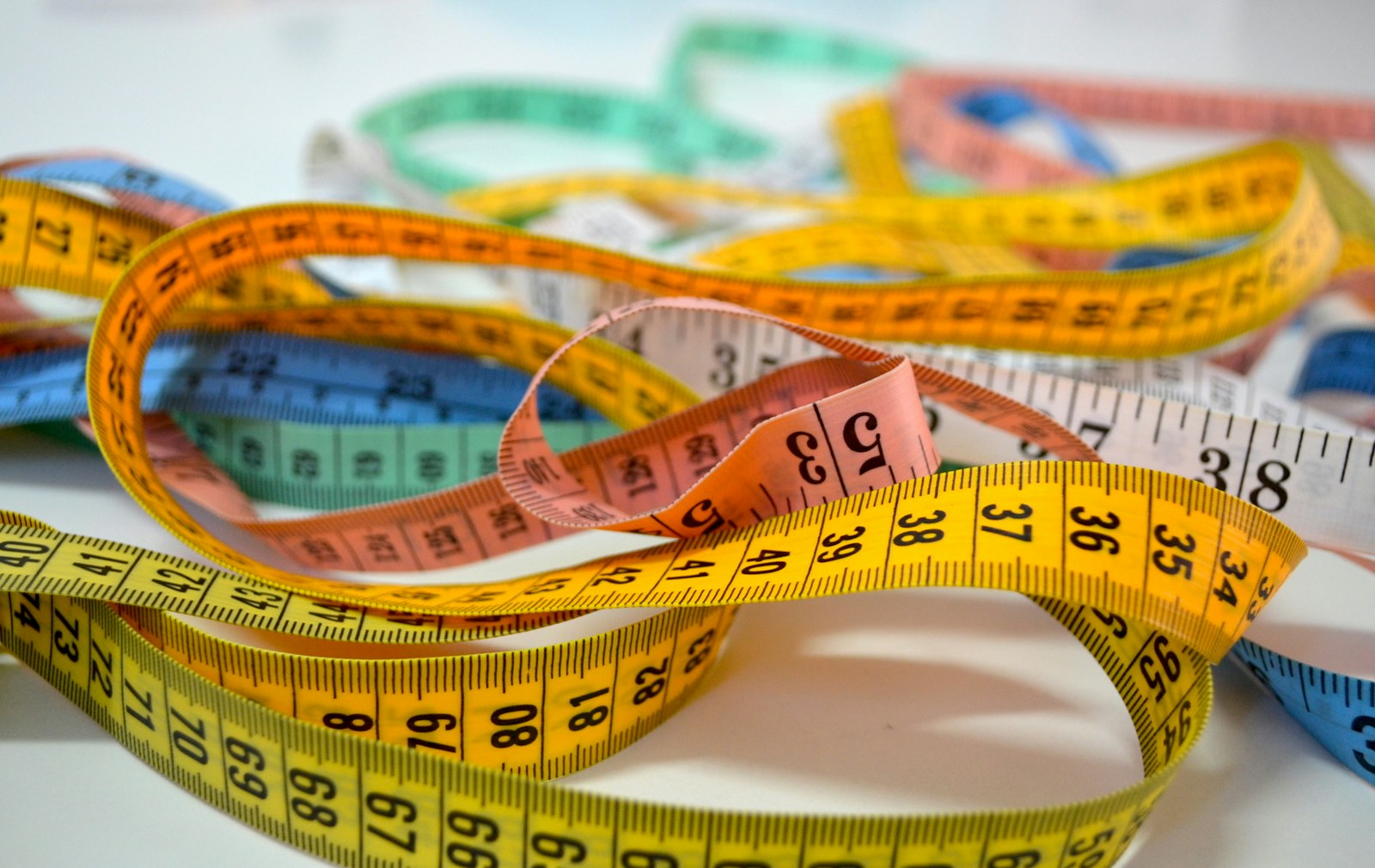
Every measurement route should be clear enough for another person to repeat it without guessing. Flat measurements need to state whether they represent half width or full circumference. Curved routes need fixed endpoints, and sleeve length should identify where the tape begins.
With those dimensions tied to the approved fabric and construction, the silhouette can be reproduced from one sample to the next.