Types of Sweaters: 26 Styles by Neckline, Knit, and Fit
Sweaters are worn throughout the year, from lightweight cotton knits to substantial wool pullovers. Familiar styles include crewnecks, cardigans, and turtlenecks, with many more names describing the knitted pattern, collar construction, or shape of the body. The fabric’s thickness also affects how a sweater sits over a shirt or fits beneath a jacket.
Several names can apply to one garment. A cropped cable-knit cardigan has a short body, raised twists in the fabric, and an opening down the front. Each term identifies a different feature.
Crewneck
A crewneck has a rounded opening near the base of the neck. The front covers the upper chest, leaving a continuous area of knitting beneath the collar. A ribbed neckband commonly finishes the opening, with matching bands at the wrists and hem. On a plain merino crewneck, those narrow ribs are often the main textured details around an otherwise smooth body.
The circular neckline also appears on fully ribbed sweaters. Here, the vertical lines continue down the torso, and the neckband follows its own curve around the opening.
V-Neck
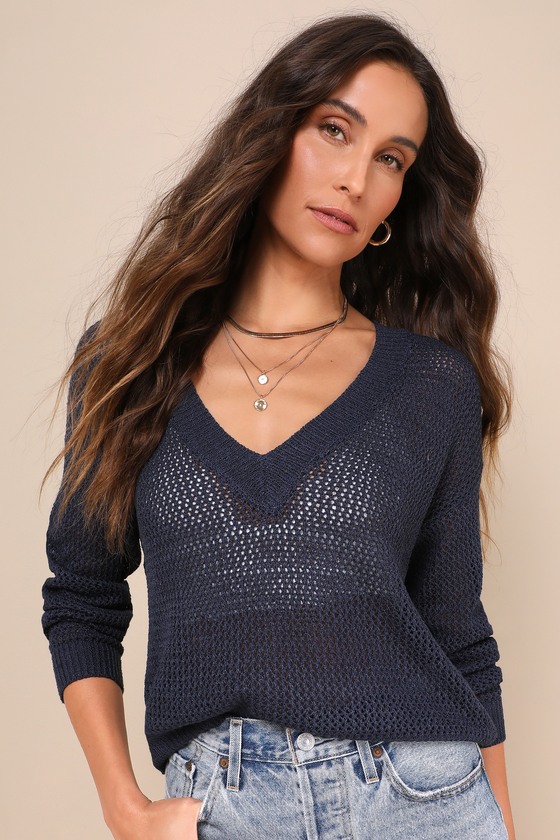
A shirt collar remains visible above a V-neck sweater, with part of the shirt front showing inside the opening. The knitted edges slope toward a point on the chest, framing that exposed area. This is a familiar combination in knitwear worn with tailoring.
The depth of the V determines how far the opening reaches down the body. A plunging version can reveal much of an underlying top, including its neckline and upper chest. The ribbed edging follows both slopes and meets at the center-front point; a broad band makes that outline especially noticeable.
Turtleneck
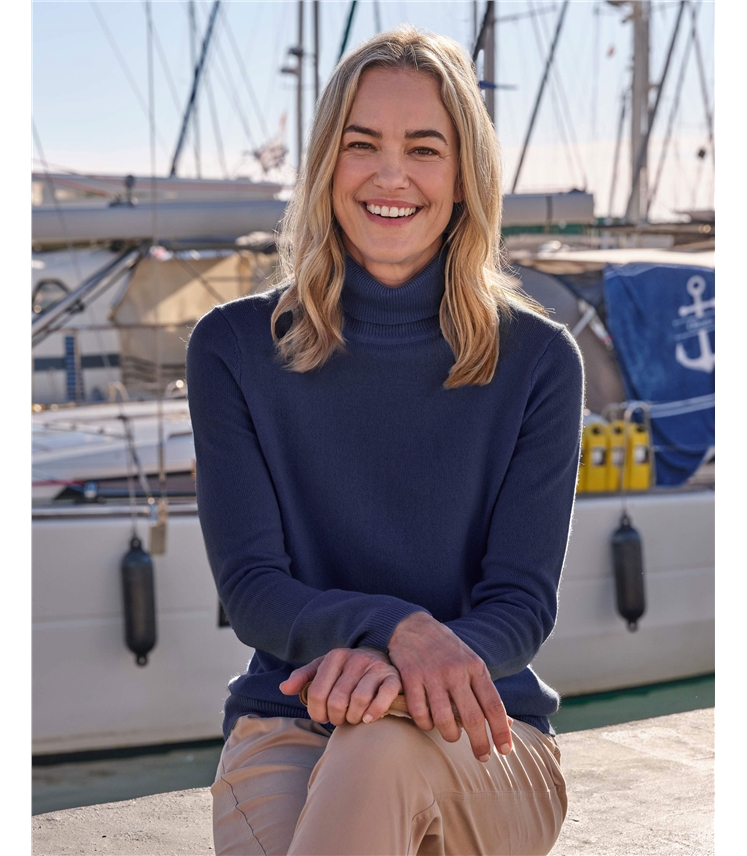
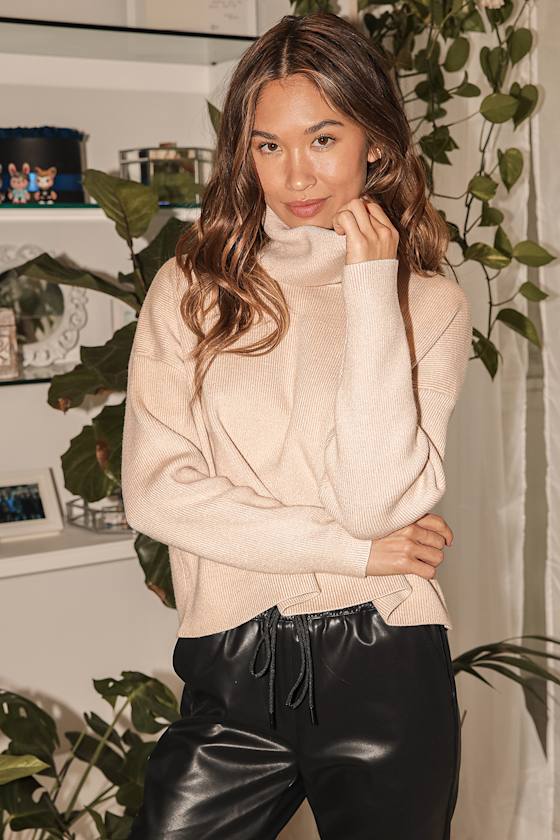
The collar of a turtleneck rises around the neck and folds back on itself. Its finished shape includes a rounded fold at the top and a doubled layer of fabric around the throat. The length of the knitted collar determines how much material is available for that fold, and its circumference affects how closely it sits against the neck.
Roll-neck is another established name for this style. With a jacket worn over it, the folded collar remains visible above the jacket opening.
Mock Neck
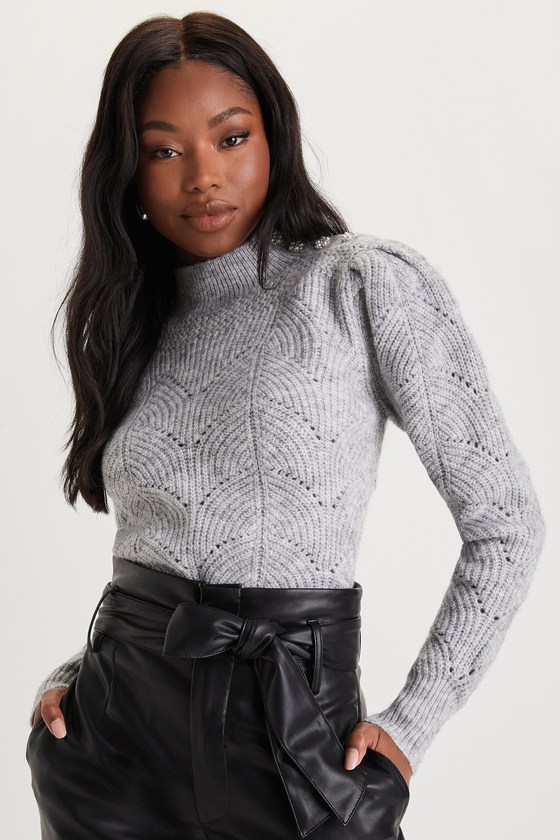
A mock neck forms a short upright band around the lower neck. It is worn at its full height, with the finished upper edge visible around the opening. The collar generally leaves some room around the throat. Product descriptions also use mock turtleneck for this shape, including on sweaters whose bodies extend into long tunics.
Cowl Neck
The folds around a cowl neckline settle over the upper chest. A generous amount of fabric surrounds the opening, allowing the collar to turn over and fall forward. The lowest fold may hang well below the throat, with additional fabric resting around the sides of the neck.
The draping continues to change slightly as the garment moves. On a fine knitted top, the collar can collapse into several shallow folds, making the neckline part of the fabric’s movement across the front. A close view shows the finished edge among those folds.
Boat Neck
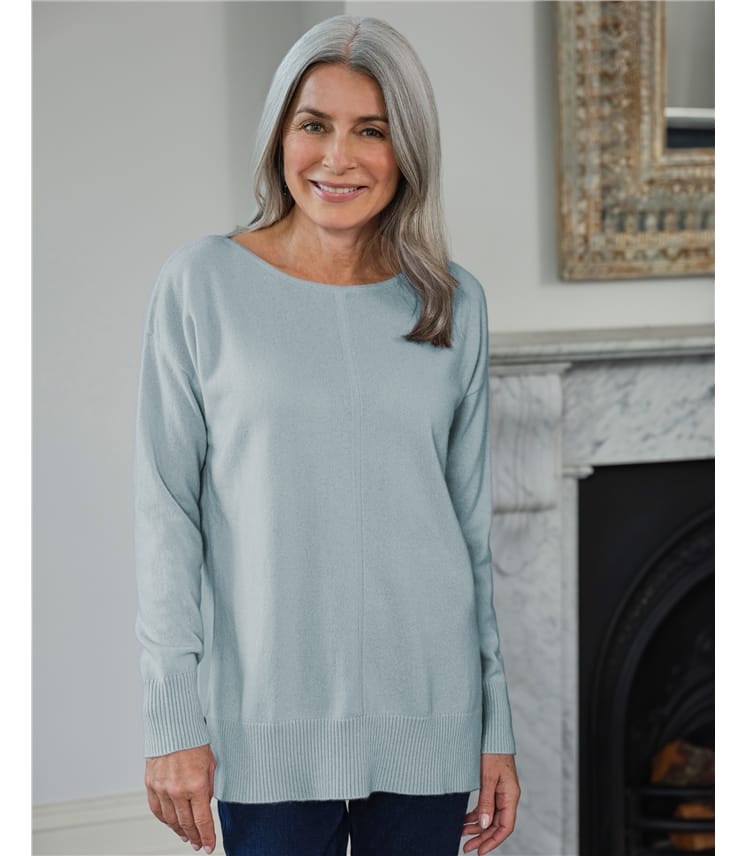
Also called a bateau neckline, a boat neck extends across the collarbone area toward the shoulders. Its broad, shallow curve leaves relatively little depth at the center front. The shoulder sections connect the front and back near the ends of the opening, creating the wide horizontal outline associated with this style.
Cardigans
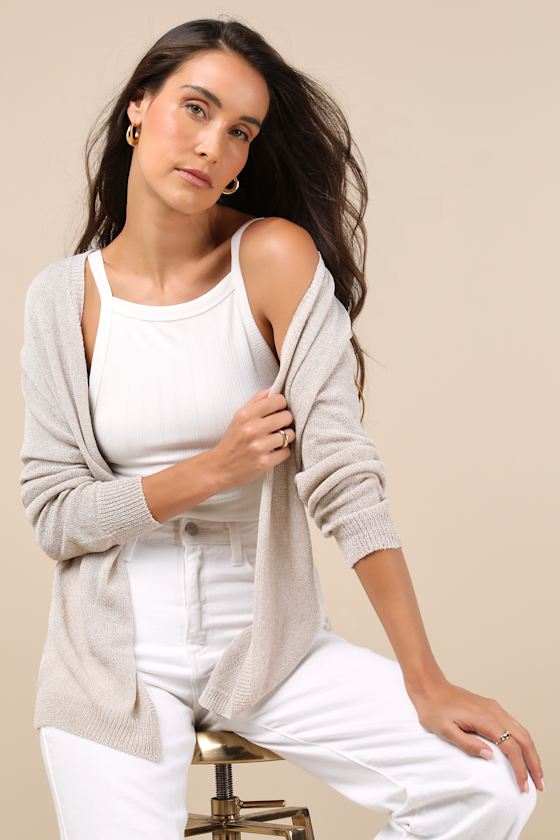
Opening a cardigan separates the garment through the full length of the front. A conventional buttoned cardigan has two front panels, with one band carrying the buttons and the other carrying the buttonholes. The neckline may finish close to the throat or descend into a V above the fastening.
Different front constructions account for several familiar cardigan names:
| Cardigan Style | Identifying Construction |
|---|---|
| Button-front cardigan | Buttons join the front edges in a vertical row. |
| Zip-through cardigan | A zipper opens the garment from the hem to the neckline. |
| Wrap cardigan | One front panel overlaps the other and fastens across the body. |
| Belted cardigan | A belt gathers the fabric around the waist and holds the front in position. |
These constructions can accompany different collars, body lengths, and knitted textures.
The fastening bands can also be formed during knitting. An integral facing is knitted into the front panel; STOLL documents a cardigan construction with a tubular facing and concealed buttonholes worked this way.
Wrap Sweaters
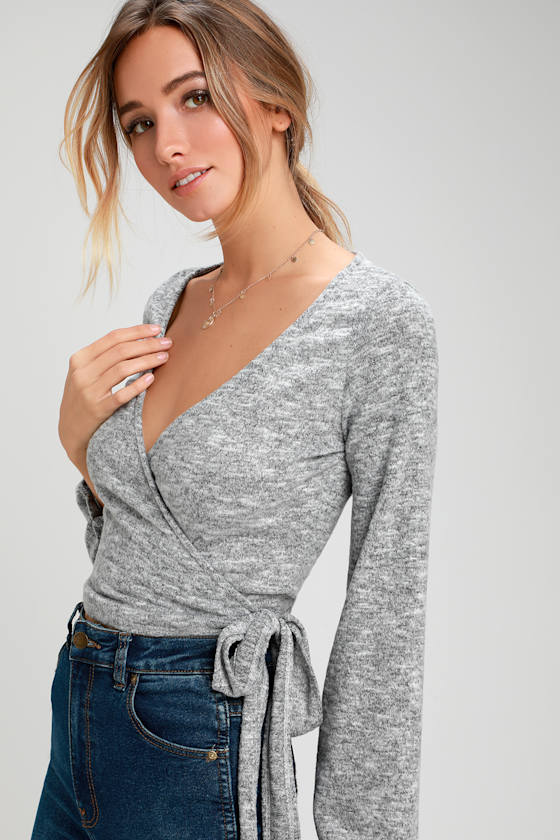
A tie at the waist draws the front of a wrap sweater across the torso. The overlapping panels create a diagonal edge and usually form a V-shaped neckline. Around the fastening, the fabric gathers into folds that follow the direction of the pull. A separate belt can hold the overlap on a longer wrap cardigan, with the lower panels falling below the tied waist.
Some wrap sweaters secure the crossing point with a button. The position of that fastening determines where the outer panel sits across the body and how much of the underlying panel remains covered.
Quarter-Zip and Half-Zip
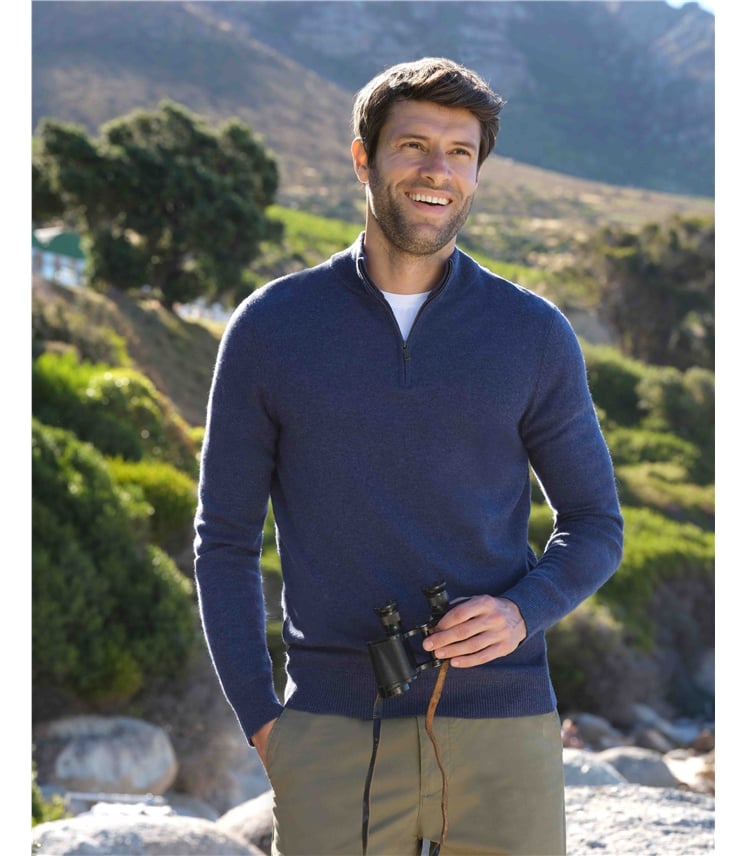
Quarter-zip and half-zip are closely related names for pullovers with a partial front zipper. Brands sometimes use the terms interchangeably, and the opening length varies between individual garments. The measured zipper length gives the precise depth of the opening.
The fastening commonly starts at the upper edge of a standing collar and runs down the center of the chest. Below the zipper, the front continues as a joined panel. Lowering the slider releases the collar edges so they can fall outward around the neck or sit over a shirt collar. The metal pull remains visible near the bottom of the opening.
Shawl Collar
The rounded edge of a shawl collar can be followed from the back of the neck down onto the chest. The collar rolls outward along this curve, exposing a broad folded section on either side of the front opening. Its thickness is particularly visible where the fabric turns near the shoulders. On a belted cardigan, the collar may continue toward the waist fastening.
Ribbing often runs through the collar and around the opening. Substantial buttons, knitted pockets, and textured wool bodies are also found on shawl-collar cardigans.

Polo Sweaters
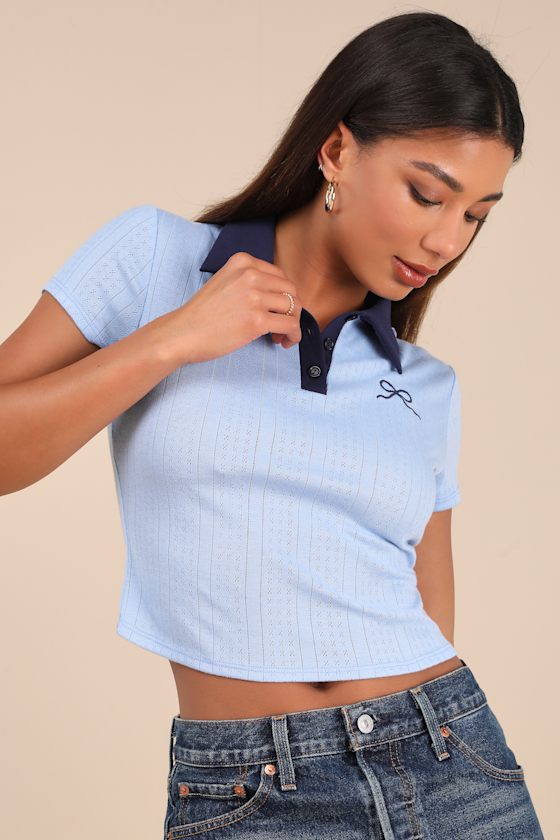
A folded shirt-style collar identifies a polo sweater. The points rest on the upper chest, usually beside a short button opening. The collar is knitted and can be shaped during production, allowing its outline to follow the design of the garment.
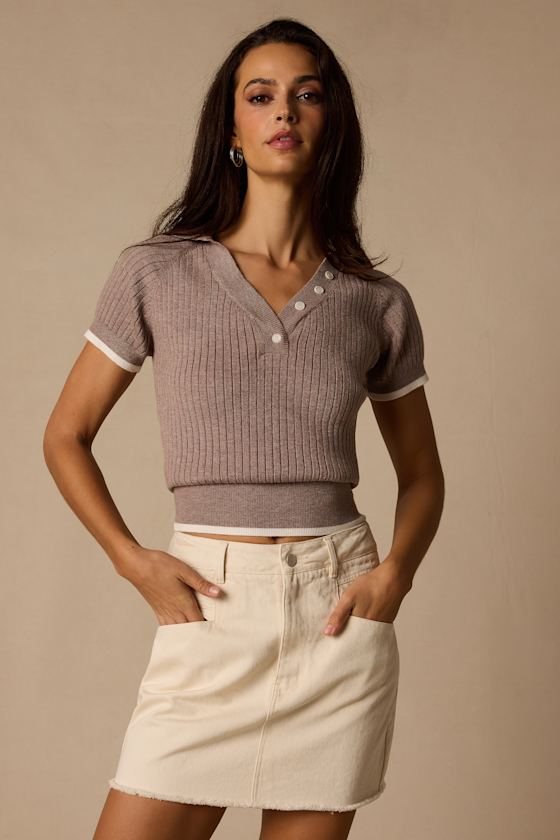
Long-sleeved merino polos provide a familiar example. Fine knitting keeps the collar and body relatively light, and some designs include turn-back cuffs at the wrists. Those cuffs have enough length to fold outward over the sleeve ends.
Hooded Sweaters
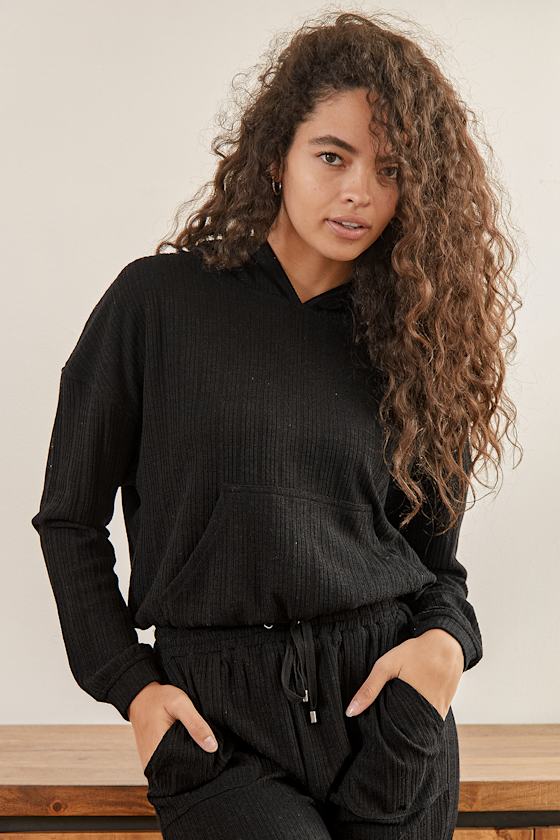
A knitted hood rests against the upper back when lowered, adding fabric behind the neck and shoulders. Raised over the head, it continues the sweater’s coverage above the neckline. Hooded knitwear includes zip-through garments made in medium-weight merino wool, with the front fastening running from the lower edge to the base of the hood.
The body can be relaxed through the chest and slightly boxy in proportion. This leaves room beneath the sweater and allows the fabric to hang from the shoulders, including around the base of the hood.
Sweater Vests
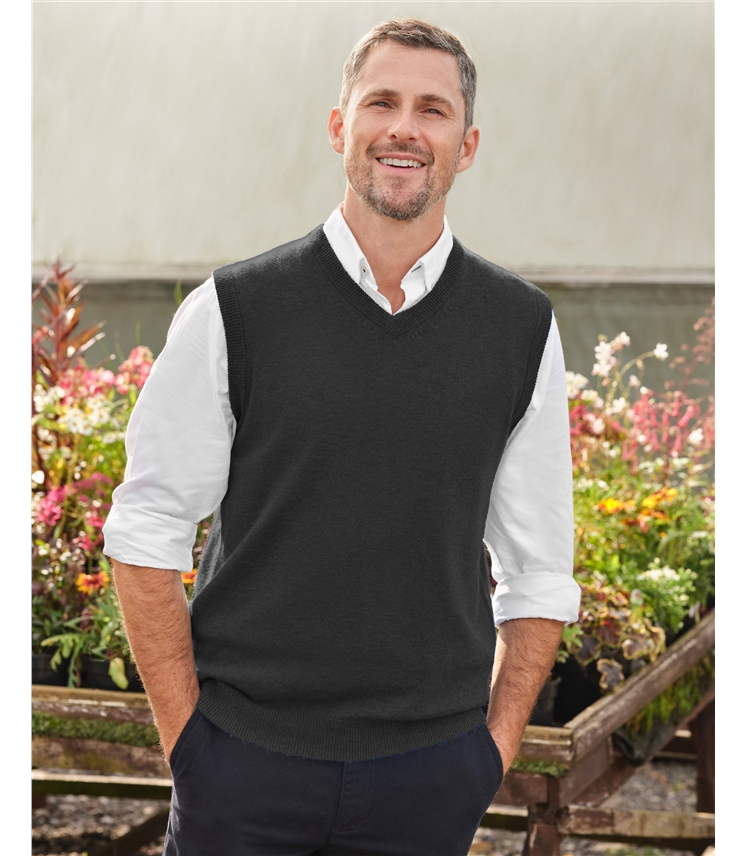
The sleeveless body of a sweater vest leaves the shoulders and armholes clearly outlined. Over a shirt, the vest covers the torso and exposes the shirt sleeves. A V-neck opening also reveals part of the shirt front, with the knitted band bordering that area.
Patterned vests can carry Fair Isle motifs across the chest and back. In a fitted version, the armholes sit relatively close around the upper arms, keeping most of the pattern on the torso visible. Ribbed edging finishes the openings and forms a boundary around the colorwork.
Cable Knit
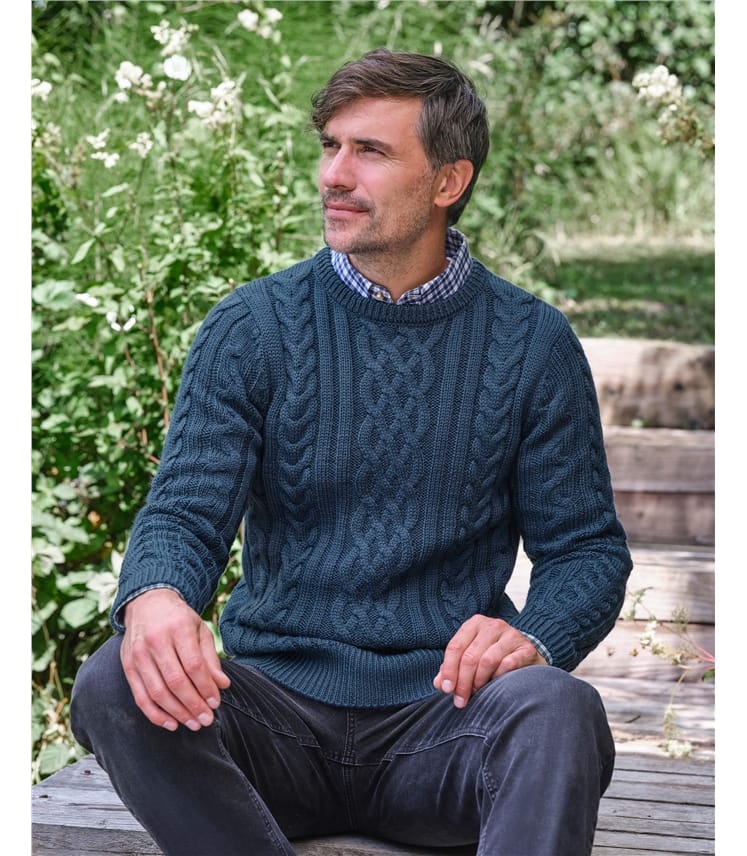
A raised cable can be followed through successive crossings in the fabric. At each crossing, a group of stitches passes over another group, redirecting the knitted columns. Repeating that movement at intervals produces the rope-like twist visible on the sweater.
A simple four-stitch cable crosses two stitches over two. More elaborate arrangements combine several groups into broad braids or interlocking shapes. The number of stitches involved affects the width of the cable, and the direction of each crossing determines how the twist travels through the fabric.
Purl stitches frequently surround the cables, forming a recessed background. On a single-color sweater, light and shadow along the raised edges make the pattern visible. Several cable panels can occupy the front, each separated by a narrow strip of background knitting.
Fisherman Sweaters
“Fisherman sweater” is a broad name associated with several regional knitwear traditions. Guernsey and Aran provide more specific references within that category.
Guernsey
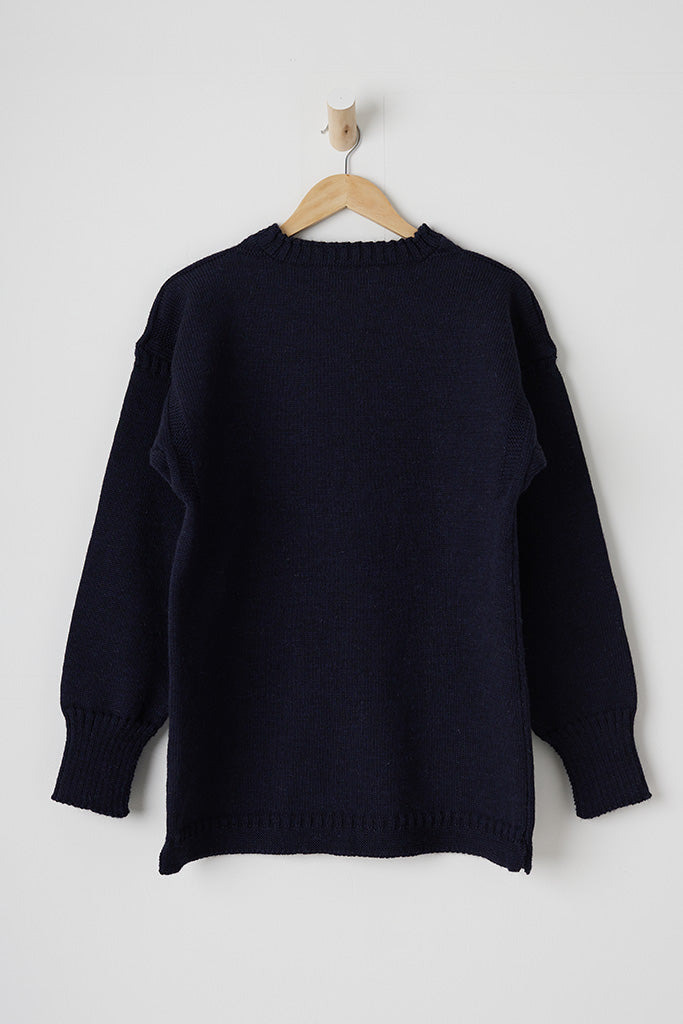
A traditional Guernsey can have a worsted-wool body with patterned or ribbed sections around the shoulders. Side splits appear at the lower edge, and a gusset contributes to the neck construction. Le Tricoteur’s Rocquaine uses these details, including a neck gusset stitched by hand after linking. The localized knitting around the shoulders remains visible against the plain body.
Aran
An Aran sweater may contain several textured panels across its front. Honeycomb knitting can occupy the center, with cables and moss-filled diamonds extending beside it. The fabric carries the decoration through the arrangement of the stitches.
Natural cream wool makes the raised pattern easy to see. The O’Grady Aran sweater uses this combination of a central honeycomb panel, cables, and diamonds in the wool’s natural white color.
Ribbed Sweaters
1 × 1 rib means one knit stitch followed by one purl stitch. 2 × 2 rib repeats groups of two. These alternating columns produce the raised lines and recessed channels visible in ribbed fabric.
The structure spreads across its width as it stretches, then draws together as the fabric relaxes. An all-over ribbed sweater carries that movement through the body and sleeves. The columns follow the shape of the torso, and their spacing can open slightly where the garment stretches.
Ribbing is also used at the edges of otherwise plain sweaters. At a cuff, the knitted band gathers the sleeve around the wrist; at the hem, it can draw the lower body inward.
Fair Isle
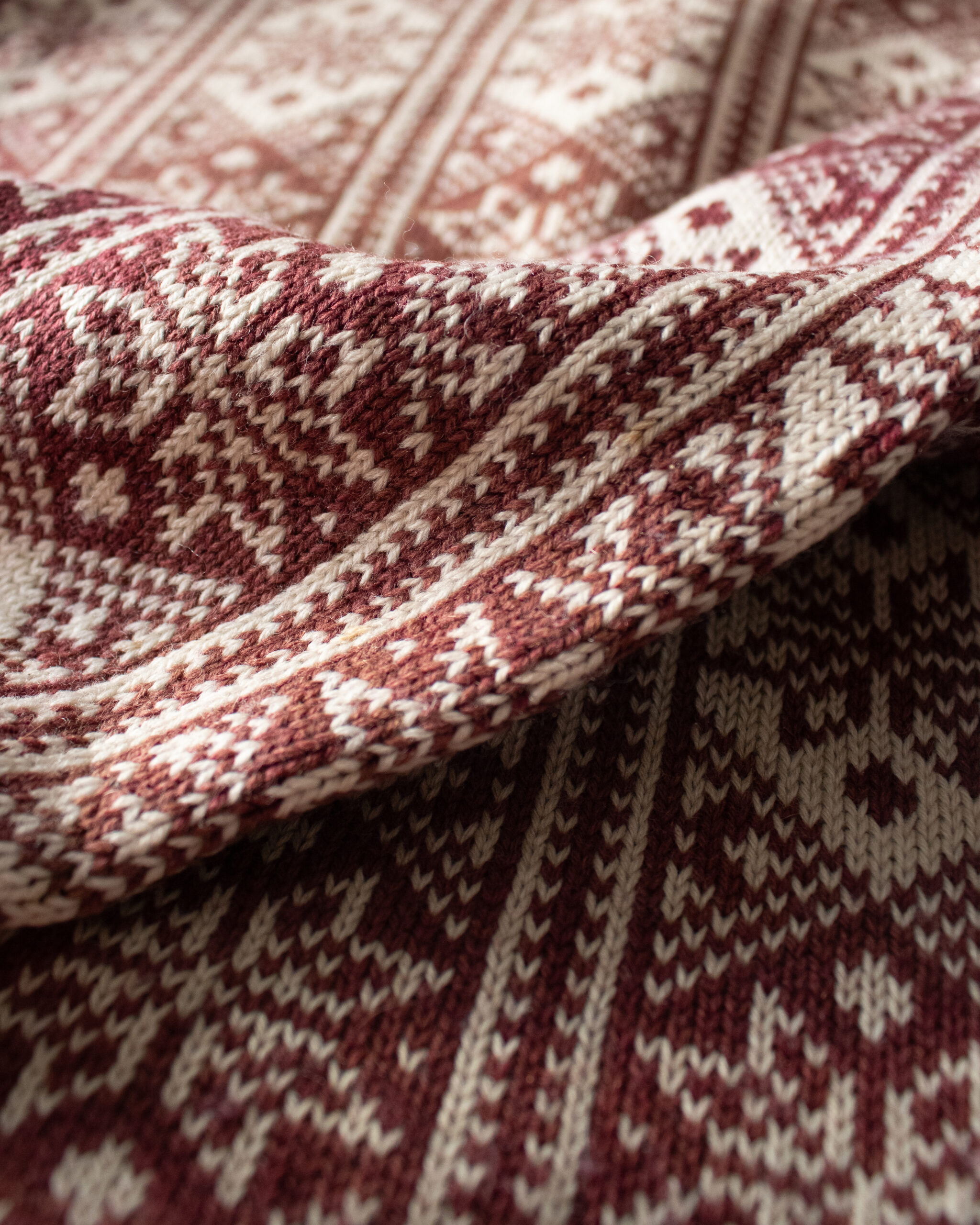
Fair Isle knitting takes its name from the Shetland island where the tradition developed. Its patterns use repeating geometric motifs, carefully arranged color shading, and an ordered relationship between the background and the design. Motifs can form bands or repeat vertically and diagonally across the garment.
A sweater containing several colors is generally built with two colors in each patterned row. The palette develops as the selected yarns change in subsequent rows. This allows different shades to pass through a repeated motif, making its center, outline, and surrounding background distinct.
Inside the sweater, short strands connect the stitches worked in each color. These strands, called floats, travel behind the visible pattern. Their presence comes from the stranded-colorwork technique used to form the motifs.
Argyle
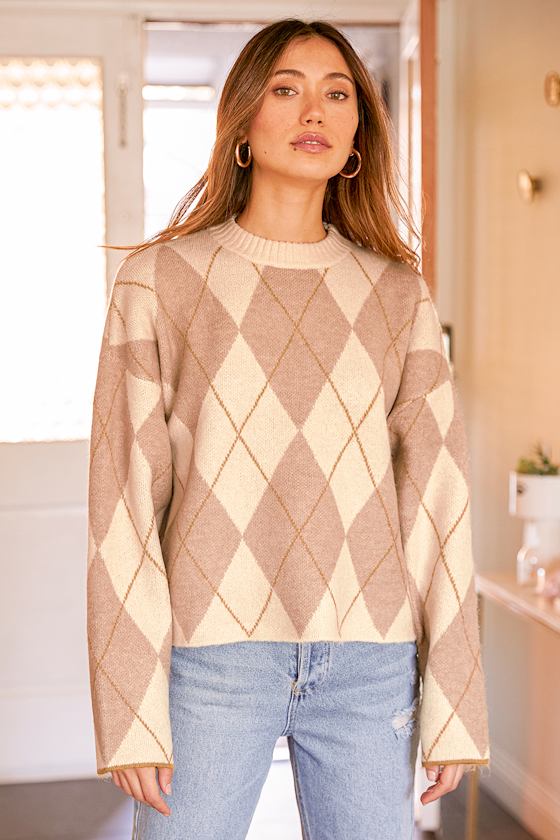
Argyle is recognized by overlapping diamonds. Solid blocks of color form the main shapes, and fine diagonal lines cross over them to create an offset arrangement. The thin outlines are part of the familiar pattern, running through the larger diamonds and the spaces between them.
The color areas can be produced through intarsia knitting. A sweater may therefore carry both terms in its description: argyle identifies the design, and intarsia identifies the method used to knit it.
Intarsia
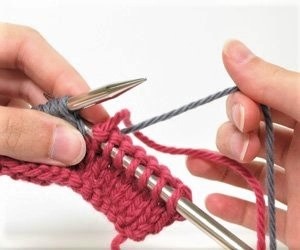
A large colored shape in the middle of a plain sweater requires separate yarn supplies for the sections across that row. One supply forms the background on the left, another works the colored shape, and another continues the background on the right. The yarns interlock where those areas meet.
This is the basic arrangement behind intarsia knitting. As the shape widens or narrows, the positions of the joins change across successive rows. A letter, animal, or abstract block develops through those changing boundaries.
The same color can require several yarn supplies when its sections are separated within the design. A detailed picture therefore involves planning the individual color areas and the joins around their edges.
Jacquard
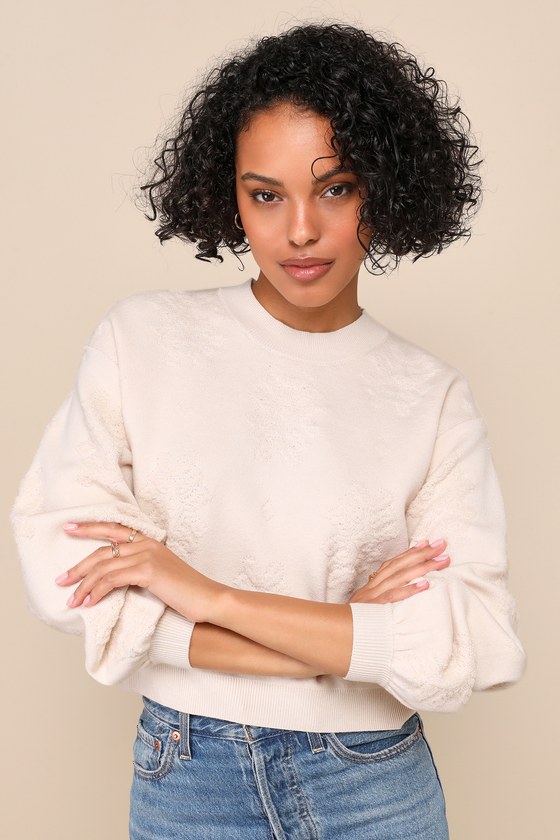
Jacquard describes patterned fabric produced on a knitting machine. The design can use color and texture, covering a section of the sweater or continuing across the whole garment. Repeated geometric arrangements and placed motifs both fall within this category.
In a sectional design, the pattern occupies a planned area, such as the upper chest. Its position becomes part of the sweater’s appearance, particularly where the patterned area approaches the neckline or sleeves. "Jacquard crewneck" combines the knitting description with the shape of the opening.
Pointelle
Small patterned openings give pointelle knitting its lace-like surface. The holes can form lines or geometric arrangements within the fabric, often beside narrow ribs. Clothing or skin beneath the sweater remains visible through those openings. A fine pointelle pattern leaves knitted fabric between the holes, preserving a delicate, closely arranged texture.
The openwork can also continue into shaped edges. In STOLL’s pointelle cardigan construction, groups of stitches are narrowed to form the V-neck. The pattern participates in the changing width of the front panel as it approaches the shoulder.

Fine-Knit Sweaters
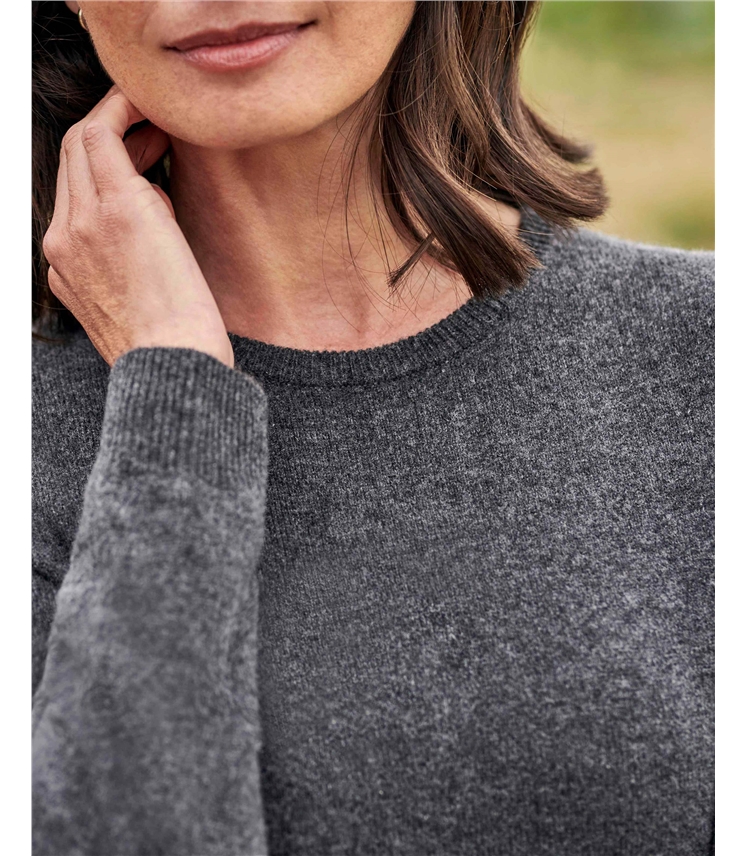
Small stitches produce the relatively smooth surface of a fine-knit sweater. The fabric is used for lightweight pullovers and knitted polos, including merino garments that fit beneath a jacket. Fine knitting also allows collars and folded cuffs to remain compact.
On a fully fashioned sweater, small shaping marks may be visible beside the armholes or other seams. They appear where the panel’s width changes during knitting. The front, back, and sleeves are knitted to their intended shapes and then linked together, leaving the shaping marks as part of the finished surface.
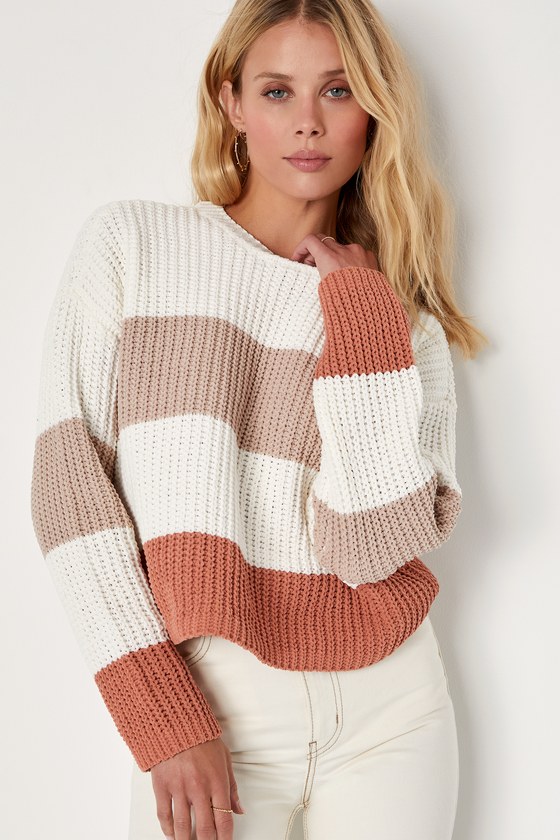
Chunky-Knit Sweaters
Large loops are visible across a chunky-knit sweater, with the yarn occupying substantial space in each stitch. Broad ribbing and deep folds around the sleeves contribute to its bulky appearance.
Machine gauge provides one construction reference. On a flat-bed knitting machine, gauge describes the number of needle positions per inch. Coarse-gauge machines have more space between needles, accommodating larger stitches. The yarn thickness and stitch length also affect the weight and dimensions of the knitted fabric.
Chunky knitting can continue into the cuffs and hem. A substantial ribbed band gathers the surrounding fabric at the edge, making the change in width visible around the wrists and lower body.
Oversized Sweaters
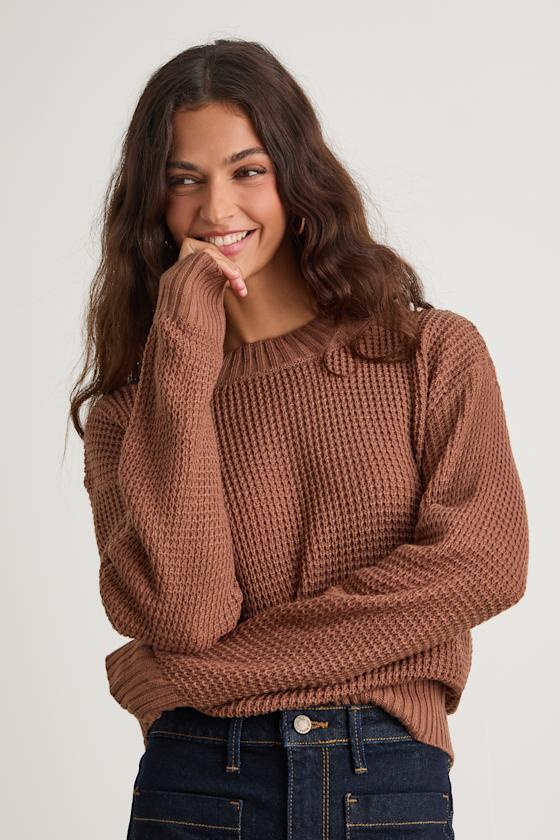
An oversized sweater contains generous room around the body. In knitting patterns, that additional circumference is called positive ease. A sweater measuring 120 centimeters around the chest, worn over a 96-centimeter body measurement, would have 24 centimeters of positive ease. The difference describes the amount of room at that measurement point.
The shoulder and sleeve shapes determine where the extra fabric hangs. A dropped shoulder places the sleeve join down the upper arm, extending the sweater body beyond the wearer’s shoulder line. Long sleeves may gather above ribbed cuffs, and a lower band can draw the hem inward beneath the roomy torso.
Cropped Sweaters
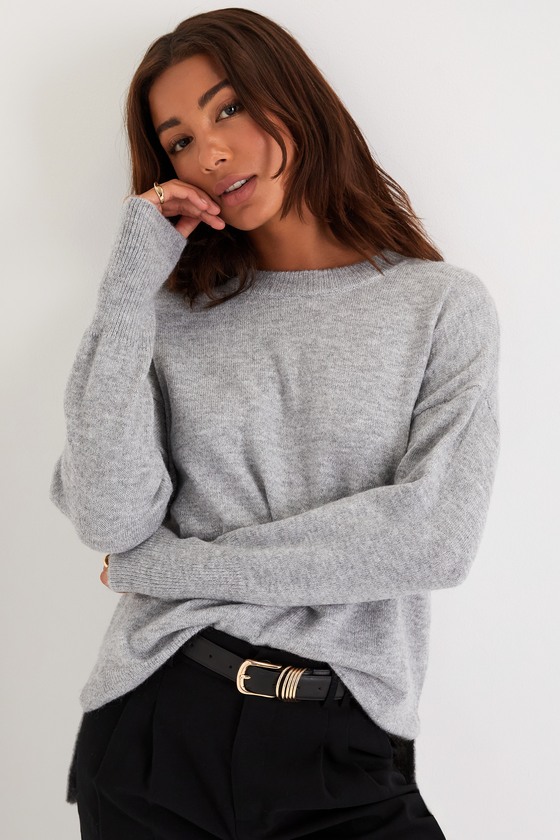
A cropped sweater ends high on the body, usually around the waist or upper hip. The hem’s position depends on the garment length and the wearer’s proportions. Short cardigans, fitted knitted tops, and wide-bodied pullovers all appear within this category.
The shortened body makes the lower edge prominent. A tie-front cropped cardigan, for example, brings its fastening close to the hem, leaving a relatively small area of knitting below it. The front opening and high lower edge together establish the garment’s proportions.
Tunic Sweaters
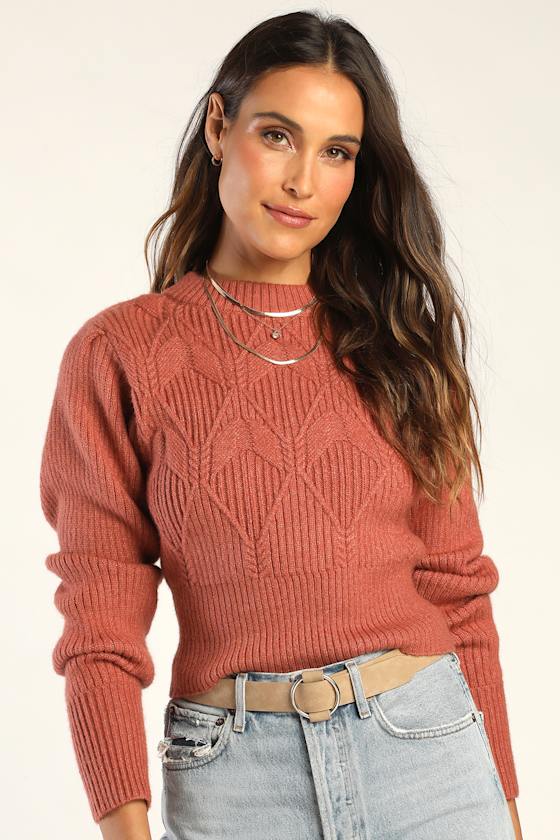
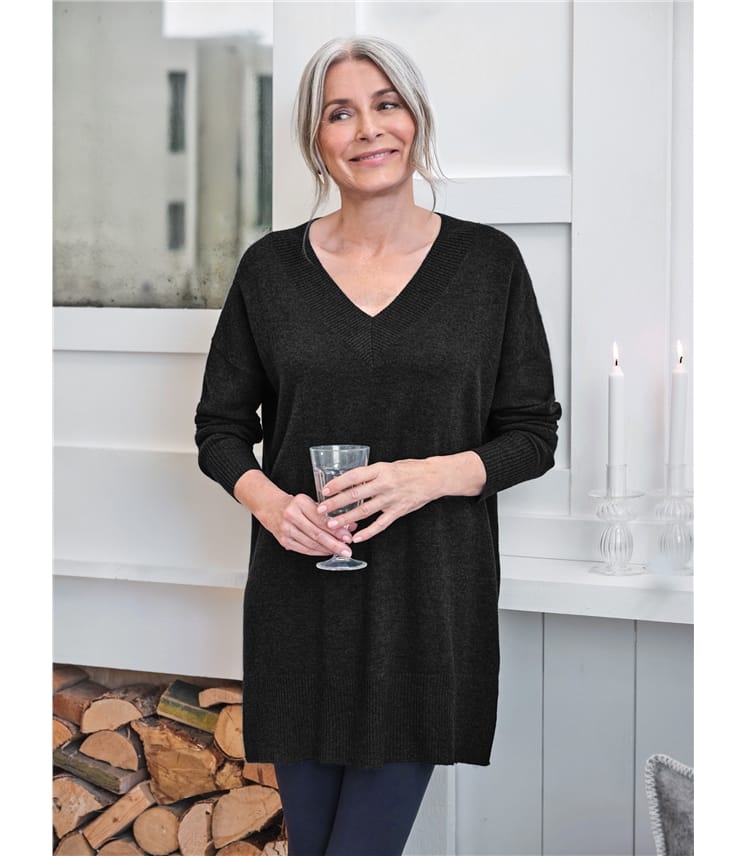
The body of a tunic sweater extends below the hips toward the upper thighs. That additional length carries the knitted fabric over a larger part of the torso and makes the hem a substantial part of the garment’s outline. Tunic length is treated separately from chest fit in knitting measurements.
A high-low tunic has a longer back. Seen from the side, its lower edge changes level as it travels around the body. Crewneck versions use this hem shape, and the tunic category also includes mock-neck sweaters with swing-shaped bodies that widen toward the bottom.
Sweater Types by Yarn
Fiber names add material information to these descriptions. A merino crewneck identifies the wool and neckline; a cotton wrap cardigan identifies the yarn and front construction. Blended yarns contain several fibers in stated proportions.
| Yarn Type | Material Details |
|---|---|
| Merino wool | Wool grown by Merino sheep. Fine Merino fibers are used in lightweight knitwear and garments worn close to the skin. |
| Cashmere | Fiber from the fine undercoat of cashmere goats. It can be used on its own or combined with other fibers in a blended yarn. |
| Cotton | Cotton yarn is used in knitted pullovers and cardigans, including midweight crewnecks with substantial ribbed trims. |
| Mohair | Fiber from the Angora goat, known for its natural luster. The material is used in knitwear yarns with a distinctive surface character. |
| Blended yarn | A combination of fibers listed by percentage. Knitwear compositions may include wool, viscose, acrylic, polyester, polyamide, or elastane in different proportions. |