What Is DTF Printing? How It Works and What to Check First
DTF printing, short for direct-to-film printing, puts your design on a clear plastic film first and moves it onto the garment with a heat press. The design ends up as a thin layer of ink glued to the surface of the fabric.
Because DTF needs no screens, brands use it to decorate T-shirts and hoodies with full-color logos and graphics in short runs. FashionMe prints DTF in-house, next to screen printing. UV DTF is a different product despite the name: it uses UV ink and goes on with hand pressure instead of a heat press, onto objects such as mugs.
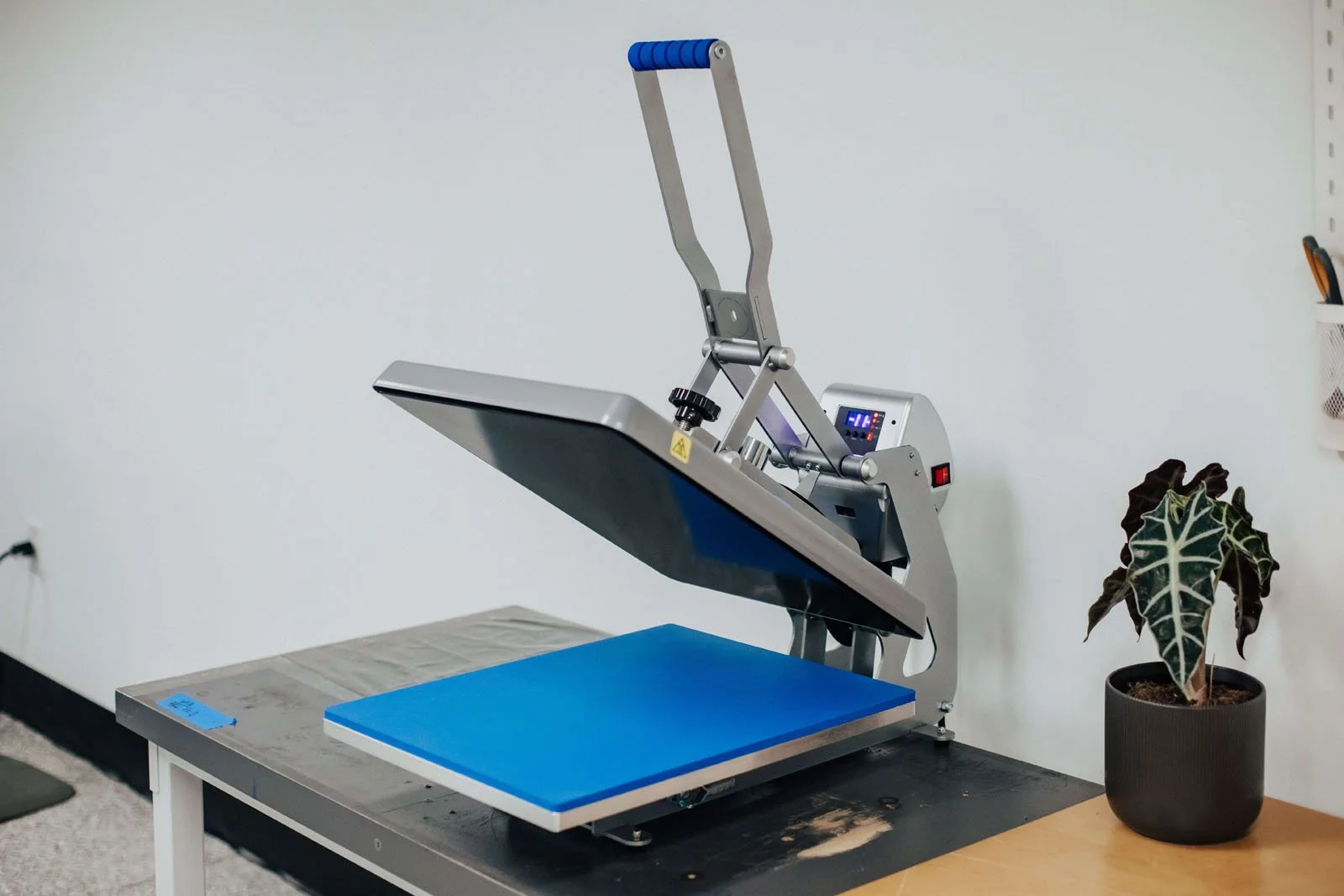
How a DTF transfer is made
A finished DTF transfer is a plastic film printed with your artwork in reverse, colors first and white ink over them. The glue on the back of the ink is a thermoplastic polyurethane (TPU), dusted on as powder while the ink is still wet and then melted in place. Since the powder clings only to wet ink, the clear parts of the film stay bare.
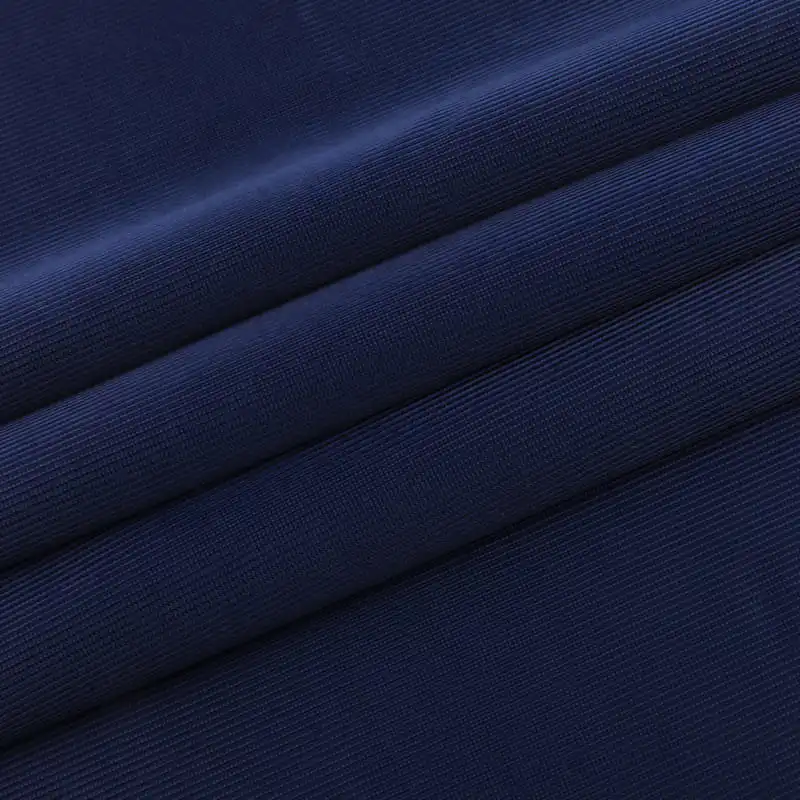
With the white layer behind them, the colors stand out on a navy or black garment. They're mixed from cyan, magenta, yellow and black, a set that can't make a true neon; DTF printers with added fluorescent inks can. In one test, a Home Depot orange printed from the standard four inks measured 7.24 on ΔE, the usual score for how far a printed color is from its target. With fluorescent inks added, the same orange came down to 2.56. A printer fitted with fluorescent magenta and yellow covered 27% more colors than one using CMYK alone.
Most DTF prints come out matte: the standard cold-peel film stays on the pressed garment until the transfer has cooled. Hot-peel film, which is less common and has to come off while still hot, gives brighter color.
What the print feels like on the garment
A new DTF print is slightly stiff on a T-shirt and thicker to the touch than ink that soaks into the fabric. It still stretches with the knit and doesn't crack easily.
Large solid areas make it firmer: a design printed as one solid block at full size can feel stiff and heavy to wear. Breaking the block up with gaps, or printing its fills as a halftone (a pattern of dots), puts less ink on the shirt and makes it lighter. On a black shirt, black areas of the artwork don't need printing at all.
Fabric choice and dye migration
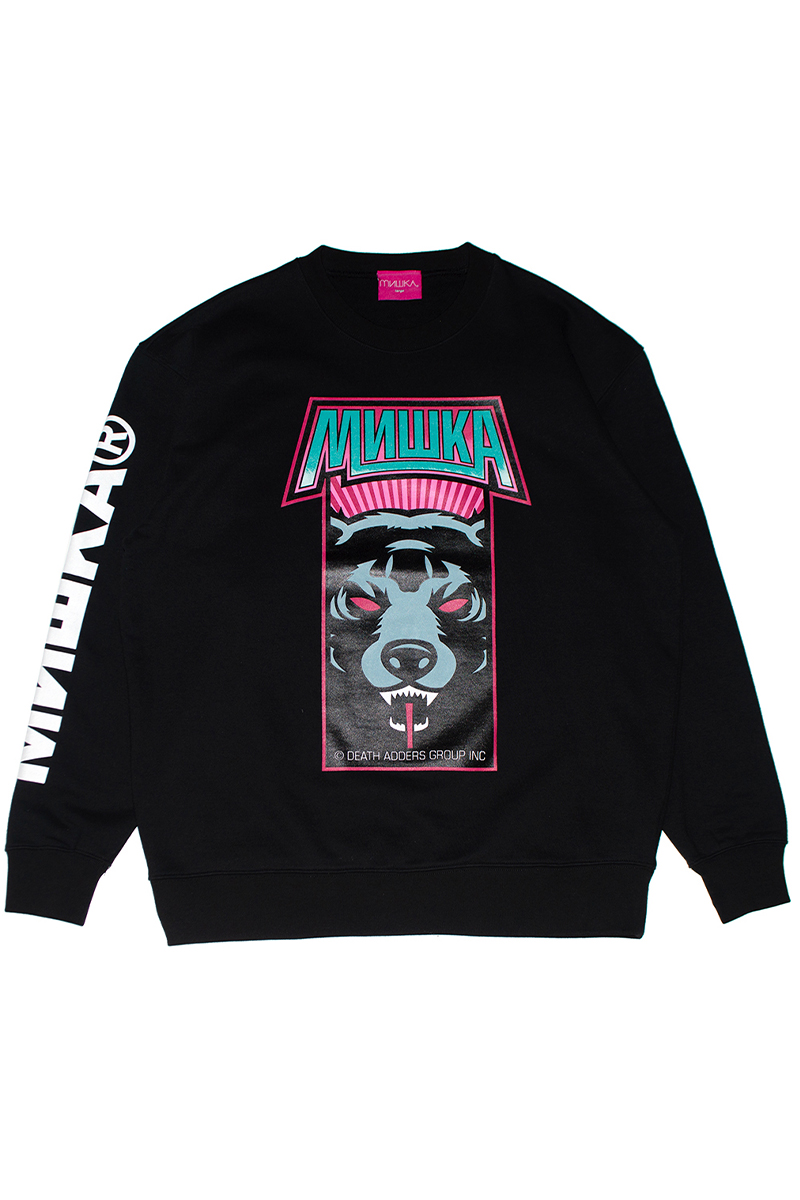
Stock Match T-shirts come on cotton blanks of 180 to 240 gsm (grams per square meter, a measure of fabric weight). Beyond cotton, DTF prints on polyester, fleece, nylon and blends.
On colored polyester, the heat of the press can turn the fabric's dyes to vapor that drifts up into the print and tints the white in the transfer pink or gray. Dark and bright polyester is the most prone. DTF printers commonly use a black adhesive powder on these fabrics to block the dye. Printing the white layer thicker serves the same purpose.
Artwork and file rules
Tiny, isolated pieces of a design give the glue very little area to bond and are the likeliest to lift when the film comes off. These sizes hold up in production:
| Detail | Safe minimum | Prints, but with risk |
|---|---|---|
| Letter height | 0.15–0.20 in (3.8–5.1 mm) | 0.10–0.12 in (2.5–3.0 mm) |
| Line thickness | 0.04–0.06 in (1.0–1.5 mm) | 0.02–0.03 in (0.5–0.8 mm) |
| Gap between elements | 0.04–0.06 in (1.0–1.5 mm) | 0.02–0.03 in (0.5–0.8 mm) |
A hard edge or a halftone prints more reliably than a soft fade or a see-through effect, where the ink goes down as droplets too small to bond. Halftones have to be built at the final print size: scaled down afterward, their finest dots can drop out. The smallest dot a printer can manage varies from machine to machine.
Send artwork as a PNG with a transparent background, sized to print at 300 pixels per inch: a 12 × 10 in design needs 3,600 × 3,000 pixels. A JPG can't hold transparency, and its white background would come out as a white box around the design.
Print sizes and placement
Standard T-shirt placements give a starting point for the sizes in your tech pack, with one artwork size covering adult S to XL. Youth sizes and XXL and up take a resized design, placed at a different height.
| Placement | Adult S–XL | Position |
|---|---|---|
| Full front | 11 × 11 in | 3 in below the collar |
| Oversized front | Up to 12 in wide, 11–16 in tall | 3 in below the collar |
| Left chest | 3.5 × 2 in, up to 4.5 in wide | 2.5–3 in below the collar to the center of the logo, 3.5–4 in from center front |
| Full back | 12 × 14 in | 3–4 in below the collar |
| Upper back | 12 × 4 in | 4 in below the collar |
| Short sleeve | 2.5 × 1 in | About 1 in above the hem |
| Size range | Artwork size | Top of the design |
|---|---|---|
| Youth | 15–20% smaller than adult | 2–2.5 in from the collar |
| XXL and up | Up to 15% larger than adult | 2.75–3.75 in below the collar |
On a hoodie, the print has to fit around the kangaroo pocket, the hood and sleeve seams and, on a zip-up, the zipper. A back print needs room below the hood as it hangs. Cropping the body usually means new positions for the pocket and the front artwork. Sweatshirts and leggings need a reference point in the tech pack: center front and the neck seam on a sweatshirt, and on leggings a fixed point such as the waistband seam, a side seam or the leg opening.
How DTF printing is priced
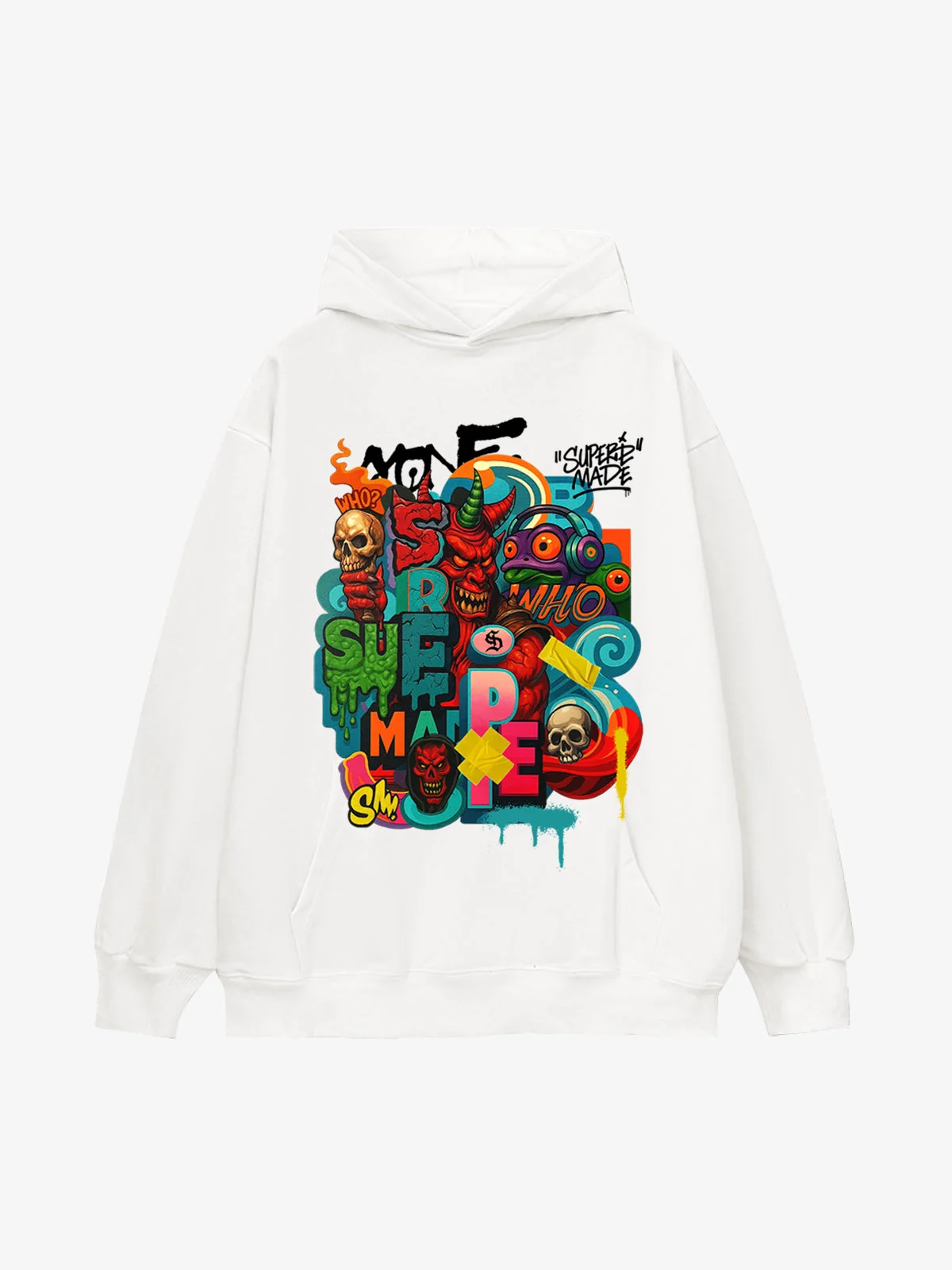
Printing is priced per piece on the same quote as the garment. For DTF, the size of the print and the number of placements set that price. The transfers themselves are costed by the square foot of film. An 11 × 11 in full front covers 121 square inches, about 17 times the 7 square inches of a 3.5 × 2 in left chest.
On Made to Order, the pattern and sample are billed first, at $80–150 for a T-shirt and $120–220 for a hoodie or sweatshirt. A run of 300–500 T-shirts then costs $3.50–6.00 a piece.
Screen printing needs a separate screen for every color, and on FashionMe tracksuit orders they cost $15–45 apiece. A four-color design on $25 screens starts with $100 of setup, which comes to $2 a set over 50 sets and $0.20 over 500. On black and navy hoodies a screen printer can add a base layer under the colors; counted as a color, it turns a three-color design into four colors of setup. Stock Match T-shirts can be quoted with either screen printing or DTF.
What to check on a DTF sample
Before placing a Stock Match order, you can get a single sample through the quote. Made to Order production starts only after you've approved a garment sample with your print on it. For a big design on a fleece or French terry sweatshirt, have the sample printed at the artwork's production width and height; a smaller test won't show how much of the front goes stiff.
- With a lamp held low and off to one side, look for edges lifting at the corners and around small text.
- Stretch the printed area gently across and along the fabric; the print should move with it without separating. On leggings, pull it out to the length it reaches when worn.
- Compare the colors with the brand references you sent, neon and very bright shades especially.
- On dark or bright polyester, look at the white areas for a pink or gray tint.
- Wash it at least five times following your care label. Cracking or peeling after a wash rules the sample out. Curing at the wrong temperature or for the wrong time is one known cause.
- Measure the design on the smallest and largest sizes against the tech pack.
Wash life and care label wording
A DTF print is rated for 50 to 100 washes but risks small cracks if it's washed in very hot water. Fabric softener breaks down the glue under the print over time. If the garment needs the dryer, use low heat and take it out while still slightly damp, before the heat can damage the print. A care label for a DTF garment can read:
Machine wash cold, inside out. Do not bleach. Do not use fabric softener. Tumble dry low. Do not iron on print.
Certificates and environmental claims
When a retailer's requirement covers the finished product, STANDARD 100 is the OEKO-TEX label that applies. It tests the garment, thread and buttons included, against more than 1,000 harmful substances, with the strictest limits for products made for babies and children up to 3. ECO PASSPORT certifies production chemicals such as inks and serves as a pre-certification.
The plastic film peeled off after pressing is usually recyclable, but that doesn't make the garment itself "eco-friendly". Under the FTC's Green Guides, marketers shouldn't make an unqualified claim like that in the first place: it's almost impossible to substantiate.
Ordering DTF printing from FashionMe
Stock Match orders start at 10 pieces on a factory style already in production and ship in 7–10 days. Made to Order covers fully custom garments from 50 pieces per style: 7–12 days of sampling, then 15–20 days of production.
A quote request should include:
- Print-ready artwork for every placement, with its size for each size range
- Pantone references for your brand colors, with any neon shades marked
- The garment's fabric and color
- Any certificate your retailer requires, named in full, such as OEKO-TEX STANDARD 100
- Your care-label wording, if you have it
The tiered quote comes back within 24 hours. Request a DTF quote.