Colorway Planning for a Clothing Style
A colorway is one color version of a style, with a color picked for the body fabric and for the trims and print that go with it. A factory that sets its minimum order quantity (MOQ) per color doesn't let colorways pool their pieces toward that minimum. Nothing is cut until you've approved the dyed parts.
Deciding how many colorways to order
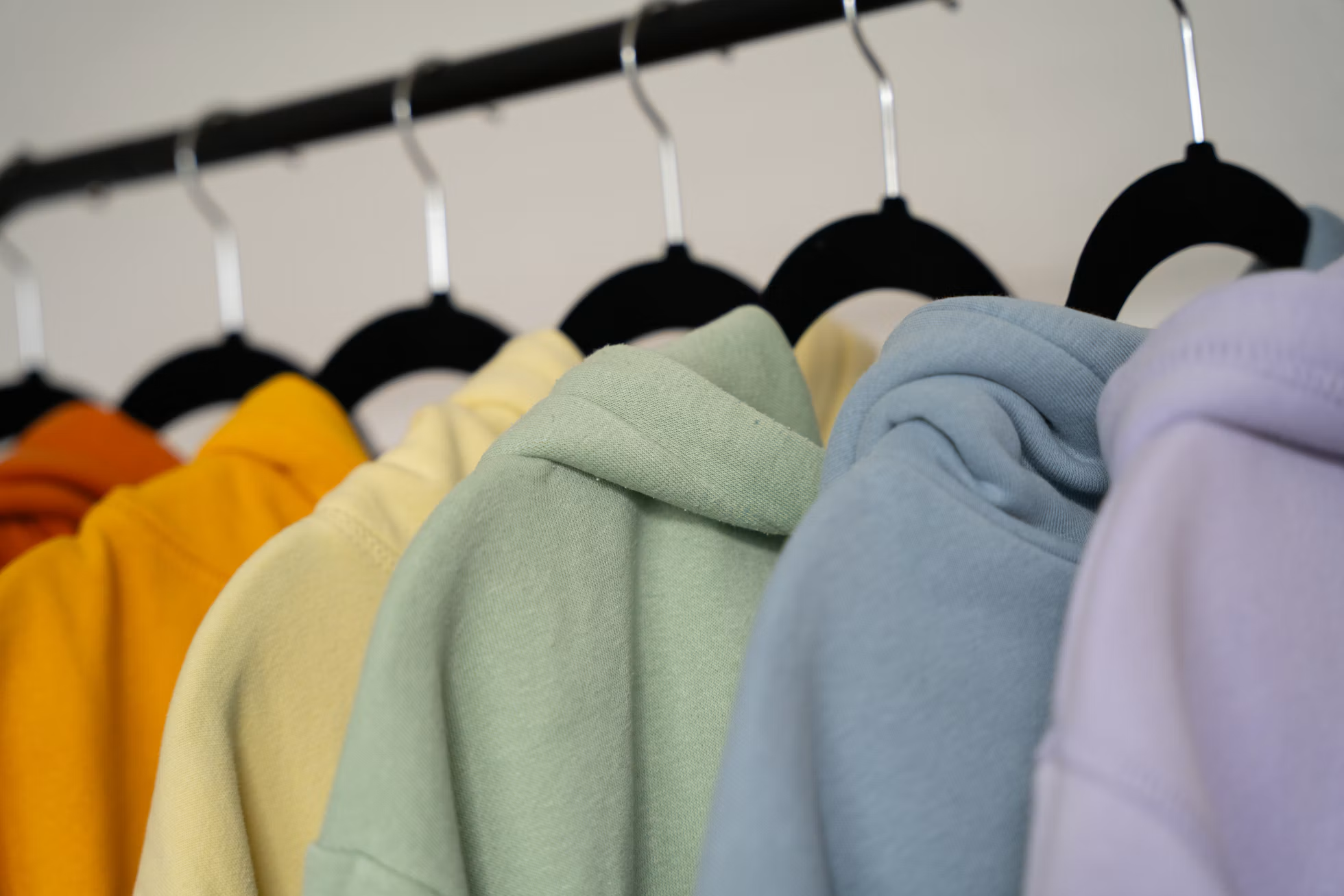
Say you want a French terry zip hoodie in black, navy and oatmeal from a factory with a 50-piece MOQ per color. That's 150 pieces, and six sizes split them into 18 color and size combinations that all have to sell. A fourth color adds 50 more. A factory that counts per style lets your colors share one minimum but caps how many colors the style can be split into. Some factories apply both rules at once.
Unless the mill already stocks your shade, it dyes a new lot for you, and a dye lot has a minimum length that starts around 45 m (49 yd) on some knits and reaches several hundred meters on others. Any color dyed for you has to reach that length by itself, even at 50 hoodies. Where a mill accepts a smaller order at all, it adds a setup fee or a surcharge. A second style in black French terry, if you have one, can share the black lot and bring it up to the minimum without a surcharge.
On a tight budget, launching two colors and holding the third for the first reorder cuts the opening order to 100 pieces while sales of the first two show whether the third is worth making.
Garment dyeing gets around the fabric dye lot because the factory sews the hoodies from undyed fabric and dyes them after they're made. One cut of fabric then becomes whichever of the three colors you need, and a brand testing colors can hold undyed hoodies until sales show which color to dye more of. Dye houses set minimums of 40 to a few hundred garments, and some set them per color. Garment-dyed batches vary more in shade than fabric dyed before cutting, and more pieces come out as seconds. At a loss of one piece in ten, 150 hoodies leave you 135 to sell.
Writing colorways into the tech pack
For the fabric standard, send the mill a physical Pantone TCX swatch on dyed cotton and write its number on the tech pack's color page. A color on screen depends on the monitor. The paper TPG chip costs less, but because it's lacquered paper, a mill dyeing cotton can match it only approximately.
Beside the standard, name two light sources on the color page and mark one as primary, because two fabrics that match in daylight can look different under store fluorescents. If a retailer you sell to specifies lights, use its pair. Otherwise D65 daylight and TL84, the fluorescent used to represent store lighting in Europe and the Pacific Rim, make a common choice.
The rest of the color page is a grid, with materials down the side and the three colorways across the top. The columns show the style number and a color code. If your brand has no codes yet, the NRF (National Retail Federation) set that GS1 US now maintains will do. The body row holds three TCX numbers. The rib row says DTM (dyed to match) all the way across. A brown drawcord on the oatmeal hoodie, with matching drawcords on black and navy, means a brown reference in one cell and DTM in the other two. Lower rows cover the label and the hood lining, and the zipper row also needs the finish of the teeth and slider if the zipper is metal. Any cell a colorway doesn't use gets N/A.
Thread, zippers and other trims
Everything on the hoodie except the French terry and the rib comes from trim suppliers, and you choose those colors from their cards, holding a card against the body fabric under your two lights. A shade picked off a card needs no lab dip because the card already fixes it. When nothing on the card comes close, the supplier dyes to match a piece of body fabric or a Pantone number, and that custom shade goes through lab dips just like the fabric.
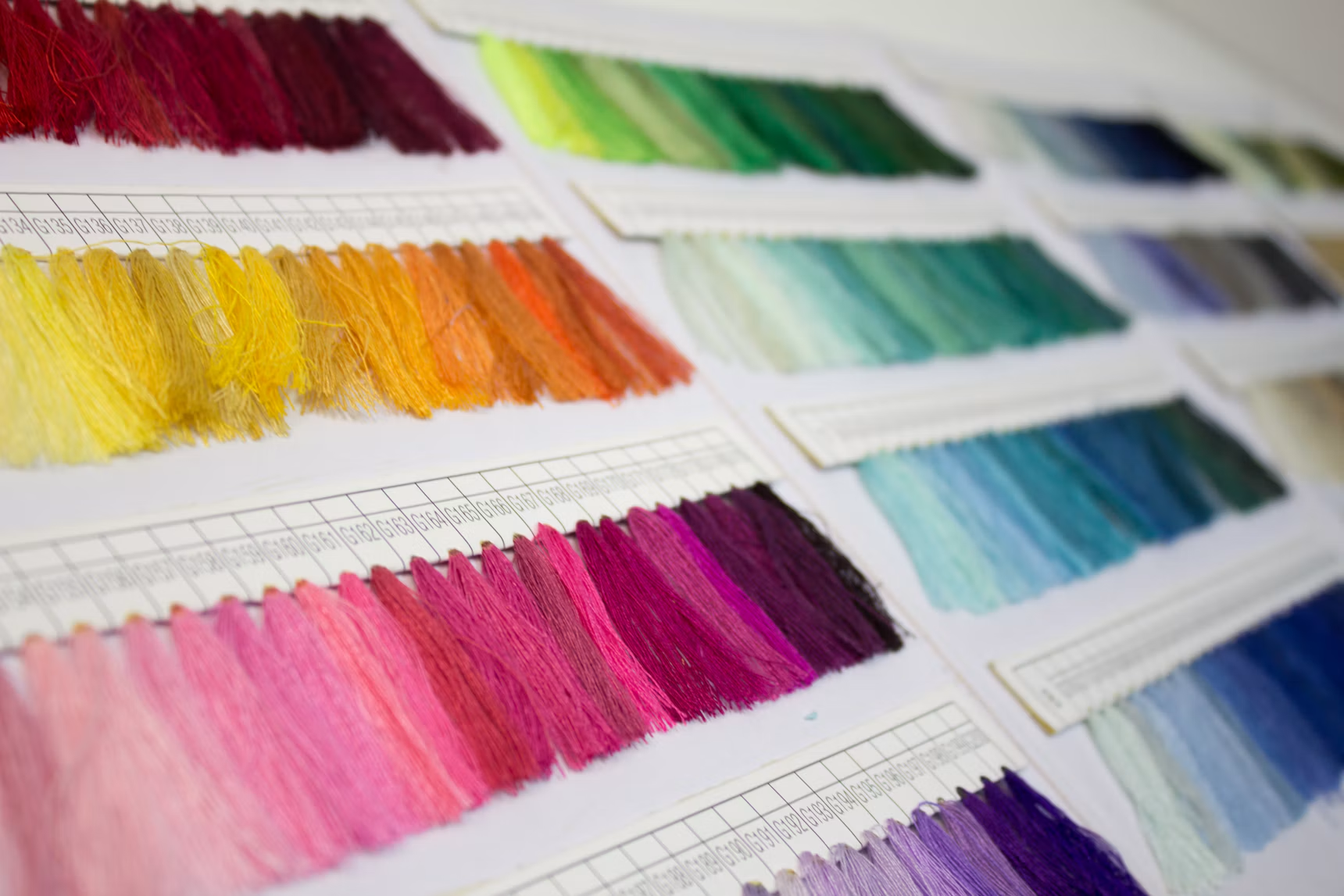
The overlock thread that wraps raw edges inside the hoodie doesn't show from outside, and keeping it to four or five basic colors saves cost when you order several colorways. In a fine multifilament, a white, two beiges and a black cover most fabrics, although the inside seams won't match the body as closely.
On a garment-dyed hoodie, the thread goes through the dye bath with the garment, and cotton thread, or corespun with a cotton wrap, comes out close to the garment's shade. The zipper is sewn in after dyeing and has to arrive in a color picked for the final shade, since nylon and polyester tape would take up little of the dye anyway.
Approving each colorway before bulk
Before dyeing bulk fabric, the mill tries your color on small swatches called lab dips, sending three to six lettered options per color. The French terry and the rib are both dipped by the mill that will dye them in bulk. With two to four rounds for most colors, at five to ten business days a round, lab dips add two to eight weeks before bulk dyeing can start. Few mills publish what dips cost. Ask for the charge in the quote, along with whether it comes off the bulk order.
Dips are judged in a light booth that switches between the two lights on your tech pack. If you don't have a booth, the factory can check the dips in its booth and send notes on the options. A spectrophotometer reports the dip's difference from the standard as a CMC (2:1) ΔE number, and on solid, flat, non-shiny fabric such as jersey, interlock or rib you can approve against that number, starting with a tolerance of 1.0. French terry, like heathers and napped fabric, gets judged by eye. On the hoodie that leaves the rib as the one part a number could check, and even there the real question is whether it looks like the body beside it. Because rib's ridges catch light differently from the flat face of French terry, the two dips go next to each other before you approve either.
Comments that help a dyer are shade directions against the standard, such as "slightly too red" or "a little duller," with no percentages and no recipe advice. Once you approve a dip, cut it in two and sign and date both halves. The mill gets one half to match bulk and reorders against. Keep yours with the standard, out of the light.
A strike-off is your print on a piece of the actual body fabric, and you want one per colorway because ink looks different on black than on oatmeal. It should show the whole design or at least one full repeat of an all-over print. Since bulk printing waits for your approval and a round typically takes two to ten business days, every rejected strike-off pushes the launch back by another round.
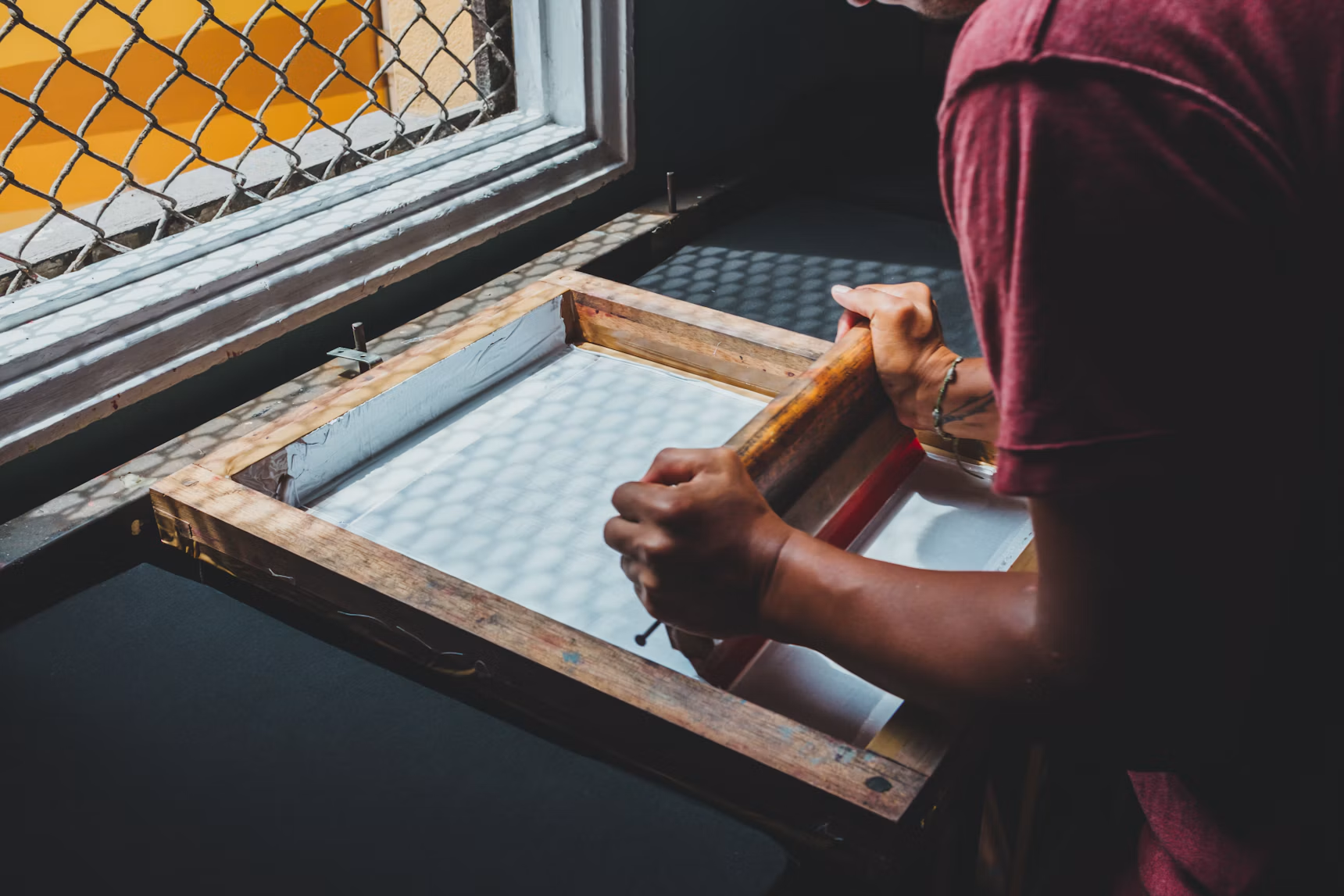
Screen printers charge a screen and setup per ink color, and on the black and navy hoodies they may first put down a base layer under the colors. Where the printer counts that layer as a color, a three-color design costs four colors of setup.
Before bulk cutting, you also approve a pre-production sample in black, navy and oatmeal. Laid flat under your primary light, a sample shows a panel that's off from the rest at a glance, and going down the color grid with the DTM parts held against the body catches trims that drifted. Approve the samples in writing once the print matches the strike-off.
Colorfastness in dark and contrast colorways
Black and navy hold more dye than oatmeal, and in a crocking test, where the fabric is rubbed against a white cloth, more of that dye comes off. Wet results come in about a grade lower than dry. Since fastness depends on the dye and on the depth of the shade, a pass on oatmeal tells you little about black or navy. All three colors go to the lab, along with the zipper tape and the drawcord.
Labs grade the results on a gray scale from 5, meaning no visible change, down to 1. In the purchase order, set minimums for standard apparel at 4 dry and 3 wet on crocking under AATCC TM8 and 3 on laundering under AATCC TM61. One 45-minute TM61 test stands in for about five home launderings. For color-blocked styles, raise wet crocking to 3.5 and laundering to 4.5. Dye transfer between folded garments in storage, tested under AATCC TM163, should reach 4.5.
The brown drawcord on the oatmeal hoodie rubs against the body whenever it's washed. The lab can test drawcord and body fabric together and grade the stain the brown leaves on the oatmeal, with 4.5 as the minimum.
Checking bulk and reorders
Small differences in temperature and dyeing time between the lab and a production machine shift bulk away from the dip shade. Lots differ from each other, and rolls within one shipment vary as well. Before cutting starts, the factory can send a shade band, with swatches from all the rolls sorted into shade groups. Hold the groups to the dip tolerance, 1.0 on a flat fabric and a visual match on French terry, and turn down any group that misses it.
The purchase order should say that a garment's panels, and both pieces of a matching set, come from rolls in one shade group. Mixed groups show at the seams, where a sleeve from one roll meets a body from another.
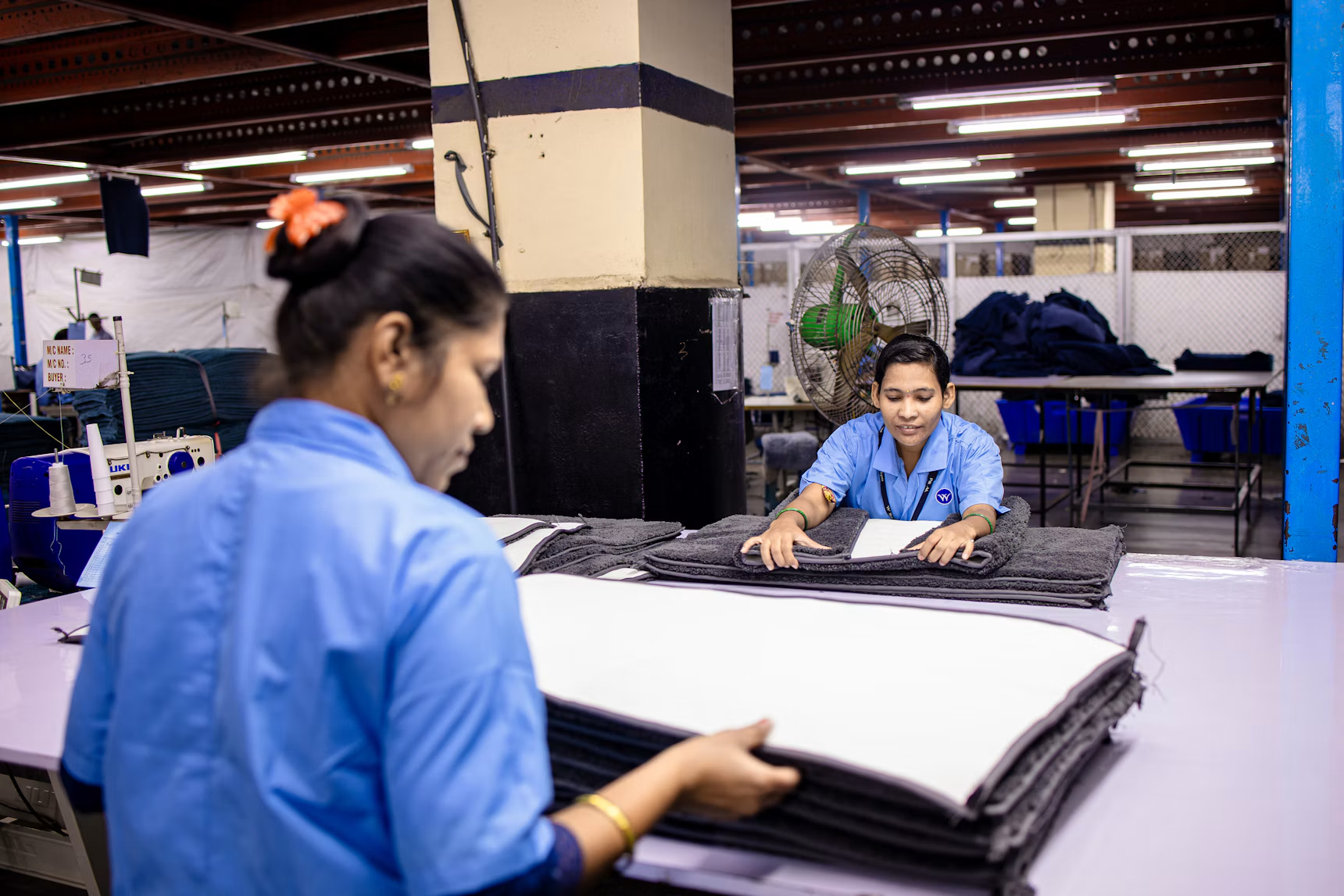
When a reorder goes into a new dye lot, the mill should match it to its half of the signed dip. Matching to the previous delivery lets small differences add up from one order to the next. Your half is what you check the new lot against.