How Are T-Shirts Made? The Complete Manufacturing Process
Cotton T-shirts are made by spinning fibers into yarn, knitting that yarn into fabric, and cutting and sewing the cloth into garments. A basic crewneck has a body, two sleeves, and a separate neckband. Dyeing and decoration can take place at different stages of production, according to the design.
Preparing the Cotton
At the cotton gin, machinery separates the fibers from the seeds and removes plant debris. The cleaned fibers, called lint, are pressed into bales for transport to a spinning mill. Information about fiber length, strength, and other properties accompanies the cotton used to plan a spinning batch.
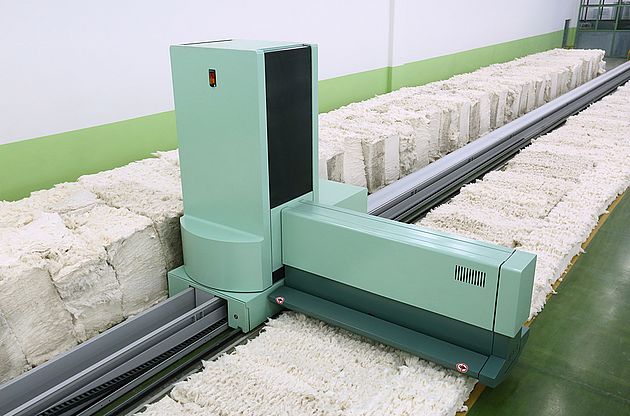
The mill arranges selected bales together, and an opening machine takes small tufts from several bales on each pass. Air carries the tufts through cleaning and blending equipment. At the carding machine, wire-covered surfaces separate and align the fibers into a thin web. This web is gathered into a loose, rope-like strand called a sliver. Several slivers then pass together through drawing rollers running at progressively higher speeds. The rollers draw the combined material down to a more even strand and improve its alignment. The resulting sliver coils into a tall can.
Spinning the Yarn
The description combed ring-spun cotton refers to preparation and spinning operations used for the yarn. Combing removes short fibers and small fiber tangles called neps. Further drawing evens out the remaining material before a roving frame makes a thin strand with enough twist to hold together during handling.
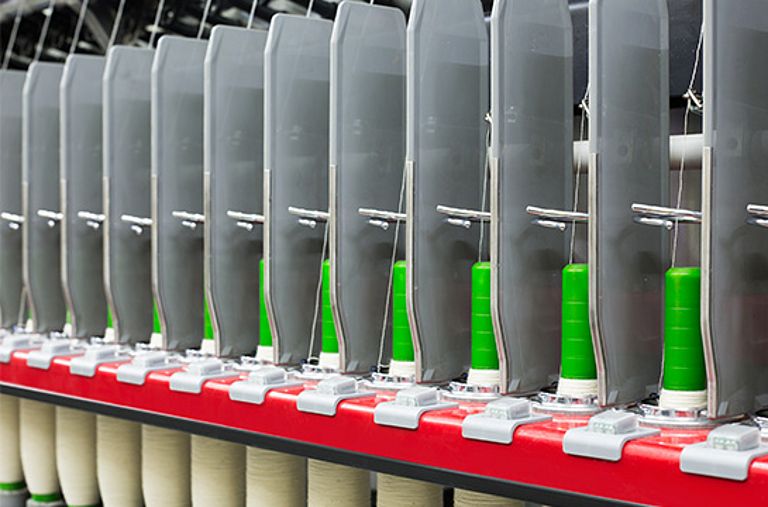
That roving feeds the ring-spinning frame. Rollers draw it down to the required yarn thickness. The ring-and-traveler mechanism inserts twist as the yarn winds onto a spindle-driven bobbin. The twisted fibers grip one another through friction. A winding machine transfers the yarn to larger cones for knitting.
Rotor-spun yarn starts with sliver fed into an opening roller. Individual fibers travel into a rapidly rotating cup and collect at the forming end of the yarn. The machine withdraws the yarn continuously onto a package ready for the knitting room.
Knitting the T-Shirt Fabric
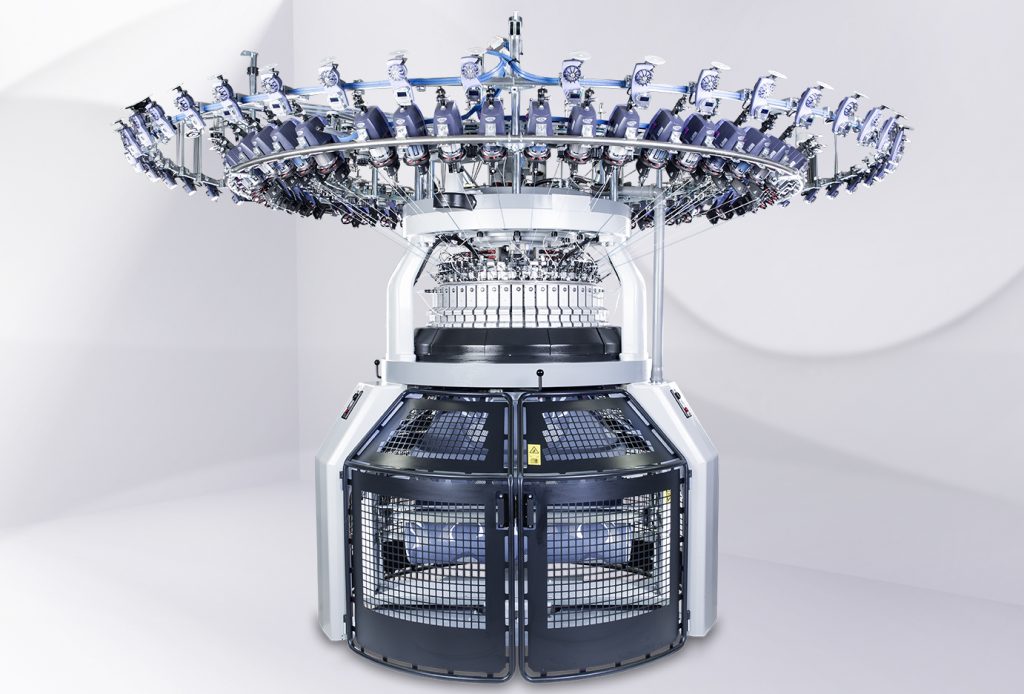
Cones are arranged around a circular knitting machine and connected to its yarn feeds. They carry cotton yarn or the cotton-polyester blend specified for the shirt. For yarn-dyed stripes, the colored yarns occupy feeds in the order needed for the repeat. An additional feeder can supply elastane for a stretch jersey. Guides and tension controls regulate the yarn delivery to the needles.
Needles around the cylinder draw new loops through existing ones. In single jersey, these loops form the small V-shaped stitches seen on the outside of a T-shirt. Their shape changes as the fabric stretches across the body. The amount of yarn fed into each stitch affects its size and the fabric's density. As rows accumulate, the cloth grows downward as a tube, passing through take-down rollers that collect it as a flattened roll.
Dyeing and Color Matching
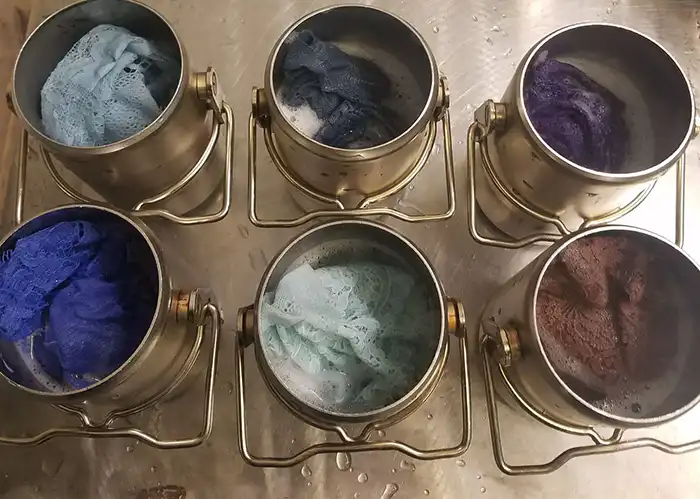
A custom shade begins with a lab dip, a small fabric sample dyed against a physical color reference. The dyehouse records the selected recipe and adapts it to the production equipment.
The production cloth is scoured to remove cotton's natural waxes and oils introduced during processing, allowing water to wet the material evenly. Bleaching produces a white base where the color specification calls for it. Rinsing and neutralizing remove residual preparation chemicals before dyeing.
In a reactive-dye process, dye molecules enter the cotton and form chemical bonds with its cellulose. Temperature, bath chemistry, and processing time are controlled for the selected recipe. Washing after fixation removes residual dye. Production samples are dried and compared with the retained color reference under defined lighting before the batch moves through its remaining finishing operations.
Fabric Finishing
A cotton T-shirt's smooth surface can come partly from an enzyme treatment during wet finishing. Cellulase acts on protruding cellulose fibers, and mechanical agitation helps remove the loosened surface fuzz. A softener may also be applied to change how the yarns move against one another and how the cloth feels against the skin.
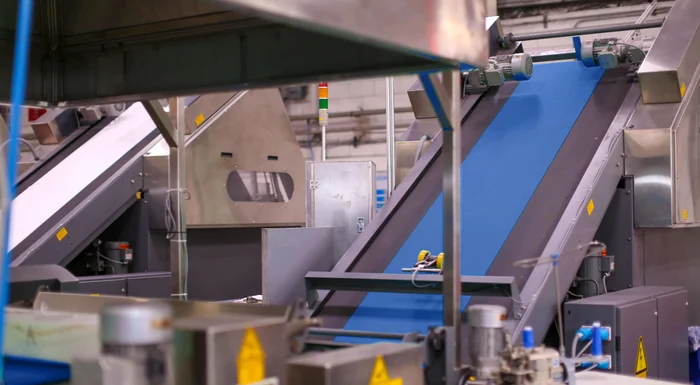
Drying and mechanical finishing establish the dimensions supplied to the cutting room. At a compactor, steam and controlled feeding let stretched knitted loops settle into a shorter, denser arrangement. The cloth loses length as it compacts, becoming heavier per unit area. This reduces the length shrinkage remaining for later laundering.
GSM expresses fabric mass in grams per square meter. A hypothetical 200 GSM order with an agreed tolerance of ±5% allows 190–210 GSM. The reading is taken from cloth that has received the specified dyeing and finishing, alongside its finished width.
Developing the Pattern
A dropped shoulder is formed in the pattern by extending the body beyond the wearer's shoulder point. The sleeve attaches farther down the upper arm, and its shape is developed to fit the resulting armhole.
For a conventional side-seamed crewneck, the pattern set contains front and back body pieces, sleeves, and a neckband. The front neckline sits lower than the back. Seam allowances and hem turnings are included around the relevant edges, with matching marks at joining points. The pieces are cut and sewn into a sample for fitting and adjustment.
Grading extends the fitted pattern into the size range. Each measuring point receives its own increment. The following illustrative size specification increases half chest by 2 cm between sizes, adding approximately 4 cm around the garment.
| Finished Measurement | Base Size | Next Size |
|---|---|---|
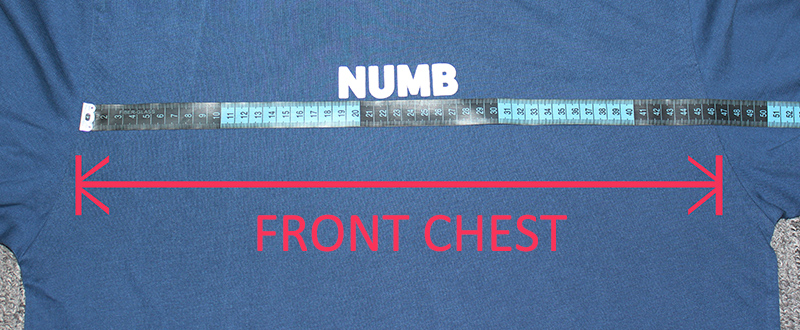
| Half chest, laid flat | 56 cm | 58 cm |
| Body length from high shoulder point | 70 cm | 72 cm |
| Sleeve length from shoulder seam | 23 cm | 24 cm |
Spreading and Cutting
Four complete sets of body and sleeve pieces in a cutting layout, repeated through 40 single layers of cloth, provide the main panels for 160 T-shirts. This example assumes every layer is usable. Neck rib cut from a separate fabric receives its own cutting allocation.
The cutting layout is called a marker. Its arrangement follows the usable fabric width, the order's size mix, and any direction required by the knit or pattern. A striped shirt also needs the stripe positions accounted for where panels will meet.
For side-seamed production, tubular jersey can be slit along its length and opened flat. Spreading lays this cloth in aligned layers with controlled tension. A tubular-body shirt uses fabric knitted to a suitable torso circumference; its upper section is cut for the shoulders, neckline, and armholes.
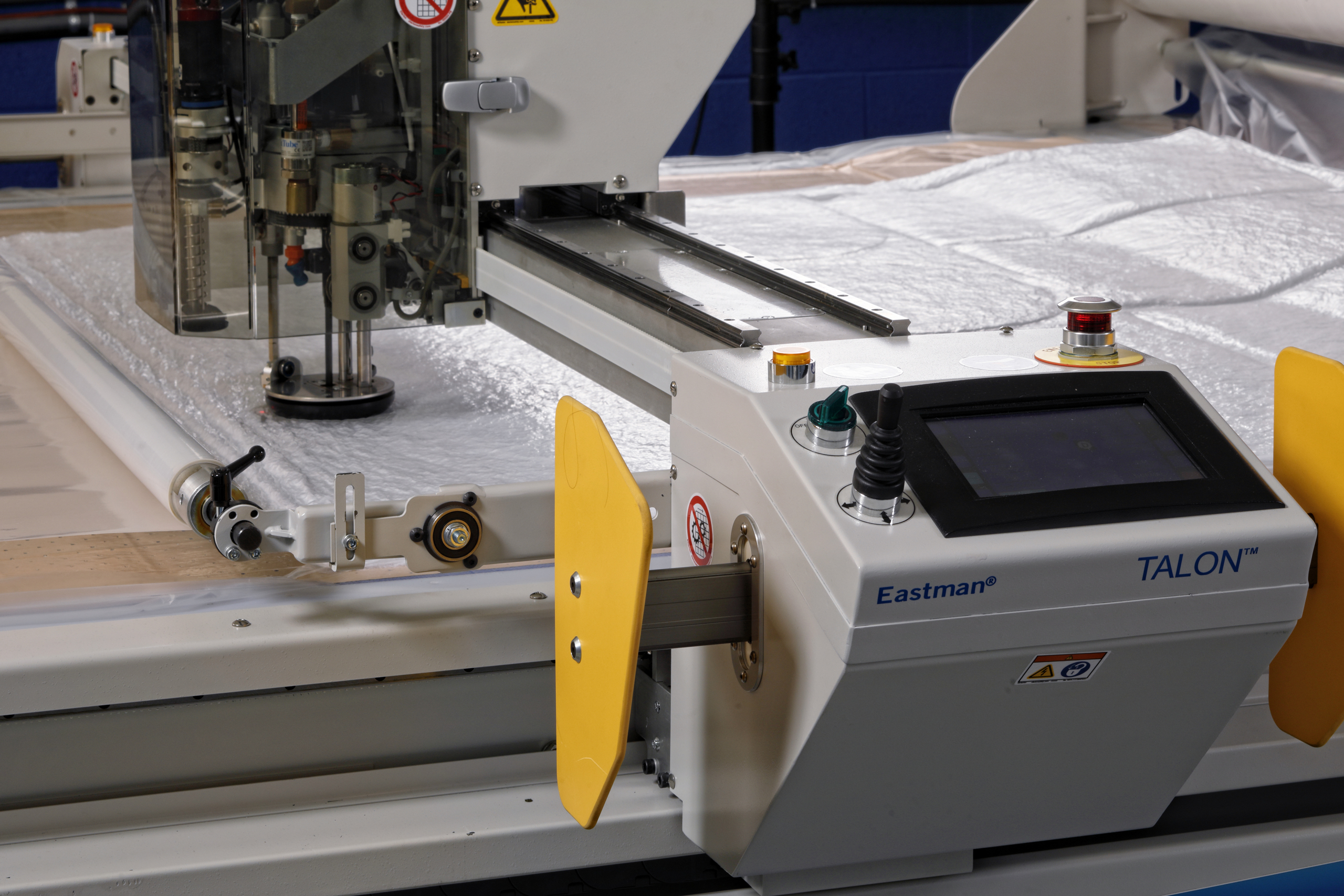
A straight-knife cutter or automated cutting head follows the outlines through the spread fabric. Vacuum holds the stack on some automated systems. The cut pieces are sorted into bundles marked with their size and fabric batch, keeping the matching body panels and sleeves together for sewing.
Assembling the Body and Sleeves
In one common assembly method, the front and back are joined at the shoulders on an overlock machine. A blade trims the aligned edges as the needles and loopers form the joining seam. A four-thread overedge seam can stretch with the knitted panels during wear.
The joined body is opened out for flat sleeve insertion. The operator matches the sleeve cap to the armhole and sews around that curve. Folding the garment brings the sleeve's lower edges together and aligns the body's side edges. A continuous seam can then run from the sleeve opening through the underarm to the body hem.
Attaching the Neckband
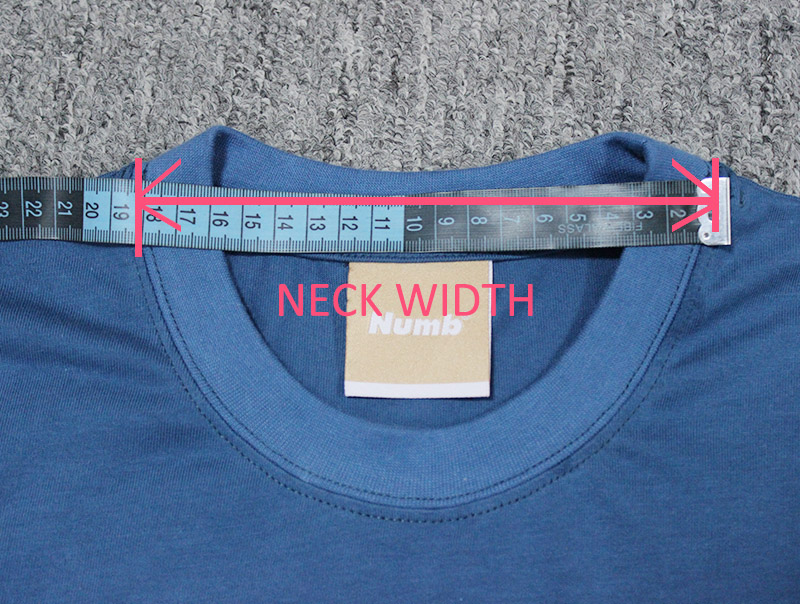
The neckband is cut as a strip with its stretch running around the neck opening. Its ends are joined into a ring, which is folded lengthwise. The ring is usually shorter than the neckline at the sewing line. Its length is set for the rib's stretch and recovery, the finished band width, and the curve of the opening.
Matching marks divide the ring and neckline into corresponding sections. The folded band's cut edges align with the body's neckline, and the operator extends the rib between the marks during attachment. The back-neck joining seam can then be covered with tape that continues toward the shoulders. A sewn brand or size label may be secured near the center back during this neck-finishing operation.
Hemming the Sleeves and Body
The two rows visible around many T-shirt hems are formed by a twin-needle coverstitch machine. Stitch type 406 uses two needle threads and one looper thread. Needle spacing determines the distance between the visible rows. The fabric edge is turned inward and guided beneath both needles, with the looper thread connecting the rows underneath the folded area. A folder or guide maintains the specified hem depth as the operator feeds the sleeve or body opening through the machine.
Adding Prints and Embroidery
A chest graphic can be applied after the T-shirt is sewn. The shirt is loaded over a printing platen with the front held flat above the back, positioning the design relative to the neckline. Artwork covering large sections of a cut-and-sew garment can be printed on fabric or individual panels before assembly.
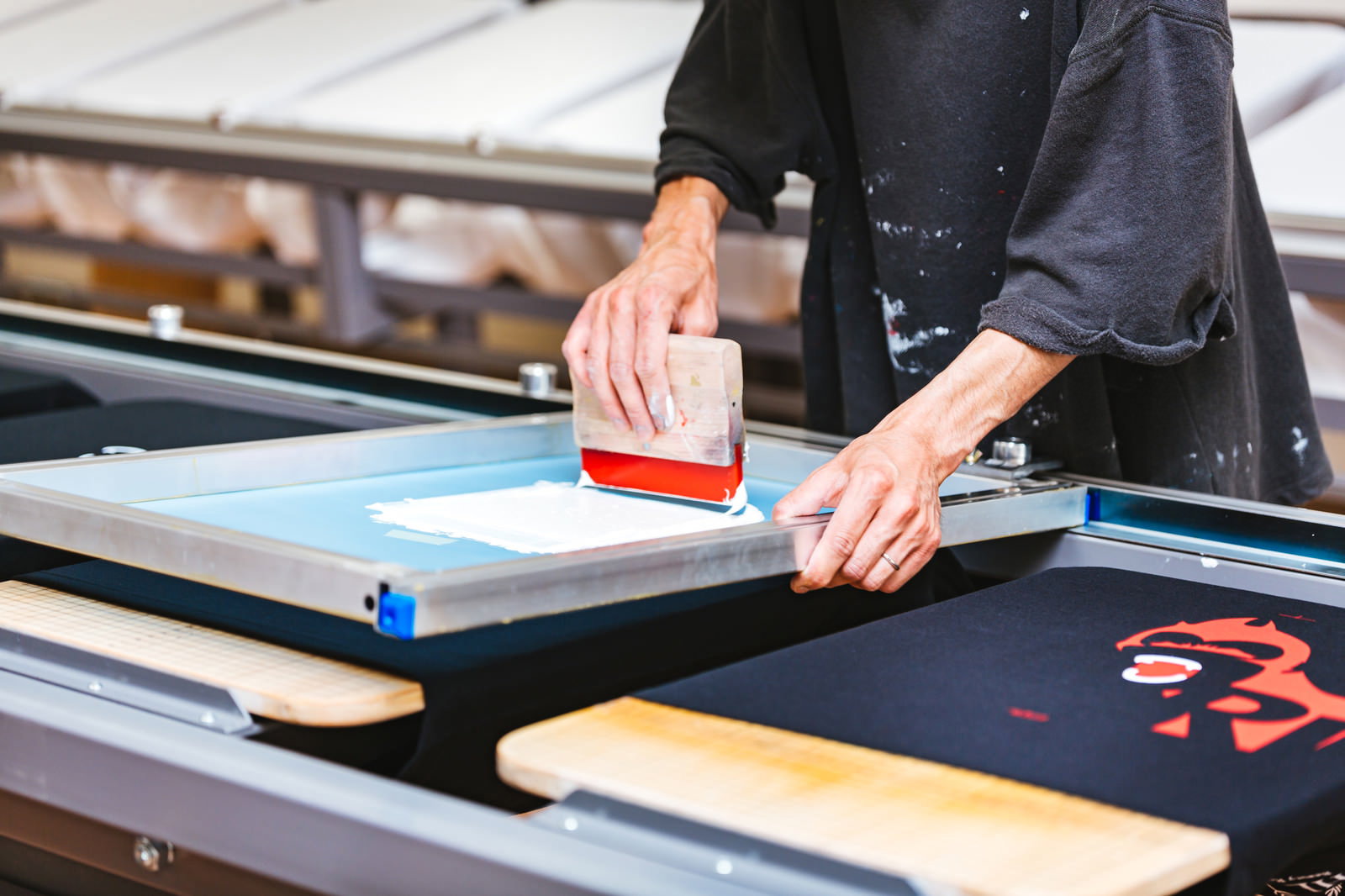
For screen printing, a stencil leaves selected areas of mesh open. A squeegee pushes ink through those openings onto the cloth. Multicolor work commonly uses a screen for each color, aligned so the printed sections meet in position. Heat cures the completed ink deposit according to the ink system.
| Method | How the Image Reaches the Shirt |
|---|---|
| Direct-to-garment printing | Inkjet printheads apply the digital artwork directly to the fabric. Pretreatment prepares the print area where required, particularly for white ink. The image is heat-cured using the system's specified settings. |
| Direct-to-film transfer | The artwork is printed onto a carrier film and coated with adhesive powder. Heat melts the powder. A press then bonds the image to the T-shirt, and the carrier is peeled at the temperature specified for that transfer. |
Embroidery uses a digitized stitch file. A hoop holds the fabric and supporting backing at the machine, which follows the programmed stitch paths. On a knit T-shirt, cut-away backing can remain beneath the logo after the excess has been trimmed from its perimeter.
Garment Washing and Dimensional Checks
Garment-dyed T-shirts receive their final color after sewing. The body, neckband, and sewn seams pass through the dyeing treatment together, with thread and trims selected for the planned appearance. A garment wash can also soften an assembled shirt or develop a washed surface effect.
Development samples are laundered under the proposed care instructions to measure dimensional change. The record identifies the wash temperature, drying method, cycle count, and conditioning before measurement. Body length, chest width, and sleeve length are measured at the same points before and after laundering, with a separate result for each dimension. Inspectors also record the neckband's shape and any rotation of the side seams. The test procedure and permitted dimensional change are agreed for the product.
In an illustrative test, body length changes from 70.0 cm to 67.9 cm, a reduction of 2.1 cm:
Length shrinkage = 2.1 ÷ 70.0 × 100 = 3%.
Final Inspection and Packing
At final inspection, the measurement sheet supplies the measuring points and tolerances for the shirt laid flat. The inspector examines the neckband attachment and hems and checks stitching along the shoulders, underarms, and sides. Printed artwork is measured from the placement points on the order drawing. Fabric shade, decoration, and label details are checked against the corresponding material and design references.
Loose thread ends are trimmed, and any pressing or steaming uses settings suited to the cloth and decoration. Size labels are checked as the garments are sorted into the required packing quantities. Shirts are folded to the packing dimensions and placed in individual packaging or a bulk pack, according to the order. The carton identification matches a packing-list entry giving the style, color, sizes, and quantity inside.