Sweatshirt Manufacturing
FashionMe's Stock Match route starts from a crewneck, quarter-zip or mock-neck sweatshirt that a factory already has in production and ships orders of 10 pieces or more per style in 7–10 days. If you want your own measurements, colorway or wash, the order goes through Made to Order. That route starts at 50 pieces per style; sampling takes 7–12 days and production another 15–20.
FashionMe's pricing page lists Made to Order sweatshirts at $120–220 for the pattern and sample and $8.00–14.00 a piece at 300–500 pieces.
French Terry and Brushed Fleece
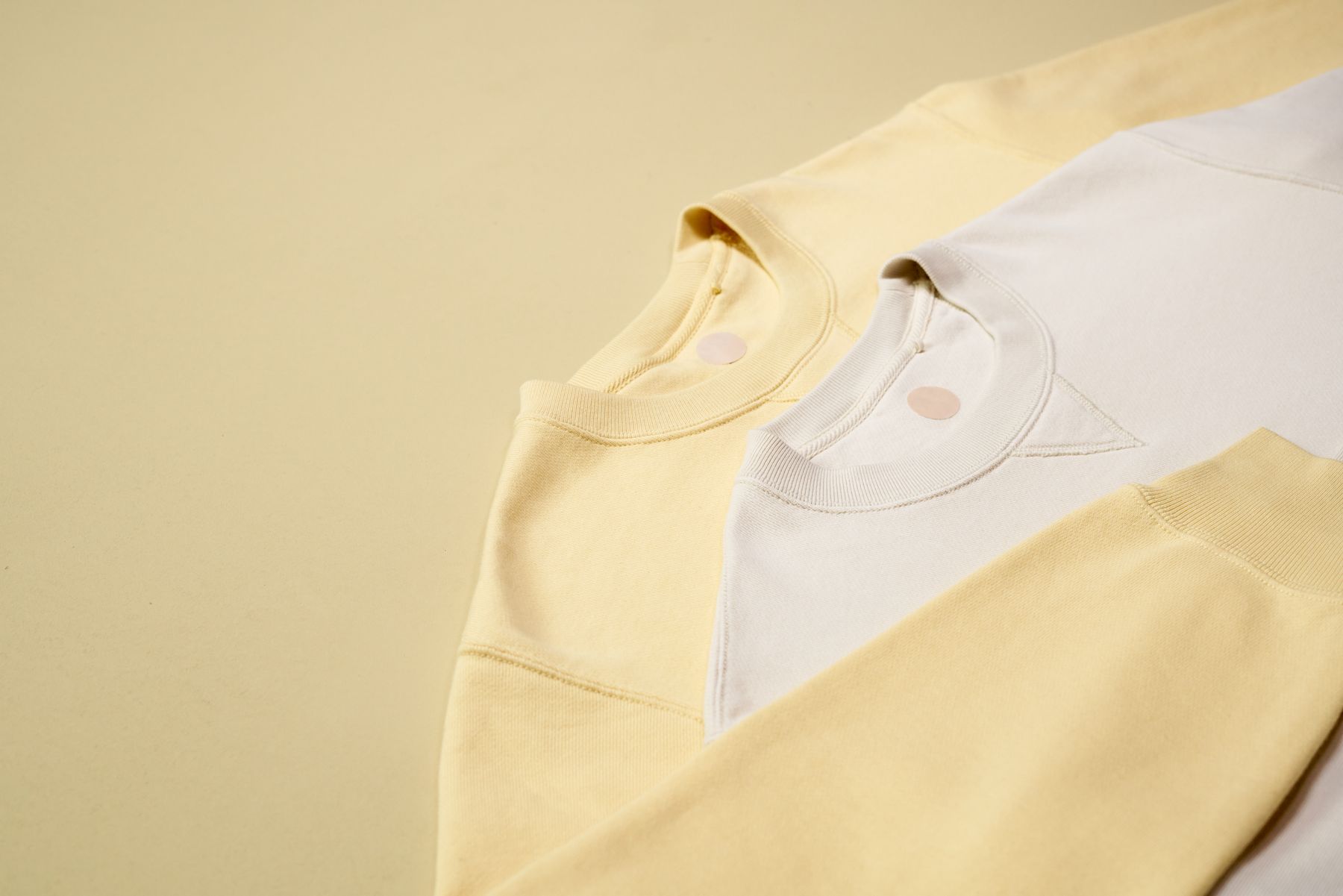
Both sweatshirt fabrics are knitted with a smooth face and small loops on the back. French terry keeps those loops. Fleece starts out the same and then gets brushed, which lifts the loops into a soft pile and makes the fabric fuller and bulkier.
The crewnecks FashionMe matches from stock are 330–420 gsm brushed-back fleece. They share mills and weights with the stock hoodies. For Made to Order, the nearest published figure is the custom hoodie range: 350–500 gsm, loopback or brushed, in cotton or cotton-poly.
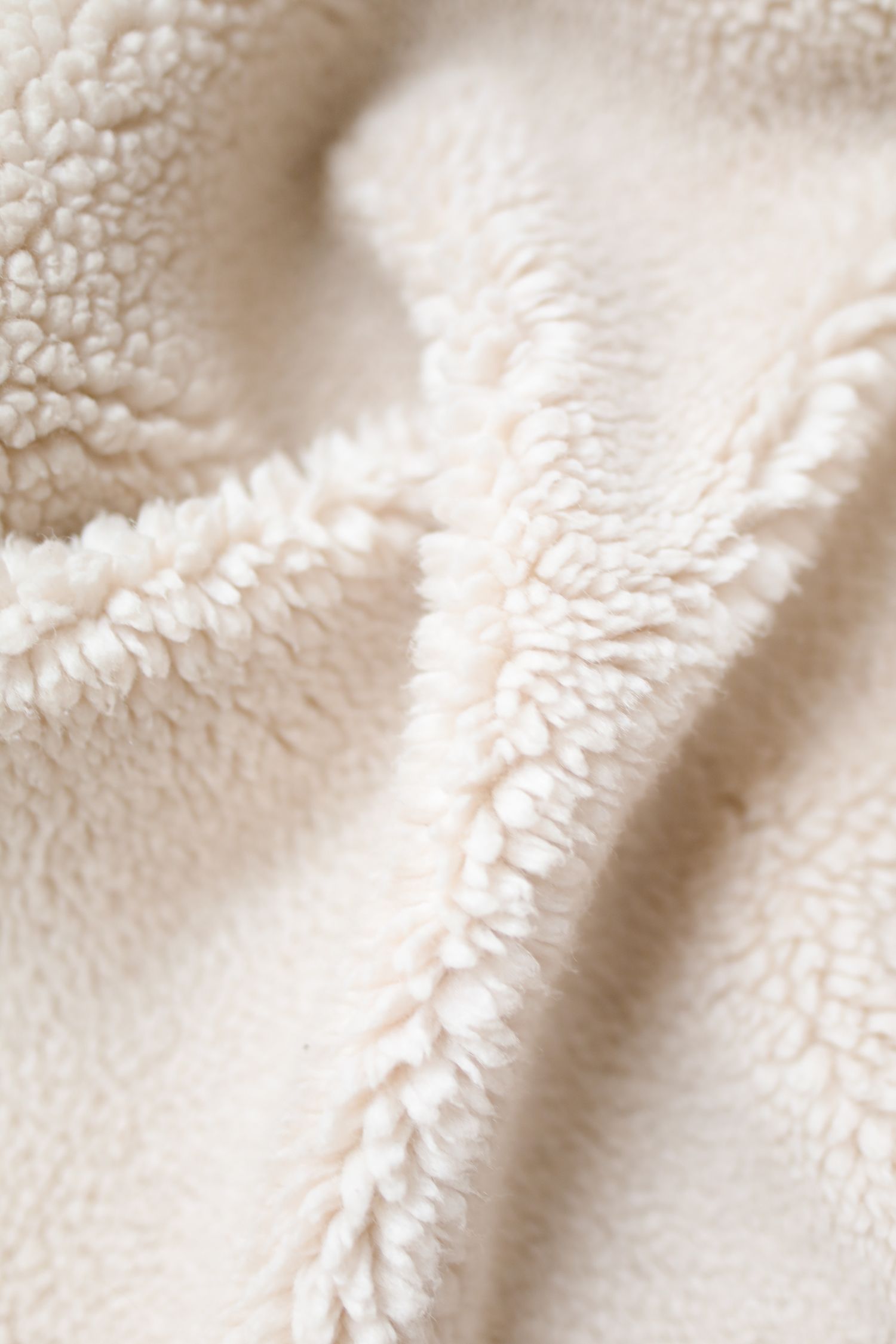
The open loops let air through and soak up moisture. A standard French terry weighs around 220–300 gsm, and heavy loop-back knits go up to about 450.
FashionMe's hoodie page says brushed fleece from 400 gsm up reads as premium and 350 gsm suits wear all year round. Fleece that heavy is warmer than French terry.
Stretch French terry adds 3–10% elastane to cotton or a cotton blend.
Put the target gsm on your spec with a tolerance, such as ±5% on weight and width.
One midweight mix is 80% cotton with 20% polyester.
The gsm alone won't tell the mill whether you want loopback or brushed. Name the finish too.
If the bulk fabric changes after you've approved the fit sample, ask for a new fit and shrinkage check on the new fabric.
Set-In, Drop-Shoulder and Raglan Sleeves

The sleeve is sewn into an armhole at the natural shoulder point. Its length runs from the top of the armhole seam along the outside fold to the end of the cuff.

A dropped shoulder lowers the seam onto the upper arm. The body gets wider across the shoulders and needs a shorter sleeve to reach the wrist.
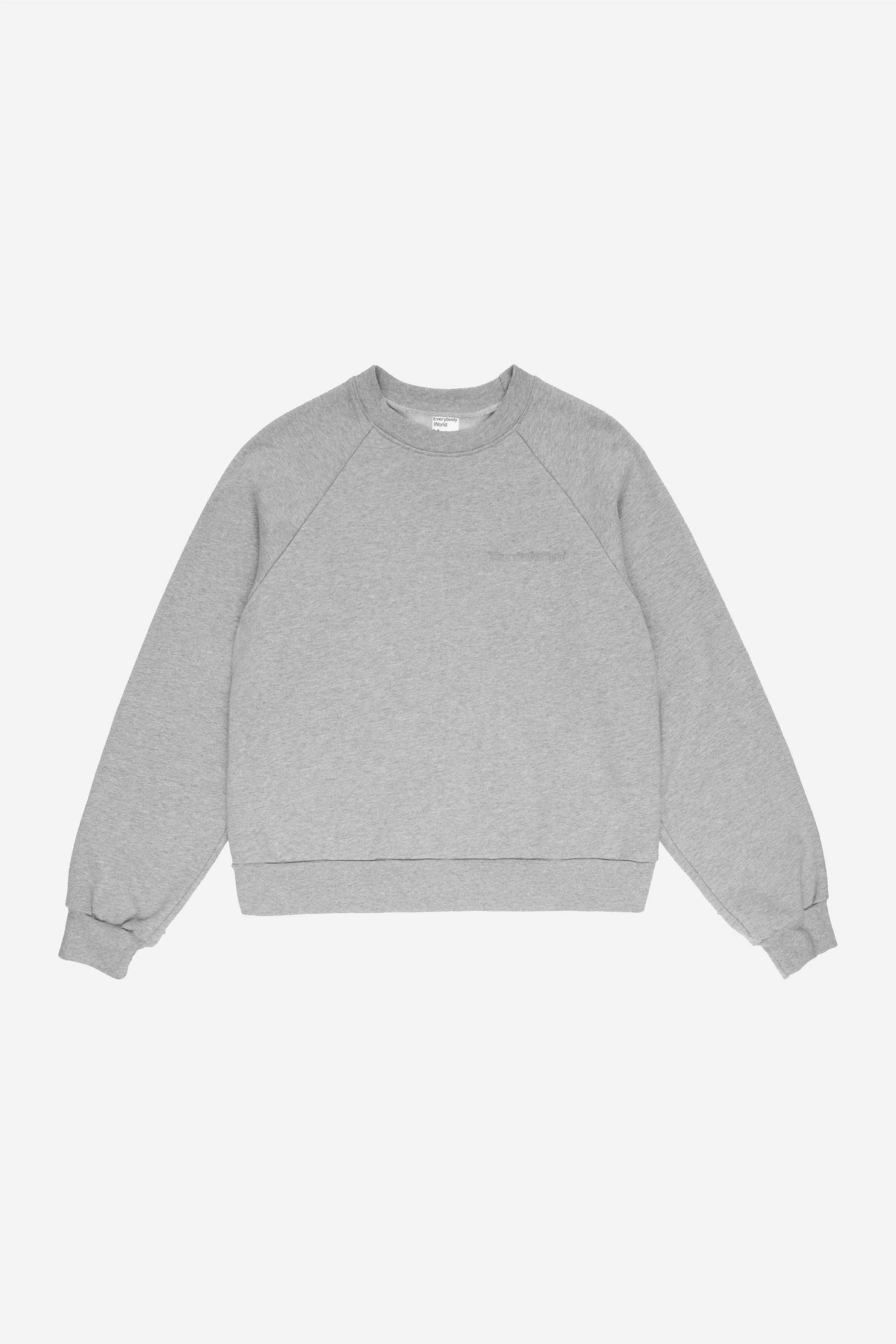
The sleeve runs up to the neckline in one piece, which leaves no shoulder seam to measure from. Raglan sleeve length is taken from center back neck, over the shoulder and down the outside of the sleeve to the cuff.
Neck Rib, Cuffs and Waistband
Sweatshirt rib at the neck, cuffs and waistband is cut shorter than the opening it goes on. Stretching it slightly as it's attached pulls the edge in and makes it sit flat. The usual rule, from Sewing.org, is to cut rib at 2/3 to 3/4 of the opening. For a 16 in neckline that works out to about 10.7–12 in.
The body neckline and the neck rib are separate pattern pieces. Shorten the rib alone and the collar gets tighter. The neck opening cut into the body stays the same.

Rib ratio
A 40 cm rib on a 50 cm neckline gives 80%, a little longer and looser than the 2/3 to 3/4 rule.
Seamwork wants neckband rib to stretch at least 50%. Rib fabrics don't all stretch the same. Set the final ratio with the bulk rib in hand.
With nothing to pull against, the rib stands away from the neck and looks floppy.
It drags the neckline in and can pucker the body fabric along the seam.
Waves almost always come from pulling the rib harder in some places than others as it goes through the machine.
Sweatshirt Measurements
Shrinkage After Washing
Working out shrinkage
A body that measures 70 cm before washing and 68 cm after has lost 2 cm, or 2.86% of its original length.
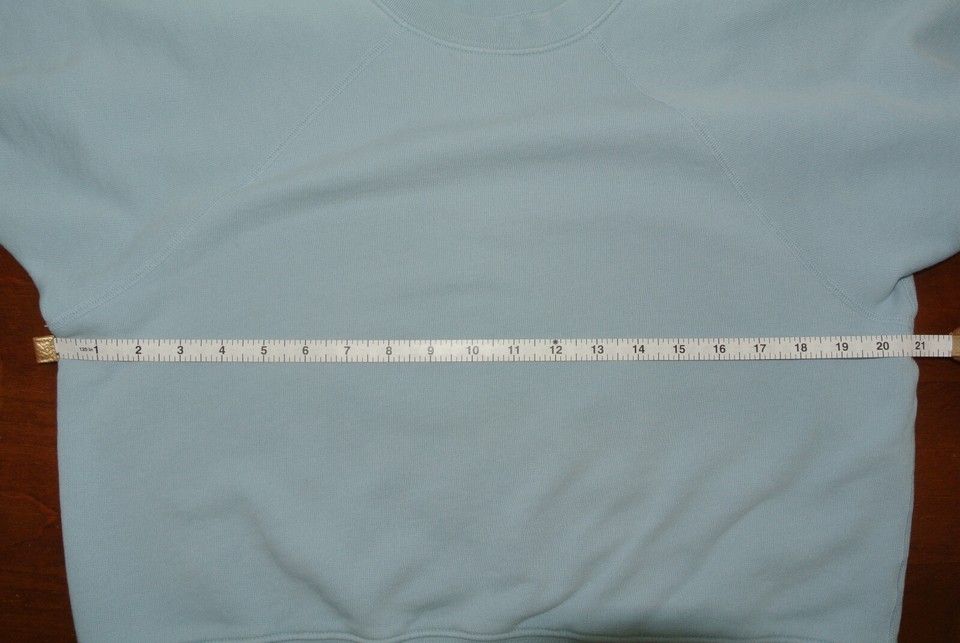
Ask for the sample to be measured flat before it goes into the wash.
The wash has to be the exact process bulk will get, whether that's a plain wash, a garment dye or another finish.
Have the same points measured again after the wash. Length and width shrinkage are worked out separately.
Colony Brands caps knit shrinkage at 6% in length or width after three home washes (AATCC 135). That's one buyer's rule; put your own figure on the spec.
Garment-washed or garment-dyed sweatshirts only show their final shade after that step. Approve the color on a washed piece.
Printing and Embroidery on Sweatshirts
FashionMe does all four in-house and prices them per piece on your quote.
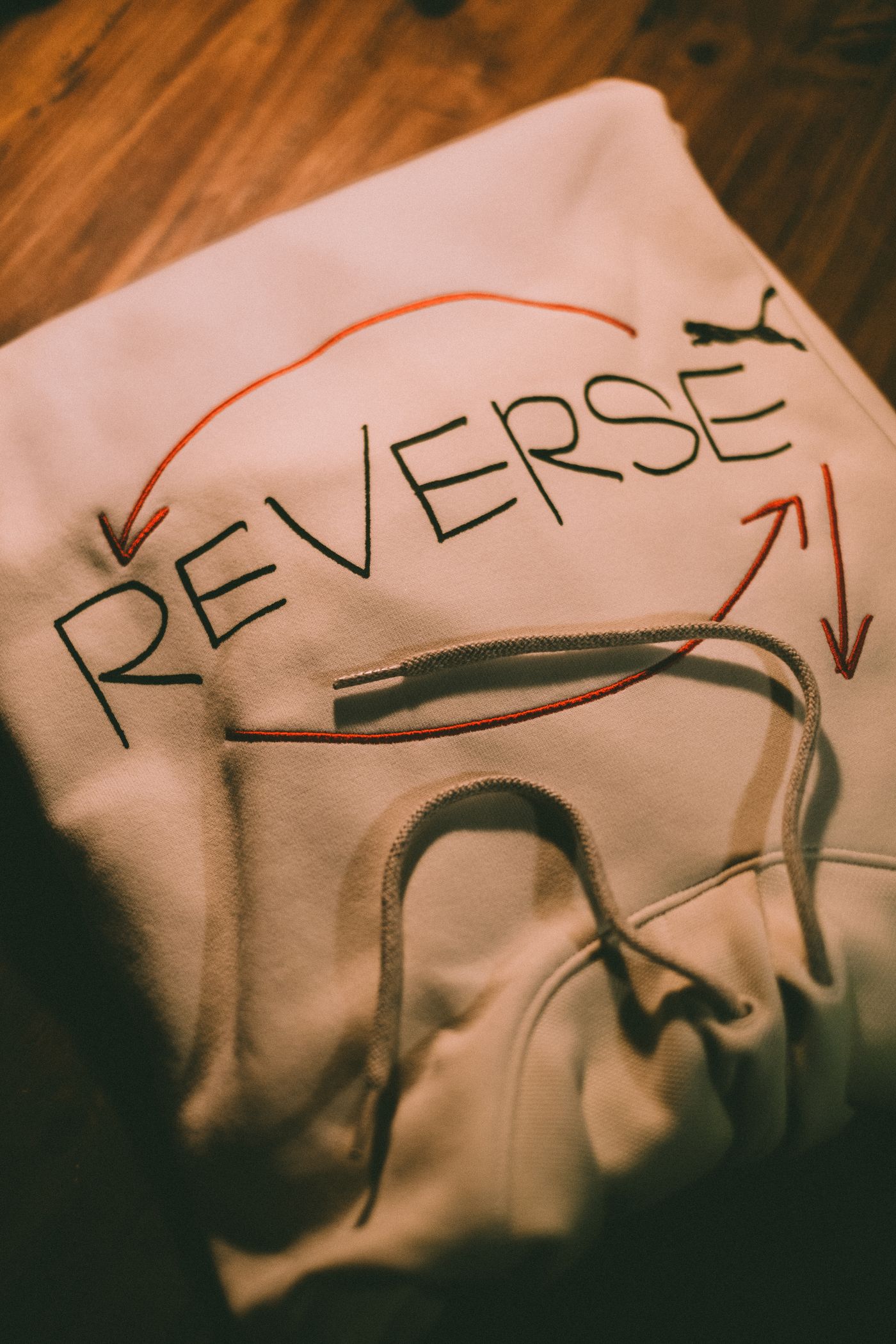
Prints on fleece
Screen printing works on standard mid-weight fleece in 50/50 or cotton-poly blends. High-pile fleece such as sherpa is a problem for both methods: it can't be screen printed, and a DTF heat press can crush the pile. Prints that lay down less ink feel softer.
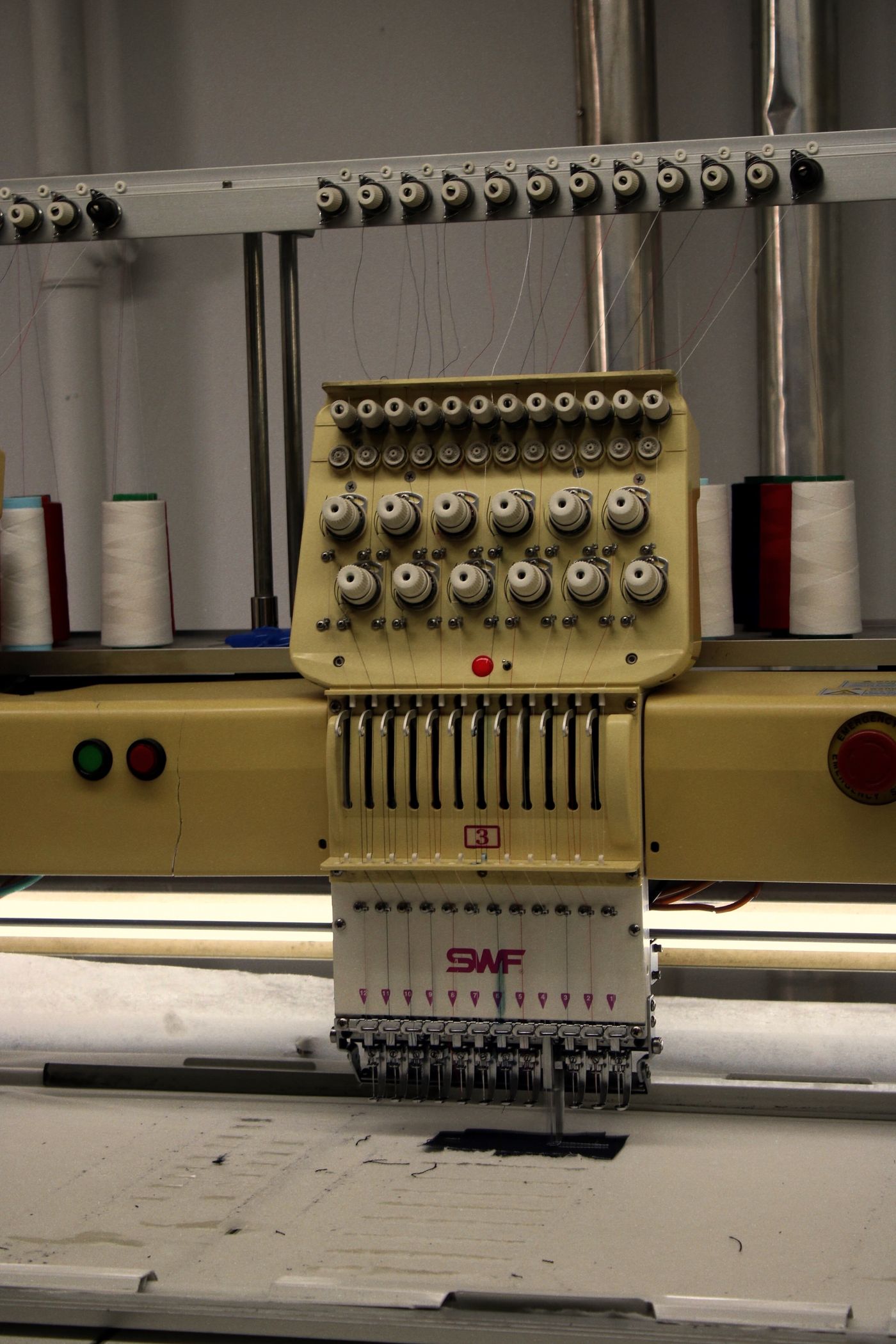
Embroidery on fleece
Embroidery works on every type of fleece and is the only clean option on deep pile. Stitches don't stretch with the knit, which is why a cut-away stabilizer goes under the design. On brushed fleece a water-soluble topping keeps the stitches from sinking into the nap.
Custom Ink puts screen setup at $20–50 a screen. A five-color print needs five. Embroidery goes by stitch count, at a standard $1–3 per 1,000 stitches.
DTF is rated for 50–100 washes and is best for shorter-use pieces.
Every print on your spec needs a size and a distance from fixed points: center front and the neck seam for a chest print, the center-back neck seam for a back print. Sleeve prints are measured from the shoulder seam or the cuff.
If artwork goes on before garment washing, have its position and the fabric around it checked again after the wash.
Checking the Sample
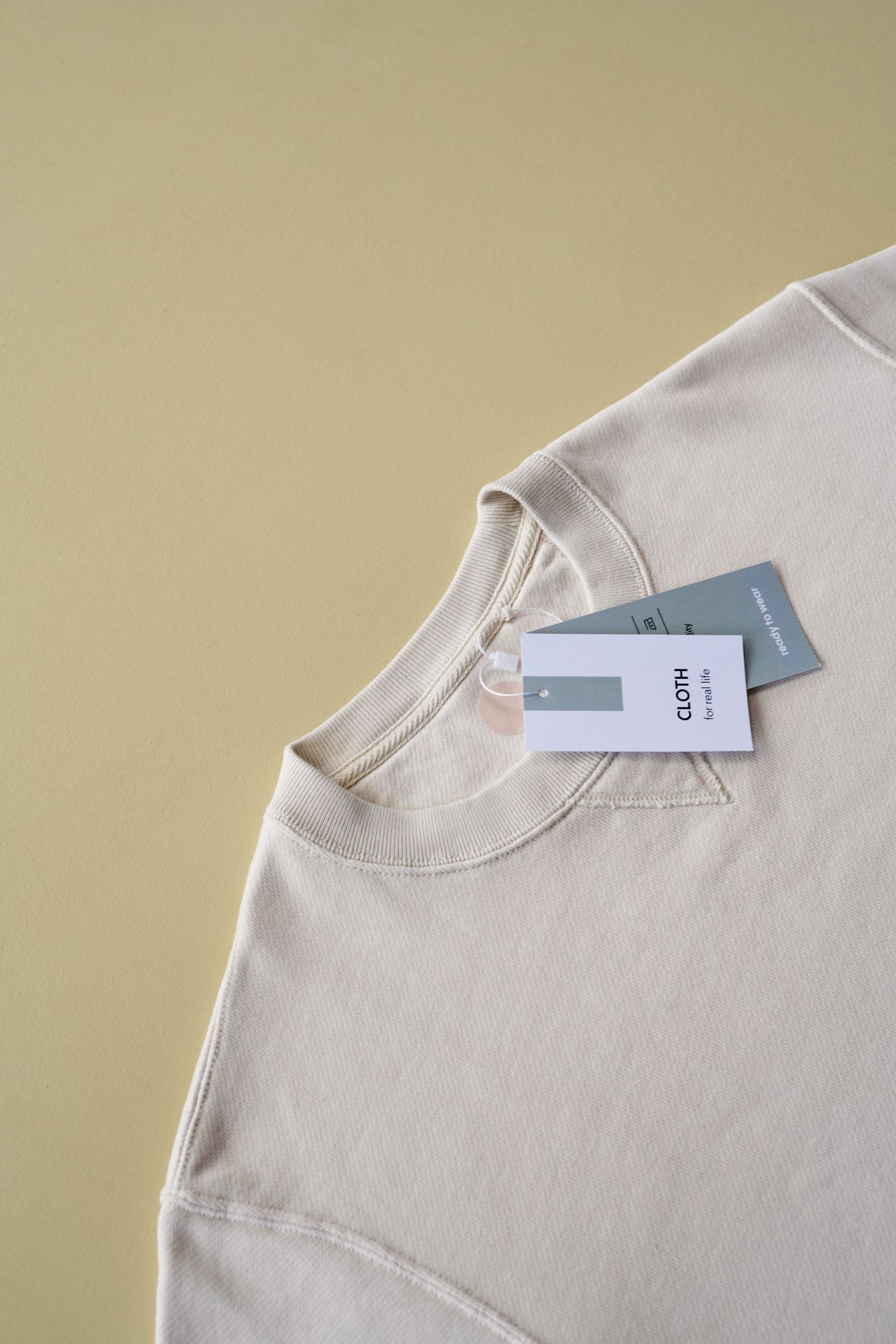
Pull it to its limit and let go. It should come back to its relaxed width with no waves and no puckers at the seam.
Both cuffs should finish level when the sweatshirt lies flat. Stretch them too. A cuff that stays wide has poor recovery.
Look along the hem rib for twisting and for gathers that bunch up in one place.
Every measurement should sit within the tolerance on your spec sheet.
Check the artwork's size and position from the reference points on your spec.
Ask for any changes before you approve the sample, because production starts once you do.
Grading Across Sizes
Chest and length don't grow at the same pace and need separate steps on the size chart. On a drop-shoulder style, check center back neck to cuff in every size after the shoulder has been graded.
Because the neck grows far less than the chest and cuffs hardly change, put a target for the neck opening, cuffs and waistband on the chart for every size.
Bulk Inspection
Every piece is checked against your spec sheet before it leaves the factory.
Standard inspection pulls a sample from the order. To have every piece checked, add $0.18 a piece.
If you bring in your own inspector, the usual acceptable quality limits (AQL) are 0 for critical defects, 2.5 for major and 4.0 for minor. For a 4,000-piece lot at General Inspection Level II that means 200 pieces get checked; the lot passes if 10 or fewer of those pieces fail.
QC on FashionMe's stock crewnecks checks how the collar, cuff and hem rib spring back after stretching. In a FashionMe case study, a streetwear label had defects in more than 4% of its goods. After every piece was checked at the factory, the next three production runs came in at 0.4%.
Labels, Tags and Packing
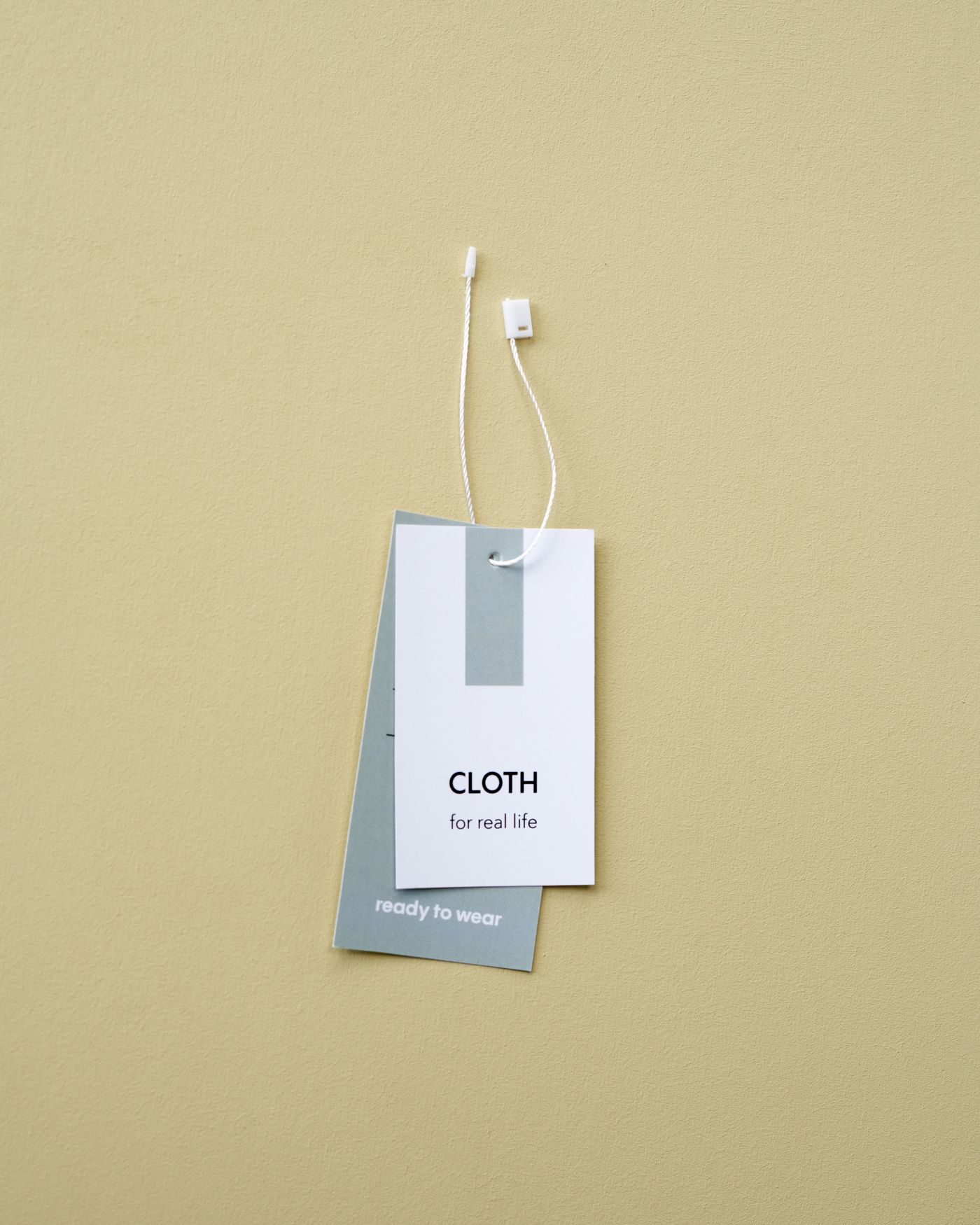
Swapping in your woven or printed label costs $0.35 a piece on Stock Match and needs at least 50 pieces of a style. Made to Order includes it. Keep the label clear of the rib so the neck still stretches.
Fiber content and care instructions should match the French terry or fleece and the rib that go into bulk.
Hang tags are an extra $0.25 each on Stock Match. Attach them at a seam or through the label.
Made to Order includes branded polybags, mailers or boxes. Stock Match orders pay $0.45 a piece for them. Every order on either route also comes with a Launch Kit: five listing images, one creative image and a video of about 10 seconds.
Choosing a Route
Hoodies and crewnecks can go in one order with one QC pass and one shipment, as long as every style reaches 10 pieces.
You pay the supplier's invoice plus a sourcing fee on it: 12% under $5,000, 9% up to $20,000 and 7% up to $50,000. Above that the fee drops to 5% on a custom quote.
The pattern is built from your measurements, tech pack, sketch, photo or a reference garment.
The pricing page gives production prices for 300–500 pieces and lower ones from 1,000. Smaller runs from the 50-piece minimum are priced on your tiered quote.
Request a Sweatshirt Quote
Upload 1–6 files, such as a photo of a sweatshirt you like, a video, a sketch or a tech pack. Within 24 hours you get a tiered quote with the price, minimum and lead time for each route. If you know your target measurements, fabric weight or wash, include them for Made to Order.