Types of Swimwear: 10 Styles and How They Fit
Most of the swimwear people buy falls into ten styles that are made in one piece, in two pieces, with sleeves or as bottoms alone. These four kinds of suit are sized by different measurements.
Pattern makers draft swimwear a little smaller than the body it's meant to fit. The knit stretches over the wearer and sits smooth on the skin even when the suit is wet and heavy. How much smaller depends on the fabric. Buyers who switch a style from a soft knit to a firmer one without redrafting the pattern get a tighter suit.
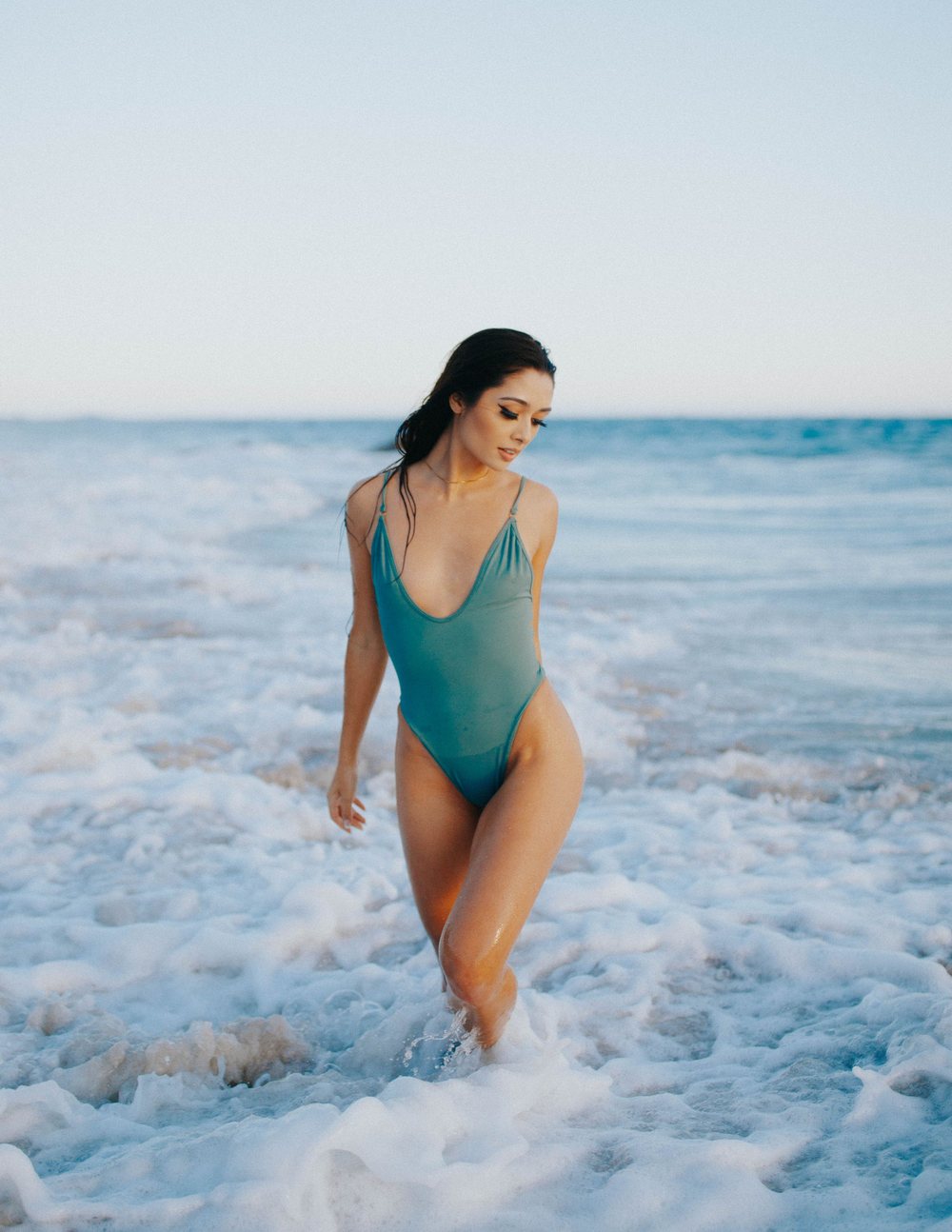
One-piece swimwear
Women with long torsos find that a one-piece cut for an average body drags their shoulders down and pulls the leg openings up into the seat however far they let the straps out. Because nothing separates the top of a one-piece from its bottom, it happens even when their bust, waist and hips match your chart. You'll see it in returns from customers who say the suit is short in the body. Short-waisted women send back suits that bag at the waist and slide off the shoulders. They only spot the problem before ordering if you put a torso-length range on your size chart. To measure torso length, they stand straight and loop a tape from the top of one shoulder down the front, through the crotch and back up to the starting point. Swimmers whose one-piece is long enough in the body climb out of the pool without tugging at the leg openings. Brands with many tall customers have one-pieces cut longer between the bust and the hips. Tall women who don't find one in their length often switch to a two-piece with a long top.
01One-piece swimsuits
The elastic band and removable foam cups inside a typical fashion one-piece rarely give a full bust enough support. Brands sell underwire one-pieces in bra sizes such as 34D. Four band sizes in three cups already make twelve sizes of one style against five from XS to XL. Underwire suits hold the bust up only when the band sits snug and level around the ribs. The cup is big enough when the wire lies flat against the ribs all the way around the breast. Firm elastic along the edge keeps a plunge neckline flat on a small bust. Straps set closer to the neck are the standard fix for a suit that slips off the shoulders in an overhead reach.
Pattern makers draft a one-piece in one sample size and then grade it, or scale it up and down, into the other sizes. They find suits with cutouts or a single shoulder strap harder to grade than plain ones. Women at both ends of your size range should try them on before you approve them. Monokinis have large cutouts at the sides of the waist, and openings that sit right on the sample can end up well off the waist on the largest size you make. One-shoulder suits pull diagonally across a long torso toward the opposite hip.
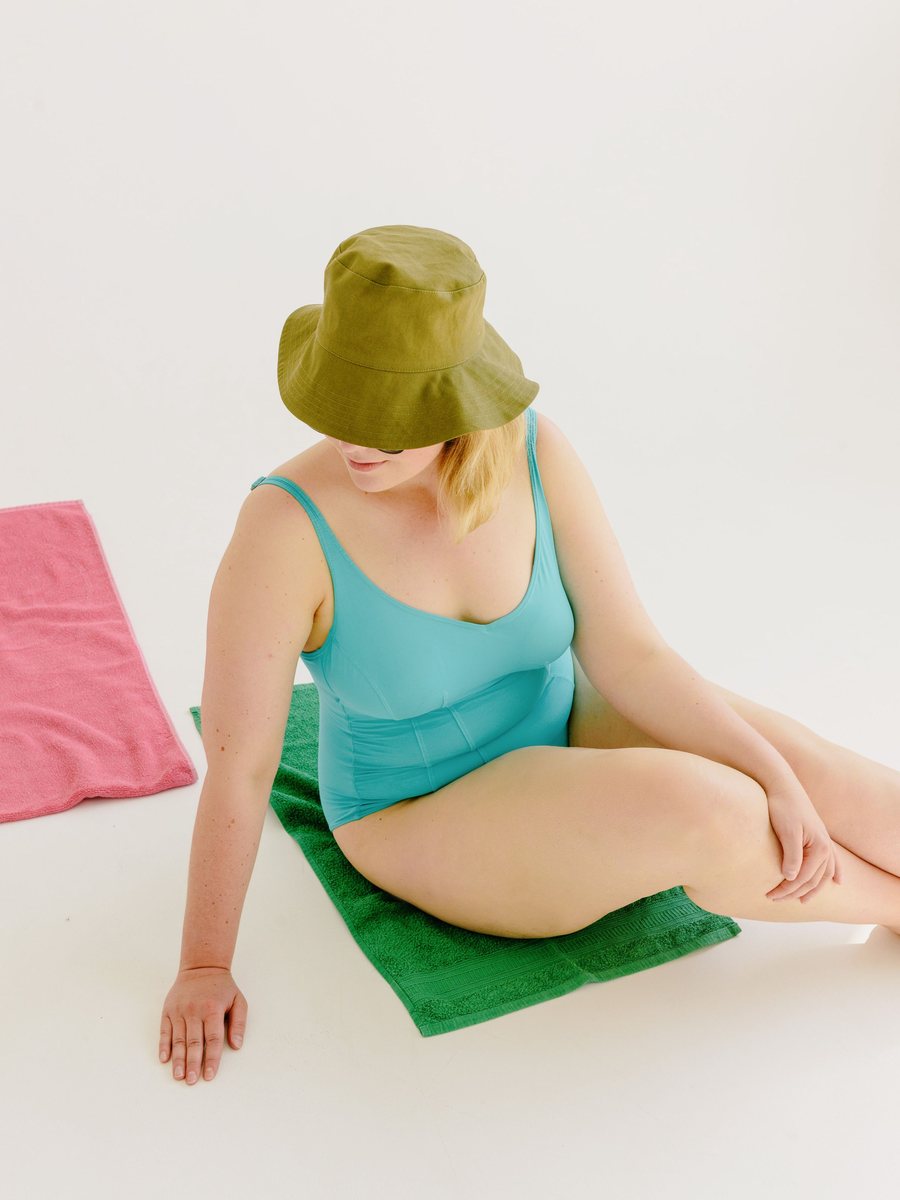
Buyers who order white or pale one-pieces ask for a full lining front and back and check a wet sample for show-through. Swim knits relax slightly once they're soaked. You only see in the pool whether the seat keeps its shape.
High-cut legs ride up on a fuller seat, and brands whose core styles go up to 2XL cut the leg line lower. Patterns graded up from a small sample come out short over the bust and stomach in the largest sizes. Sizes past 2XL fit better when they're graded from a second base pattern drafted on a plus-size body. That pattern has wider straps and a firmer band under the bust. Brands that sell mostly to plus-size women draft their own base pattern that way from the start.
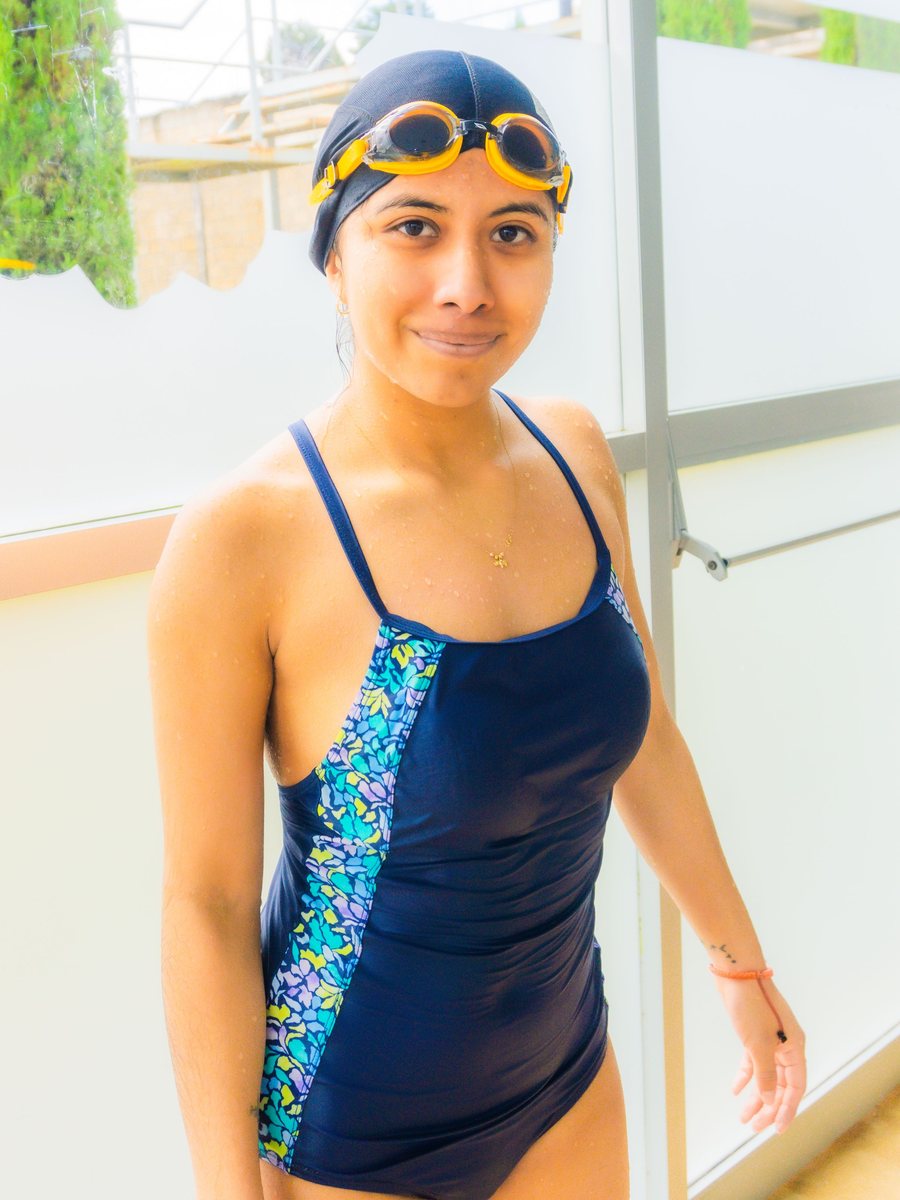
Club swimmers train in one-pieces with open backs that leave the shoulder blades bare and the arms free to swing. Training suits fit as snug as a swimmer can wear comfortably through a whole practice. Plain spandex breaks down in chlorinated pool water until the suit sags. Suits for daily laps are knitted from chlorine-resistant polyester blends that hold their shape far longer and feel firmer than fashion swim knits. You learn little about the fit of a training suit from a sample cut in anything but the production fabric. Racing suits are cut even smaller from thinner, more compressive fabric, and the knee-length ones are so tight that swimmers roll them up each leg a little at a time. Swimmers save them for races. World Aquatics allows women's racing suits to reach the knee and no further.
02Swim dresses
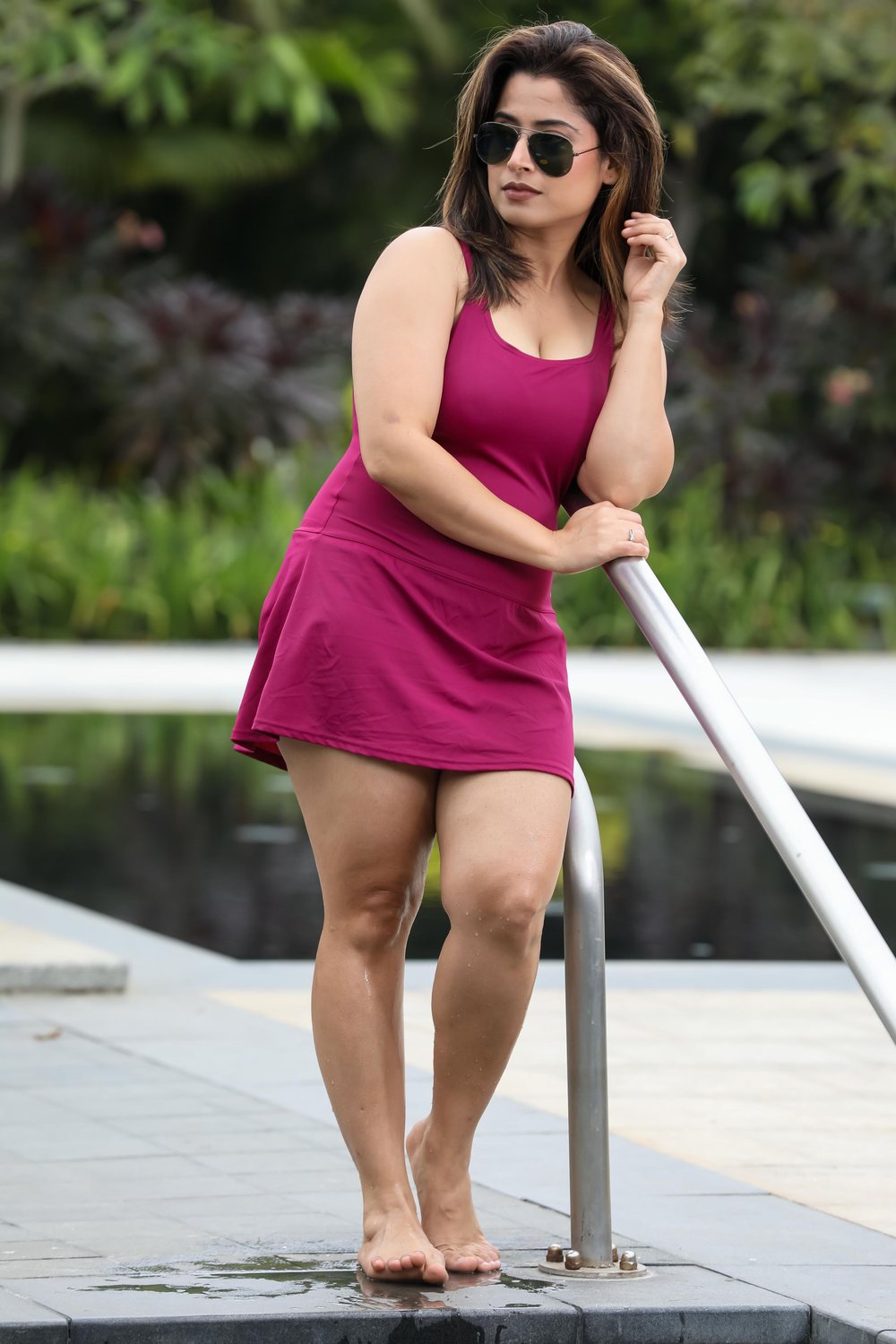
Swim dress customers judge the skirt by whether it covers the seat on a lounger. Ask someone to sit down in the sample before you approve the length. Skirts flared from a seam at the waist hang clear of the hips when they're wet, provided the torso length puts that seam at the wearer's natural waist. Shoppers who want to hide the stomach look for a seam moved up under the bust. The shorts built into many swim dresses keep the wearer covered when the hem floats up in the water. Swim dresses take the bust, hip and torso sizes of your one-pieces.
Two-piece swimwear
A woman who wears a medium top and a large bottom can buy exactly that when you sell tops and bottoms separately. Half of a set packed in one size would never fit her. Torso length stops mattering when the suit comes in two pieces. Customers choose a top by measuring around the fullest point of the bust over a light bra. Separates also let a customer pair tops and bottoms from different sets and colors.
03Bikinis
The wearer fits a string bikini herself by sliding the triangle cups along the cord and tying the strings at the neck, back and hips. Most women fit one size or S, M and L. Strapless bandeau tops stay up on a silicone strip inside the top edge and sometimes on stiff boning in the side seams. Triangle cups and bandeaus have neither an underband nor a wire to hold a full bust. Many bandeaus come with a removable halter strap for swimming. Bralette tops built like a soft sports bra around a wide underband keep a fuller bust in place through laps and surfing. List which cups a bralette's S, M and L fit on its product page. Women who need underwire mostly buy the top as a separate and choose a bottom in their hip size.
Bikini backs are cut four ways, from most coverage to least: full, cheeky, Brazilian and thong. Lap swimmers tend to choose the fuller backs. The hip measurement goes around the widest point of the seat. When the hip size is right, bottoms lie flat over the seat without digging in at the sides. Tie-sides fit a customer who falls between two hip sizes more closely than bottoms with sewn sides. High-waisted bottoms have a long rise that reaches up the front from the crotch seam as high as the navel. They have to fit the waist as closely as the hips.

04Tankinis
Women who swim laps in a tankini pick tops that reach the hip bone and stay down through flip turns. Loose tops float up in the water unless the hem is elasticated. Tankini tops usually give light support from a shelf bra built into the lining. Maternity tankinis have extra room over the stomach for a growing bump. Their bottoms sit low beneath the bump. Pregnant customers who buy them as separates move up to a bigger top in the last months without buying new bottoms. Swim shorts and swim skirts with a brief sewn inside cover more than a bikini brief does. Tankini tops long enough to reach mid-thigh make two-piece swim dresses.
Sleeved swimwear
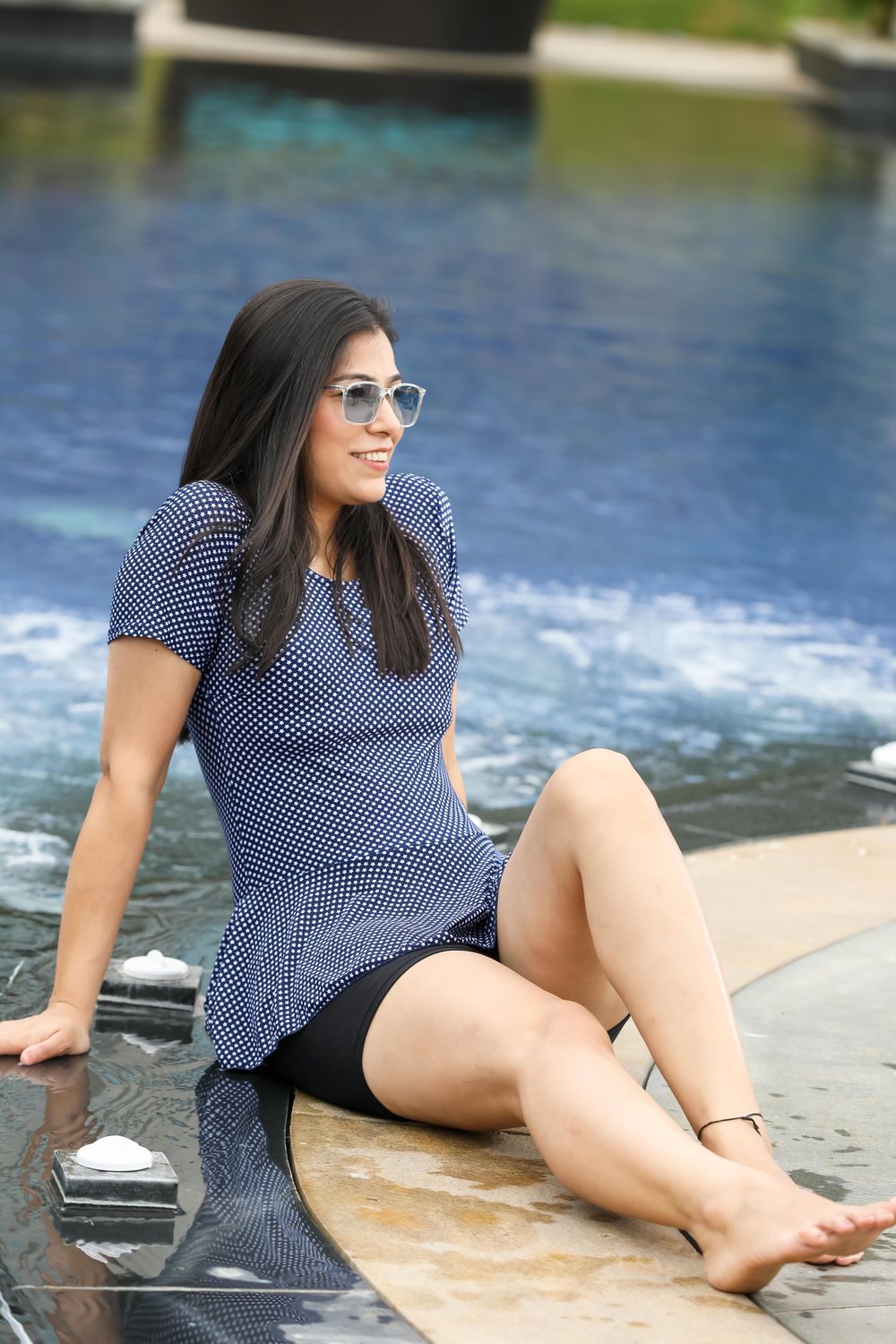
Once a swimsuit has sleeves, a customer needs it to fit across the shoulders and down the arms, not only around the chest. Rash guards come in letter sizes by the chest. One letter size covers several chest sizes in the looser cut sold as a swim shirt. Customers trying a rash guard on at home look for shoulder seams that sit where the shoulders end. Anyone choosing a burkini size checks the hip range as carefully as the bust range.
05Rash guards
Surfers need a rash guard that sits close to the skin on the board and under a breaking wave. They also need a hem that covers the waistband of their boardshorts through a long paddle out. Sleeves measured with the arms at the sides end up short of the wrist when a surfer reaches forward on the board. Flatlock seams with no raised edge keep a rash guard from rubbing the skin under a wetsuit. Unisex rash guards drafted on a man's body pull across the bust and gape at the waist on many women. Surf brands that sell to women cut a separate women's pattern for that reason. Some women who surf prefer a long-sleeved surf one-piece with a zip for getting in and out.
Families buying rash guards for sun protection at the beach want a different fit from surfers. They buy swim shirts cut roomy through the chest and back. The gaps in a knit widen when it's stretched tight over the body, and more UV usually gets through them. Long-sleeved styles with a high collar cover the arms and neck. Many families add matching swim leggings. Parents of small children look for front-zip styles that come off a wet child far more easily than pullovers. Age-sized rash guards with a little extra room fit a growing child for more than one summer.
06Burkinis
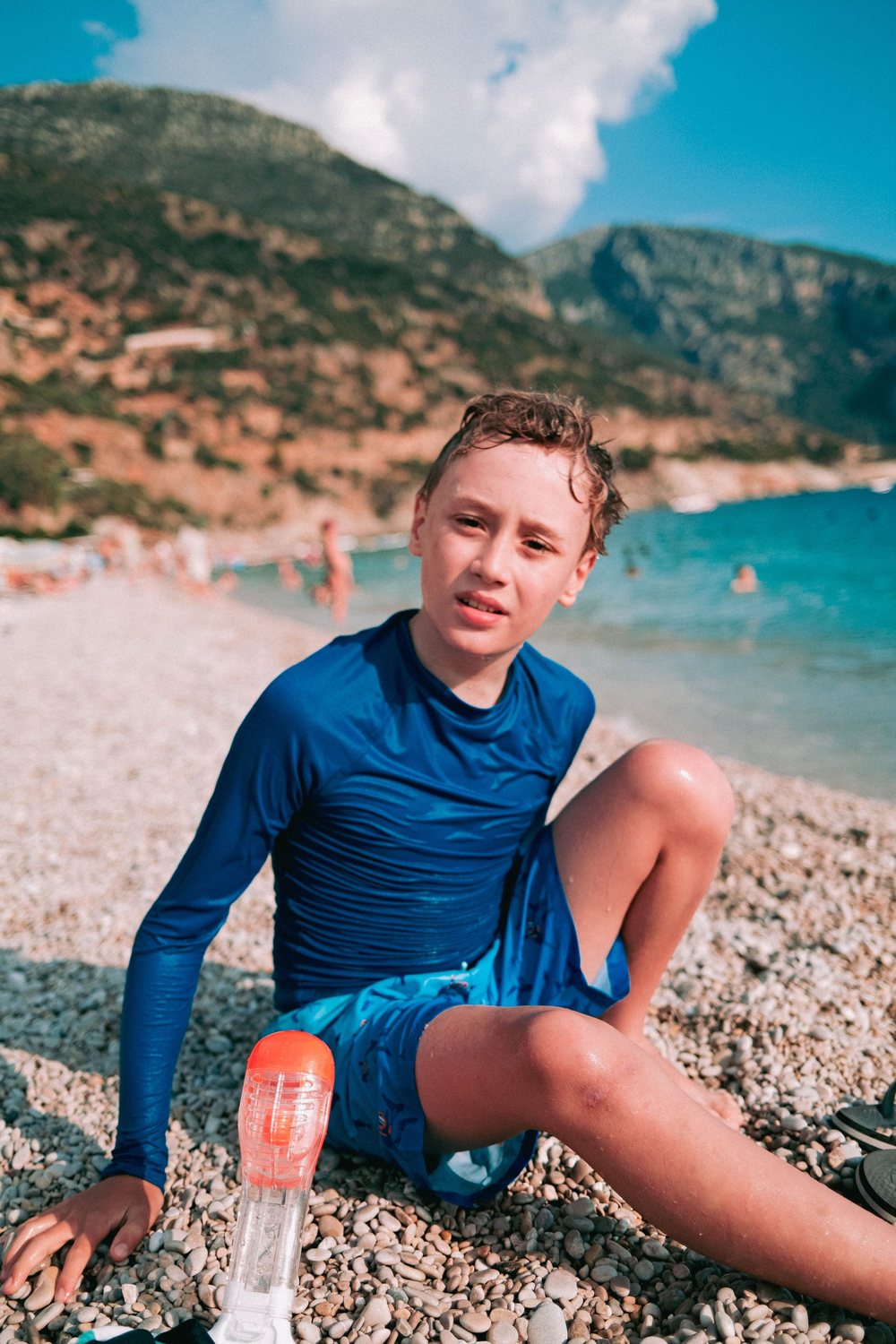
Muslim women who cover their hair and women who want full sun cover at the beach and in public pools buy most burkinis. Sets come with the hood sewn to the tunic or as a separate piece that women who only want sun cover can leave off. Burkini hoods for lap swimming fit close around the face but leave room at the chin for turning to breathe. Pattern makers cut the tunic loose enough that wet fabric hangs away from the body without filling with water and dragging at the swimmer's arms. Mid-thigh tunics drag less in the water than knee-length ones. Elastic at the ankles holds the pants down when the swimmer kicks. Burkinis cut for an average height come up short in the sleeves and pants on tall customers. Dense polyester in dark shades and prints keeps a burkini opaque in the water.
Swim bottoms
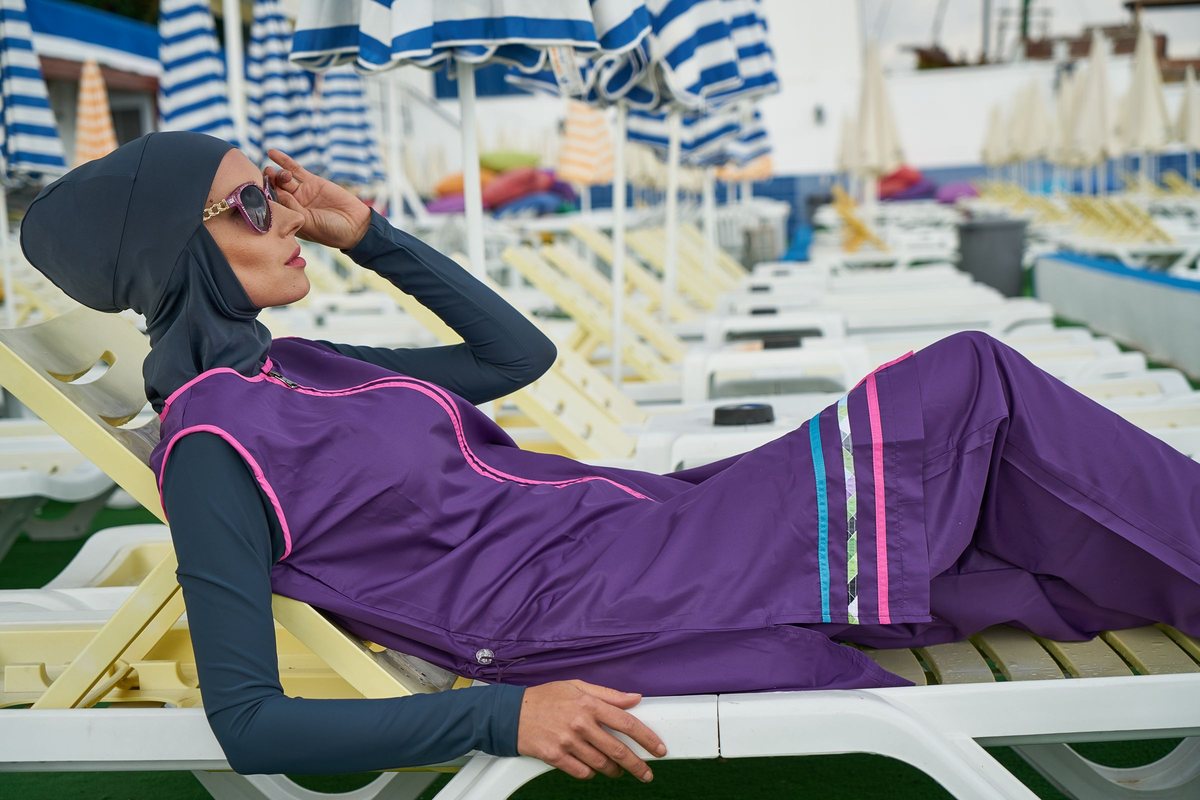
Men's swim bottoms have nothing but the waistband to hold them up through dives and wipeouts. Every style from loose trunks to skin-tight briefs is sized by the waist at the point where the bottoms sit. Hip-slung briefs are measured lower on the body than trunks that sit at the natural waist. Boardshorts with a fixed waist come in waist sizes numbered in inches, and so do most racing jammers and briefs. Trunks get by with letter sizes because the drawcord takes up the slack between waist measurements. Some brands add XS and 3XL to the usual S to 2XL.
07Swim trunks
The mesh brief sewn inside most swim trunks is fine for swimming and lounging, but men who play beach volleyball and other sports on the sand want a compression liner shaped like cycling shorts that keeps the inner thighs from chafing. Men who wear a swim brief underneath skip the liner. Trunks in the right size stay up with the drawcord tied loosely. Most trunks come in one of three inseams measured down the inside leg: 13, 18 and 23 cm (5, 7 and 9 in). Shoppers have no way to tell how long a pair is from the letter size unless you put the inseam in the product name. Slim-cut trunks sit closer on the thigh than the classic wide leg. Flat fronts with elastic only at the back and sides give trunks the tidier look of tailored shorts.

08Boardshorts
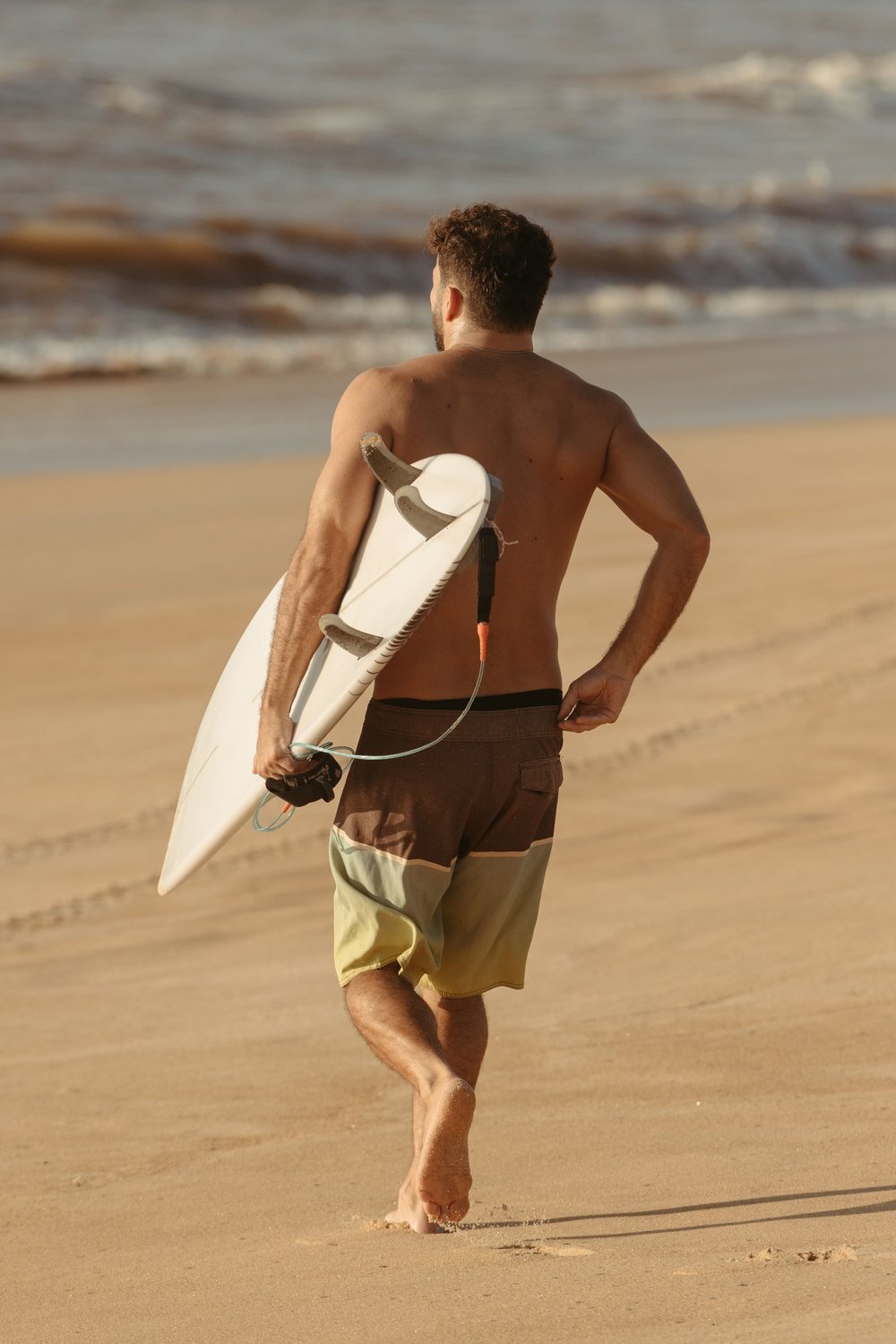
Surfers keep boardshorts on through a wipeout by tying the lace-up fly at the front of a waistband that doesn't stretch. Men generally buy boardshorts by the waist size on their jeans. Surf brands add odd sizes such as 31 and 33 to the six even-numbered waist sizes from 28 to 38 for surfers who want an exact fit. The odd sizes matter little to men who never surf. If you stock only even sizes, customers between a 32 and a 34 fit either one when the woven fabric has some stretch. Letter sizes like those for trunks work on boardshorts with a short stretch panel in the back waistband.
Boardshorts usually measure 43 to 53 cm (17 to 21 in) down the side seam. Pairs at the long end of that range come down to the knee on a man of average height. Many are woven with four-way stretch that moves with a surfer paddling out and standing up. They're made without a liner. Hybrid shorts are cut like walk shorts from boardshort fabric for men who want one pair for land and water.
09Jammers
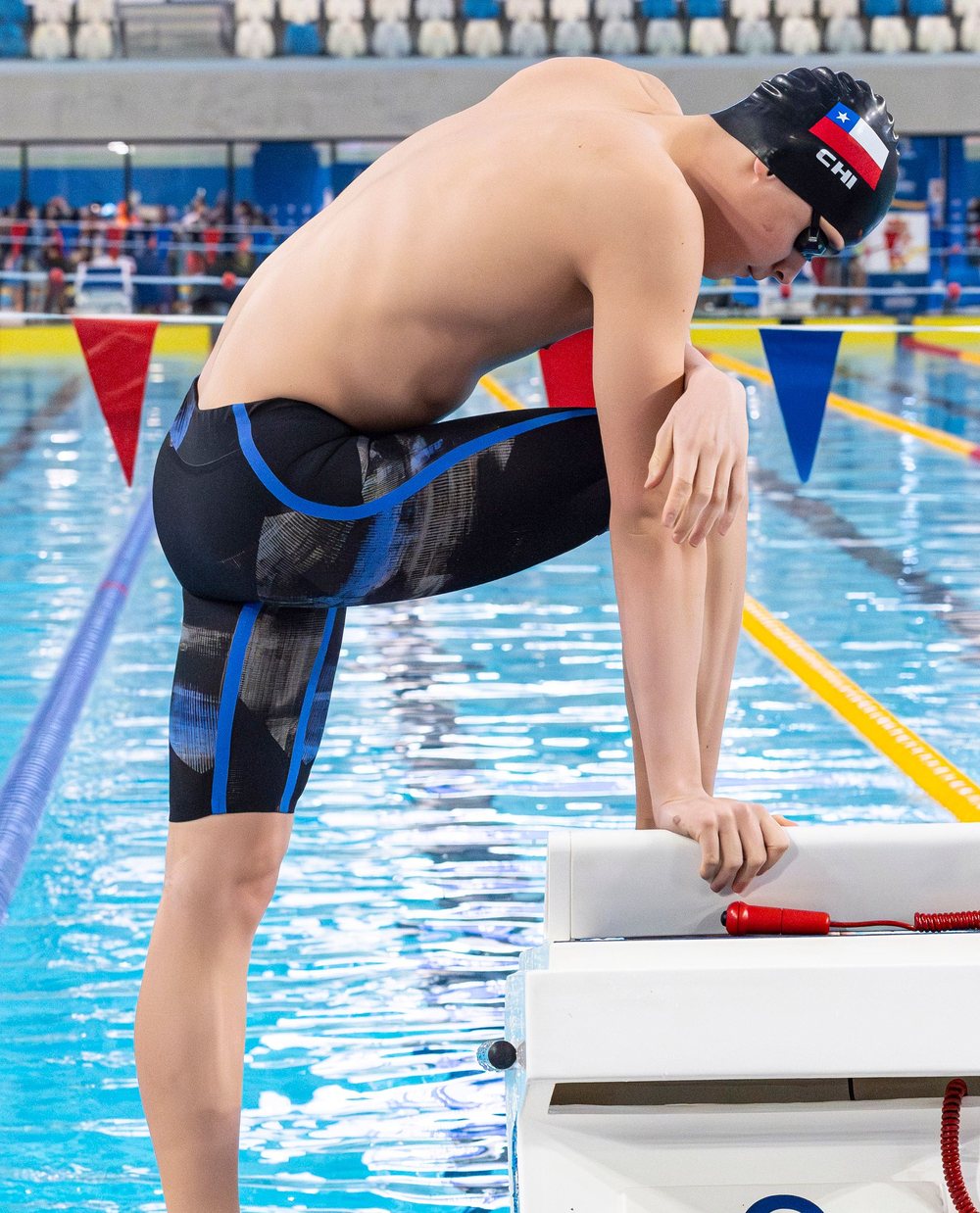
Swimmers who would rather not train in briefs wear skin-tight jammers that sit below the navel and end just above the knee. Water rushes in at a loose waist when the swimmer dives. Training pairs are less compressive than racing jammers and last longer in chlorine. Men's racing suits have to stay between the navel and the knee under World Aquatics rules. Racing jammers ride up on push-offs without silicone grip strips inside the leg hems. Those strips can be up to 20 mm wide on a racing suit.
10Swim briefs
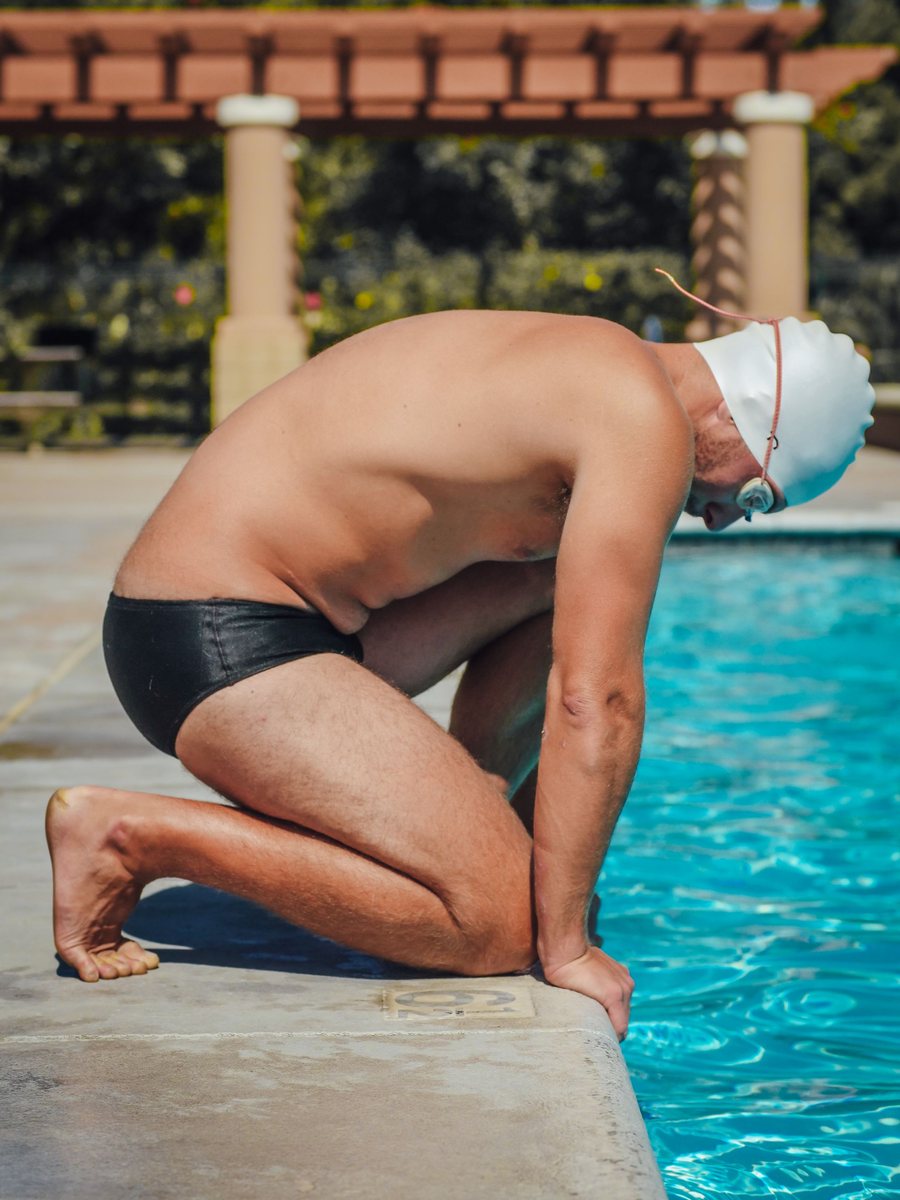
Plenty of men in Europe and Australia go to the beach in briefs shaped like underwear but wider at the sides than low-slung racing briefs. Square-legs that end at the upper thigh give more cover than briefs without the length of trunks. They look like very short jammers. Beach briefs and square-legs fit the letter sizes you use for trunks. Leg hems finished with firm elastic hold square-legs in place on the thigh through a walk along the beach. Skin-tight racing briefs stay on through a dive off the blocks.
Water polo players wear briefs made from a double layer of heavier fabric that holds up when an opponent grabs the suit. The drawcord on a water polo brief sits inside the waistband out of an opponent's reach.
Sources
- World Aquatics, Competition Regulations, version February 2026, Part One, Article 6
- ARPANSA, Sun protection clothing