Types of Jackets for a Clothing Line
Coach jackets, bombers, denim truckers, chore coats, fleece jackets and 16 other jacket styles are sewn in the cut-and-sew factories that make shirts and hoodies. If a jacket needs leather, down filling or seams taped against rain, a specialist factory has to buy the material before it can sew the first sample. Tailoring factories build the front of a blazer or sport coat over a stiffening layer and press it into shape.
Unlined jackets in nylon or light cotton are the cheapest to make, and heavier fabric, a lining or insulation raises the price. Cut-and-sew factories send printing, embroidery, garment washing and garment dyeing to outside workshops that charge for the work and add their turnaround to the delivery date.
Types of jackets from a general factory
Several of these styles differ by little more than a collar or a hem that your factory needs spelled out on the order.
| Jacket | How to tell it apart | Usual fabric |
|---|---|---|
| Coach jacket | Snap front, shirt collar, drawcord in the hem | Water-repellent nylon |
| Harrington jacket | Zip front, short stand-up collar with two buttons, check lining, stretchy rib knit at the hem like the cuff of a sweatshirt | Cotton-polyester poplin |
| Bomber jacket | Zip front, rib knit at the collar, cuffs and waistband, often an orange lining | Matte nylon twill or satin |
| Souvenir jacket | A satin bomber with tigers, dragons, eagles or maps embroidered large on the back, first made in Japan for American servicemen | Satin |
| Baseball jacket | Snap front, striped rib knit, one fabric for body and sleeves where a varsity jacket has two | Satin or nylon |
| Track jacket | Zip front, stand-up collar, matching pants | Tricot, a shiny polyester knit |
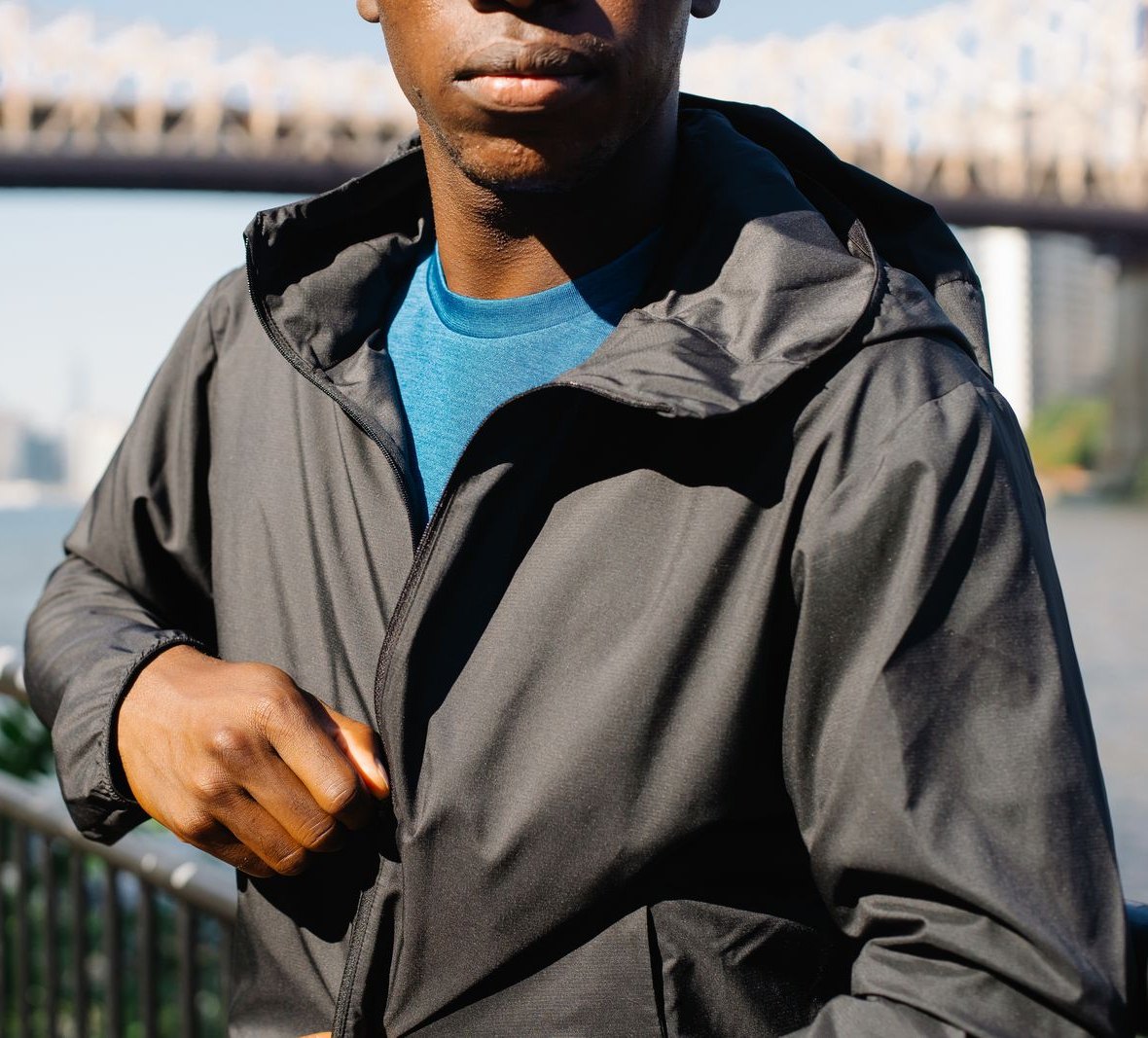
| Windbreaker | Thin shell, zip front, elastic at the hem and cuffs | Nylon, often ripstop with a grid of thicker yarns that stops tears from spreading |
| Anorak | Pulled on over the head, half zip at the neck, one large chest pocket | Water-repellent nylon |
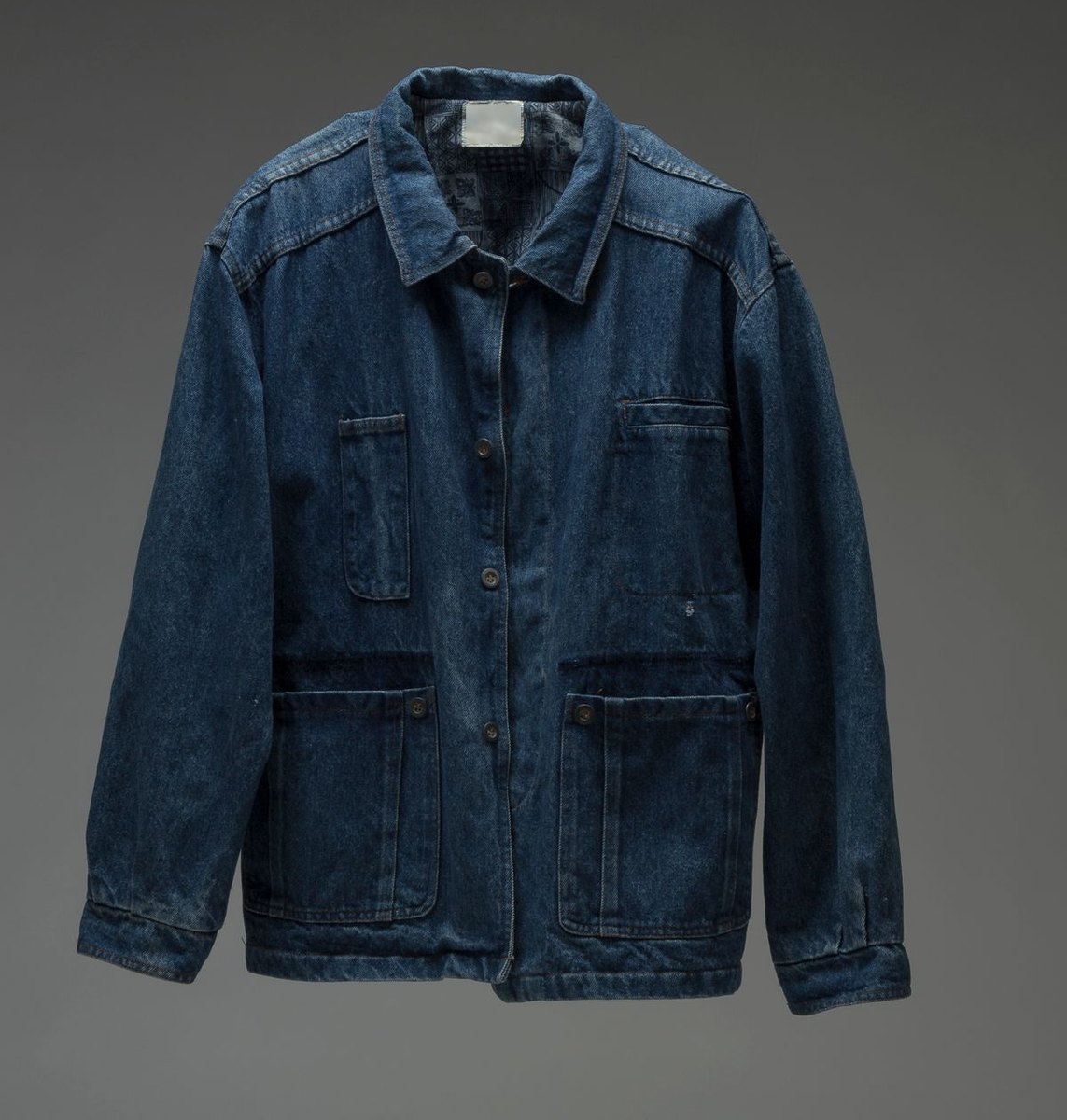
| Trucker jacket | The denim jacket most people picture: waist length, buttoned front, two chest pockets under pointed flaps | Rigid denim of 407 to 475 g/m² (12 to 14 ounces a square yard) |
| Shirt jacket, or shacket | A shirt in heavier fabric, worn open over other clothes | Wool flannel or brushed cotton twill |
| Utility jacket | Unlined, two flapped chest pockets, lighter than a field jacket | Cotton twill |
| Chore coat | Unlined, hip length, shirt collar, patch pockets on the chest and lower front, first worn by French workers | Cotton twill or canvas |
| Work jacket | Waist length, zip front, blanket lining in the body, slick quilted nylon in the sleeves | Duck, a heavy cotton canvas |
| Barn jacket | Hip length, corduroy collar, big flapped pockets low on the front, flannel lining | Cotton canvas |
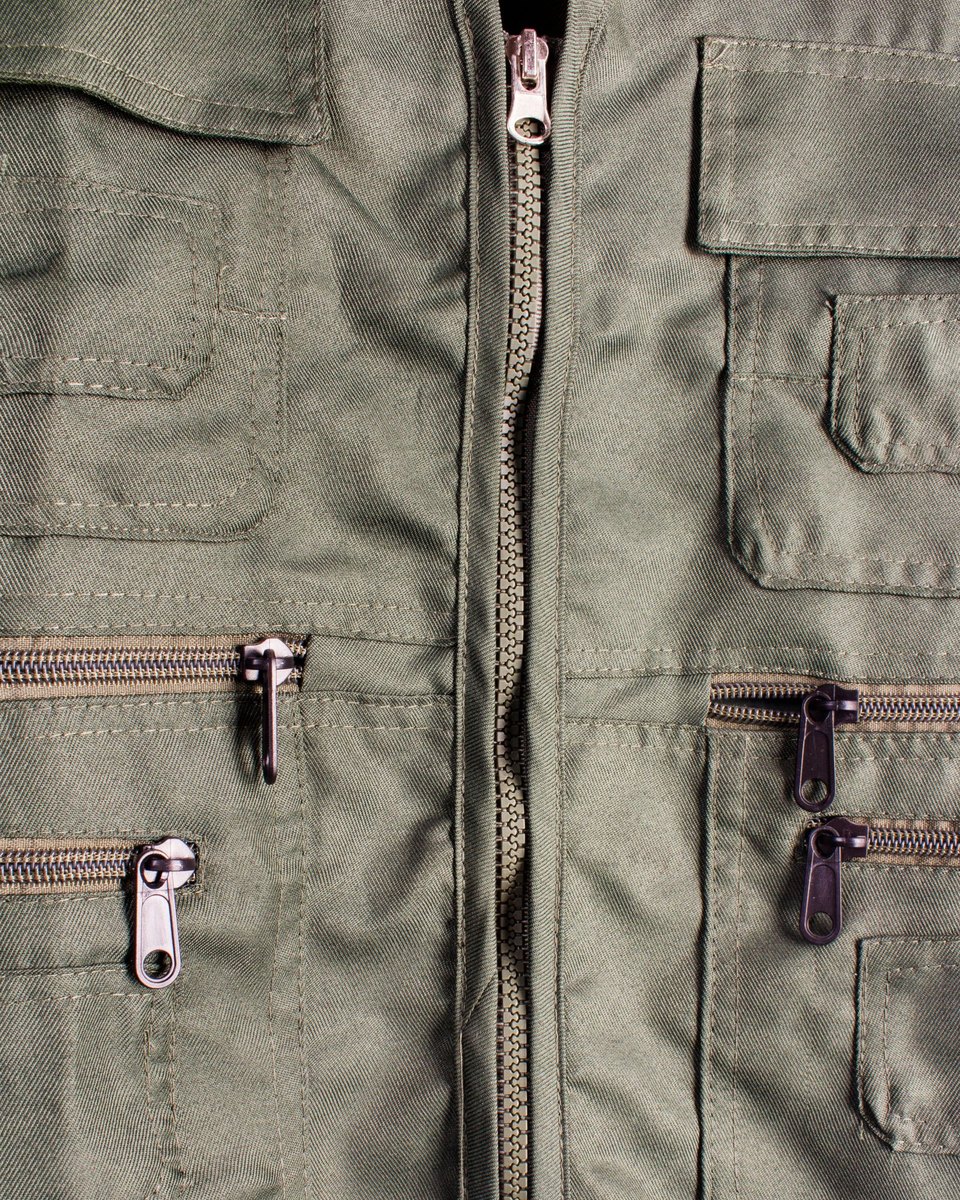
| Field jacket | Four flapped pockets, drawcord at the waist, snapped flap that covers the front zip | Cotton twill |
| Safari jacket | Unlined, belted, shoulder straps, four pockets with pleated sides | Cotton twill or linen |
| Waxed jacket | Hip length, plaid lining, front zip under a snapped flap | Waxed cotton |
| Quilted jacket | Diamond stitching, snap front, corduroy trim at the collar and pockets | Nylon over thin polyester insulation |
| Softshell jacket | Close-fitting, zip front, worn for hiking and cycling when a rain jacket would be hot | Stretch woven fabric bonded to a knit backing |
| Fleece jacket | Zip-up with a soft brushed surface | Polyester fleece |
| Teddy jacket | Boxy, with a curly pile that looks like sheep's wool | Sherpa, a curly pile fabric on a knit back, usually polyester |
Five of these styles started as workwear: the shirt jacket, utility jacket, chore coat, work jacket and barn jacket. Customers buy them and the army's field jacket as alternatives to one another, and a small line rarely needs more than one unlined style and one lined style out of the six.
Shell fabric
Two of these styles can be called windproof if you pay for the costlier version of their fabric. Uncoated nylon makes the cheaper windbreaker and the more breathable one, but it lets a little air through and is wind-resistant at best. Coated or laminated nylon stops that air for more money per meter. Softshell resists wind and light rain as it comes. The version with a membrane between its woven face and its knit backing blocks wind completely but costs more and breathes less. You'll want either upgrade on a jacket meant for cold, windy rides and hikes and neither on one bought for its looks.
How a jacket feels on its first day and looks after its first washes depends on the finish its fabric leaves the mill with. Rigid duck takes months of wear to soften. Fashion customers won't wait that long. Duck that the mill has washed or sanded soft costs slightly more and is what a fashion line orders. Clothing lines order waxed cotton in its dry finish. The wet one is greasier and marks car seats and pale sweaters. An anti-pill finish named on your order keeps fleece from forming little balls of fiber in its first washes.
Field jackets in a 50/50 blend of nylon and cotton look like the cotton twill version and wear much longer. You'd pay the higher price of that blend on a jacket you pitch as durable. Satin makes a dressier bomber than matte nylon twill and snags where the twill doesn't. Twill is the better shell for daily wear. Linen creases the moment it's worn. It costs more than the cotton twill most safari jackets are cut from and is the fabric to choose only if that rumpled look is what you're after.
Mills quote the weight of duck in ounces or by a number that falls as the fabric gets heavier. Duck of 407 g/m² (12 ounces a square yard), the classic weight for a work jacket, sits between No. 12 at 388 g/m² and No. 10 at 499 g/m² on the duck number scale. Fleece labels read 100, 200 or 300 for weight classes that mills divide at different points. Whichever way a quote arrives, write the weight on your order in g/m². Outer-layer fleece jackets are mostly cut from the 200 class. Softshell comes with a fleece backing for a warmer jacket or a thin grid knit for a lighter one.
Color
Rib for a bomber is usually knitted to order in a color matched to the shell. You approve that color on a small dyed sample before knitting starts, and a change once it has started means paying for a second batch of rib. Mills keep softshell in stock colors that are already dyed and bonded. A custom color is dyed and bonded to order in a minimum quantity that the mill sets and that a small order won't use up. Track jackets and their matching pants are cut from fabric dyed in one batch, or a slight difference in color between the two can show as soon as they're worn together.
Truckers are usually washed after they're sewn and change size and color in that wash. Sign off fit and shade on a washed sample, unless the jacket is raw denim that will be delivered unwashed. Utility jackets are among the simplest jackets to make until you ask for one to be dyed after sewing for a faded color that's darker at the seams and edges. The dye colors cotton and leaves polyester thread and the fabric tapes of the zips as they were. You choose between cotton thread that takes the dye with the fabric and a polyester thread picked in advance for contrast stitching. Zips are ordered close to the final shade. The pattern is enlarged before production by the amount that a dyed test jacket shrinks.
Fit
Anoraks are pulled over the head and cut with more room at the chest and hip than a zip-front jacket of that size. A side-seam zip allows a slimmer cut. When a shirt jacket is cut from a shirt pattern, it fits over a T-shirt and feels tight over a sweater. More chest width and a deeper armhole make room for knitwear. Winter versions with a quilted lining lose more of that room and are cut from a larger pattern than the unlined ones.
A women's version of a jacket, such as the trucker cut slimmer in a lighter stretch denim, is usually sampled and quoted as a second style. Cropped versions change little but the length of a pattern you already have. Factories mostly quote an oversized one as a new pattern because its dropped shoulder changes the armhole and the sleeve.
Decoration
With no seam across it, the back of a coach jacket is one flat piece of nylon for a printer to work on. Ink mixed for cotton doesn't bond to nylon or to the water-repellent finish on its face. Printers who know nylon add a bonding agent to the ink and cure the print at a lower temperature.
Embroidery is the biggest cost in a souvenir jacket and is charged by stitch count. Motifs set apart on bare satin take fewer stitches than a filled background. Reversible versions double the count with a second design inside. The back is embroidered as a flat panel before the jacket is sewn, and a change to the artwork after that means paying for a whole new panel.
Team names and logos on a baseball jacket are best done in tackle twill. The letters are cut out of twill fabric and sewn down around their edges with a zigzag stitch. They outlast heat transfers in the wash and pucker the satin less than dense embroidery. Fleece is embroidered through a film. It holds the stitches above the pile and dissolves in water afterward.
Contrast on the sleeves of a track jacket is better done with piping or color-blocked panels than with parallel stripes. Adidas lost a jury trial against Thom Browne in 2023 over four parallel bars on clothing and has kept appealing. Few small brands could afford that fight. Levi's has sued other brands over tabs like the small red one it sews into a pocket seam of its jeans and denim jackets. Your woven label on a trucker is safer sewn down flat than folded into a pocket seam.
Linings
Linings add a second fabric to the order and a second round of cutting and sewing. Coach jackets are among the cheapest jackets you can order until you add a quilted nylon or sherpa lining for autumn. Autumn bombers have a thin layer of polyester insulation quilted to the lining. Most windbreakers have a mesh lining that holds the nylon away from bare arms. Packable ones leave it out to fold small. A teddy jacket has a thin lining to cover the knit back of its sherpa and a strip of smooth fabric along the front edges to keep the pile out of the zip teeth.
The check lining that people know a Harrington by is the one part of it to design yourself. Burberry sued JCPenney in 2016 over a quilted jacket with a checked lining and a coat that came with a checked scarf. A check of your own can be printed on lining fabric in a small order.
Construction
Field jackets are slower to sew than any of the workwear styles, and you can save some of that time by leaving out two features of the military original: the hood rolled into a zipped collar pocket and the buttons for a quilted liner. The pleated sides that let the four pockets of a safari jacket expand are where most of the sewing time goes. Flat patch pockets sew faster and look less like the original. Sherpa makes thick seams. A teddy jacket sews cleaner in a boxy shape with few of them and with patch pockets.
The cheapest way to make a quilted jacket is to buy the fabric already quilted, and it's the right way unless matched diamonds are the point of your style. Pre-quilted diamonds cross the seams wherever the cutting leaves them. For diamonds centered on the fronts and matched at the side seams, the factory quilts the cut panels one at a time and charges more.
Chore coats are unlined and show their inside seams whenever they hang open. Most factories can bind the raw edges in a contrast tape. A flat-felled seam, folded and stitched twice like the inseam of jeans, is neater and longer-wearing but needs a machine that many general factories don't have. It's realistic only with a factory that already makes workwear. Waxed cotton keeps the hole of every stitch, and a good sample, with a single line of holes along the seams, comes from a factory that has sewn the fabric before.
Canvas and flannel stack up at the front edge of a barn jacket and take buttons or snaps with long posts. Snaps in the thin shell of a baseball jacket are set through a patch of reinforcing fabric. Fleece cuffs and hems bound in stretch tape hold their shape through washing and are the finish to pay a little more for.
Types of jackets from a specialist factory
Eight styles are best known in a version that needs a specialist factory and have a cheaper version that your general factory can sew. Suede bombers and anoraks with taped seams go to a specialist for the reason that biker jackets and rain jackets do.
| Jacket | How to tell it apart | Specialist version | General-factory version | Sell that version as |
|---|---|---|---|---|
| Varsity jacket | Wool body, sleeves in a second color, striped rib knit, a large fuzzy letter on the chest | Leather sleeves | Sleeves in polyurethane-coated fabric | Faux leather sleeves |
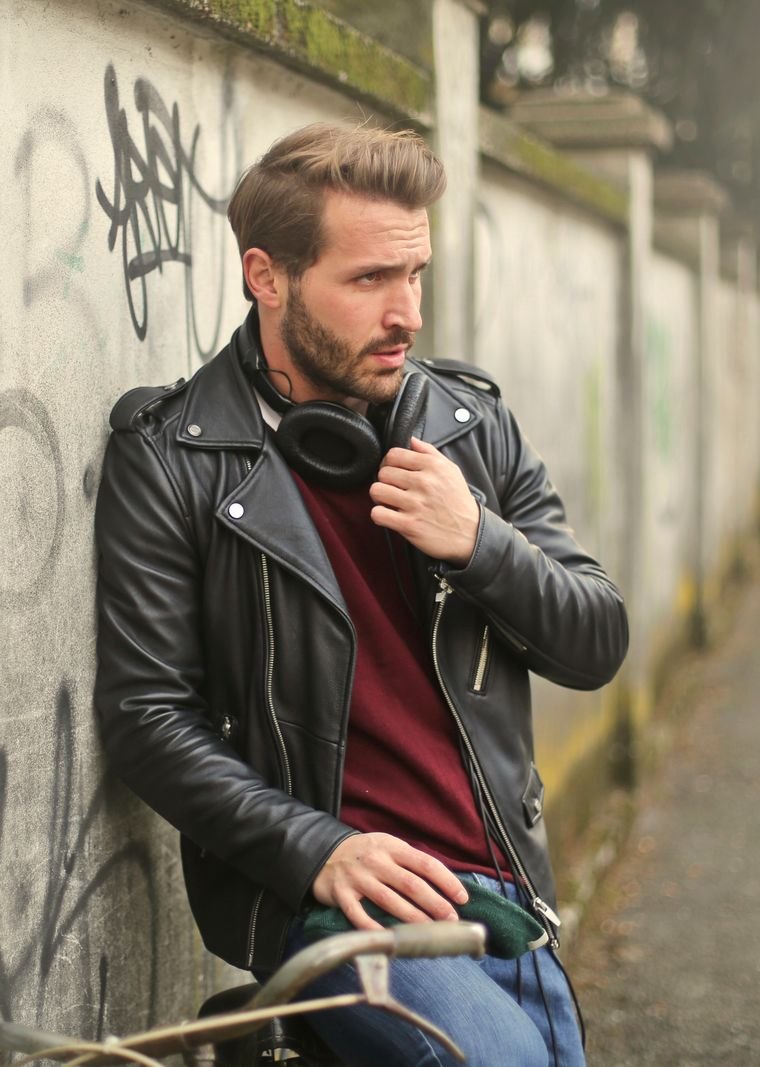
| Biker jacket | Short, off-center zip, fronts that fold back into wide lapels | Lambskin or cowhide | Polyurethane-coated fabric | Faux leather |
| Racer jacket | Plain front, center zip, small stand-up collar with a snap tab | Smooth leather or suede | Polyurethane-coated fabric | Faux leather |
| Shearling jacket | Sheepskin with the wool left on, worn suede side out | Real sheepskin | Sherpa bonded to faux suede | Faux shearling |
| Rain jacket | Hooded shell | Waterproof fabric with taped seams | Untaped seams | Water-resistant |
| Ski jacket | Hood sized for a helmet, pass pocket on the forearm | Taped seams, underarm vents, powder skirt | Untaped seams, no vents or skirt | Water-resistant |
| Puffer jacket | Insulation held in stitched channels, also made as a vest | Down filling | Polyester insulation | Polyester fill |
| Parka | Hooded, past the hip, zip behind a snapped flap | Down filling or taped seams | Polyester insulation, untaped seams | Polyester fill, water-resistant |
Leather
Leather is cut by hand one skin at a time and sewn on heavier machines than a general factory has. What you pay follows the area and the grade of the skins. Shearling jackets use the most skin and tend to be the most expensive jackets in a line. Racers are cut from the cleaner grades that tanneries charge more for per square foot because the plain front shows any scar that a cutter could work around on the smaller panels of a biker jacket. Biker jackets with the back in two pieces let the cutter use smaller skins and waste less.
Fashion biker jackets are cut from lambskin 0.6 to 0.8 mm thick that's soft from the first wearing. The 1.2 to 1.4 mm cowhide of a real motorcycle jacket is there to protect a rider in a slide and is wasted on a jacket nobody rides in. American tanneries quote thickness in ounces at 0.4 mm to the ounce and would call that lambskin 1½ to 2 oz. Smooth leather is the lower-risk finish. Suede spots in rain and is usually cleaned by a leather specialist.
Varsity sleeves in faux leather cost much less than leather ones and are the sensible choice unless the jacket is priced as a leather piece. Faux leather comes with a polyurethane coating, PU for short, or a cheaper PVC one that hardens in cold weather until it cracks along the creases. PU is the coating for those sleeves and for a faux biker or racer.
Patch makers build the chest letter of a varsity jacket from chenille yarn looped onto a felt backing. The front of the jacket isn't lined until the letter is sewn on. A late delivery from the patch maker stops production.
Many people call the biker jacket a Perfecto, but Schott NYC owns that name as a registered trademark for its motorcycle jacket. Biker jacket and moto jacket are the names open to you.
Down
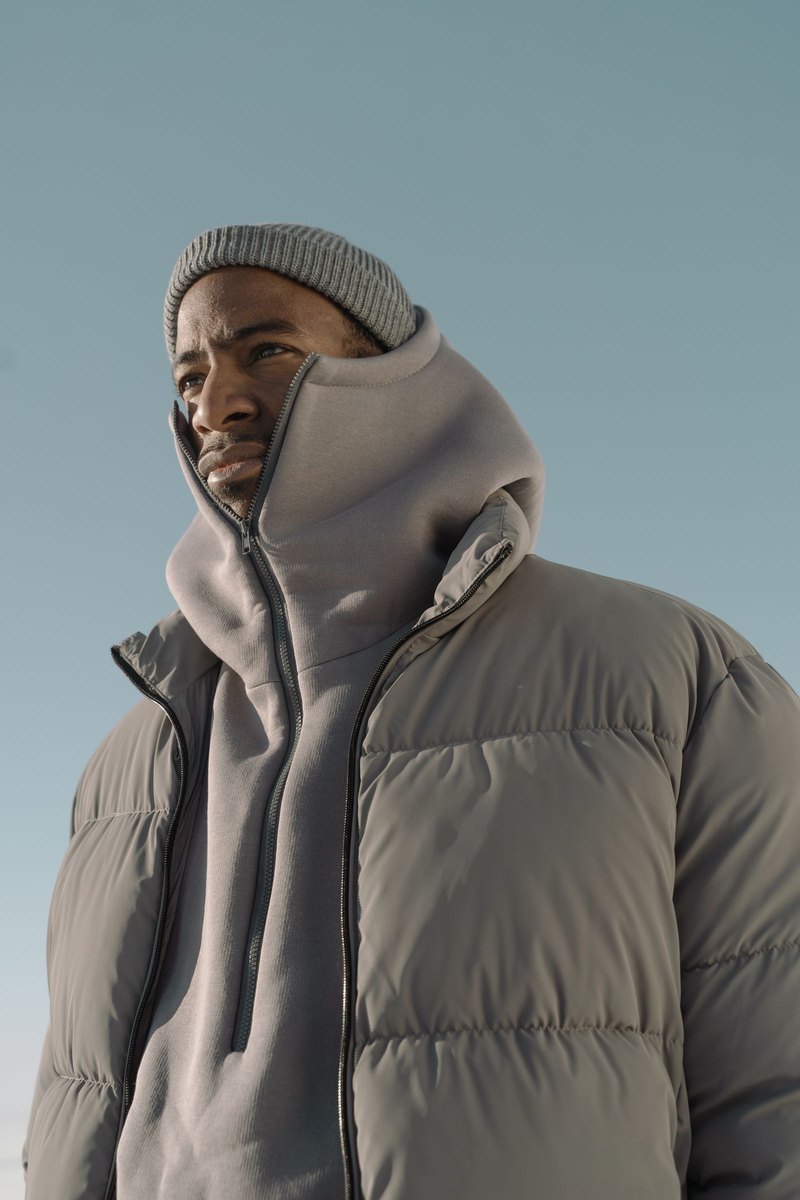
Most puffers at mid-market prices are filled with sheets of polyester insulation that a general factory sews in like a lining. It costs much less than down and keeps more of its warmth when damp. A down jacket is warmer for its weight and is filled by a specialist's machine that blows weighed doses into the stitched channels.
Down in the 80/20 grade is four-fifths down clusters and one-fifth feathers by weight and costs less than 90/10. Fill power, measured in cubic inches per ounce of down, is 550 to 650 in everyday puffers. Down of 600 in the 80/20 grade is plenty for a fashion puffer. Higher figures, 90/10 and fill powers of 800 or more, reach a given loft with fewer grams and are for jackets you'll market on low weight.
The usual puffer is stitched straight through shell and lining and is thin along the seams. Jackets built for hard cold have a wall of fabric sewn between shell and lining at every seam to hold the down at full thickness. Those walls add so much sewing that few fashion puffers have them. Down also calls for a tightly woven shell and lining, or the clusters work their way out through the fabric.
If you claim humane down, the usual proof is a certificate under the Responsible Down Standard, the Global Traceable Down Standard or Downpass. The three standards exclude down from live-plucked birds and from birds force-fed for foie gras.
Parkas hide the insulation of a puffer, down or polyester, under a smooth outer shell. Many have a ruff around the hood that slows the wind in front of the face and comes off before the jacket is washed. The ruff can be real fur, shearling or faux fur. California banned the sale of new fur clothing from January 2023, and neither sheepskin with hair attached nor faux fur is covered by the ban. Faux fur is the cheapest of the three and can be sold in any state.
Waterproof shells
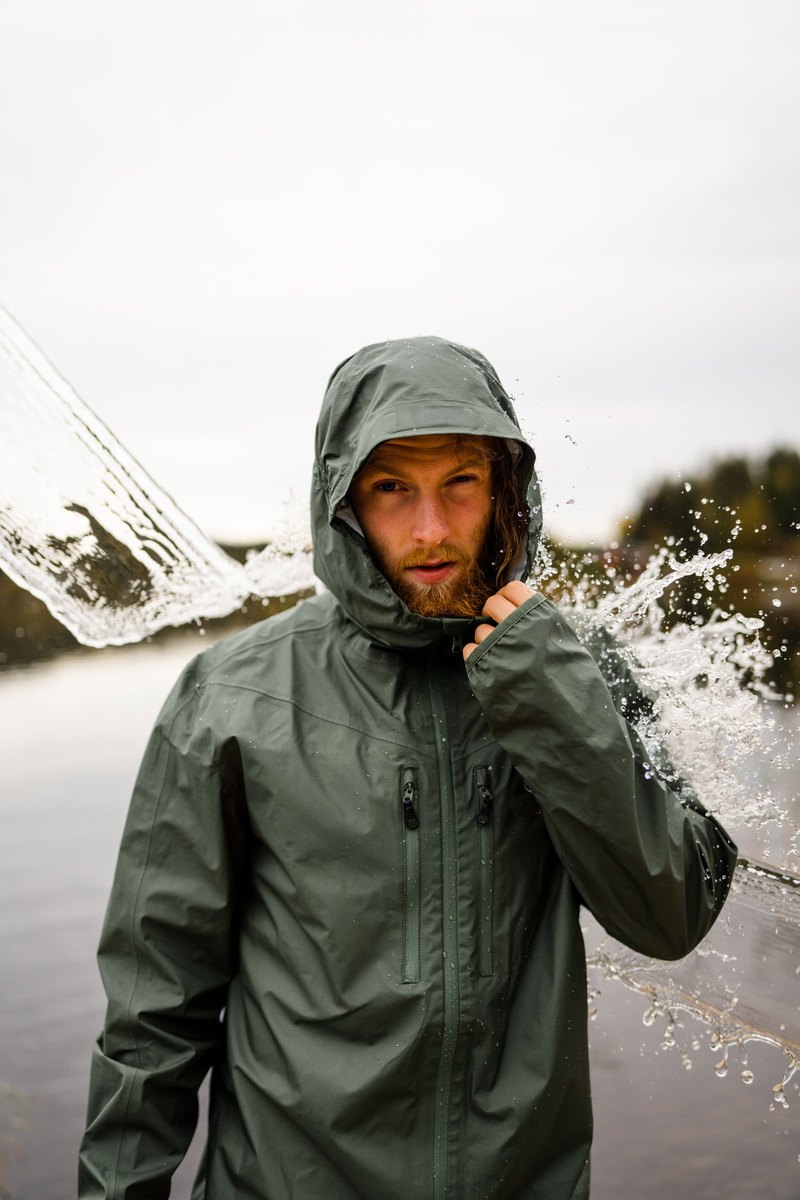
Rain jackets are waterproof when the fabric has a waterproof membrane or coating and the seams are sealed with tape over the needle holes. The front zip is coated or covered by a flap. Seam tape is applied by hot-air machines that a general factory doesn't have. Jackets without taped seams are water-resistant however good the fabric is.
Mills test waterproof fabric under a column of water and rate it by the height in millimeters that it holds back. Fabric rated 10,000 mm keeps out moderate rain but can leak under a backpack. Twice that is usually more than adequate for three-season hikers and backpackers. That puts 10,000 mm in a rain jacket for everyday wear and 20,000 mm in one you market to hikers.
Waterproof fabric comes in three builds that differ in what protects the inside of the waterproof layer.
| Build | Inside of the waterproof layer | Weight and price | Use |
|---|---|---|---|
| 2-layer | A loose mesh or taffeta lining hung inside the jacket | Heaviest, lowest price | Everyday rain jackets |
| 2.5-layer | A thin protective print and no lining | Lightest, less breathable | Packable jackets |
| 3-layer | A thin inner fabric bonded to the membrane | Most durable, highest price | Hiking and ski shells |
Any breathability figure you publish needs the name of its lab test beside it. Results from the several tests in use can't be compared.
Several US states, California and New York among them, now ban PFAS in new clothing. Under California's law, PFAS are fluorinated organic chemicals with at least one fully fluorinated carbon atom. The PTFE in many membranes and the C6 water repellents that replaced older ones both meet that definition. No new jacket can be sold there if PFAS were added on purpose for a functional effect, whatever the amount, or if any part of it tests at 100 parts per million or more of total organic fluorine. That limit drops to 50 on January 1, 2027. PTFE membranes and C6 repellents fail the first test at any fluorine reading. Everyday rain jackets can be made with a fluorine-free water repellent and a membrane without PTFE. Shells made for experts in severe wet conditions can still be sold with PFAS until January 1, 2028 and must be labeled "Made with PFAS chemicals" until then.
Ski jackets made for the slopes have zipped vents under the arms and a powder skirt. The skirt is sewn inside the jacket with an elastic edge and snaps shut at the waist to keep snow out in a fall. If your customers will wear the jacket around a resort town more than on a lift, they can do without either.
Types of jackets from a tailoring factory
The front of a blazer or sport coat is stiffened with a layer of interlining and pressed on shaping machines at several stages of sewing. General factories rarely have the machines or the pressers. Tailored jackets are sized by chest measurement for men and by number for women and need a second size chart when the rest of your line is in letter sizes. Oversized and double-breasted women's blazers are sampled as separate patterns from the classic cut.
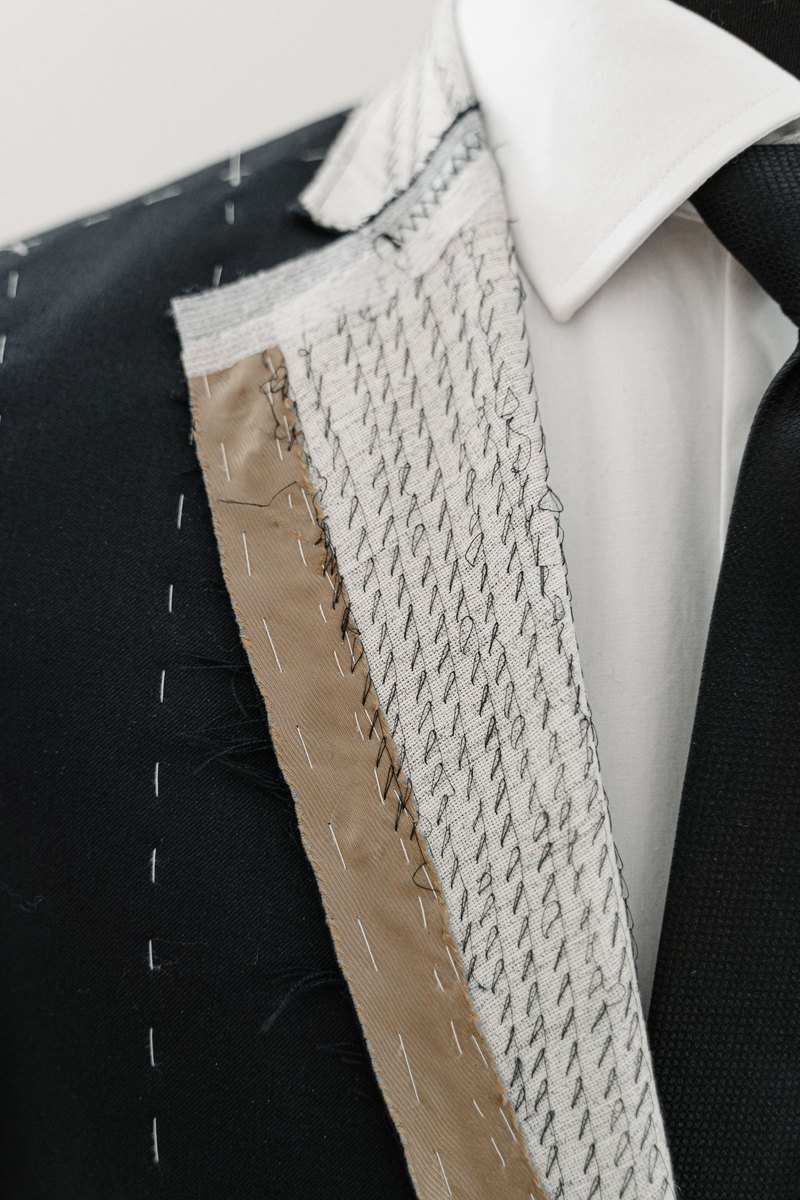
Most blazers have the interlining fused to the front by heat and pressure. A half-canvas front, which has a layer of canvas stitched loosely through the chest and lapels, costs more and gives the lapel the soft roll expected of an expensive jacket. Unless the jacket competes on tailoring, fused is the right front.
Sport coats are cut softer in the shoulder than blazers, with patch pockets, in a wider range of fabric. Summer ones in linen are often lined in the shoulders and sleeves alone to keep them cool. Tweed and herringbone are the cheap wools to cut. A check costs the cutter extra fabric and time to line up across the front edges and pockets.
The short, collarless bouclé jacket was first made with none of that structure inside it. Chanel, who made the style famous, left out the interlining and shoulder pads and had the silk lining quilted straight to the tweed. Bouclé takes its texture from looped yarn in a loose weave. It frays and stretches. Factory-made versions are usually fused to a light interlining for that reason and lined like a blazer in the factories that make women's blazers. Braid for the edges and pockets is bought by the meter, and a jacket with two pockets uses much less of it than the original with four. Other brands call theirs a bouclé jacket or a tweed jacket and keep the registered name Chanel out of the description.
US label rules for jackets
Jackets for the US market are labeled with the fibers they're made of and the country they were made in. The company behind them is identified by name or by its registered number from the FTC. Rib trim at the collar and cuffs doesn't count toward the fiber content. Insulation is listed in a section apart from the shell, even when the two are one fiber.
Care labels must be permanently attached and remain readable as long as the jacket is in use. Waxed jackets lose their wax in a washing machine or at a dry cleaner. Theirs need to say "Do not wash" and "Do not dryclean". The rewaxing that owners do at home, when the finish wears off the elbows and pocket edges, can be explained on a hangtag.
Federal fur labeling applies to any animal skin with the hair or fleece attached. Both the sheepskin of a real shearling jacket and the fur on a parka's ruff are covered. Such fur is labeled with the name of the animal and the country it came from. Dyed fur is declared as dyed.
Children's sizes under US safety rules
If you offer any of these jackets in children's sizes, the US drawstring rules for children's outerwear apply. Sizes 2T through 12 may have no cord in the hood or at the neck. That rules out the usual hood cord on a rain jacket or parka. Waist and hem cords in sizes 2T through 16 may reach 76 mm (3 in) at most out of their channels with the jacket spread to its full width and may have no toggles or knots on their ends. A cord that's one piece through the channel is stitched to it to stop it from being pulled out. Those limits apply to the hem cord of a coach jacket and the waist cord of a field jacket.
Jackets made for children no older than 12 count as children's products under federal law. They must bear a permanent tracking label that identifies the manufacturer or private labeler, the batch and the location and date of production. The importer or US manufacturer certifies them in a written Children's Product Certificate that rests on tests by a laboratory the CPSC has accepted. That certificate is yours to issue if the jackets are imported in your company's name.
Sources
- US Consumer Product Safety Commission, Drawstrings in Children's Upper Outerwear
- US Consumer Product Safety Commission, Tracking Label Requirement for Children's Products
- US Consumer Product Safety Commission, Children's Product Certificate
- Federal Trade Commission, Threading Your Way Through the Labeling Requirements Under the Textile and Wool Acts
- Federal Trade Commission, Clothes Captioning: Complying with the Care Labeling Rule
- Federal Trade Commission, How to Comply with the Fur Products Labeling Act
- California Assembly Bill 44 (2019), chaptered text
- California Assembly Bill 1817 (2022), chaptered text
- Advnture, What Is Hydrostatic Head and Why Does It Matter?