What Is Sherpa Fabric?
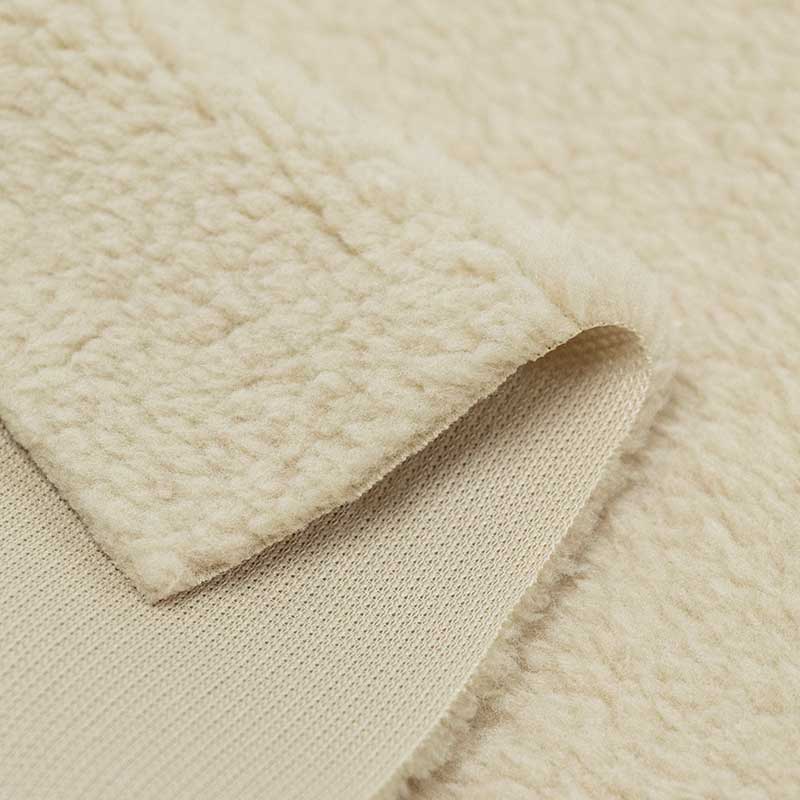
Sherpa fabric is a high-loft pile textile with a thick, curly surface that resembles sheep fleece. Most sherpa used in jackets, coat linings, hoodies and winter outerwear starts with a knitted base. Finishing raises fibers above that base and develops the uneven clusters that create the familiar lambswool-like face.
Polyester is common in commercial sherpa because it handles knitting and mechanical pile finishing well. The material also exists in cotton and blended constructions. One current cotton sherpa is specified at about 300 GSM, 150 cm wide, with four-way stretch, showing how widely the structure can vary without losing the recognizable sherpa surface.
A typical single-face sherpa looks very different from one side to the other. The face carries the curls and most of the loft. Turn the cloth over and the flatter knitted base becomes visible. Some qualities have a more finished reverse, and heavier versions can have another textile attached underneath.
That combination of a textile backing and a deep, irregular pile is the basic structure behind sherpa.
How the Curly Sherpa Surface Is Made
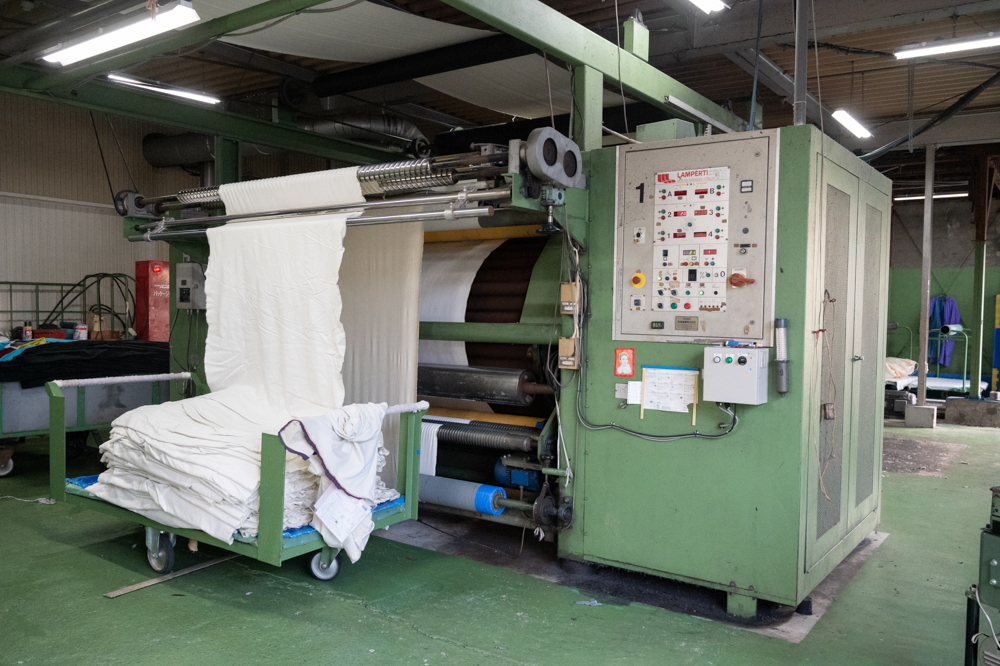
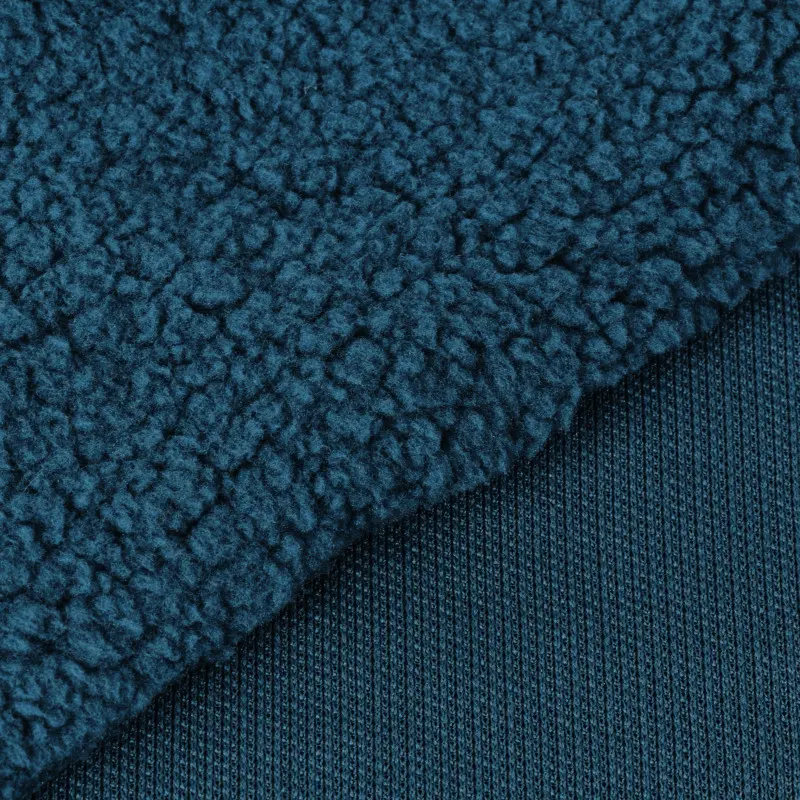
The lamb-fleece appearance develops during finishing.
Knitting first creates the structure that will carry the pile. Mechanical napping then works fibers out from the surface and increases the depth above the base. Combing opens dense areas and separates fibers that remain packed together. Shearing controls excessive height where the pile needs a more even level.
Further finishing determines how open, compact or clustered the final curls become.
Under side lighting, a good sherpa surface has visible depth. Some curls sit higher, narrow valleys run between them, and the pile changes slightly in direction across the cloth. A perfectly flat, uniform fuzzy face would look closer to many ordinary fleece constructions.
Problems become clearer on a larger cutting. Weak pile formation can continue across the width as a thin band. Sparse areas expose more of the knitted base. These defects may disappear almost completely when the fabric is judged from a small color swatch.
Commercial sherpa covers a substantial range of physical constructions. A current polyester example from Kangman is 300 GSM, 150 cm wide and knitted, intended for jackets, linings, sweaters and outdoor clothing.
GSM Tells Only One Part of the Story
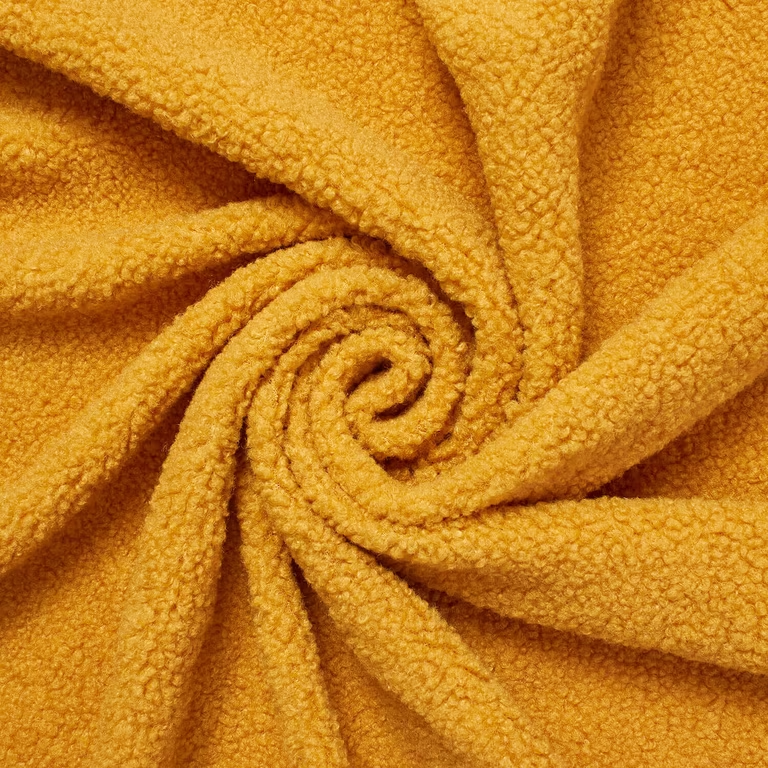
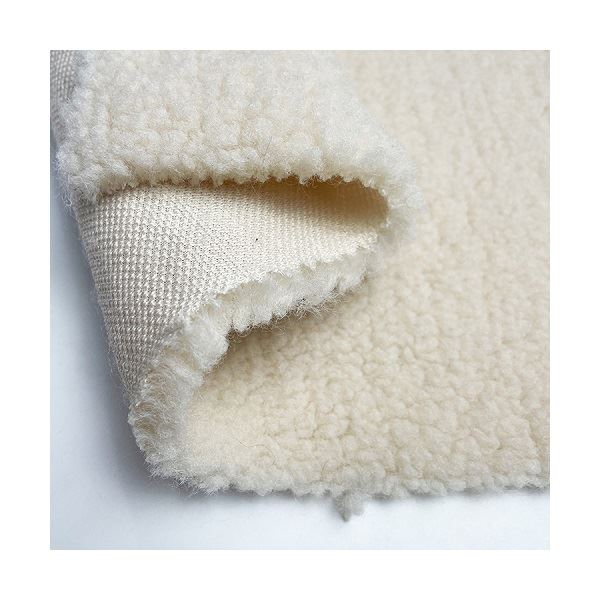
GSM is fabric weight per square meter.
A 300 GSM sherpa contains 300 grams of material across one square meter. That number gives a useful production reference for weight consistency.
Pile depth and finished thickness need their own measurements.
Fabric Wholesale Direct currently lists an unbacked polyester sherpa at 280 GSM, 1.30 mm thick, 68/69 inches wide and 15% vertical stretch. Its backed version is 380 GSM, 1.60 mm thick, 56/57 inches wide and also listed with 15% vertical stretch.
Those two products show what happens when additional structure is placed underneath the pile. The backed quality carries another 100 grams per square meter and gains published thickness as well.
Pile height adds another dimension. A fabric can concentrate much of its fiber close to the knitted base or spread the surface through a deeper loft. Fold several layers at a collar edge and that difference becomes much easier to feel than it was on the cutting table.
Thickness figures also depend on measurement pressure. ASTM D1777-26 covers knitted, napped and pile textiles and states that apparent thickness varies considerably with the pressure applied during testing. A mill comparing sample and bulk should therefore keep the measurement pressure consistent.
The Backing Has a Major Effect on Stretch
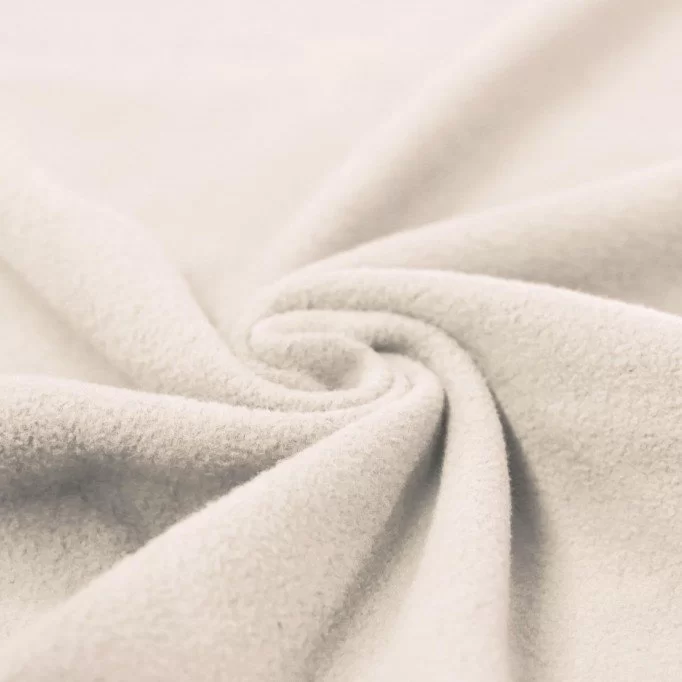
The fluffy face can hide a surprisingly mobile knit underneath.
A fabric made from 100% polyester may still extend through the loop structure of the backing. Cotton sherpa can behave the same way. Rijs Textiles currently sells a 100% cotton sherpa at roughly 300 GSM and 150 cm width with four-way stretch.
For garment development, the amount of stretch needs an actual measurement.
ASTM D2594/D2594M-21 measures stretch when a known load is applied and records growth after an imposed extension has been removed.
Take a development sample with a starting gauge length of 100 mm. If the marked section reaches 125 mm under the selected test condition, the extension is:
(125 − 100) ÷ 100 × 100 = 25%
After recovery, suppose the same section settles at 103 mm. The remaining growth is 3%.
Those numbers belong to that sample and test condition. A production sheet should record direction, method and result so the next lot can be checked against the same reference.
This matters especially around jacket fronts. Zipper tape stays relatively stable during sewing, while a knitted sherpa edge can lengthen if it is fed with too much tension.
A front pattern edge designed at 650 mm and finished at 663 mm has gained 13 mm, equal to 2%. That amount can create visible waviness when the zipper is closed.
Why Sherpa Feels Warm
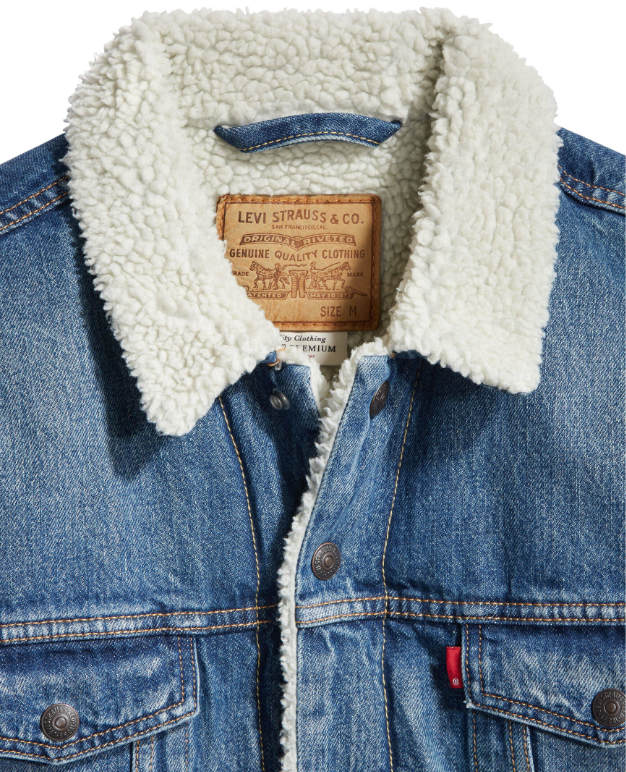
The pile creates loft, and the loft contains many small pockets of air.
Air held within the raised fiber structure slows heat transfer away from the body. Density affects how much fiber occupies the pile, and the backing influences how freely air can move through the material.
A jacket changes the system further.
Dense denim surrounding a sherpa lining limits air movement around the pile. A lighter, more open outer layer creates another thermal result even when the sherpa itself stays unchanged.
This makes GSM a poor shortcut for predicting warmth. Two 300 GSM sherpa fabrics can have different pile structures, backing permeability and thermal resistance.
ISO 11092:2026 provides a laboratory method for measuring thermal resistance and water-vapour resistance of textile materials, including multilayer assemblies used in clothing. A shell and sherpa lining can therefore be tested together when the finished jacket needs a measured thermal value.
Air permeability can be measured separately. ASTM D737 applies to knitted, napped, layered and pile fabrics.
For a denim jacket, testing the complete shell-and-lining assembly may be more useful than looking at the sherpa number in isolation.
Sherpa Changes the Space Inside a Jacket
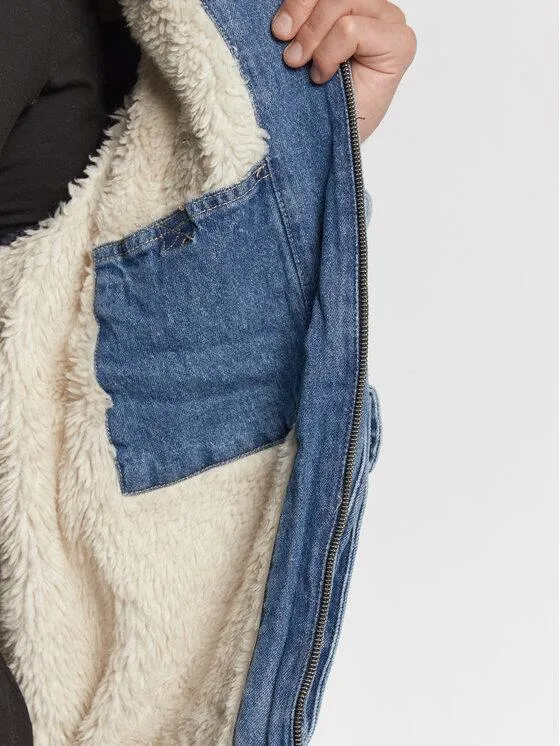
Pile occupies real volume.
A jacket developed with a thin woven lining can feel different once the actual sherpa goes into the sample. The change often shows first around the upper arm, where several millimeters of pile sit between the body and the shell.
The armhole concentrates seam allowances into a relatively small area. A collar folds the lining around an edge. Along the front opening, shell cloth, sherpa and zipper tape all meet within a narrow strip.
This is why fitting with the real lining fabric matters.
Thickness becomes especially obvious at the collar. Take the backed commercial sherpa mentioned earlier at 1.60 mm published thickness. Two flat layers already represent more than 3 mm before the shell, interfacing and seam allowances enter the construction. Sewing compresses the pile, so the finished edge needs to be checked on the actual garment rather than calculated from the flat fabric alone.
Factories often reduce pile inside selected hidden seam allowances when the edge becomes too bulky. The operation needs to stay inside the allowance so the visible face keeps its full coverage.
Fibers caught in an exposed seam can also be lifted gently back toward the surface after sewing, which helps the join disappear into the surrounding pile.
Backed Sherpa Has More Structure
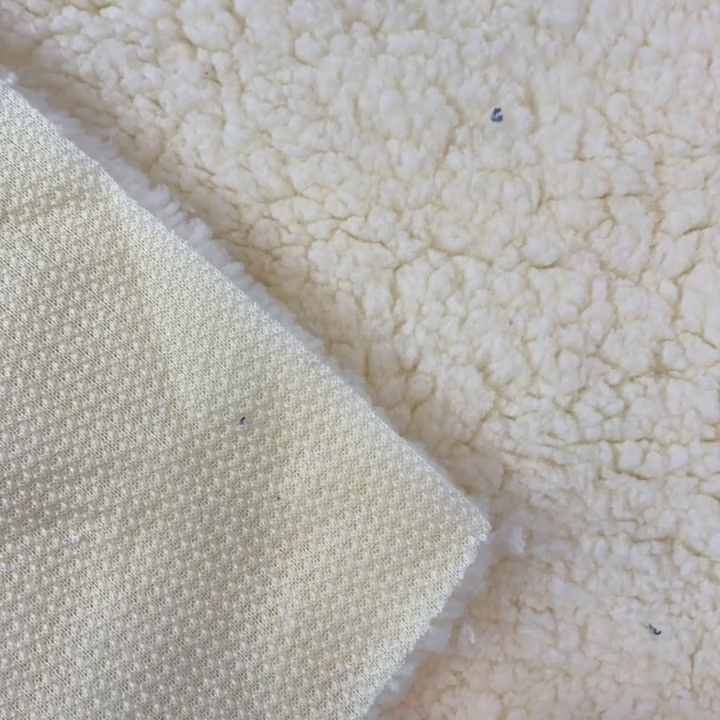
A backed sherpa combines the pile construction with another textile underneath.
The 380 GSM Fabric Wholesale Direct example uses a plain woven backing. Its pile is knitted onto a 0.30 mm base, then that base is secured to the woven layer. The finished fabric is listed at 1.60 mm thickness and 15% vertical stretch.
The same supplier's unbacked sherpa is lighter at 280 GSM and measures 1.30 mm thick.
That extra layer becomes obvious when the material is folded through a pocket opening or collar. Large panels also carry more body.
For pattern development, the complete bonded or backed material should be handled as one fabric. Testing only the fluffy layer would miss much of the stiffness that controls the finished coat.
What Repeated Wear Does to the Surface
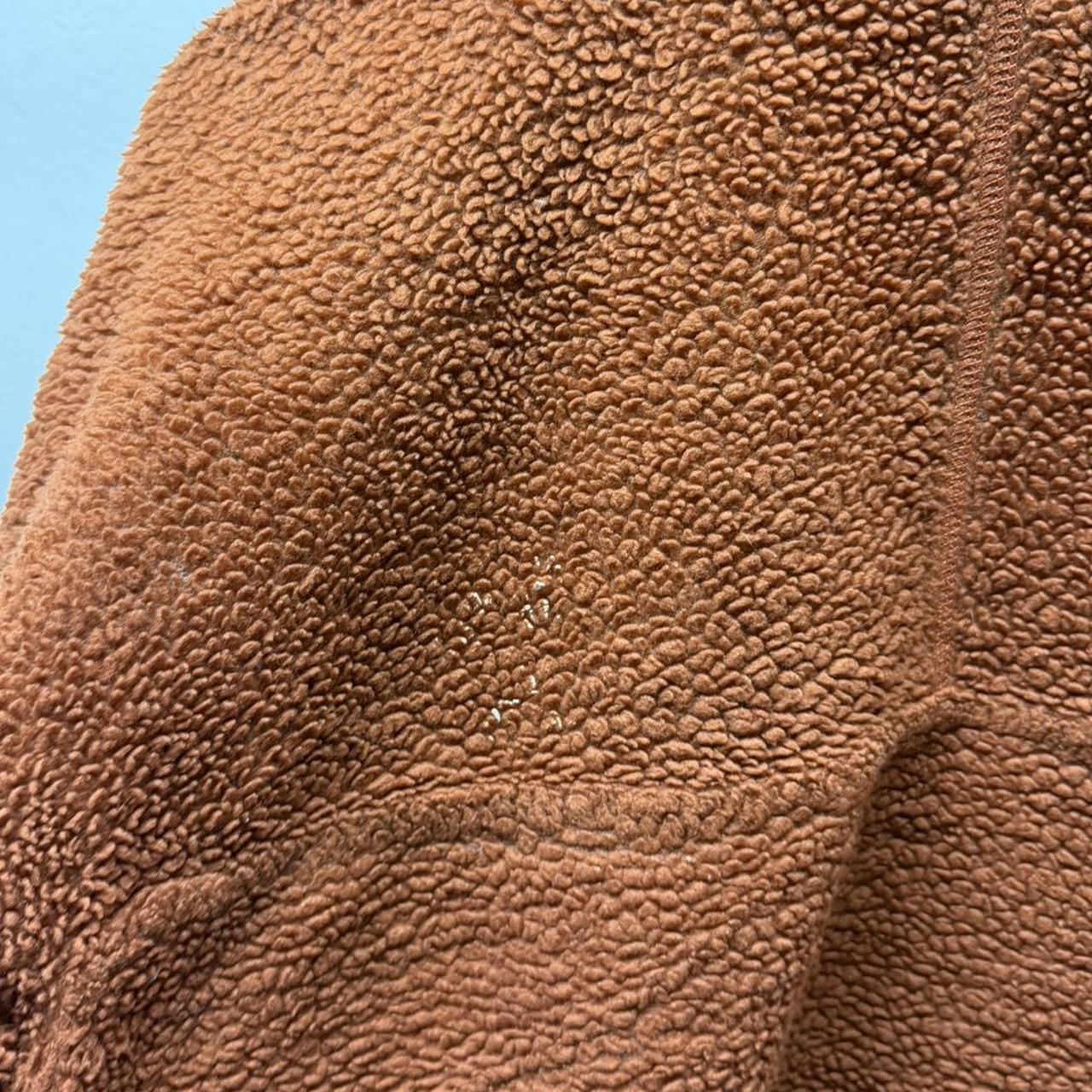
Sherpa often shows wear through changes in the pile before anything happens to the backing.
A cuff spends hours touching tables and desks. Hands pass through pocket openings. A bag strap repeatedly presses the shoulder.
The fibers in those areas gradually gather together, and the open valleys become less visible. The affected section starts to look flatter and denser. This is the surface change usually described as matting.
Pilling has a different appearance. Small tangled balls form on the face. ASTM D3512 evaluates pilling against visual standards on a scale from 5 for no pilling to 1 for very severe pilling.
A sherpa sample can therefore receive an acceptable pilling grade while still showing noticeable pile flattening. The surface needs to be viewed for both conditions.
Loose fibers around freshly cut edges are another common sight during production. Cutting through the pile severs fibers along the pattern line, so some loose material on the cutting table is expected. Fiber loss continuing from the middle of the fabric during wear would need a separate investigation.
Abrasion testing can add another reference. The current 280 GSM and 380 GSM sherpa products cited above are both published at 25,000 cycles under ASTM D4966.
That number belongs to those specific fabrics. ASTM D4966 explains that Martindale results can vary between laboratories and operators, and laboratory abrasion results do not translate directly into a precise number of months or years of real-world wear.
For outerwear development, photographs taken at fixed test intervals can show when the pile begins to flatten or expose more backing.
Washing Changes More Than the Dimensions
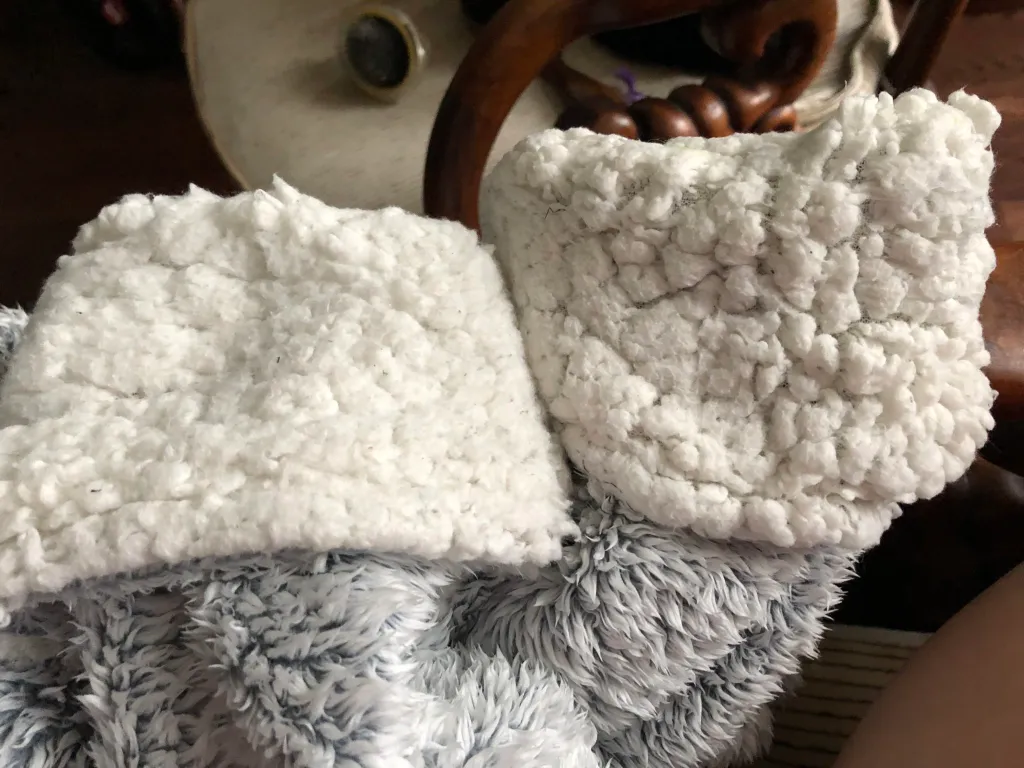
Sherpa can keep its basic fabric structure and still look noticeably different after laundering.
The curls may pull into larger groups. Some sections can become flatter. Repeated movement during washing and drying can reduce the open loft that was visible on the original sample.
Dimensional change is still worth measuring.
Suppose two marks are 500 mm apart before laundering and 485 mm apart after the selected cycle:
(485 − 500) ÷ 500 × 100 = −3%
The fabric has shortened by 3% in that direction.
A useful result needs the wash conditions attached to it. AATCC TM135-2025 covers dimensional change of fabrics after home laundering and provides four washing temperatures, three agitation cycles and four drying procedures.
Length and width should be recorded separately.
Pile appearance needs its own reference. Keeping an unwashed sample and photographing both pieces under the same side lighting makes changes in curl size, clumping and loft much easier to see.
With polyester sherpa, the selected drying route also matters because the pile is made from thermoplastic fibers.
Sherpa, Polar Fleece, Teddy, Borg, and Shearling
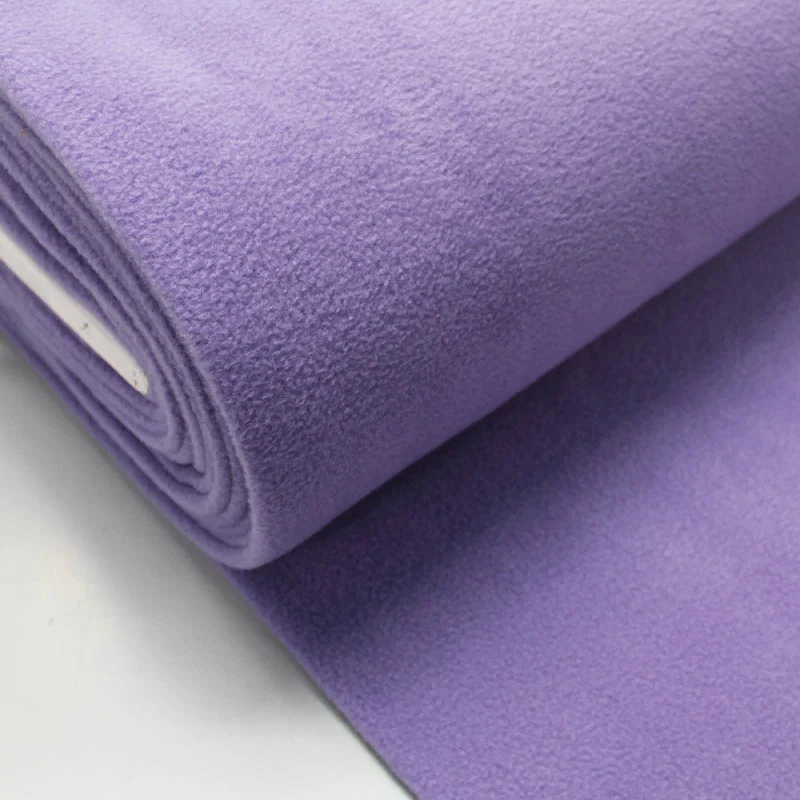
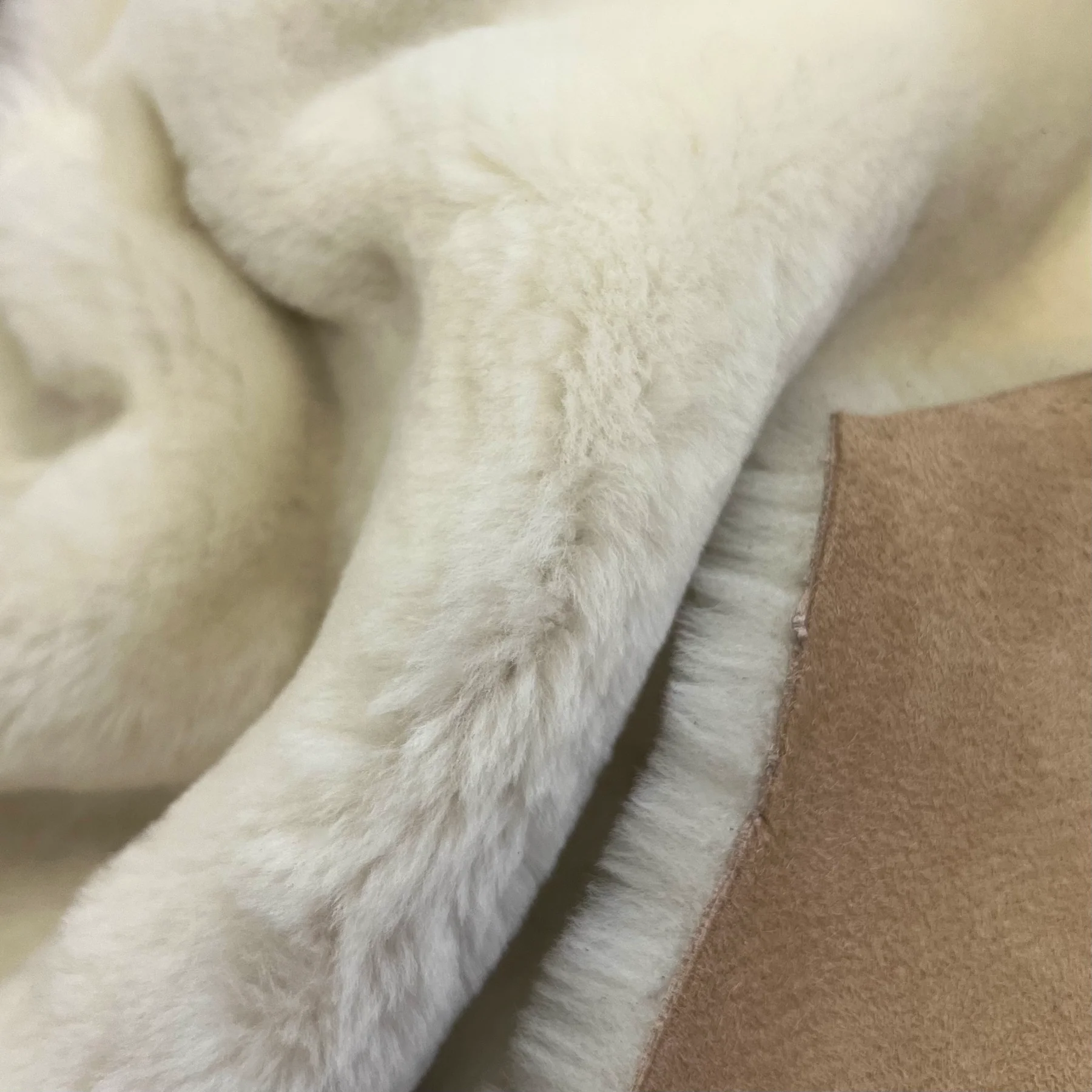
The names around sherpa come from different parts of the clothing and textile market, so product descriptions often overlap.
Polar fleece usually has a shorter, more even brushed surface. Sherpa has a deeper face with visible curls and valleys, giving it a stronger sheep-fleece appearance.
Teddy and borg are broader fashion-market names used for related high-pile fabrics. Their meaning can shift from one supplier to another, which makes a reference swatch more useful during sourcing than the name alone.
Shearling comes from sheep or lamb skin with the natural fleece still attached to the hide. The reverse of the material is skin.
A sherpa reverse shows textile construction: knit, finished fabric or an added backing.
That difference affects cutting, sewing and care long before the materials reach the finished garment.
Sherpa Can Be Made From More Than Polyester
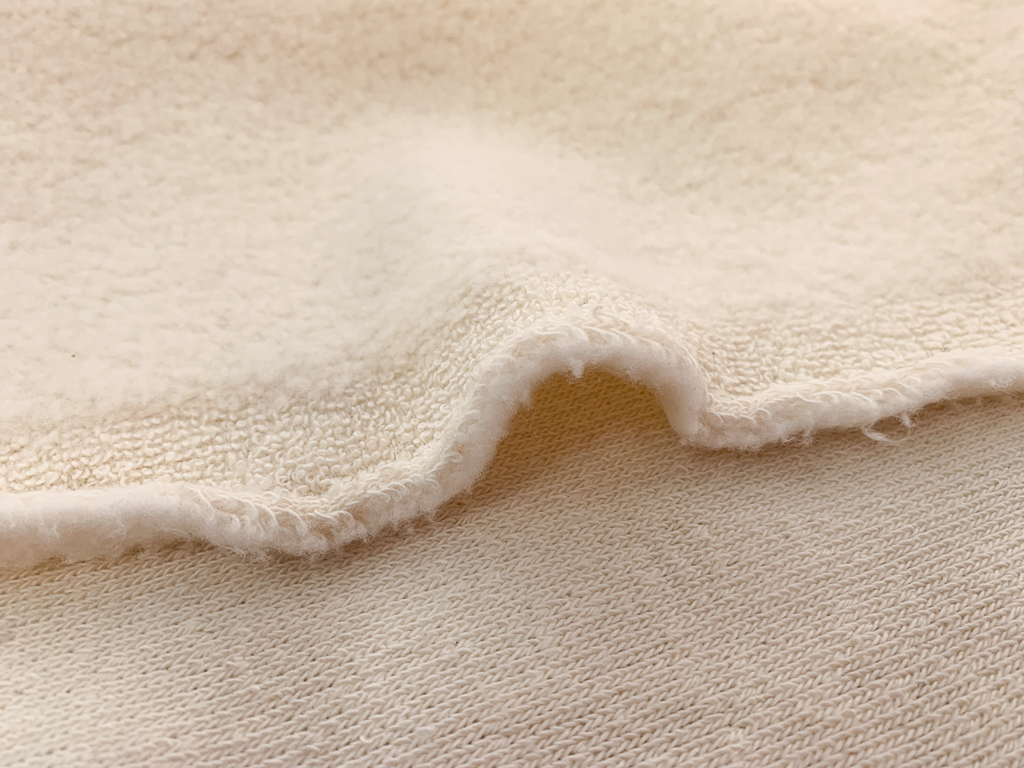
Polyester appears across much of the commercial sherpa market.
The Kangman fabric at 300 GSM and 150 cm width is one example of a knitted 100% polyester quality used for jackets and linings.
Cotton sherpa gives the same fabric family another feel. The Rijs example uses 100% cotton, approximately 300 GSM, 150 cm width and four-way stretch, with a fluffy side and smoother jersey-knit reverse.
Fiber choice affects moisture absorption, drying behavior and care. The defining sherpa character still comes from the raised, clustered surface.
For production, composition belongs on the fabric specification beside weight, width and construction.
What a Sherpa Sample Should Show Before Production
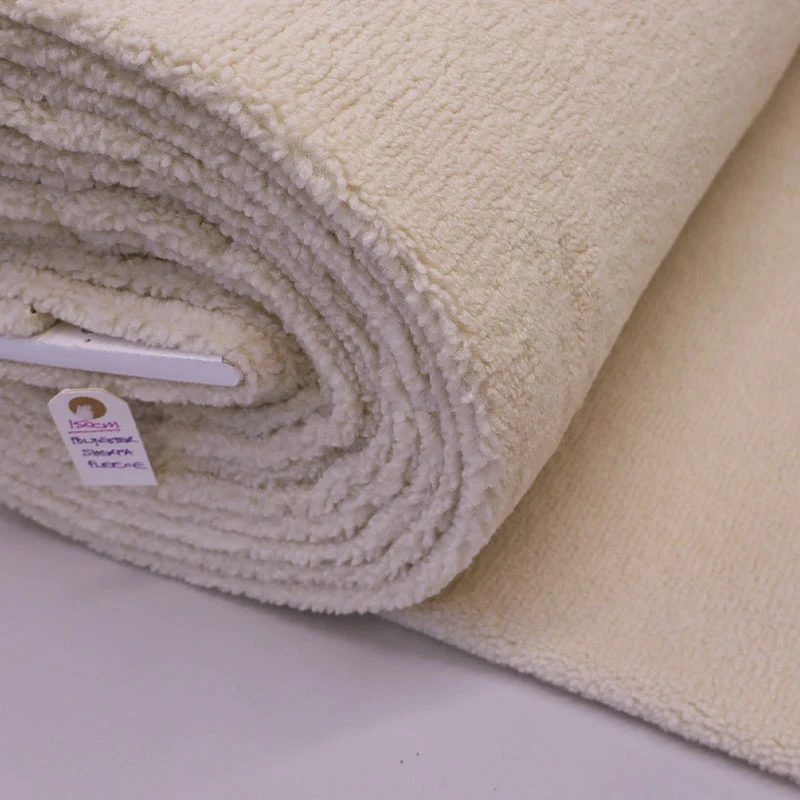
A small hand swatch is enough to check color and basic hand feel. A larger cutting shows much more about the material.
Under side lighting, changes in curl density and thin pile bands become easier to see. Turning the cloth over reveals whether the backing is a simple knit, a finished second face or a separate woven layer.
The intended garment determines which measurements deserve attention.
A jacket lining needs usable width, fabric weight, finished thickness and enough stretch information to predict sewing behavior and internal volume. Full-sherpa outerwear adds pile durability and laundering performance. A backed coat fabric also needs its complete thickness and handling checked through collars, pockets and other folded areas.
The current market examples already span 280 GSM unbacked polyester sherpa at 1.30 mm, 300 GSM knitted polyester sherpa at 150 cm width, about 300 GSM cotton sherpa with four-way stretch, and 380 GSM backed polyester sherpa at 1.60 mm.
Those are four fabrics sold under the same general sherpa name, with different structures and different behavior once they reach a pattern.