What Is Raw Denim?
Raw denim is denim that has never been washed, at the mill or after sewing. Some brands sell it as dry denim or rigid denim. Jeans were sold that way from the first riveted work pants of the 1870s until industrial garment washing spread in the 1970s and 1980s. Most jeans today are washed after sewing until the cloth is soft and the blue has faded to a planned shade. Raw jeans skip that step. The pair your customers unpack is as dark as it will ever be and stiff with the starch sizing that protected the warp yarns on the loom. It softens and fades over months of wear and shrinks in its first wash if the mill didn't preshrink the cloth.
With no fashion wash to date them, raw styles can stay in your line for years. You can point out in sustainability copy that no laundry water or chemicals went into the jeans after sewing. A devoted following photographs the fades on raw jeans month by month, but most of the customers buying them just want dark jeans that look smart.
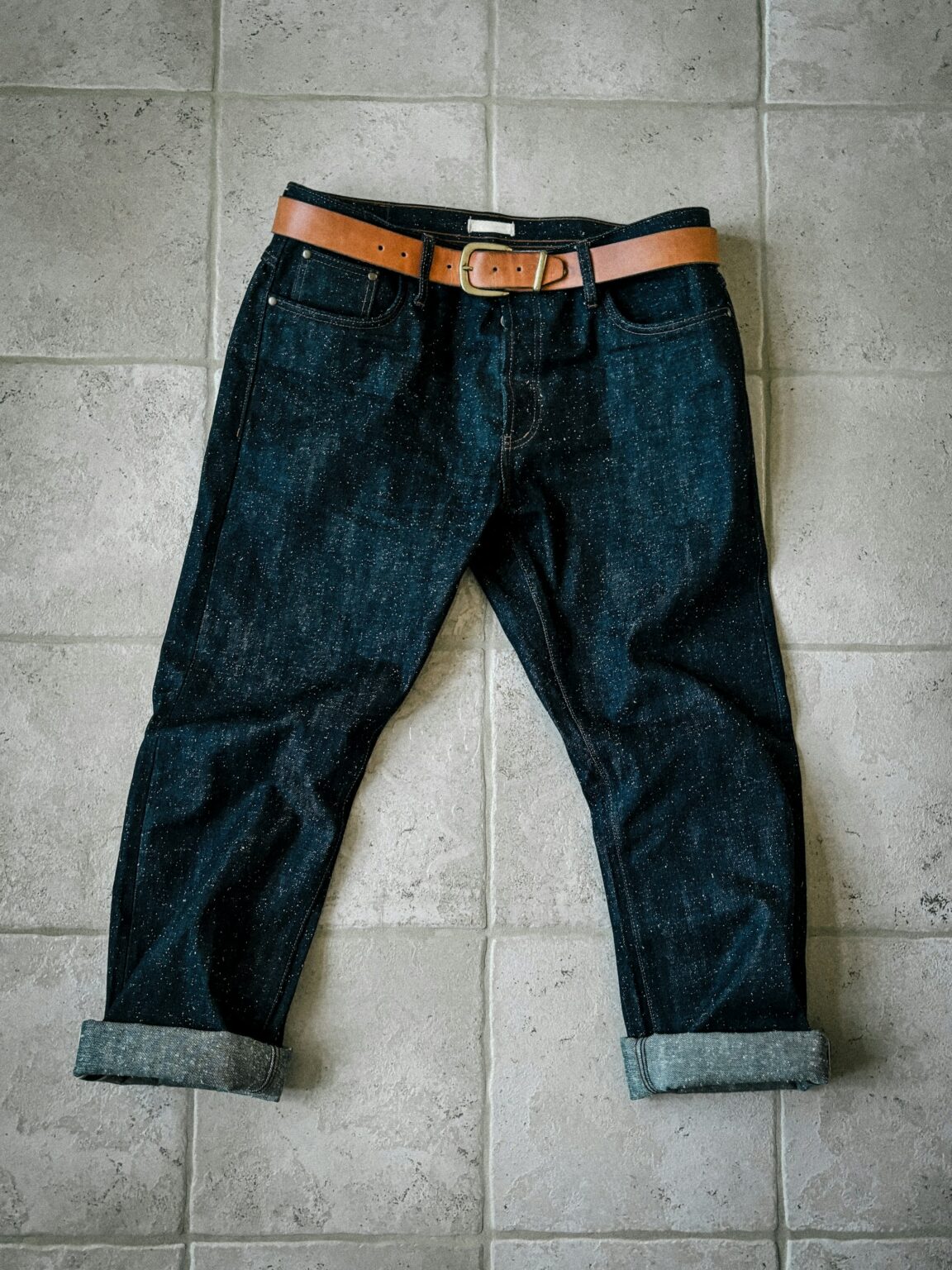
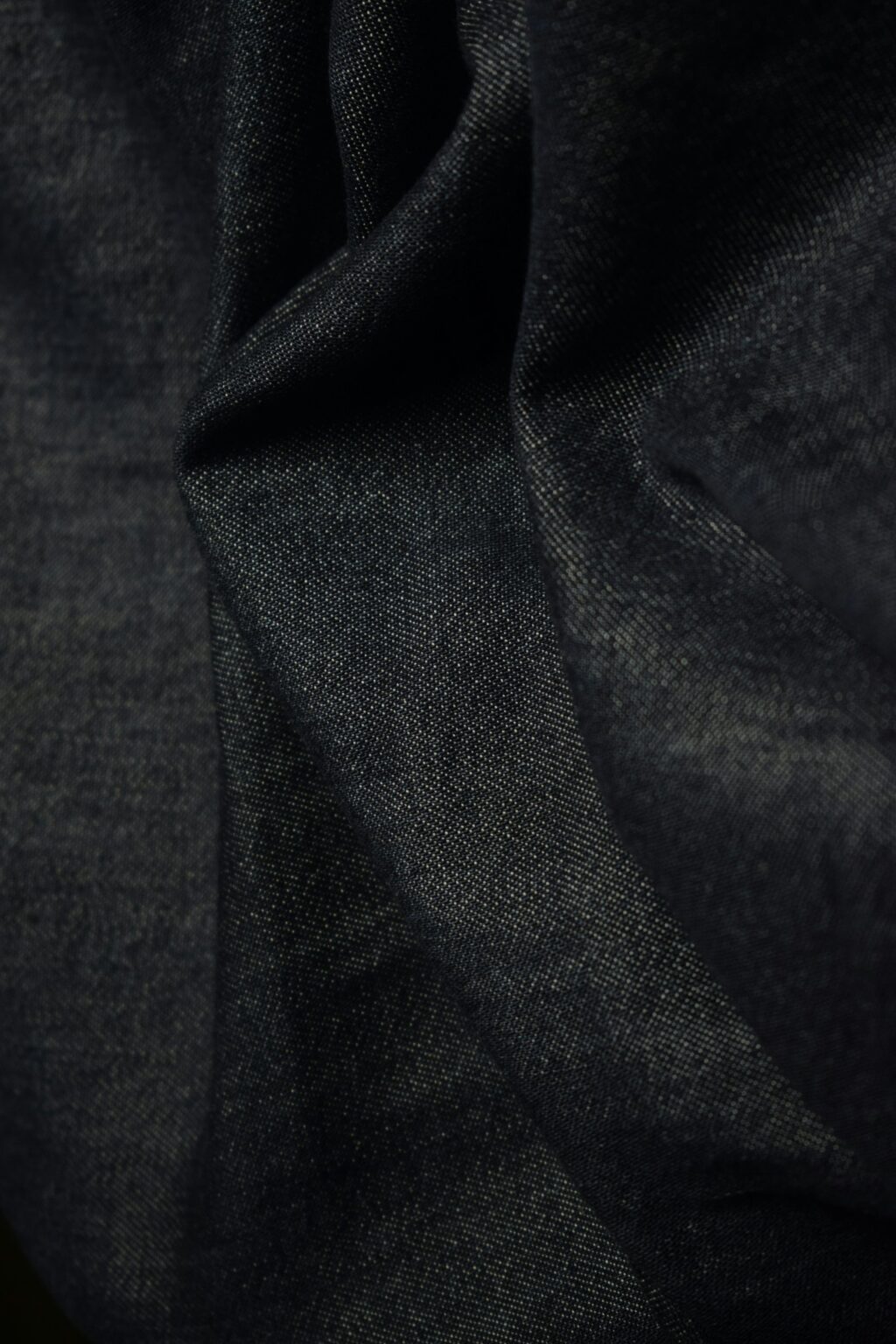
Raw denim fabric
Indigo bonds weakly to cotton and coats only the outside of the warp yarns, even after the several dips a mill gives them. Because twill brings much of the warp to the face of the cloth, the white cores of those yarns show through as soon as the dyed surface wears off. The mill dyes the warp gathered into loose ropes of a few hundred yarns or spread flat as a sheet. Panels cut from different parts of the width can show up as two blues in one pair when sheet-dyed warp differs in shade between the edges of the cloth and the middle.
The medium-dark pure indigo that customers picture when they hear raw denim lightens from navy toward bright blue and is the obvious first color for a raw line. Deeper indigo needs more months of wear before the creases turn pale. The cast of the blue, greener or redder, comes from the dye-bath conditions and from sulfur dyes the mill lays under or over the indigo. Denim with sulfur under the indigo wears to the gray-blue of old work jeans. Black raw jeans show blue at the creases only when the black goes over an indigo base. The cast you approve on the swatch shows more as the jeans age.
On raw jeans, no garment wash hides the slight shade differences between dye lots and between rolls of one lot. Rolls leave the mill sorted into shade groups, and a factory that cuts your jeans one shade group at a time keeps the panels of a pair and the pairs on a shop shelf in one blue. You can hold a swatch from a new dye lot against the one you approved for the first order before a reorder is cut.
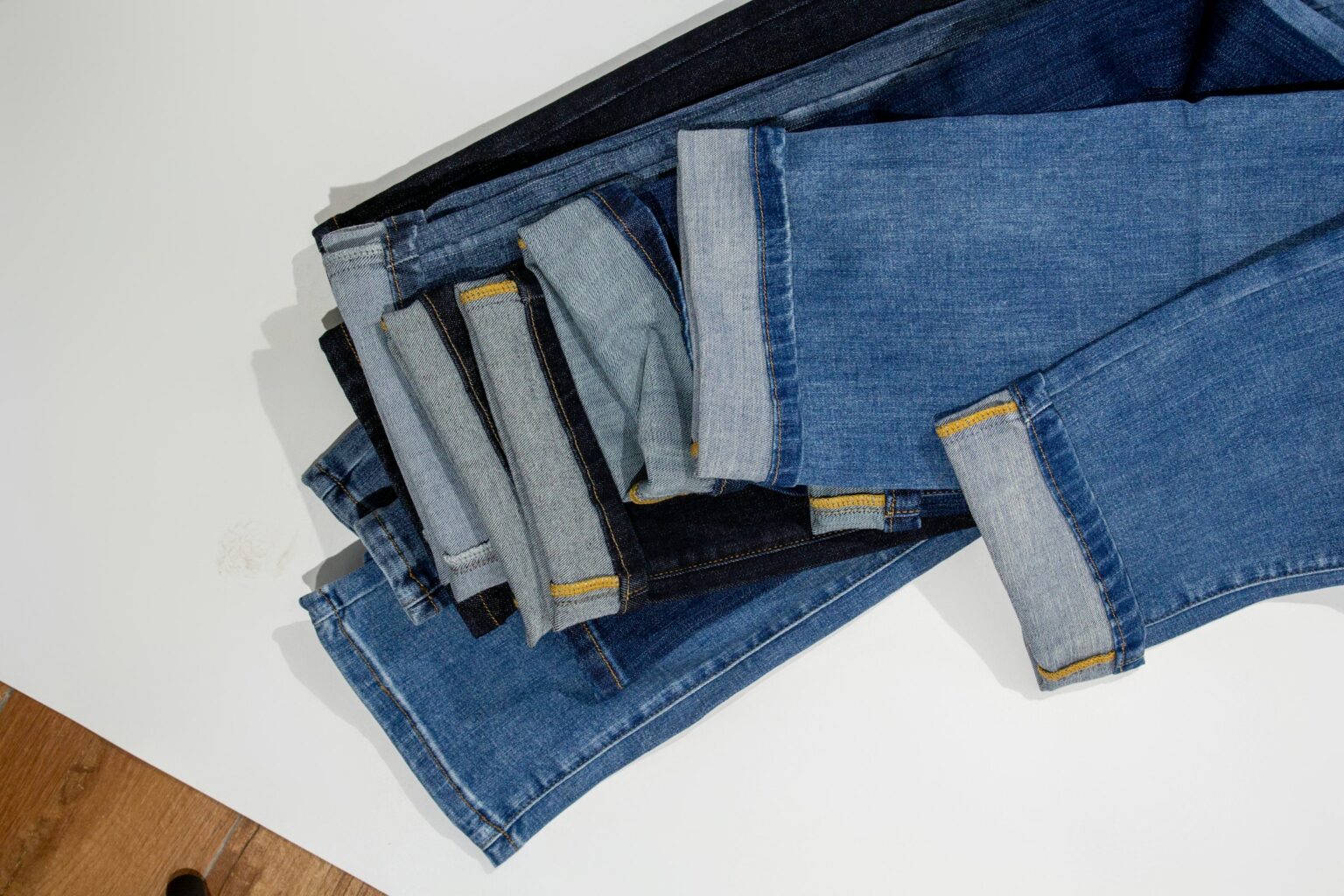
The thick stretches along a ring-spun yarn lose their indigo first and leave fine vertical streaks inside the fades. Denim woven from the more evenly spun open-end yarn costs less and fades to a flat blue. If the fades are what you're selling, the warp has to be ring-spun and dyed in ropes. Dark styles that customers buy for the color and the fit can go into open-end denim with sheet-dyed warp once a full-width sample shows one shade from edge to edge.
Raw jeans are usually cut from denim between 410 and 540 g/m² (12 and 16 oz/yd²). Lighter raw denim goes into shirts and summer jeans. The safe place to start a raw line is 440 to 490 g/m² (13 to 14.5 oz/yd²). Jeans in that range soften within a few weeks of daily wear and stay comfortable in all but the hottest months. Left-hand twill, woven with its diagonal slanting the opposite way to the usual right-hand twill, breaks in sooner and fades more hazily. Denim over 540 g/m² (16 oz/yd²) takes months to break in and wears into deep creases that fade with bold contrast. Above 680 g/m² (20 oz/yd²), only factories with heavy-duty machines can sew the hems and belt loops.
Customers in the US and Japan compare raw denim by its weight in ounces and look for that figure on the product page. Denim the mill hasn't preshrunk weighs more per square meter after it shrinks, and two mills quoting one weight can be selling different cloth if one weighed it before washing and the other after.
Stretch raw denim with 1 to 2 percent elastane in the weft is comfortable from the first day and fades with softer contrast than all-cotton denim. It suits slim cuts that would otherwise feel tight for weeks. Stretch denim leaves the mill heat-set and preshrunk, and a hot soak at home won't shrink it to fit.
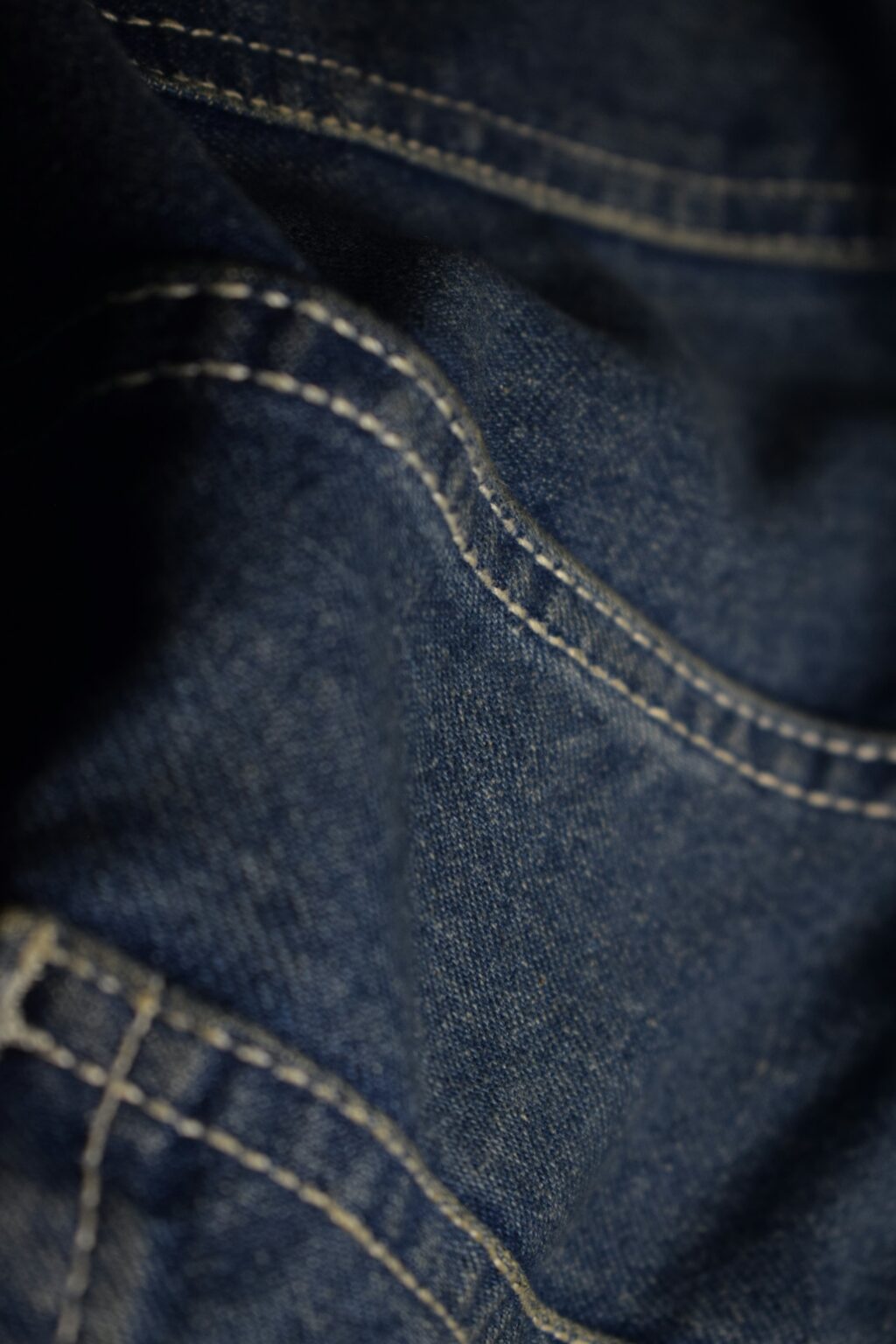
Selvedge denim
Selvedge and raw often get mixed up in product names, but selvedge refers only to the closed edge that a shuttle loom weaves into the cloth. Washed and even stonewashed selvedge jeans are common. Most raw jeans are made from wide denim with plain cut edges. Shuttle looms pass one continuous weft yarn back and forth across the warp and close the two edges of a narrow cloth. The selvedge forms the outseam of the finished jeans. The marker thread along the edge, classically red, can be woven in your brand color on a custom order.
The two edges lie pressed open along the outseam and lighten into a pale track down the side of the leg. The small irregularities that shuttle looms leave in the cloth at their lower weaving tension come out as uneven streaks in the fades.
Selvedge pays for itself on top-priced pairs and on styles worn with a rolled cuff that shows the edge. Other styles can get similar vertical streaks from ring-spun wide denim and skip the selvedge cost. Chinese selvedge costs less than the Japanese selvedge woven in Okayama and Hiroshima and suits mid-priced lines.
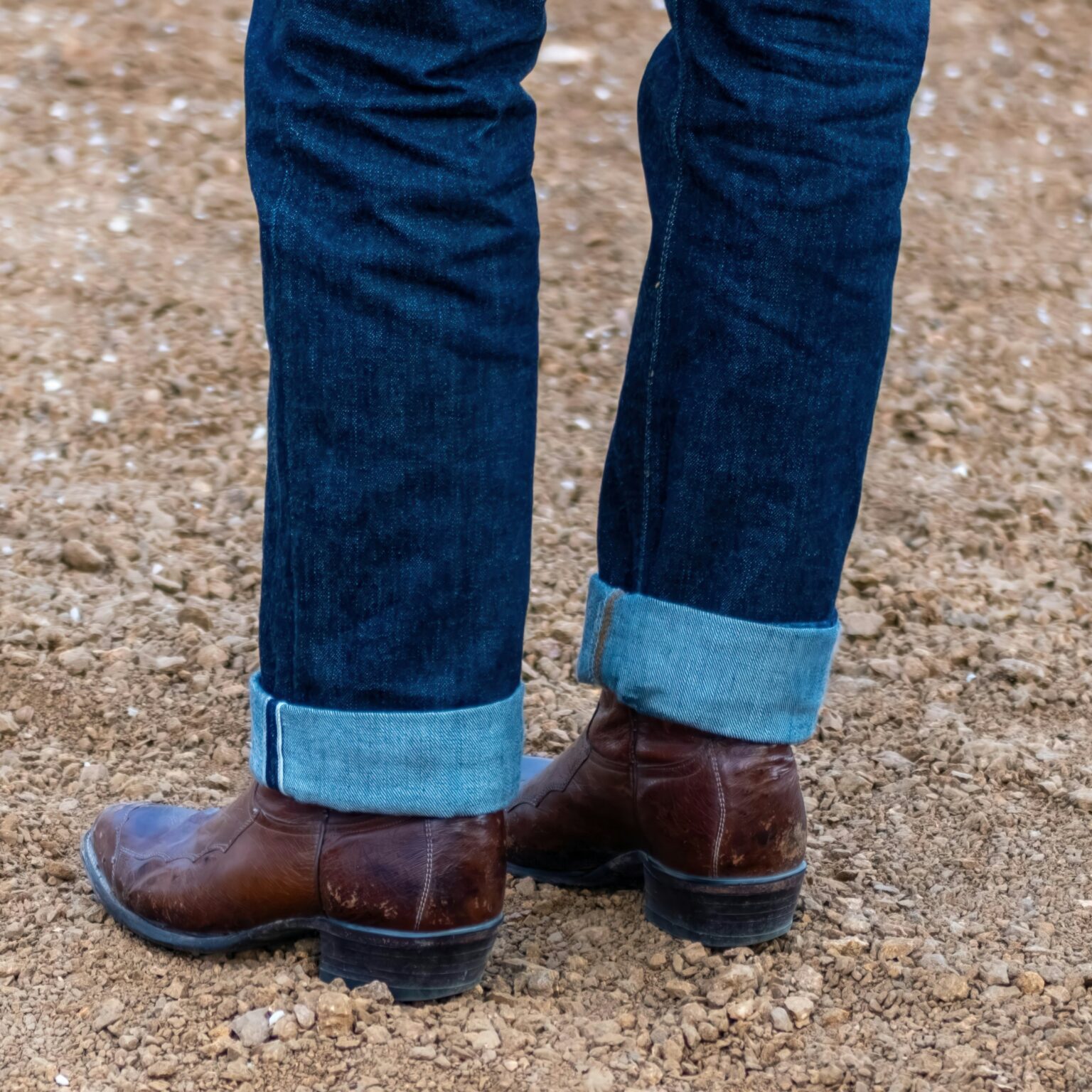
Raw denim shrinkage
Yarns held tight on the loom relax in water and shorten the cloth more than they narrow it. Mills preshrink denim on sanforizing machines that press the damp cloth against a thick rubber belt and take most of the shrinkage out before the cloth is cut.
Fabric sold under the Sanforized trademark must not shrink or grow by more than 1 percent in length or width when tested with the ISO 6330 wash method. The limit is 1.5 percentage points higher after tumble drying and for fabric already sewn into garments. A mill that sanforizes without the trademark prints a residual shrinkage figure on its spec sheet that you can hold against these limits. Sanforized jeans with an 81 cm (32 in) inseam stay within those limits up to a loss of 2.0 cm (0.8 in). You get the finished inseam you ordered when the factory washes a swatch of your bulk fabric before cutting and adds the measured shrinkage to the pattern length.
The first soak takes up to 10 percent off the length of unsanforized denim, or 8.1 cm (3.2 in) off an 81 cm (32 in) inseam, and the amount varies with water temperature and fabric lot. Jeans cut from this denim are sold as shrink-to-fit. Customers soak them in a bathtub of hot tap water for 30 minutes to an hour before the first wear. Many pull them on damp afterward and let the denim dry to the shape of their body.
A pair meant to finish at an 81 cm (32 in) inseam has to leave the factory at 89 cm (35 in) if the soaked swatch loses 9 percent of its length. The waist shrinks less and gets a smaller allowance. Approve the after-soak sizes on a sample pair the factory has soaked and measured. Those sizes hold only for jeans soaked at the factory's water temperature and for its soak time. Because brands label shrink-to-fit sizes by different conventions, customers can't tell from the label size alone which pair to order. They can pick a size once you list flat measurements from before the soak and after it on the size chart and note which of the two the label size refers to.
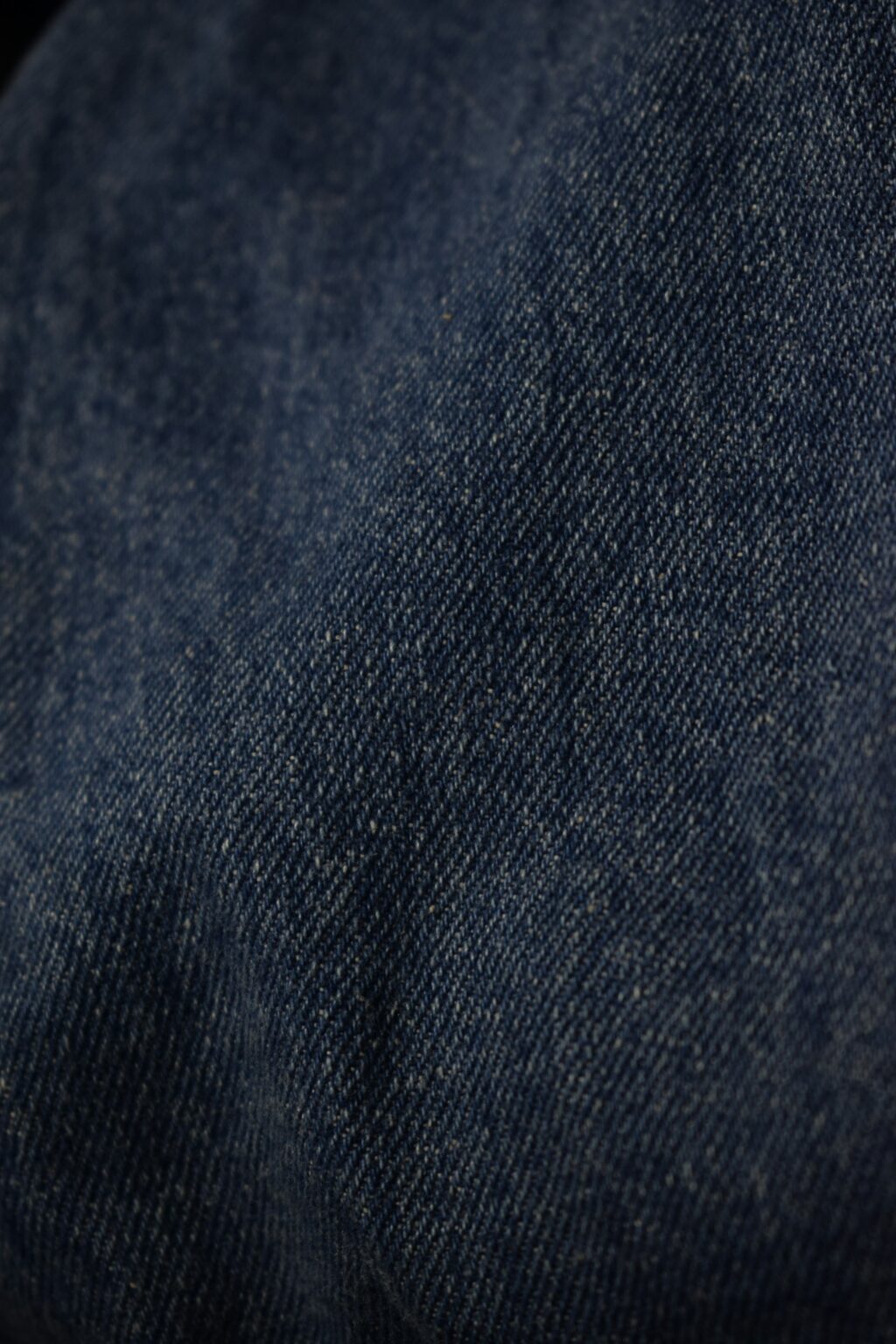
Legs cut from unsanforized twill can twist in the soak until the side seams sit on the front of the shin. Mills prevent that by skewing regular twill: the weft leaves the mill at a slight angle and is pulled square in the soak. Broken twill reverses its diagonal at short intervals and doesn't twist. Labs measure leg twist on finished jeans with AATCC TM207 or ISO 16322-3 by laundering a marked pair and recording how far a vertical seam has moved at the hem as a percentage of its length. The common limit of 3 percent comes to 2.4 cm (1 in) at the hem of an 81 cm (32 in) inseam.
The risk online is a customer who orders a shrink-to-fit pair in the usual size and finds it a size short after the first hot wash. An unsoaked pair can be exchanged for the cost of the shipping, but a soaked pair can't go back on sale as new. Say plainly in the return policy that soaked pairs are final sale. Sanforized denim is the safer start for a raw line sold mostly online until you know how many of your customers have soaked raw jeans before.
A short factory wash with a desizing agent or detergent and a softener removes the starch and most of the shrinkage from one-wash jeans and leaves the indigo nearly as dark as raw. Customers buying online get the dark look without the stiff break-in or the home soak. Creases on one-wash jeans form with no starch to hold them and fade more softly than on raw jeans. One-wash jeans listed as raw draw complaints from customers who have worn raw denim.
Fit choices
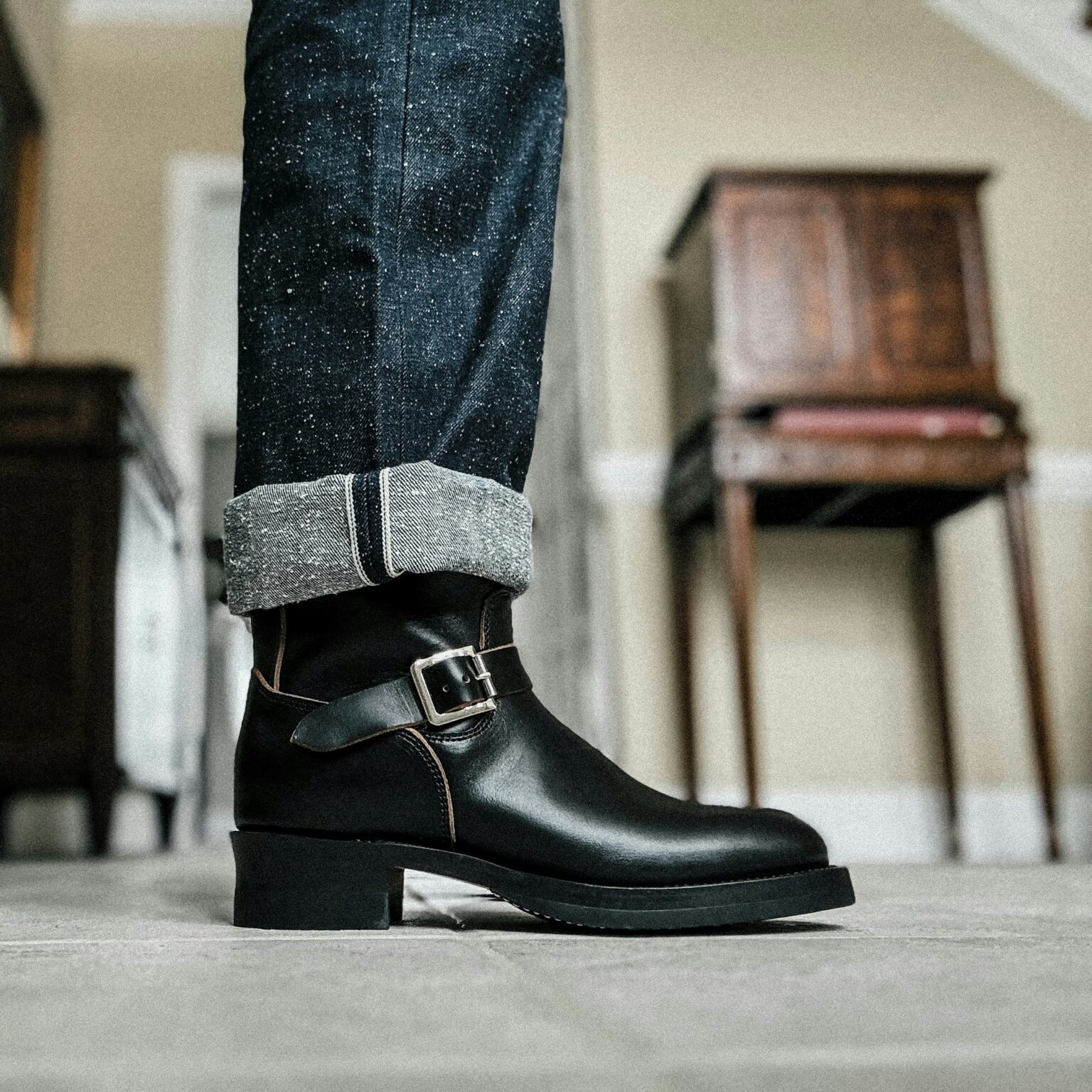
In a slim-straight or tapered cut, the denim folds tightly as it is worn and fades more sharply than in a relaxed cut. Start a fade-led line with one of those two cuts. Whiskers at the hips and honeycombs behind the knees show up within a few months of daily wear. The creases on pure indigo turn light blue after a year or two. A product photo of a pair worn for a year lets customers see how long those fades take.
The denim around a chain-stitched hem shrinks against the looped stitch in the early washes and twists into a wavy ridge that customers call roping. If you sell the style as a single long unhemmed leg, you stock one length per waist size and leave the hemming to customers after the first wash or soak. The flat lockstitch hem that most alteration shops sew never ropes. For a fade-led style, factory chain-stitched hems in several finished lengths are worth the extra stock.
All-cotton raw jeans stretch up to 2.5 cm (1 in) at the waist between washes and shrink back toward their original size in the next one. Tell customers in the fit notes to choose a waist that feels snug on the first day. Stretch raw jeans recover their shape between washes and bag less at the knees. Customers can buy them in the waist size they wear in other jeans.
Production details
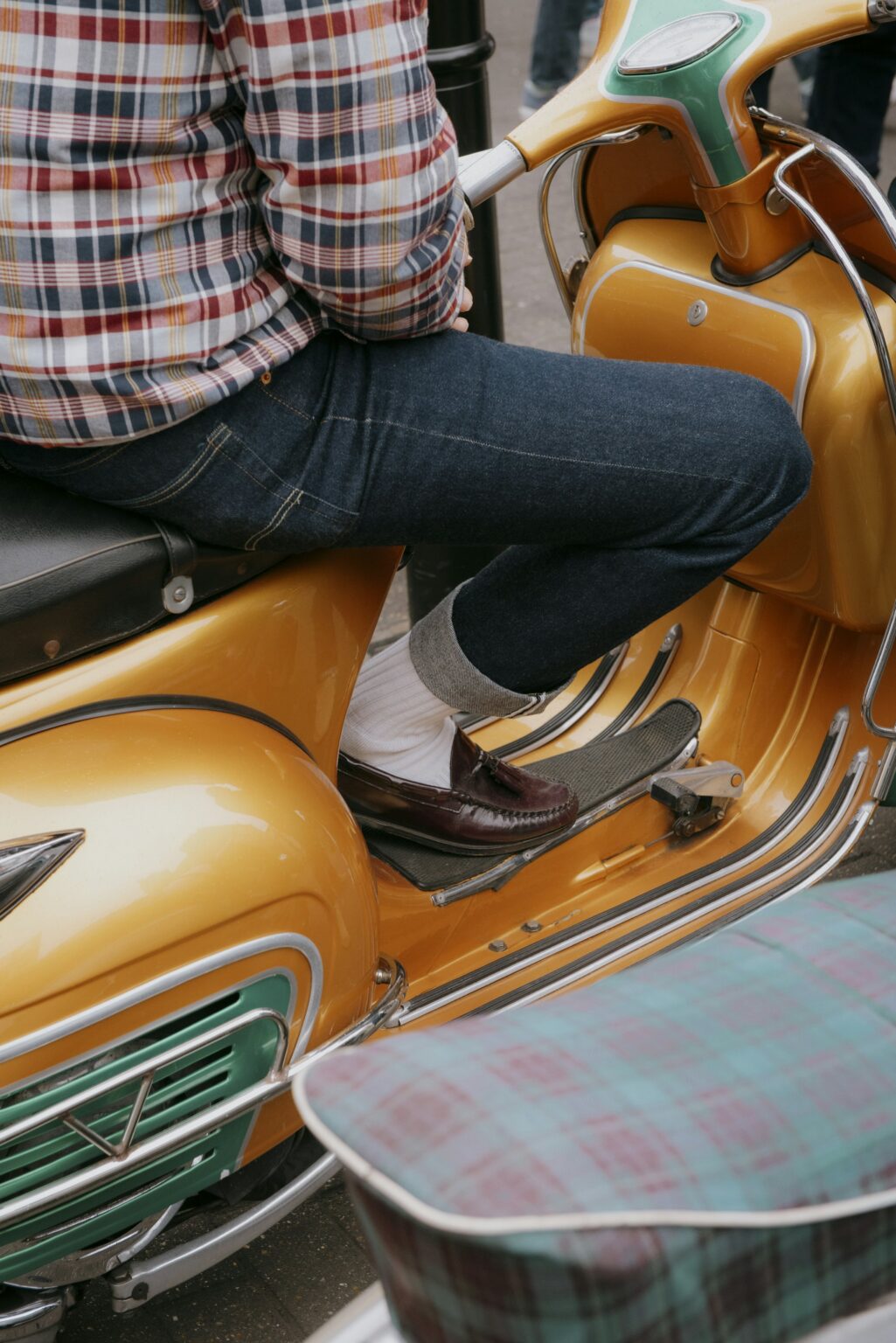
The crotch seams and pocket bags usually give out first on raw jeans worn for months between washes. Polyester-core thread wrapped in cotton holds those seams longer than all-cotton thread and ages along with the denim. Keys wear holes in thin pocket bags long before the denim wears thin. Heavier pocket twill fixes that for little extra cost. At the back yoke and seat, customers look for flat-felled seams that enclose the cut edges in two rows of stitching and end up as raised pale ridges.
Buttons and rivets in solid copper or brass survive the hot soak of shrink-to-fit jeans without rusting onto the denim. Button flies are the norm on these jeans. Zip flies sewn into unsanforized denim come out of the soak puckered around the tape. Some heritage brands put leather patches on shrink-to-fit jeans for the way leather hardens and cracks in hot water. Jacron, the washable paper-based card used for most jeans patches, comes through the soak in one piece.
Rivets at the corners of the back pockets scratch furniture and car seats when they are left exposed. Levi Strauss & Co. covered its back-pocket rivets in 1937 after customers complained, then switched to bar tacks in 1966 when the covered rivets started wearing through the denim. Bar tacks hold up better on raw jeans that see hard daily wear.
Creases pressed into unwashed denim set and later fade into pale stripes down the leg. Unpressed raw jeans, loosely folded for packing, reach customers without those creases.
Care instructions
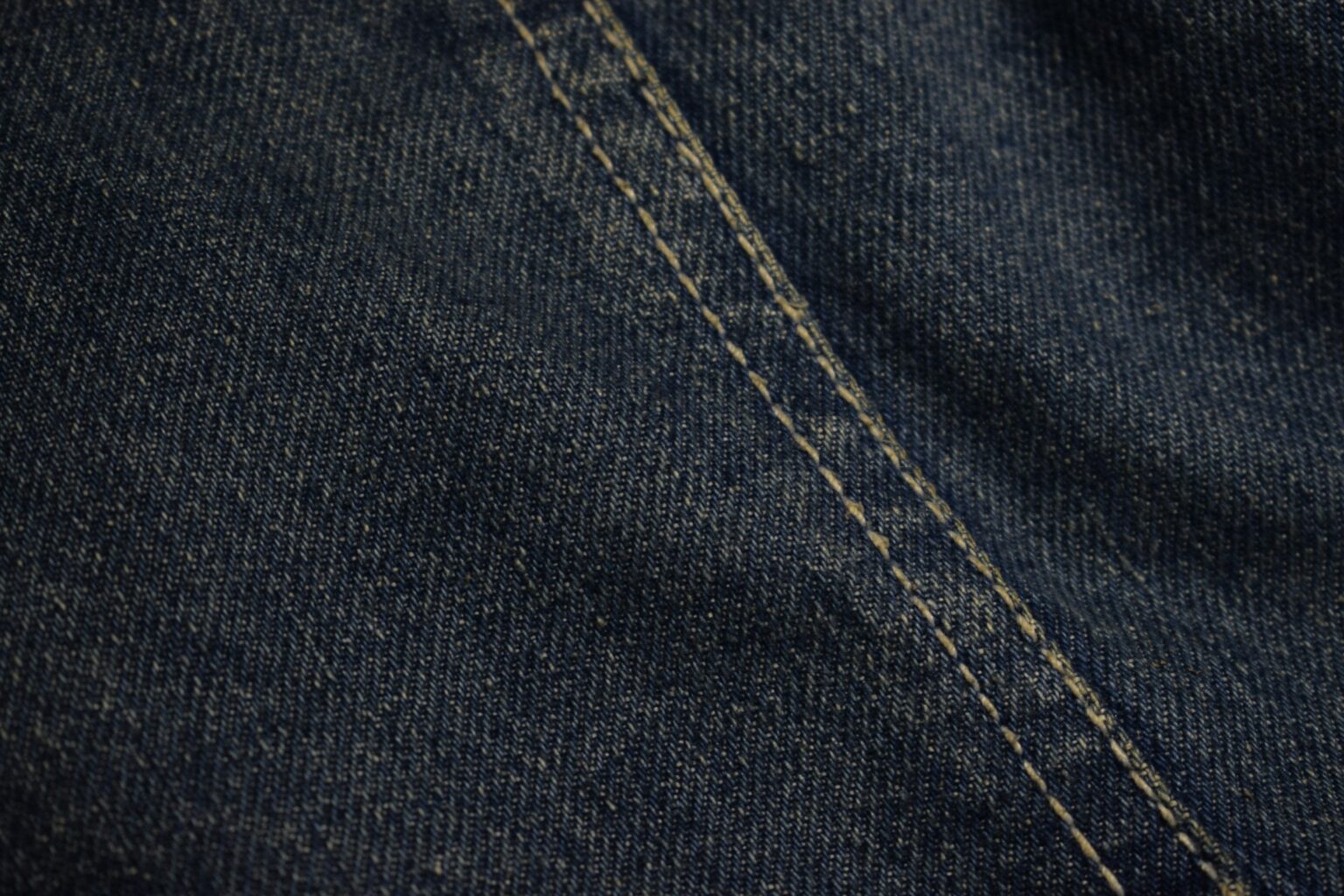
The blue lightens by a shade when the starch comes out in the first wash or soak. Many customers put off that wash for months and let the starch hold the creases in place as they fade. For a sanforized pair, print four instructions on the care label: wash inside out, use cold water, keep light clothes out of the load and hang to dry out of direct sun. Any hot wash after the soak takes more length off shrink-to-fit jeans. Their labels need the soak instructions first and the four instructions for later washes under them.
Fresh indigo rubs off onto light sofas and white sneakers in the first weeks of wear. Damp denim leaves far more of it behind. Labs grade this rub-off, known in the trade as crocking, by rubbing a dry white cloth and then a wet one against the fabric and rating the stain from 5 for none down to 1. The minimums for indigo denim in the 2009 edition of ASTM D6554, a US denim specification withdrawn in 2023, were grade 3 dry and 1.5 wet on the AATCC crocking test. Most raw indigo denim clears the dry minimum and sits right on the wet one. A 440 g/m² (13 oz/yd²) raw denim in a 2026 lab study rated 4 dry and 1 to 2 wet.
Put a warning about damp denim and a note that soap takes the blue off skin on the hangtag. Mills can work to grade 3 dry and 1.5 wet if you write those grades and the test method into the fabric spec. Anti-crock finishes applied at the mill reduce the transfer and are worth their cost when a retail account tests for crocking, or once customers start sending photos of blue stains on pale car seats.
Raw denim costs
Raw styles save you the wash charge and the days the jeans would have spent at the laundry. Fabric makes up the largest share of what a raw pair costs. The price per meter rises with fabric weight and with the extra dips a deeper indigo needs. Heavy denim takes longer and costs more to cut and sew. Natural plant indigo costs far more than the synthetic indigo used for nearly all denim and makes sense only for a small premium batch marketed on that story.
Cotton denim over 200 g/m² (5.9 oz/yd²), selvedge included, is exported at an average customs value of under US$5 a kilogram from China and over US$15 from Japan. The 0.9 to 1 kg of 440 g/m² (13 oz/yd²) wide denim that goes into a pair of jeans costs US$4 to 5 at the Chinese average. Small custom orders cost more per meter than these export averages.
Selvedge adds cost in two places: the price per meter and the meters per pair. Shuttle looms weave several times slower than modern looms and turn out cloth 76 to 81 cm (30 to 32 in) wide against 150 cm (59 in) for wide denim. Cloth half as wide takes close to twice the length per pair of jeans. That gap doesn't show in a per-meter quote. Fabric for a selvedge pair costs more than double the fabric for a pair cut from wide denim.
Stock fabric ships by the roll from a mill's inventory, and an opening order of a few hundred pairs is enough to test a raw style before you commit to a custom denim. Custom denim usually has a minimum order of 3,000 m (3,300 yd) or more per color. That minimum is enough wide denim for 2,000 to 2,300 pairs of jeans at 1.3 to 1.5 m (1.4 to 1.6 yd) a pair. A raw style skips the two to four weeks of wash testing that a washed style adds to the four to six weeks a mill takes to develop a custom denim.
Sources
- Standards for Shrinkage of Sanforized Labeled Woven Fabrics, The Sanforized Company
- Naser, A. et al., "Effects of Industrial Washing Techniques on the Physical and Color Fastness Properties of Denim Fabrics," Tekstilna industrija 74(2), 2026
- ASTM D6554/D6554M-09, Standard Performance Specification for 100% Cotton Denim Fabrics, ASTM International (replaced in 2014 by an edition that ASTM withdrew in 2023)
- Denim exports by country, HS 520942, 2024, World Integrated Trade Solution, World Bank
- Levi Strauss & Co. company timeline, Levi Strauss & Co.