What Is GSM in Fabric?
Suppliers give fabric weight in grams per square meter and write it as GSM, gsm or g/m² on quotes for knits and wovens. Chinese wholesale sellers often shorten it to a bare 180g or give a range such as 180-200g under the heading 克重. Lightweight and heavyweight on a tee listing refer to its GSM. Garment weight is a different number. A size XL tee outweighs a size S cut from one roll of 180 GSM jersey, the plain knit of most tees, and equal-sized pieces cut from the two weigh alike.
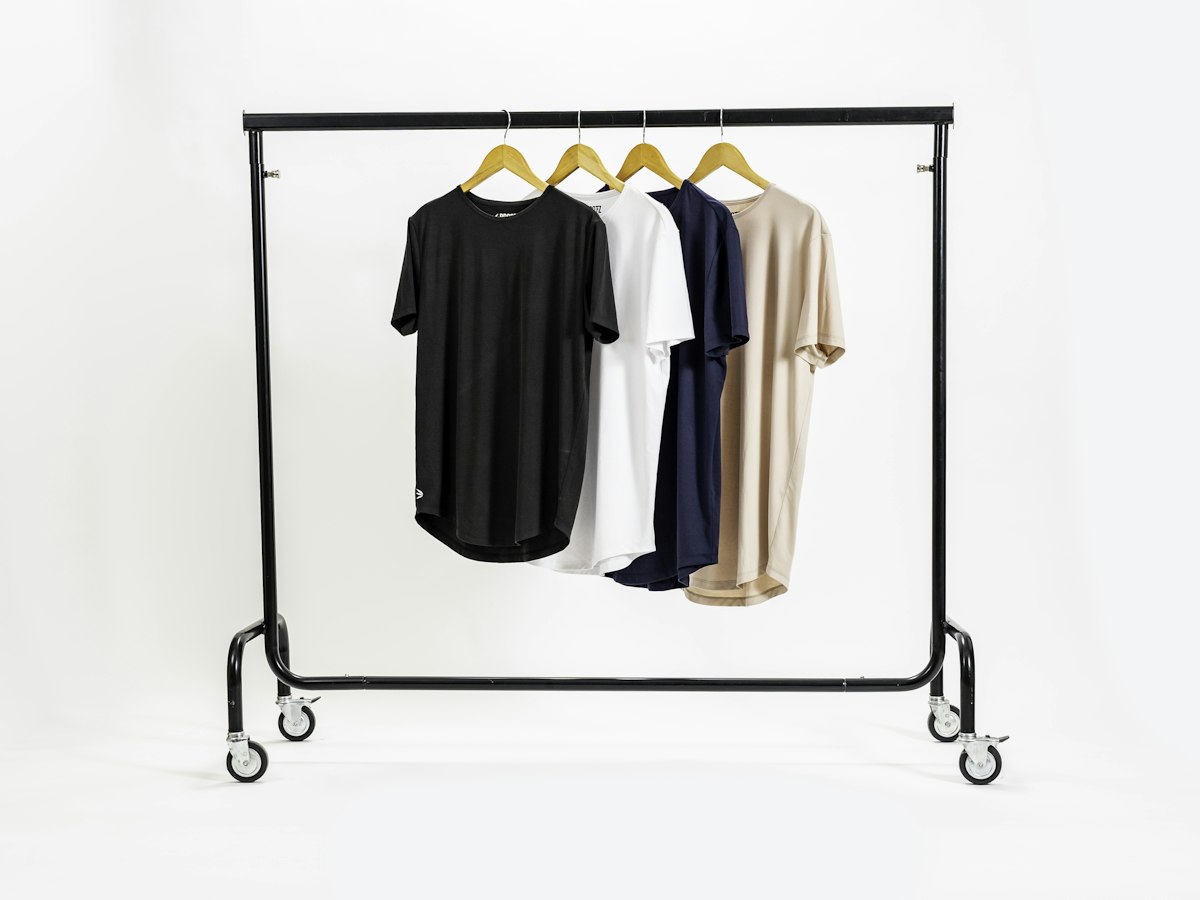
GSM measurement
You can check a supplier's figure at home before you pay for samples. Mills and labs use a round cutter that stamps out a disc of exactly 100 cm² and multiply the disc's weight in grams by 100. The disc has the area of a 10 cm square. The tools are a ruler and a calibrated pocket scale that reads to 0.01 g. The square should come from a flat area away from seams and folds, or from the unprinted back panel of a tee you want to match. Under the usual tolerance of 5% either way, a square of jersey sold as 180 GSM weighs 1.71 to 1.89 g, and one that weighs 1.62 g comes from jersey 10% under the quote.
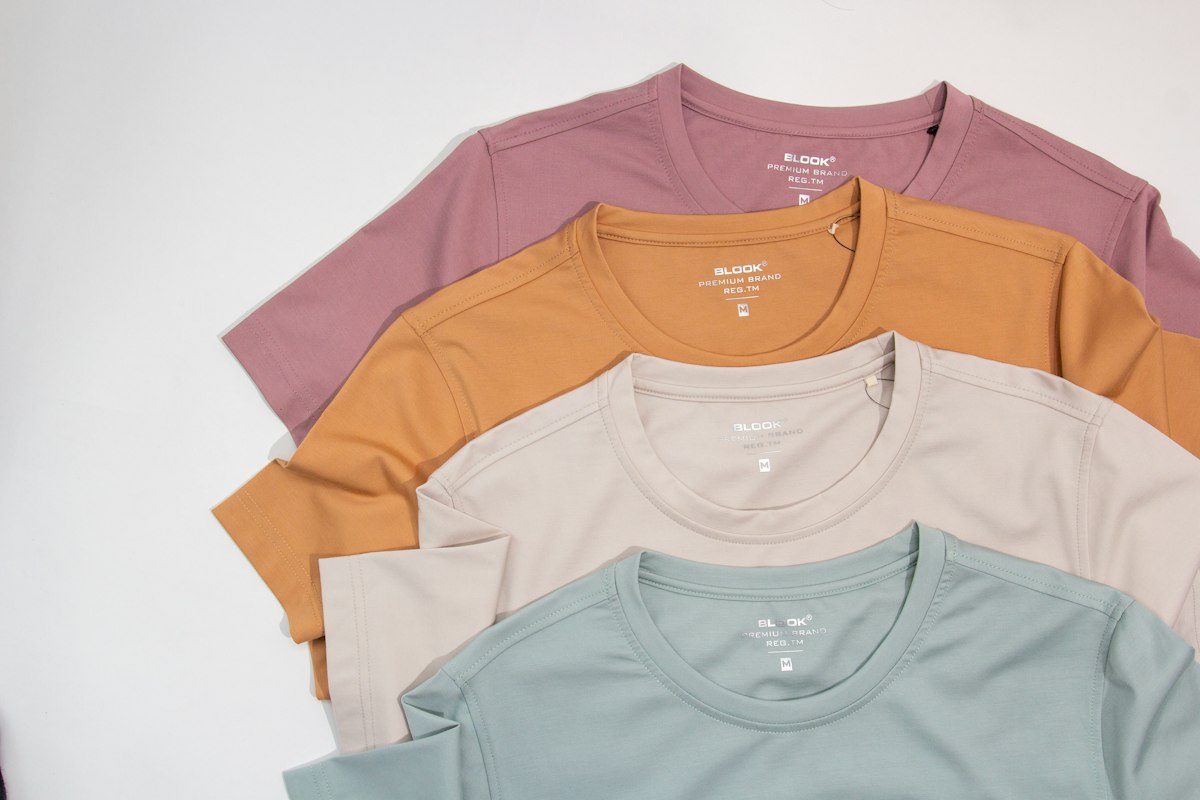
Squares cut 1 mm short in length and in width cover 98 cm² and weigh 2% less than a true 10 cm square. On a 5 cm square from a small swatch card, the shortfall is 4%. Kitchen scales that read in whole grams round a 1.80 g square up to 2 g and overstate its weight by 11%.
Cotton takes up water from the air and weighs more on a humid day than on a dry one. Polyester barely changes. Swatches sealed in plastic bags keep the moisture they had when they were packed. Knits are stretched in length on a tightly wound roll and weigh light until they relax. You get a steady reading from swatches that have lain flat overnight, out of their bags, in the room where you weigh them. Two suppliers' swatches rested side by side and weighed on one scale share any humidity or scale error and can be ranked fairly.
Labs report GSM on one of two bases: oven-dry, weighed straight out of a drying oven, or conditioned, weighed after the swatch has rested at 65% relative humidity until it stops gaining or losing weight. Conditioned is the basis of most textile test methods. Cotton weighs 7 to 8% more conditioned than oven-dry. Rayon and wool gain more. Jersey that a mill weighed at 180 GSM conditioned comes out at 167 or 168 GSM when your lab weighs it oven-dry and fails a 5% tolerance on paper.
GSM conversions
US blank brands and denim mills in China and elsewhere give fabric weight in ounces per square yard (oz/yd²). One ounce per square yard equals 33.9 GSM. Blank tees listed at 5.3 oz are cut from 180 GSM jersey. You list a 200 GSM jersey as 5.9 oz on a US product page after dividing by 33.9.
One momme, the unit silk is sold by, equals 4.34 GSM. Satin of 19 momme weighs 82 GSM. Suppliers who name only the yarn, such as 150 denier polyester or 30s cotton, haven't told you the GSM. Denier is the weight in grams of 9,000 m of yarn. Mills knit 150 denier polyester into light mesh and into heavy fleece. In cotton counts, a higher number means a finer yarn. Sweaters knitted to shape never exist as a roll of fabric and are weighed per sweater.
GSM ranges by garment
Tees in light jersey suit hot weather and layering under a shirt. Light jersey wears thin sooner than heavier jersey and turns stiff under a large screen print or heat transfer. Work tees that go through a weekly wash for years and tees with big prints hold up better in heavier jersey.
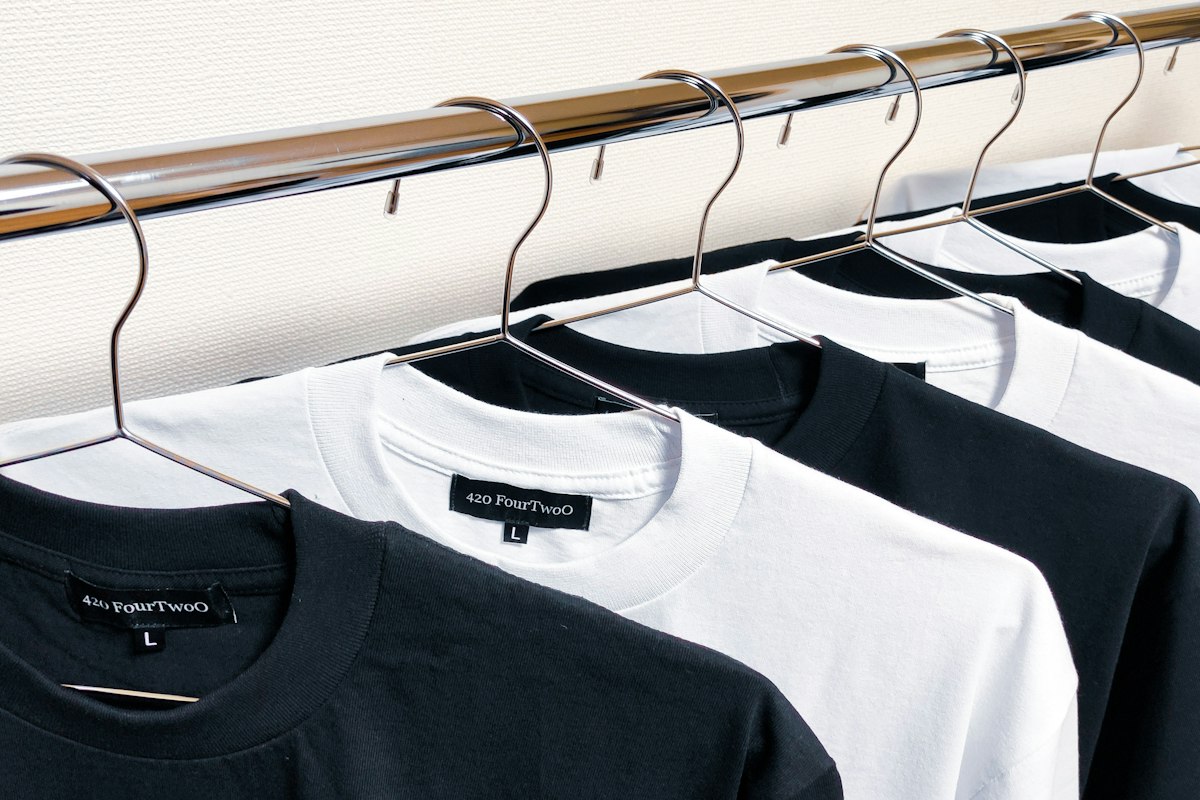
White jersey shows more skin than black jersey of equal weight. The weight for all colors of a tee style is chosen by testing the palest color. Say the choice is between 160 and 200 GSM. The first white sample, sewn in 160 GSM jersey, is checked in daylight on a person who wears your sample size. Does it cover the skin at the chest and shoulders and hang straight? A second sample in 200 GSM jersey is needed only when the first one shows skin.
Training tops and basketball uniforms are cut from light polyester knits that dry fast after a workout and let air through. Mesh shows skin through its holes at any weight. Leggings and swimsuits are knitted from nylon or polyester with spandex. Compression leggings are knitted denser to press harder on the legs and come from the heavy end of the leggings range.
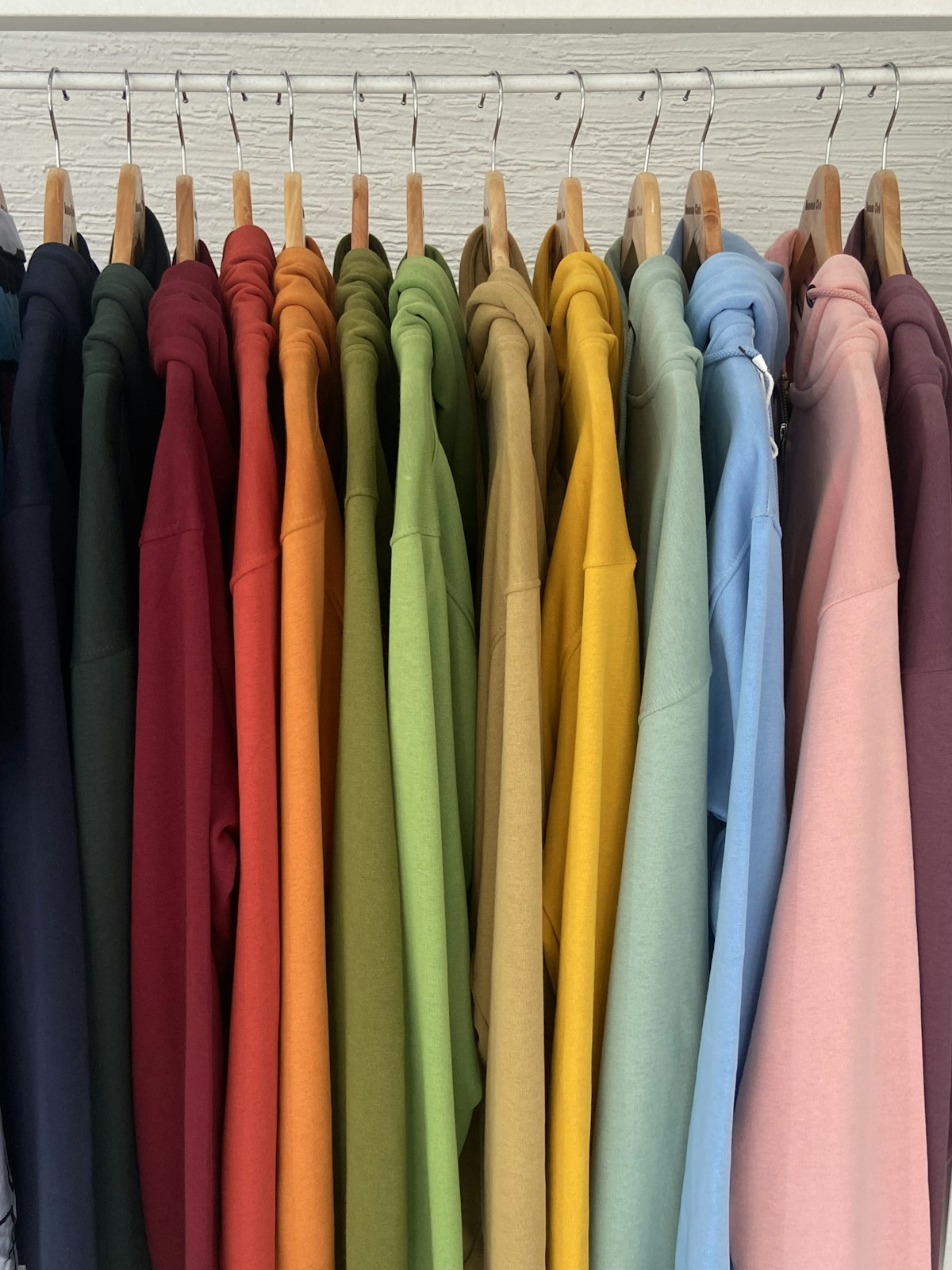
Sweatshirt fabric is knitted with an extra yarn that forms loops on its inside face. Brushing machines pull those loops up into the soft nap of fleece. French terry is the unbrushed version. Hoodies in it feel cooler than fleece hoodies of equal weight and suit spring and fall. Most hoodie fleece weighs more than the jersey of tees sold as heavyweight. Fleece at the light end of its range suits a hoodie worn under a jacket. People who wear a hoodie through winter without a coat need fleece of 450 GSM and up.
| Garment | Fabric | GSM | oz/yd² |
|---|---|---|---|
| Lightweight tees and tanks | Cotton jersey | 120 to 150 | 3.5 to 4.4 |
| Everyday printed tees | Cotton jersey | 150 to 200 | 4.4 to 5.9 |
| Heavyweight tees | Cotton jersey | 220 to 280 | 6.5 to 8.3 |
| Polo shirts | Cotton piqué | 180 to 240 | 5.3 to 7.1 |
| Training tops | Polyester knit | 120 to 200 | 3.5 to 5.9 |
| Basketball uniforms | Polyester mesh | 120 to 180 | 3.5 to 5.3 |
| Leggings | Stretch knit | 220 to 350 | 6.5 to 10.3 |
| Swimsuits | Nylon-spandex knit | 180 to 220 | 5.3 to 6.5 |
| Crewnecks and hoodies | French terry | 220 to 440 | 6.5 to 13.0 |
| Hoodies and sweatshirts | Fleece | 270 to 500 | 8.0 to 14.7 |
| Sweatpants and joggers | French terry or fleece | 250 to 450 | 7.4 to 13.3 |
| Tracksuits | Velour | 250 to 350 | 7.4 to 10.3 |
| Shirts and blouses | Woven cotton | 100 to 160 | 2.9 to 4.7 |
| Shirts and dresses | Linen | 120 to 200 | 3.5 to 5.9 |
| Blouses and dresses | Chiffon | 30 to 90 | 0.9 to 2.7 |
| Dresses | Woven rayon | 100 to 150 | 2.9 to 4.4 |
| Sleepwear and slip dresses | Polyester satin | 80 to 150 | 2.4 to 4.4 |
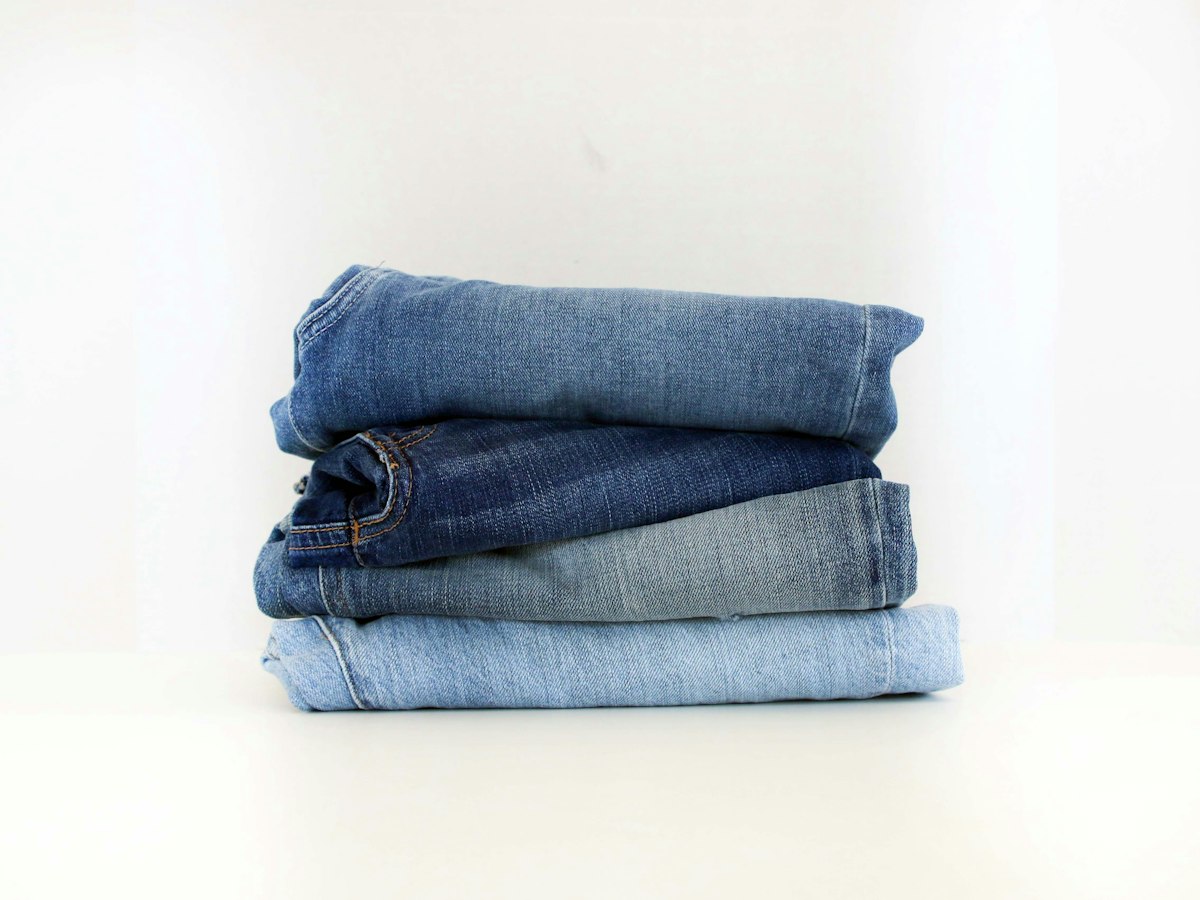
| Jeans | Denim | 270 to 540 | 8.0 to 15.9 |
Fabric construction
Interlock of 280 GSM, the smooth double knit of many baby clothes and team sports tops, is far thinner and cooler than fleece of that weight. The nap of fleece traps air. Interlock is made of two layers of loops locked together and comes out heavier than jersey knitted from a matching yarn. The straight, close-set yarns of a woven cotton shirt leave smaller gaps to see through than the loops of a jersey tee of equal GSM.
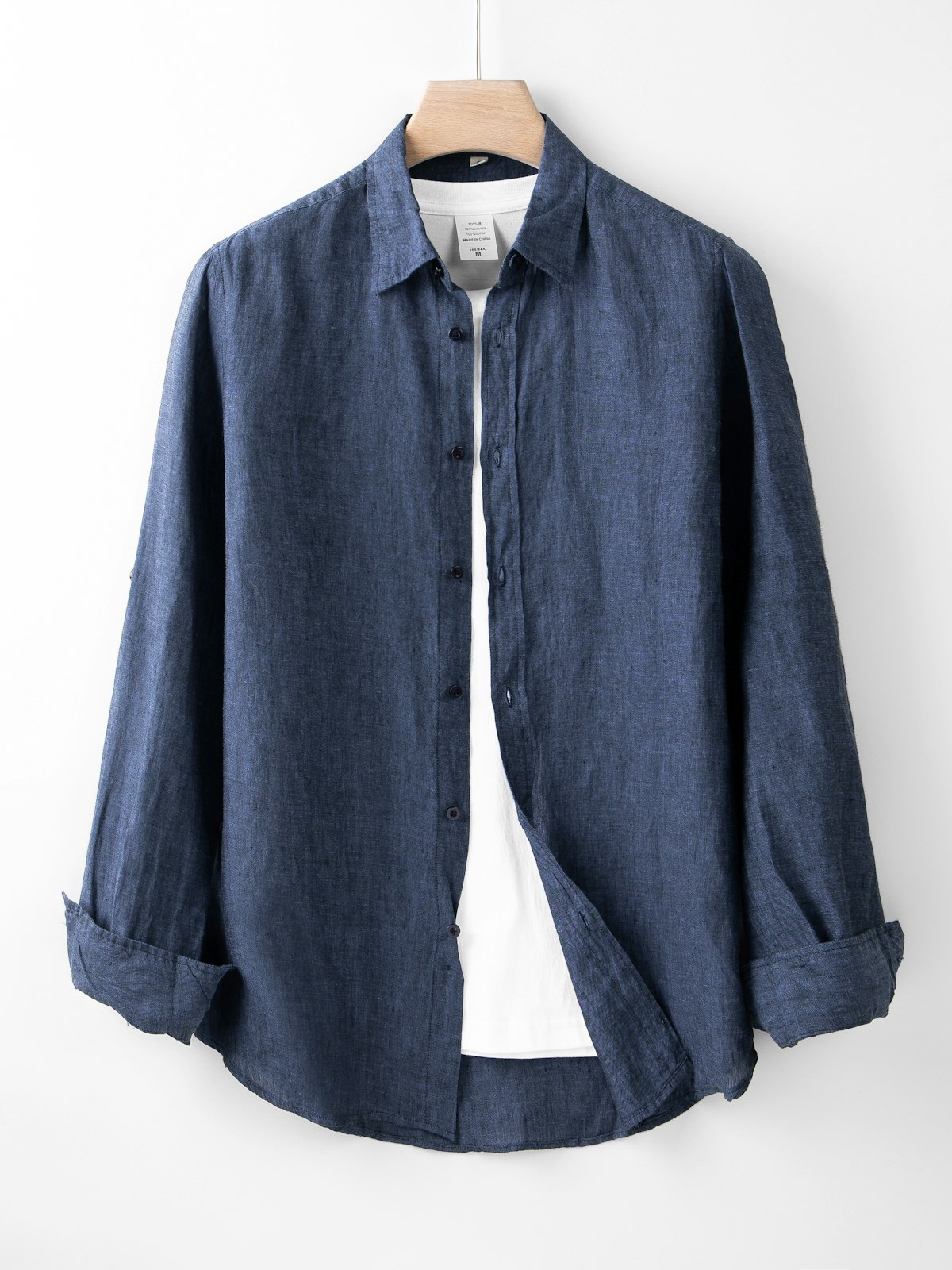
The GSM of a polyester version of a cotton tee is set by matching the polyester to the cotton sample for thickness and opacity. Polyester fiber takes up 12% more space than cotton fiber of equal weight. The cotton sample's thickness can be matched at a lower GSM with a matte, cotton-like polyester knit. Slick, shiny polyester is knitted from smooth strands that pack tightly and has to be heavier to look as thick.
Jersey of fine cotton yarn at 150 GSM feels smoother than jersey of coarse yarn at 200 GSM and is the better choice for a summer tee. Coarse yarn adds weight and a fuller, rougher feel. Fine yarn can be knitted into tighter loops for a heavier jersey that feels smooth and stretches less. The loops of a cotton-spandex knit draw closer together once the fabric is finished with heat, and the stretch version of a tee is ordered at a higher GSM than the all-cotton one.
Burn test exemption
Clothing textiles sold in the US are covered by the federal flammability standard in 16 CFR 1610. Some fabrics passed its burn test so consistently over the years that they are exempt from it. Fabric made entirely of acrylic, modacrylic, nylon, olefin, polyester or wool, or of a blend of those fibers, is exempt at any weight and with any surface. Spandex is not on that list. Flat fabric of any fiber is exempt at 88.2 GSM (2.6 oz/yd²) and above. Jersey and stretch knits are flat fabrics. Fleece, velour and cotton flannel, whose surfaces are brushed into a nap or cut into a pile, get no exemption by weight.
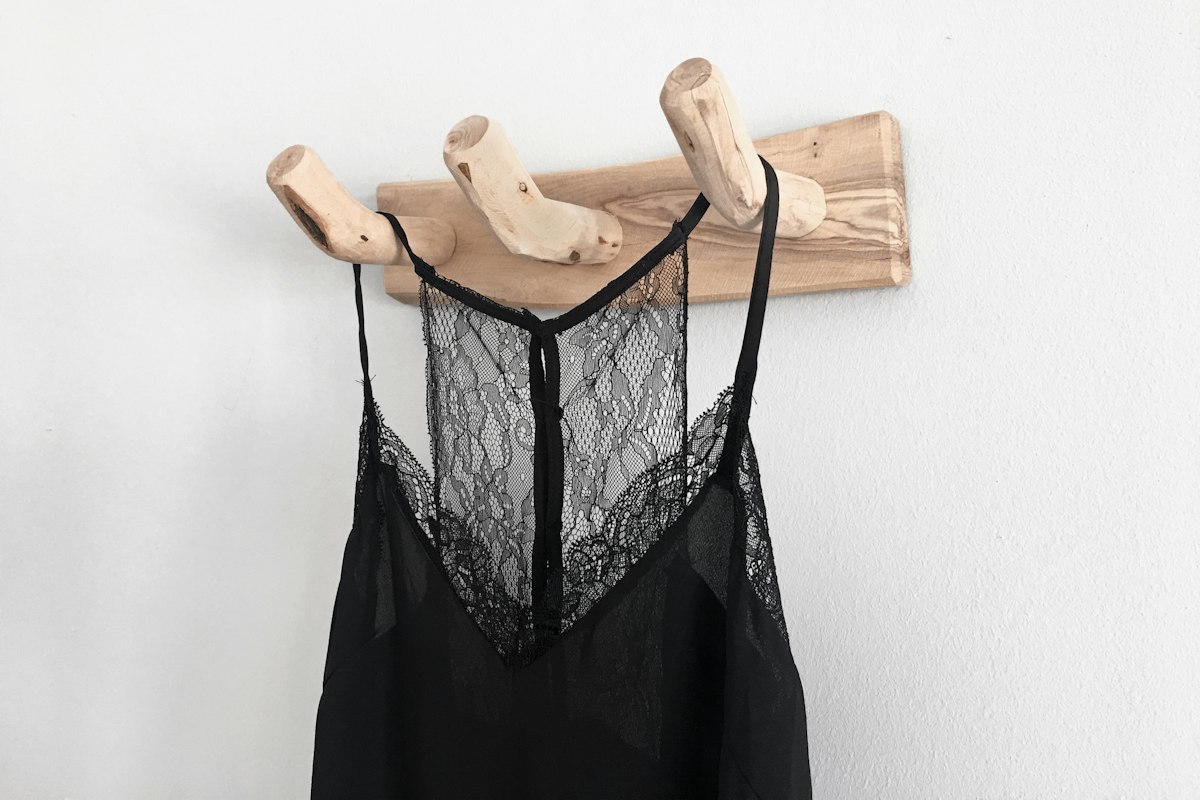
Fleece hoodies in 100% polyester go on sale without a burn test. Fleece with any cotton in it, including the cotton-rich polyester blends sold as CVC, is tested whatever it weighs. Brushed leggings of polyester and spandex qualify under neither exemption. Silk satin of 19 momme and most rayon and silk chiffon weigh under 88.2 GSM and have to pass the test. Woven rayon for dresses at 100 GSM and up is exempt by weight. The US Consumer Product Safety Commission lists polyester/cotton and 100% cotton fleece garments, sheer 100% rayon skirts and scarves and sheer 100% silk scarves among fabrics that commonly fail the standard.
Fabric quoted at 92 GSM can weigh 87.4 GSM within a 5% tolerance. That is below the threshold. The light end of the tolerance stays above it for fabric specified at 93 GSM or more. You need a lab weight on any fabric near the threshold before you count on the exemption.
Garments qualify only when they are made entirely of exempt fabrics, and a nylon jacket with an exposed cotton fleece lining has its lining tested. Children's sleepwear that isn't tight-fitting, in sizes above 9 months through 14, falls under separate standards (16 CFR 1615 and 1616) whatever its fabric weighs. Other children's clothing outside the exemptions is tested at a third-party lab that the Consumer Product Safety Commission recognizes.
Price per kilogram
The length of a knit roll changes enough with winding tension that knit mills price fabric by the kilogram or the pound. Pound prices convert to kilogram prices when multiplied by 2.2. At one price per kilogram, a 240 GSM tee is cut from a third more fabric by weight than a 180 GSM tee of that size and costs a third more in fabric. Jersey made heavier with coarse yarn costs less per kilogram than fine-yarn jersey. The 240 GSM jersey has to be a quarter cheaper per kilogram before its tee costs no more in fabric than the 180 GSM tee.
Wovens and some knits are sold by the meter or the yard. You can compare a meter price with a kilogram price once you know what a meter weighs: the GSM times the width in meters. One meter of 180 GSM jersey 1.8 m wide weighs 324 g. A kilogram of it covers 3.1 m. Mills quote a knit's GSM for the width they finish it to, and jersey finished wider comes out lighter. The width of tubular jersey, knitted as a tube, is often quoted across the flattened tube and is doubled for this calculation.
Jersey of any GSM outside a mill's stock weights is knitted to order for a minimum of 300 to 500 kg (660 to 1,100 lb). Fewer garments make up that minimum in heavier fabric. Several styles cut from one jersey in one color are added together toward it. The fabric cost of a tee differs by 6% between a 180 GSM target and a stock jersey 10 GSM away. Stock jersey is sold by the roll for small orders that fall short of a knitting minimum.
GSM in production
Mills and factories read the GSM on an order as the weight of finished fabric, dyed and ready to cut, before any garment wash. Jersey that shrinks by 5% in length and 5% in width in a garment wash gains 11% in GSM. Factories match a tee you already sell by cutting test discs from it and ordering fabric to their weight. You send them a new, unwashed tee from your stock, or tell them that the tee you sent has been washed.
Styles that are dyed or washed after sewing have two GSM figures on the spec sheet you send the factory: the GSM of the fabric as the mill ships it and the GSM after the wash. The mill works to the fabric figure. The washed figure comes from a swatch dyed and washed along with the first sample.

Rib, the stretchy ridged knit of collars and cuffs, is knitted apart from the main fabric at a higher GSM and has a separate entry on the spec. Fusible interlining, the stiffening ironed inside shirt collars, is listed on the spec by its GSM. Any weight change after approval means sewing another sample in the new fabric to see how it hangs and shrinks.
The approved sample and a swatch of its fabric, labeled with its GSM, are your reference for the full production order that factories call bulk. Bulk is judged by the GSM on the spec when the first sample came from a stock jersey near your target. Light bulk inside the tolerance passes. GSM varies from roll to roll. You should have a pre-production sample sewn from bulk fabric and GSM results from swatches of several bulk rolls, weighed on the basis your spec names, before the factory starts cutting.
Three or four bulk tees in the approved sample's size and print are weighed on a postal scale and their average compared with the sample. Prints add weight. Swatches of the bulk fabric go to a lab for a GSM test when that average comes out clearly lighter than the sample.
Sources
- ISO 139:2005/Amd 1:2011, Textiles: Standard atmospheres for conditioning and testing, International Organization for Standardization
- 16 CFR § 1610.1, Purpose, scope and applicability, Legal Information Institute, Cornell Law School
- Highlights of Apparel and Textile Requirements in the United States, September 2015, US Consumer Product Safety Commission