Types of Cardigans: 25 Styles and Their Defining Features
Cardigans have been part of everyday wardrobes for generations, worn for work, weekends and evenings out. They are often the layer kept nearby as the weather changes. A lightweight cardigan can be folded into a bag for later in the day or worn beneath a jacket, with its neckline and upper buttons showing between the lapels.
The front opening can be buttoned, zipped or tied at the waist, and open-front designs hang freely over the clothes underneath. Several names can describe one garment: a cropped cable-knit cardigan may also have a crewneck and long sleeves.
01V-Neck Cardigans
The first button marks the bottom of a V-neck cardigan's opening. Above it, the sloping edges leave a triangle of the underlayer visible across the chest.
The V stays open with every button fastened, so its depth determines how much of a shirt or T-shirt shows. An Oxford collar sits above the knit, and the shirt front continues down to the top button of the cardigan. A deep opening can frame a T-shirt's entire round neckline. Below the V, the remaining fastenings run vertically to the hem. This neckline appears on fine, close-fitting cardigans and on loose styles whose front panels fall away from the body when opened.
02Crewneck Cardigans
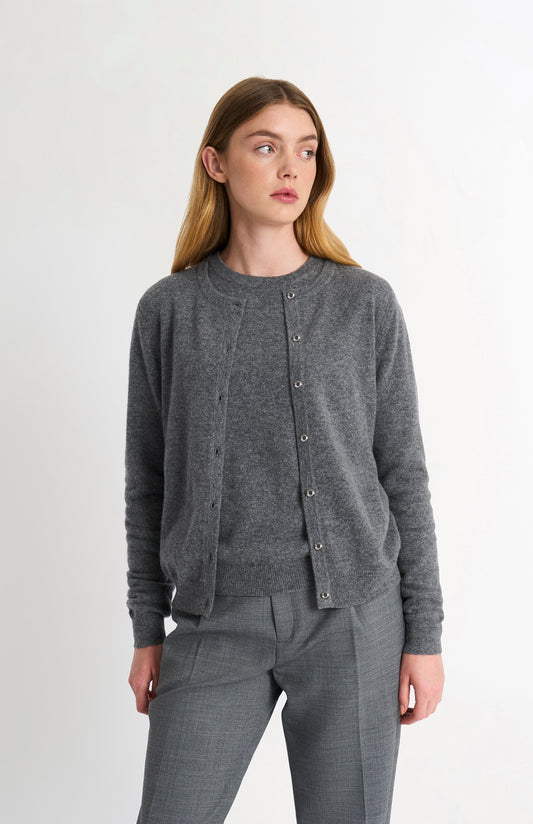
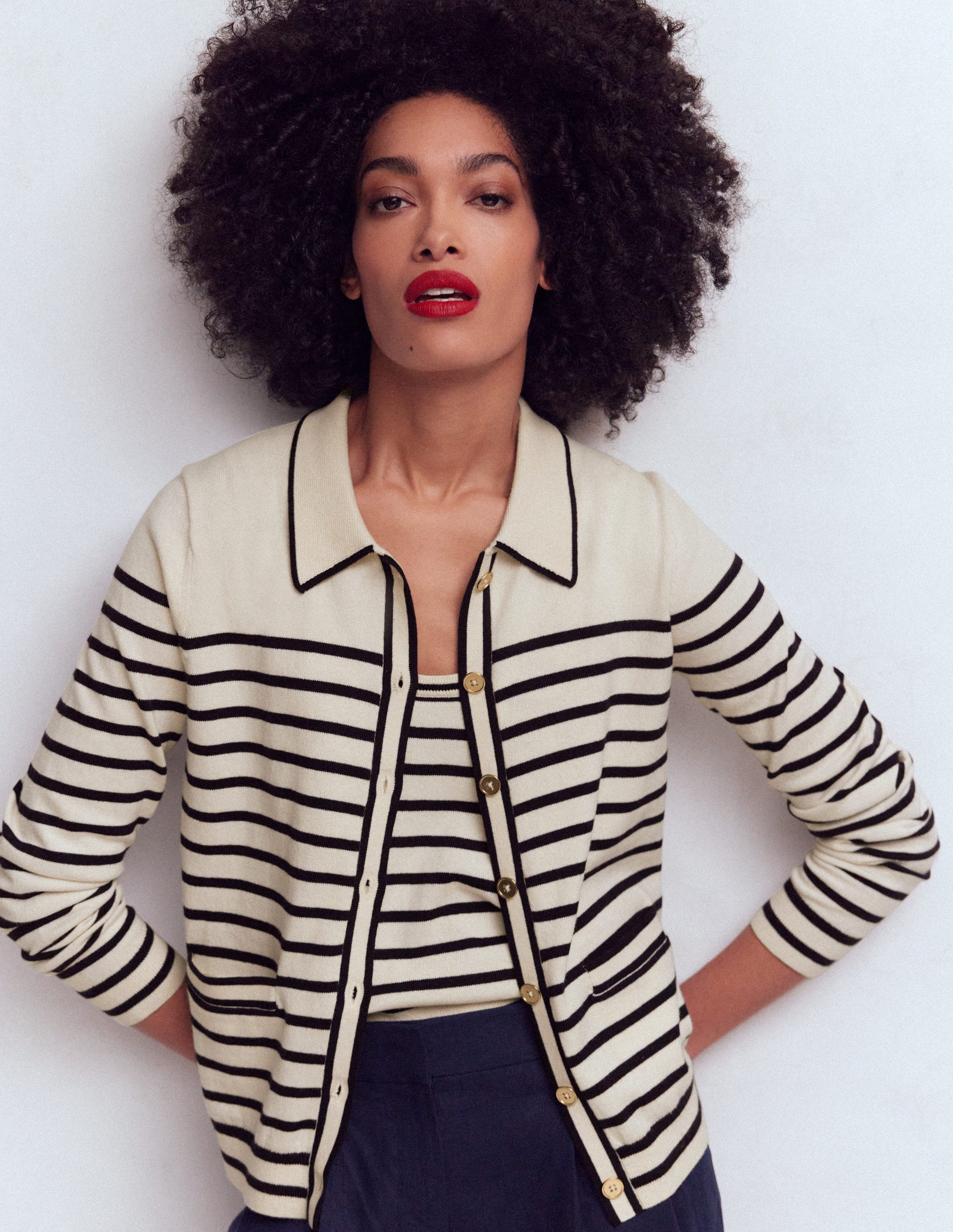
A crewneck cardigan often forms the outer half of a twinset, accompanying a knitted shell in the same yarn and color. Open over that matching top, the cardigan has a line of small buttons bordering one front edge. Fastening it to the top brings the ends of its rounded neckband together near the base of the throat. The shell then sits beneath a fully covered, buttoned front, and the two matching layers remain visible at the neckline when the upper button is left open.
On a fine-knit crewneck, narrow ribbing can finish the neck, cuffs and hem. The small trims lie close around each opening.
03Cropped Cardigans
Over a navy fit-and-flare midi dress, a cream cropped cardigan can end close to the seam where the skirt begins to widen. The dress keeps its visible waist, and the short layer covers the bodice above it. Brown Mary Janes and a small brown shoulder bag complete the outfit.
Sleeves can remain full length on a cropped cardigan. Laid flat, their cuffs may extend well below the shortened body.
Cropped hems range from around the waist to the upper hip. Ralph Lauren's cropped cable cardigan is designed to reach the high waist and measures 18¾ inches from the high point of the shoulder in size medium. Its rounded front hem and crocheted edging follow the short body around the torso.
04Longline and Duster Cardigans
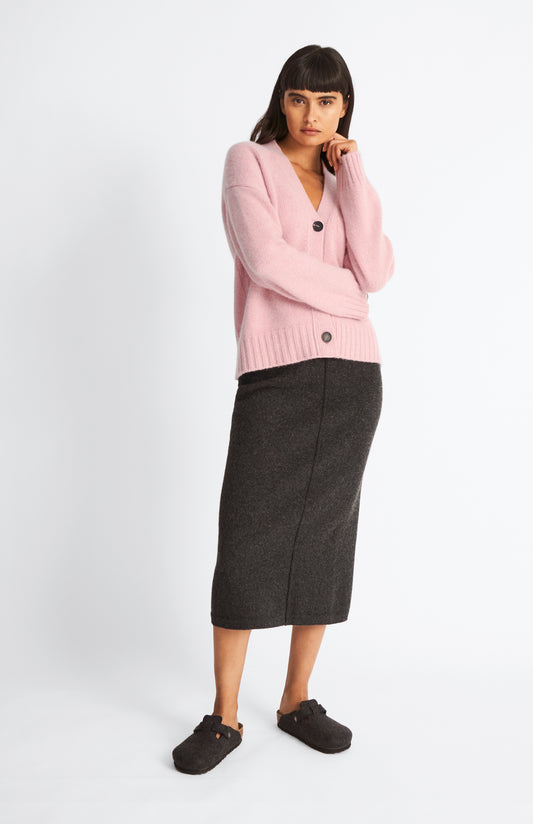
Longline cardigans extend below the hips, sometimes reaching the thigh or knee. Dusters carry the fabric farther down the legs.
The EILEEN FISHER linen-crepe duster has a 48½-inch body in size small, a straight fit and an open front. Its slightly sheer linen-blend fabric makes this an extended, lightweight layer. Length terms vary across product descriptions, and a stepped hem adds a further measurement to consider: the brand's silk-and-cotton long cardigan measures 34 inches at the front and 36½ inches at the back in size small. The additional length falls behind the legs, so the front and back give different amounts of coverage over a dress or trousers.

05Oversized Cardigans
A dropped shoulder seam can sit partway down the upper arm on an oversized cardigan. The body continues beyond the natural shoulder before the sleeve begins, leaving room through the upper back and underarm. H&M's dropped-shoulder version combines it with a regular-length body, a round neck and front buttons.
At the wrist, a ribbed cuff gathers the wide sleeve. Fabric folds above the band as the arm bends or the cuff is pushed upward.
Fastening the cardigan brings the front panels together over the chest. A narrower lower band can then gather the body around the hips, leaving a rounded fold of knit above the hem.
06Boyfriend Cardigans
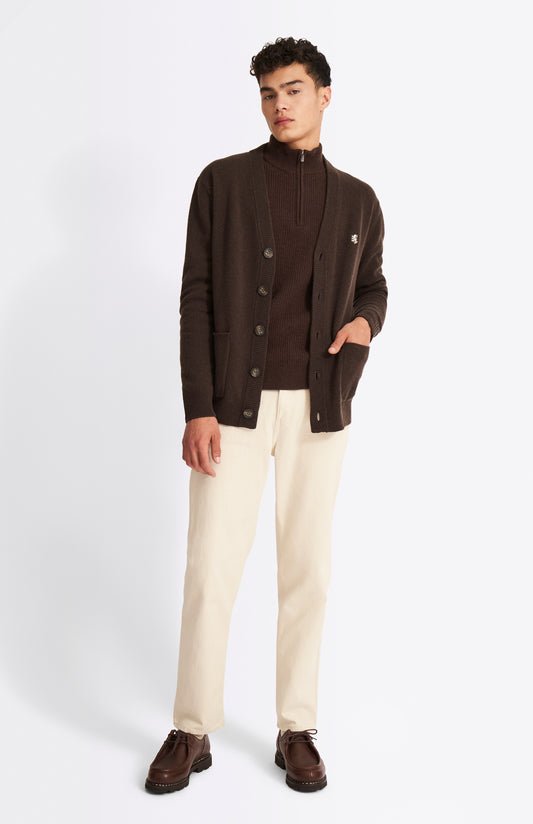
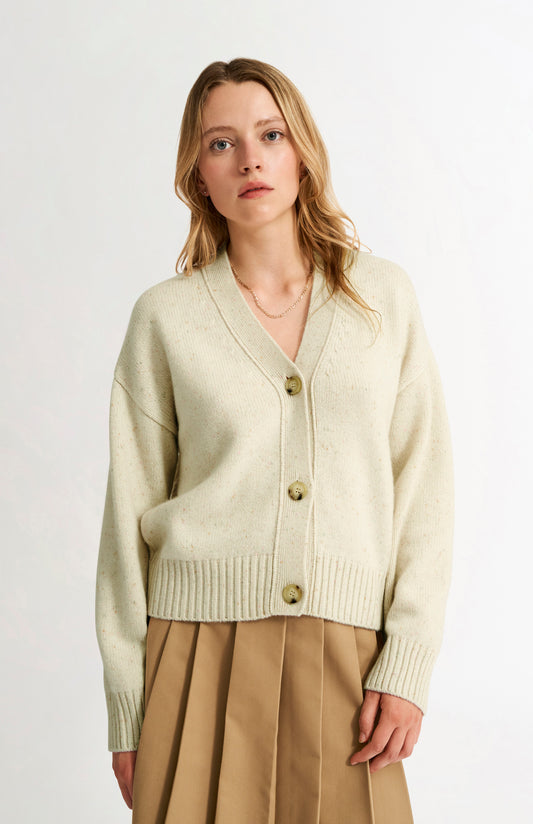
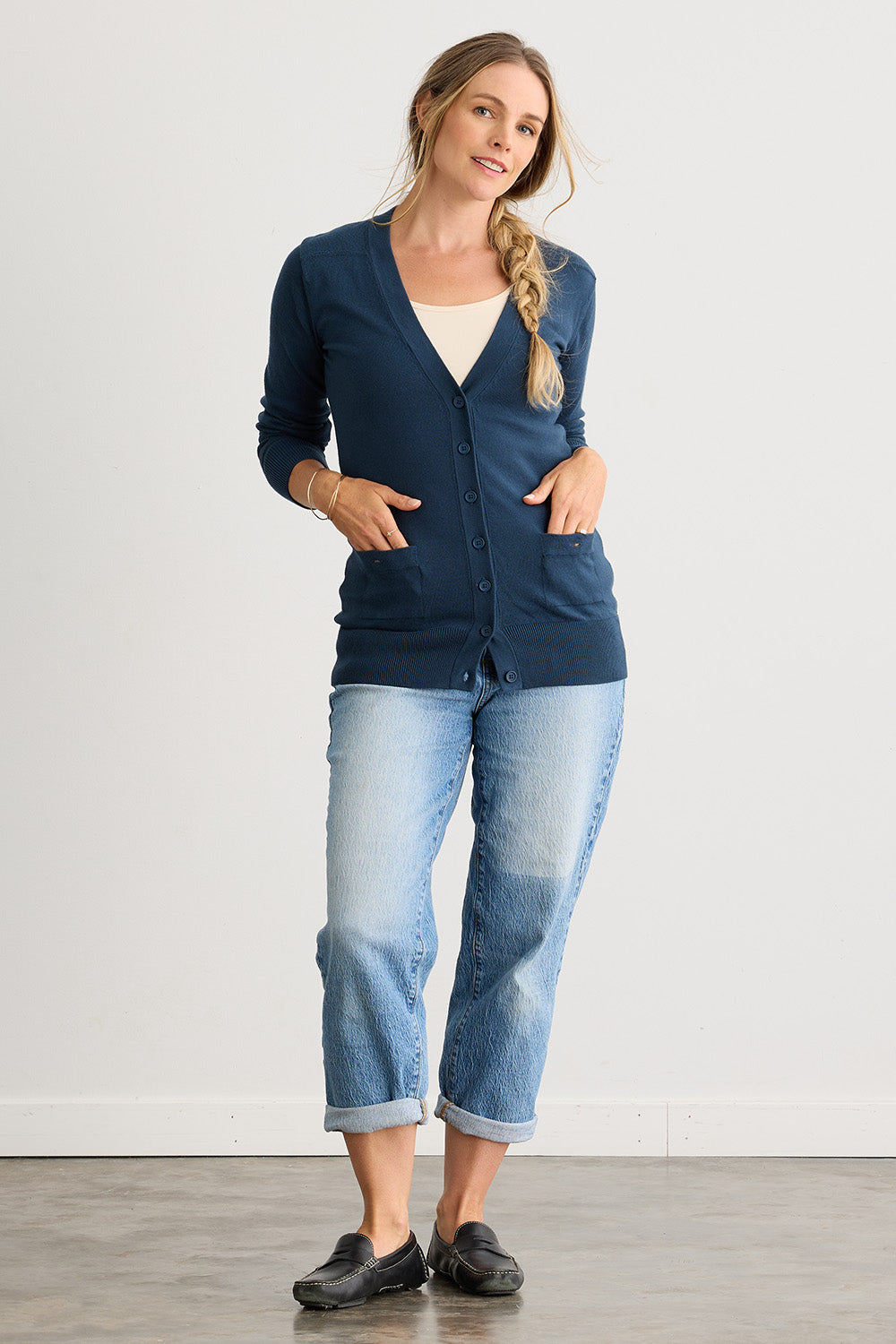
Low patch pockets are a familiar feature of a boyfriend cardigan, giving a plain knitted front two clearly outlined panels beside the lower buttons. The term is used in womenswear for relaxed, fairly straight styles that hang loosely through the waist. Gap's CashSoft version has a V-neck, front buttons and a hip-length body, with enough room to sit over a shirt. Its pocket openings add horizontal lines across the lower front. The pockets also place another layer of fabric over the hips, where their stitched edges remain visible with the cardigan open or fastened.
07Fitted Cardigans
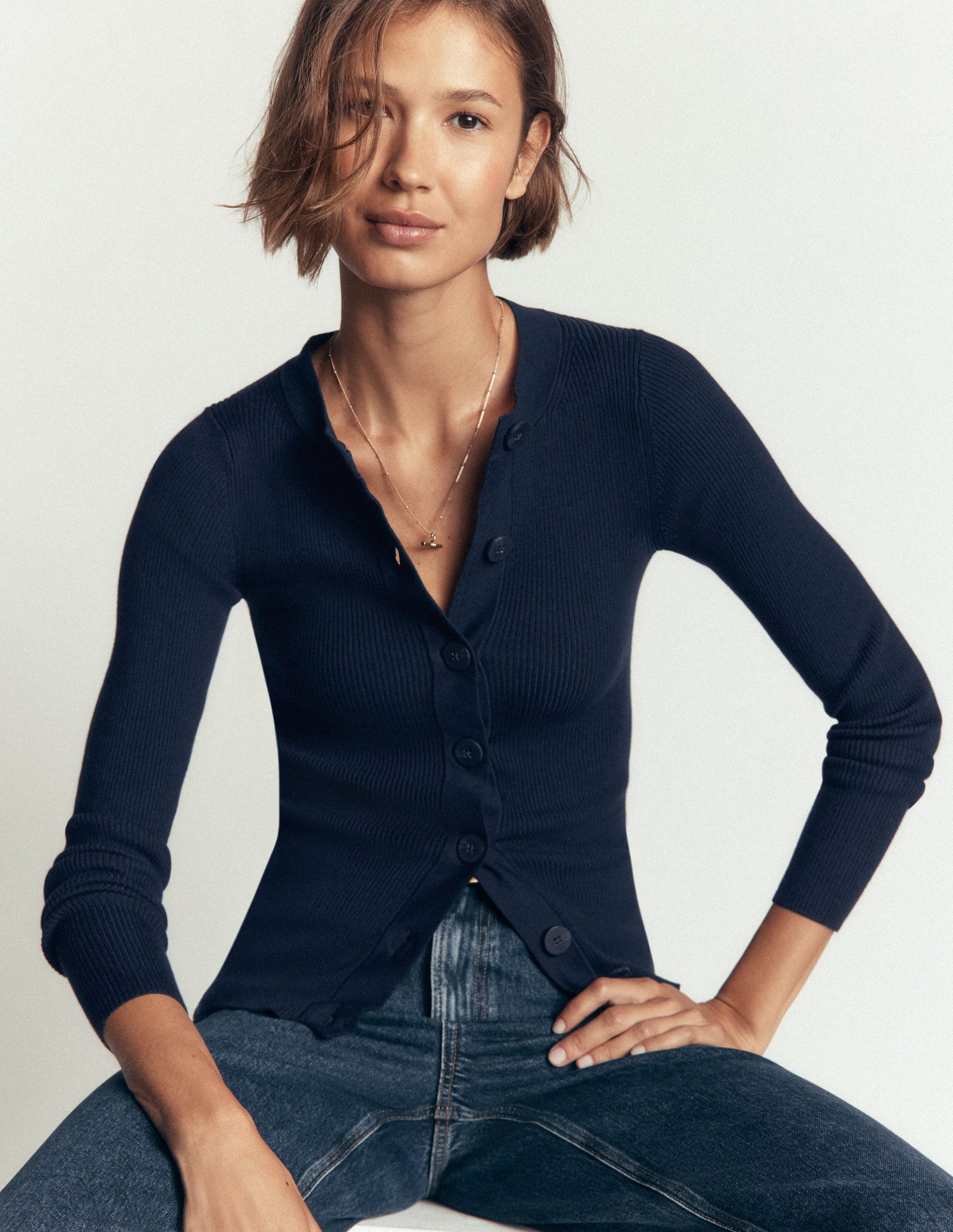
A fitted cardigan follows the chest and waist closely and can be worn buttoned as the main top. Across the bust, the fastened band should rest comfortably against the body when sitting or moving the arms.
The waist can be shaped within the garment. H&M's long fine-knit cardigan uses front darts beneath a round neckline and a line of metal buttons. The darts draw in the waist before the fabric extends over the hips, placing the narrowest part of the cardigan at a defined point on the torso. Ribbed construction also allows a close-fitting body to move: its columns spread across the chest as the fabric stretches, accommodating the wearer's shape through the knitted structure.
08Shawl-Collar Cardigans
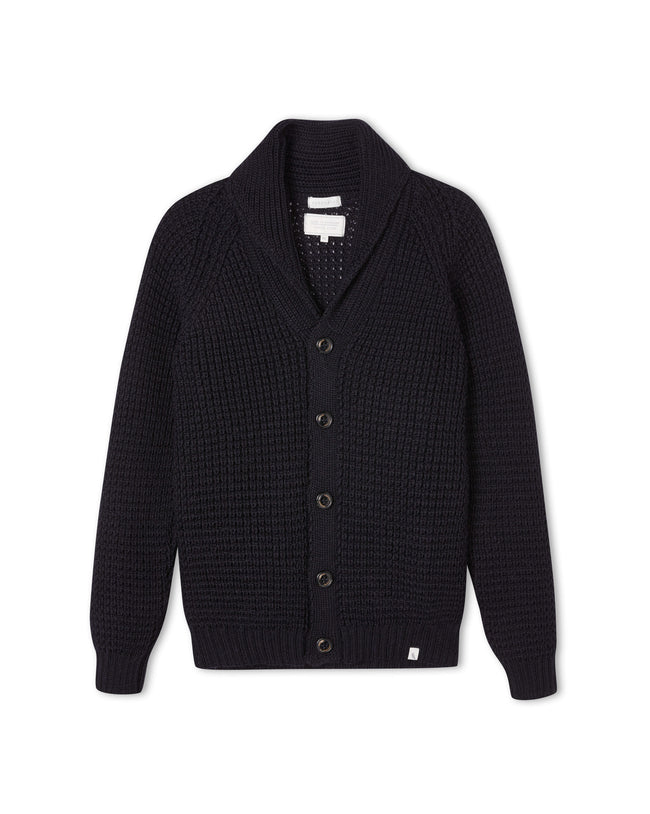
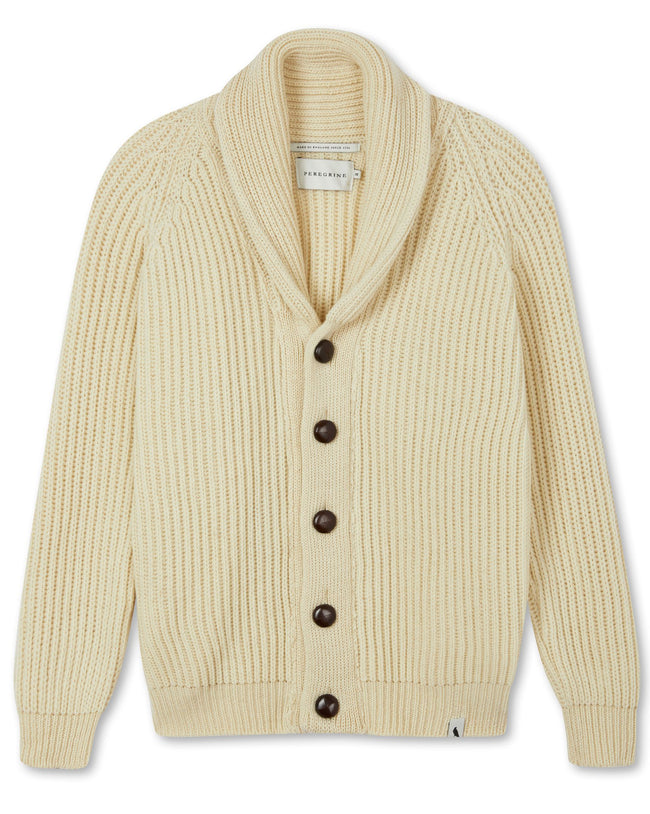
A shawl collar curves around the back of the neck, folds outward and continues down the chest as a continuous roll. The folded section puts an extra thickness of fabric beside the neck, especially in a substantial ribbed knit. Farther down, the collar narrows toward the front fastening.
Some versions close higher at the neck. Ralph Lauren's cotton shawl cardigan adds a two-button side closure above the main placket and places welt pockets at the waist.
09Polo-Collar Cardigans
The collar points on a polo cardigan rest over the upper chest, above a fastening that opens through the full body. In a fine knit, the folded collar gives the top of the garment a soft, shirt-like shape. Ralph Lauren's wool blouson design places that collar above a full body gathered into a tapered ribbed hem. The fabric folds outward above the hips, and dropped shoulders carry the roomier shape into full sleeves.
10Open-Front Cardigans
A black open-front cardigan leaves an ivory tank and matching straight-leg trousers visible through the middle of an outfit. Black ankle boots repeat the outer layer's color at the feet. The cardigan's panels hang beside the lighter clothes through the torso and hips, giving the ivory layers a continuous vertical outline.
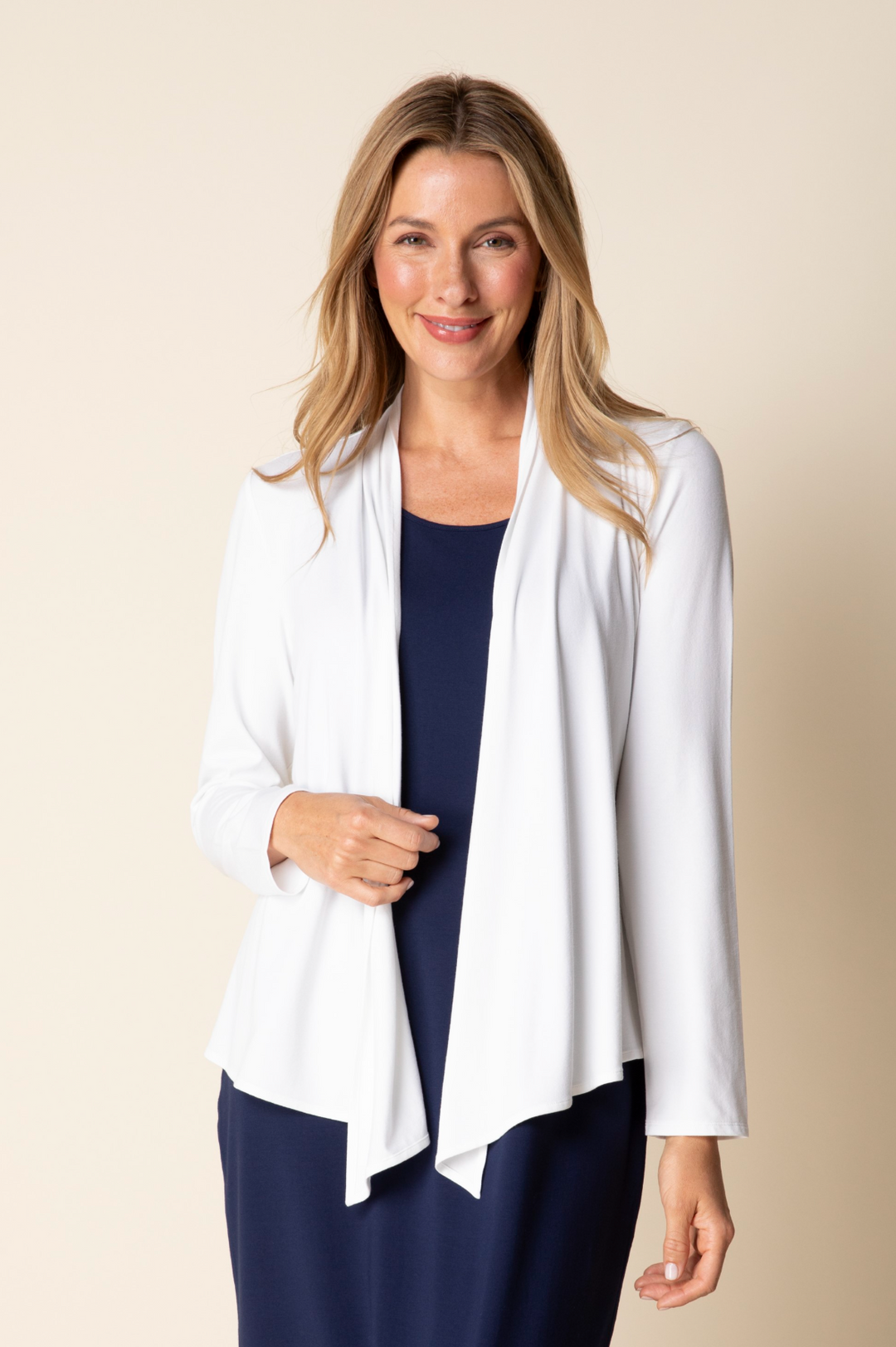
The edges of an open-front cardigan are finished to hang freely. A high collar may fold back near the neck before continuing into those edges.
On boxy versions, dropped shoulders and patch pockets sit within a loose body. The opening can have a very small border: EILEEN FISHER uses knitted jersey tubing around the neck and front of a silk-and-cotton design, making a rounded edge against the smooth fabric.

11Waterfall Cardigans
The pointed front hem of a waterfall cardigan changes position as its folds move. Extra fabric around the opening falls back on itself, leaving loose layers down the chest and torso; some of the front length sits within those folds. Soft jersey lets the fabric settle under its own weight. From the side, the lowest front points can hang well below the back hem. Turning or walking opens the folded panels and exposes more of their inner surface, especially near the neck where the fabric rolls outward.
12Wrap and Belted Cardigans
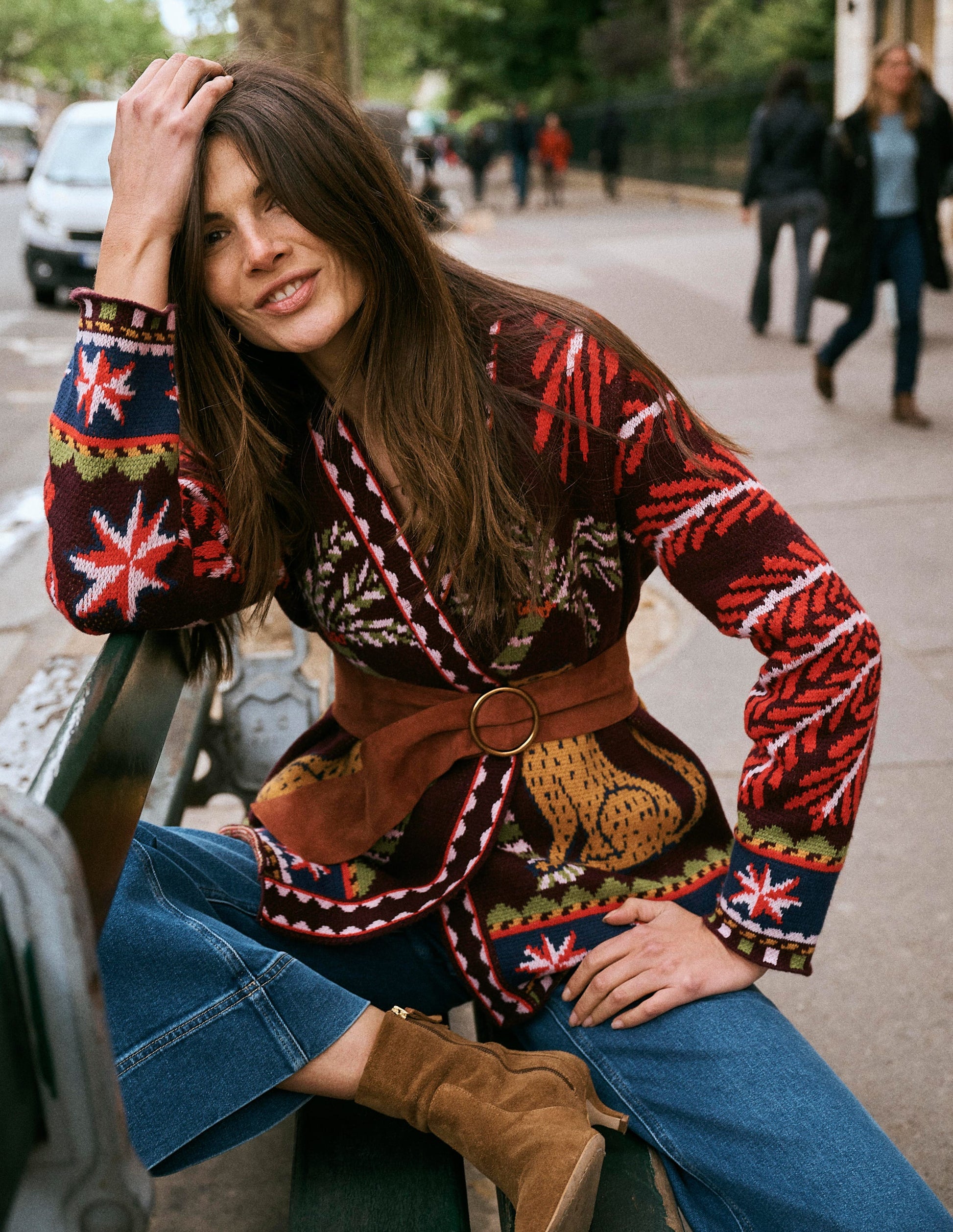
The overlapping front of a wrap cardigan travels diagonally across the chest and is held at the waist by a tie or belt.
The position of that fastening determines where the fabric gathers. A removable belt can pass around the whole garment, drawing in fabric from the back and sides as it is tied. Folds collect above the waist and continue over the hips below it. A wide knitted belt also forms a substantial knot, with its ends falling across the front.
Belted styles also include open-front cardigans secured at the waist. In a design brief, the front overlap, belt-loop positions and attachment of any fixed side ties need to be recorded separately.
13Bolero Cardigans
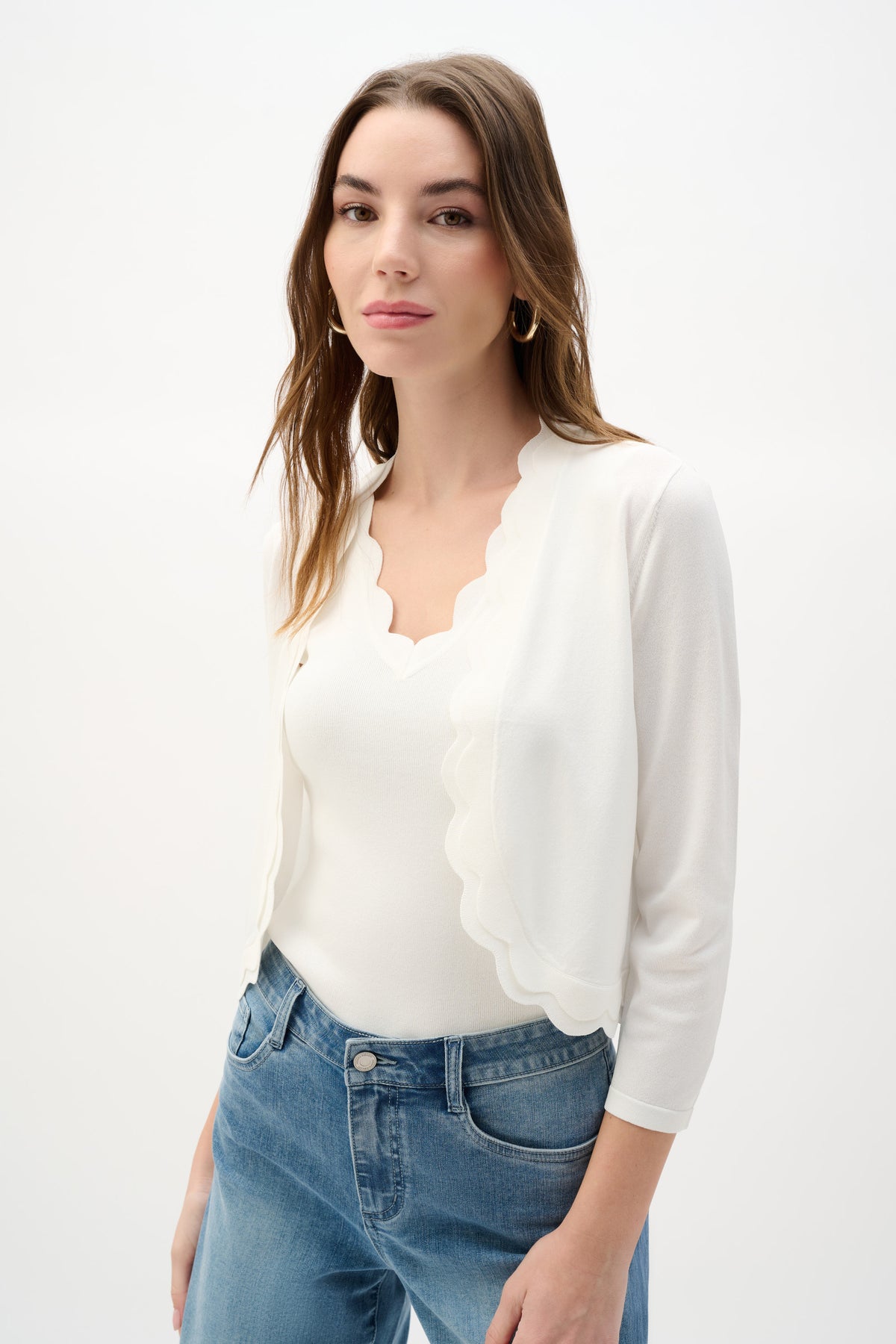
The & Other Stories knitted bolero measures 30 centimeters, or 11.8 inches, through the body in size small. It has full-length sleeves and a cable-ribbed surface, placing most of its coverage around the shoulders and arms. Knitted boleros sit high across the upper back and leave much of the waist exposed. Their short front edges can frame the top of a dress. This compact body allows a fitted dress waist and the point where its skirt begins to widen to remain visible below the knit.
For a dress with a back bow or decorative panel, the bolero's back length determines how much of that detail remains exposed.
14Zip-Front Cardigans
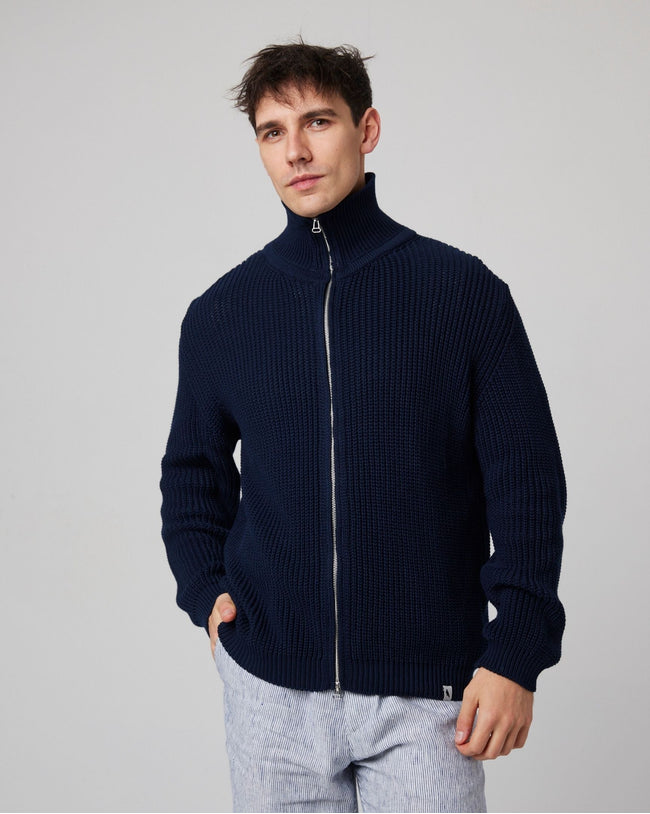
A zip-front cardigan closes continuously from the hem upward. Lowering the slider opens the neckline to a particular point; on a high-neck version, the upper edges can fall outward around the throat. The zipper teeth may sit behind knitted strips along the opening. UNIQLO's double-face knitted zip-up design uses this concealed fastening with a ribbed collar, cuffs and hem. Pockets sit at waist level.
A zipper also works beside a textured body. Half-cardigan stitch produces raised vertical lines across the front panels of another full-zip design.
15Fine-Gauge Cardigans
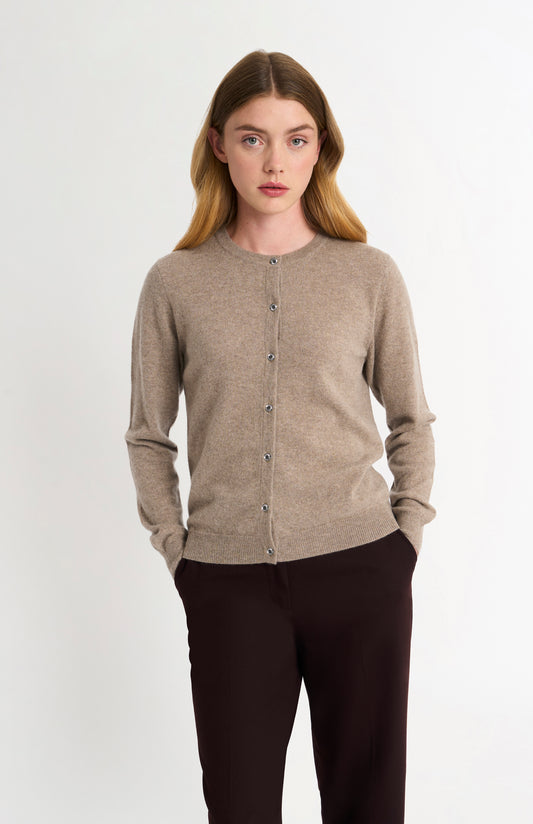
John Smedley's Anika is knitted in 30-gauge extra-fine merino wool, forming a relatively smooth, light body. Shaped shoulders and fine ribbing finish the garment, with narrow bands and small buttons following the scale of the stitches. The flexible fabric bends into small folds at the elbows.
Under a blazer, a fine-gauge cardigan occupies little room through the sleeves and torso. Its neckline and upper buttons can remain visible between the lapels.
16Chunky-Knit Cardigans
A turned-back cuff doubles the thick fabric of a chunky-knit cardigan at the wrist. The large stitches remain visible through the fold.
The yarn gives the rest of the garment depth, including plain sections knitted in a single color. Broad sleeves form substantial folds around the elbows, and a deep lower band can gather the body into a rounded edge over the hips. Chunky cardigans include hand-knitted and machine-knitted constructions. A short body can hold the same large-scale texture: Ralph Lauren's cropped cable cardigan uses thick-gauge yarn for raised motifs that occupy much of each front panel, placing the lower ends of those cables close to the waist.
17Cable-Knit Cardigans
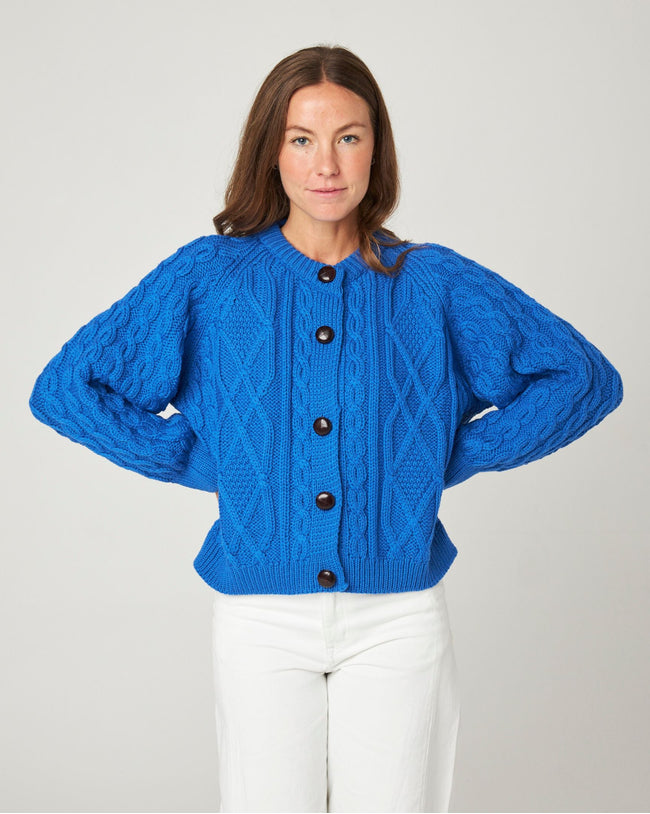
A cable is made by crossing groups of stitches during knitting. Repeating the crossing produces the raised twist visible on the finished fabric.
Larger groups and different crossing arrangements create broad braids or interlacing shapes. A recessed background leaves a visible shadow beside the raised stitches, helping each twist stand out in a single-color cardigan. At the front, the opening divides the available space into two panels, each with its own pattern arrangement. Narrow cables can follow the button band, leaving room for broader motifs across the chest. The last crossing above the hem determines how the pattern finishes against the lower band, and a sleeve cable needs a defined position where it meets the cuff.
18Ribbed Cardigans
The grooves in ribbed fabric widen as the knit stretches around the chest or a bent elbow. Alternating face and back stitch columns create this movement; in relaxed fabric, the columns sit close together. A 2×2 rib alternates groups of two face columns with groups of two back columns. Worked across a cardigan's whole body, the ribs make a continuous vertical texture through the torso and sleeves.
Ribbing is also used just at the edges of a cardigan. Cuffs, neckbands and waistbands can expand around an opening as the garment is put on.
19Pointelle Cardigans
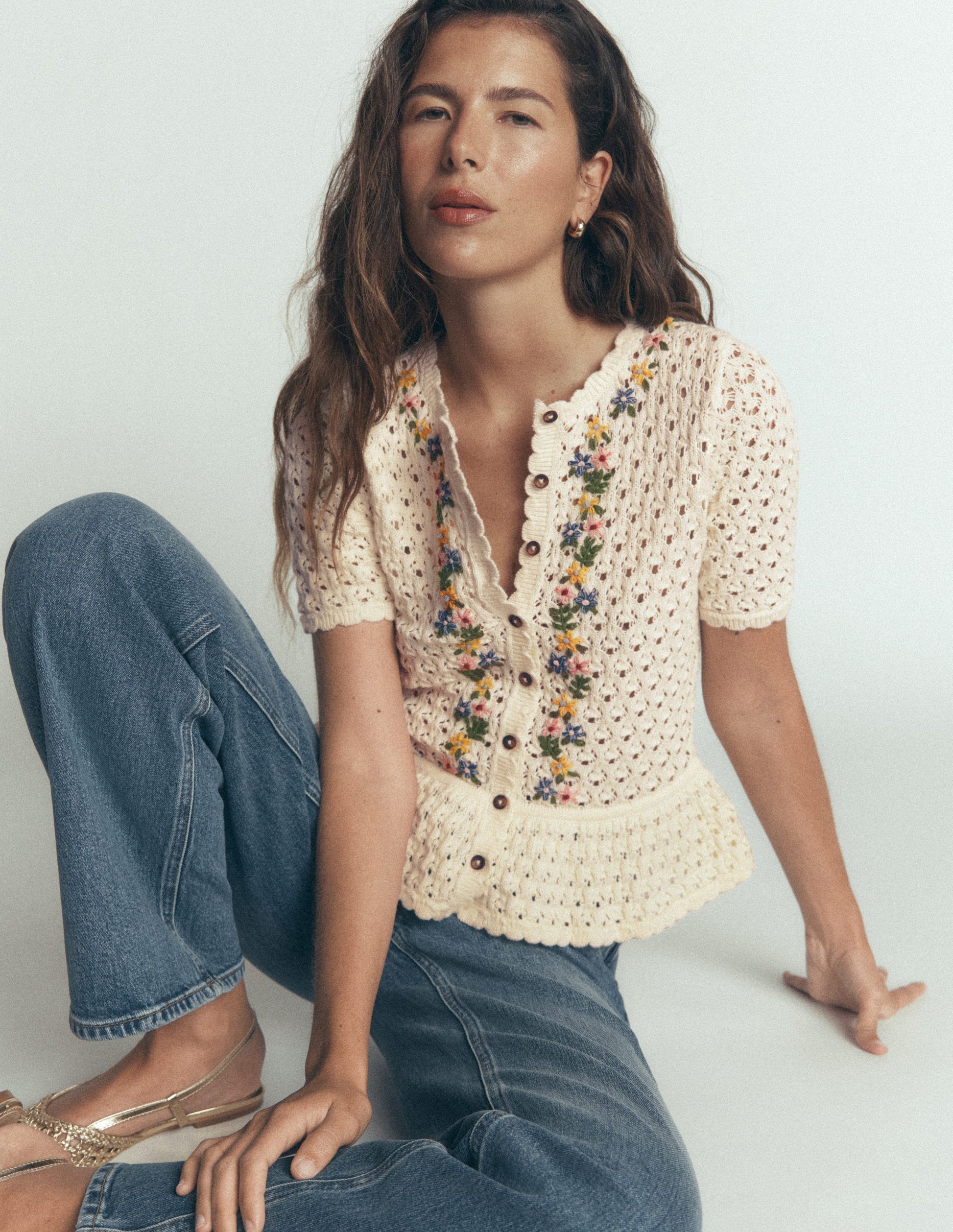
Small patterned openings give a pointelle cardigan its lace-like surface. The openwork can run in rows or form decorative shapes across the body and sleeves.
The underlayer becomes part of what is visible through the knit. A closely matched camisole gives the openings a subtle appearance across the torso, and the sleeve pattern shows directly against the skin. Larger or more widely spaced holes expose a different amount of the surface beneath.
Embroidery adds another detail over the openwork. Boden's cotton pointelle cardigan places floral decoration across the repeating knitted pattern.
20Crochet Cardigans
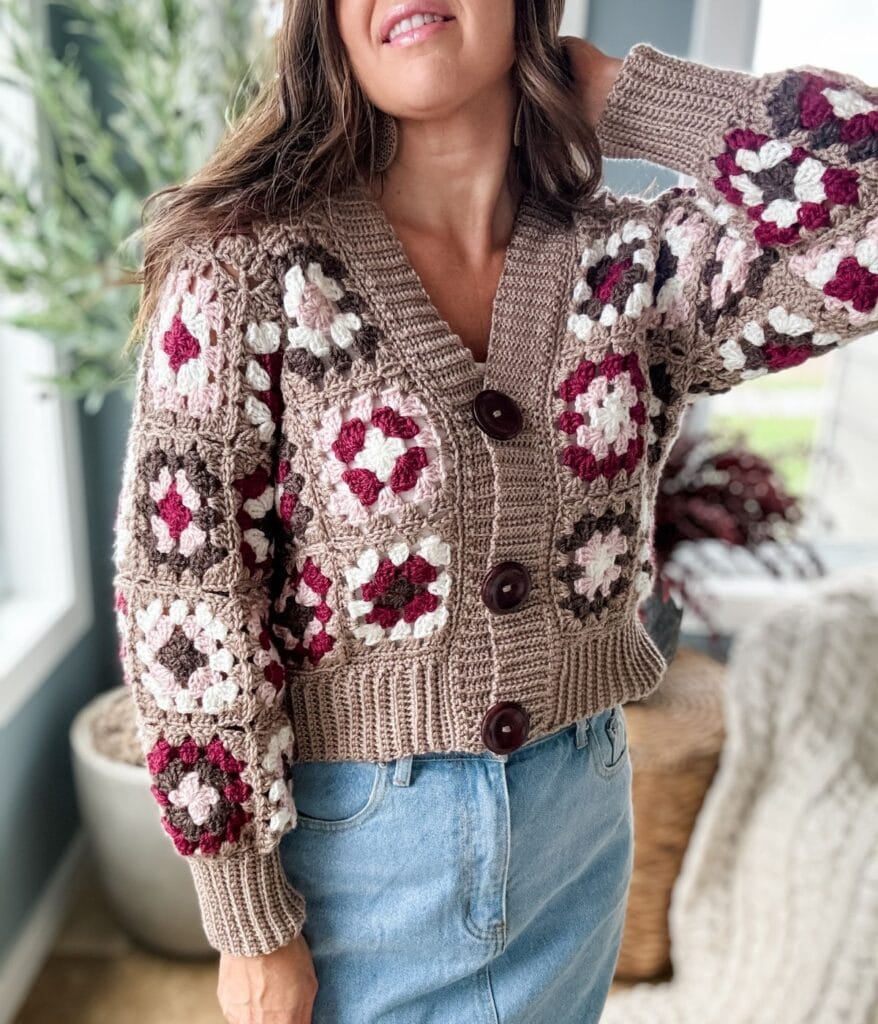
Crochet stitches are made with a hook. For a granny-square cardigan, individual motifs are worked separately and joined into larger garment sections. Repeating colors around each square's center and border gives the body its patchwork appearance. The layout establishes where those colors meet across the shoulders, front and back, and the joining yarn can continue the outer border of each square. Its color then runs through the garment along the joins. These connections form visible lines between the motifs, remaining part of the surface alongside the crochet stitches.
Yarnspirations' Caron cocoon design uses four large squares for its main construction. Enlarging the squares changes the garment dimensions, making the size of each motif part of the overall fit.
21Short-Sleeve Cardigans
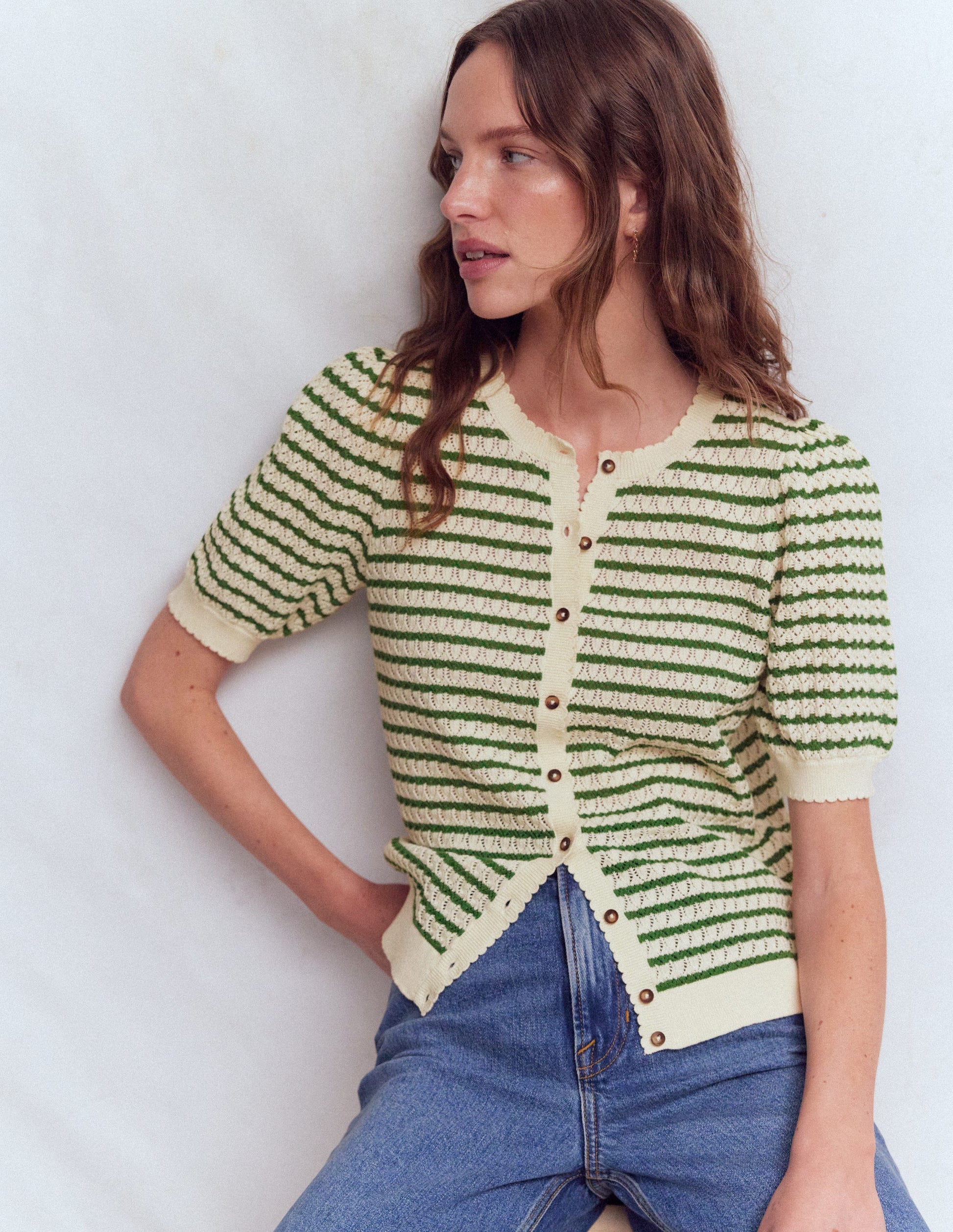
A navy ribbed cardigan buttoned over the waistband of ecru straight-leg jeans can be worn as the main top, finished with tan loafers and a brown leather bag. Short sleeves expose the forearms, and the ribbed body follows the waist above the straight denim legs. Sleeve hems can sit on the upper arm or nearer the elbow, changing how much of the arm remains covered. Collared short-sleeve cardigans add the folded neckline of a polo above the full front fastening.
22Sleeveless Cardigans
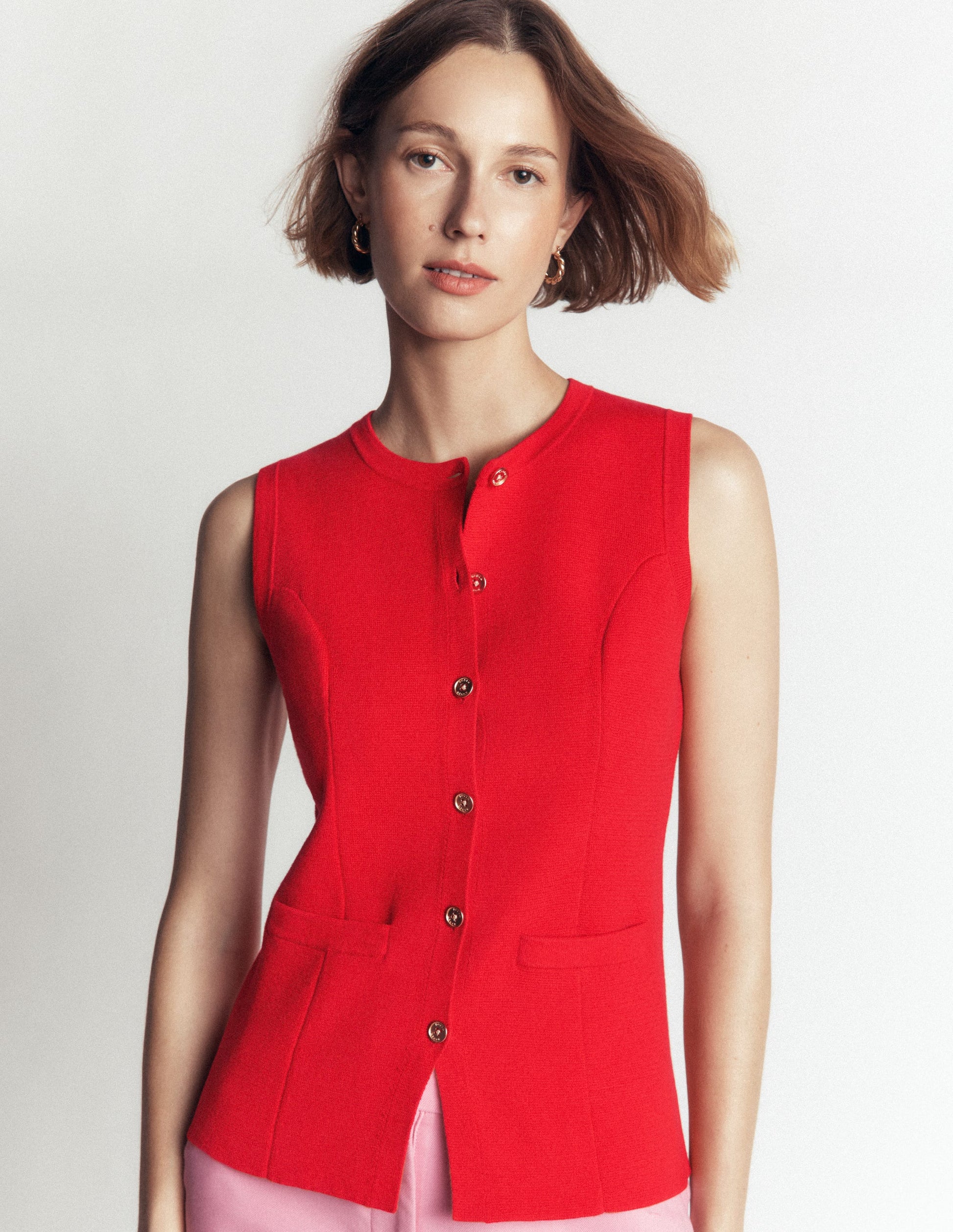
Over a shirt, a sleeveless cardigan leaves the shirt sleeves visible and frames the upper body around its armholes. Their depth determines how much shirt fabric shows beneath the arms. A broad shoulder section covers more of the shirt's upper arm, placing the knitted edge near the point where a short sleeve would begin.
The cardigan covers the chest and back and opens through the front. Buttoned V-neck versions resemble knitted waistcoats; cotton-and-linen designs may finish the body with a ribbed lower edge.
23Hooded Cardigans
A lowered hood rests as a fold of knitted fabric behind the neck, with its front edges continuing toward the cardigan's opening. It can be incorporated into a light, close-fitting garment: H&M's fine-knit version has a short body, long sleeves, ribbed cuffs and small front buttons. Drawstrings follow a channel around the hood opening, with their ends hanging beside the upper chest. As the front is opened, the neckline spreads and the hood settles behind the shoulders, extending the knit over the upper back.

24Argyle Cardigans
Pringle of Scotland dates its signature argyle knitwear to the 1930s. The diamond pattern has a longstanding association with golf clothing.
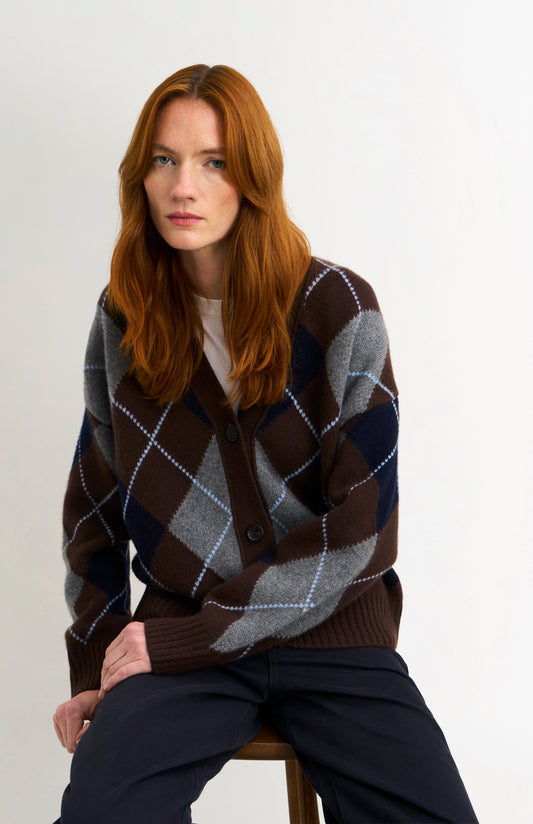
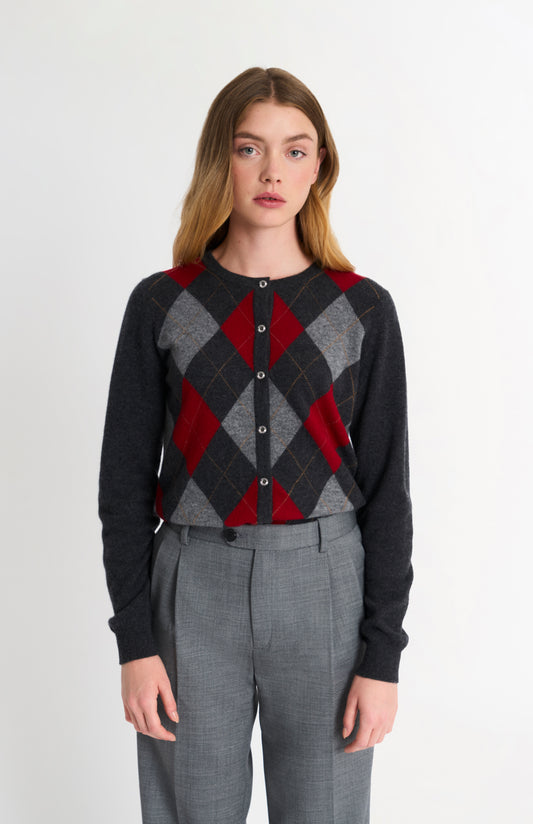
Fine diagonal lines often cross the larger colored diamonds. On a cardigan, a plain button band divides that geometry at the center front, and the diamond size determines how many fit across each panel. The pattern may continue over the shoulders and along the sleeves. Intarsia knitting builds the separate areas of color into Pringle's cashmere argyle cardigans, forming the diamonds within the fabric. A plain collar, hem and cuffs leave solid knitted borders around the pattern.
25Fair Isle Cardigans
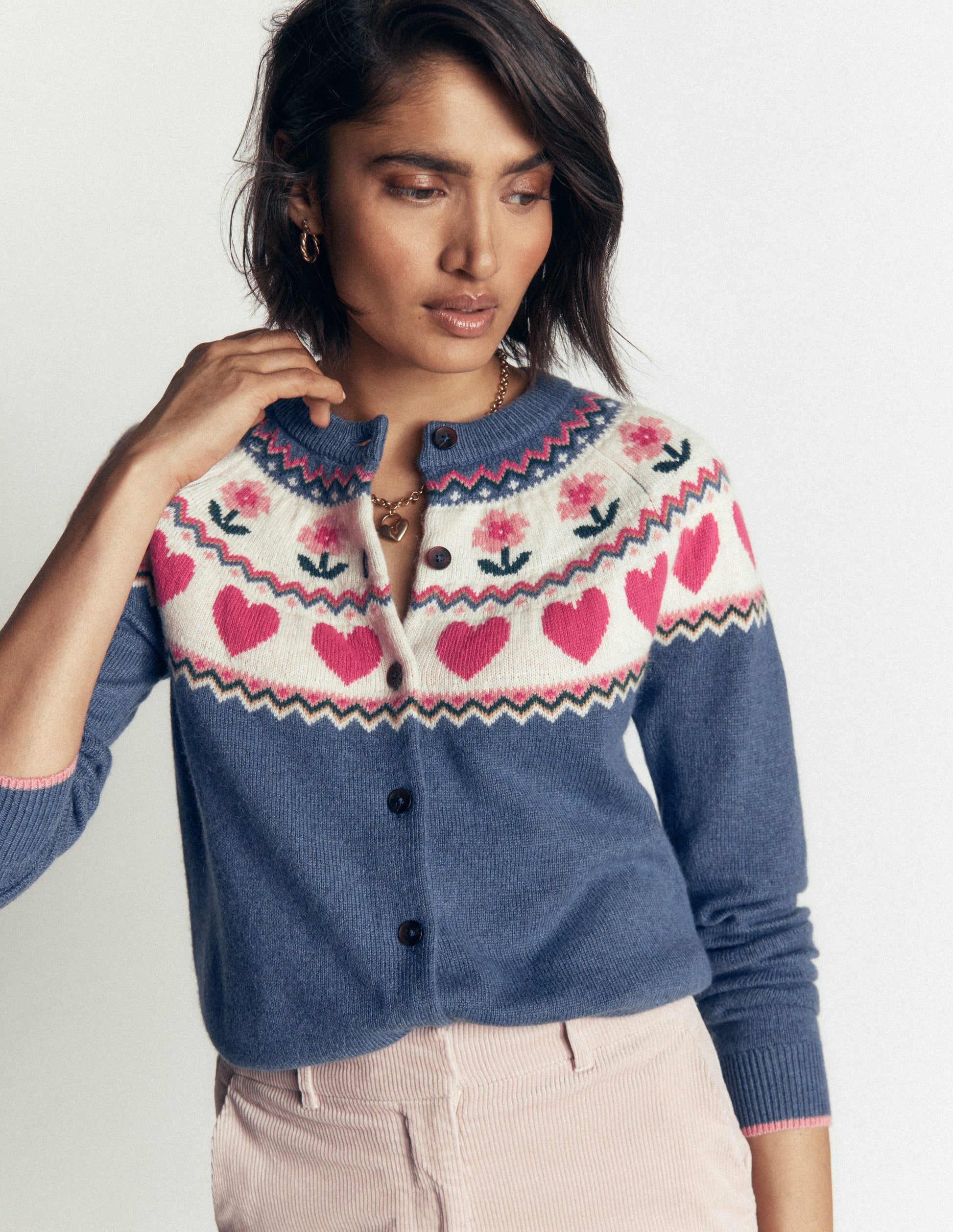
Fair Isle knitting takes its name from the Scottish island. Its small colorwork motifs are traditionally arranged in horizontal bands.
The motifs include crosses, diamonds and eight-pointed stars. Two colored strands are used within a patterned row, and new color combinations can be introduced between bands, building a broader palette across the garment. A cardigan carries the pattern across separate front panels, with the layout determining its continuation around the back and sleeves.
Inside the garment, strands called floats travel between the stitches where each color is used. They run behind the motifs and need enough length to accommodate the fabric as it stretches around the body.