Best Fabric for Dresses
If your dresses sell at a mid price and have to be machine washable, the best fabric for dresses that hang loose is rayon challis with a washable finish. Shirt dresses and sundresses need the crispness of cotton poplin, and most styles that fit close are knits with spandex. Silk and wool are for brands whose customers pay for the fiber and accept dry cleaning. Your factory buys the fabric you write into the tech pack (the specification you send with your design), at the weight and with the finish you put there. A tech pack that says only rayon challis gets you the ordinary kind that is usually sold with a dry-clean or a hand-wash label.
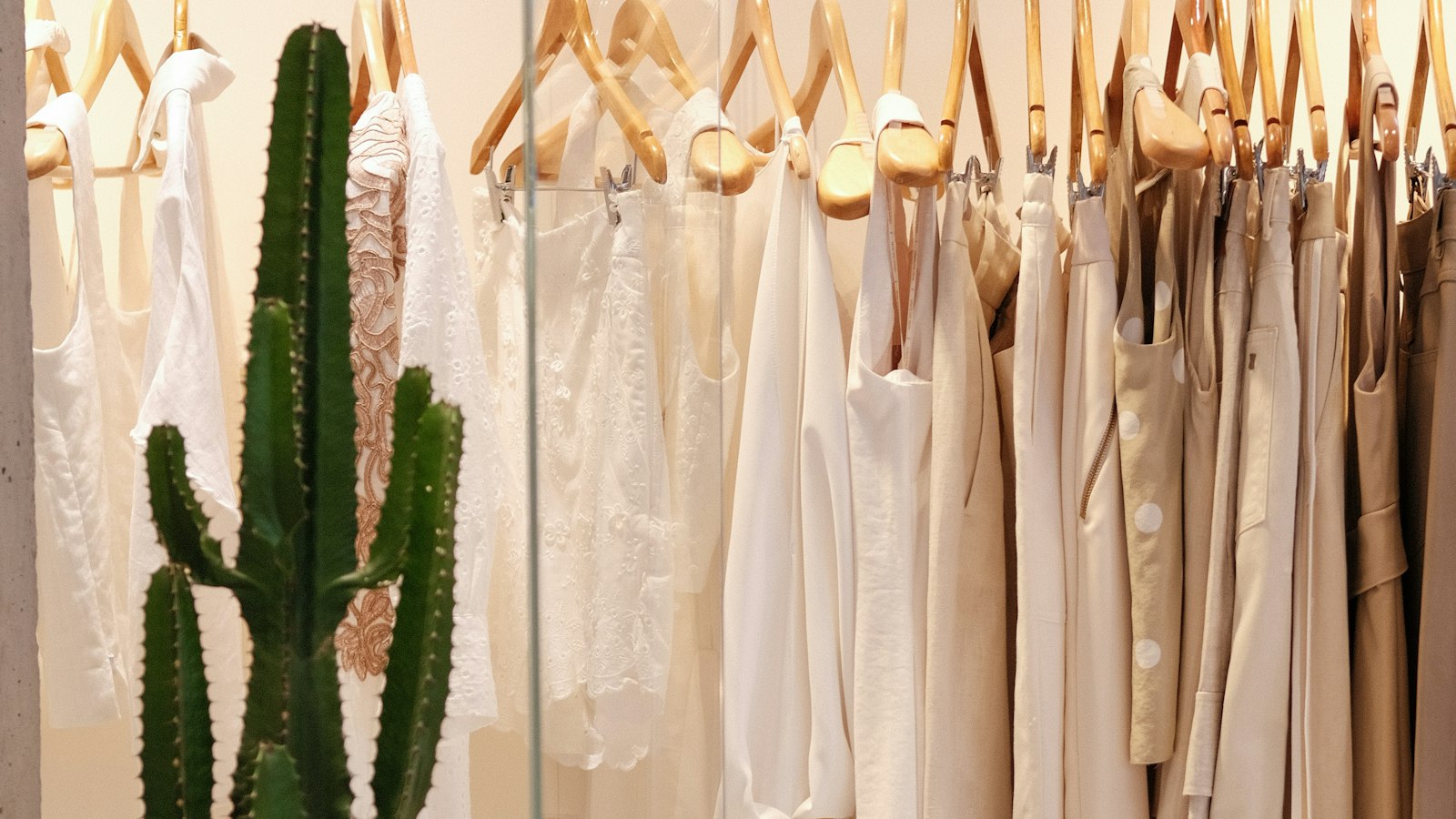
Best fabric for dresses by style
| Style | First choice | Fiber content | Weight |
|---|---|---|---|
| Loose styles | |||
| Loose printed dress | Challis with a washable finish | 100% viscose rayon | 100–150 g/m² (2.9–4.4 oz/yd²) |
| Tiered, empire-waist or kaftan dress | Challis with a washable finish | 100% viscose rayon | 100–120 g/m² (2.9–3.5 oz/yd²) |
| Shirt dress | Poplin | 100% cotton | 130–150 g/m² (3.8–4.4 oz/yd²) |
| T-shirt dress | Jersey | 100% cotton | 160–200 g/m² (4.7–5.9 oz/yd²) |
| Slip dress | Satin | 100% polyester | 120–170 g/m² (3.5–5.0 oz/yd²) |
| Column dress | Crepe | 100% polyester | 150–220 g/m² (4.4–6.5 oz/yd²) |
| Styles that hold a shape | |||
| Sundress or babydoll dress | Poplin | 100% cotton, with 2% to 3% spandex if the bodice is fitted | 130–150 g/m² (3.8–4.4 oz/yd²) |
| A-line or trapeze dress | Twill | 100% cotton | 200–240 g/m² (5.9–7.1 oz/yd²) |
| Pinafore | Denim | 100% cotton | 270–340 g/m² (8–10 oz/yd²) |
| Shift dress | Jacquard | 100% polyester | 200–300 g/m² (5.9–8.8 oz/yd²) |
| Skater dress | Scuba | 95% polyester, 5% spandex | 250–350 g/m² (7.4–10.3 oz/yd²) |
| Close-fitting styles | |||
| Wrap dress | Jersey | 95% polyester, 5% spandex | 160–200 g/m² (4.7–5.9 oz/yd²) |
| Tank dress | Rib knit | 95% cotton, 5% spandex | 220–280 g/m² (6.5–8.3 oz/yd²) |
| Sheath dress | Ponte | 95% polyester, 5% spandex | 250–320 g/m² (7.4–9.4 oz/yd²) |
| Bodycon dress | Matte stretch knit | Polyester with more than 10% spandex | 280 g/m² (8.3 oz/yd²) and up |
| Sweater dress | Panels knitted to shape | Viscose-nylon yarn | 12 gauge |
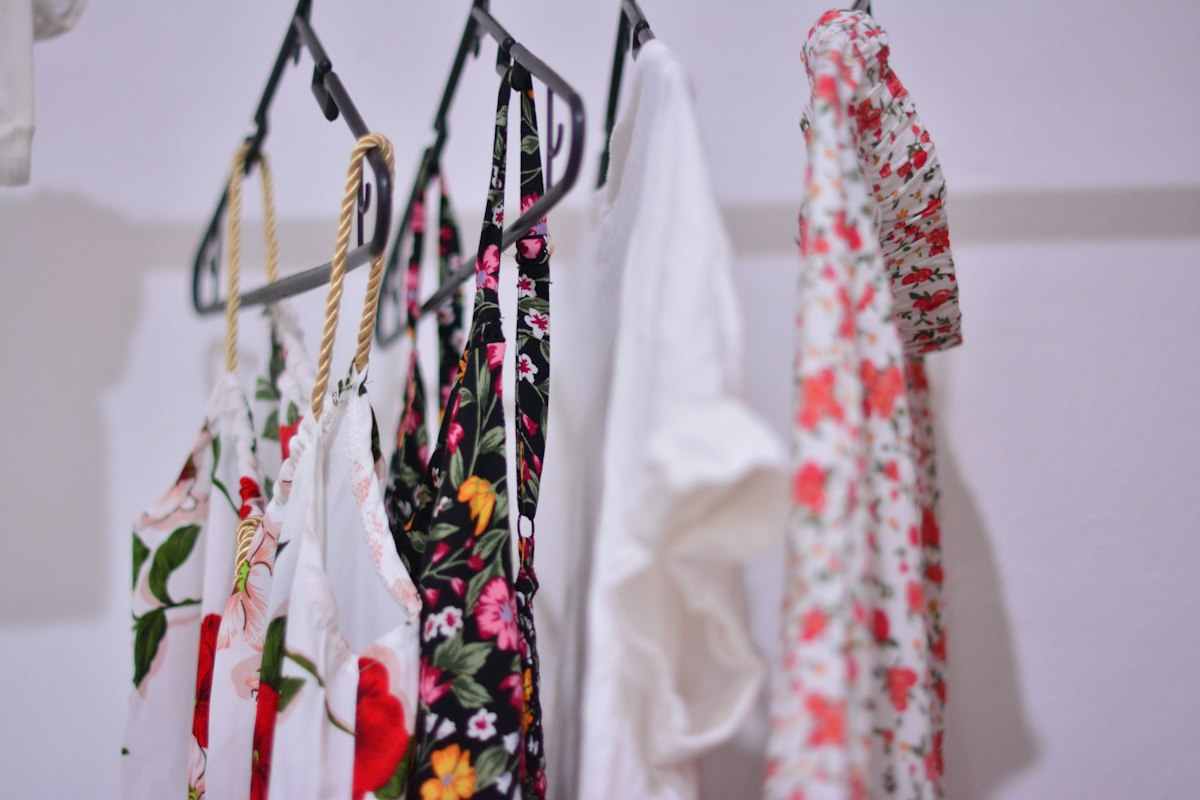
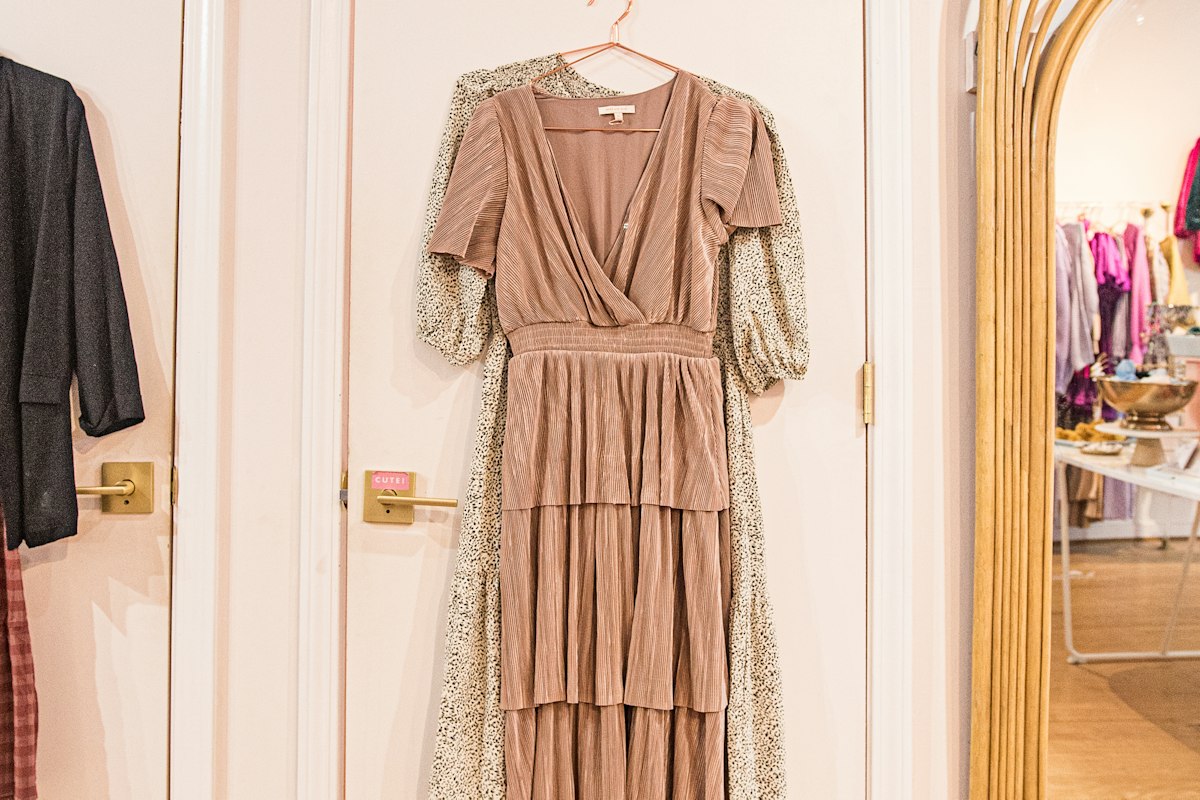
Challis is a light, floppy weave that falls in soft folds from a yoke and takes a print in bright color. Few fabrics that breathe cost as little. Tiered and empire-waist dresses use the lighter half of its range. Once the challis is heavier than that, the gathers turn bulky and the skirt starts to pull down on the seam under the bust. Double gauze gathers almost as softly when your customers want cotton next to the skin, but it has to be ordered preshrunk. It is an open, crinkly cotton sold as two layers joined into one. When a dress has to come out of a suitcase or a dryer ready to wear, the substitute is a matte, pebbled polyester crepe that can be worn unlined. Georgette is the sheer, grainy fabric that lined styles use in its place.
Poplin, the smooth and crisp cotton of a dress shirt, keeps a collar and a placket sharp on a shirt dress. Shirt-weight poplin shows through when nothing is worn under it. Dress weight is higher. Polyester-cotton poplin saves your customers some of the ironing. Chambray gets the look of pale denim, at shirt weight, from its mix of dyed and white yarn. Lyocell twill gives a softer shirt dress that drapes. Although lyocell is a rayon that keeps its strength when wet, a dress in the twill is washed at 30°C (86°F) and line dried.
In a T-shirt dress, cotton jersey hangs straight from the shoulder like the T-shirts your customers know it from. The slimmer version and the maternity dress are cut from modal jersey with 5% spandex. Modal is a soft rayon, stronger than viscose, that stretches further once the spandex is in it. Polyester-cotton jersey loses less in the wash than pure cotton when shrinkage matters more to you than softness.
The smooth, glossy face of satin slides over the body in a slip dress. Polyester satin is opaque in dark and mid colors at the weight a slip is cut in. Luxury brands use silk charmeuse, the light and fluid kind of satin, at 22 momme. Momme is the silk trade's unit of weight. Twenty-two momme equals 95 g/m² (2.8 oz/yd²). Polyester crepe hangs straight from hip to hem in a column dress. Floor length takes the top of its weight range. Cut from thick, firm, double-knit ponte, the column pulls on without a zipper.
Poplin takes a sharp dart in a sundress bodice and holds the gathered skirt away from the legs. Cotton eyelet, the summer alternative, is embroidered around small cut-out holes that need a lining behind them. Nothing inside an A-line or a trapeze dress holds the skirt out. Cotton twill is a heavier weave than poplin with a diagonal line in it. Twill flares evenly without help and presses flat at the seams. Linen-cotton blends make a lighter dress of that shape for summer.
Scuba is a thick, spongy double knit that holds a skater skirt out in a bell where cotton-spandex jersey lets it hang soft. Indigo-dyed denim keeps the A-line shape of a pinafore over a shirt. The winter pinafore is corduroy whose ridges, at 14 to 21 to the inch, are narrow enough not to look bulky in a dress.
The extra yarn that weaves the design into a jacquard makes the fabric stiff. Cut from polyester jacquard, a shift dress stands clear of the body from shoulder to hem. Cotton jacquard is softer. Cotton sateen has a smooth face and a faint luster. It is the fabric for a shift that will be unlined.
Wrap dresses stay closed at the bust in larger sizes only if the fabric stretches where the fronts cross. Rigid wovens don't. Polyester-spandex jersey stretches there. It comes out of a suitcase ready to wear. Rayon-spandex jersey feels softer and cooler on the skin but costs more to print. In woven crepe, the wrap needs a snap at the bust unless it is stitched shut as a faux wrap.
Rib knit, a knit with raised vertical lines, stretches further than jersey and springs back after a tank dress has been pulled on. Underwear lines don't show through it at the weight of a tank dress. Tank dresses in modal-spandex jersey are thinner and softer. Ponte pulls on like a sweater. The lap of a ponte sheath stays smooth after sitting. All-polyester ponte pills later than the softer kind blended with rayon. For sharper darts, a sheath is cut in woven stretch crepe and closed with a zipper.
Only a thick, springy knit smooths the lines of the body in an unlined bodycon dress. A matte surface keeps a knit this tight from looking like swimwear. Nylon-spandex, sold mostly in plain colors, springs back more fully than polyester-spandex but costs more to print.
Sweater dresses come from a knitwear factory that knits the panels to shape from yarn and knits the cuffs and hems in as ribbing. Viscose-nylon yarn knitted at 12 gauge, meaning 12 needles to the inch, makes a smooth, heavy dress that skims the body. Chunky dresses are knitted at 5 or 7 gauge in acrylic that can be machine washed. Soft-spun acrylic pills the way wool and cashmere blends do. Your dress factory can sew a small order from sweater-knit fabric bought on a roll if you give up the knitted-in ribbing.
Because minimum order quantities are counted per fabric and per color, a first collection is easier to produce in two or three fabrics. A shirt dress and a sundress cut from one color of one poplin count toward a single minimum.
You save a round of sampling by settling the fabric before the first sample is made. Patterns are drafted for the way one fabric hangs and stretches. A wrap dress sampled in woven crepe has to be drafted again before it can be made in jersey. Pull-on knit styles remade in a woven cost you a zipper and the extra sewing. Until you approve the style and the fabric for the order is bought, the sample room sews in a stock fabric of the type and weight you chose. You judge the fit on that sample and the color on a swatch of the fabric bought for your order.
Best fabric for dresses by season
Cotton and rayon soak up the sweat that polyester leaves on the skin. Lawn and voile are the cottons for the hottest months. Lawn of 70 to 80 g/m² (2.1 to 2.4 oz/yd²) is smooth, thinner than poplin and cooler in a sundress or a shirt dress that is lined in white and pastels but can be left unlined in a dense, dark print. Voile of 50 to 80 g/m² (1.5 to 2.4 oz/yd²) is the sheerer of the two. It is kept for loose styles and lined whatever the color.
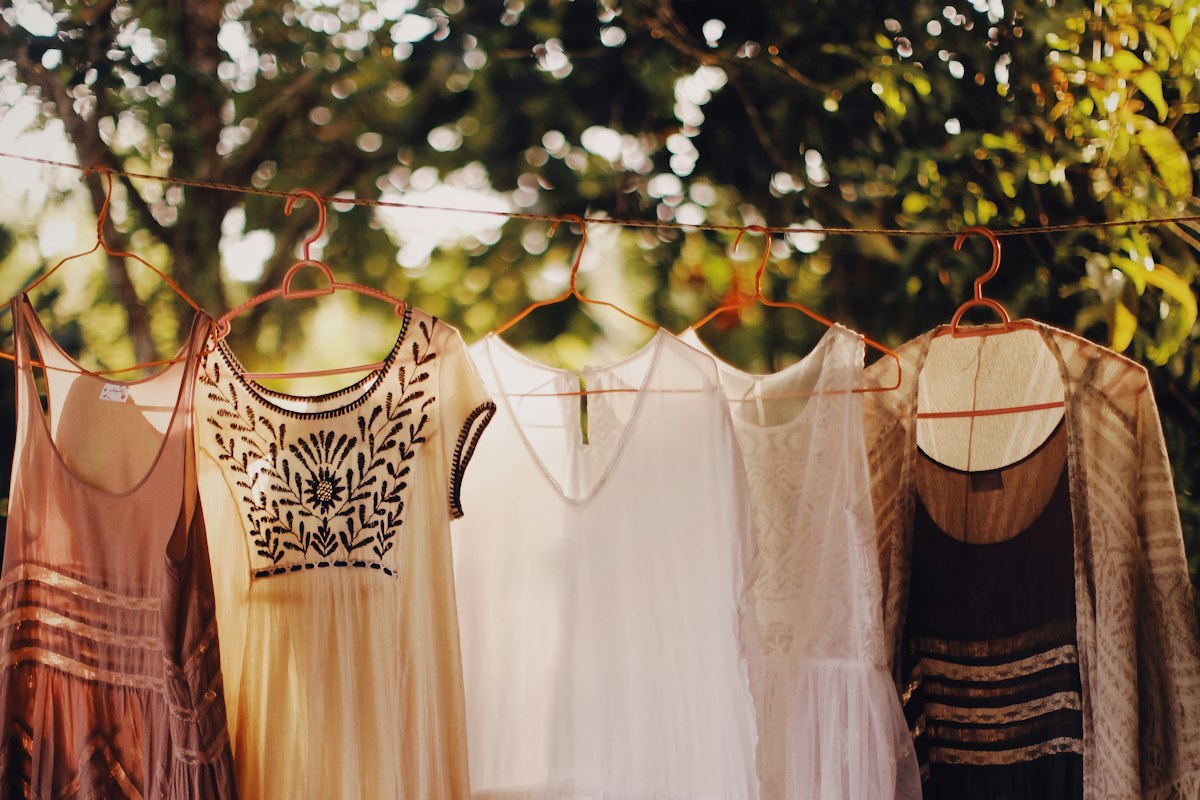
Seersucker is a cotton with puckered stripes that hold the fabric off the body and never need ironing. Linen of 150 to 200 g/m² (4.4 to 5.9 oz/yd²) stands off the skin in a shirt dress, a shift or an A-line dress. Linen creases. Your customers expect that of it. Linen-rayon blends crease as fast at a lower price. The coolest way to wear polyester is chiffon, the lightest of the sheer weaves, in a loose maxi dress whose lining stops above the knee.
Wool crepe and wool flannel are the winter fabrics of brands whose dresses are dry cleaned. The crepe drapes close to the body in a sheath. Flannel is firmer and softly brushed. Flannel shifts are scratchy until they are lined. Polyester-rayon suiting with 2% to 3% spandex is the fabric for a sheath or a shift that sells below wool prices and can be machine washed. Party dresses in polyester velvet show fewer crush marks from sitting than rayon velvet does.
Ponte, polyester crepe and jersey of medium weight are the fabrics that sell in every season. If you keep one collection on sale all year, you can build it on those three and change the sleeve length.
Best fabric for dresses by occasion
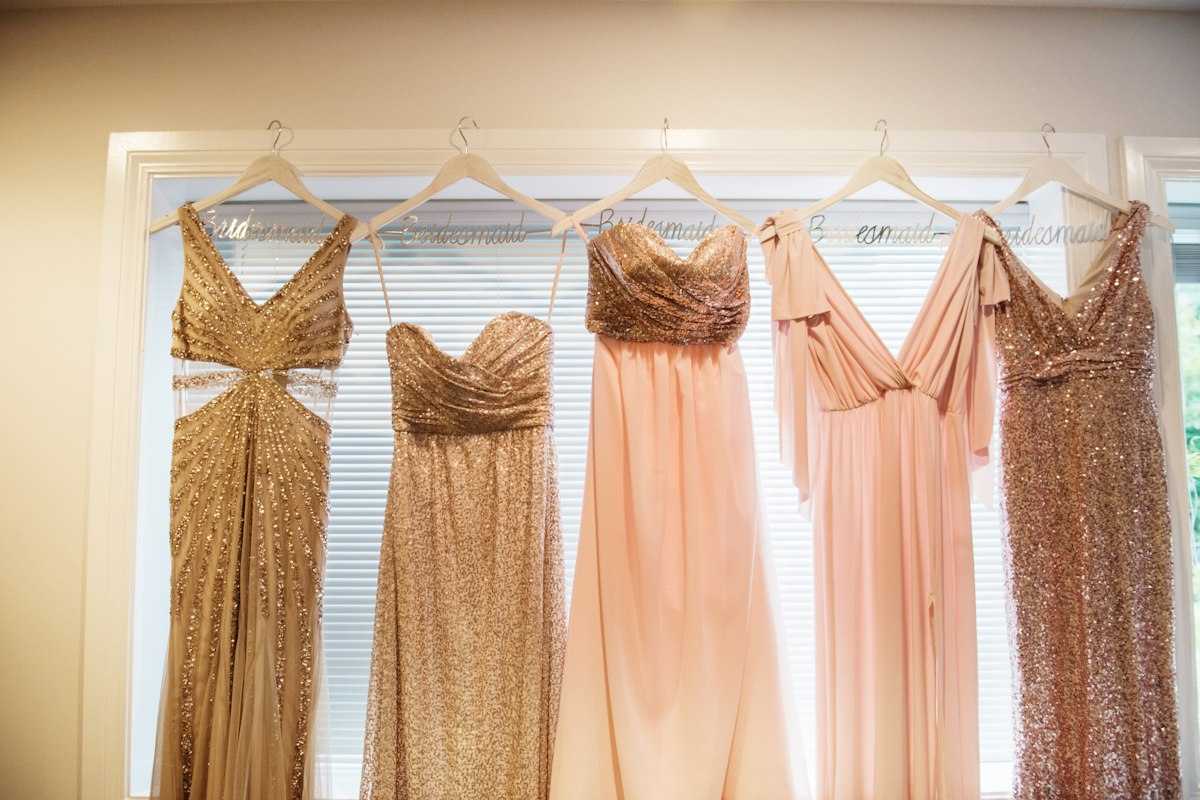
Bridesmaid dresses are polyester chiffon of 30 to 70 g/m² (0.9 to 2.1 oz/yd²) over a lining. Mills stock that chiffon in so many colors that most wedding palettes can be matched from the roll with no dyeing. You approve a bridesmaid shade with the chiffon laid over the lining that gives it its final color. When bridesmaids for one wedding order months apart, their dresses match only if a color's whole season is cut from chiffon dyed in one batch. Georgette, heavier than chiffon, suits a skirt that should swing with more weight.
Prom dresses get their volume from layers of a stiff nylon net called tulle. Over the tulle, the fabric is only a cover. The usual cover is a crisp, faintly shiny polyester taffeta of 60 to 100 g/m² (1.8 to 2.9 oz/yd²). Some styles add a layer of organza that is sheer like chiffon and stiffer.
Evening gowns fitted down to the knee have to stretch, or the woman wearing one can't sit down. Stretch crepe of 200 to 260 g/m² (5.9 to 7.7 oz/yd²) is the woven that does. Rigid satin works once the gown flares from mid-thigh. Crepe-back satin, glossy on one side and matte on the other, makes a column gown when it is sewn matte side out and the neckline bands are turned to the gloss.
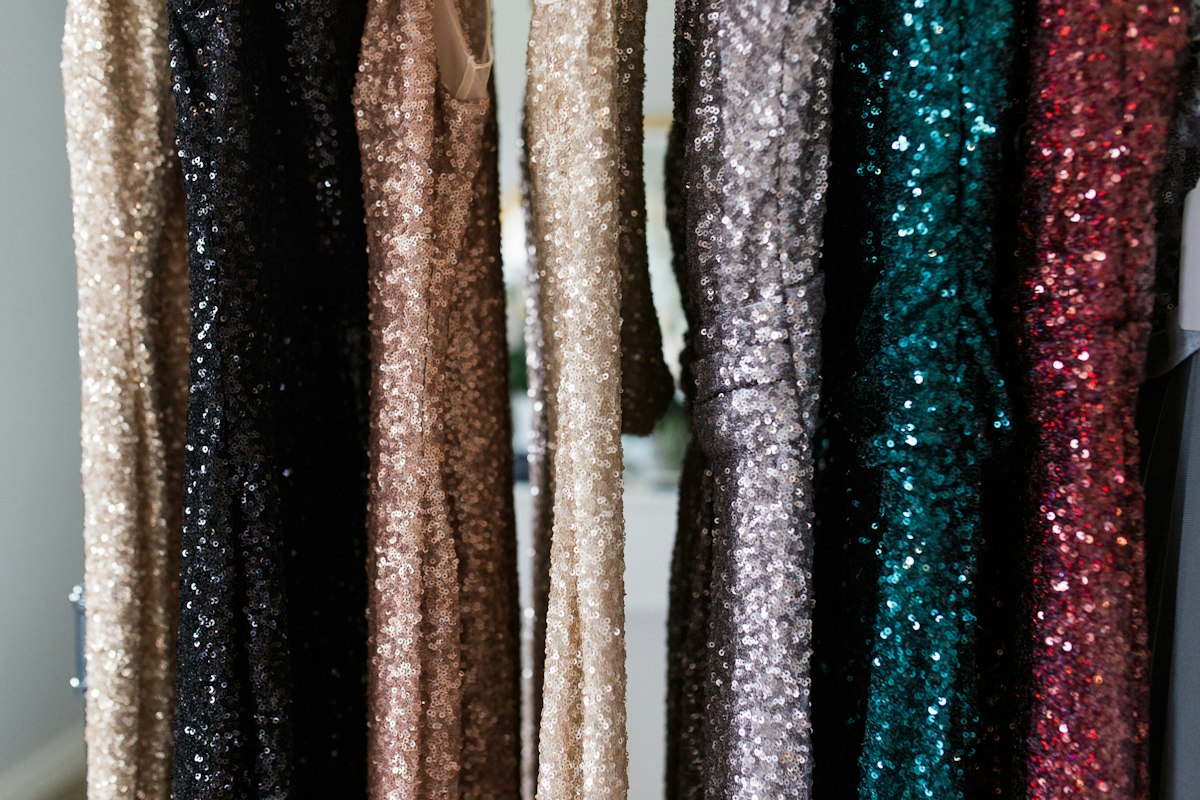
You can make a fitted party dress in stretch satin, or in sequin fabric if the sequins are stitched to a mesh that stretches. The sequin version needs a lining against the scratch and a dry-clean label.
Mikado, a heavy and firm twill weave with a low sheen, gives a bridal gown folds that hold with little tulle underneath. At 200 to 300 g/m² (5.9 to 8.8 oz/yd²), it supports a boned bodice once it has been backed with cotton twill. Duchess satin is the heavy, stiff satin to use for a higher gloss than mikado.
Fabric names
Most of these names describe how a fabric is made and leave the fiber open. Satin is sold in polyester that can be machine washed and in silk that is mostly dry cleaned. A factory told only "satin" can't know which you mean. Write the fiber and its percentage beside the name in the tech pack, down to the spandex. The full entry for a loose printed dress would be "rayon challis, 100% viscose, 120 to 130 g/m² (3.5 to 3.8 oz/yd²), washable finish, shrinkage within 3%". If the vocabulary is the obstacle, you can mail your factory a dress in a fabric you like. Swatches of the nearest matches in the fabric markets come back for you to choose from.
Weight
Ivory challis of 120 g/m² (3.5 oz/yd²) shows underwear, but a dark floral on that fabric doesn't. If your palette includes white or pastels, write the top of the weight range for those colors or plan on a lining. A lining lets the fabric be lighter. You pay for it in a second layer and its sewing. Because knits get thinner when they stretch over the body, a pale bodycon dress needs a heavier knit than its black version.
Poplin ordered at 130 g/m² (3.8 oz/yd²) and delivered at 124 g/m² (3.7 oz/yd²) is within the tolerance of 5% either side that fabric is commonly ordered with. To be safe, write 10 g/m² (0.3 oz/yd²) above the lightest weight that works in your palest color. Your factory fills a small order from what a mill has in stock and has room to find a fabric when you give it a range with the safe weight at the bottom.
Taffeta at 80 g/m² (2.4 oz/yd²) is crisper than challis at nearly twice the weight. Stiffness can only be judged with a swatch in your hand. If it juts out over the edge of a table, the fabric will hold the flare of an A-line skirt.
Stretch
The spandex in a dress fabric rises as the fit gets closer, and wovens for fitted styles, the kind shaped with darts and closed with a zipper, have 2% to 5% of it. Two percent is what a darted poplin bodice needs to leave room for raised arms. Slip dresses and cowl necklines get their give from a bias cut in which the satin is laid at 45 degrees to the lengthwise yarns and stretches a little over the hips.
When a dress in rigid satin is tight across the hips, the smooth yarns slide apart beside the seams. How easily they slide can be measured by a lab in a seam-slippage test before the fabric is cut. In ASTM D7020, the voluntary specification for woven blouse and dress fabrics, a seam passes when it holds 67 N (15 lbf) before the yarns have slipped 6 mm (1/4 in), or 45 N (10 lbf) in a sheer fabric. Satin that fails is safer in a style that hangs free of the hips.
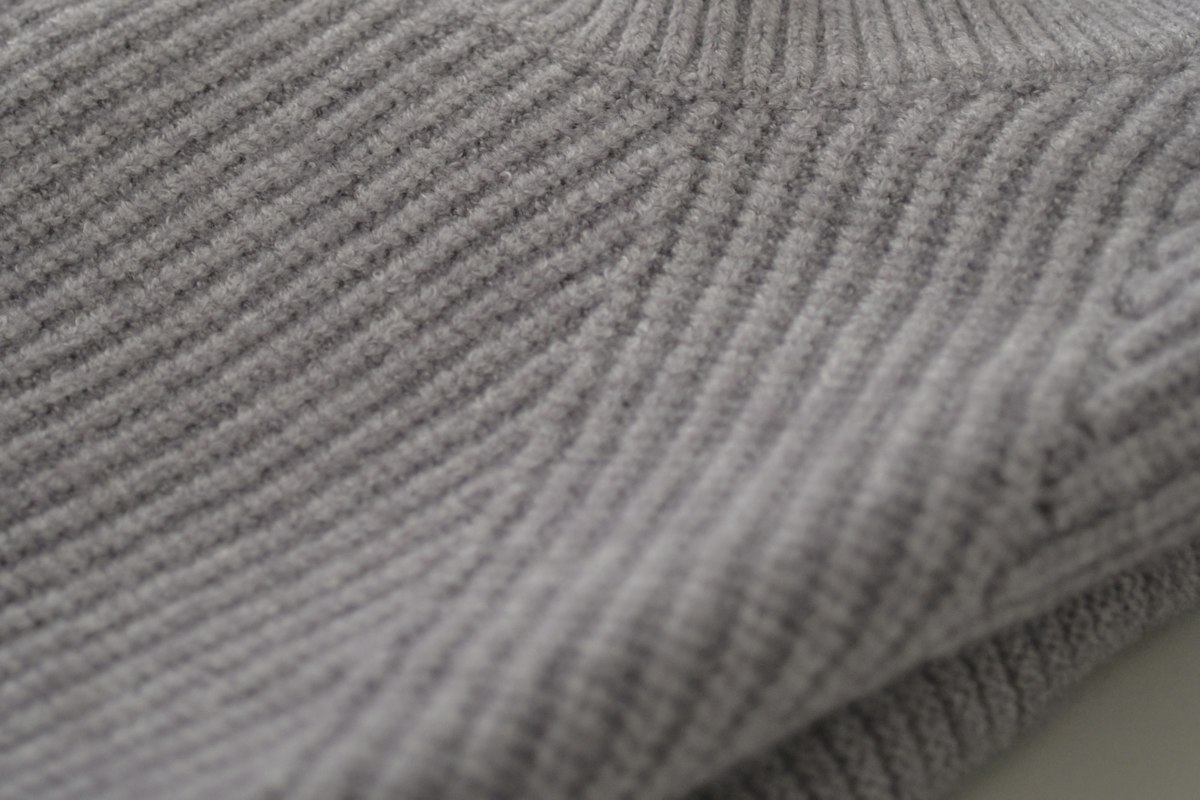
Knits for close-fitting dresses contain 5% to 10% spandex and bodycon knits more than that. Spandex is what pulls a knit back into shape. Without 5% of it, pure cotton jersey bags at the seat of a slim T-shirt dress. A knit whose swatch stays stretched in your hand after a hard pull will lose its shape in wear. Bodycon skirts ride up when the wearer sits unless the knit stretches in length and in width.
Yardage
Most dresses cost more in fabric than in sewing, and a midi dress can take anything from 1.6 m (1.7 yd) for a narrow skirt to 3 m (3.3 yd) for tiers. Your factory works the length out by laying the pattern pieces for your size range across the width of the fabric. That length is the consumption in your quote. Plus sizes raise it. Consumption multiplied by your order quantity is the length your factory buys. That total is what you compare with a mill's minimum before you ask for a color to be dyed.
| What adds fabric | How much | The way around it |
|---|---|---|
| A full lining | Most of the dress length again, in lining fabric | An opaque fabric that needs no lining |
| A bias cut | A third to a half more than a straight layout, 0.5 to 0.8 m (0.6 to 0.9 yd) on a slip dress | Stretch satin cut straight |
| A check or a large motif matched at the seams | More for a bigger check or motif | A small all-over print that hides the seams of a tiered dress |
| Velvet or corduroy | Extra length. The pieces all point one way, or the pile shows two shades | No way around it |
| Fabric 112 cm (44 in) wide | More length per dress than at 150 cm (59 in) | Prices compared per dress |
Color
Mills dye a color to order from 500 to 1,000 m (550 to 1,100 yd), but an order of 100 midi dresses needs only 160 to 300 m (175 to 330 yd), and your factory fills it from the colors a mill has already dyed and sells by the roll. Any color on the mill's color card for that fabric can be bought a roll at a time. Knit mills count the minimum by weight, at 300 to 500 kg (660 to 1,100 lb) for a color or a weight they don't stock.
When an order is large enough to dye, the color takes 14 to 21 days. The mill sends a dyed swatch before it dyes the batch. Because two shades can match under indoor light and differ outdoors, check the swatch against your Pantone number in daylight. The swatch you approve is what the mill matches when you reorder.
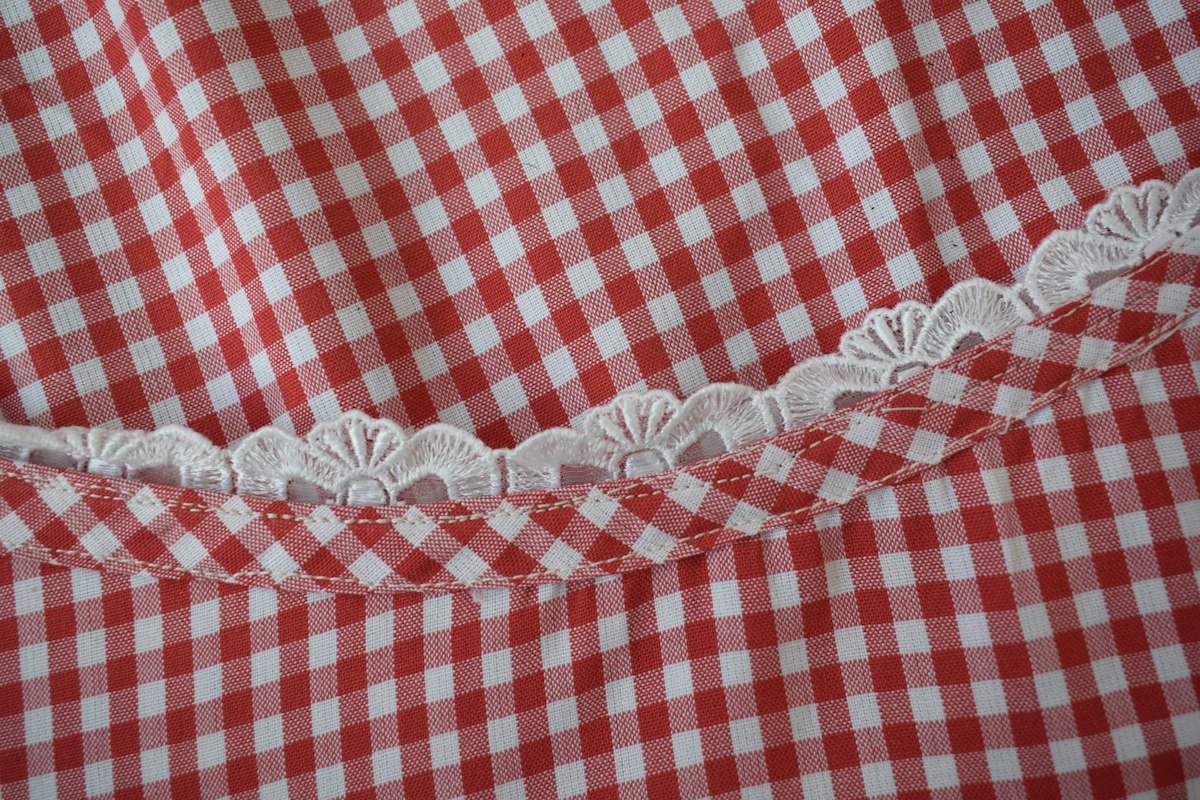
Checks woven from dyed yarn are colored right through, and you buy them from a mill's stock as ginghams and tartans when the order is small. Mills weave a check of your design to order from 1,000 to 3,000 m (1,100 to 3,300 yd) in 30 to 45 days. Below that length, it has to be printed on the surface. Such a check has a pale back that shows when the sleeves of a shirt dress are rolled up.
The cheapest prints are stock designs from a fabric market that any other brand can buy. Your design can be printed digitally from 100 m (110 yd) or less. Rotary screen printers charge less per meter but start at 1,000 m (1,100 yd) per design, and brands move a design to them once it has sold. Custom designs take 10 to 30 days longer than stock ones. A short length comes for your approval before the full length is made.
Sublimation, the heat-transfer process behind the designs on most polyester knits, works on polyester and on blends that are mostly polyester. Rayon-spandex and modal-spandex jersey takes the reactive dyes used on cotton at a higher cost per meter. If a T-shirt dress will get its design after sewing, on a direct-to-garment printer, the jersey has to be mostly cotton for the inks to bond. Plain T-shirt dresses can be cut from the polyester-cotton jersey that shrinks less.
Dark red and navy dyes can bleed onto a white ground in the wash on rayon and polyester alike. In the AATCC 61 test for colorfastness to laundering, one 45-minute lab wash roughly approximates the color loss of five home launderings. Woven dress fabric passes ASTM D7020 at grade 4 of 5 for color change and grade 3 for staining. But the staining of five home washes isn't always predicted by that lab wash. The surer check for a white ground is the fabric that comes back from the five-wash shrinkage test.
A pinafore worn over a white shirt is the reason to order denim with a rinse wash from the mill. The wash softens the fabric and takes out much of the excess indigo that unwashed denim rubs onto the shirt underneath.
Washing
Untreated viscose rayon weakens in water and can shrink as much as 10% in the washing machine your customers expect to use for a casual dress. You get a machine-wash label on challis by writing two things into the tech pack: a formaldehyde-free washable finish and a shrinkage limit in the AATCC 135 home-laundering test. The lab measures a marked square on the fabric before and after five rounds of washing and drying as your label will say. The limit in ASTM D7020 is 3% for woven dress fabric. Linen-rayon blends need that finish and that limit for the rayon in them. It is worth doing the test on the fabric bought for your order, before any of it is cut.
Cotton that hasn't been preshrunk comes out of its first wash 3% to 5% smaller. You order woven cotton and linen preshrunk and jersey compacted by a mill treatment that takes most of the shrinkage out of a knit. What's left is measured in the wash test. Since tumble dryers shrink cotton and viscose more than the wash does, you choose between a line-dry label and a shrinkage test that includes the dryer. Modal jersey and polyester can usually be tumble dried. Challis with the washable finish and linen are safer with a line-dry label. The label on a bodycon knit should keep it out of a hot dryer that wears out its spandex.
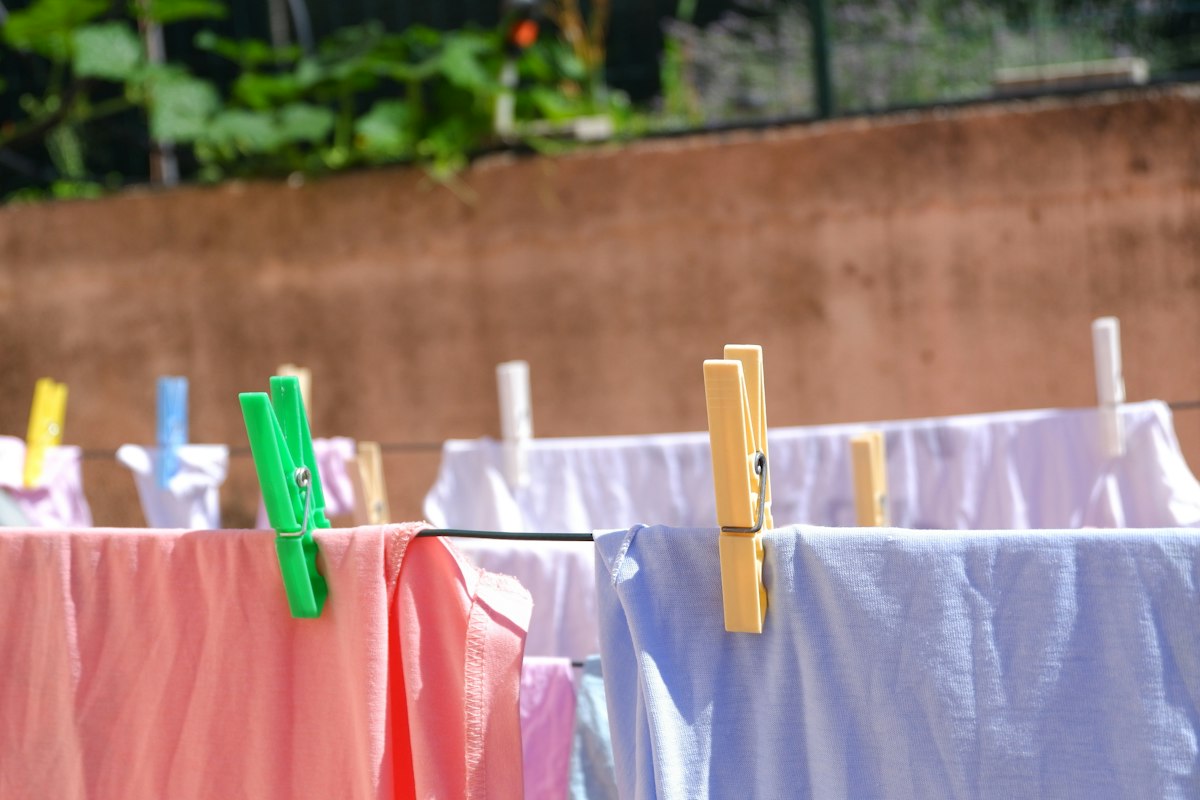
Linen and cotton dresses that are garment washed after sewing reach your customers soft and with the shrinkage already out. Their pattern is cut larger by the amount the fabric shrinks.
As the importer of dresses sold in the United States, you answer for what the care label says. Under the Federal Trade Commission's Care Labeling Rule, the label needs a washing or a dry-cleaning instruction, and you need a reasonable basis for that instruction before the dress is sold. Fabric tests are accepted when you have evidence for the garment as a whole. Past experience with a fabric can serve as the basis. But the most direct basis is a finished dress washed as the label says with its lining in.
Flammability
Most dress fabric is exempt from testing under the US flammability standard for clothing textiles. Any fabric of 88.2 g/m² (2.6 oz/yd²) or more is exempt in any fiber unless it has a pile or a brushed surface. Almost all opaque dress fabric clears that weight. Fabrics made only of polyester, nylon, acrylic, modacrylic, olefin and wool, in any combination, are exempt at any weight and with any surface.
A fabric under that weight, or with a raised surface, needs the test when it contains any other fiber:
- Cotton voile and lawn
- Silk charmeuse of 20 momme or less
- Silk chiffon and organza
- Stretch lace and stretch mesh, for the spandex in them
- Velvet with rayon or spandex in it, cotton corduroy and brushed knits in cotton or rayon
Labs hold a small flame to a strip of the fabric for one second. Smooth fabrics fail when the flame travels up the strip in under 3.5 seconds. Unless the test is in your budget, make the sheer layers of a gown in polyester. All-polyester velvet and brushed sweater knits of acrylic and wool are exempt. Sequin party dresses are safer tested. Because of the spandex in their mesh, the fiber exemption doesn't apply, and whether sequins count toward the weight of a fabric isn't addressed in the regulation.
Sheer chiffon and georgette made entirely of rayon are the fabrics to leave out of a collection. Sheer 100% rayon skirts and scarves were among the violations the Consumer Product Safety Commission (CPSC) listed for 1994 to 1998, and a single passing test isn't enough to show that such fabrics comply.
Only the parts of a dress that are uncovered in wear are tested. The lining of a zip-front jacket is the example of an exposed part in the regulation. Linings that show at a wrap front or a high slit are exposed in just that way and need a passing test unless the lining fabric is exempt itself. Behind the wrap front of a cotton dress, a cotton poplin lining of 100 g/m² (2.9 oz/yd²) is exempt by weight.
If you import a dress in a fabric that isn't exempt, you certify in writing that it passed the test. That document is called a General Certificate of Conformity (GCC). Adult clothing can be tested by a lab that isn't on CPSC's accepted list. Keep the lab report in your files. Suppliers outside the United States may offer a written guaranty that the fabric complies, but it won't protect you from prosecution. CPSC said in 2016 that it wouldn't enforce the certificate requirement for adult clothing made from exempt fabric.
Lining
You have to line a dress when you can see your hand through the fabric, from neckline to hem or down to the knee under a skirt that's meant to stay sheer below it. Where an opaque dress fits close above the waist, you can line the bodice alone. Loose jersey needs no lining at all. Long yarns cross the back of a jacquard and catch on rings unless the dress is lined.
Since a washable outer fabric over a dry-clean lining makes a dry-clean dress, choose the lining by the care label you want. Polyester is the cheapest lining and doesn't shrink. Most washable dresses are lined in polyester whose antistatic finish stops it clinging to tights. The lining to choose for a cotton or linen dress is cotton voile that shrinks along with it. Polyester lining makes a cotton dress feel like polyester in summer. It keeps its length while the dress shrinks around it, until it hangs below the hem.
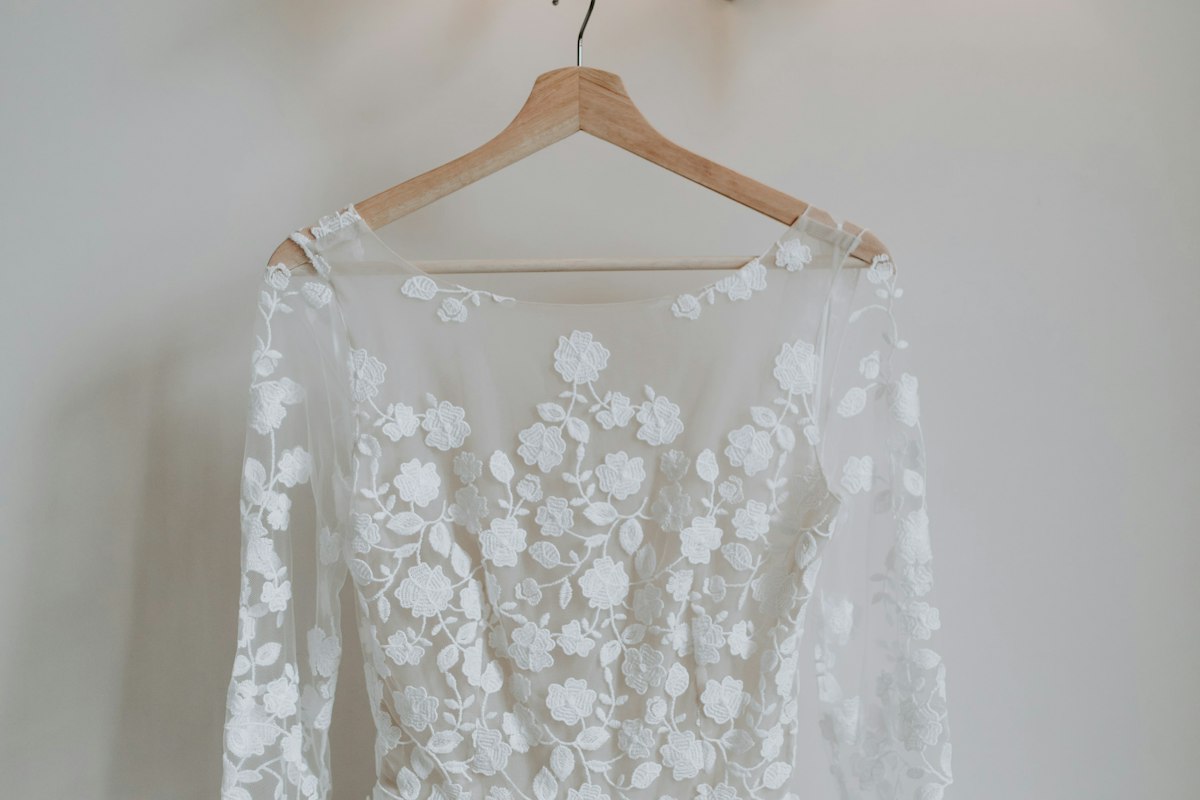
Cupro is a rayon made from cotton linter that breathes and doesn't cling with static. As fragile in water as viscose, it suits a summer dress with a hand-wash or dry-clean label. Acetate is a glossy fiber made from wood pulp that water marks and weakens. Its place is in occasion dresses that will be dry cleaned. Stretch tricot is the lining for a fitted knit dress. It is a thin, smooth knit that gives as far as the outer fabric. Skin-tone lining under a lace bodice makes the lace look as if it's worn on bare skin. Under white fabric, it hides more than a white lining does.
Sources
- 16 CFR Part 1610, Standard for the Flammability of Clothing Textiles
- U.S. Consumer Product Safety Commission, Clothing FAQ
- Federal Trade Commission, Care Labeling of Textile Wearing Apparel and Certain Piece Goods, 16 CFR Part 423
- ASTM D7020-22, Standard Performance Specification for Woven Blouse, Dress, Dress Shirt & Sport Shirt Fabrics
- Ohio State University Extension, HYG-5538-02, Rayon: The Multi-Faceted Fiber (archived)