Types of Activewear: 24 Workout Clothing Styles Explained
Activewear includes clothing worn for gym workouts, studio classes, outdoor training, and sport. T-shirts, leggings, sports bras, and shorts make up much of a workout wardrobe. Specialized garments include padded cycling shorts, lined tennis dresses, and swimsuits made for regular pool training.
Sports Bras
The underband sits around the rib cage beneath the bust and anchors a sports bra. In a shaped-cup design, separate cups surround the breasts and join the band along their lower edges. Adjustable straps change the length over the shoulders, and a back fastening allows adjustment around the ribs.
Sports bras may use band-and-cup sizing or clothing sizes such as small, medium, and large. Some letter-sized designs specify a cup range within each size. The band needs to sit securely around the ribs, with sufficient space in the cups for the bust.
Support ratings describe the intended use of the garment. High-support bras are commonly worn for running and repeated jumping. Breast size, fit, and personal comfort also influence the support required.

Workout T-Shirts
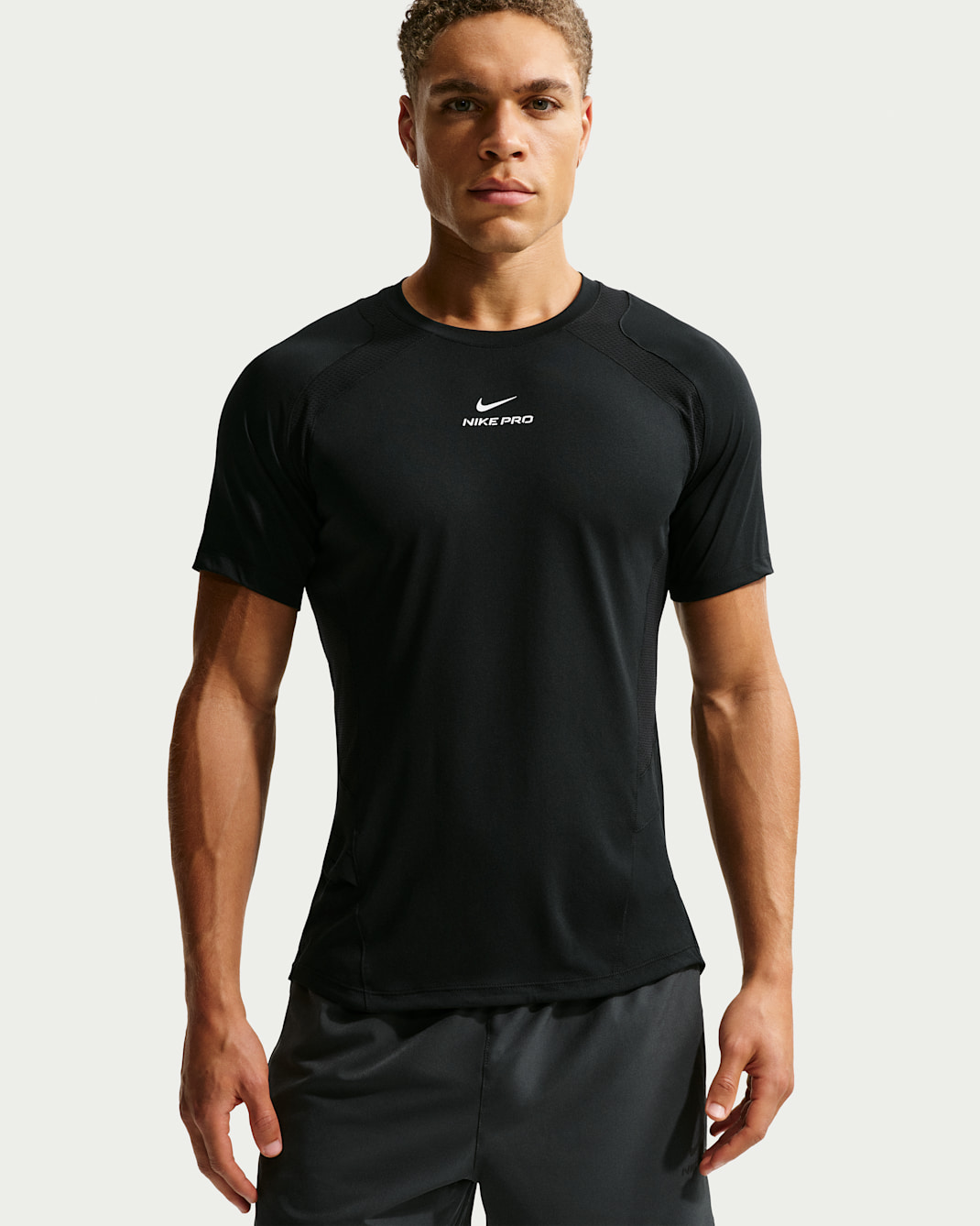
Fine mesh can run across the shoulders, underarms, and back of a workout T-shirt. Its small openings provide ventilation and create visible changes in texture, including on a garment made entirely in one color. Lightweight polyester-based fabrics are common, with stretch incorporated into some designs for movement through the shoulders. Bonded seams keep the joins between panels relatively thin. Where the mesh meets a solid section, the change in fabric structure remains visible across the surface of the shirt.
Tank Tops
“Racerback” describes the back of a tank, where the fabric narrows between the shoulder blades. The armholes curve toward this central section, exposing the outer shoulders. The front can have a high neckline, a scoop neck, or narrow straps.
A tank with a shelf bra contains a separate bust lining beneath the outer fabric. The lining ends at an elastic underband, and small openings may hold removable cups. The outer body continues below this support layer, sometimes hanging loosely around the abdomen. The stated support level and cup range describe the internal bra’s fit.

Long-Sleeve Training Tops
Thumbholes extend the sleeves of many running tops over part of the hands. The sleeve needs enough length for the elbow to bend with the thumb through the opening. Stretch through the forearm accommodates that movement and helps the cuff stay in position.
Lightweight versions provide coverage across the arms during outdoor sessions and fit beneath a jacket. Seamless-knit tops can contain ventilation patterns through the back and underarms, formed by changes in the knitted structure. Small openings become part of the fabric around those areas.

Athletic Polo Shirts
Piqué gives many athletic polos their lightly textured surface. The knit often includes stretch for movement across the upper back during a golf swing. A folded collar sits above the body, with a short button placket extending down the chest. The placket reinforces the opening with additional fabric, and some designs have stays inside the collar points to maintain their shape. Athletic polos also appear in smooth performance knits, particularly in lightweight versions worn for golf and court sports.

Leggings
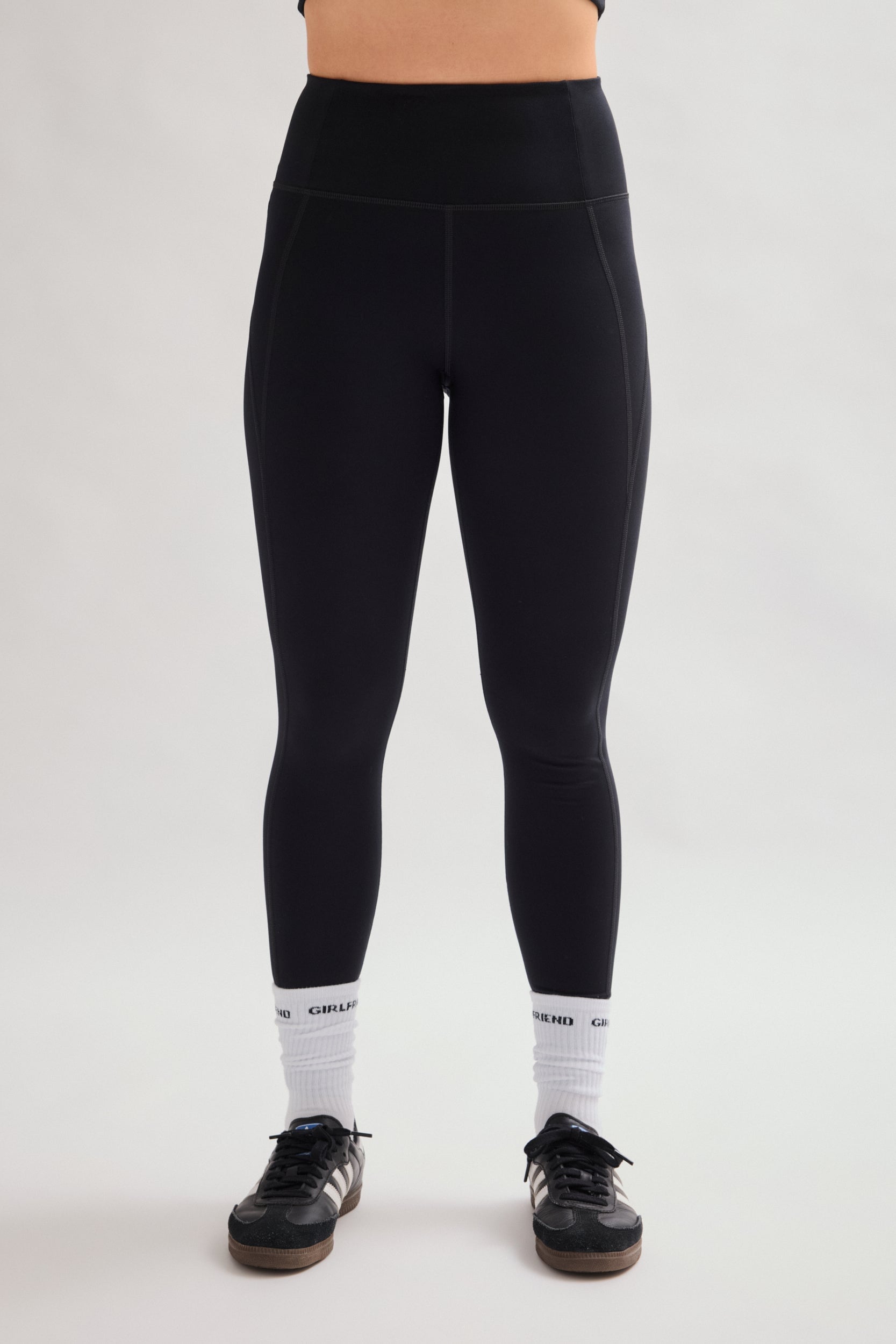
Leggings fit closely through the hips and legs. Their fabric stretches across the seat and knees during bending, and the waistband keeps the upper edge positioned around the torso. High-rise designs extend above the hips and may use several fabric layers or concealed elastic through the waist.
A gusset forms a separate panel at the crotch, changing the arrangement of the seams between the legs. Side pockets are commonly built into thigh panels, placing their openings below the waistband.
The inseam measures the inside leg from the crotch to the hem. Length names describe an intended fit; the actual hem position also depends on the wearer’s leg length.
| Length Name | Intended Hem Position |
|---|---|
| Full length | Near the ankle. |
| 7/8 length | Around or above the ankle on the intended wearer. |
| Cropped | Farther up the lower leg, commonly around the calf. |
Yoga Pants
Yoga pants include fitted leggings and designs with wider lower legs. Flared versions follow the hips and thighs before opening below the knee. A broad waistband often continues the fitted upper section over the waist.
The position of the knee shaping affects where the flare begins. Below that point, additional fabric falls around the calf and ankle. The inseam determines how far the wider section reaches toward the floor. On a full-length pair, the hem may open over the instep and around the shoe. Soft stretch knits accommodate seated poses and deep bending at the hips.

Biker Shorts
An inseam such as 6 or 8 inches gives the inner-leg length of biker shorts. The resulting hem position depends on the wearer’s thigh length. These shorts have the fitted waist and seat of leggings, with stretch fabric continuing over the upper legs.
The lower edge sits directly against the thigh. It may have a narrow stitched hem or a raw-cut finish with a single layer of fabric. Some designs use a continuous front panel across the lower torso, placing the shaping seams along the sides, back, and inner legs.

Running Shorts
A side split lets the outer panels of running shorts separate as the leg reaches forward. Deep splits and curved hems release fabric around the upper thigh. The lightweight shell hangs from an elastic waistband, usually secured with a drawcord.
Brief-lined shorts contain an inner brief covering the seat and crotch. Its leg openings sit high on the thighs, and the liner attaches beneath the waistband. The fabric touching the skin can differ from the woven outer shell.
In a two-in-one design, fitted inner shorts extend down the legs. Their hems may remain visible beneath the shell. Storage can be placed on the inner shorts, where a pocket holds a phone close to the thigh beneath the moving outer fabric.

Training Shorts
Training shorts generally have room through the seat and thighs for squats, lunges, and high steps. The width at the leg opening leaves space around a bent thigh, and side vents release the lower edge further. Stretch-woven cloth and lightweight knits are both used for these loose-fitting gym styles. A drawcord secures the waistband above the fuller body of the shorts, allowing the waist fit to be adjusted independently of the room around the legs.

Joggers
Fabric gathers above the ankle cuff on a jogger. The cut widens gradually through the calf and thigh, creating a tapered outline with room around the upper leg. Ribbed or elasticated cuffs keep the lower openings close to the ankles. This shape appears in lightweight stretch-woven trousers as well as fleece garments. A woven jogger can provide a relatively thin warm-up layer, with most of its gathering concentrated at the waistband and cuffs.

Track Pants
Ankle zippers allow tapered track pants to open around footwear. Releasing the lower seam widens the space around the foot, making the trousers easier to change before or after practice. The zipper can sit along the outer calf or near the back of the ankle.
Track pants also include straight-leg and relaxed warm-up styles. They are often sold with a matching track jacket. Smooth synthetic fabrics, contrasting side panels, and stripes are familiar features.

Sweatpants
Brushed fleece gives many sweatpants their fuzzy inner surface. Fibers are raised from the knitted fabric during finishing, producing the soft face worn against the legs. Cotton-and-polyester blends are common, and the cloth often has a relatively smooth exterior.
Relaxed sweatpants leave room through the seat and thighs. Open hems fall loosely around the ankles and toward the shoes. Cuffed versions gather the fabric at the bottom of the leg, giving them a jogger shape. An elastic waistband usually contains a drawcord for adjustment.

Athletic Skorts
The phone pocket on a tennis skort may sit on the shorts hidden beneath the skirt. It is reached from below the outer hem, keeping the contents close to the thigh.
The fitted shorts cover the seat and upper legs and join the skirt at the waist. A lightweight woven outer layer can move over stretch-knit shorts. Pleats or a flared cut add width around the hips, allowing the skirt to open during a step. The inner shorts provide coverage through that movement. Tennis versions may also include a pocket arranged for carrying a ball.

Workout Dresses
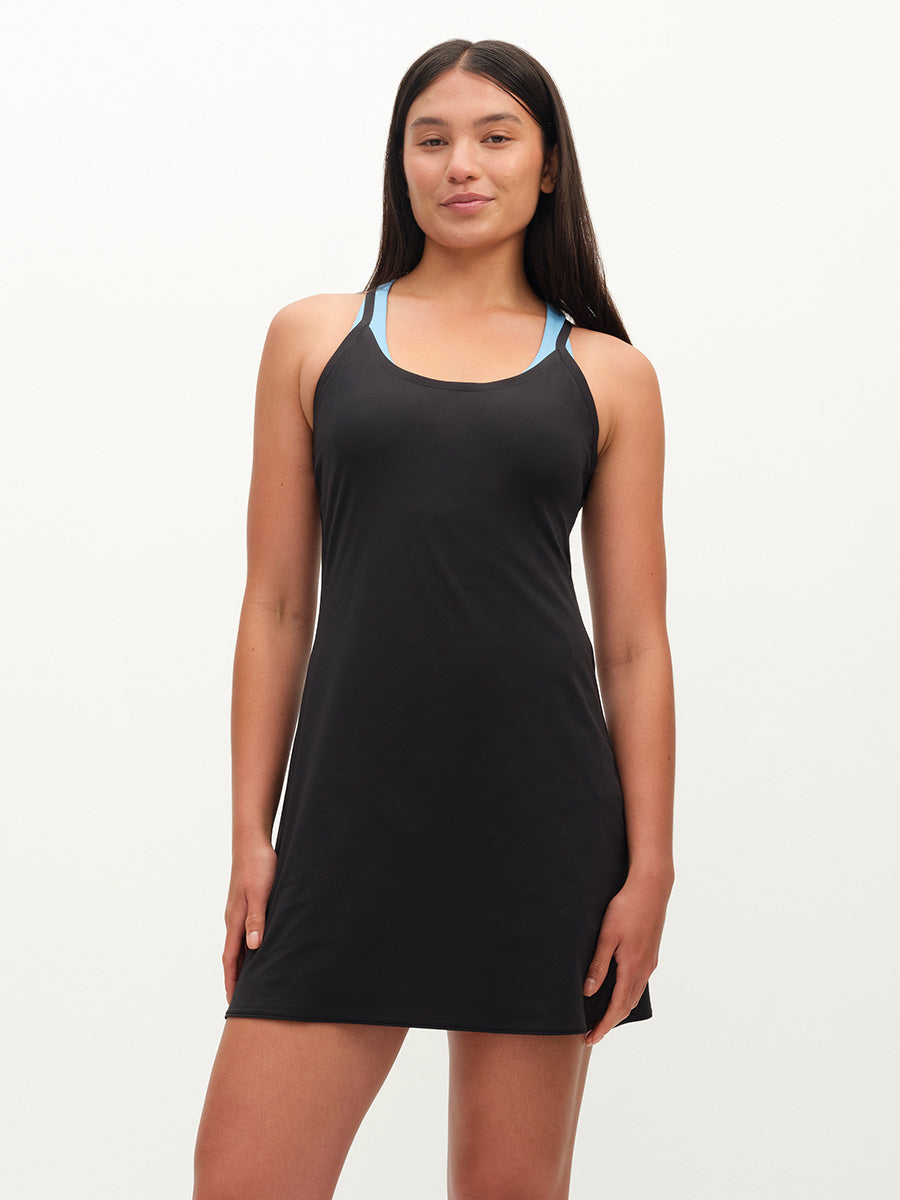
A workout dress can contain a fitted shorts liner beneath an A-line outer body. The lining follows the torso and hips into short legs, sometimes carrying pockets along the thighs. Grippers at the leg openings help hold the liner hems in position as the outer skirt moves.
Bust support depends on the construction inside the upper body. A shelf-bra version has an additional lining and an elastic underband. Removable cups may fit inside that lining, and adjustable shoulder straps help position the top of the dress.
Some dresses have a connected liner extending from the upper body into the shorts. This construction needs sufficient torso length for the wearer to reach and bend comfortably.
Unitards
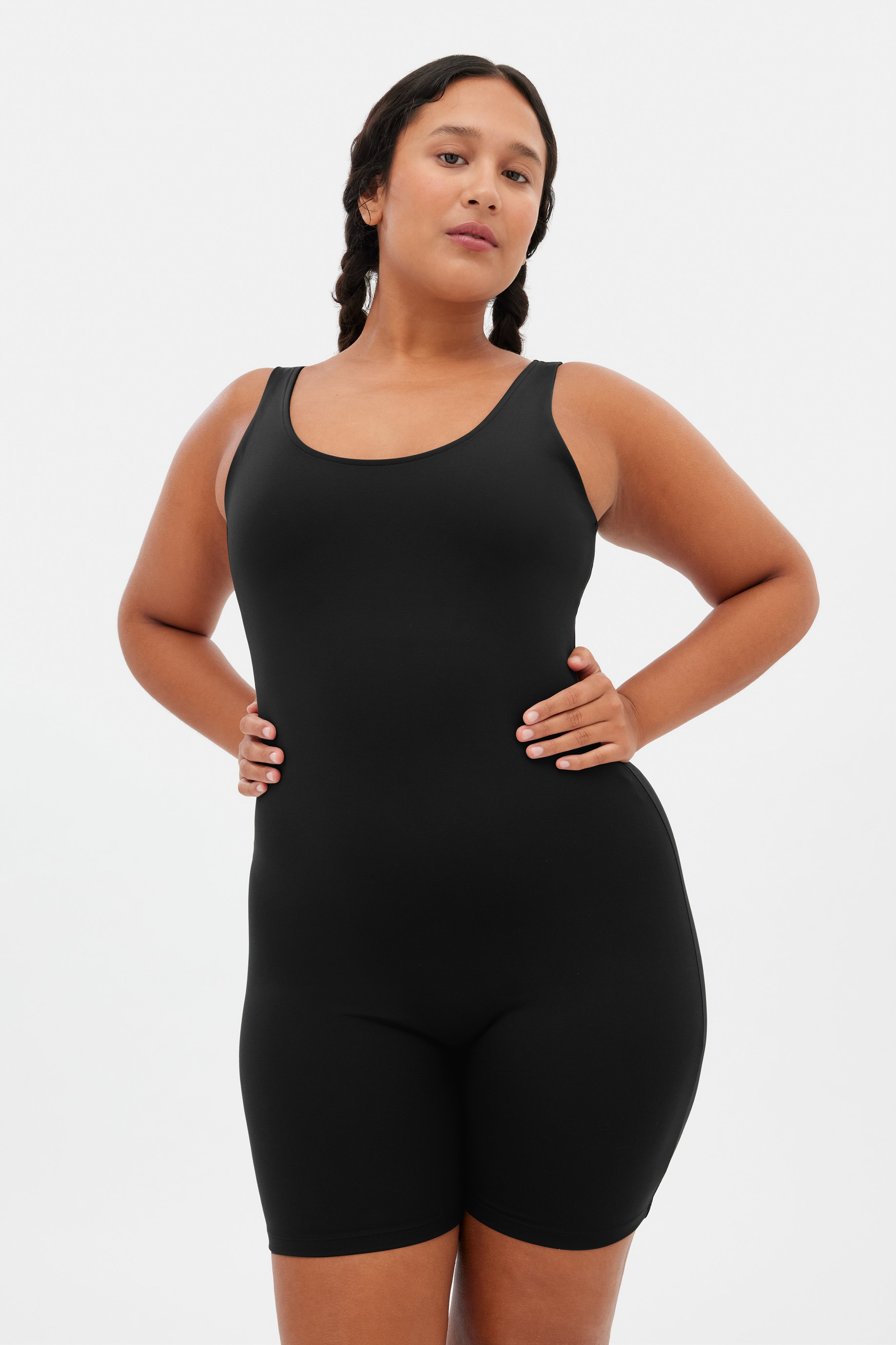
Torso length is a central part of unitard fit. The garment connects the shoulders and crotch through a continuous body, and that distance affects where the neckline, armholes, and seat sit. Stretch accommodates movement through the back and abdomen, with the cut supplying the underlying proportions.
Short unitards have the outline of a fitted tank continuing into thigh-length legs. Full-length versions extend toward the ankles. Seams may shape the torso along the sides or beneath the bust, and an internal bra can be attached within the upper section.
Base Layers
Base layers are worn directly against the skin beneath outdoor clothing. Long-sleeve tops and fitted bottoms are common forms. Moisture-managing fabrics collect and spread perspiration during activity, with close contact helping transfer moisture into the material.
Polyester, merino wool, and blended yarns are widely used. Elastane may be included for movement at the shoulders, elbows, hips, and knees. Compact cuffs and ankle openings help the garments sit beneath jackets and trousers.
Lightweight, midweight, and heavyweight labels describe different levels of fabric bulk. Weather, activity level, and the clothing worn over the base layer determine the suitable weight.

Compression Tops and Tights
Compression activewear uses stretch fabric fitted under tension around the body. The category includes short-sleeve tops, long sleeves, shorts, and full-length tights. Panel shaping follows the torso or legs closely, and mesh may be incorporated around the underarms or back.
Compression tops are often worn beneath jerseys. Fitted shorts can sit under loose gym or running shorts, with their lower edges visible below the outer hem.

Hoodies and Sweatshirts
French terry has small loops on the inside of the fabric and a smooth outer surface. It is used for sweatshirt layers with room through the body and sleeves. Brushed fleece has a fuzzy interior and is common in warmer garments.
A crewneck sweatshirt finishes with a round neck opening. Ribbing usually forms the neckband, cuffs, and lower edge, gathering the surrounding fabric where the bands attach.
On a pullover hoodie, the hood joins around the back and sides of the neckline. Its front edges may overlap beneath the chin, and a kangaroo pocket can span the lower front. Zip-through hoodies open from hem to neckline, often with a separate hand pocket on each side of the fastening.

Half-Zip Tops
A half-zip top opens from the collar into the upper chest. The fastening creates room around the head when the pullover is put on and allows the neck opening to be adjusted during wear. Lightweight training versions use thin knitted fabric with room over a T-shirt. The collar can fold outward when released, exposing the neckline of the layer underneath.

Fitted Training Jackets
Curved seams shape a fitted training jacket through the waist. A narrow side panel between two seams brings the fabric closer around the middle, and stretch in the main material accommodates reaching and rotation.
Pocket openings may follow those shaping seams, with the pocket bags concealed inside the body. A full-length front zipper runs from the hem into a standing collar. Hip-length versions extend below the waistband of the clothing underneath.

Windbreakers
A packable windbreaker can fold into one of its own pockets. The pocket turns into a pouch around the sleeves, body, and hood, with a zipper closing the bundle. The packed garment can be carried during an outdoor session and taken out for exposed sections of the route.
Thin nylon ripstop is one common fabric. Reinforcing yarns form a fine grid through the cloth, and the lightweight shell compresses into a small space. Wind-resistant construction limits airflow through the garment. Some versions also have a water-repellent finish for light moisture.

Cycling Bib Shorts
The padded insert inside cycling shorts is called a chamois. It follows the crotch and seat, placing cushioning between the rider and saddle. Modern inserts use shaped foam beneath a soft fabric surface, with thickness and density varying across the pad.
Bib shorts extend upward into shoulder straps. The straps hold the shorts in position around the torso, including when the rider leans forward. Their length affects the fit through the body. The legs remain close-fitting and commonly finish with grippers around the hems.
The chamois is designed to sit directly against the skin. Some manufacturers use different pad dimensions across garment sizes.

Training Swimwear
One-Piece Training Swimsuits
A training one-piece covers the torso and seat, with straps arranged to accommodate movement through the shoulders. Racerback straps meet toward the center of the upper back, leaving the outer shoulder area open.
Pool-training suits commonly use chlorine-resistant polyester fabrics, including blends containing PBT polyester. A separate lining provides coverage inside the body. Elastic finishes around the neckline and leg openings help keep those edges positioned during swimming.

Jammers
Jammers have fitted legs extending down the thighs, often finishing above the knees. An internal drawcord adjusts the waist, and the front may contain a shaped support liner. Seams follow the crotch and inner legs. Polyester-based fabrics are common in training versions intended for repeated pool use.

Rash Guards
Rash guards provide upper-body coverage during water activities. Short- and long-sleeve versions use stretch fabric across the chest, back, and shoulders. Flatlock stitching creates relatively flat joins between panels, and close-fitting neck openings keep the upper edge near the body. Products carrying a UPF rating state the ultraviolet protection provided by their fabric.
