What Is Linen Fabric?
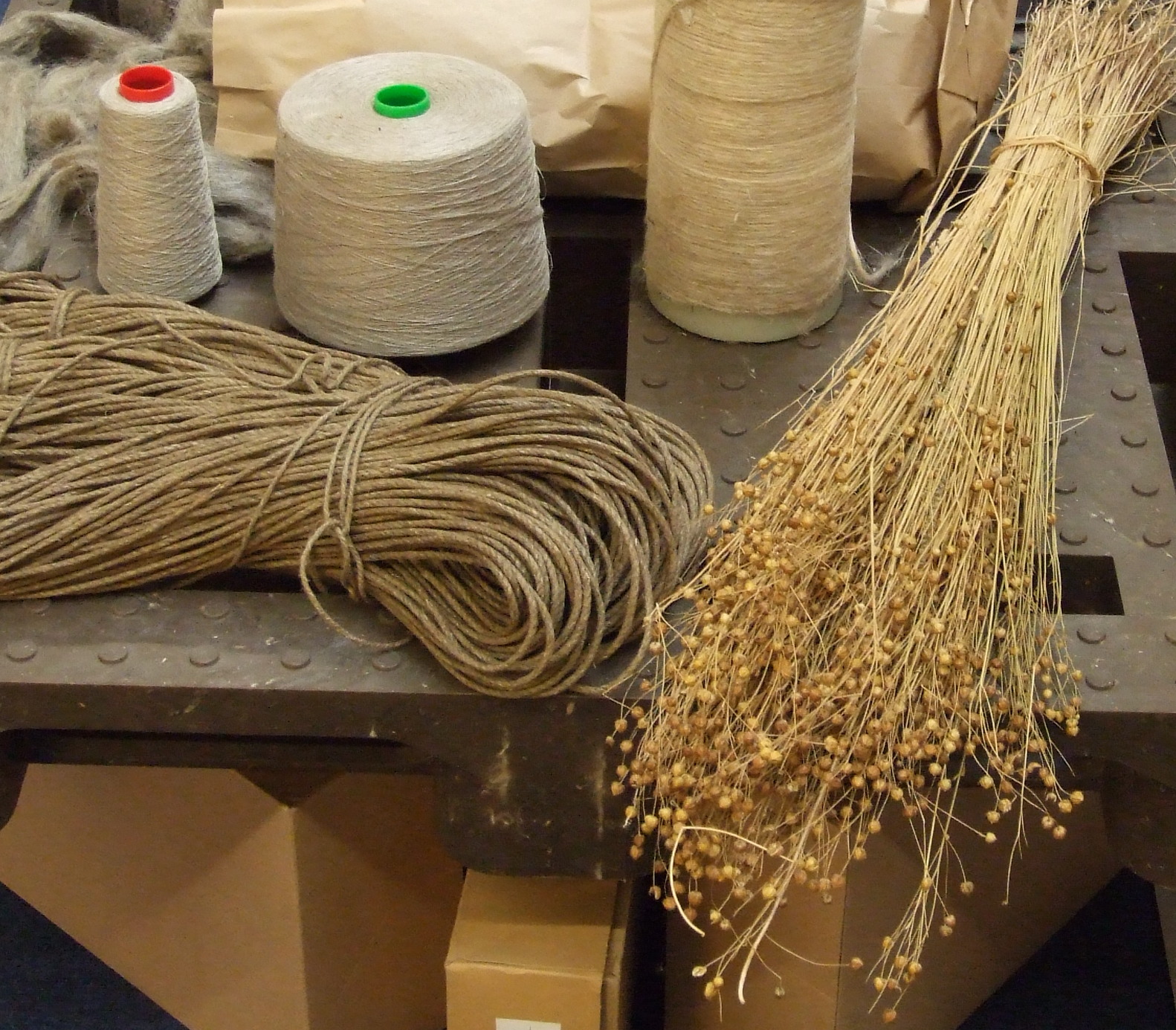
Linen is a textile made from flax fibre, usually from Linum usitatissimum. The fibres used for linen grow inside the stem in long bast-fibre bundles. Producing the fabric requires several separate operations: harvesting the stalk, retting it, mechanically extracting the fibre, preparing the fibre for spinning, making yarn, forming fabric, then applying whatever washing or finishing the final product requires.
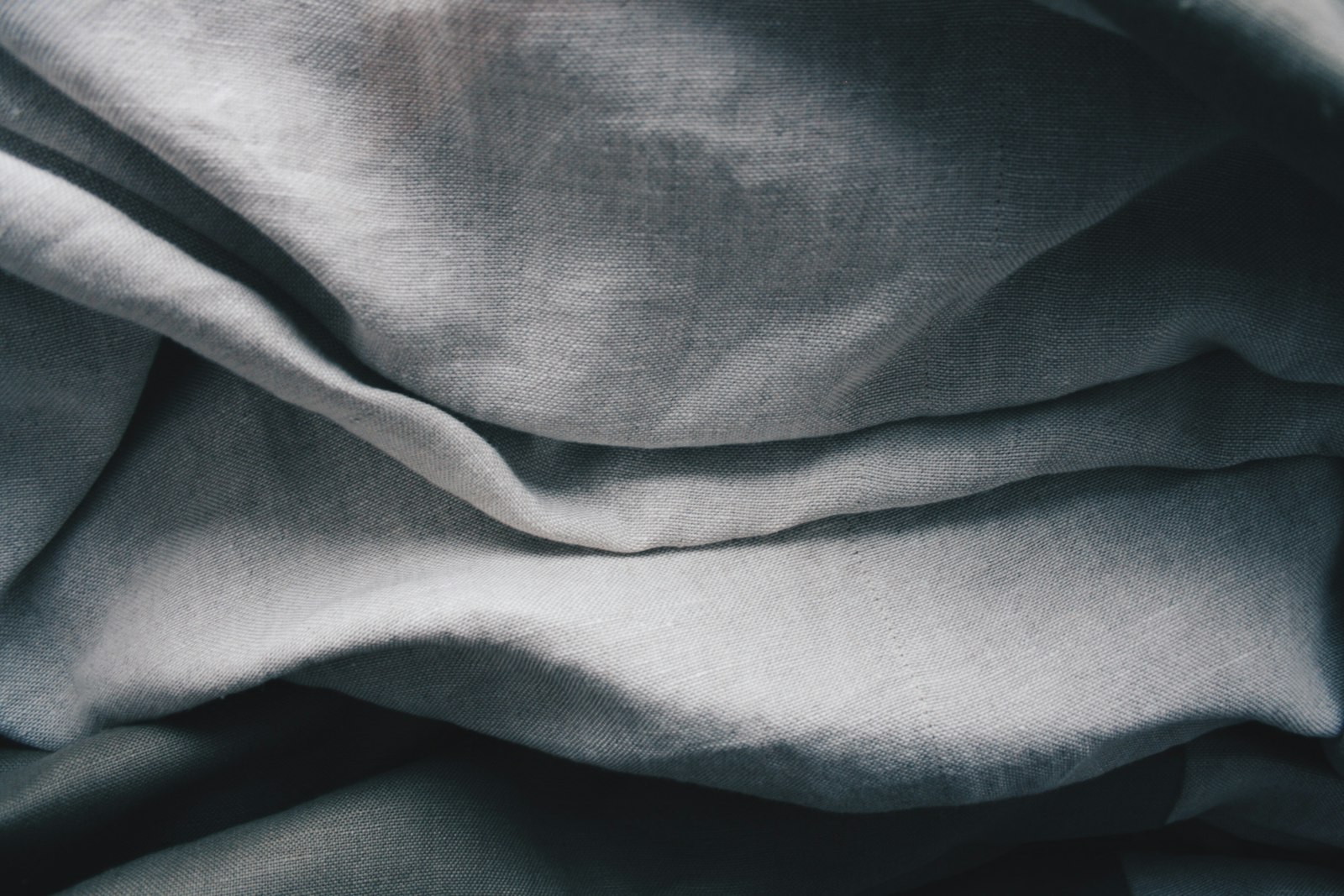
Fresh linen commonly has a dry, crisp hand and visible yarn character. Fine long-fibre yarn can produce smooth shirting. Heavier yarns, tow yarns, open constructions and washed finishes create very different surfaces. The word linen describes the fibre material. It does not specify one GSM, one weave or one type of garment.
Linen Fibre Grows Along the Flax Stem
Fibre flax reaches roughly 100 cm in height around flowering. The useful fibre bundles run along the stalk, which is why European fibre flax is traditionally pulled from the soil during harvest. Alliance documentation places pulling around July and states that preserving the whole stalk helps retain fibre length.
Inside that stalk is a woody core called shive. The textile fibres sit farther outward in bundles bound to the surrounding stem tissue by pectic substances. At harvest the material is still a complete biological structure containing fibre, shive and other plant matter.
A mill cannot take this straw directly to a spinning frame. The connection between the textile bundles and the rest of the stem has to be loosened first.
Retting Is Controlled by the Condition of the Straw
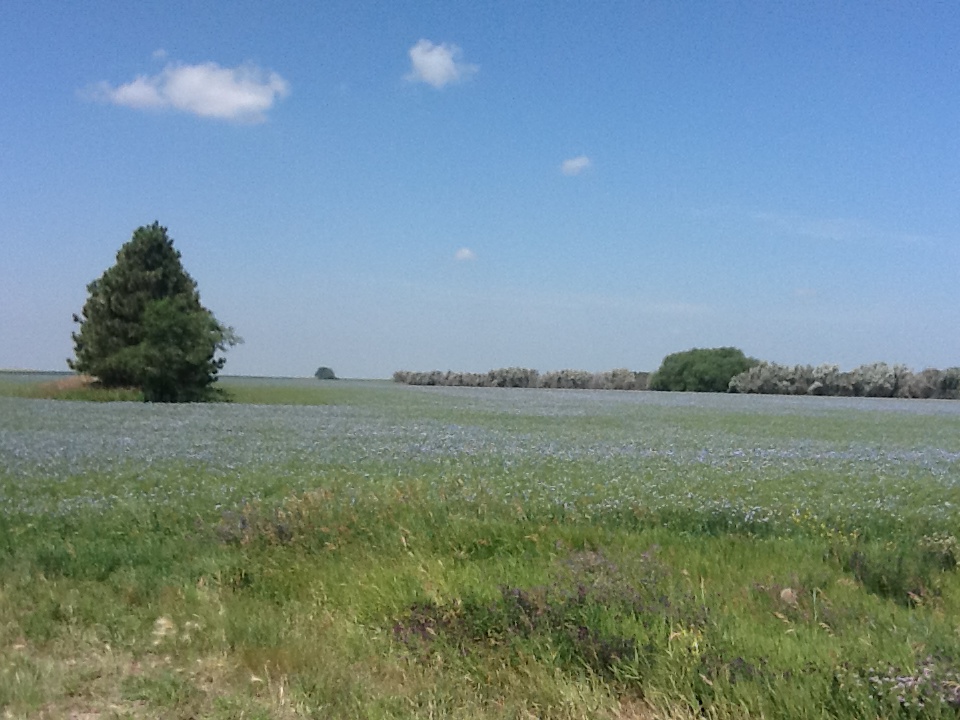
Pulled flax is laid on the field in swaths for dew retting. Rain, dew, sunlight and naturally occurring microorganisms act on the stems. Enzymes produced by microorganisms break down pectins involved in binding the bast fibres to surrounding tissue. Alliance material places the normal European field-retting season from July through September and describes turning the straw during the process to improve uniformity.
There is no useful universal instruction such as “ret flax for exactly 21 days.” The extent of retting is checked on individual plots through sampling, and changing weather alters the rate at which the stem breaks down. Alliance technical material specifically describes plot sampling as part of controlling retting.
The 2026 European crop gives a practical example. Alliance reported unusually low rainfall across flax-growing regions and warned that the lack of water could hinder retting and later scutching performance. The crop was already lying in the field; the limiting variable was the weather acting on the straw.
Scutching Separates the Stem into Useful Fractions
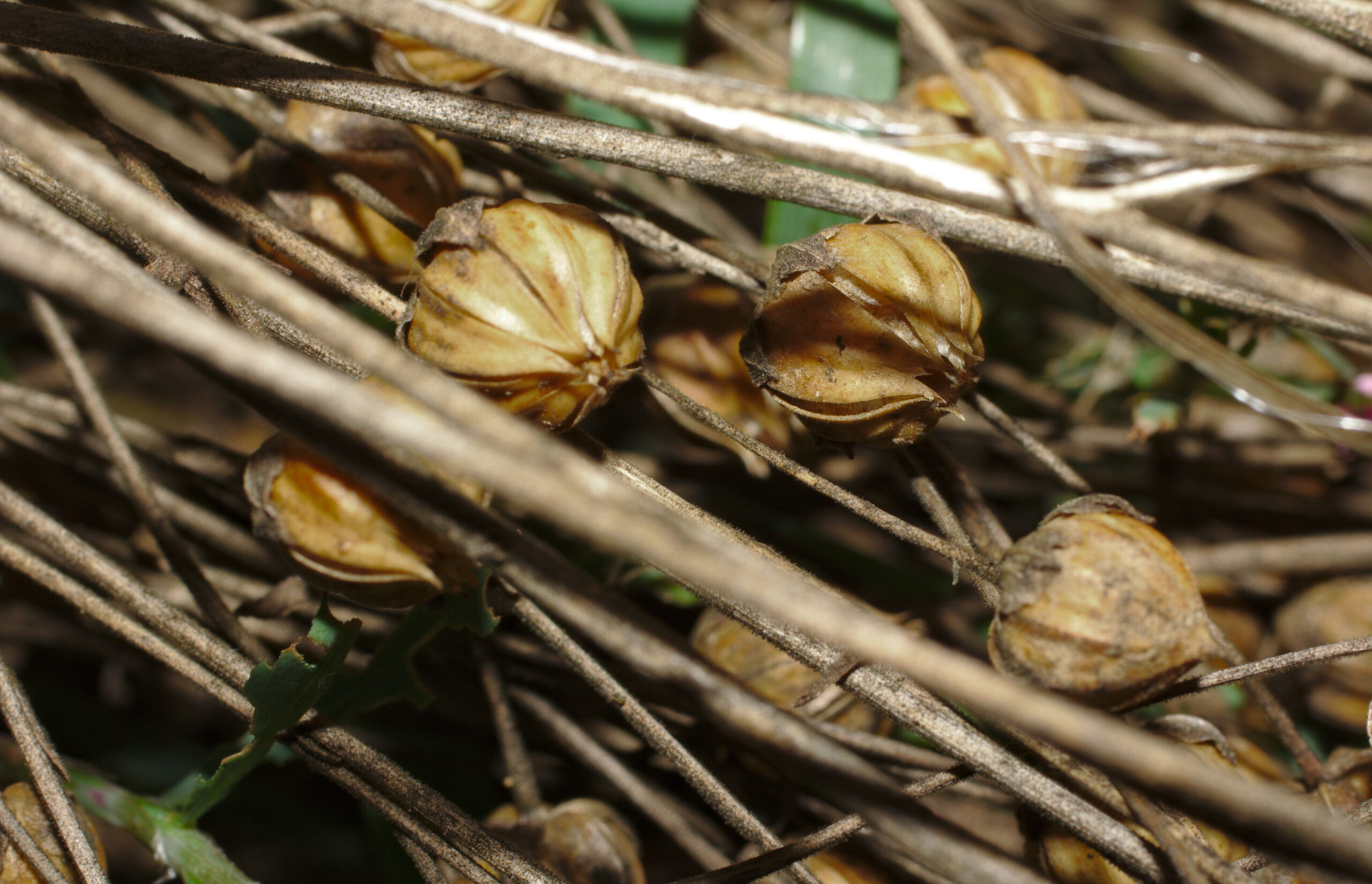
Once retted straw is collected, scutching breaks the stem and mechanically separates its components. Alliance defines this operation as separating long fibres, short fibres, shives and seeds through crushing and threshing.
Long fibre intended for finer textile yarn receives further preparation. Hackling draws it through combing equipment, removes short material and progressively aligns the fibre bundles.
The long prepared fibre is commonly called line flax. Short fibre produced during scutching and hackling becomes tow.
Those two streams already behave differently before yarn is spun.
Line Flax Can Become Much Finer Yarn Than Scutched Tow
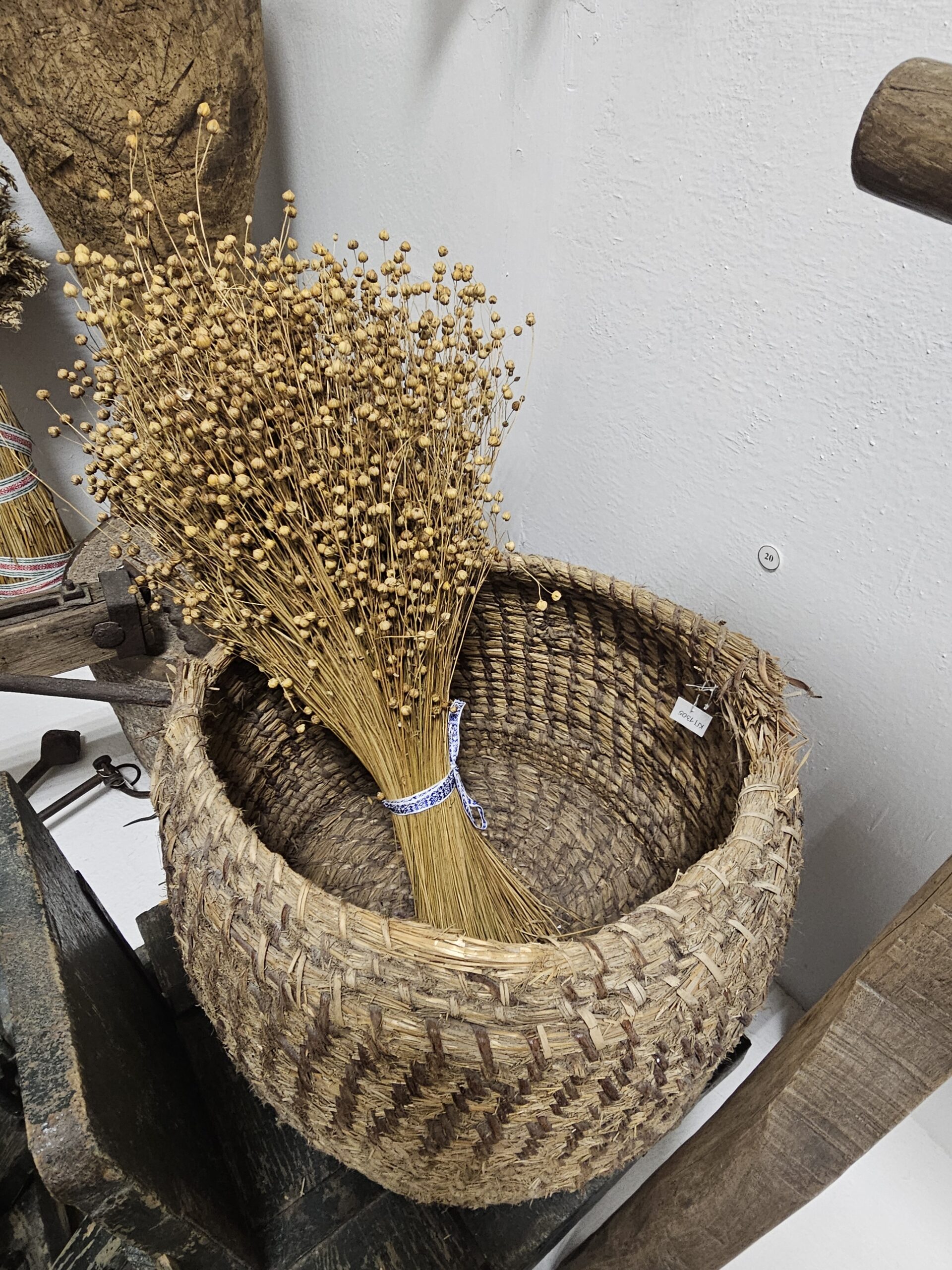
Alliance process mapping places long flax in wet-spinning routes producing approximately Nm 6 to Nm 50+. It lists dry and semi-wet spinning around Nm 1 to Nm 9.5, with short fibre also entering cotton-type and wool-type spinning systems for blends.
Actual yarn listings make the difference more concrete. Safilin long-fibre wet-spun yarn is currently offered in counts including Nm 6, 10, 13.5, 16.5, 20, 24, 26, 33, 36, 39, 45 and 50.
Its scutched tow dry-spun yarn is offered from Nm 1.8 to Nm 7.25 and is described by the supplier as slubbed.
The larger surface irregularities seen in rustic linen can therefore originate in the fibre stream and spinning route long before finishing gives the fabric its final hand.
Nm Tells You How Much Yarn Length Is in One Kilogram
The Nm, or metric count, is an indirect yarn-count system. Alliance defines it as the number of kilometres of yarn per kilogram.
An Nm 20 yarn contains a nominal 20 km of yarn per kilogram. Its equivalent linear density is about 50 tex, using:
tex = 1000 ÷ Nm
An Nm 50 yarn is about 20 tex.
The higher Nm value therefore identifies the finer yarn.
Fabric weight cannot be calculated from Nm alone. The loom also determines the number of warp and weft yarns occupying the finished area.
A Real Linen Construction Shows What GSM Leaves Out
A current 100% linen plain-weave listing from ZAN gives a finished fabric at about 165 GSM, 56 in / 142 cm wide, using 40s × 40s linen yarn. The supplier estimates 58–64 ends per inch (EPI) and 44–48 picks per inch (PPI).
Another pure linen construction from the same supplier is approximately 230 GSM with 25s × 25s yarn, again listing roughly 58–64 EPI and 44–48 PPI.
The increase in mass in those examples comes largely from a heavier yarn construction occupying a similar number of positions in the fabric.
An industrial specification matrix from Reuro shows the same relationship across another set of pure linens. Its published plain-weave lines include:
L14 × 14, 50 × 54, 150–155 GSM
L9 × 9, 41 × 42, 198 GSM
L5 × 5, 28 × 27, 265 GSM
The supplier uses its own construction notation in that table. The useful production point is visible in the complete specification: yarn information, thread setting and GSM need to travel together.
Linen Fabric Can Be Woven or Knitted
Plain weave is common because linen yarn works well in a regular warp-and-weft grid. Reuro's current pure-linen range also lists 2/1, 3/1 and 4/1 weaves plus dobby, across fabrics from about 110 to 265 GSM.
Twill shifts the positions of the crossings and creates diagonal ribs. Herringbone changes the direction of those diagonal lines. Dobby equipment allows smaller structural motifs.
Knitting changes the architecture completely. Alliance notes that knitted linen gains flexibility and is used for products including T-shirts, tops and sweatshirts.
A label that says 100% linen leaves the construction question open.
Slubs Are Part of the Yarn
A slub is a thicker section running along a yarn.
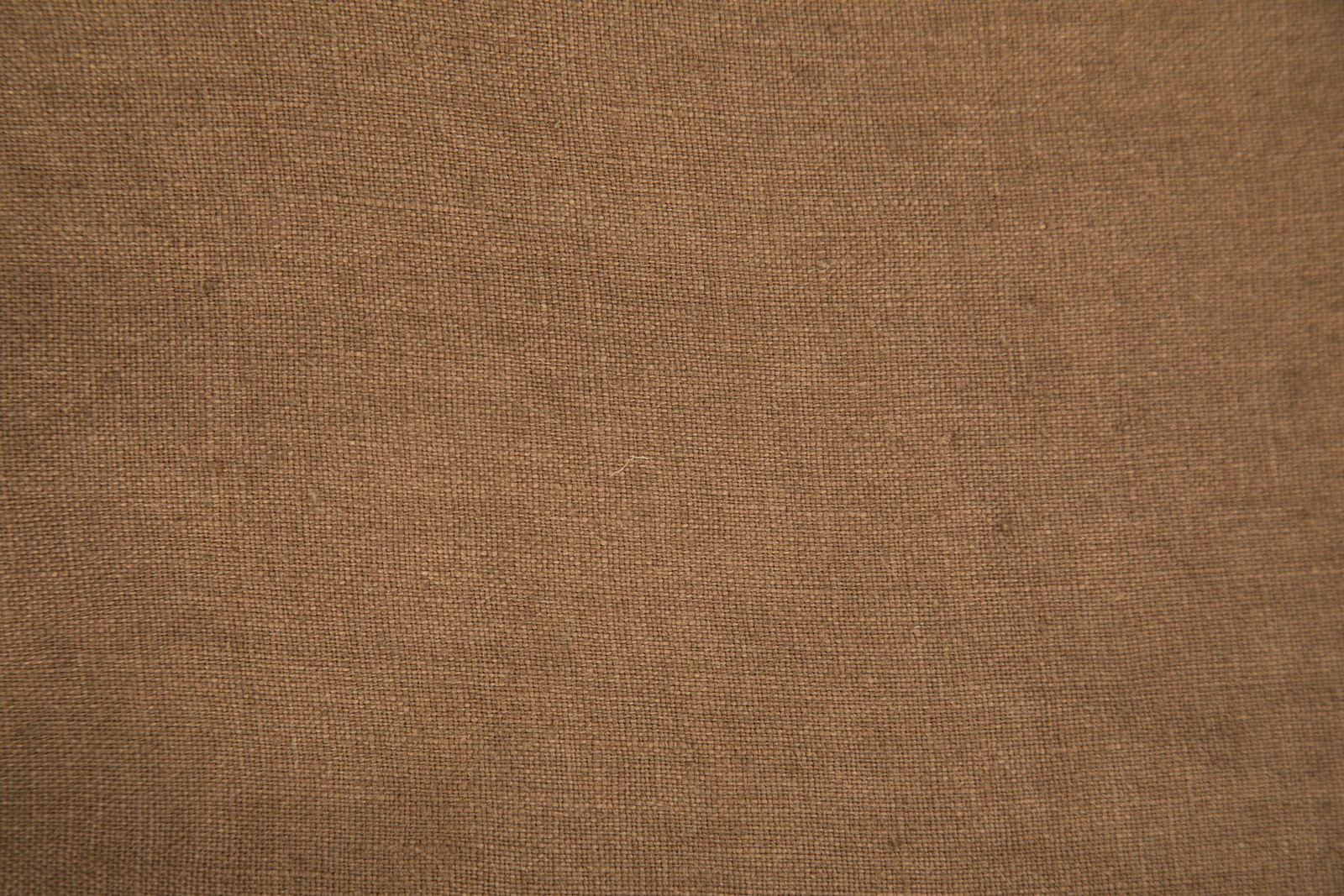
Merchant & Mills' Plainings 260 is a useful real-world example. It is 100% linen, 260 GSM and 145 cm wide, and the supplier states that its slubby appearance comes from a special tow yarn. The fabric is laundered and tumbled at the mill.
During inspection, a slub follows the path of the yarn. A missing pick appears as an absent weft insertion. A broken end interrupts a warp yarn. Holes, oil contamination and local loom damage have their own physical signatures.
A brand ordering a deliberately slubby linen needs an agreed appearance standard so normal yarn variation does not get recorded as random weaving damage during final inspection.
Linen's Crispness Starts with Flax Fibre
Flax has low extensibility. A reference dataset published through ScienceDirect lists 1.8% breaking elongation, moisture regain of 10% at 65% RH, and a flexural-rigidity value of 175 in the units used by that source.
Those properties help explain the dry, firm hand of new linen and the sharp folds that form during wear.
A trouser knee repeatedly pushes the cloth through a small radius. The fibre contributes very little stretch as the fold forms. The same material behaviour appears at elbows, the front hip and other areas that bend repeatedly.
Garment ease and panel shape decide where the cloth is forced to fold most often.
Moisture Regain Can Be Measured Directly
A 2023 study compared flax fibres produced through several retting routes. At 65% relative humidity, the reported hygroscopicity values were approximately 8.80% for water-retted flax, 8.94% for osmotically degummed flax and 9.44% for dew-retted flax.
A separate textile reference gives flax moisture regain at 10% at 65% RH.
The difference between those figures is useful. “Linen absorbs moisture” is a material statement. A precise percentage requires a defined fibre, conditioning atmosphere and test procedure.
When perspiration reaches a linen garment, liquid can enter the fibre and move through capillary spaces in the yarn. Evaporation takes place from the fabric surface after that moisture has spread.
Airflow Through Linen Comes from the Fabric Construction
Air permeability is measured by forcing air through a defined fabric area under a specified pressure difference. Fibre content alone cannot supply the result.
A 2018 experiment used 100% linen warp yarn at 50 tex and linen weft yarns at 104/1, 104/2 and 104/3 tex, with linen weft densities of 8, 10 and 12 picks/cm. The researchers found statistically significant effects from weft density and yarn structure. Among the linen samples, the paper reports an air-permeability high of 1694.22 mm/s at 8 picks/cm and a low value of 833.89 mm/s within the tested linen constructions.
Another published fabric dataset measured 516 L/m²/s for its 100% linen specimen and 8.05% hygroscopicity at 65% RH. Those numbers belong to that fabric and its test conditions.
This is why a supplier's word breathable cannot be converted into one standard air-permeability number for all linen.
Flax Retains High Strength in Water
The same ScienceDirect property dataset reports flax wet breaking tenacity about 25–30% higher than its dry value.
That fibre behaviour is relevant to repeated laundering. The fabric is exposed to water, bending, rubbing and mechanical agitation during the same cycle.
Finished-cloth performance still includes yarn twist, thread density, weave, finishing history and existing damage. A fibre-strength figure should stay identified as fibre data.
130, 200 and 260 GSM Are Real Apparel Linen Weights
Merchant & Mills currently sells North Star 130, a 130 GSM, 143 cm wide, 100% linen described as handkerchief linen for tops, blouses and gathered dresses. It is already laundered and tumbled at the mill.
Its First Light fabric weighs 200 GSM, is 280 cm wide, uses plain weave and is also supplied laundered and tumbled. The supplier lists dresses, skirts, tops, loose trousers, bedding and curtains among its uses.
At 260 GSM, Plainings moves into trousers, light jackets and light upholstery. The same product carries a published 15,000-rub Martindale upholstery result.
These are product specifications, so the numbers do not define mandatory linen categories. They show what real commercial mills are currently selling at three different weight levels.
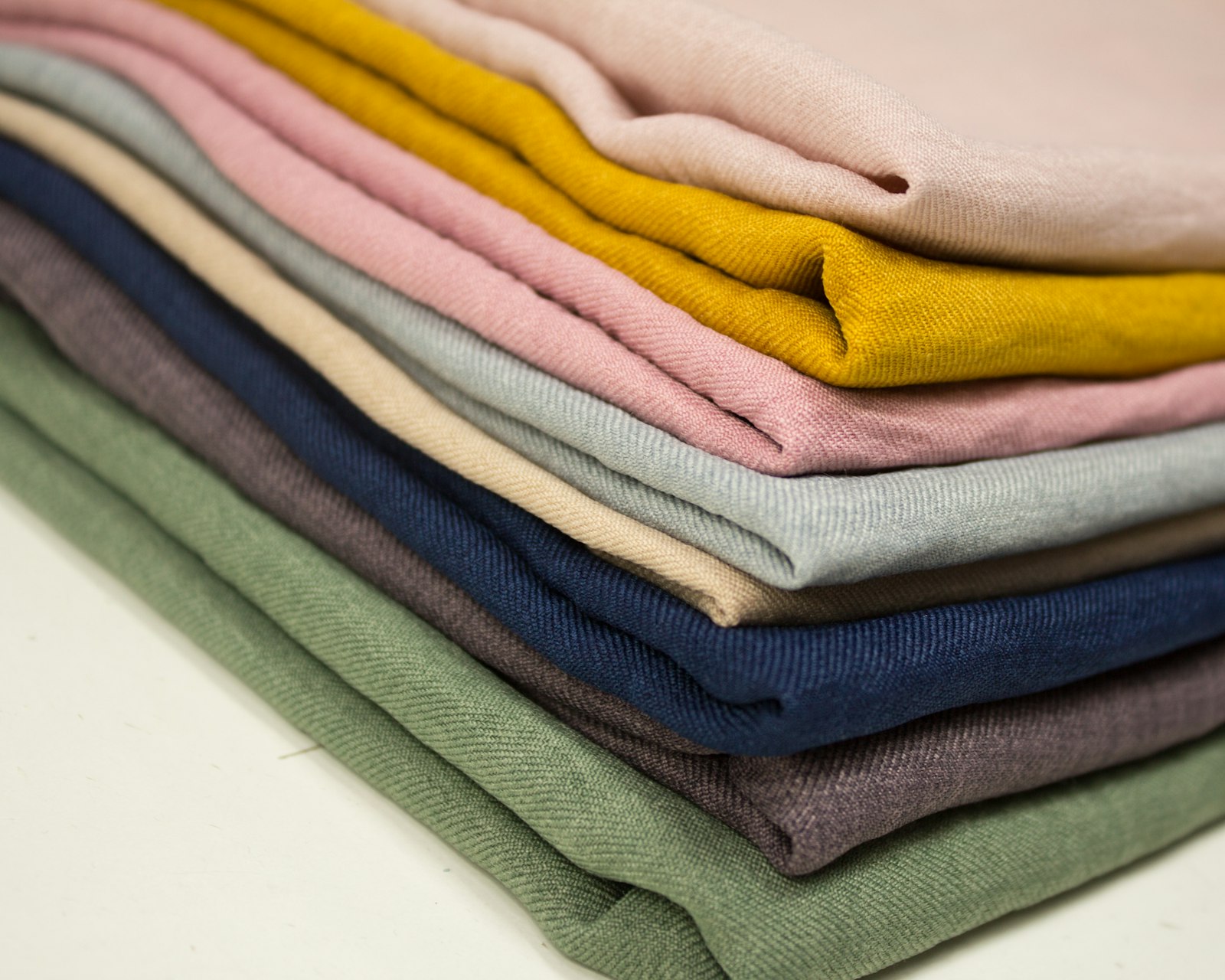
Shrinkage Needs Warp and Weft Results
A percentage without a direction gives incomplete production information.
Alhambra's Bulgur 07 is a 100% linen, 120 GSM, 300 cm wide fabric. Its published wet-wash-and-iron results are −1.5% in warp and −1.0% in weft, with a maximum wash temperature of 40°C.
A much heavier furnishing linen can behave differently. The Lino Coex technical sheet specifies 490 GSM ±15, 140 cm width and 30°C water shrinkage of 2–3% in warp and 1–2% in weft.
Växbo Lin gives a production example from unwashed shirting: its 100% linen cloth is about 160 GSM, roughly 160 cm wide before washing and 150 cm after washing, with stated shrinkage of approximately 3–7%. It recommends a 60°C prewash before garment cutting.
If a measured 500 mm warp interval becomes 485 mm, the calculation is:
(485 − 500) ÷ 500 × 100 = −3%
A 750 mm garment dimension exposed to that same percentage represents 22.5 mm of movement.
Seam Slippage Can Be Tested on Linen
Open or mobile woven structures can move around a seam under transverse load. The resulting separation of yarns is called seam slippage.
A 2022 linen study used two woven samples with the same reported warp and weft yarn counts and different fabric densities. Sample 1 was 175 GSM, 61 EPI and 53 PPI. Sample 2 was 200 GSM, 80 EPI and 74 PPI.
The researchers changed seam type, stitch type and stitch density, testing 10, 12 and 14 stitches per inch. Their seam-slippage procedure used a 60 N maximum force, 50 mm/min test speed, and standard atmospheric conditions of 22 ±2°C and 65 ±2% RH. The higher-density sample generally produced better seam performance in this experiment.
ISO 13936-2 is the current confirmed international fixed-load method for determining resistance of woven-fabric yarn systems to slippage at a sewn seam.
This gives a factory something more useful than a universal instruction such as “linen needs 12 SPI.” The actual fabric, seam construction and sewing settings can be tested together.
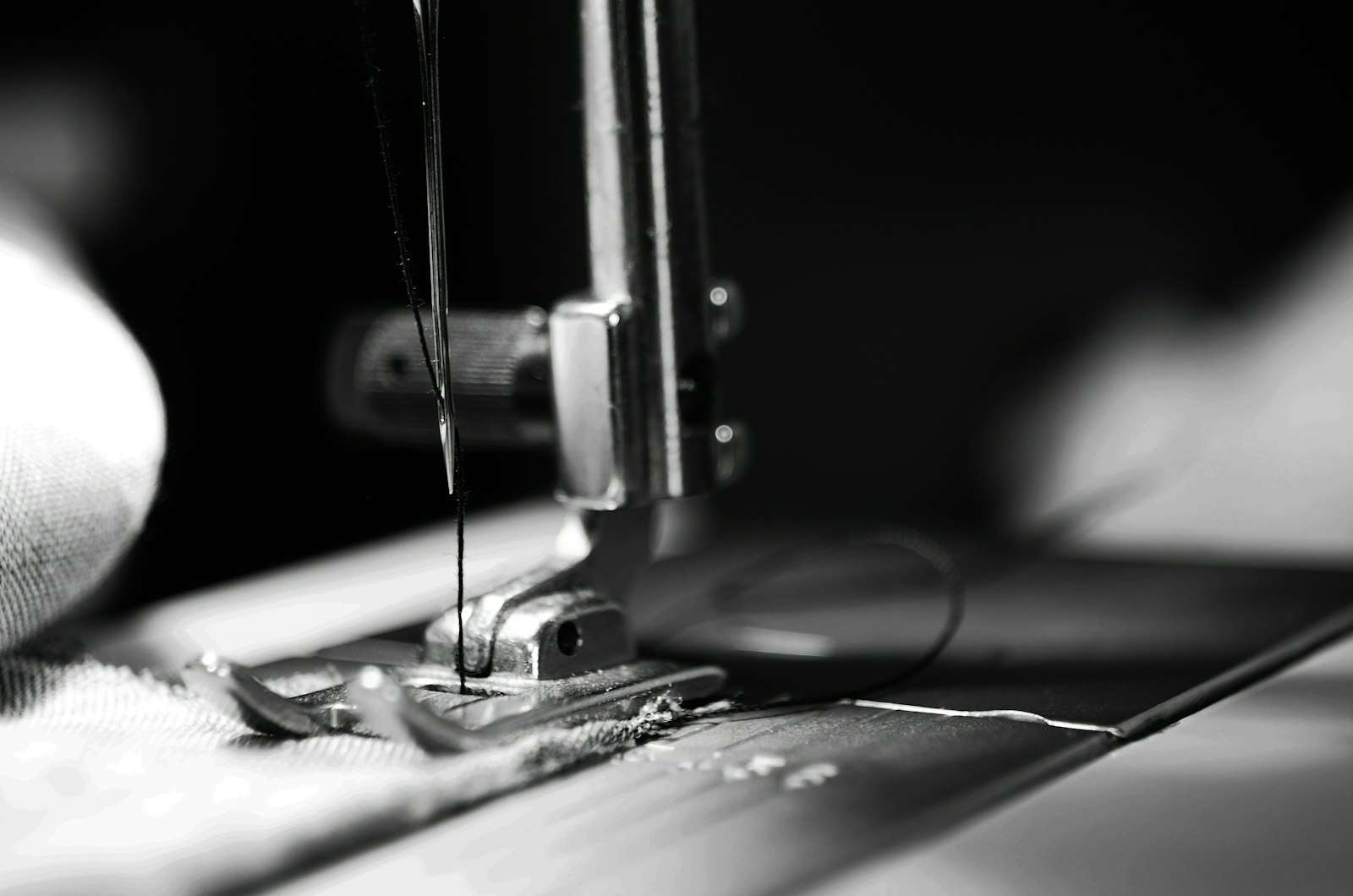
Laundering and Enzyme Finishing Change the Surface Before Cutting
Merchant & Mills' First Light reaches the buyer already laundered and tumbled at the mill for softness. Its listed care route is a 30°C wash, no tumble drying, shake out and dry flat.
The company's Calamine 185 adds another operation. It is 185 GSM, 143 cm wide and 100% linen, with an enzyme wash that the supplier says gives a slightly distressed finish.
Enzymes can produce measurable physical changes. A study of cellulase treatment on linen and other cellulose fabrics found removal of surface fibrils after six hours of treatment; continued hydrolysis increased weight loss and eventually affected mechanical properties.
Another study on a 169 GSM plain-woven linen used pectinase and lipase for bioscouring. Increasing enzyme concentration increased weight loss and improved wettability; subsequent bleaching produced comparable wettability to conventional alkaline treatment with lower fibre damage reported for the enzymatic route.
“Enzyme washed” therefore describes a processing history that can alter surface material, wettability, friction and hand. The enzyme system, concentration, time and temperature determine the actual result.
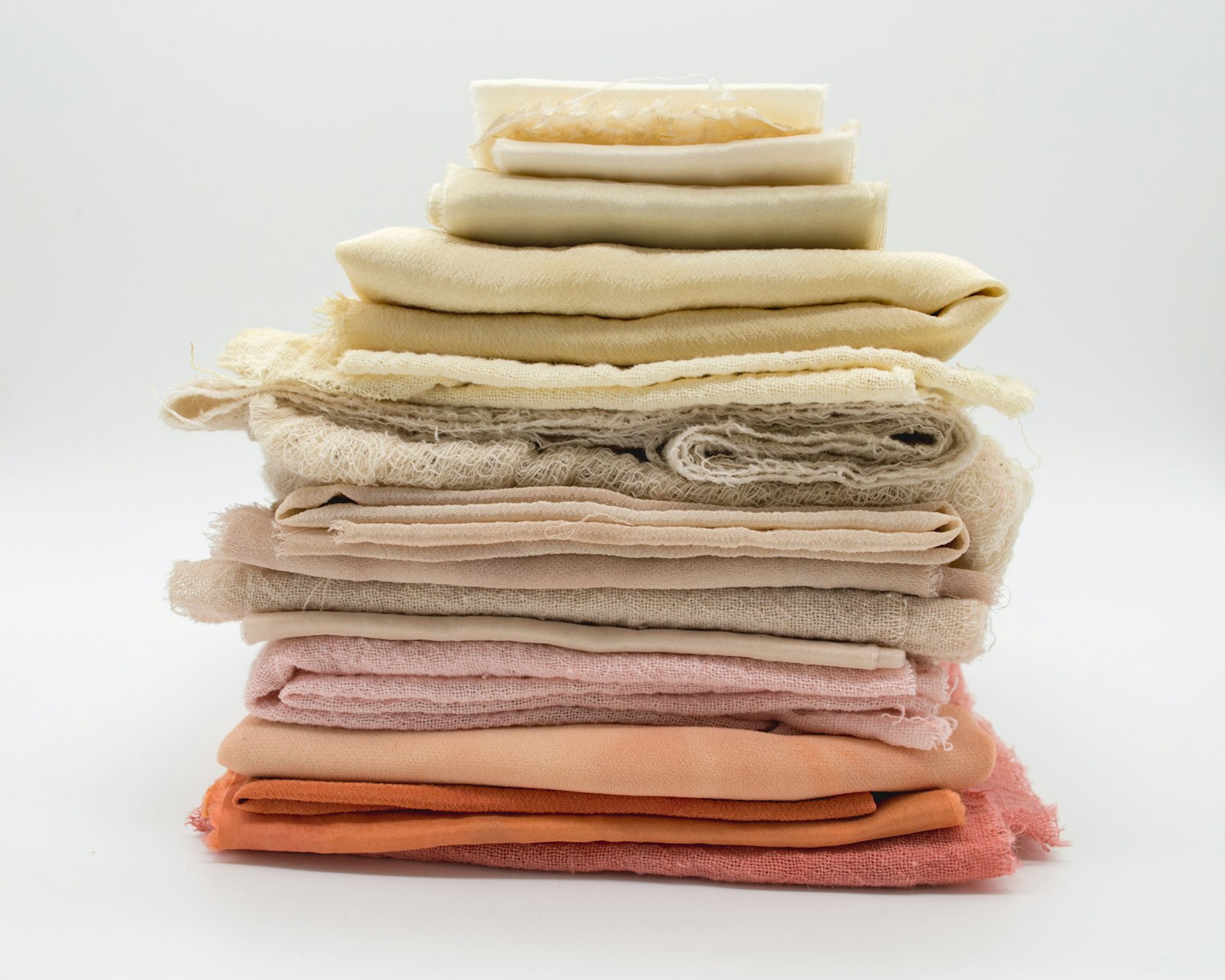
Linen-Viscose Needs Its Own Finished-Fabric Specification
A current commercial linen-viscose woven fabric from Endless Fabrics is 55% linen / 45% viscose at 165 GSM. The listing identifies it as woven with no stretch and attributes additional drape to the viscose component.
A mill-scale Reuro specification for the same 55/45 blend shows how much construction can vary inside one fibre ratio. Its published examples include 150 GSM, 185–190 GSM and 280 GSM constructions, with different yarn and thread-density combinations.
The percentage on the fibre label cannot supply the GSM or density.
Linen-Cotton Also Covers Very Different Cloths
Xiang Kuan publishes a 64% linen / 36% cotton plain weave at 116 GSM, using a listed 32 × 17 yarn count and 57/58 in width. Another line in the same specification is 55% linen / 45% cotton, 122 GSM, also listed at 32 × 17.
A separate retail fabric from KBM uses 55% linen / 45% cotton, weighs 237 GSM and is 60 in / 152.4 cm wide.
The same broad blend family can therefore produce a light summer cloth or a much more substantial fabric depending on yarn, density and finishing.
Linen-Polyester Can Still Be a Medium-Weight Woven Linen Blend
The Linen Lab currently lists a pre-washed woven fabric containing 88% linen / 12% polyester, weighing 180 GSM and measuring 42 in / 106 cm wide. The supplier describes it as slightly crisp after prewashing.
A Japanese deadstock example sold by Stonemountain & Daughter contains 55% linen / 45% polyester, weighs 190 GSM and is 56 in wide.
Polyester percentage alone cannot be used to predict hand, drape or dimensional stability. Those claims need measurements from the finished article.
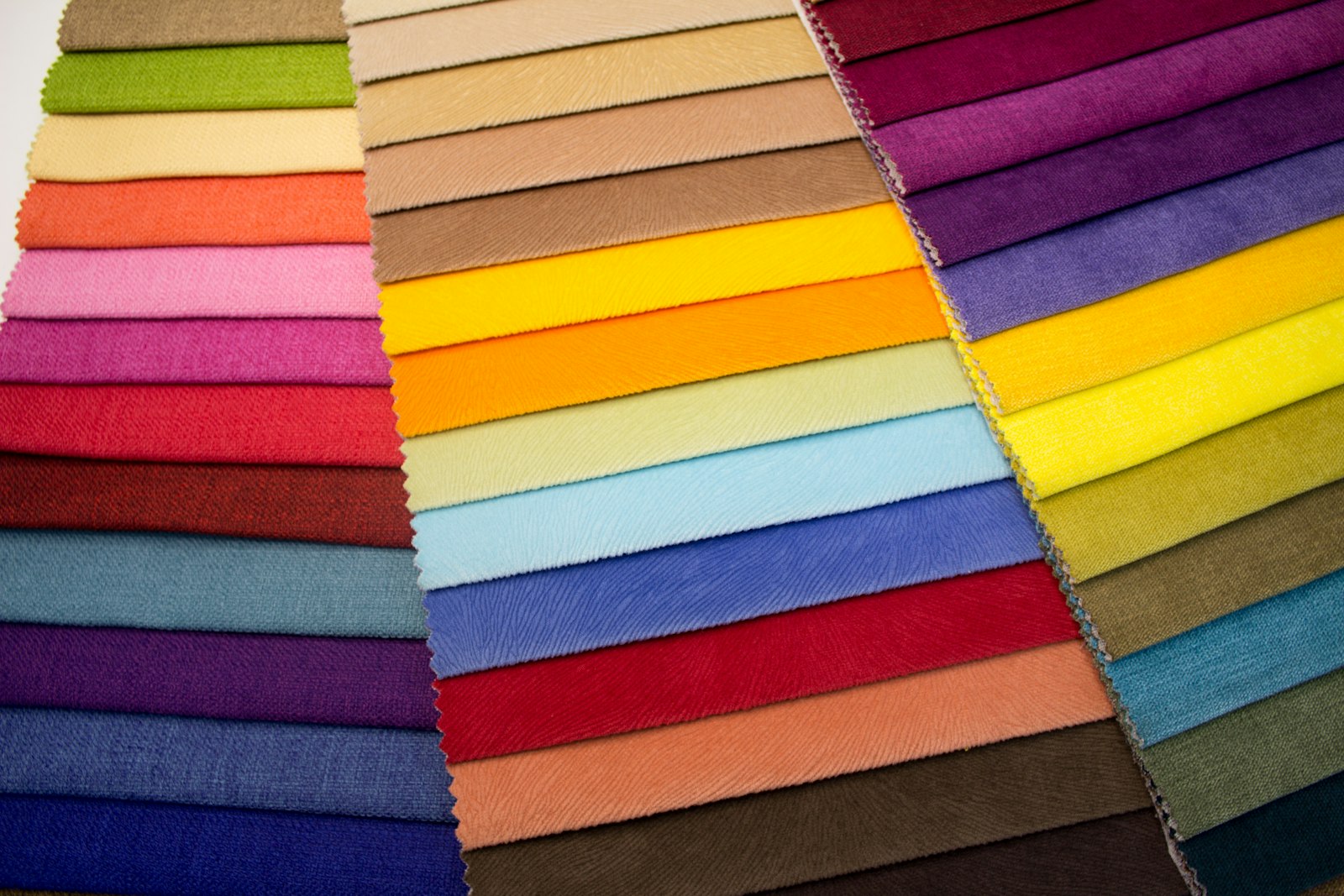
What Should Be on a Linen Fabric Specification?
For garment production, a useful linen specification identifies the material that will actually reach the cutting table:
- fibre composition and blend ratio;
- finished GSM;
- full width and usable width;
- weave or knit construction;
- warp and weft yarn counts where available;
- EPI and PPI, or metric thread density;
- finishing state, such as loomstate, laundered, tumbled, softened or enzyme washed;
- dimensional change in warp and weft under the agreed care procedure;
- colourfastness results appropriate to the product;
- seam-slippage or seam-strength results when the construction is mobile;
- dye-lot identification;
- the visual tolerance for slubs and other natural yarn variation.
A linen roll can satisfy the fibre-content label and still miss a garment specification through width, density, residual shrinkage, shade or finishing differences.
Washing Continues to Alter Linen After Sewing
Merchant & Mills specifies 30°C washing and no tumble drying for several of its laundered apparel linens, including North Star 130, First Light and Plainings 260.
Växbo's unwashed shirting starts from another production state: the supplier recommends shrinking it at 60°C before cutting, then using 40°C for later care.
The development sample needs to enter the same washing route planned for the finished garment. After laundering, measurements can be taken again at body length, sleeve length, trouser inseam, waist and other controlled points. Seam puckering, twisting, shade movement and surface change become visible on the same sample.