What Is Fast Fashion?
FashionMe · Fashion Industry
What Is Fast Fashion?
Fast fashion is a clothing business built around frequent new styles, low prices and large sales volumes. Retailers follow current trends and bring out products throughout the year. Zara and H&M are familiar examples. SHEIN uses small initial orders and shopping data to decide which styles to make again.
Low prices make it possible to buy an outfit with a limited budget. For the retailer, a steady flow of new clothes creates opportunities for another sale to the same shopper.
How Fast Fashion Developed
H&M opened in 1947 as Hennes, a womenswear shop in Västerås, Sweden. Zara’s first shop opened in 1975 in A Coruña, Spain. Between 1988 and 1990, Zara expanded into Portugal, New York and Paris.
Zara’s parent company, Inditex, describes using information from customers to adjust designs and orders during the selling season. Sales from the current range help buyers decide what to stock next. A style selling strongly can receive another order, including a different mix of sizes and colors based on purchases so far. Buyers can also change the next selection as new trends appear.
H&M began selling online in Sweden in 1998. A shopper could now order without visiting a branch, and retailers could see which products people browsed on their websites. Social media brought more places for a look to spread.
McKinsey’s account of the model’s development describes retailers using demand information in product design, working with extensive supplier networks and recruiting customers through influencers. Shopping apps added rewards for activities such as leaving reviews and watching live streams.
What Makes a Brand Fast Fashion?
A fast-fashion range changes repeatedly during a season. Some of the clearest signs are visible in the shop:
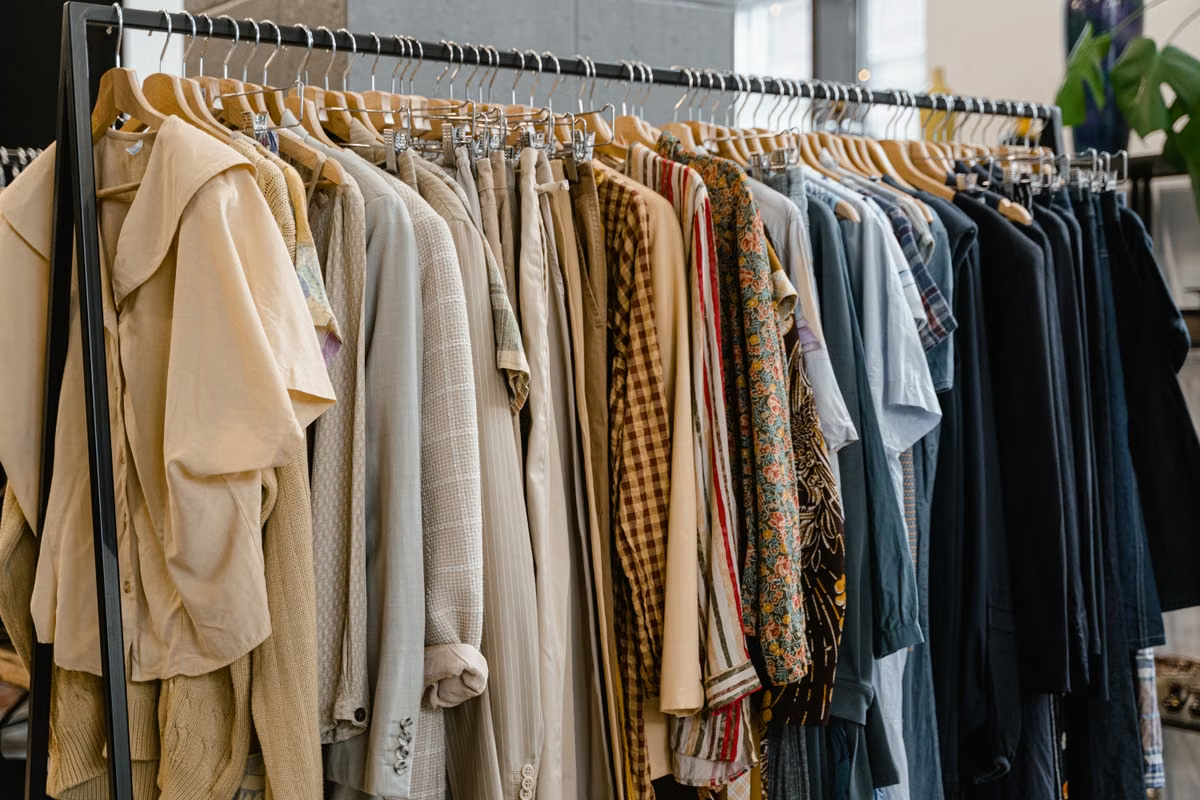
- New releases arrive between seasonal collections. A retailer keeps adding clothes to its new-arrivals section, giving regular visitors more products to browse.
- Designs follow looks gaining attention on social media, on catwalks or through celebrities. Good On You’s definition emphasizes this quick response to trends.
- Low prices and frequent promotions make repeat purchases affordable. In an app, a discount can appear during browsing or arrive in a notification.
Fast-fashion ranges also contain plain cotton T-shirts and jeans that are reordered all year. These continuing basics share the shop floor with trend-led clothes that may appear for a single season.
The new-arrivals page from several dates can show how quickly the selection changes. A company’s annual report may give production figures as well.
Next-day delivery can be arranged for stock that has already spent months in a warehouse. That delivery time starts when the shopper places an order.
How Clothes Reach the Shop So Quickly
H&M says it plans capacity with strategic suppliers three to five years ahead. Its purchasing policy describes sharing those plans so factories can prepare for demand.
For a dress using an existing pattern, the factory may already have checked the fit on a sample. A new print on the same fabric can leave the cutting pattern and sewing instructions usable. Once the fabric is available and the sample details are settled, cutting can begin.
A mill developing new fabric may need to make a sample and check its color before weaving or knitting the full quantity. The sewing factory has to receive that fabric before making the garments. A repeat order also needs a material check: obtaining another matching lot can add time if the original fabric has sold out.
| Timing quoted | Work covered |
|---|---|
| Design idea to product on sale | Development, fabric preparation, sampling, production and delivery. Some of these tasks can overlap. |
| Factory production lead time | The work in the factory’s quote. The starting date may assume that fabric is ready and the sample has been confirmed. |
| Restock time | Getting an existing item back on sale through a warehouse transfer or a new production order. |
| Daily or weekly new arrivals | The release schedule. Designs developed earlier can be put online on different days. |
Why Fast Fashion Is Cheap
In a hypothetical order, a $300 pattern-and-sample bill adds $3 per garment when 100 pieces are made. Spread that bill across 1,000 pieces and it contributes $0.30 each.
Fabric, sewing, packaging and delivery have their own charges. Several designs can use one fabric, allowing their material requirements to be bought together. Construction affects the sewing work: adding a lining creates another set of pieces to cut and assemble.
H&M’s pricing method separates materials, labor and operations. Its labor calculation includes the time needed to make the garment, production efficiency and wages.
The price on the shop tag also pays for running the retail business. Rent, advertising, payment processing and the cost of handling returns can all sit outside the factory quote. A retailer placing an order for thousands of garments commits to that stock before knowing how many customers will keep a purchase.
Stock remaining at the end of its selling period may go on sale. For an order bought at a fixed factory price, a later retail discount leaves the agreed purchase cost in place. That cost takes up a larger share of the discounted selling price.
How the Clothes Hold Up
Six of the ten best-performing T-shirts in a University of Leeds and WRAP study cost less than £15. The researchers tested 47 T-shirts through 50 cycles of a 30°C wash followed by tumble drying, checking shrinkage, fading, pilling and appearance. Their results, reported in 2025, found price to be an unreliable guide to durability in that sample.
For an individual item, a review written after repeated washing can describe changes that a delivery-day review misses. Useful details include a neckline stretching, side seams twisting or pilling appearing on the surface. The care instructions give the conditions the maker expects the garment to withstand.
What Ultra-Fast Fashion Changes
SHEIN says it starts with 100–200 items per style in its 2024 Sustainability and Social Impact Report. Those garments are made before customers buy them. Purchases help determine which products receive another order, and suppliers can access demand and inventory information through its digital systems.
Ultra-fast fashion uses this close connection between online sales and suppliers to speed up repeated launches. McKinsey identifies large supplier networks and product design informed by demand as features of the model.
SHEIN uses “on-demand” to describe adjusting production as demand becomes visible. A maker selling made-to-order garments starts production after an individual customer places an order. Fabric and components may already be available.
In a hypothetical launch of 500 styles at 100 pieces each, 50,000 garments are produced. If 60 styles each receive one further order for 1,000 pieces, another 60,000 garments are added. That launch and its reorders produce 110,000 garments.
A sweatshirt design offered in two colors and five sizes can have ten stock-keeping units, or SKUs. Each SKU identifies a variant such as blue, size medium, as explained in Shopify’s inventory guidance. Ten pieces of each variant would produce 100 sweatshirts, recorded under ten SKUs for that single design.
What Happens After the First Sale
A retailer can place a repeat order for a dress before the returns from its first batch have arrived. By the time warehouse staff inspect those returns and make them available for sale, the next batch may already be on its way.
The European Environment Agency’s 2024 review of returned and unsold textiles estimated that around 20% of clothing bought online in Europe is returned. Processing can take weeks, shortening the time available to resell seasonal and fast-fashion items at their original price. The EEA reports that most returned and unsold textiles are resold or sold through outlets.
A dress that photographs well may attract orders and then come back because of its fit. Its early sales count includes purchases that will later be refunded. Recording returns against the style and size shows which purchases were kept and whether a particular size comes back more often.
Returned pieces also add back to the stock in each size and color. If demand has faded, those garments may join a sale. Selling fifty dresses at a discount establishes demand at that reduced price. A full-price reorder based on those sales assumes customers will buy again at the higher price.
What Fast Fashion Means for Garment Workers
A pocket change after cutting can require new fabric panels. Cutting and sewing those pieces adds work to the order, which still has its original delivery date. The extra material and labor also have a cost. Keeping the original price leaves that bill with the factory.
In a survey conducted in 2016, 59% of suppliers reported additional overtime resulting from insufficient lead times. The ILO and Ethical Trading Initiatives surveyed 1,454 suppliers across 87 countries and several sectors. Within the textile and clothing group, 52% had accepted at least some orders below production cost during the preceding year. The report published in 2017 recorded suppliers accepting losses to secure future business.
The US Department of Labor’s 2022 Southern California garment survey, published in 2023, examined more than 50 contractors and manufacturers. Time and pricing studies found sewing fees were, on average, $2.75 per garment below the amount needed to meet federal wage standards. Investigators found one contractor paying workers as little as $1.58 an hour.
Factory safety drew international scrutiny after the Rana Plaza building collapsed in Bangladesh on April 24, 2013, killing more than 1,100 people. An ILO account of the disaster identifies failures to enforce building regulations and workers having too little say over their safety among the problems. Subsequent work included inspections of thousands of factories for structural, electrical and fire hazards. The most dangerous sites closed, and other factories underwent repairs.
How Fast Fashion Affects the Environment
Before a garment reaches a sewing line, its yarn has been spun and its fabric woven or knitted, dyed and finished. These stages consume energy and materials for every batch, including pieces that stay unsold. Supplier energy sources and the transport used for orders also affect emissions.
Conventional polyester begins with fossil-based raw materials. Cotton uses farmland and can need irrigation. Producing the clothing, footwear and household textiles bought by EU households in 2022 required an estimated 5.3 billion cubic meters of surface and groundwater, much of it for cotton irrigation. Dyeing and finishing involve chemical use and wastewater treatment. EEA textile assessment
| Published figure | Year and coverage |
|---|---|
| 26.2 million tonnes of CO₂-equivalent emissions | SHEIN’s reported 2024 total from its operations and value chain, covering Scopes 1, 2 and 3. The scope includes apparel and other activities. SHEIN, page 47 |
| 159 million tonnes of CO₂-equivalent emissions | The value chain of all clothing, footwear and household textiles consumed in the EU in 2022, across retail business models. Around 70% occurred outside Europe. European Environment Agency |
| 4–9% of textile products destroyed before use | An estimate for products placed on the European market, published in the EEA’s 2024 review. European Environment Agency |
SHEIN changed its emissions accounting methodology and recalculated its 2023 total as 21.3 million tonnes. That revised figure is the base for the 23.1% increase it reported for 2024.
Synthetic garments can release plastic fibers during wear and washing. An EEA review of textile microplastics reports particularly high shedding during early washes. Frequent replacement brings more new clothing into those first washes. Fabric construction and treatment also affect the amount released; abrasion during manufacturing can contribute to fiber breakage.
Clothing Recycling
The EEA’s estimate of destruction before use includes finished garments shredded or dismantled for recycling before anyone wears them. Incinerated and discarded products are included as well.
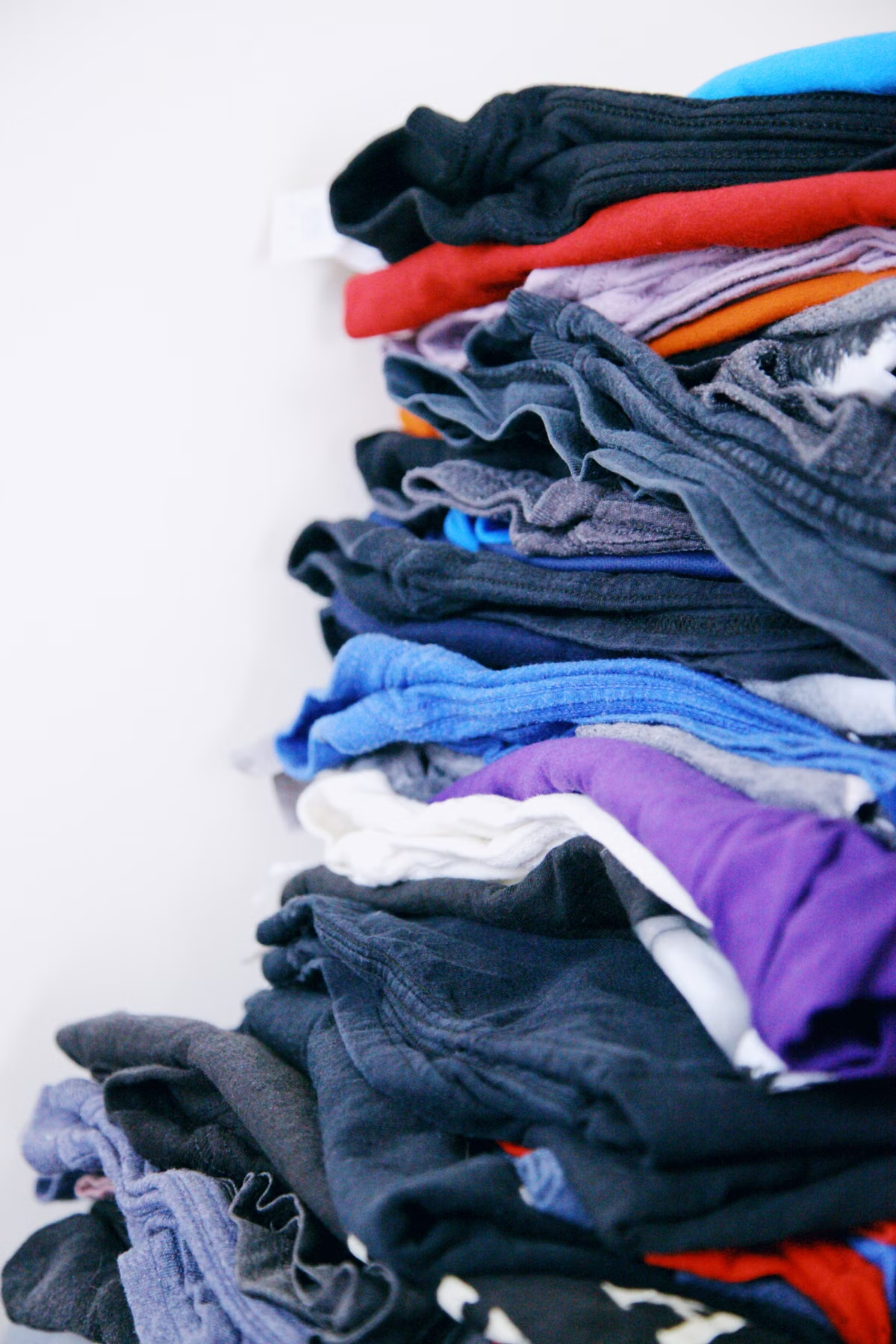
Once used clothes are collected, sorting determines which pieces can go to resale and where the rest will be sent. The EEA describes exported textiles moving through sorting, resale, recycling and disposal, sometimes across several countries. A take-back scheme can publish the collected weight together with the quantities resold, recovered as fiber and disposed of after sorting.
Textile Exchange’s Materials Market Report 2025, covering 2024 production, found that 98% of recycled polyester came from plastic bottles. Across the global fiber market, less than 1% came from recycled textiles, including manufacturing waste and used textile products.
A recycled-polyester sweatshirt may therefore contain material from bottles. Product details can identify the feedstock, such as bottles or discarded textiles. Recycled fibers can also be blended with newly produced material; the percentage specifies the recycled share in the named fabric or component.
What Slow Fashion Looks Like in Practice
A trouser fit kept in the range for several seasons can be revised using feedback from people who wear it. A stronger pocket attachment or a waistband adjustment can become part of the next order. The supplier can plan fabric purchases and staffing around an agreed schedule for that continuing style.
Slow fashion focuses on longer use of clothes and better working conditions for the people making them. Kate Fletcher’s 2007 essay connected those priorities with supplier relationships and the communities involved in making clothes.
| Part of the offer | Specific information |
|---|---|
| Durability | Which garments were tested, the wash or wear conditions and the changes measured. |
| Pay and working hours | The workers and factories covered, the reporting period, basic pay and the hours and pay recorded for overtime. |
| Repairs | Products and damage covered by the service, repair charges, shipping costs and the process for sending an item in. |