What Is Corduroy?
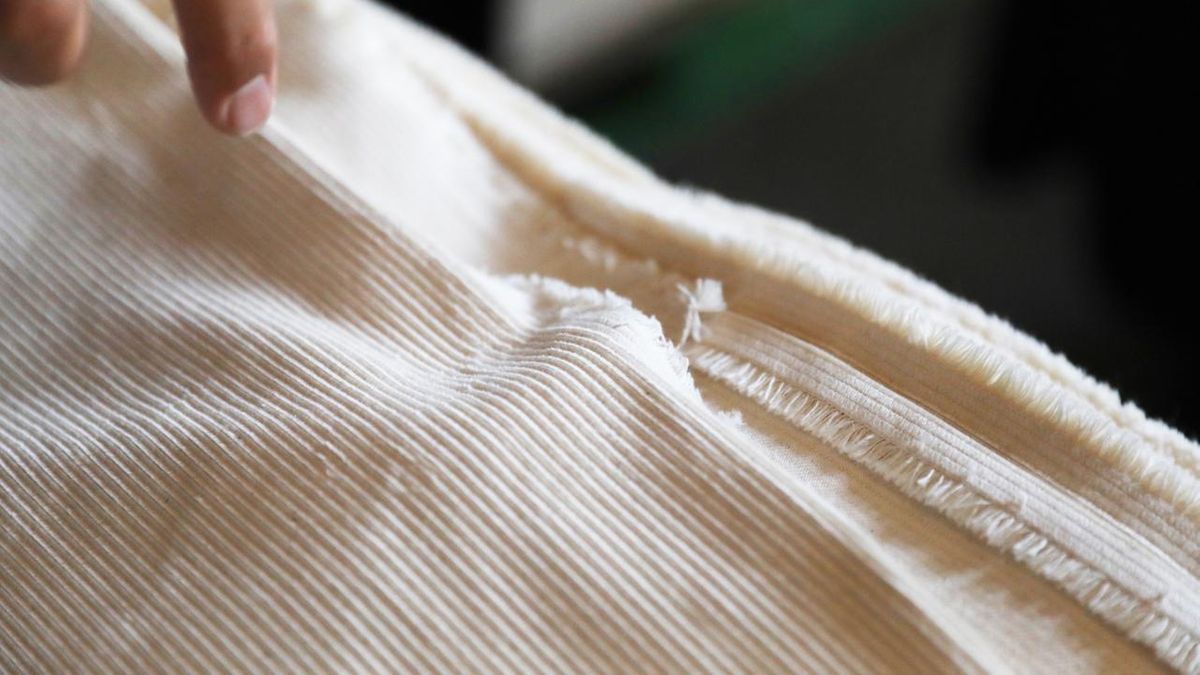
Corduroy is a woven cut-pile fabric with raised ribs running lengthwise across its face. Each raised rib is called a wale.
The ribs come from the way the cloth is woven and finished. A woven ground holds the fabric together. Extra filling yarns are introduced as floats in planned areas above that ground. After weaving, those floats are cut open. The loose yarn ends stand above the base and form pile. Brushing, cleaning and shearing develop that pile into the soft cords visible on finished fabric.
Corduroy is a filling-pile fabric, with constructions ranging from roughly 1 to 22 wales per inch.
Cotton remains common in trousers, jackets, skirts and overshirts. Stretch qualities frequently contain a small percentage of spandex or elastane. Polyester and blended constructions are also available. Corduroy describes the structure of the fabric, so the name alone gives no reliable information about fiber content, GSM, stretch or shrinkage.
What One Wale Is Made Of
Turn a corduroy swatch sideways and look across the ribs.
The surface rises, drops into a channel and rises again. The raised section is one wale.
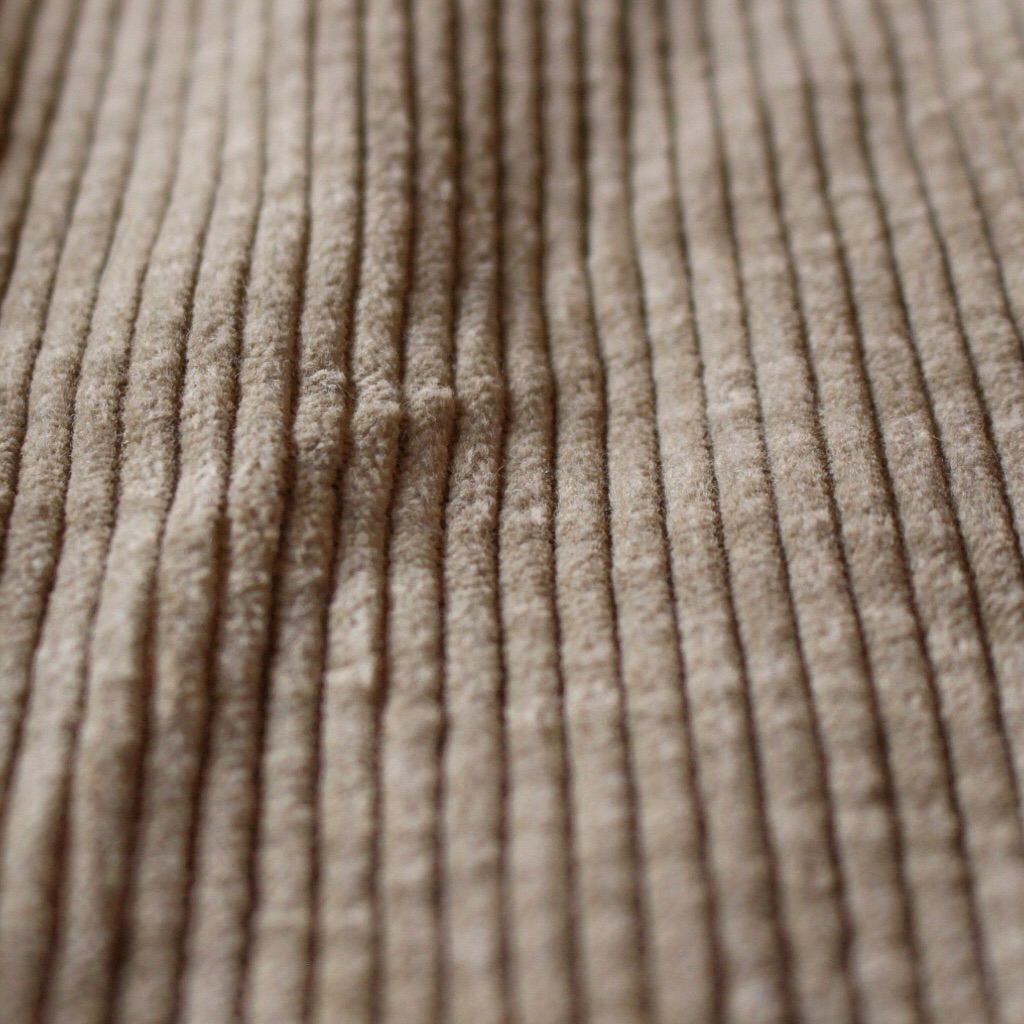
Inside that wale are cut pile yarns attached to the ground cloth. The attachment can be built in several ways.
A V-shaped pile uses a single binding point. Once the float is cut, each pile section has one interlacing holding it in the ground. This construction is relatively simple to cut and has a greater tendency for pile to pull out during use and care.
A W-shaped pile has two interlacings anchoring the pile yarn into the ground. Those extra attachment points give the cut pile more security and make the pile more durable in use.
Some broad corduroys use both structures inside the same wale. W-shaped binding can stabilize the outer areas of the cord, with V-shaped pile contributing height through the center. The result is a full, strongly defined rib.
That construction is buried under the finished pile, so a casual look at the face usually will not reveal which binding system was used.
The Pile Is Cut After the Fabric Leaves the Loom
Freshly woven corduroy has not yet developed the open fuzzy pile seen in a finished trouser or jacket.
The filling pile yarn is still present as floats.
During cutting, a specially shaped guide needle enters the cloth above the ground yarns and below the pile floats. A rotary knife runs through the guide and opens the floating yarn without cutting through the woven base.
The opened ends are then brushed and finished so they stand away from the ground cloth.
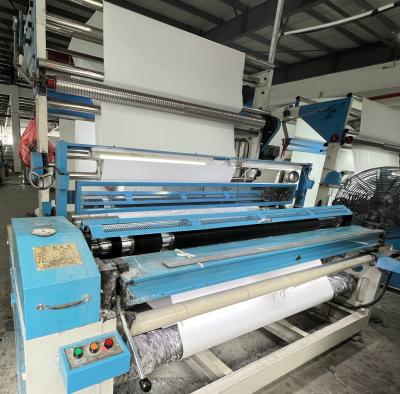
Broad corduroy gives the cutting equipment enough space to open a wale in one pass.
Fine corduroy places the cutting lines much closer together. In one fine-wale cutting method, alternating cords are opened on the first pass. The cloth travels through the cutting stage again so the remaining cords can be opened. The additional pass increases processing cost and introduces another chance for cutting faults.
A missed cut can leave a section of float closed. After brushing, that section may appear as a narrow smooth line running with the wale. Uneven cutting can also leave one portion of the rib lower than the surrounding pile. A knife or guide problem may repeat along many meters because the equipment continues following the same path through the cloth.
Wale Count Is a Physical Measurement
Lay a ruler across the ribs.
Count every raised cord inside one inch.
Eight cords gives 8 wale.
Fourteen gives 14 wale.
Twenty-one gives 21 wale.
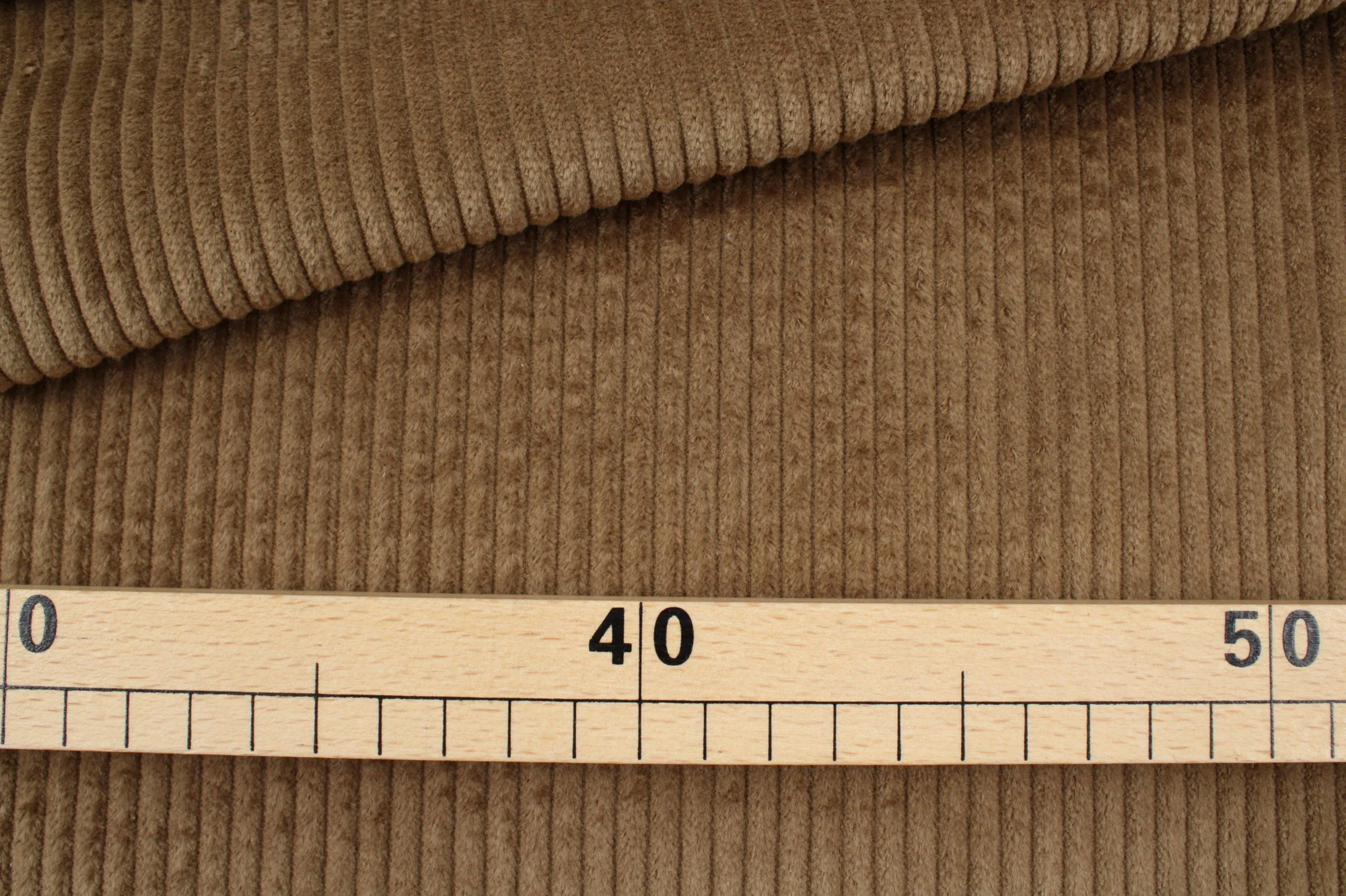
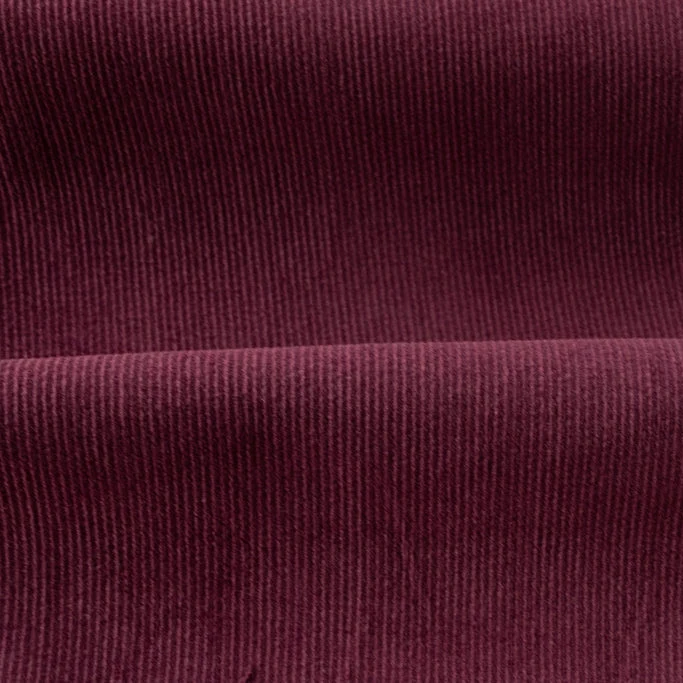
Fine-wale corduroy is commonly defined at 16 or more wales per inch. Wide-wale fabric generally falls below that range.
Very broad qualities create large visible cords with deep channels. A current commercial 2.5-wale cotton corduroy, for example, is sold at 345 GSM for jackets and trousers. (uniontextiles.com)
A current 6-wale cotton corduroy is listed at 325 GSM and 150 cm wide. (turningcraftwise.com)
Move into the middle of the range and the ribs become less visually dominant. Current 11-wale cotton fabrics can be found around 280 GSM, and heavier versions are sold around 330–335 GSM. (uniontextiles.com)
Fourteen-wale qualities currently appear around 275–305 GSM depending on construction and finish. (uniontextiles.com)
Fine corduroy can reach 21 wales per inch and still carry substantial body. One current stretch quality is 270 GSM. (dressew.com)
These examples show why names such as baby cord, pinwale, needlecord and wide wale are useful descriptions and poor substitutes for an actual wale count.
Wale Count Cannot Tell You the GSM
Rib frequency is only one part of the construction.
A current 8-wale stretch corduroy from Rick Rack Textiles is specified as:
98% cotton / 2% spandex
325 GSM
150 cm wide
20% stretch
(rickracktextiles.com)
A current 21-wale stretch corduroy from Dressew is:
98% cotton / 2% spandex
270 GSM
140 cm wide
approximately 30% width stretch
(dressew.com)
The wale count changes dramatically. The weight changes by 55 GSM. Both fabrics still use the same stated 98/2 fiber ratio.
GSM is affected by the amount of yarn actually contained in one square meter. Ground yarn size matters. Warp and filling density matter. Pile yarn adds more mass. Taller pile consumes additional yarn. Finishing can alter width, thickness and final weight.
This is also why two fabrics with the same 11-wale count can sit around 280 GSM and 330-plus GSM in current commercial listings. (uniontextiles.com)
When a factory receives a request for “11-wale cotton corduroy,” it still needs the target GSM.
Pile Height Is Another Separate Variable
The wale number tells you how frequently ribs repeat across the width.
It gives no direct finished measurement of how far the cut pile stands above the ground cloth.
Float geometry during weaving establishes the available pile length. Cutting opens that float. Brushing and shearing then affect the finished surface.
A fabric with closely cropped pile can feel firm and compact under the fingers. More pile volume creates a deeper surface. A dense rib feels full because many cut ends fill the top of the wale.
Two 12-wale samples can therefore have a similar visual spacing and very different hands.
Finished pile is also compressible. That makes a physical reference swatch valuable during sourcing. Where pile height needs to become a controlled production parameter, the measurement method and amount of pressure used during measurement should be agreed with the mill. A pile surface squeezed by a thickness gauge will give a different number from an optical measurement taken without compressing the fibers.
For bulk development, a practical specification can record a nominal pile height together with an approved swatch showing the expected density, softness and finished surface.
Brushing and Shearing Change the Finished Face
Opening the floats does not complete the surface.
Cut yarn ends can sit irregularly after the knives pass through the fabric.
Brushing helps separate and lift those fibers. The ribs become clearer and the pile opens.
Shearing removes fibers that project above the intended level. Industrial shearing uses a moving blade arrangement to trim the surface more evenly.
The difference can be felt on two fabrics that began from a similar woven construction. A heavily sheared pile feels cleaner and more uniform. A softer finish can leave more apparent surface volume.
This is one reason a fabric specification based only on loom construction will not fully describe the final corduroy.
Fiber Content Changes More Than the Label
A 100% cotton corduroy is common in traditional trousers, jackets, overshirts and workwear. Cotton pile develops a dry, soft hand and responds strongly to washing and mechanical finishing.
Stretch trousers frequently use cotton with a small elastane or spandex content.
The percentage alone does not predict the finished stretch.
The commercial 8-wale and 21-wale fabrics above both contain 2% spandex. Their stated width stretch is approximately 20% and 30% respectively. (rickracktextiles.com)
The elastomeric yarn has to work through an actual woven structure. Yarn size, yarn placement, crimp, tension, weave density and finishing influence how far the cloth can extend.
Polyester can be introduced for dimensional stability, abrasion behavior, drying properties or a different surface character. Its response to heat during pressing and finishing also needs to be considered.
A useful fiber line therefore reads something like:
98% cotton / 2% elastane
It still needs wale, GSM, width, stretch and recovery information beside it.
How to Measure Stretch Properly
Saying “this corduroy has stretch” is too loose for a fitted trouser specification.
Stretch has a direction and a percentage.
A simple development-room check can start with a measured section of fabric. Mark a 100 mm gauge length across the direction being tested. Apply the agreed force and measure the new length.
If the marked 100 mm section reaches 125 mm:
Stretch = (125 − 100) / 100 × 100 = 25%
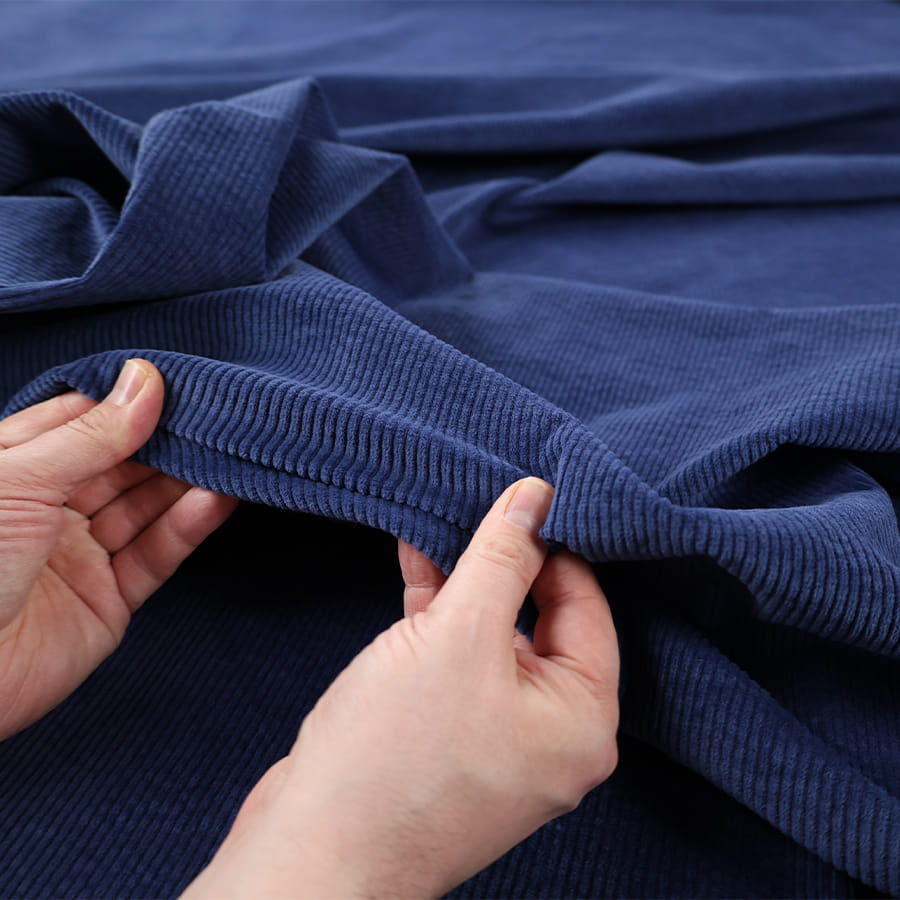
The result only becomes comparable when the same specimen size, conditioning, load, holding time and direction are used.
For laboratory work, ASTM D3107-26 covers stretch, growth and recovery in woven fabrics containing stretch yarns. The current method includes tension options of 1.35 kg (3 lb) and 1.8 kg (4 lb) and is intended for woven fabrics showing more than 12% stretch under the defined low-tension conditions. ASTM also notes that some stretch wovens carry the stretch yarn only in the filling direction, so that direction becomes the relevant one to test. (store.astm.org)
A sourcing sheet should therefore state the method, direction and test condition when the number matters commercially.
“25% stretch” on its own can come from a supplier hand test, an internal bench method or a laboratory procedure. Those numbers cannot safely be treated as identical measurements.
Recovery Tells You What Happens at the Knee
Extension measures how far the fabric can move.
Recovery shows what happens after the load disappears.
For a simple development check, take the same 100 mm gauge.
Suppose it is extended to 125 mm.
After repeated extension and a defined relaxation period, the gauge settles at 103 mm.
The permanent growth is:
(103 − 100) / 100 × 100 = 3% growth
Using the original 25 mm extension as the reference, the recovered portion is 22 mm:
22 / 25 × 100 = 88% recovery
That simple calculation is useful for understanding the behavior. Production testing should follow the chosen laboratory method and report its conditions.
ASTM D3107 specifically covers fabric stretch, growth and recovery because all three affect how a garment behaves in use. (store.astm.org)
A trouser can feel comfortable during the first fitting and still develop visible knee bags after several hours if residual growth is too high.
That problem cannot be diagnosed from the “2% spandex” line.
Nap Changes the Shade Under the Same Light
Corduroy pile lies in a direction called the nap.
Stroke along the ribs. One direction feels smoother under the hand.
Rotate the fabric 180 degrees beneath a fixed light source. The face may now look lighter, darker or shinier because the pile presents a different angle to the light.
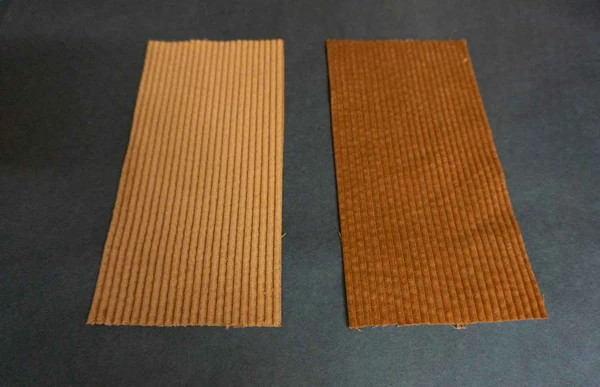
Threads notes that corduroy commonly appears darker with the nap running upward and lighter or shinier with the nap running downward. It also recommends keeping pattern pieces oriented toward the same end of the fabric. (threadsmagazine.com)
This directly affects marker efficiency.
A marker for a plain, nondirectional woven can sometimes rotate a trouser leg or sleeve to fill unused space.
Corduroy usually loses that freedom. The major garment pieces stay in the chosen nap direction, so actual consumption can rise.
For production, the marker should record that direction before cutting begins.
Nap Direction Also Affects Wear
Nap direction is visible after sewing, and it also changes how the surface meets friction during wear.
Threads recommends downward nap for skirts and trousers because the seat is less likely to develop shine. Jackets, coats and blouses are often cut with the pile running upward when a richer, deeper surface appearance is wanted. (threadsmagazine.com)
There is no value in leaving this decision to the cutting room.
“Nap direction: all major pieces downward” is a much clearer instruction for a trouser order.
Collars, pockets, facings and other visible components also need to follow the intended orientation unless the design deliberately changes it.
Broad Wales Make Alignment Visible
Take an 8-wale jacket and place a patch pocket on the front.
The garment already contains strong vertical lines.
Move that pocket sideways by half a rib. The wale entering the pocket edge suddenly lands in a channel or on a different part of the next cord.
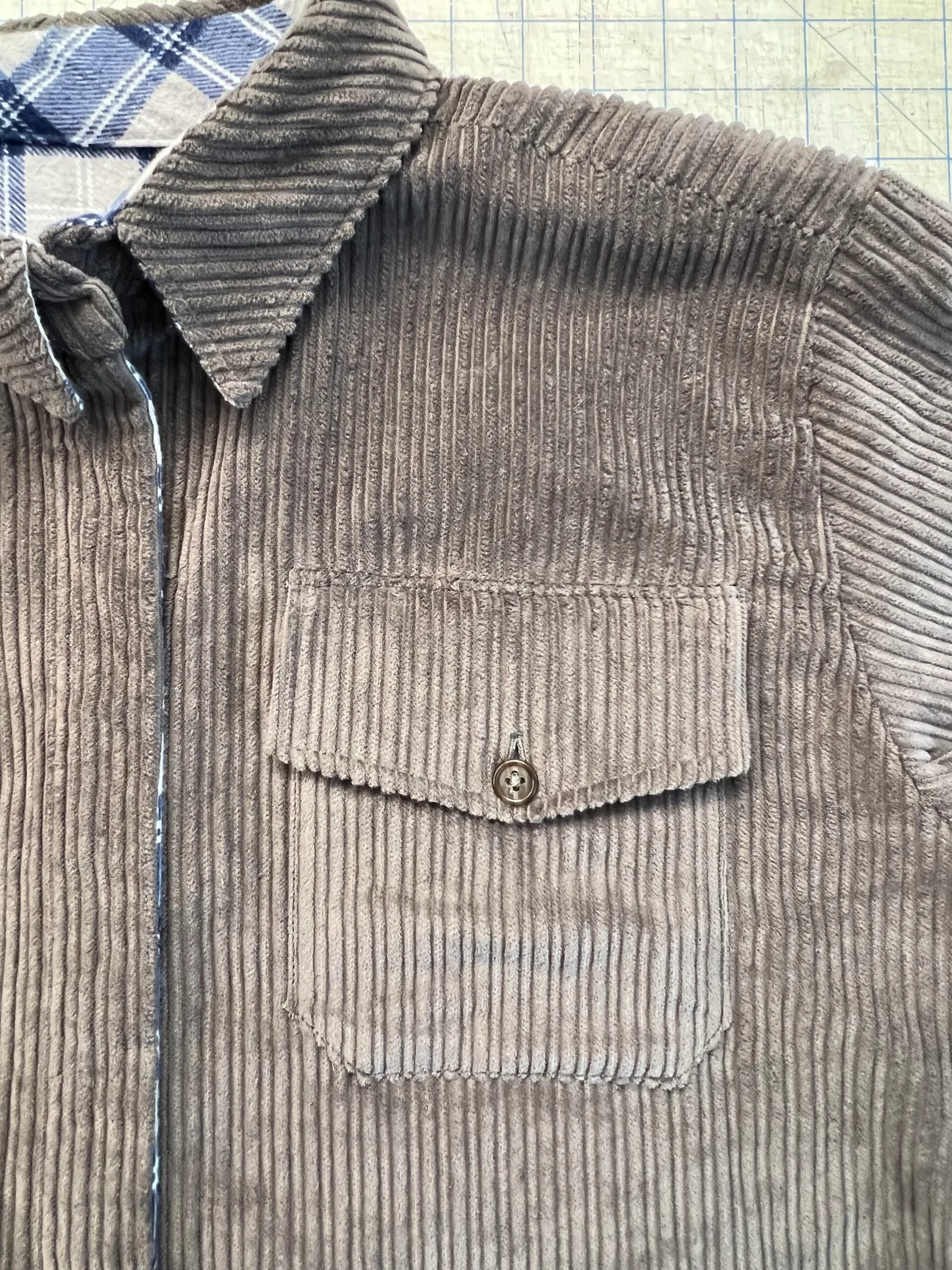
The error becomes easy to see from several feet away.
Threads recommends matching corduroy around 1/4 inch wale width or larger and also calls out fabrics containing alternating thick and thin ribs. (threadsmagazine.com)
Patch pockets are only one place where this appears.
A center front can expose misalignment between left and right garment sections.
A yoke creates another strong horizontal break across the ribs.
Waistband seams and flap pockets can leave abrupt shifts in broad cord.
Single-layer cutting can help on wide wale because the operator can place pattern pieces against visible ribs more accurately. Threads also recommends single-layer cutting, wrong side up, for many wide-wale corduroys to reduce shifting. (threadsmagazine.com)
Pins and Marking Tools Can Damage the Face
A deep pile remembers pressure.
Threads recommends testing whether pins leave visible marks before cutting. If they do, pinning can be confined to seam allowances or replaced with weights. It also advises against tracing wheels on corduroy because the pressure can leave permanent impressions. (threadsmagazine.com)
Chalk, removable marking pens, tailor's tacks and thread tracing avoid dragging a serrated wheel across the ribs.
The issue becomes more noticeable on dark, soft and high-pile qualities where a compressed line catches light easily.
Corduroy Needs a Different Pressing Surface
A hard ironing board gives raised pile nowhere to move.
Place corduroy face-down on that board and press firmly. The pile becomes trapped between the cloth and board.
A needle board solves this by supporting the fabric on hundreds of fine points. The garment sits face-down on those needles, leaving spaces for the pile and reducing crushing during pressing. Needle boards are specifically used for pile fabrics such as corduroy, velvet and velveteen. (hotironco.com)
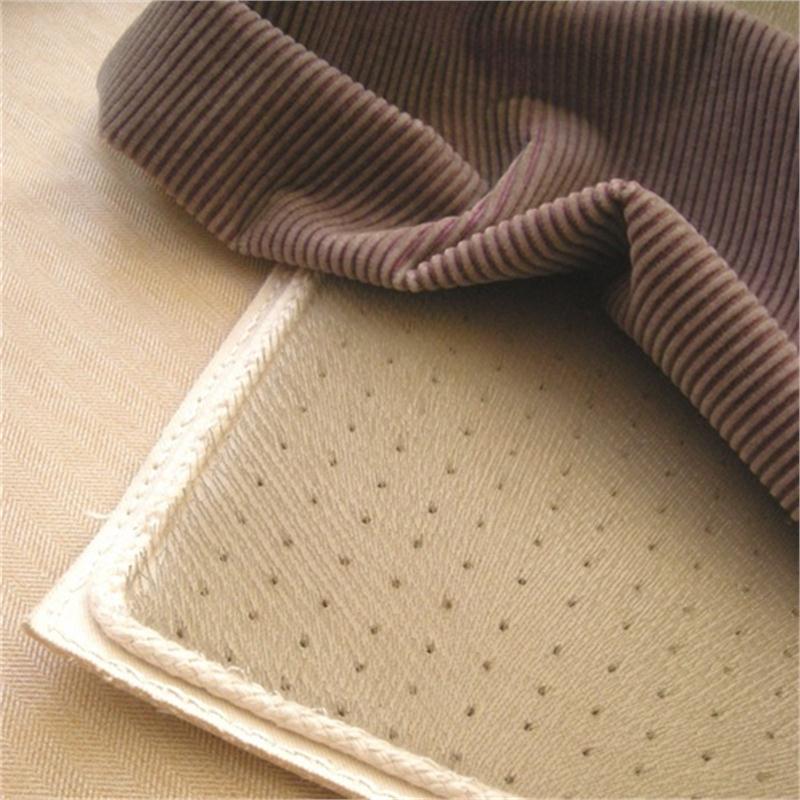
A piece of self fabric placed pile-to-pile can also provide temporary support. A thick towel is another workshop option for light pressing.
Pressing from the wrong side limits direct contact with the pile.
Steam can be introduced without grinding the iron across the face. New Mexico State University's pressing guidance recommends steaming pile fabrics and, when working from the wrong side, placing the face over a towel, self fabric or needle board and pressing lightly. (pubs.nmsu.edu)
Seam Allowances Can Print Through
Consider a trouser side seam.
The garment face is resting on the pressing surface.
Underneath it sits a seam allowance edge.
Heavy pressure pushes that edge into the pile from behind. After the garment is lifted, a narrow line may remain visible on the right side.
Threads specifically warns about seam-allowance impressions on corduroy. (threadsmagazine.com)
This is why pressing an open seam can use a seam roll, narrow support or carefully positioned strip underneath the seam area. The aim is to shape the seam without forcing the seam-allowance edge through the surrounding pile.
A fresh pressure mark can sometimes be improved with steam and gentle brushing after the pile has relaxed. Deep heat-set crushing is much harder to correct.
Sewing Layers Can Creep
Put two pieces of corduroy face-to-face and feed them through a sewing machine.
The pile surfaces grip each other.
During a long seam, one layer can gradually move ahead. The seam ends with pieces that started at the same length and no longer meet at the bottom.
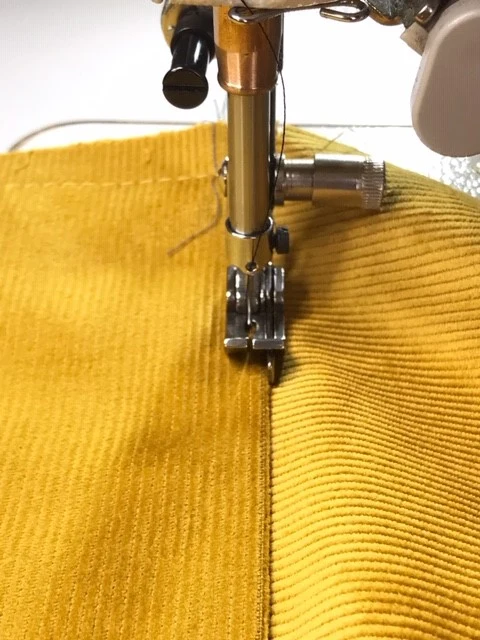
Seamwork describes this as corduroy's tendency to creep or shift during sewing. Its recommendations include sewing in the direction of the nap, pinning carefully, periodically lifting the presser foot with the needle down to release built-up tension, using a walking foot, or hand-basting difficult seams. (seamwork.com)
Presser-foot pressure matters because excessive pressure can increase drag on the top layer.
A walking foot or compound-feed machine helps move the layers together.
The test needs to use a realistic seam length. A five-centimeter scrap may look perfect and still hide creeping that becomes obvious across a 70 cm trouser side seam.
Seam Bulk Has to Be Checked at the Actual Garment Intersection
Single-layer GSM cannot tell you how a finished waistband will sew.
A 300 GSM corduroy may become several compressed millimeters thick where construction layers accumulate.
At one waistband point there can be:
- outer corduroy;
- folded seam allowance;
- waistband corduroy;
- interfacing;
- pocketing;
- belt-loop layers.
A heavy patch pocket corner can create a similar stack.
Needle size, stitch length, thread and machine feed should be tested through this assembled thickness.
Enclosed seams can also be graded to reduce abrupt bulk. Some garment constructions use lighter pocketing or internal fabrics because duplicating thick corduroy inside every component produces unnecessary thickness.
Topstitching Follows the Surface
Wide ribs give topstitching a very visible background.
A line placed near the edge of a patch pocket may repeatedly climb over a wale and drop into a channel.
The stitch can look slightly uneven even when the operator is following a perfectly straight guide because the surface height keeps changing beneath the presser foot.
Longer test runs help determine whether the chosen stitch length, thread thickness and foot produce a clean result.
Designs using contrast topstitching need extra attention because every small deviation becomes more visible.
Corduroy Feels Warm for Several Reasons
The raised pile adds physical thickness to the cloth.
Air can remain between the fibers in that raised layer, contributing to thermal insulation.
GSM adds another part of the picture. A 345 GSM 2.5-wale cotton corduroy carries a substantial amount of material. Current lightweight fine-wale constructions can sit much lower. (uniontextiles.com)
Air permeability matters as well. A dense ground construction reduces air movement through the cloth.
A lined jacket adds another textile layer and another air space inside the garment.
Fit changes how much air is held around the body. A roomy corduroy overshirt can trap more still air than a close-fitting unlined garment made from the same cloth.
“Corduroy is warm” therefore describes a common experience, not a fixed thermal value for every corduroy fabric.
Washing Changes Size and Surface
Cotton corduroy can shrink during wet processing.
The actual percentage depends on the yarns, woven construction and finishing history. Current retail fabric listings illustrate the uncertainty: one 16-wale washed cotton corduroy is sold with a caution allowing roughly 2–10% shrinkage, and another 8-wale cotton seller advises allowing up to 10% unless the fabric has been tested. (croftmill.co.uk)
Those figures are supplier cautions, not a universal corduroy standard.
A production order needs a tested shrinkage value for the exact fabric and intended wash.
If a trouser measures 105 cm before washing and the fabric loses 4% in the warp direction, the theoretical dimensional loss from fabric shrinkage alone is about:
105 × 0.04 = 4.2 cm
Pattern allowance and garment finishing therefore depend on actual wash testing.
The test should reproduce the intended laundering or garment-wash process. Measuring an untreated lab dip tells little about a final product that will receive enzyme wash, garment dye, tumble drying or another wet finish.
Wear Changes the Pile Before the Ground Fails
Look at the knee of an older pair of corduroy trousers.
The cloth may still be structurally intact.
The surface can already look smoother.
Repeated bending and rubbing push pile fibers down. The fibers begin reflecting light from a flatter angle, creating shine.
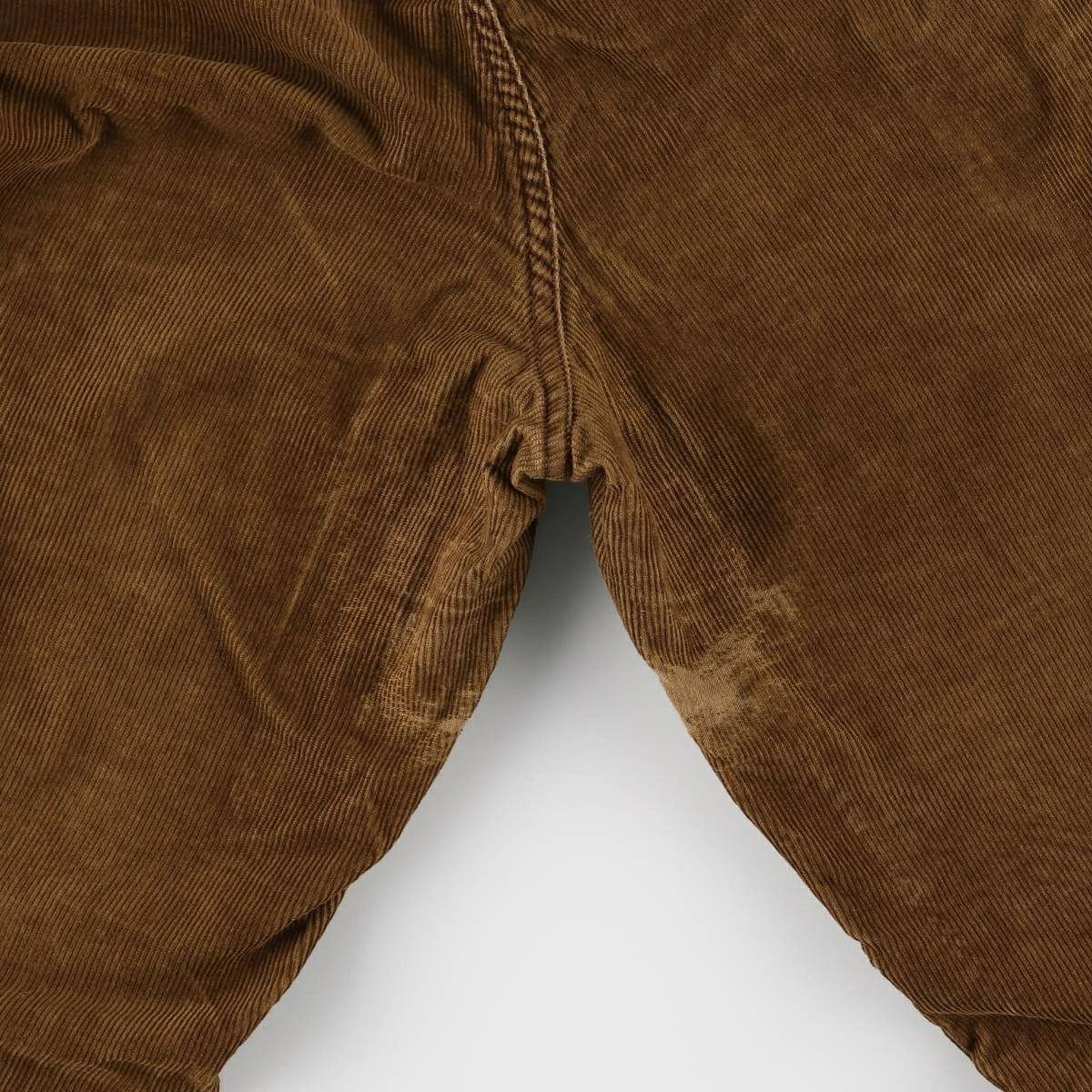
Seat areas receive long periods of pressure.
Pocket openings see fingers and objects moving across the ribs.
Elbows and cuffs rub against desks, furniture and other garments.
Pile loss can eventually expose more of the ground fabric. The appearance of wear therefore develops gradually through pile flattening, polishing and fiber loss.
A wash standard for a deliberately vintage corduroy garment should show how far this effect is intended to go.
Velvet, Velveteen and Moleskin Can Be Identified From the Surface
Corduroy is easiest to identify by following the ribs with a fingertip.
The finger repeatedly rises over a cord and drops into a channel.
Traditional woven velvet has a continuous pile surface. It is a warp-pile fabric with cut pile brought to a uniform height.
Velveteen uses a cut filling-pile construction related to corduroy. Its pile is distributed to create an even face, so the surface lacks the strong repeating channels that define corduroy.
Moleskin has a dense, smooth, suede-like face created from a tightly woven and mechanically finished cloth. Under low side light, the surface remains comparatively continuous.
Corduroy under the same lighting throws narrow repeating shadows into the channels between the wales.
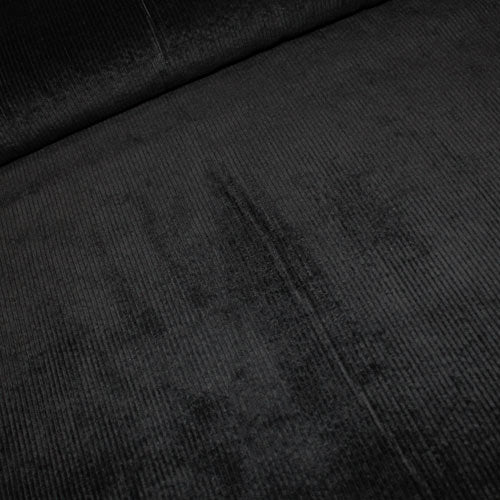
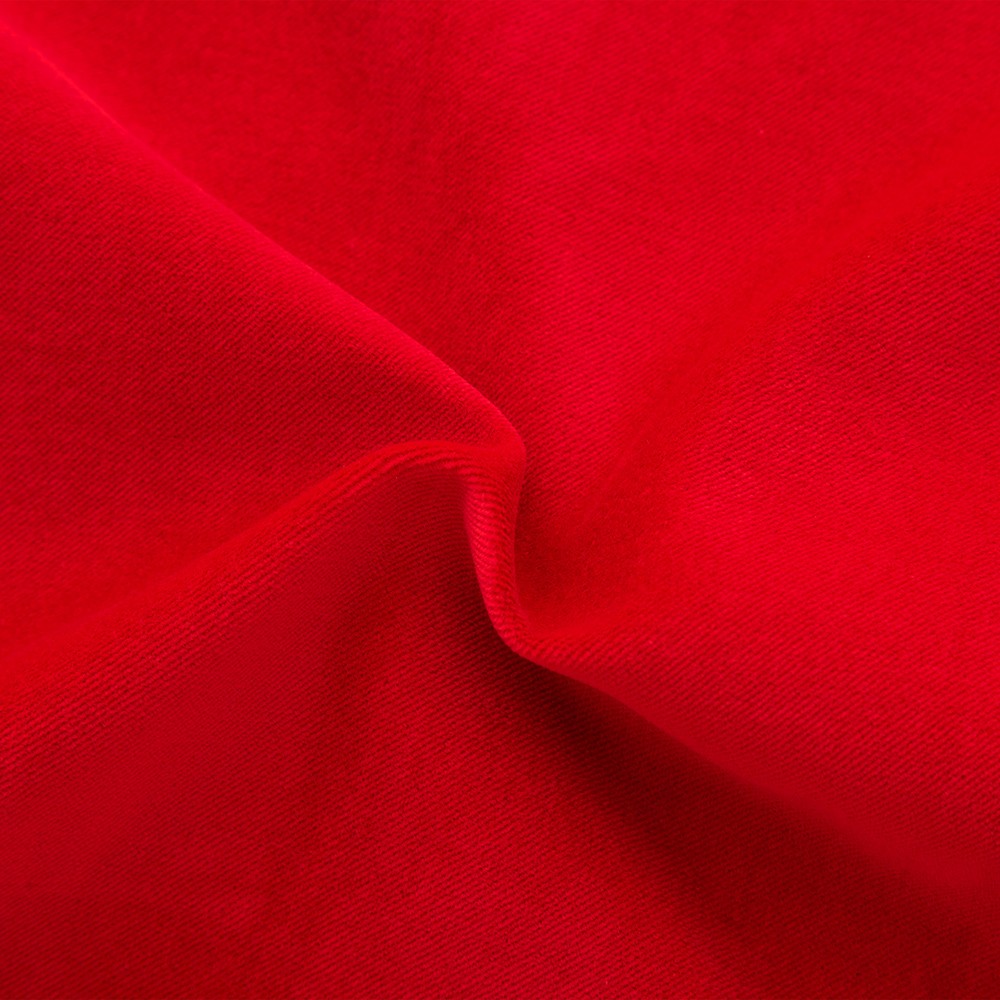
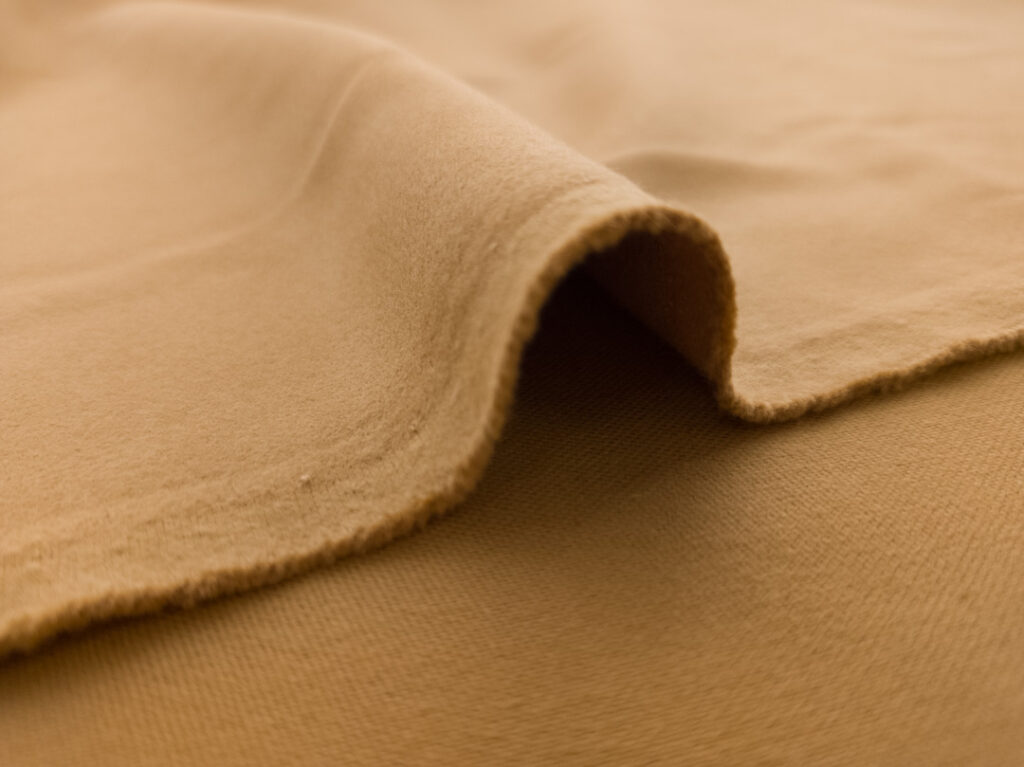
That visual check is often faster than relying on a fabric name from a swatch card.
Corduroy Inspection Should Follow the Wale
Normal four-point fabric inspection still needs extra attention to the directional surface.
An incomplete pile cut may run for meters along the same rib.
A damaged wale can appear as a thin flat line.
Uneven pile height can create a strip that changes shade when the roll moves under the light.
A local loss of pile can expose the woven ground and appear as a bald area.
Wale spacing should also be checked across the width. An irregular rib becomes much more noticeable once it is cut into a long trouser leg.
Inspecting from only one end of the table can hide directional shading. Turning the viewing direction or changing the angle of the cloth exposes faults that disappear with the nap.
The usable-width measurement should exclude damaged selvedge areas and any recurring edge defects.
What a Real Corduroy Specification Needs
A production request reading:
“Dark brown cotton corduroy, medium weight”
leaves most of the fabric undefined.
A usable development sheet needs measurable fields.
For example, an illustrative trouser specification could be written in this form:
Fabric: stretch cotton corduroy
Composition: 98% cotton / 2% elastane
Wale count: 11 wales/inch
Finished weight target: 300 GSM, with agreed production tolerance
Usable width: minimum 145 cm excluding selvedge
Stretch direction: filling / crosswise
Crosswise stretch target: 25% under the named test method and load
Growth/recovery: report after repeated extension using the agreed laboratory method
Nap: all major garment components cut in one direction
Pile: match approved bulk swatch for height, density and hand
Finished shade: match approved lab dip and production standard under agreed light source
Dimensional change: maximum target written separately for warp and filling after the exact specified wash procedure
Wash finish: state enzyme, pigment, garment wash or other process by recipe/reference standard
Wale matching: required at patch pockets and center-front areas where visible
Pile cutting: no continuous unopened wale accepted in visible garment panels
Pressing: pile-support pressing method required on visible areas
Bulk approval reference: sealed fabric swatch from confirmed production lot
Those numbers are an example of how a specification is structured, not universal limits for every corduroy.
Once the supplier sends the actual candidate fabric, the development team can replace the illustrative targets with measured values from that cloth.
A spec should also identify the test method whenever the result depends on how the test is performed. ASTM D3107-26 is a current option for stretch, growth and recovery in woven stretch fabrics. (store.astm.org)
For shrinkage, the order should name the exact wash or dimensional-change procedure used by the brand or laboratory and record warp and filling results separately.
The approved physical swatch remains important because pile density, surface fullness and hand are difficult to communicate with a short list of numbers.