OEM and ODM in Clothing Manufacturing
OEM and ODM split on who develops the garment. Both of them manufacture it.
2 manufacturing models 6 development steps 3 contract clauses 4 factory questions
OEM and ODM split on who develops the garment. Both of them manufacture it.
Who draws the pattern, who picks the cloth, who carries the development bill, and what stays in your hands afterward all follow from that one split.
What OEM Means on a Clothing Factory's Page
A factory advertising OEM service is telling you it will build to your drawings.
The definition has been in print since 1999. Gary Gereffi, a sociologist at Duke University who spent his career mapping how the apparel trade is organized, set out four features of it in the Journal of International Economics. The supplying firm makes the product to the design the buyer specified, the product sells under the buyer's name, supplier and buyer stay separate companies, and the supplier has no say in where the goods go afterward.
Outside apparel the same three letters point the other way. United States federal acquisition rules define an original equipment manufacturer as a company that manufactures products it has designed and sells them under its own brand name. Hold that up against a garment factory. Both halves fail. The factory designed nothing and sells nothing under its own name.
The same rule supplies the word that does fit, one line further down. A contract manufacturer is a company that produces goods under contract for another company under the label or brand name of that company. That is the factory sewing your tech pack, described exactly.
Neither industry is using the word wrong. A supplier writing OEM on its page means the apparel version and is offering to build your design.

What ODM Means
Take the sample a factory just handed you and ask who drew it.
Under ODM the answer is the factory. It developed the style on its own account, cut the pattern, chose the cloth, sewed the sample, and put the finished thing on a rail for whoever walks through the door. Your part starts at the colorway and the labels.
An ODM firm adds design functions on top of the sewing.
A rail of finished styles is expensive to keep. Some of those styles will never sell. Every garment on it was patterned, graded, sampled and costed before a single buyer asked for it, and the factory carried all of that itself.

Who Supplies What
Two arrangements, five questions.
| OEM | ODM | |
|---|---|---|
| Who develops | You | The factory |
| Who sources the fabric | The factory, to your spec | The factory, from its own stock |
| Whose pattern | Yours | The factory's |
| Whose graphic | Yours | The factory's |
| What you keep | Your pattern and tech pack | Your labels and your colorway |
Where the Development Actually Happens
Development runs the same six steps whichever letters sit on the quote. The two routes move where each step gets done.
The sketch. One of you arrives with it.
The pattern. A patternmaker turns the sketch into flat pieces, then grades those pieces across the size run so a large comes out a large and not a stretched medium. Every piece in the garment gets graded separately. On an ODM style that work was finished before you had heard of the factory. On a style of your own the hours land on your bill.
The fabric. A fabric spec names a weight in grams per square meter, a fiber blend by percentage, a knit or weave structure, a finish and a shrinkage tolerance after washing, and then a mill has to be found that runs all of those together at a price that survives the rest of the costing. An ODM factory bought the cloth already. That is how it quotes a low minimum on a style you have never ordered. The cloth in the sample is the cloth you are getting.
The proto sample. The first sewn garment tests whether the pattern holds together at all. An ODM factory has done this step and put the result on the rail. The sample you are looking at is the proto.
The fit sample. The garment goes on a body and gets measured against the spec sheet. Both routes run this one. Corrections travel back to whoever drew the pattern. Every correction is another garment sewn and shipped.
The pre-production sample. The last one comes off the actual line in the actual bulk cloth. Both routes run this one too. Skipping it is how a good sample turns into a bad delivery.
Four of those six steps sit on the factory's side of an ODM deal. The saving lands on the development bill and never on the unit price. The patternmaker's hours are the biggest single line inside it.
Two published estimates put a figure on that bill. Both come off the sell side and no independent survey of either exists. MakeMine, a sourcing firm that also sells the service, prices a production-ready tech pack at $400 to $800 a style. Jace Apparel, a factory, gives a rule for samples at two to three times your target unit cost. A hoodie you expect to make at $15 samples at $45 to $60.

A Thin Tech Pack Turns OEM Into ODM
The two models are drawn as a choice you make. In practice the line moves on its own. It moves in one direction.
A tech pack with gaps in it gets filled by the factory. It fills them with what it already runs. The interlining it stocks, the thread it buys by the cone, the neck construction and stitch density its operators use without being told. A decision has to be reached at every one of those points. The factory reaches it when you have not.
None of that is dishonest. It is the only way an order gets built at all.
The garment comes out quoted as OEM and developed as ODM in every place your spec ran out. You paid the OEM development bill and received the factory's defaults on everything you left blank.
The test is not how many pages your tech pack runs to. It is whether a person who has never spoken to you could build the garment from it and get one answer. Points of measure with tolerances by size. Stitch types called out by seam. Trims named by supplier and part number. A named fabric with a named mill.
Ask the factory to send back a list of everything it had to decide for you.

What an ODM Sample Has Already Decided
The ODM sample in your hands is another company's finished decision. Everything on it was settled before you arrived. Six of those settled parts are checkable in the room.
Measure the whole size run. Grading is where a block gets aimed at a particular body. The factory graded this one for the customer it built it for. Errors surface as a jump that runs bigger in one place than another, a chest gaining half an inch between two sizes while the sleeve gains a full one and throws the proportion out everywhere except the size you were shown.
Read the fiber content, then ask for the weight in grams per square meter. A 200 gsm French terry and a 320 gsm French terry are the same words on a label and two different garments on a person.
Wash the sample before you order. Shrinkage, twisting at the side seam, pilling on the surface and color bleeding all trace back to a finish the factory chose. On your own style that finish is a line you write and a wash test you pay for.
Turn out the trims. The zip brand, the thread ticket, the interlining and whether it is fused or sewn all come inherited on an ODM garment. Any of them changes for a fee once you ask.
Check the neck. Rib depth, back neck tape and the stitch used at the collar seam are the details that decide whether the garment still looks new after a year. An ODM sample has answered all three before you asked.
Look at the inside of the seams. Overlocked and left raw, bound with a tape, or flat-locked so the join lies smooth against skin are three different costs and three different garments. Changing it on a first order of two hundred pieces takes a negotiation.
None of this argues against an ODM base. It argues for running all six checks before the deposit moves, the way you would on a garment another company designed.

The Fabric Is Where a Factory Climbs
In sportswear the development a factory can offer sits in the cloth. Two named suppliers behind Nike and lululemon are fabric makers before they are sewing floors.
The ODM contribution in performance apparel looks like that. The brand still decides what the jacket looks like. Its material is the factory's call.
Shenzhou International supplies Nike, Uniqlo, adidas, Puma and lululemon. The company turns out over 250,000 metric tons of fabric a year. Fabric at that tonnage means a mill.
Eclat Textile in Taiwan makes high-end knits and turns them into sports clothing for Nike, lululemon, Under Armour, Polo Ralph Lauren and adidas.

What You Own When You Walk Away
Every sourcing page says the same thing about ODM. The factory owns the base design and can sell it to your competitor unless you pay for exclusivity. According to Alibaba's own seller guidance, a manufacturer without an explicit clause against it can sell the same design to as many buyers as want it.
That is true. It also stops one step short of what happens on a garment.
United States copyright treats clothing as a useful article. The Supreme Court set the current test in Star Athletica in 2017, holding that a design feature on a useful article can be copyrighted only where it can be perceived as a work of art separate from the article and would qualify as a protectable work on its own. A graphic printed across the chest clears that test.
So an ODM factory holds its two assets by two different mechanisms. The artwork it owns outright, against the world. The pattern is a different matter. It reaches you and stops. A competitor who never signed anything with your factory can measure that garment and draft the same block. You have no case to bring. You, the one party who did sign, are the only party in the world bound not to take it elsewhere.
Under OEM the ownership question has a duller answer. It is still a contract question. A fit block your patternmaker develops during sampling belongs to whoever the production agreement names. Get the assignment written in before the first sample is cut.
Three clauses cover the ground on either route. Assignment of the patterns, the graded specs and the tech pack. Confidentiality over the document itself. That clause matters more than the assignment on the day the factory quotes your competitor. Return or certified destruction of the digital files when you stop ordering.
On an ODM base the clause you want is narrower and costs money. Exclusivity runs by category, by territory and by term, and a factory will price all three separately. Ask what the base style costs to take off the rail for twelve months in your market alone.

OEM, ODM and OBM as Rungs
The trade does not treat these as a menu. They are rungs, and the research literature has tracked firms climbing them since Gereffi wrote the sequence down in 1999.
The bottom rung is CMT. The factory sells labor, cuts what you send it, and touches nothing else.
Taking on material sourcing and the financing to carry it moves a factory up to OEM. Adding design moves it to ODM. Owning the brand at the top makes it an OBM.
Any factory quoting you today sits somewhere on that ladder.
The top rung is not a guaranteed arrival. A factory that launches its own label starts competing with the buyers whose orders pay its wages. Plenty of firms climbed to ODM and stopped there on purpose. Gereffi's 1999 paper records significant reversals in the OBM experience.
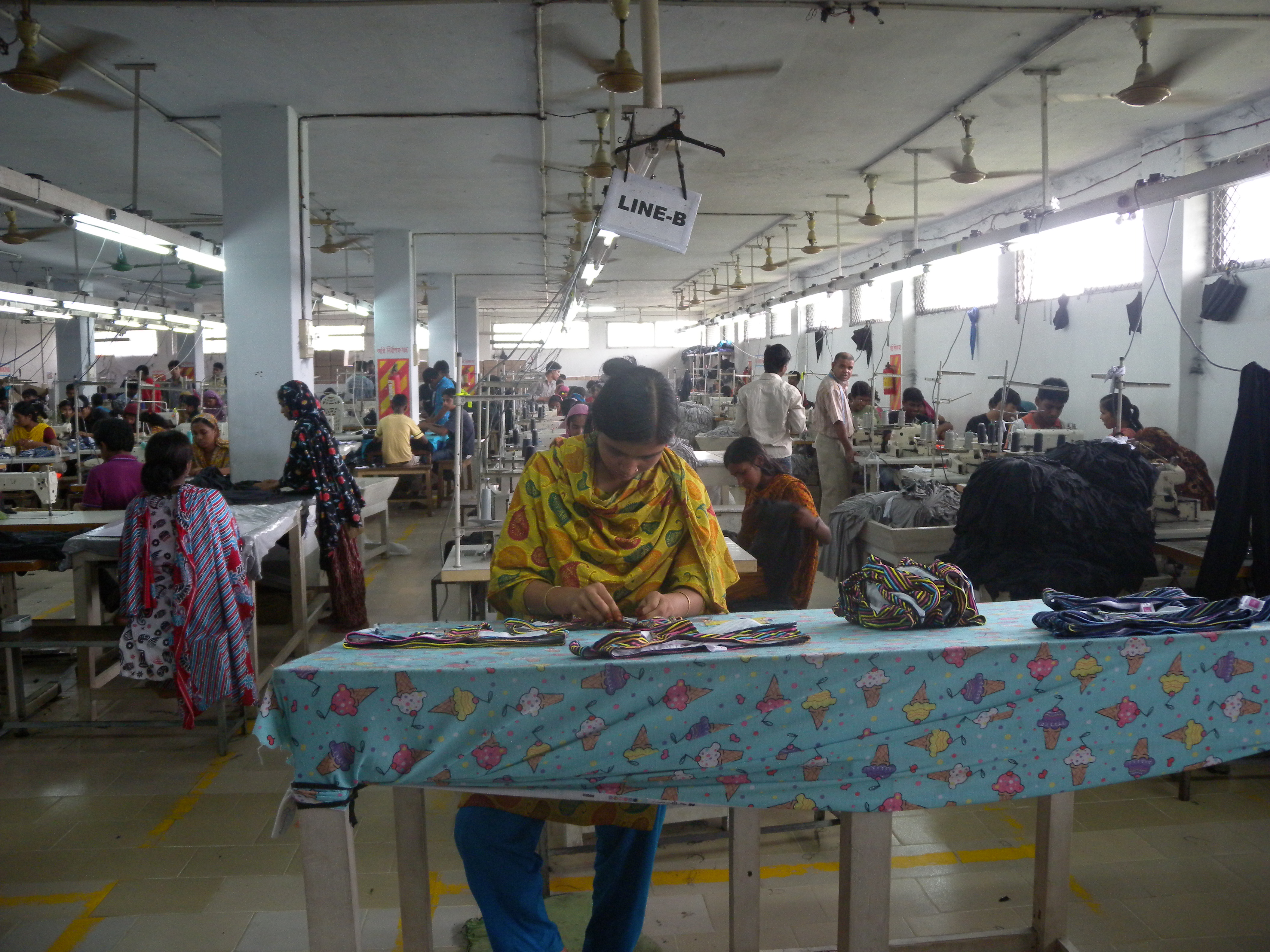
Reading "OEM/ODM Available" on a Factory's Page
That phrase appears on nearly every supplier profile. Most of the time it means the factory will do either one.
Something else hides behind it often enough to check.
Some factories do real OEM and file their own stock styles under ODM. A catalog is not a design capability.
The split can also run inside one garment. A supplier that develops its own fabric and sews your pattern sits on the ODM rung for the cloth and the OEM rung for the shape.
Four questions separate these. Who drew the pattern for the sample in front of you. Which mill made the cloth and who developed it. What happens to the pattern if you stop ordering. Then ask to see the graded spec. Any factory that drew the garment keeps one on file.
A factory that developed the style names the patternmaker without going to check.

Which One You Are Being Offered
A catalog with prices next to the styles is ODM.
A factory that asks for your tech pack before it quotes is running an OEM conversation.
A quotation that arrives before you have sent a spec is neither one. It is a guess. The number moves once the factory finds out what you want.
An offer to develop from your mood board sits between the two. That arrangement gets called ODM on some pages and OEM on others. The letters decide nothing. The contract has to say who ends up owning what comes out of it.

Questions People Ask
Is ODM the same as private label?
They overlap without matching. ODM describes who developed the garment. Private label describes whose name goes on it. A private label program usually runs on an ODM base. It can also run on a pattern you paid to have drawn.
Can a factory do OEM for one style and ODM for another?
Routinely, and often inside one order. Pin the mix down style by style before you assume the quote covers everything the same way.
Can I move a style from ODM to OEM later?
Yes, by paying to have the pattern redrawn as your own. The factory's contract hold covers its block. A new block drafted from your spec is yours from the first sample.