How to Design a Custom Hoodie: From Sketch to Production Sample
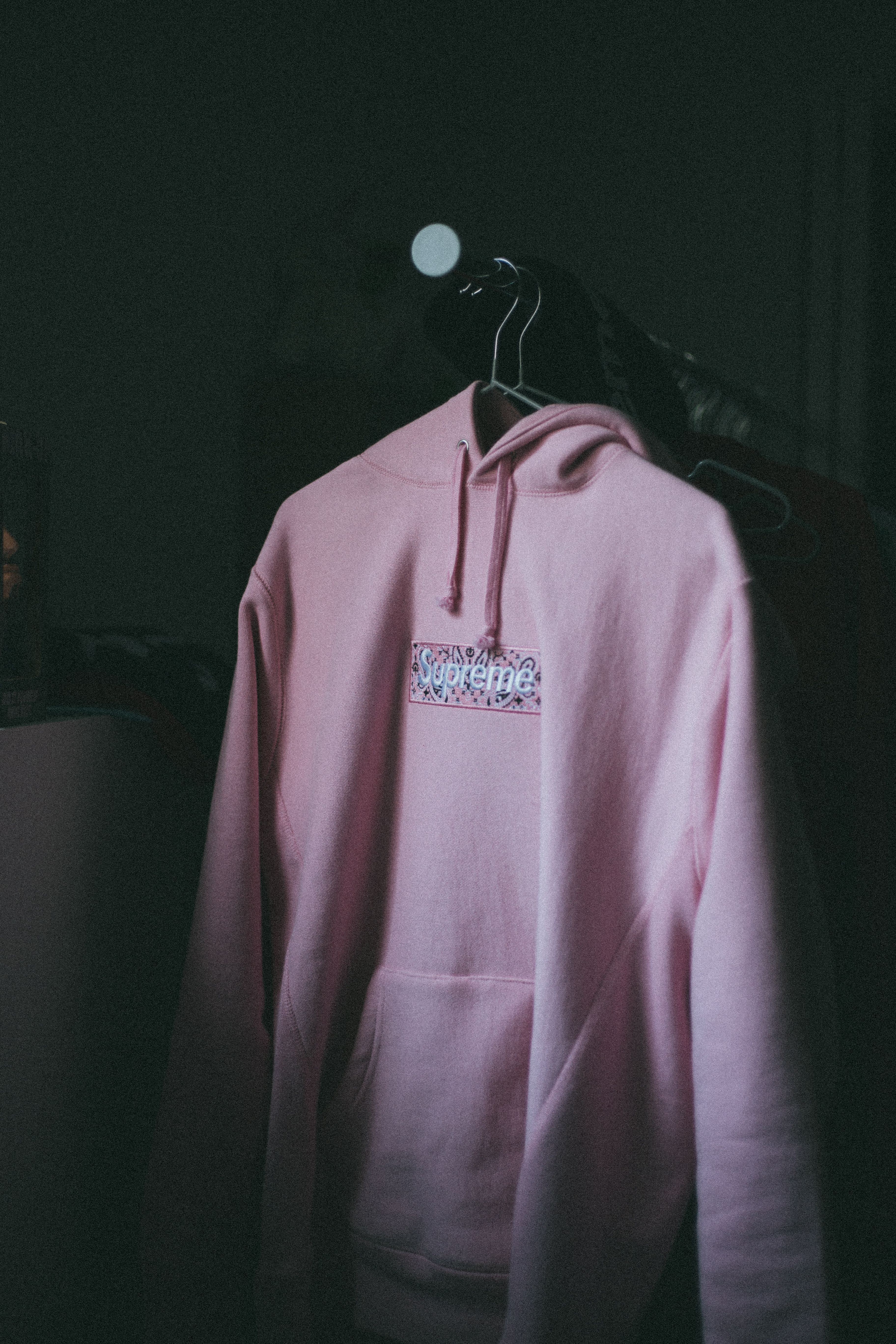
The proportions of a custom hoodie are visible before any artwork is added. A wide chest and a shorter body give a pullover a boxy outline, with the lower band gathering the fabric above the hips. The pocket and hood occupy part of the space available for decoration, so their dimensions belong in the design alongside the graphic.
The Design Brief
For decoration on a ready-made hoodie, the manufacturer's style number, color, and size identify the garment being customized. A physical example supplies the hood, pocket, and seam positions for the artwork layout.
An original adult streetwear pullover might begin with this brief:
Relaxed pullover with an upper-hip hem, dropped shoulders, and full sleeves gathered into ribbed cuffs. Charcoal sweatshirt fleece, a self-lined hood, and a cream back graphic. Develop one base-size sample to wear over a T-shirt.
Reference images accompany the feature they illustrate. A hood photograph might carry the note "use this center-panel construction," with a dimension beside the panel. Measurements taken from an existing garment can be marked directly on its reference sketch.
A Fit Reference and a Measurement Sheet
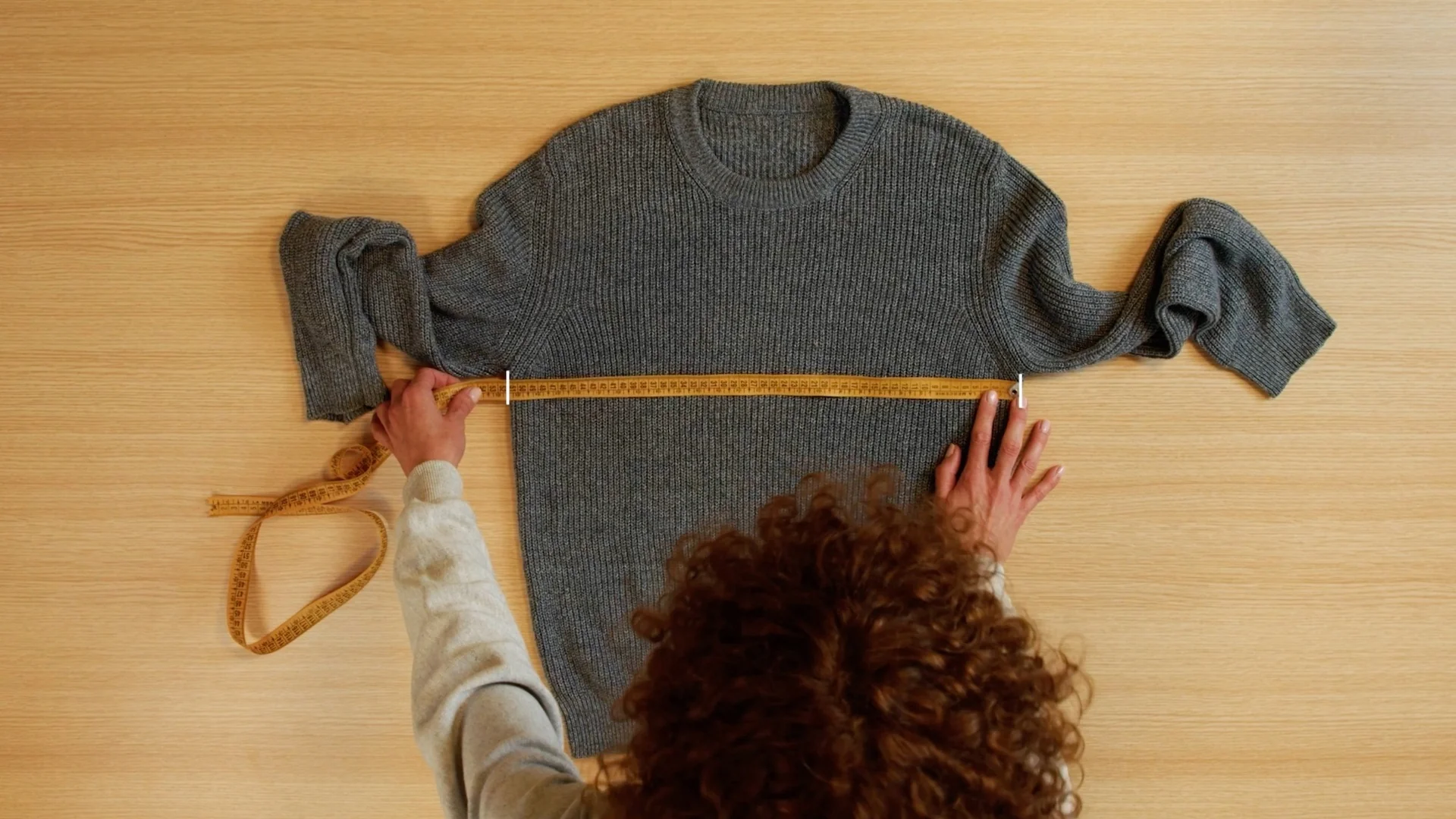
A hoodie measuring 62 cm across the chest has approximately 124 cm of circumference at that point. On a wearer with a 100 cm chest, this supplies 24 cm of additional room, or ease. The following example combines that roomy chest with a 54 cm half-hem opening, gathering the lower body into the ribbed band.
These are proposed measurements for one adult relaxed-fit sample. Its size designation follows fitting. The garment is measured laid flat with the ribbing relaxed; the high shoulder point is the junction of the shoulder and neckline beside the neck.
| Measurement | Method | Example Target |
|---|---|---|
| Half chest | Straight across, 2.5 cm below the armhole | 62 cm |
| Body length | High shoulder point to bottom edge, including hem rib | 66 cm |
| Shoulder width | Across the back between sleeve attachment seams | 60 cm |
| Sleeve length | Shoulder seam to cuff edge along the upper sleeve, including cuff | 59 cm |
| Half hem opening | Across the relaxed lower edge | 54 cm |
| Half cuff opening | Across the relaxed cuff | 10.5 cm |
| Cuff height | Joining seam to finished cuff edge | 7 cm |
Front and Back Drawings
The front and back drawings use the same scale, with the sleeves held clear of the body so the underarms remain visible. Pocket openings and the seams joining the ribbing are drawn in their finished positions. On a zip-through hoodie, the closed front shows the zipper between the pocket sections.
For a sewn sleeve stripe, two joining seams outline the separate fabric panel, with its width and fabric reference beside it. An enlarged pocket corner shows the reinforcement stitching. The inside-neck view locates the neck tape and label attachment.
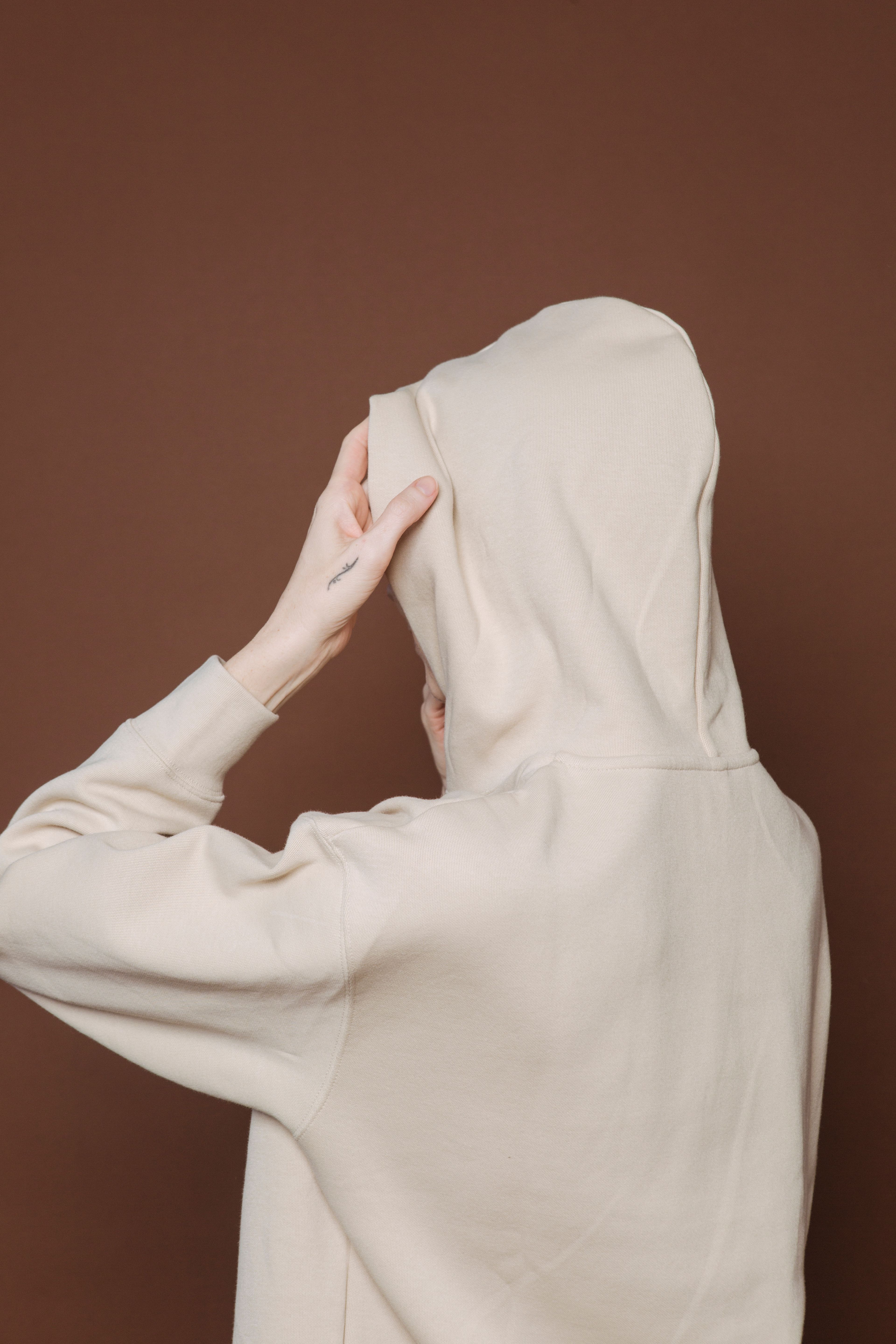
The hood's side view carries its height and depth measurements. Each line has fixed endpoints on the neckline seam, crown, back seam, or front edge. A three-piece hood also has a dimension for the center strip between its side panels. The overlap beneath the chin appears on the front view.
Fabric and Hood Construction
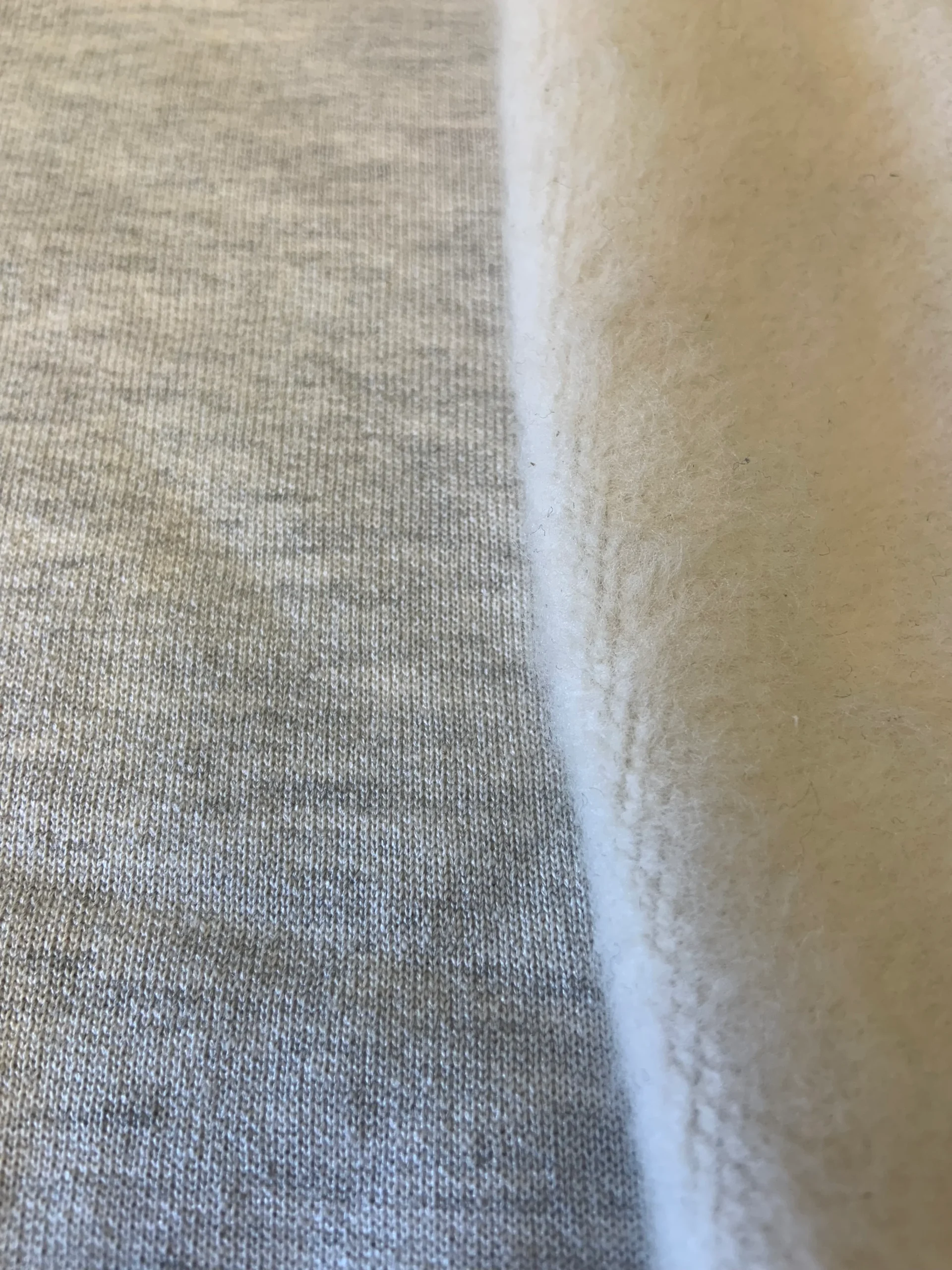
320–360 GSM cotton-faced sweatshirt fleece is a proposed starting range for an everyday casual pullover. GSM expresses fabric mass in grams per square meter. The fabric entry also states its complete composition and reverse finish. For example, "70% cotton and 30% polyester overall, with a 100% cotton face yarn" describes cotton covering the outside of a blended cloth.
Brushing raises fibers on the reverse to produce the fleece interior. French terry retains exposed loops, which are visible inside an unlined hood. A self-lined hood contains another layer of the main fabric. A separately specified jersey lining contributes its own weight and thickness around the face opening, where the fabrics and seam allowances turn together.
Artwork Size and Placement
A worked front-print example uses a 28 cm wide × 18 cm high graphic. Its top edge sits 8 cm below the center-front neckline seam, centered across the garment. The graphic therefore ends 26 cm below that reference. A pocket beginning 32 cm below it leaves 6 cm between the artwork and pocket.
Place a full-size paper copy on the reference hoodie to assess the layout on the wearer. The placement measurement runs to the visible artwork's edge, accounting for transparent margins in the exported file. The decorator's available print area and seam clearances set the usable space around it.
For a back graphic, mark the hood's resting edge on the placement drawing with the hood lowered. Position the lettering or image at the chosen distance below that edge.
Sleeve lettering carries a wearer-left or wearer-right label and its reading direction with the arm lowered. A graphic crossing the front zipper is laid out against the closed fastening at finished size. The drawing includes the visible zipper width and the gap between the printed sections.
Printing and Embroidery
| Decoration | Production Information |
|---|---|
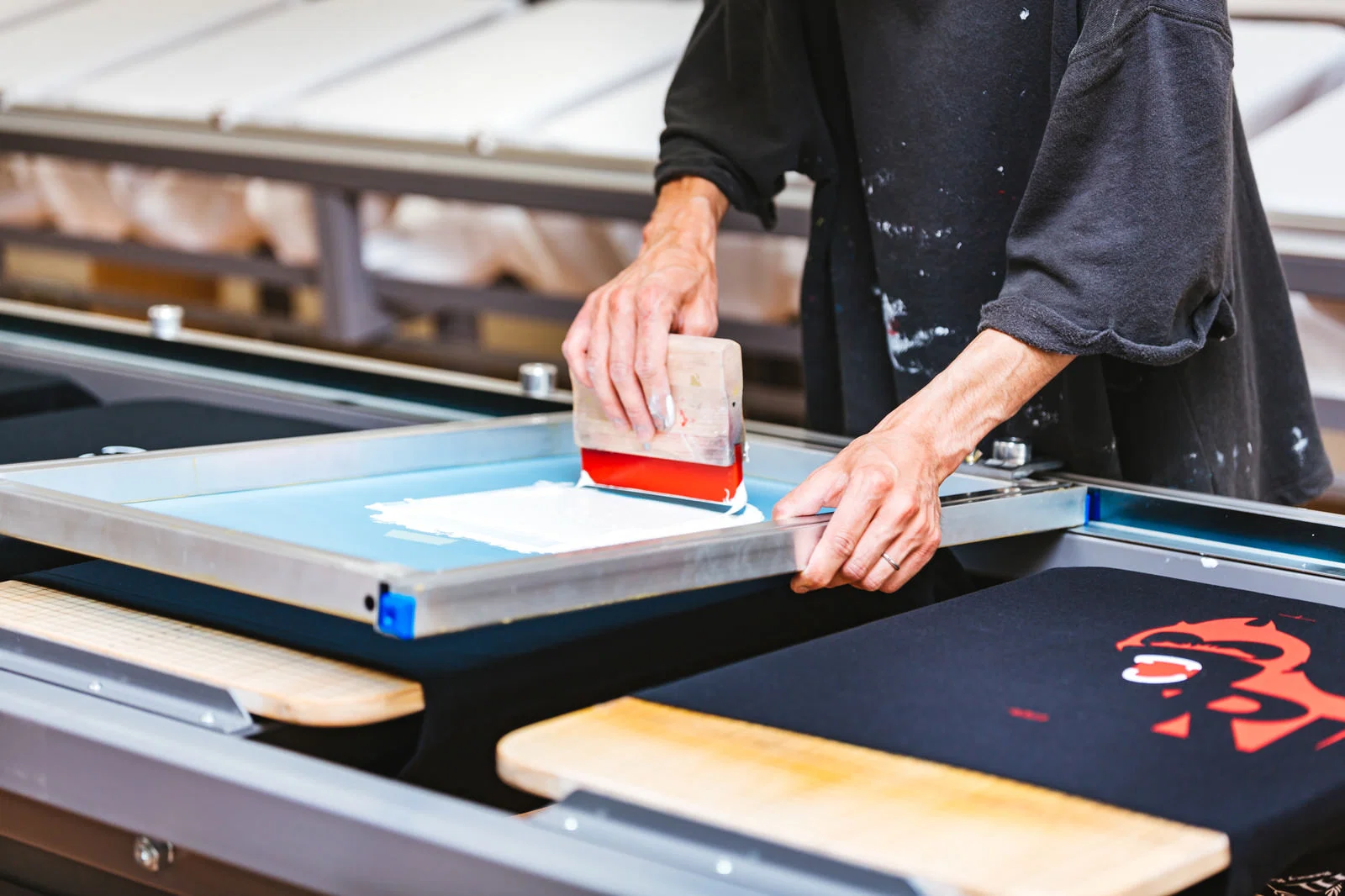
| Screen printing | Ink colors, garment color, and the intended surface finish. Raised or specialty ink effects are named in the design. |
| Direct-to-garment printing | Full-color artwork, including photographs or gradients, at the required resolution and color profile. The printer receives the garment's fabric and color specification. |
| Direct-to-film transfer | Finished transfer dimensions and the fabric receiving the transfer. Seams around the heat-application area appear on the placement drawing. |
| Embroidery | Thread references, stitch treatment, and the fabric beneath the design, together with its finished dimensions. |
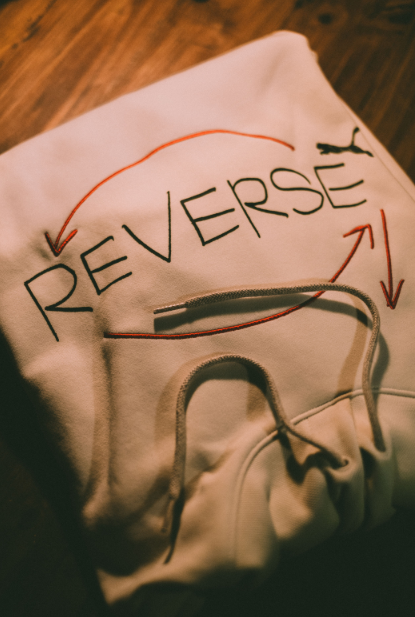
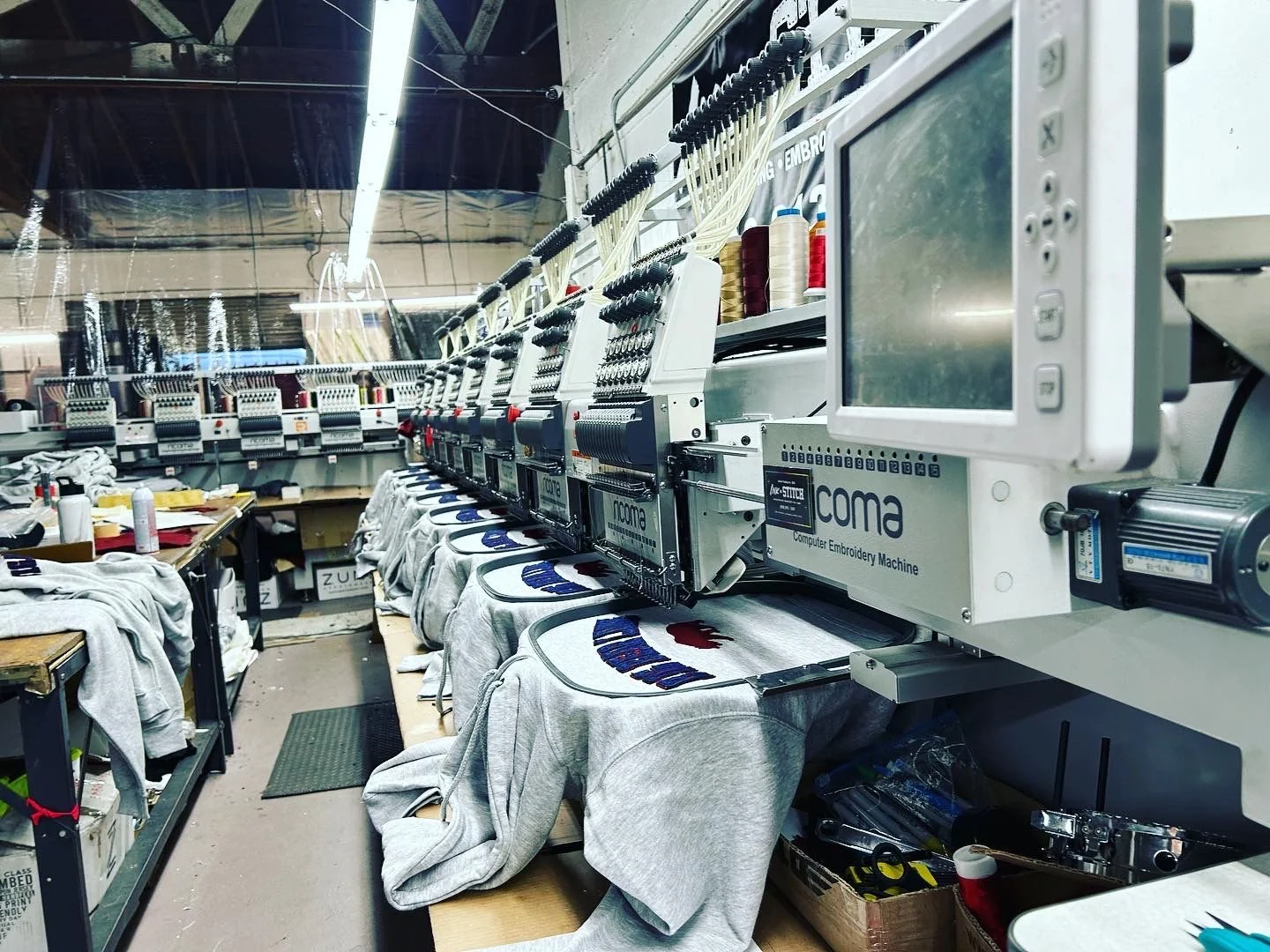
Digitizing converts an embroidered wordmark into a stitch plan at its finished size. The digitizer sets stitch paths around the letter shapes, including the small gaps between strokes. Dense filled areas hold more of the knit beneath the stitches and influence the backing selection.
Cut-away stabilizer remains behind the embroidery after excess backing is trimmed. On a light jersey or soft fleece, its thickness and cut edge can be felt from inside the hoodie.
Production Artwork Files
A raster image for a 12 × 8 inch print at 300 pixels per inch needs 3,600 × 2,400 pixels. This is a separate export example; the decorator supplies the resolution and color-profile requirements for the selected product and process.
A transparent PNG can carry an isolated graphic. Where outlined lettering is requested, a vector production copy is exported from the editable master. The master retains the original text. Embroidery artwork is delivered in the source format accepted by the digitizer, together with the physical logo dimensions.
For the 28 × 18 cm front graphic, a file name could be:
HD01_FRONT_280x180mm_R02.pdf
The name links style HD01 to the front placement, dimensions, and revision R02. A sleeve design receives a separate file. Each file is identified beside its placement on the garment mockup.
Color and Garment Washing
A garment-washed design includes the finish at the seams, cuffs, and decorated areas. The production schedule places decoration at its intended stage of dyeing and washing. For a print applied after garment washing, the printing trial uses fabric with that wash already completed.
Custom fabric color is developed through a lab dip: a small dyed sample matched to a physical reference or agreed color-system reference. The selected dip is assessed under the specified light source and identified by fabric article and colorway.
Body fabric and rib are viewed together at the sleeve-to-cuff join. Their different textures affect the appearance of the shade at this boundary. Zipper tape and sewing thread can have separate supplier color references within the same hoodie colorway.
Labels and Hardware
A woven neck label could measure 45 × 20 mm after folding, centered inside the back neckline with its end folds stitched down. The artwork includes additional material for those folds. The inside-neck drawing locates its stitching relative to the hood attachment seam. A side-seam label uses a separate position note, such as an upper edge 6 cm above the hem joining seam on the wearer's left side.
| Component | Specification on the Drawing or Material List |
|---|---|
| Drawcord | Shape, width or diameter, material, and end treatment. |
| Eyelet | Opening size suited to the cord, with the eyelet center marked on the hood. |
| Front zipper | Separating construction, finished length with measurement endpoints shown, tape color, puller, supplier reference, and any two-way opening. |
The Cost of the Design
An illustrative $120 setup charge across 80 hoodies adds $1.50 per garment. Fixed charges such as artwork preparation, embroidery digitizing, or screen production remain separate from the per-unit manufacturing price.
The quotation applies to a stated quantity, color breakdown, and size range. Its decoration entries use the dimensions and placements in the artwork schedule, including embroidery size and screen-print colors. Sampling and packaging are identified alongside the garment's material and manufacturing charges.
When a zipper or label order exceeds garment consumption, the cost sheet records that purchase and the handling of the remaining stock. Main fabric, rib, separate hood lining, and hardware each have their own entries.
The Hoodie Tech Pack
Style HD01 can be issued to the factory as revision R02, with a cover date and base sample size. The package contains the construction drawings and measurement sheet alongside the artwork schedule and bill of materials. Its file index identifies the artwork included in that issue.
The bill of materials lists the supplier reference, quantity, and unit for each component. The main fabric carries its article, composition, finished GSM, and color; a separate hood lining has its own specification. Units such as "per garment," "per pair," and "per order" establish how the listed quantities are counted.
Each measurement has a diagram, unit, and agreed tolerance. Around the example 66 cm body-length target, a proposed tolerance of ±1 cm gives a range of 65–67 cm.
Sample Fitting and Revisions
The sample is worn over the T-shirt named in the brief, on a wearer representing the base size. A fitting includes reaching forward and sitting, with notes on sleeve movement, the underarms, and where the lower band settles. The hood is assessed around the face and in its lowered position over the back print.
The received measurements go into the fit report. For the dimensions used earlier, a revision note could read:
Sample body length measures 68 cm against the 66 cm target. Revise the pattern to deliver 66 cm after the specified finishing. Retain the 62 cm half-chest measurement. Move the front artwork down by 1 cm and issue a revised placement drawing.
The decorated sample uses the selected fabric, lining, and embroidery backing. Its artwork is assessed at full size beside the pockets and zipper. Around embroidered areas, the inspection includes fabric flatness and the feel of the backing edge inside the garment.
After laundering under the proposed care instructions, the same garment points are measured under the agreed measuring conditions. The record includes wash and drying settings and separate dimensional-change results for body length and chest width. The closed front of a zip hoodie is also checked for flatness.
Size Grading and the Production Sample
A proposed increase in half chest from 62 cm to 65 cm adds approximately 6 cm around the garment between two sizes. Body length, sleeve length, hood dimensions, and cuff openings each receive their own increments in the size specification.
The smallest and largest planned sizes carry an artwork layout showing the pocket positions and graphic dimensions. Where the design uses more than one graphic size, the artwork schedule assigns a file to each garment-size group and gives that group's placement measurements.
In the size set, the garments are checked against these graded measurements. The pre-production hoodie brings together the production fabric, trims, decoration, and finish. Its measurements are taken after finishing, and the retained sample is tagged with the style number, size, color, tech-pack revision, and artwork revision.