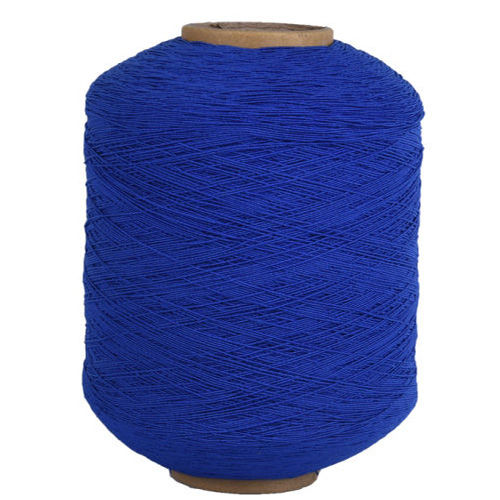
Spandex is a manufactured elastic fiber made from segmented polyurethane. Under the U.S. legal definition, the fiber-forming substance contains at least 85% segmented polyurethane. It is normally used with cotton, polyester, nylon or other fibers rather than making up most of a garment by itself.
A pair of stretch jeans may contain only 2% or 3% spandex. The elastic filament can run through yarn after yarn across the cloth, so that small share of the total fiber weight can influence movement through a much larger area.
Spandex fiber has exceptionally high elongation. CottonWorks gives at least 200% elongation, with some fibers reaching about 800%. A filament capable of that movement becomes much more restricted after it is built into a fabric, where other yarns and the textile structure control how far the finished material can extend.
Why Spandex Is So Elastic
The polyurethane structure contains flexible molecular regions connected through firmer domains. Pulling the filament changes the arrangement of those flexible sections and allows the fiber to lengthen. Once the force is removed, the polymer moves back toward its relaxed arrangement.
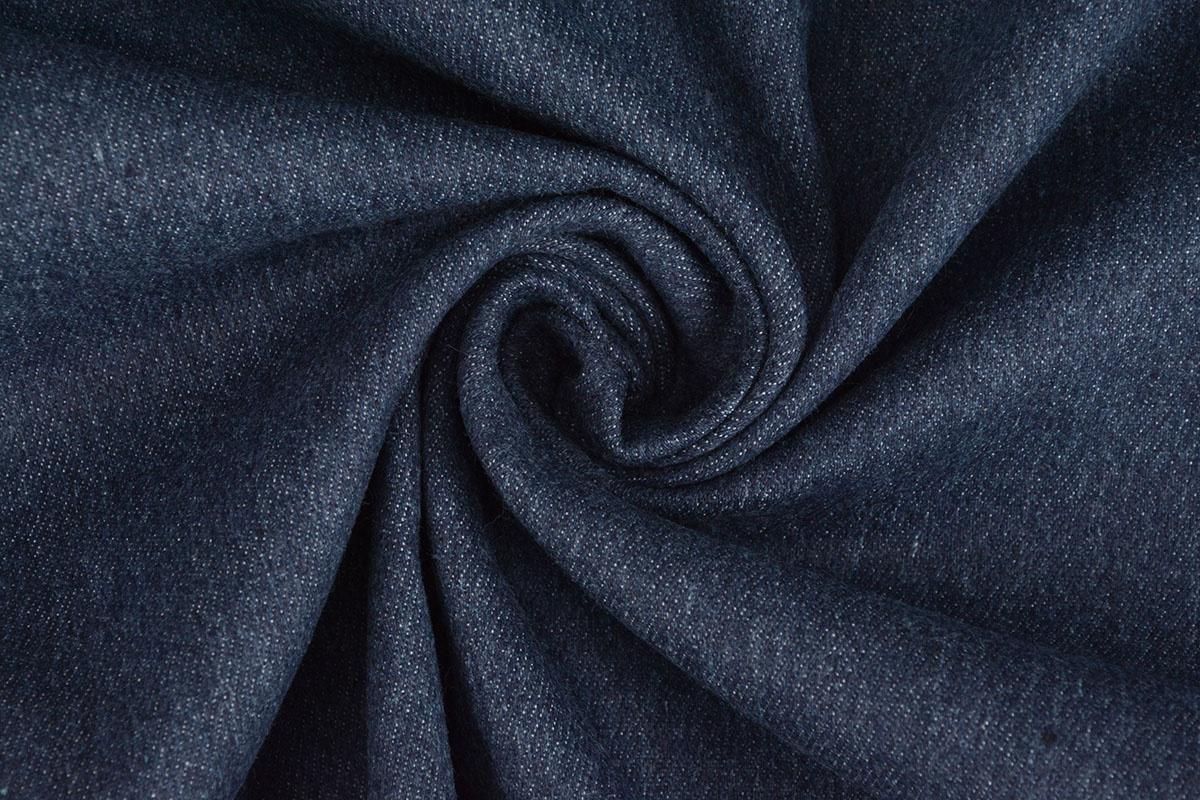
That movement happens inside a very fine filament. In a cotton-spandex T-shirt, most of what you see and touch can still come from cotton. In denim, the spandex may sit inside a yarn and remain almost invisible from the surface.
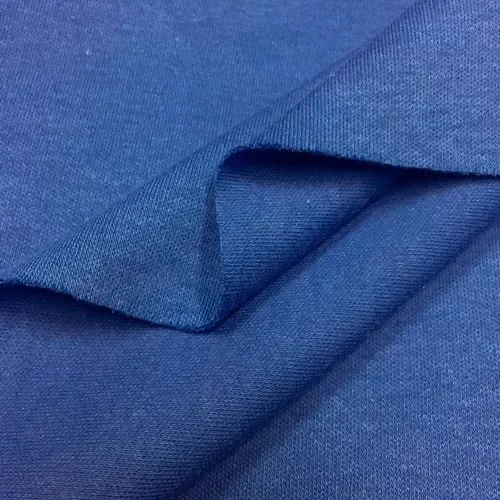
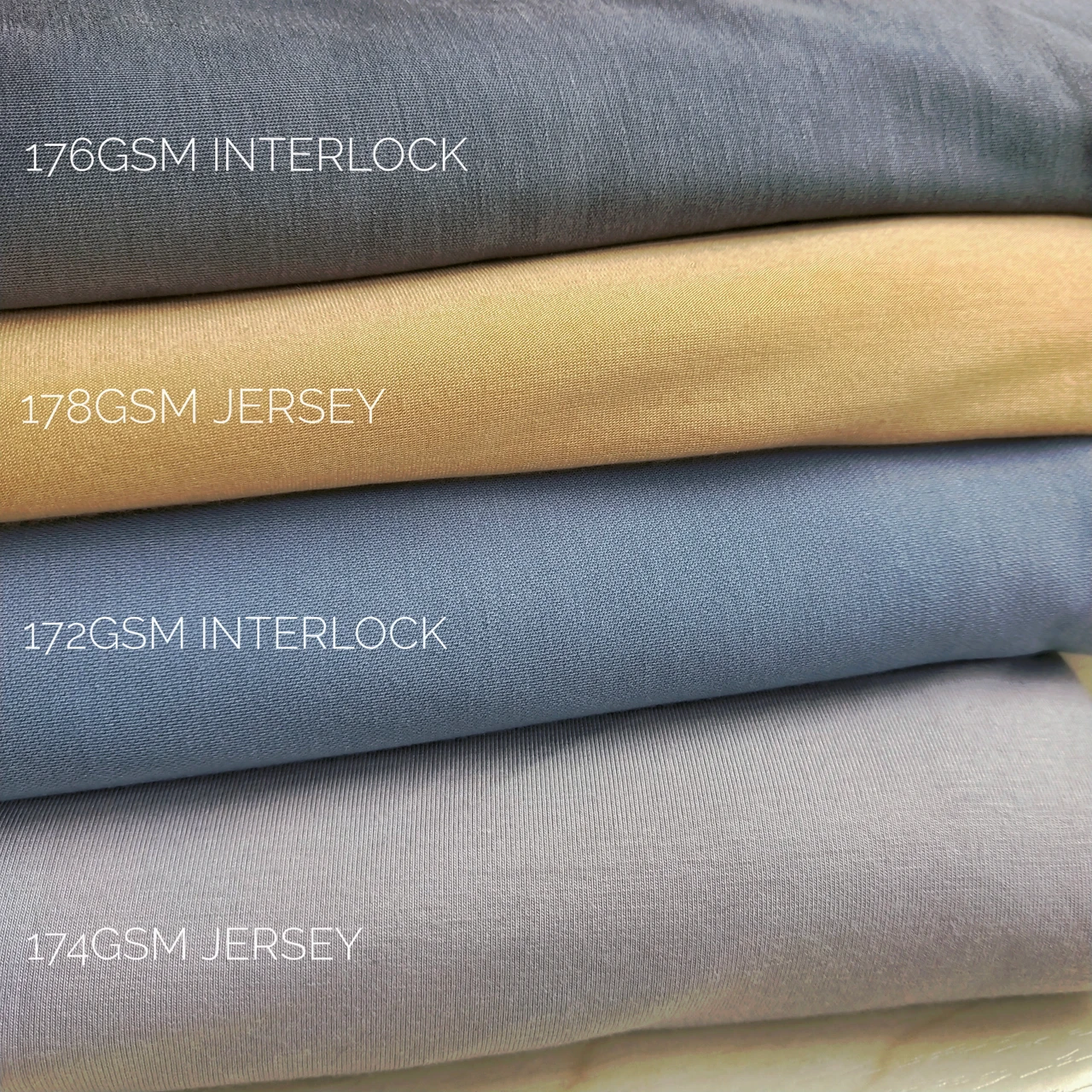
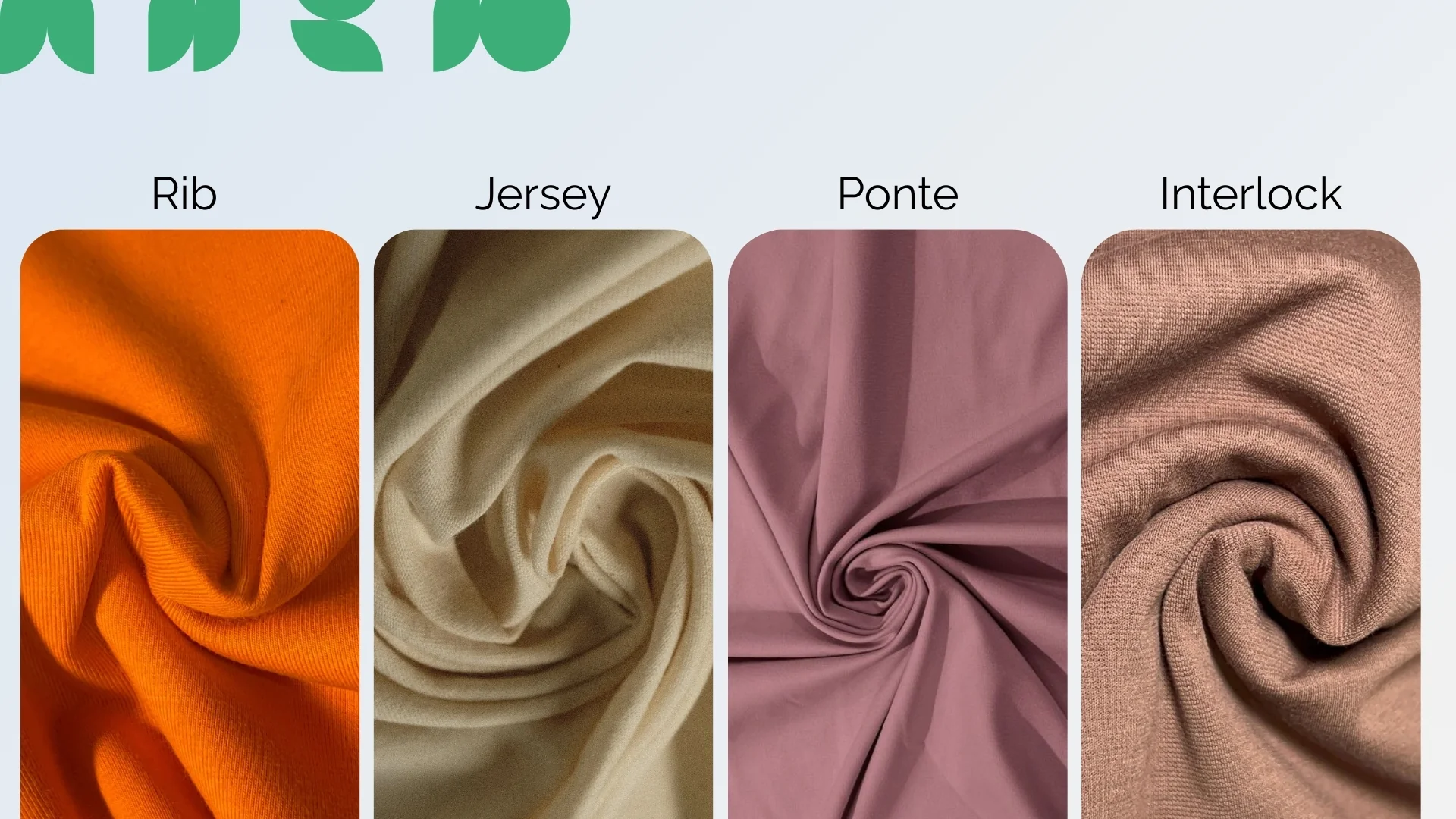
Spandex is therefore a fiber, not a particular fabric construction. Jersey, denim, rib, interlock and swimwear fabric can all contain it.
Spandex, Elastane and LYCRA®
The generic name most familiar in the United States is spandex. Elastane is widely used for the same fiber family in international textile terminology.
LYCRA® is a brand of elastane fiber. The original LYCRA® fiber was invented in 1958, and The LYCRA Company now produces many different LYCRA® fibers for different textile applications.
A garment label may therefore read 95% cotton / 5% elastane, even though an American product description might refer to the same generic type of elastic fiber as spandex. A LYCRA® hangtag identifies a branded fiber used in the textile.
How Spandex Becomes Part of a Fabric
Commercial spandex is commonly produced through solution spinning. Polyurethane polymer is prepared as a solution and passed through tiny spinneret openings. During dry spinning, solvent is removed from the emerging streams and continuous elastic filaments remain.
Textile mills describe the size of those yarns with units such as denier and dtex. A 70-denier yarn weighs 70 g per 9,000 m; 70 dtex records 70 g over 10,000 m.
The way the filament enters a fabric depends on the construction.
Stretch denim commonly uses core-spun yarn. Spandex travels through the center while cotton fibers twist around it. CottonWorks describes this method as an established route for producing elastic denim yarns.
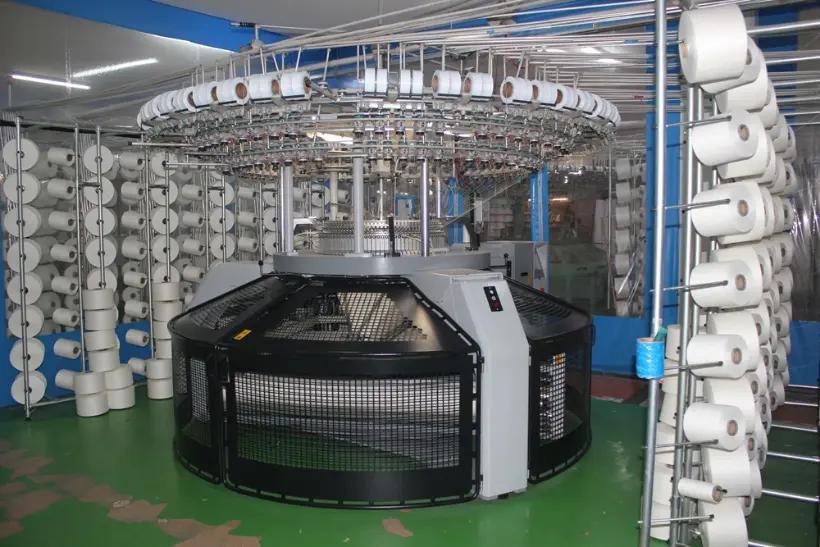
A knit can feed the elastic yarn directly during loop formation. In a plated single jersey, the main yarn forms the visible surface and spandex runs repeatedly through the knitted structure.
CottonWorks has published actual Fabricast constructions using 97% cotton / 3% spandex plated single jersey, along with a 98% cotton / 2% spandex 3/1 twill example.
Why Only 2% or 3% Can Make a Difference
A label reading:
97% cotton 3% spandex
records fiber content by weight.
In a simplified 100 g example, roughly 3 g of the fiber content is spandex. That filament can still repeat throughout thousands of knitted loops or sit inside filling yarns running across the whole width of a woven fabric.
This is also why the number on the care label cannot be used as a stretch percentage.
Suppose two marks are placed 100 mm apart on a fabric sample. During a specified test they move to 140 mm:
(140 − 100) ÷ 100 × 100 = 40% extension
A fabric labeled 5% spandex can produce a value such as 40% under a particular test, because composition and finished-fabric movement are measured in different ways.
Yarn size, spandex feed, stitch length, weave or knit density, finished width and processing all affect the result.
Stretch Is Only Half of the Wear Behavior
Consider a fabric that starts at a 100 mm gauge length and is extended to 150 mm. After the load is removed and the prescribed recovery period has passed, the marks settle at 104 mm.
The remaining 4 mm is growth left after extension.
That behavior becomes visible in garments around knees, elbows, waistbands and seats. Sitting keeps trouser fabric extended around the knees and hips for long periods, so the material's recovery becomes important after the wearer stands again.
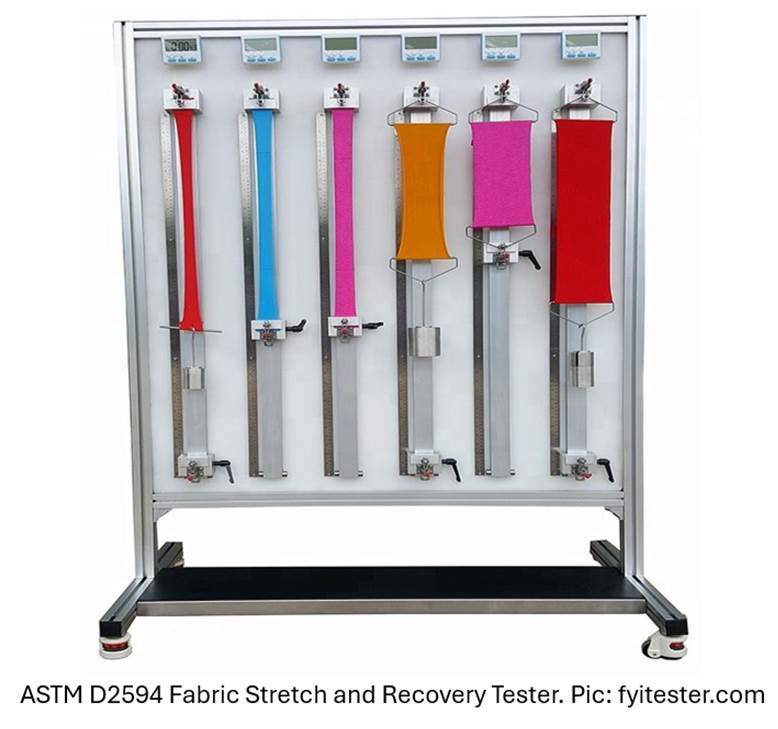
ASTM D2594/D2594M-21 covers stretch and growth measurements for knitted fabrics having low-power stretch. Fabric stretch is measured under a known load, and growth is evaluated after a known extension has been applied and removed.
Stretch woven fabrics use methods such as ASTM D3107-26. Its current scope includes woven fabrics with more than 12% stretch under the conditions covered by the standard, with 1.35 kg (3 lb) and 1.8 kg (4 lb) tension options.
A supplier's figure such as “45% stretch” is therefore much more useful when the test method, fabric direction and test conditions are attached.
What Spandex Does in Jeans and Leggings
In many stretch denims, the elastic core yarn is placed in the filling direction across the width of the cloth. Once cut into jeans, that movement is available around areas such as the waist, hips and thighs.
The denim can still keep a cotton-dominated surface because the elastic filament sits inside a cotton-covered yarn.
Leggings ask more of the elastic structure. The fabric begins extending as the garment passes over the hips, remains under tension around the waist and thighs, and moves farther during actions such as squatting.
Spandex percentage alone cannot describe how firm leggings will feel. A dense knit can require substantial force to extend even when another fabric carries a similar fiber composition. GSM, yarn size, loop dimensions, elastic-yarn specification and garment measurements all contribute.
The same principle applies to the phrase four-way stretch. It refers to useful movement in both principal fabric directions. It does not identify a particular spandex percentage.
A Fabric Can Stretch Without Spandex
Knitted loops can create movement even when the yarn itself has little elasticity. A 100% cotton jersey usually gives across its width because its loops change geometry as the material is pulled.
Mechanical stretch can also be engineered into woven cotton.
Cotton Incorporated's NATURAL STRETCH technology uses 100% cotton and lists typical filling-direction stretch of 10% to 18%, depending on fabric weight and weave. Its process controls the woven structure and finishing to create additional weft crimp without elastomeric yarn.
So the presence of stretch in a garment is not, by itself, proof that spandex is present.
Finishing Changes the Way Spandex Fabric Behaves
A newly knitted stretch fabric has not reached its final dimensions.
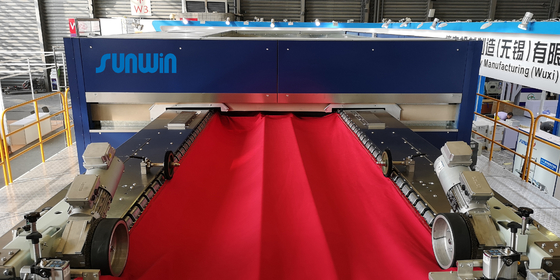
Dyeing, drying, width control and heat setting change the way the loops and elastic yarn sit in the finished cloth. If a knit is held wider during finishing, its resting geometry changes. Fabric density, GSM and available extension can move with it.
Heat setting is particularly important in many elastane constructions because time, temperature and tension affect dimensional stability and the state of the elastic component.
These values are set for the actual fabric being produced. A process developed for one cotton-spandex jersey should not be treated as a universal recipe for every elastane fabric.
For repeat orders, mills commonly need more than the fiber composition to reproduce the original result. Finished width, fabric weight, yarn details and processing conditions can all matter.
What Chlorine Does to Spandex
Swimwear adds chemical exposure to the repeated stretching already happening around the body.
ISO 17608:2015 provides a method for measuring the resistance of bare elastane yarn to chlorinated swimming-pool water through breaking-force retention. The standard was reviewed and confirmed again in 2026.
The ISO scope also states that results obtained from bare yarn cannot be used to predict the performance of the finished fabric. A swimsuit contains other fibers, knit geometry, dyes and finishes that affect its behavior in use.
This is one reason swimwear suppliers may specify elastane developed for repeated pool exposure rather than relying only on the percentage printed on the composition label.
Reading a Spandex Fabric Specification
The description:
95% cotton / 5% spandex single jersey
identifies the fiber blend and general construction, but a production fabric normally needs more information attached to it.
A working record can include the finished GSM, usable width, cotton yarn count, spandex denier or dtex, plating method, stretch in each direction, growth or recovery result, shrinkage test and confirmed physical swatch.
The stretch figures should carry their test conditions. Shrinkage needs the laundering method used to produce the result. The physical swatch preserves hand and surface characteristics that are difficult to capture with composition percentages alone.
What Is Sherpa Fabric?
What Is Sherpa Fabric?
What Is Sherpa Fabric?
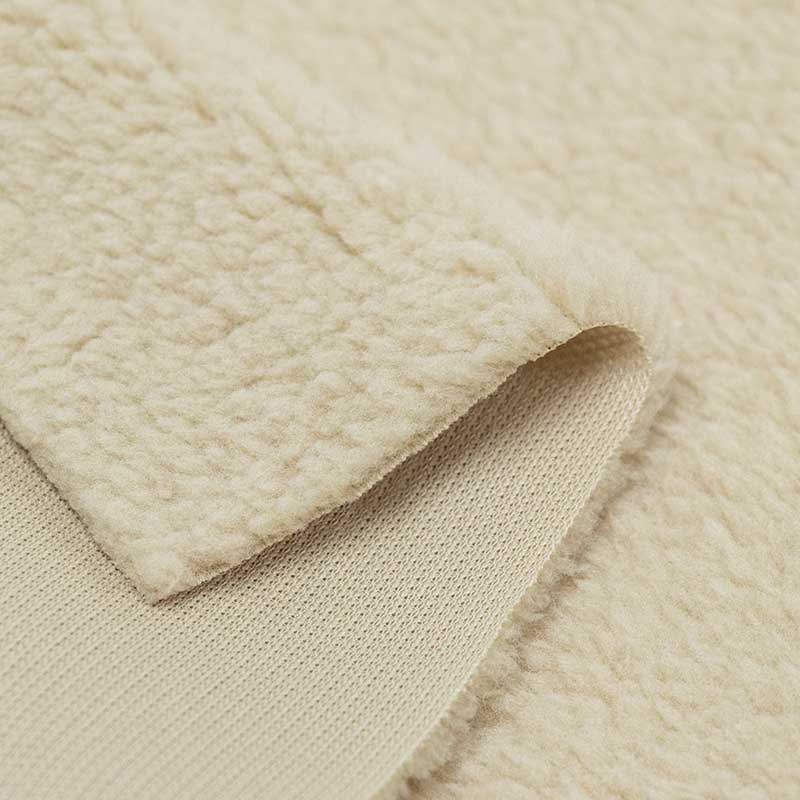
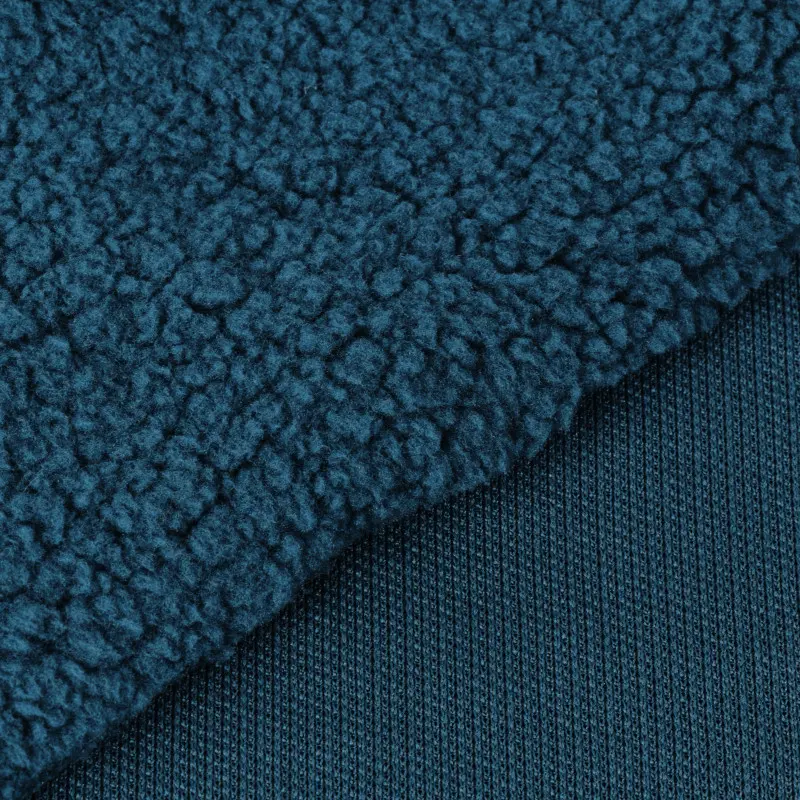
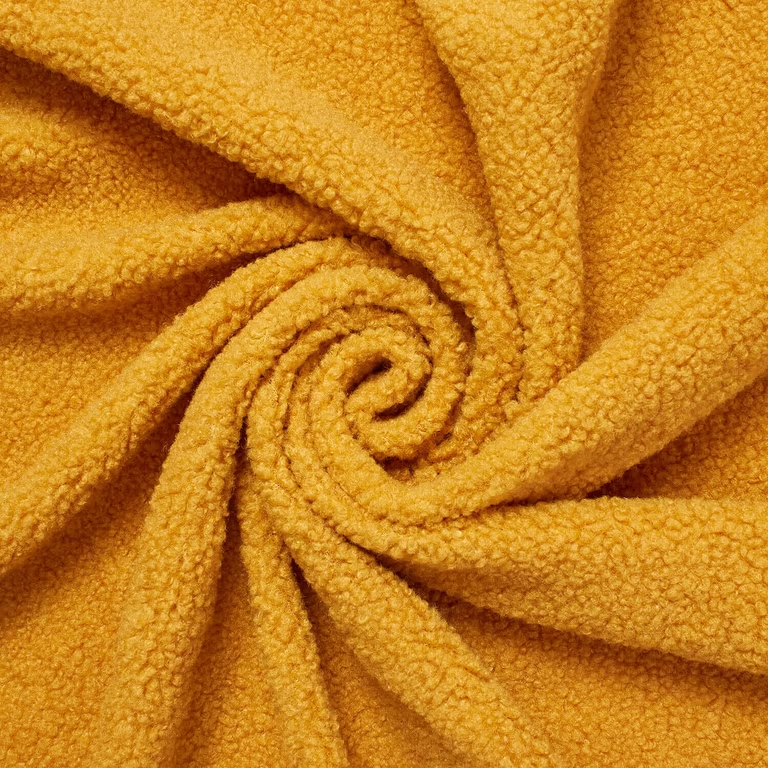
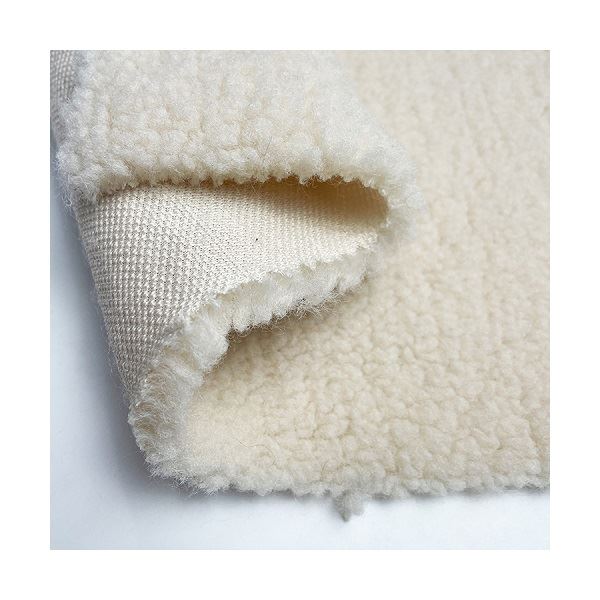
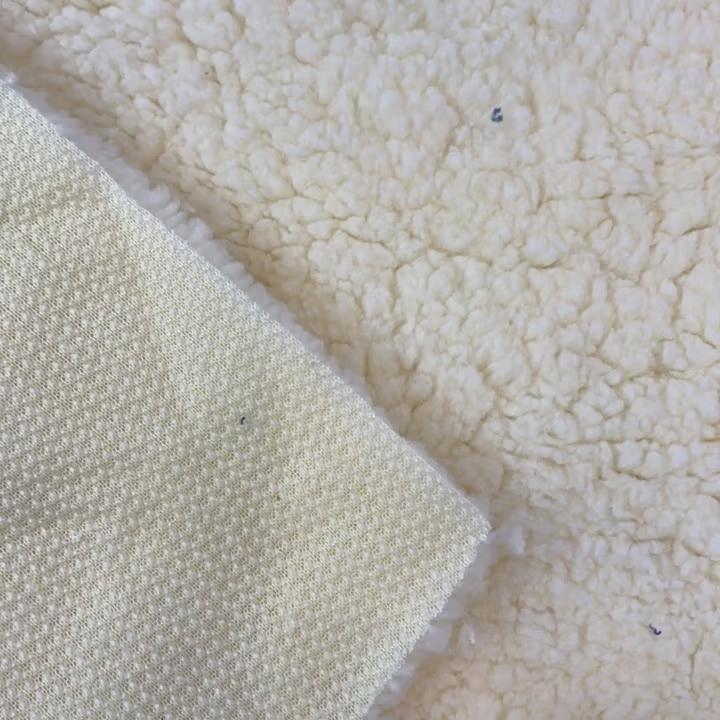
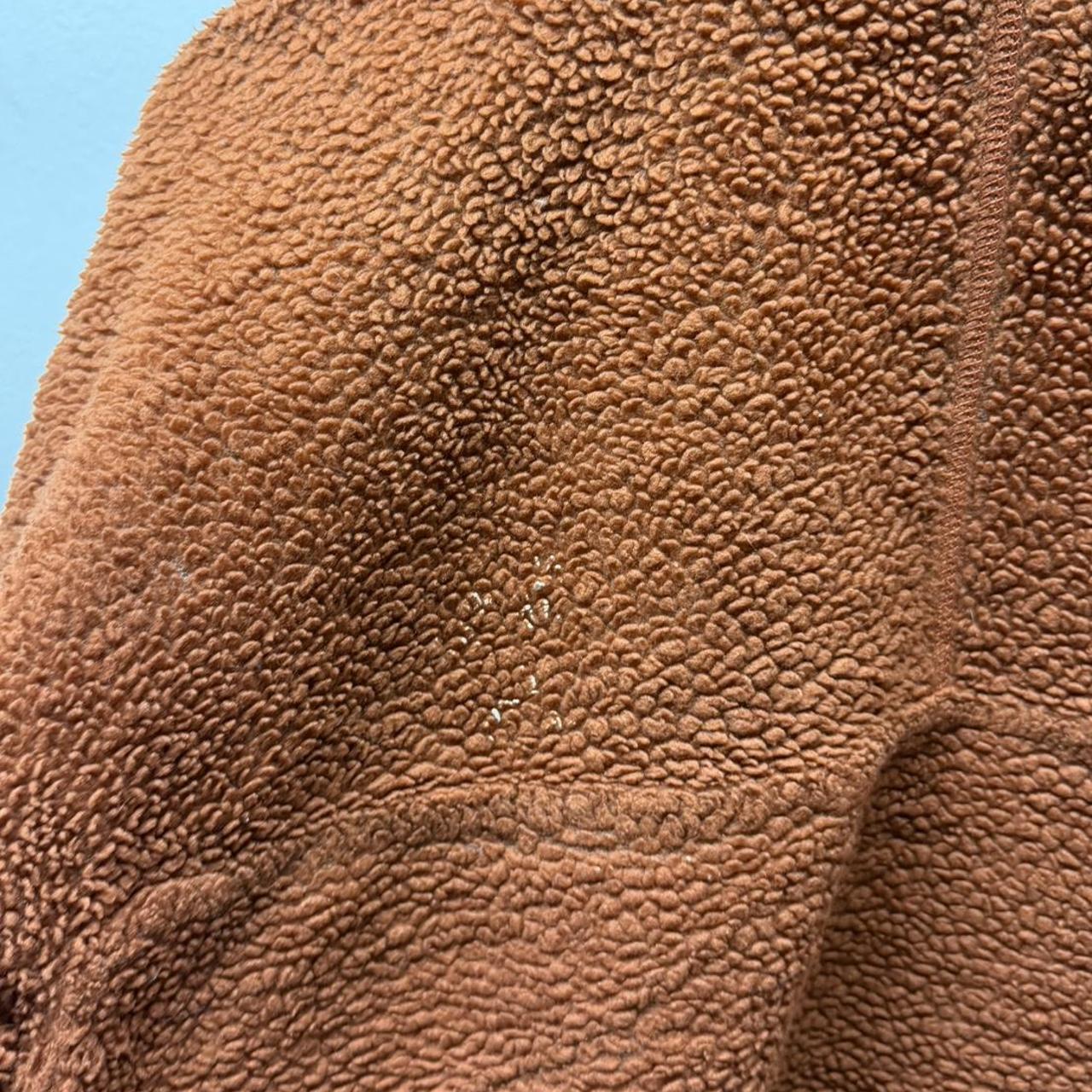
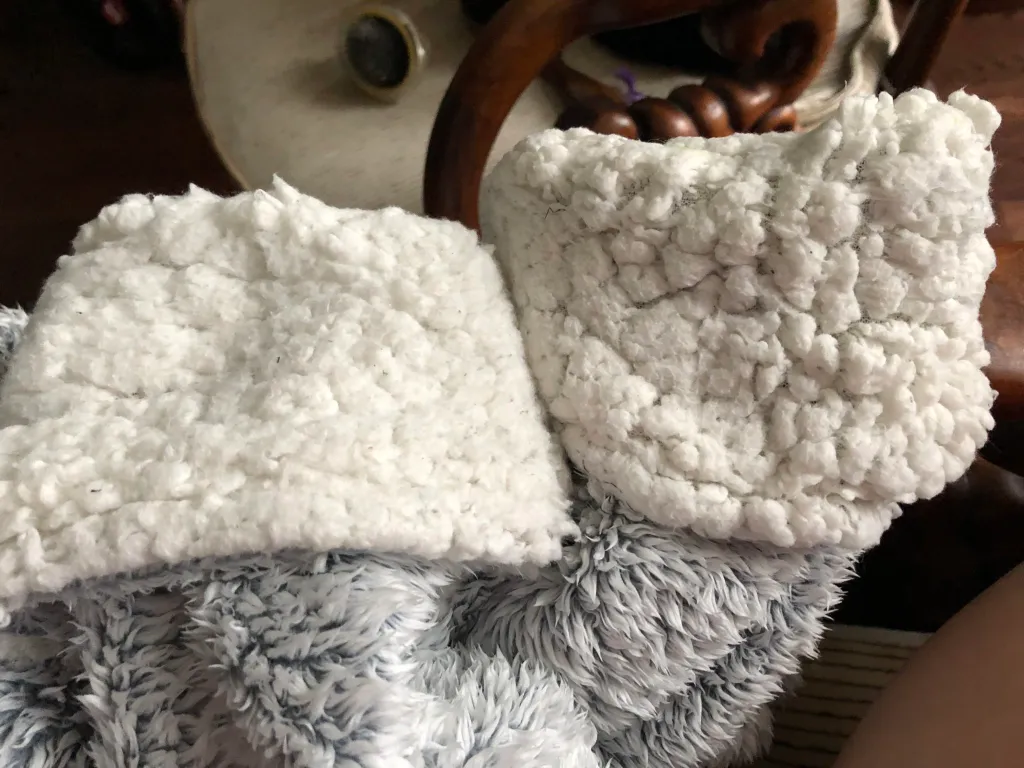
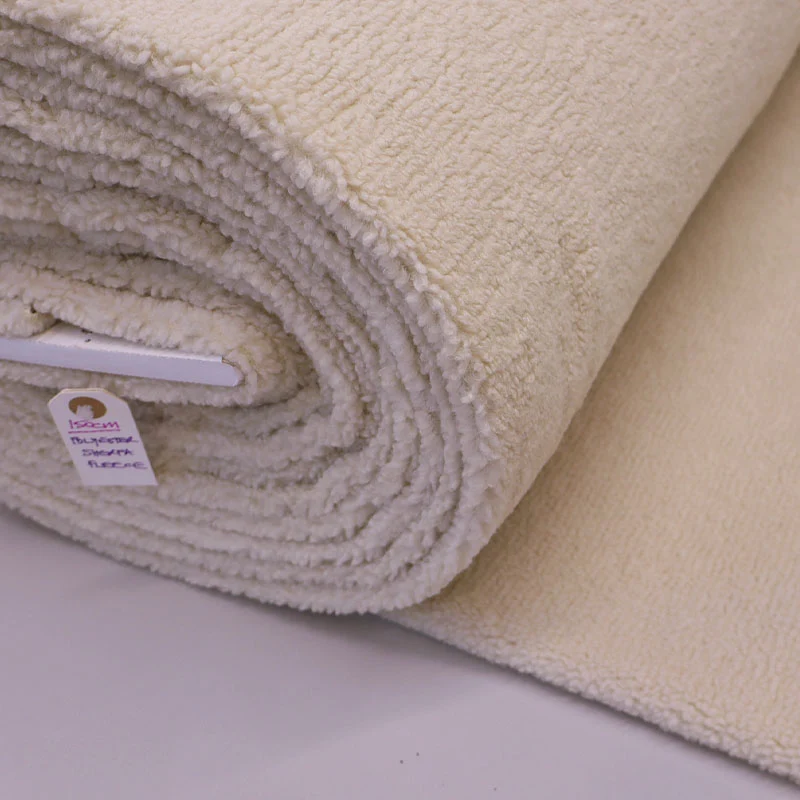
Sherpa fabric is a high-loft pile textile with a thick, curly surface that resembles sheep fleece. Most sherpa used in jackets, coat linings, hoodies and winter outerwear starts with a knitted base. Finishing raises fibers above that base and develops the uneven clusters that create the familiar lambswool-like face.
Polyester is common in commercial sherpa because it handles knitting and mechanical pile finishing well. The material also exists in cotton and blended constructions. One current cotton sherpa is specified at about 300 GSM, 150 cm wide, with four-way stretch, showing how widely the structure can vary without losing the recognizable sherpa surface.
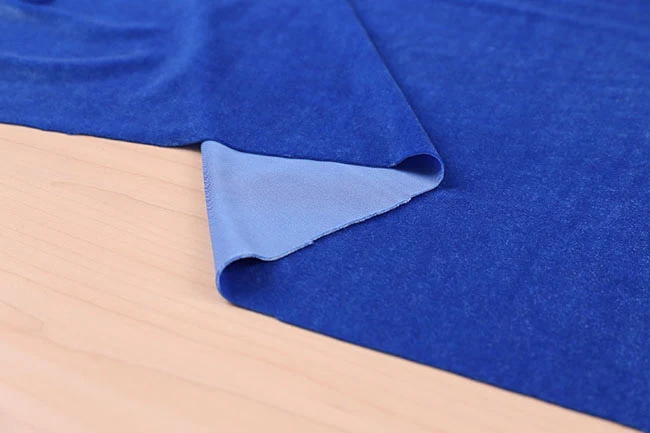
A typical single-face sherpa looks very different from one side to the other. The face carries the curls and most of the loft. Turn the cloth over and the flatter knitted base becomes visible. Some qualities have a more finished reverse, and heavier versions can have another textile attached underneath.
That combination of a textile backing and a deep, irregular pile is the basic structure behind sherpa.
How the Curly Sherpa Surface Is Made
The lamb-fleece appearance develops during finishing.
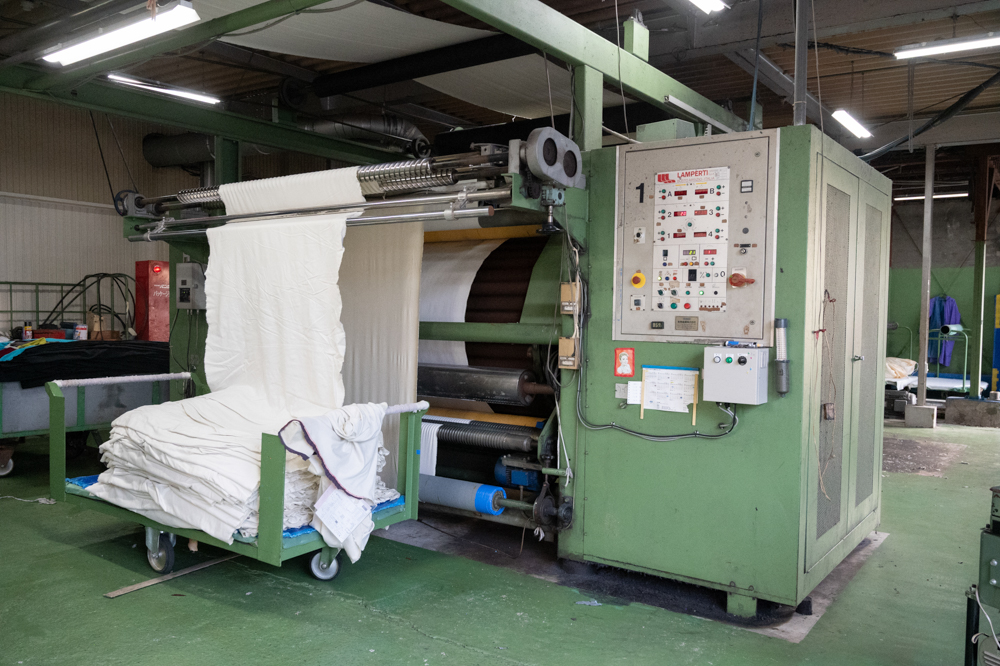
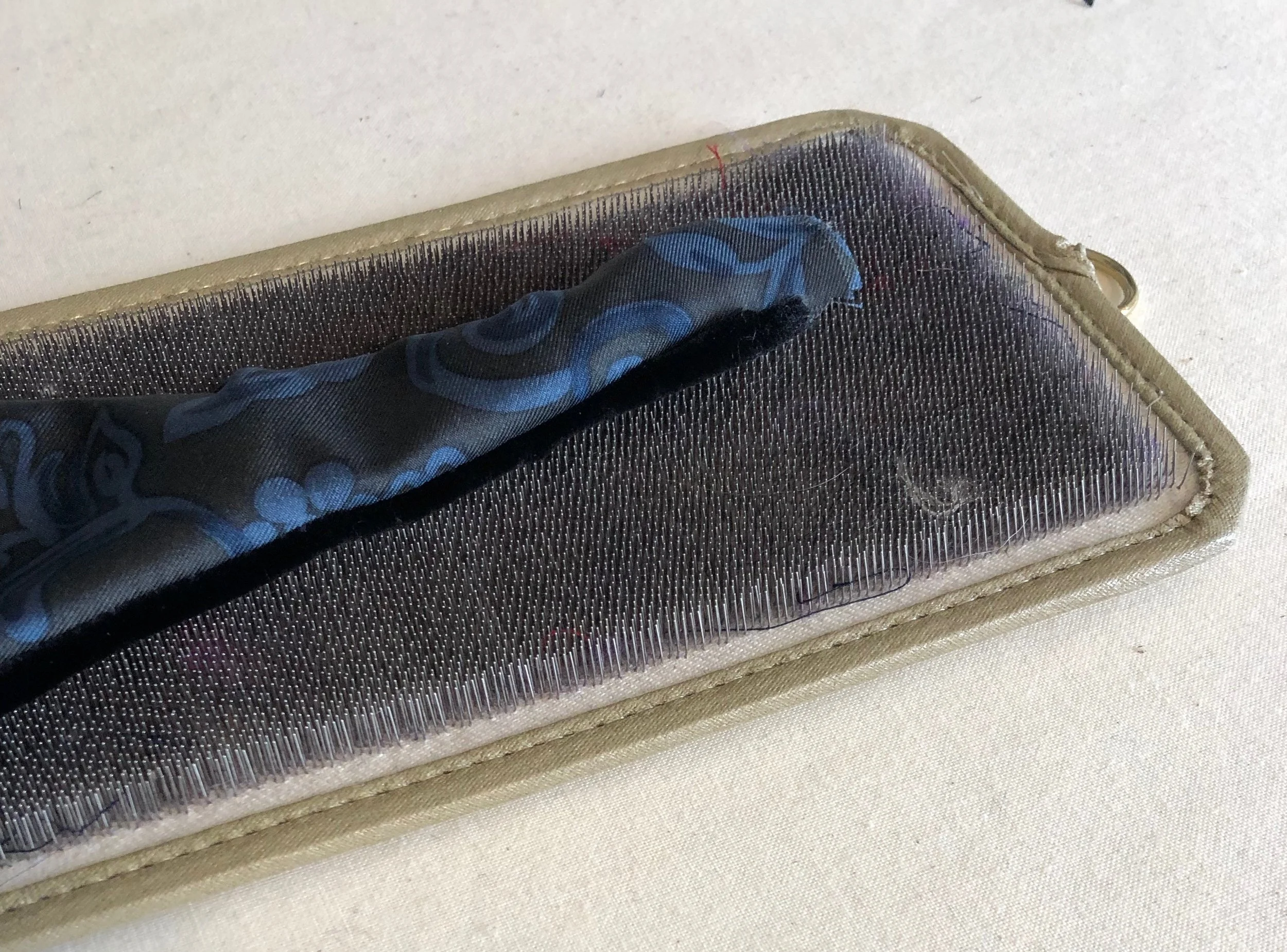
Knitting first creates the structure that will carry the pile. Mechanical napping then works fibers out from the surface and increases the depth above the base. Combing opens dense areas and separates fibers that remain packed together. Shearing controls excessive height where the pile needs a more even level.
Further finishing determines how open, compact or clustered the final curls become.
Under side lighting, a good sherpa surface has visible depth. Some curls sit higher, narrow valleys run between them, and the pile changes slightly in direction across the cloth. A perfectly flat, uniform fuzzy face would look closer to many ordinary fleece constructions.
Problems become clearer on a larger cutting. Weak pile formation can continue across the width as a thin band. Sparse areas expose more of the knitted base. These defects may disappear almost completely when the fabric is judged from a small color swatch.
Commercial sherpa covers a substantial range of physical constructions. A current polyester example from Kangman is 300 GSM, 150 cm wide and knitted, intended for jackets, linings, sweaters and outdoor clothing.
GSM Tells Only One Part of the Story
GSM is fabric weight per square meter.
A 300 GSM sherpa contains 300 grams of material across one square meter. That number gives a useful production reference for weight consistency.
Pile depth and finished thickness need their own measurements.
Fabric Wholesale Direct currently lists an unbacked polyester sherpa at 280 GSM, 1.30 mm thick, 68/69 inches wide and 15% vertical stretch. Its backed version is 380 GSM, 1.60 mm thick, 56/57 inches wide and also listed with 15% vertical stretch.
Those two products show what happens when additional structure is placed underneath the pile. The backed quality carries another 100 grams per square meter and gains published thickness as well.
Pile height adds another dimension. A fabric can concentrate much of its fiber close to the knitted base or spread the surface through a deeper loft. Fold several layers at a collar edge and that difference becomes much easier to feel than it was on the cutting table.
Thickness figures also depend on measurement pressure. ASTM D1777-26 covers knitted, napped and pile textiles and states that apparent thickness varies considerably with the pressure applied during testing. A mill comparing sample and bulk should therefore keep the measurement pressure consistent.
The Backing Has a Major Effect on Stretch
The fluffy face can hide a surprisingly mobile knit underneath.
A fabric made from 100% polyester may still extend through the loop structure of the backing. Cotton sherpa can behave the same way. Rijs Textiles currently sells a 100% cotton sherpa at roughly 300 GSM and 150 cm width with four-way stretch.
For garment development, the amount of stretch needs an actual measurement.
ASTM D2594/D2594M-21 measures stretch when a known load is applied and records growth after an imposed extension has been removed.
Take a development sample with a starting gauge length of 100 mm. If the marked section reaches 125 mm under the selected test condition, the extension is:
(125 − 100) ÷ 100 × 100 = 25%
After recovery, suppose the same section settles at 103 mm. The remaining growth is 3%.
Those numbers belong to that sample and test condition. A production sheet should record direction, method and result so the next lot can be checked against the same reference.
This matters especially around jacket fronts. Zipper tape stays relatively stable during sewing, while a knitted sherpa edge can lengthen if it is fed with too much tension.
A front pattern edge designed at 650 mm and finished at 663 mm has gained 13 mm, equal to 2%. That amount can create visible waviness when the zipper is closed.
Why Sherpa Feels Warm
The pile creates loft, and the loft contains many small pockets of air.
Air held within the raised fiber structure slows heat transfer away from the body. Density affects how much fiber occupies the pile, and the backing influences how freely air can move through the material.
A jacket changes the system further.
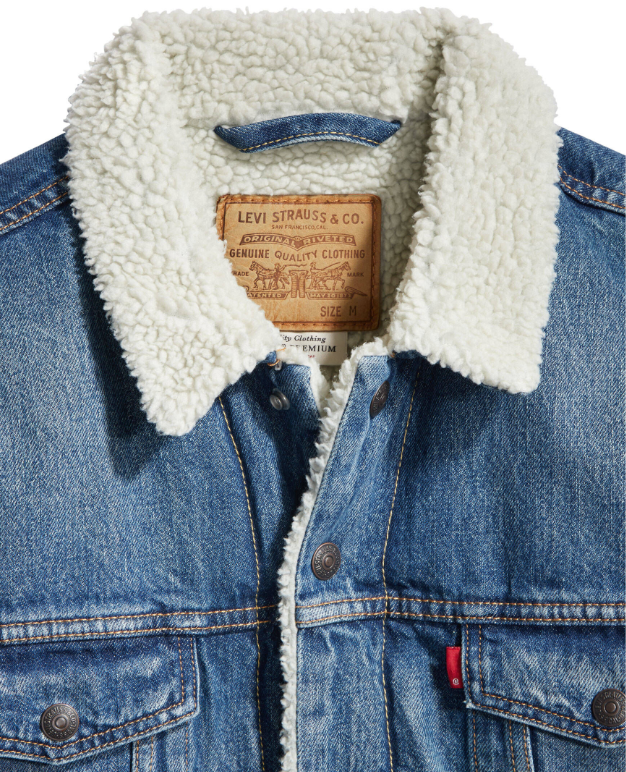
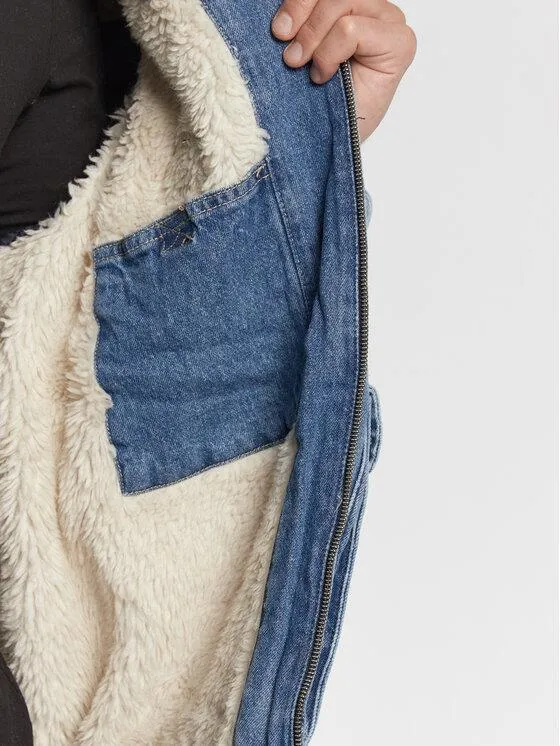
Dense denim surrounding a sherpa lining limits air movement around the pile. A lighter, more open outer layer creates another thermal result even when the sherpa itself stays unchanged.
This makes GSM a poor shortcut for predicting warmth. Two 300 GSM sherpa fabrics can have different pile structures, backing permeability and thermal resistance.
ISO 11092:2026 provides a laboratory method for measuring thermal resistance and water-vapour resistance of textile materials, including multilayer assemblies used in clothing. A shell and sherpa lining can therefore be tested together when the finished jacket needs a measured thermal value.
Air permeability can be measured separately. ASTM D737 applies to knitted, napped, layered and pile fabrics.
For a denim jacket, testing the complete shell-and-lining assembly may be more useful than looking at the sherpa number in isolation.
Sherpa Changes the Space Inside a Jacket
Pile occupies real volume.
A jacket developed with a thin woven lining can feel different once the actual sherpa goes into the sample. The change often shows first around the upper arm, where several millimeters of pile sit between the body and the shell.
The armhole concentrates seam allowances into a relatively small area. A collar folds the lining around an edge. Along the front opening, shell cloth, sherpa and zipper tape all meet within a narrow strip.
This is why fitting with the real lining fabric matters.
Thickness becomes especially obvious at the collar. Take the backed commercial sherpa mentioned earlier at 1.60 mm published thickness. Two flat layers already represent more than 3 mm before the shell, interfacing and seam allowances enter the construction. Sewing compresses the pile, so the finished edge needs to be checked on the actual garment rather than calculated from the flat fabric alone.
Factories often reduce pile inside selected hidden seam allowances when the edge becomes too bulky. The operation needs to stay inside the allowance so the visible face keeps its full coverage.
Fibers caught in an exposed seam can also be lifted gently back toward the surface after sewing, which helps the join disappear into the surrounding pile.
Backed Sherpa Has More Structure
A backed sherpa combines the pile construction with another textile underneath.
The 380 GSM Fabric Wholesale Direct example uses a plain woven backing. Its pile is knitted onto a 0.30 mm base, then that base is secured to the woven layer. The finished fabric is listed at 1.60 mm thickness and 15% vertical stretch.
The same supplier's unbacked sherpa is lighter at 280 GSM and measures 1.30 mm thick.
That extra layer becomes obvious when the material is folded through a pocket opening or collar. Large panels also carry more body.
For pattern development, the complete bonded or backed material should be handled as one fabric. Testing only the fluffy layer would miss much of the stiffness that controls the finished coat.
What Repeated Wear Does to the Surface
Sherpa often shows wear through changes in the pile before anything happens to the backing.
A cuff spends hours touching tables and desks. Hands pass through pocket openings. A bag strap repeatedly presses the shoulder.
The fibers in those areas gradually gather together, and the open valleys become less visible. The affected section starts to look flatter and denser. This is the surface change usually described as matting.
Pilling has a different appearance. Small tangled balls form on the face. ASTM D3512 evaluates pilling against visual standards on a scale from 5 for no pilling to 1 for very severe pilling.
A sherpa sample can therefore receive an acceptable pilling grade while still showing noticeable pile flattening. The surface needs to be viewed for both conditions.
Loose fibers around freshly cut edges are another common sight during production. Cutting through the pile severs fibers along the pattern line, so some loose material on the cutting table is expected. Fiber loss continuing from the middle of the fabric during wear would need a separate investigation.
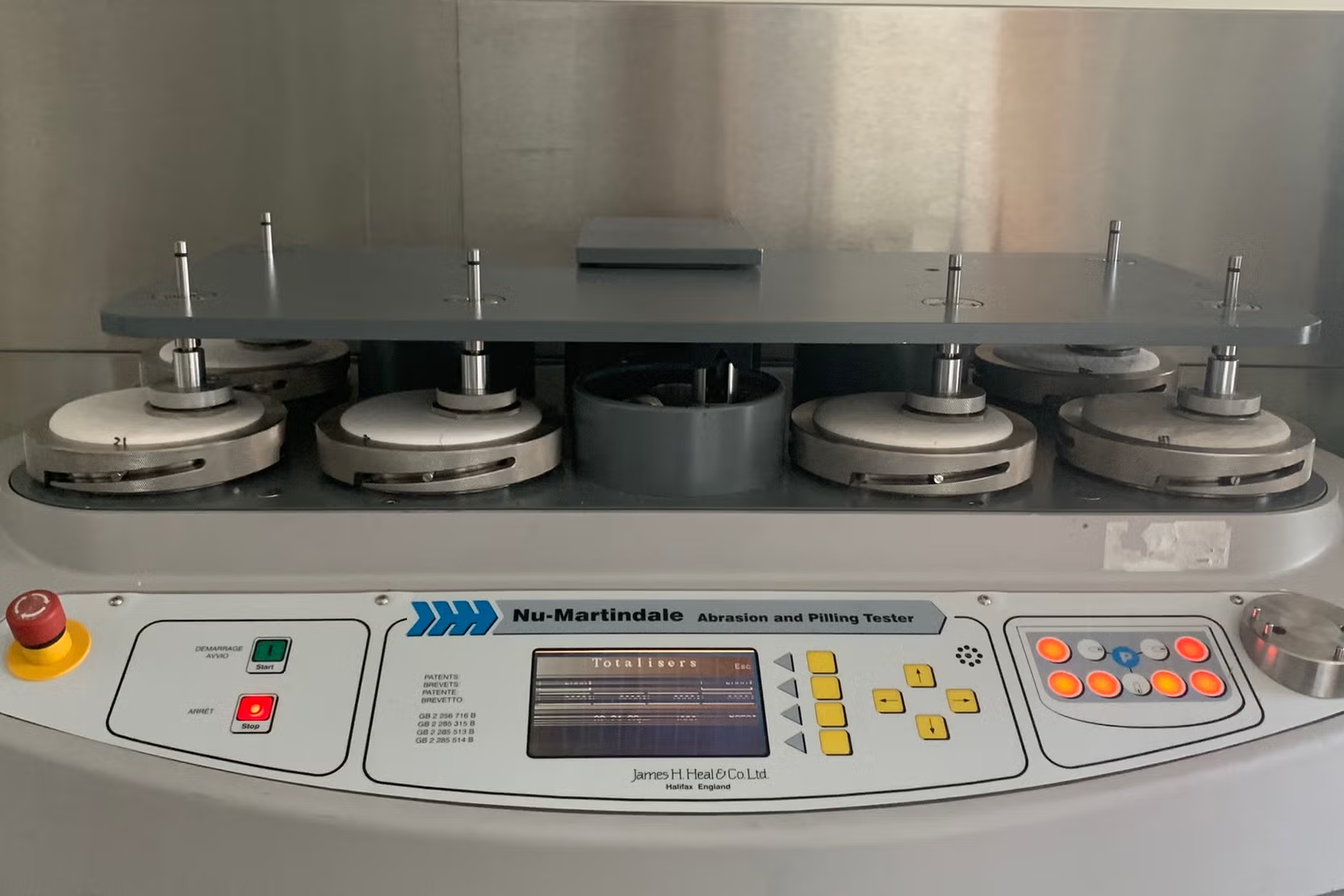
Abrasion testing can add another reference. The current 280 GSM and 380 GSM sherpa products cited above are both published at 25,000 cycles under ASTM D4966.
That number belongs to those specific fabrics. ASTM D4966 explains that Martindale results can vary between laboratories and operators, and laboratory abrasion results do not translate directly into a precise number of months or years of real-world wear.
For outerwear development, photographs taken at fixed test intervals can show when the pile begins to flatten or expose more backing.
Washing Changes More Than the Dimensions
Sherpa can keep its basic fabric structure and still look noticeably different after laundering.
The curls may pull into larger groups. Some sections can become flatter. Repeated movement during washing and drying can reduce the open loft that was visible on the original sample.
Dimensional change is still worth measuring.
Suppose two marks are 500 mm apart before laundering and 485 mm apart after the selected cycle:
(485 − 500) ÷ 500 × 100 = −3%
The fabric has shortened by 3% in that direction.
A useful result needs the wash conditions attached to it. AATCC TM135-2025 covers dimensional change of fabrics after home laundering and provides four washing temperatures, three agitation cycles and four drying procedures.
Length and width should be recorded separately.
Pile appearance needs its own reference. Keeping an unwashed sample and photographing both pieces under the same side lighting makes changes in curl size, clumping and loft much easier to see.
With polyester sherpa, the selected drying route also matters because the pile is made from thermoplastic fibers.
Sherpa, Polar Fleece, Teddy, Borg, and Shearling
The names around sherpa come from different parts of the clothing and textile market, so product descriptions often overlap.
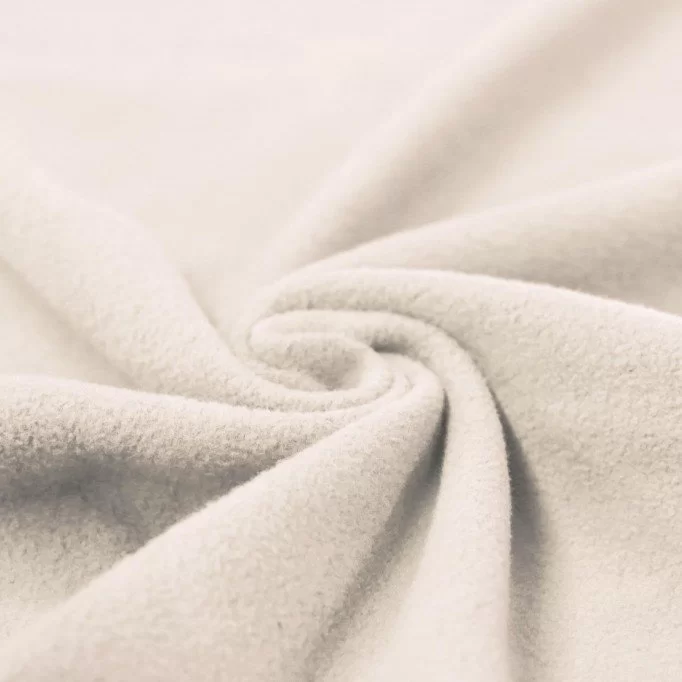
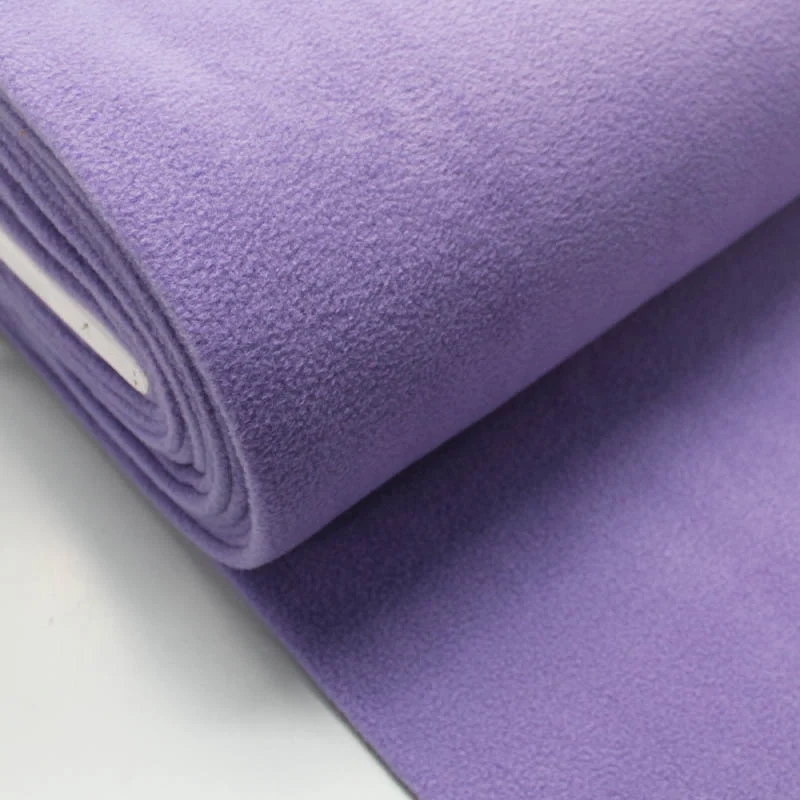
Polar fleece usually has a shorter, more even brushed surface. Sherpa has a deeper face with visible curls and valleys, giving it a stronger sheep-fleece appearance.
Teddy and borg are broader fashion-market names used for related high-pile fabrics. Their meaning can shift from one supplier to another, which makes a reference swatch more useful during sourcing than the name alone.
Shearling comes from sheep or lamb skin with the natural fleece still attached to the hide. The reverse of the material is skin.
A sherpa reverse shows textile construction: knit, finished fabric or an added backing.
That difference affects cutting, sewing and care long before the materials reach the finished garment.
Sherpa Can Be Made From More Than Polyester
Polyester appears across much of the commercial sherpa market.
The Kangman fabric at 300 GSM and 150 cm width is one example of a knitted 100% polyester quality used for jackets and linings.
Cotton sherpa gives the same fabric family another feel. The Rijs example uses 100% cotton, approximately 300 GSM, 150 cm width and four-way stretch, with a fluffy side and smoother jersey-knit reverse.
Fiber choice affects moisture absorption, drying behavior and care. The defining sherpa character still comes from the raised, clustered surface.
For production, composition belongs on the fabric specification beside weight, width and construction.
What a Sherpa Sample Should Show Before Production
A small hand swatch is enough to check color and basic hand feel. A larger cutting shows much more about the material.
Under side lighting, changes in curl density and thin pile bands become easier to see. Turning the cloth over reveals whether the backing is a simple knit, a finished second face or a separate woven layer.
The intended garment determines which measurements deserve attention.
A jacket lining needs usable width, fabric weight, finished thickness and enough stretch information to predict sewing behavior and internal volume. Full-sherpa outerwear adds pile durability and laundering performance. A backed coat fabric also needs its complete thickness and handling checked through collars, pockets and other folded areas.
The current market examples already span 280 GSM unbacked polyester sherpa at 1.30 mm, 300 GSM knitted polyester sherpa at 150 cm width, about 300 GSM cotton sherpa with four-way stretch, and 380 GSM backed polyester sherpa at 1.60 mm.
Those are four fabrics sold under the same general sherpa name, with different structures and different behavior once they reach a pattern.
What Is Velvet? Structure, Pile, Types, and How It Behaves in Clothing
What Is Velvet? Structure, Pile, Types, and How It Behaves in Clothing
What Is Velvet? Structure, Pile, Types, and How It Behaves in Clothing
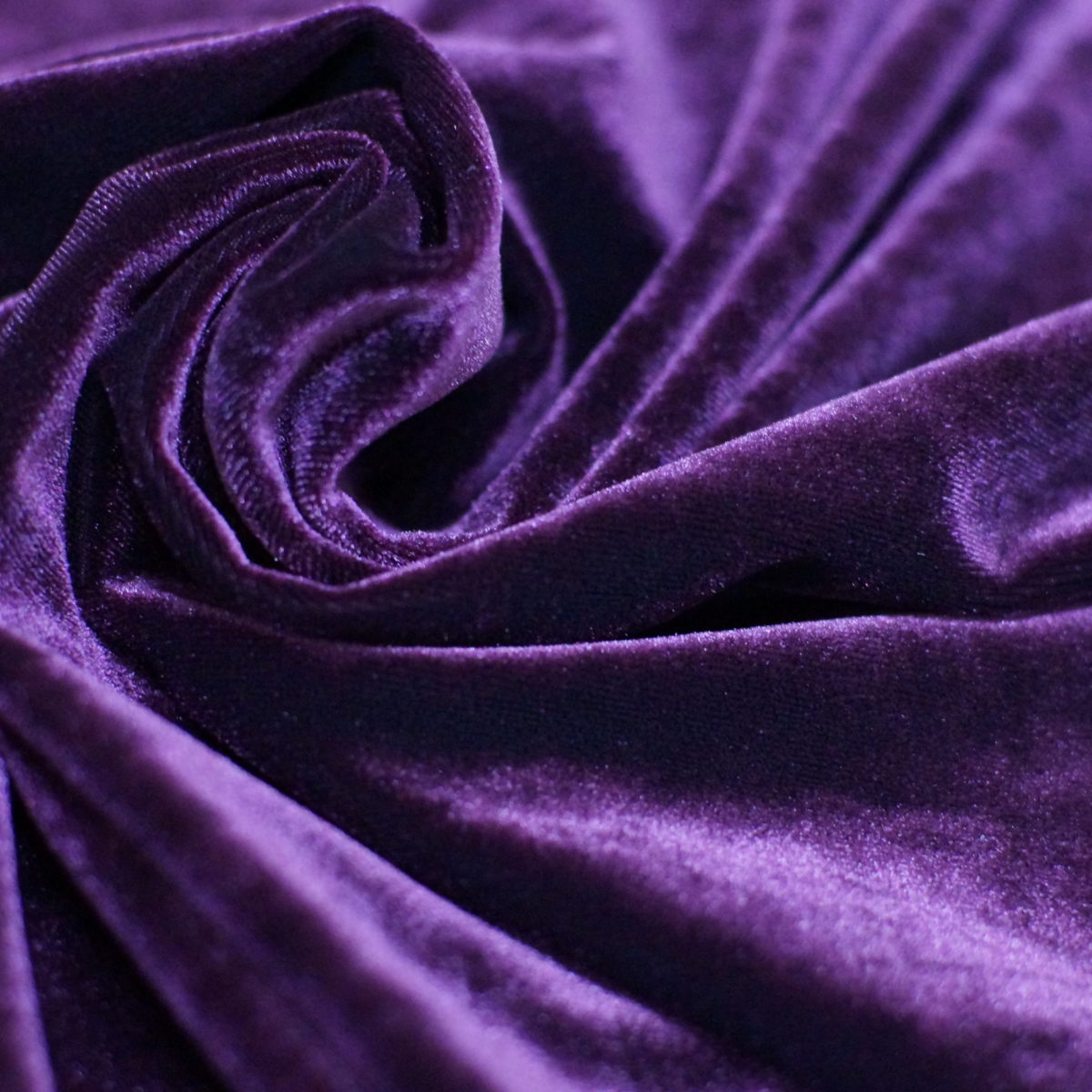
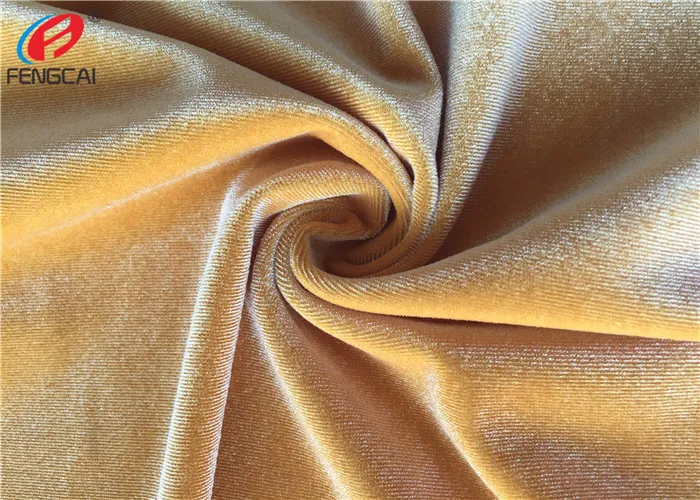
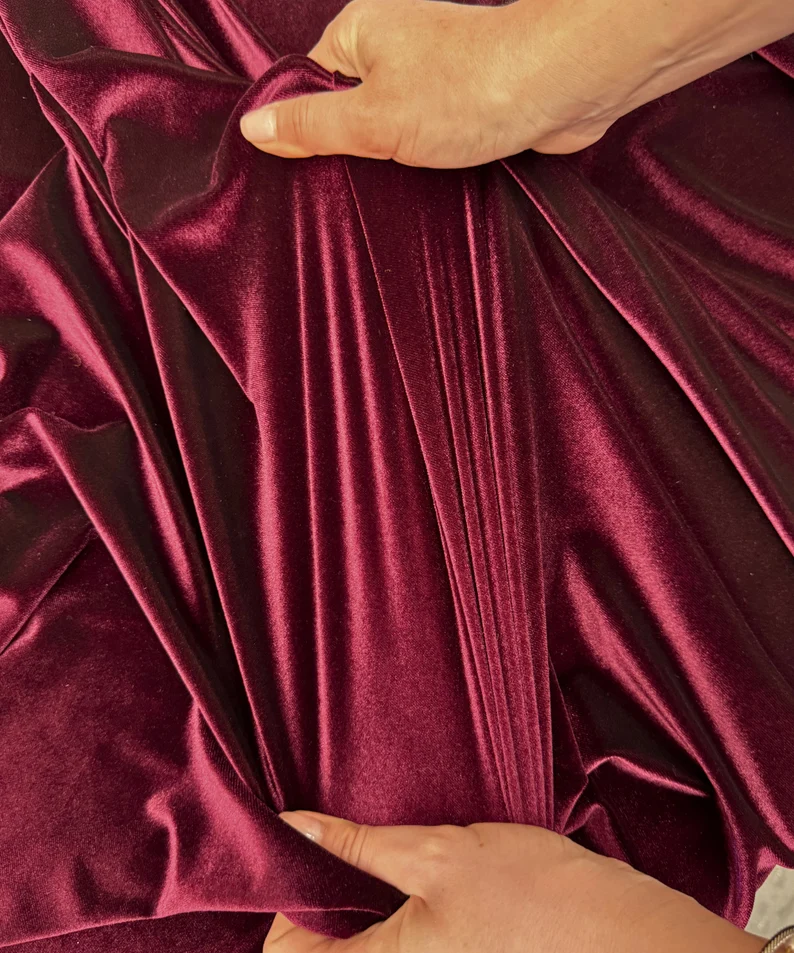
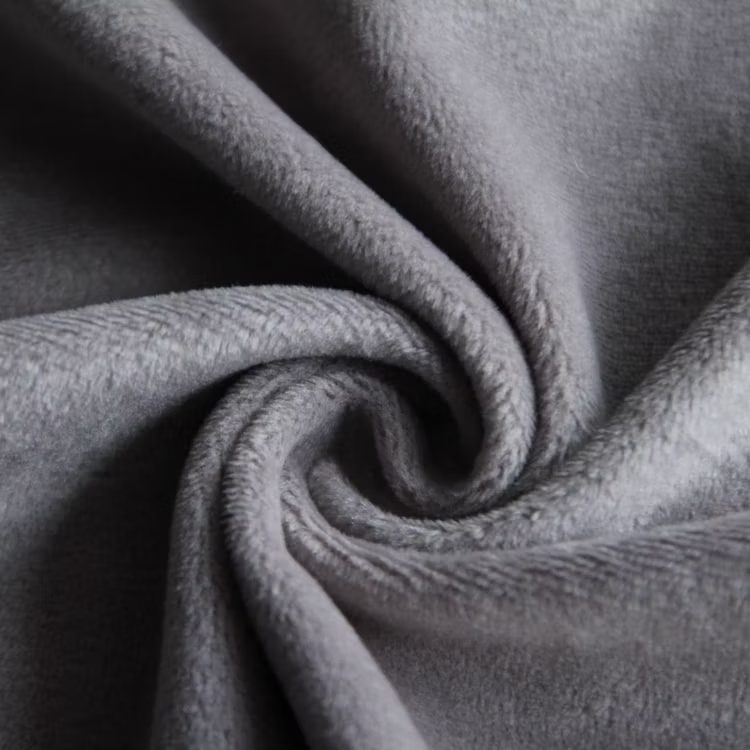
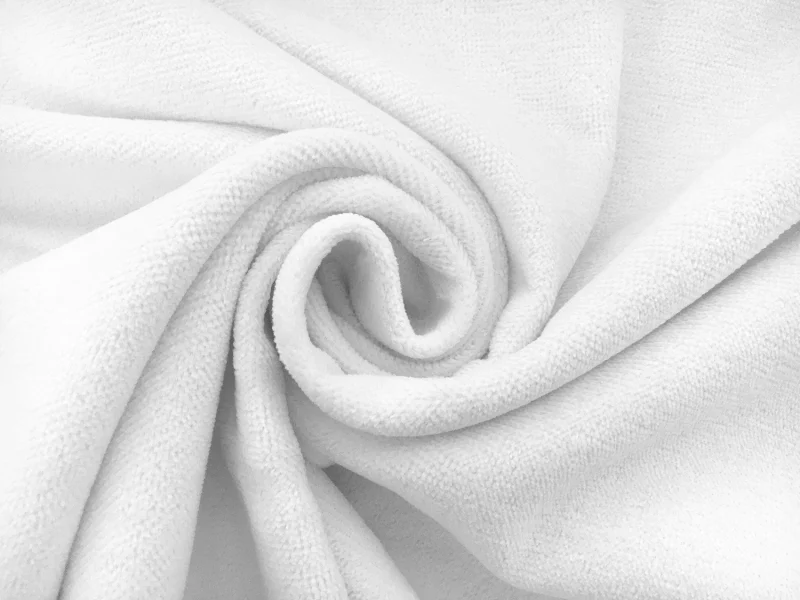
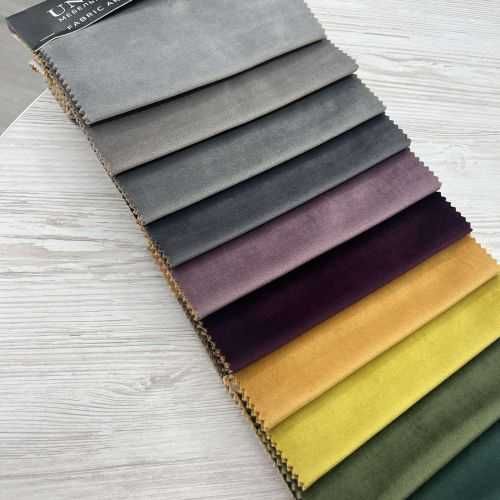
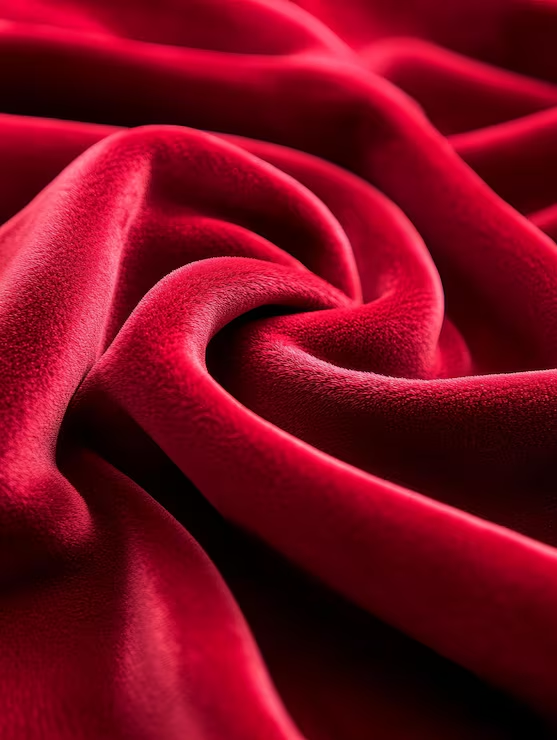
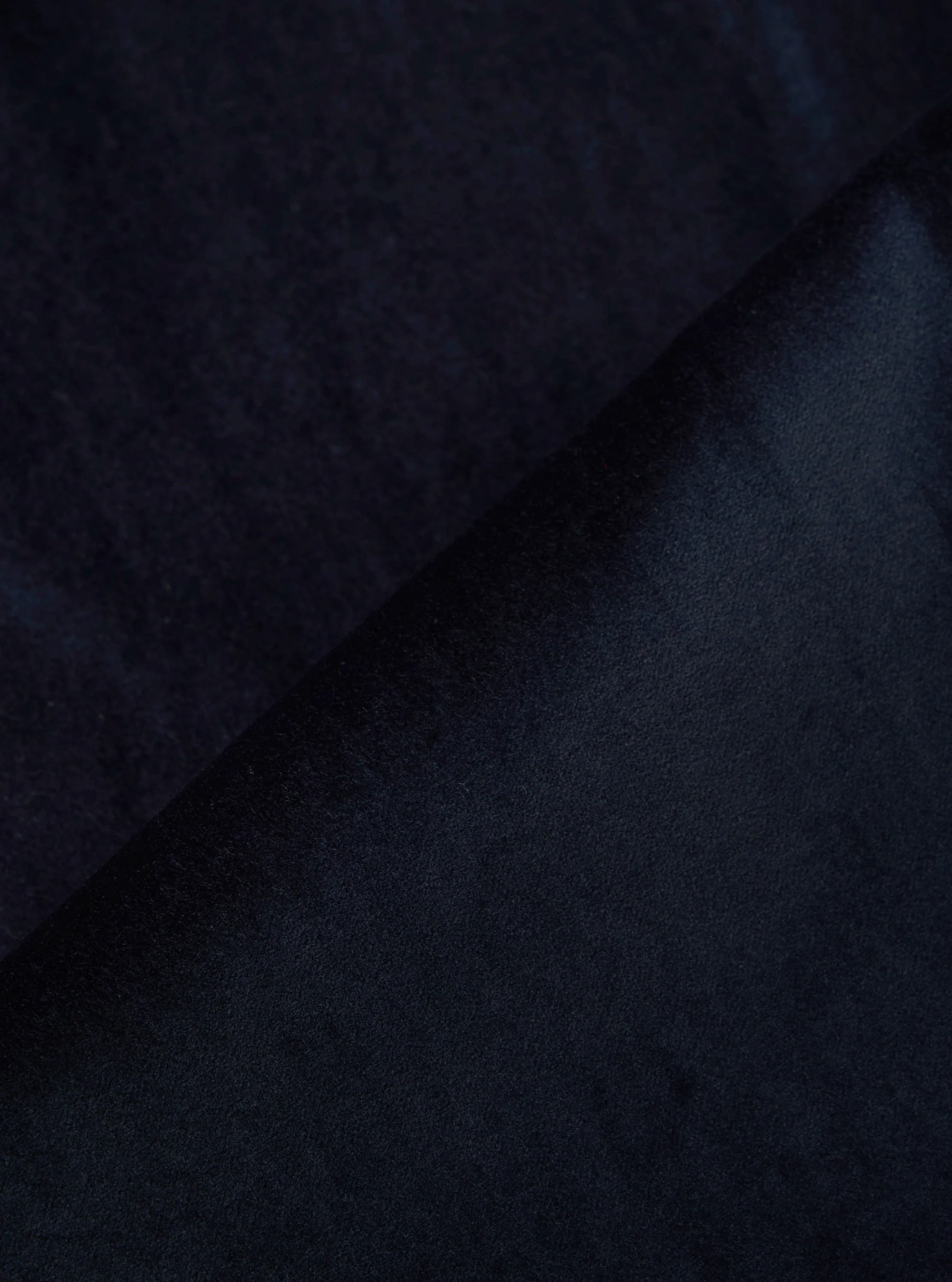
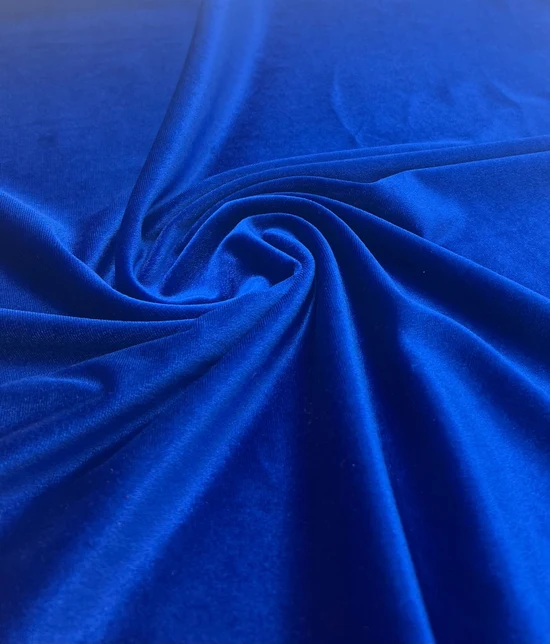
Velvet is a pile fabric with a dense layer of short cut yarns rising above a supporting ground. Those upright yarn ends create the soft hand, deep-looking color, directional shine and surface marks people associate with velvet.
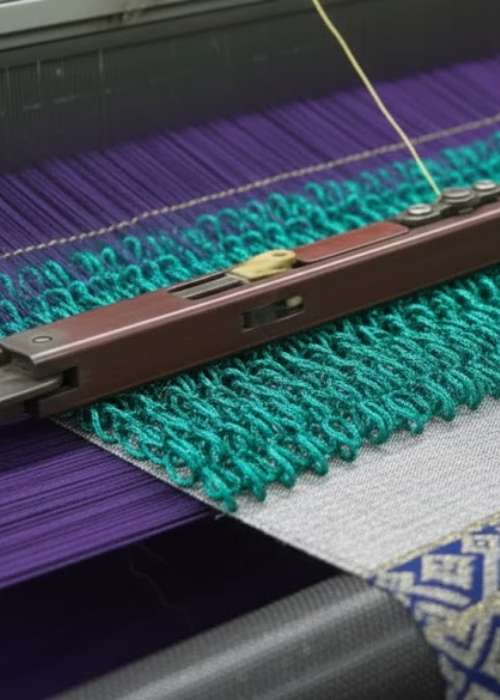
Traditional velvet is woven. The pile comes from warp yarns introduced specifically for that purpose, then cut to an even height. CottonWorks defines velvet as a warp-pile fabric with woven cut pile and notes that a high number of pile yarns per inch increases the fullness of the surface.
Silk, cotton, rayon and polyester can all appear in velvet because fiber content is a separate part of the fabric description. Modern apparel catalogs also use velvet for knitted stretch products, which makes the backing construction worth checking whenever fit, sewing or testing depends on it.
The Pile Is What Gives Velvet Its Character
Hold a velvet swatch near eye level and look across the face.
The surface no longer looks flat. Thousands of short yarn ends project above the ground, forming a layer that may be around a millimeter high in apparel fabrics.
Bend the swatch tightly around a finger. The pile spreads farther apart along the curve, making the supporting ground easier to see.
The number of pile yarns packed into the surface changes how full that face appears. Dense pile hides more of the ground and creates a deeper-looking surface. Lower density exposes the base sooner when the cloth bends.
Light also travels through this raised layer before returning to the eye. Some rays hit the fiber tips. Others travel into the spaces around the pile. The result is the dark, saturated appearance that makes black, navy, burgundy and jewel-tone velvet look especially deep.
Inside Traditional Woven Velvet
A standard woven cloth needs warp and filling yarns to form its ground.
Velvet adds pile warp.
The ground provides the structure that carries the finished fabric. Pile yarn moves through that ground and later becomes the visible surface.
CottonWorks records two common pile shapes used in velvet construction. A V-shaped pile uses a single binding with the ground yarns. Adding a second interlacing creates the W-shaped formation, giving the pile stronger anchoring in the fabric.
That detail is hidden under the finished face. It becomes relevant during repeated rubbing, garment care and any situation where pile retention matters.
How the Loom Creates a Velvet Surface
A widely used velvet method weaves two ground fabrics together.
Pile warp travels through the space between them and connects the grounds during weaving. A cutting mechanism passes through that space and severs the pile yarn.
Once separated, each ground carries a cut pile face.
The surface then goes through finishing. Shearing brings projecting fibers to a controlled level and removes excessive height variation across the cloth.
CottonWorks places velvet pile below 1/8 inch, equal to 3.175 mm. Its terminology uses plush for warp-pile fabrics above that height.
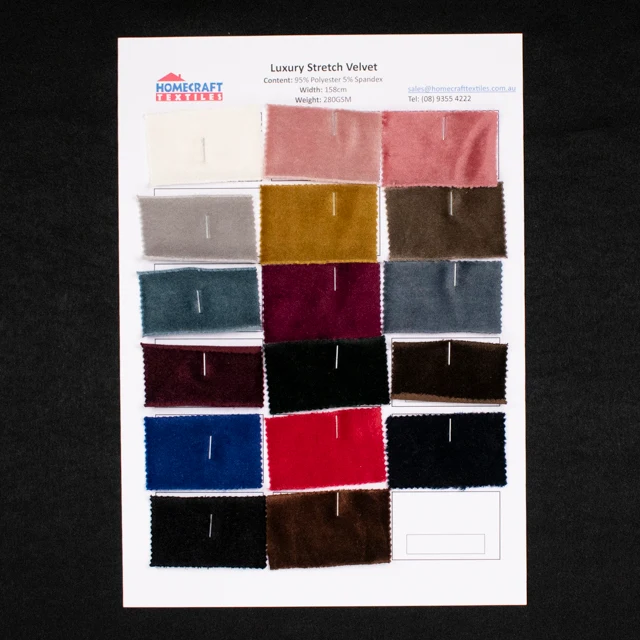
Commercial apparel velvet can sit far below the 3.175 mm boundary. A current 95% polyester / 5% spandex garment velvet specification lists 1.0 mm pile height, 250 GSM weight and 58/60-inch width.
Why Velvet Changes Shade Under Your Hand
Place a dark velvet swatch under a fixed lamp and move your palm across part of the surface.
The touched area immediately looks lighter or darker.
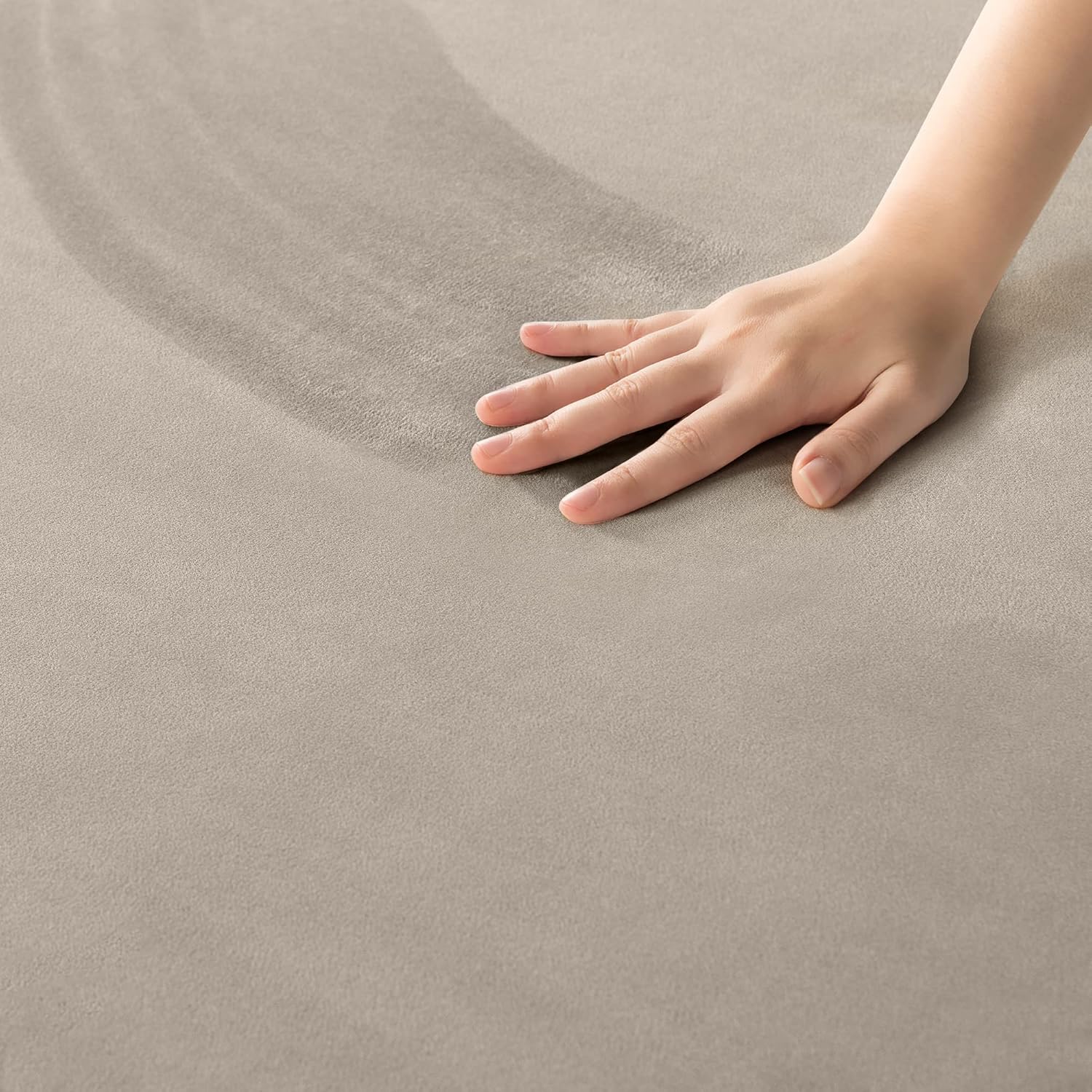
The change comes from nap, the direction in which the pile lies. Moving those fibers alters the angle at which the surface meets the light.
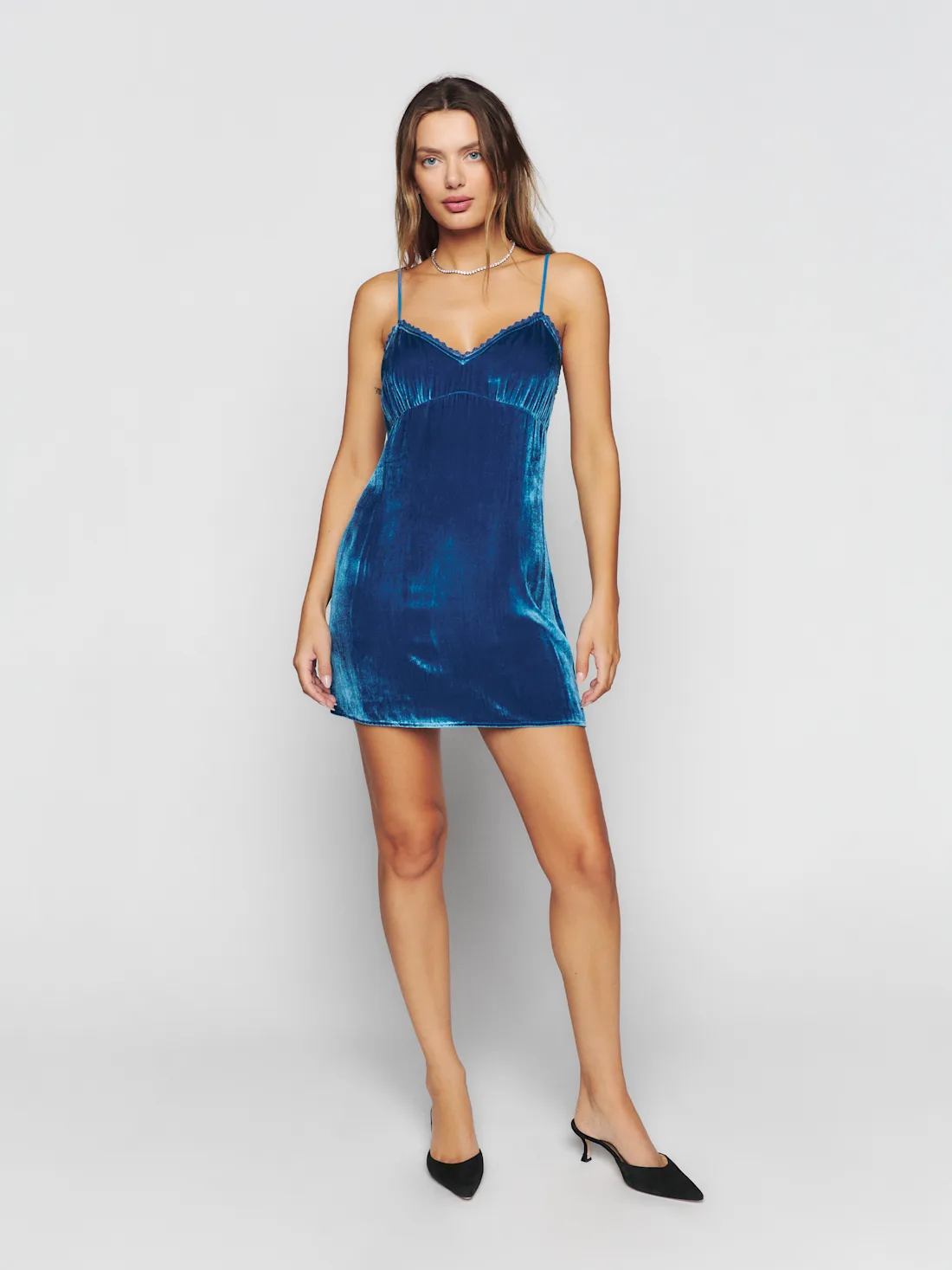
A large garment makes the effect more obvious. Folds in a velvet skirt redirect the pile over broad areas, so highlights move through the fabric as the wearer walks.
Finger marks work through the same mechanism. Pressure shifts a small group of fibers and changes their reflection.
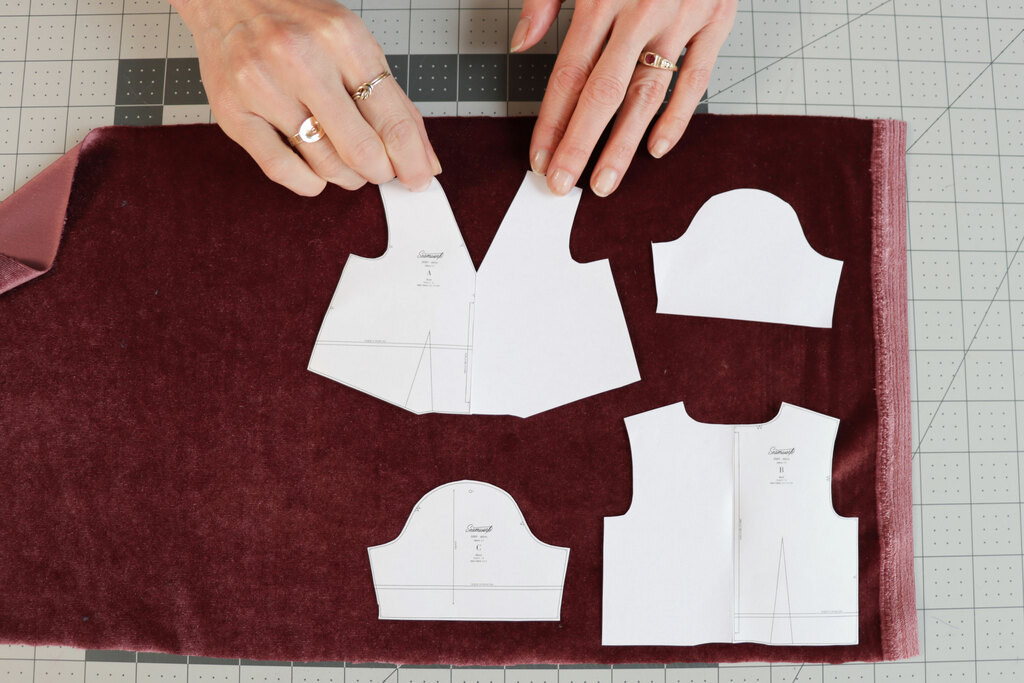
Nap becomes part of the garment long before sewing starts because every major pattern piece has to respect the intended pile direction.
Why Turning a Pattern Piece Can Change the Finished Color
Imagine a jacket marker with an empty space large enough for a sleeve.
Rotating the sleeve 180 degrees may improve fabric utilization. The finished sleeve can appear to be a different shade because its nap faces the opposite direction from the jacket body.
For this reason, velvet markers commonly keep major pieces running one way.
Suppose a freely rotated marker uses 1.60 m. After the pieces are arranged for one-way nap, consumption reaches 1.74 m.
(1.74 − 1.60) ÷ 1.60 × 100 = 8.75%
The nap requirement added 8.75% in that specific marker.
Fabric width, size ratio and pattern geometry determine the result on a production style, so the usable consumption figure comes from the actual final marker.
A 250 GSM Velvet Can Have Several Different Surfaces
GSM records total mass per square meter.
It cannot tell you how much of that mass sits in the ground or how much contributes to the pile.
Real supplier data shows how much variation can exist inside the same nominal weight.
A 95% polyester / 5% spandex velvet from Juncheng Textile is listed at 250 GSM with 1.0 mm pile. The same supplier publishes a polyester/spandex velvet at 250 GSM with 1.5 mm pile. Its micro velvet range includes a 250 GSM version with 0.5 mm pile.
All three examples carry the same listed weight.
At 0.5 mm, the surface stays close to the ground. A 1.5 mm pile gives the fibers three times the nominal pile height of the 0.5 mm example, changing how the face bends, reflects light and responds to pressure.
Pile density remains another variable, so two fabrics sharing the same pile height can still feel different.
Pile Height and Fabric Thickness Need Separate Measurements
Pile height refers to the raised fibers.
Finished thickness covers the complete fabric under the pressure used during measurement.
That pressure matters greatly on a compressible surface.
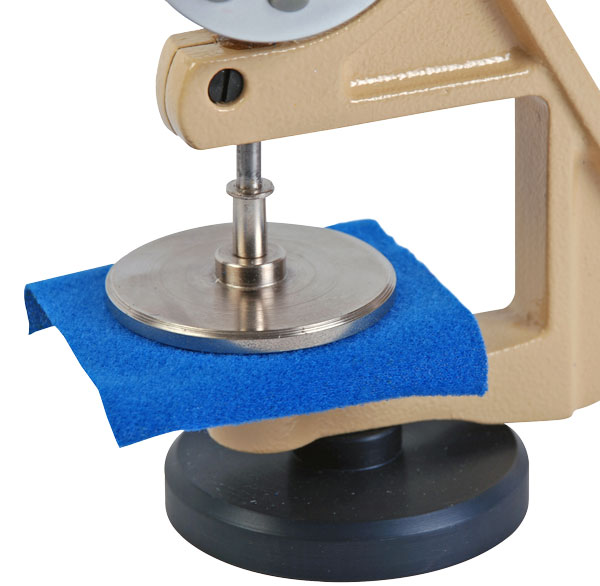
ASTM D1777-26 covers thickness measurement for woven, knitted, napped and pile fabrics. ASTM states that apparent thickness varies considerably with applied pressure and says the pressure needs to be specified when a thickness value is reported.
A laboratory result of 1.20 mm therefore needs its test condition before a sourcing team can compare it with a 1.05 mm result from a different mill.
A 1.0 mm pile-height specification also cannot be substituted for finished thickness because the ground contributes its own depth beneath the pile.
What Fiber Content Changes
Velvet can be built from very different fibers.
Silk gives a velvet surface a distinctive luster and fluid hand. Rayon or viscose is widely used where pronounced drape and surface shine are wanted. Cotton creates a different touch and optical character from filament-based velvet. Polyester appears across a large range of apparel velvets and makes stretch constructions easy to find commercially.
These descriptions still leave several fabric properties unresolved.
A composition of 95% polyester / 5% spandex gives the fiber percentages. The specification still needs construction, pile height, finished weight, usable width and measured extension if the garment depends on stretch.
A supplier currently lists such a fabric at 250 GSM, 150 cm wide and 1.0 mm pile height.
The Names Used for Velvet Come From Different Parts of the Fabric
A name such as silk velvet identifies fiber content.
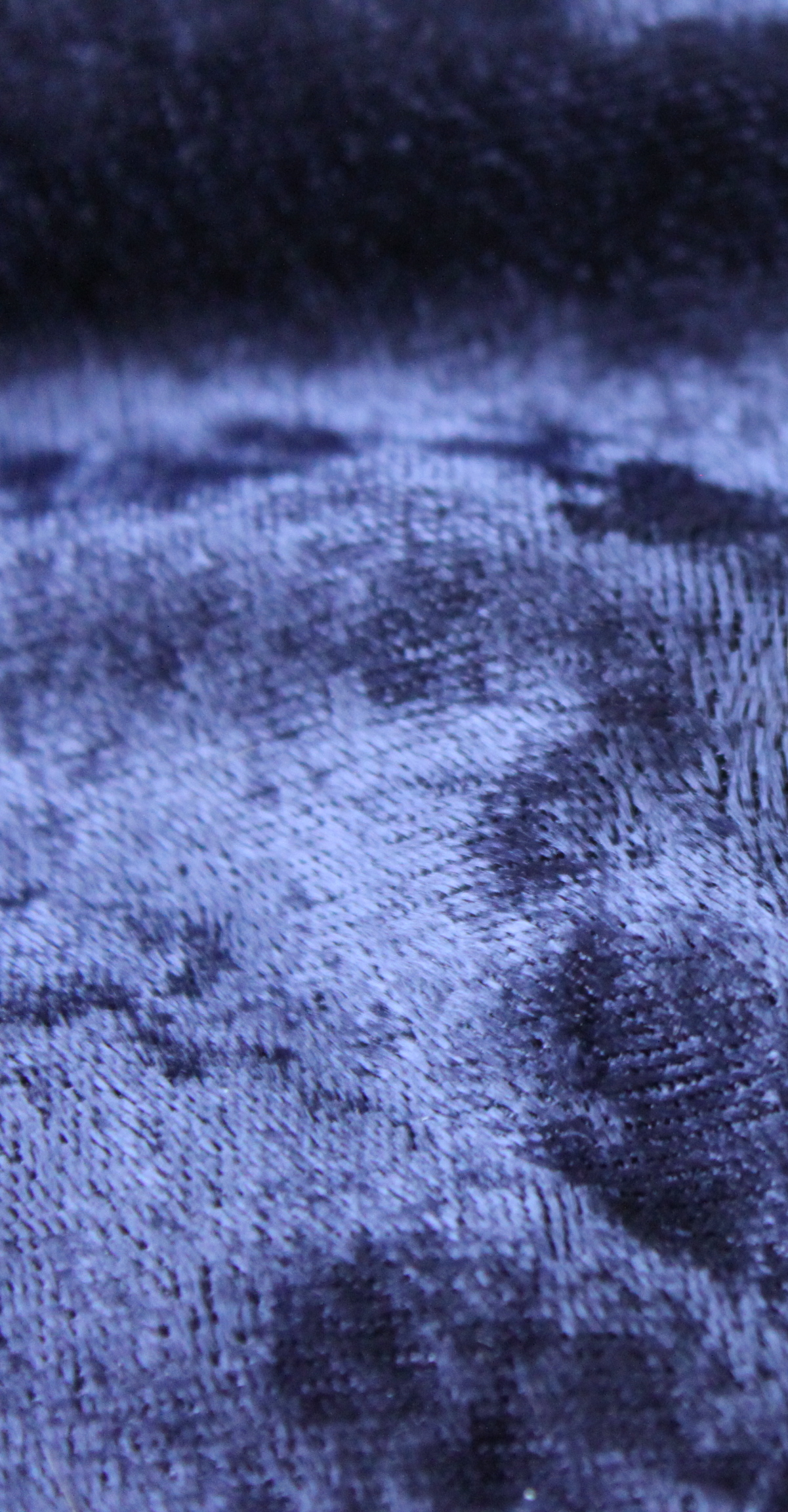
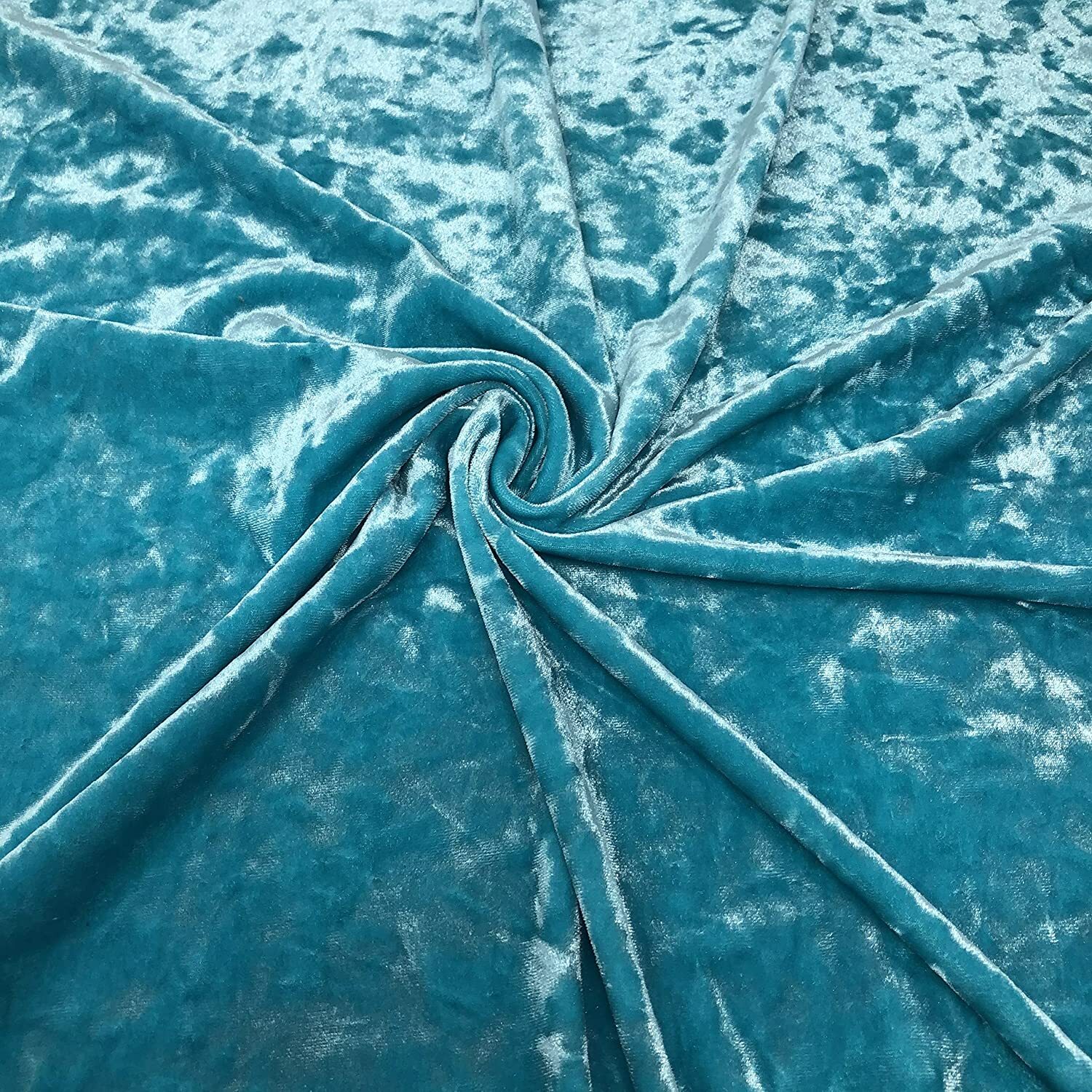
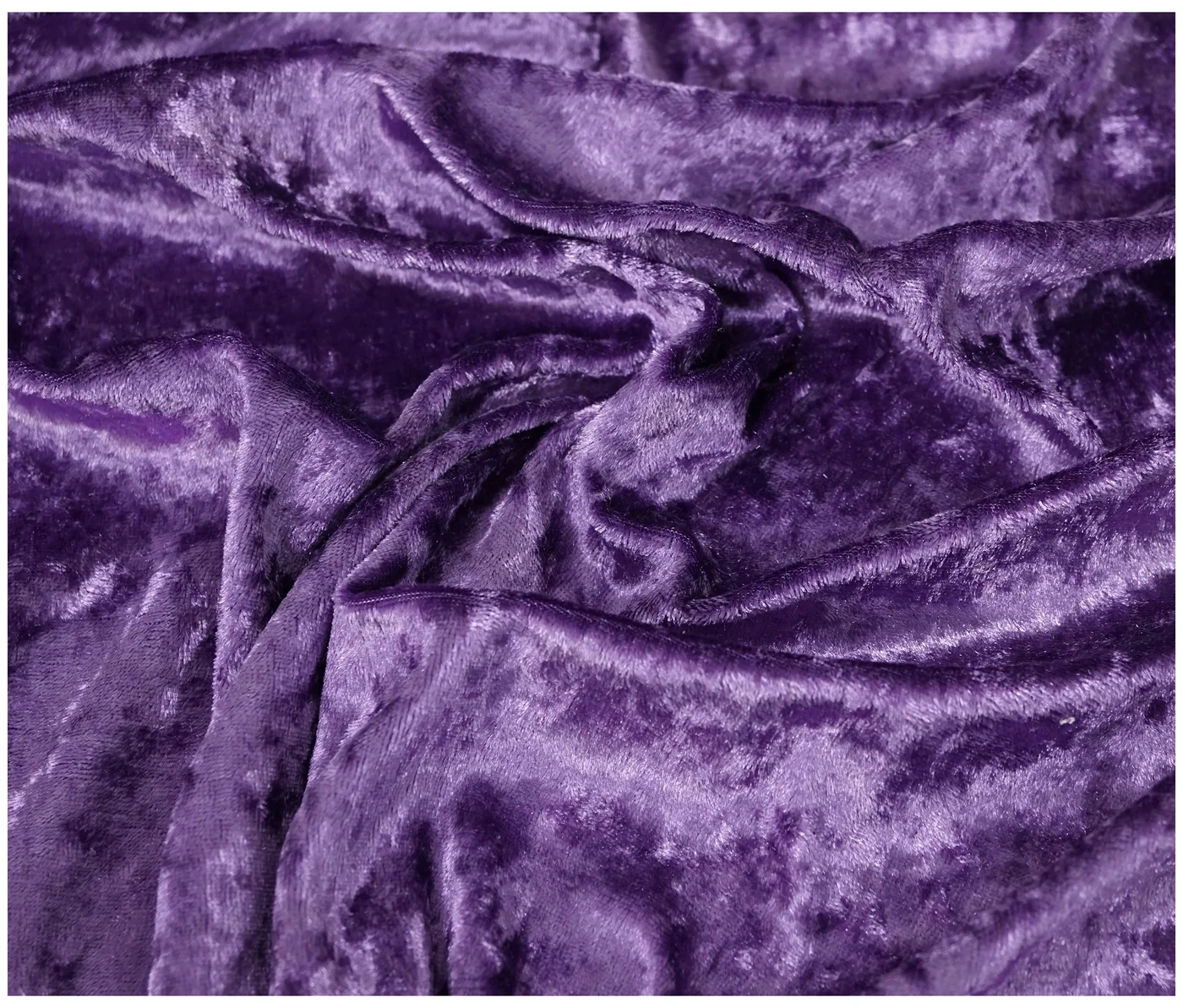
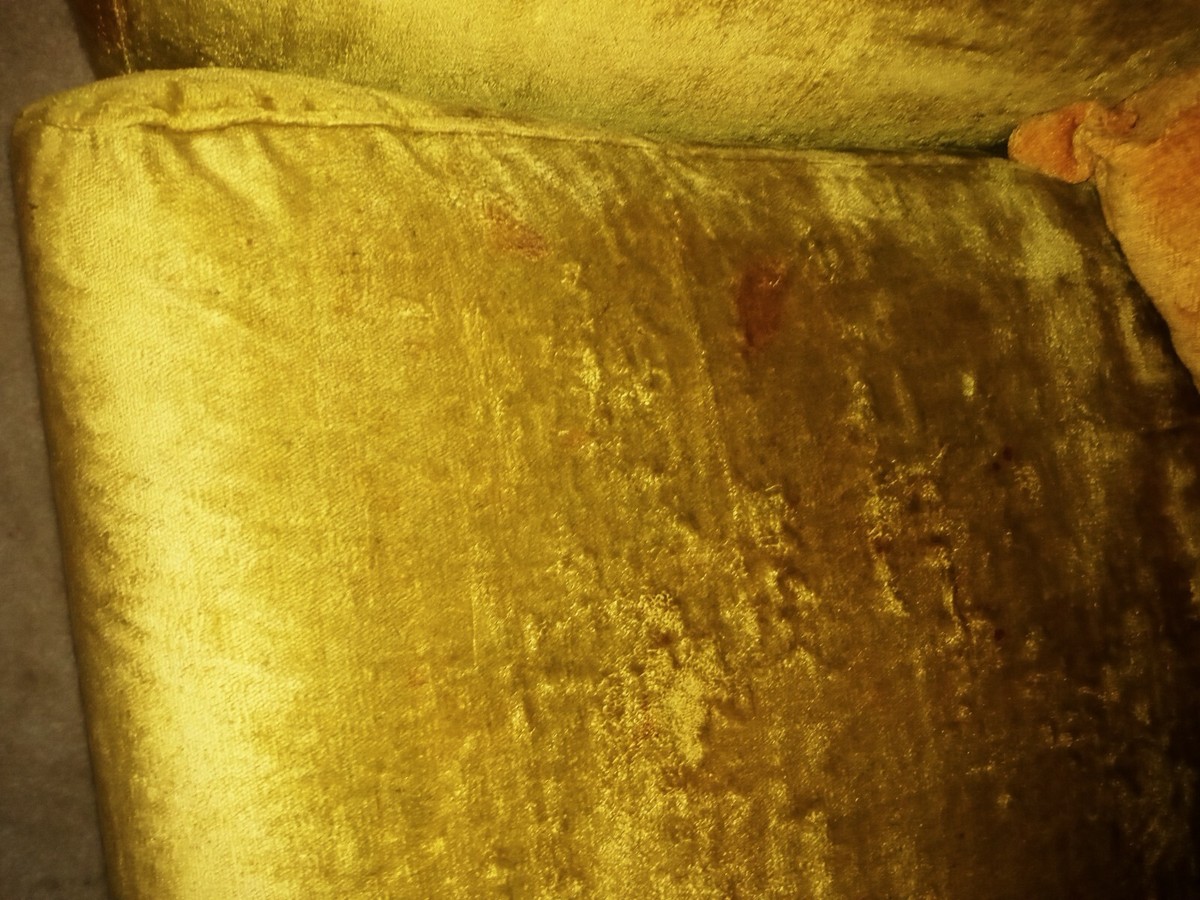
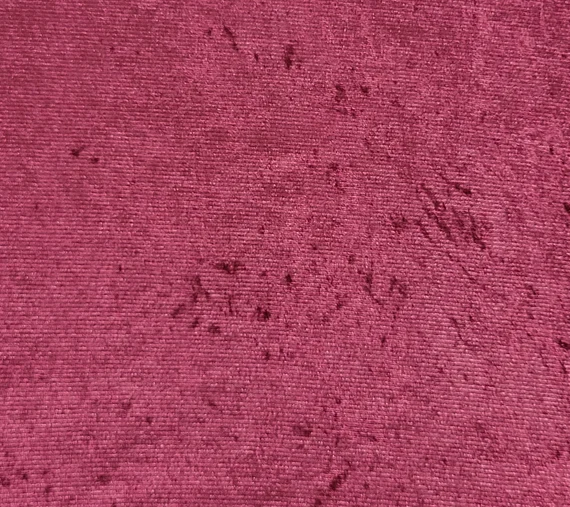
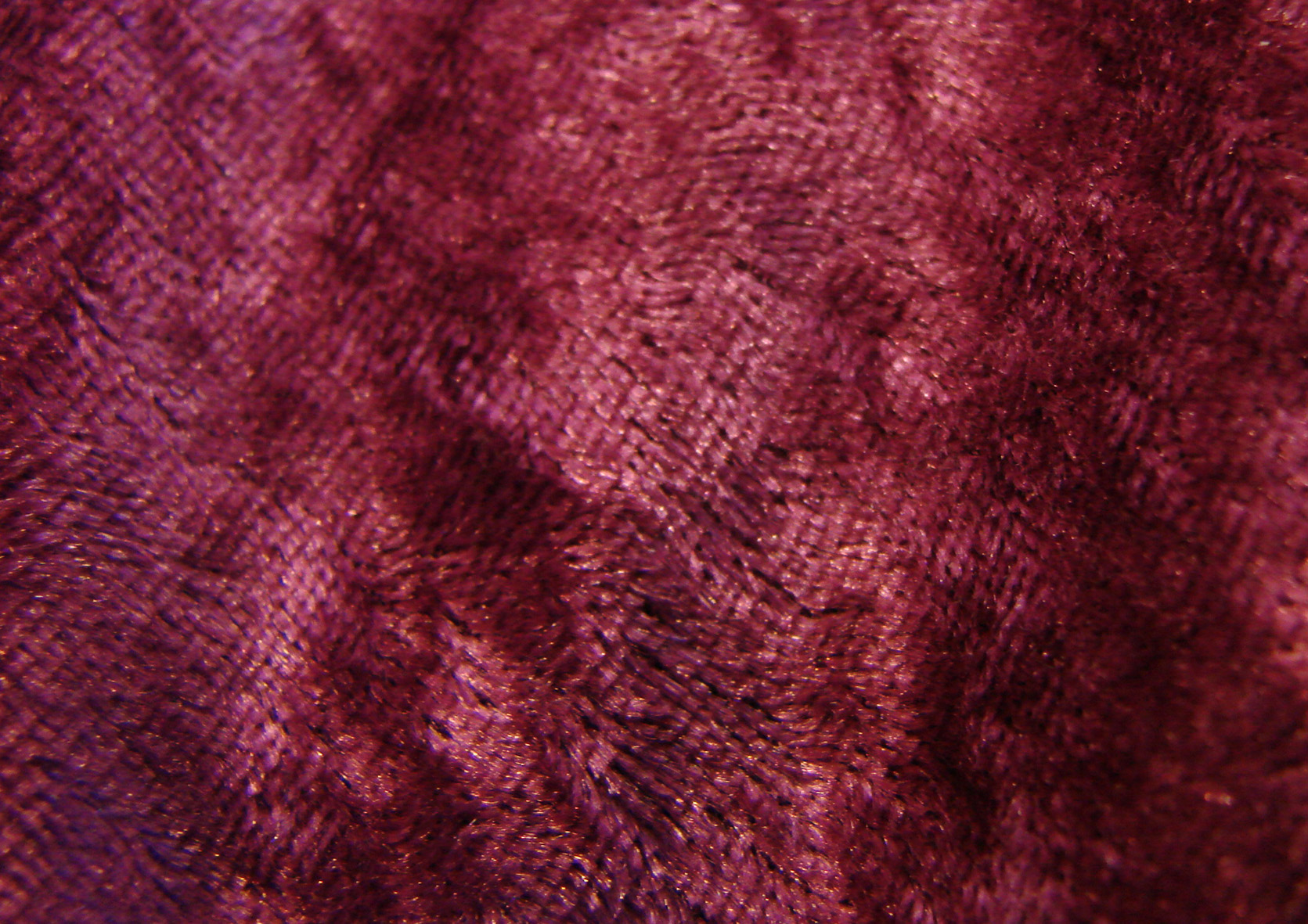
Crushed velvet refers to a surface whose pile has been deliberately disturbed so the fibers sit at changing angles. This produces irregular highlights across the fabric.
The word stretch describes mechanical behavior. Commercial stretch velvet can use a knitted backing, and the amount of extension varies from fabric to fabric.
Velveteen belongs to the same broader pile-fabric family and uses a different woven construction. CottonWorks describes it as a filling-pile fabric and records constructions reaching 400 picks per inch.
Plush sits beyond the traditional velvet pile-height range in CottonWorks terminology, starting above 1/8 inch / 3.175 mm.
These names become easier to read once the specification is separated into construction, fiber, surface treatment and mechanical properties.
Stretch Velvet Needs an Actual Stretch Number
A current Lady McElroy polyester/spandex stretch velvet is listed at:
The 20% figure is useful because a fitted pattern can be developed around measurable fabric extension.
For a simple calculation, start with gauge marks 100 mm apart. If they reach 125 mm during the chosen test:
(125 − 100) ÷ 100 × 100 = 25% stretch
After release, imagine the distance settles at 103 mm following the specified recovery period.
(103 − 100) ÷ 100 × 100 = 3% growth
Stretch describes extension under the test condition. Growth records the residual enlargement remaining after recovery.
For woven fabrics made with stretch yarns, ASTM D3107-26 covers stretch, growth and recovery. Its scope is aimed at woven fabrics exhibiting more than 12% stretch, and the method includes 1.35 kg and 1.8 kg tension options used in the textile industry.
A knit-backed velvet requires a test method suited to knitted construction.
How to Tell What Kind of Velvet You Have
Start with the face under low-angle light. The pile becomes much easier to see from the side than from directly above.
Move the surface with your fingertips and watch the reflection. A clear change indicates directional nap.
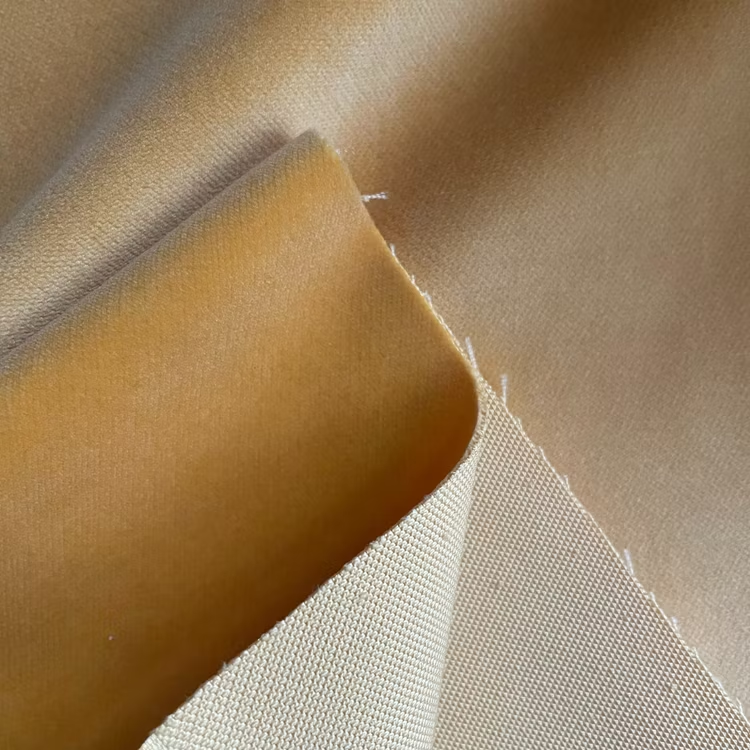
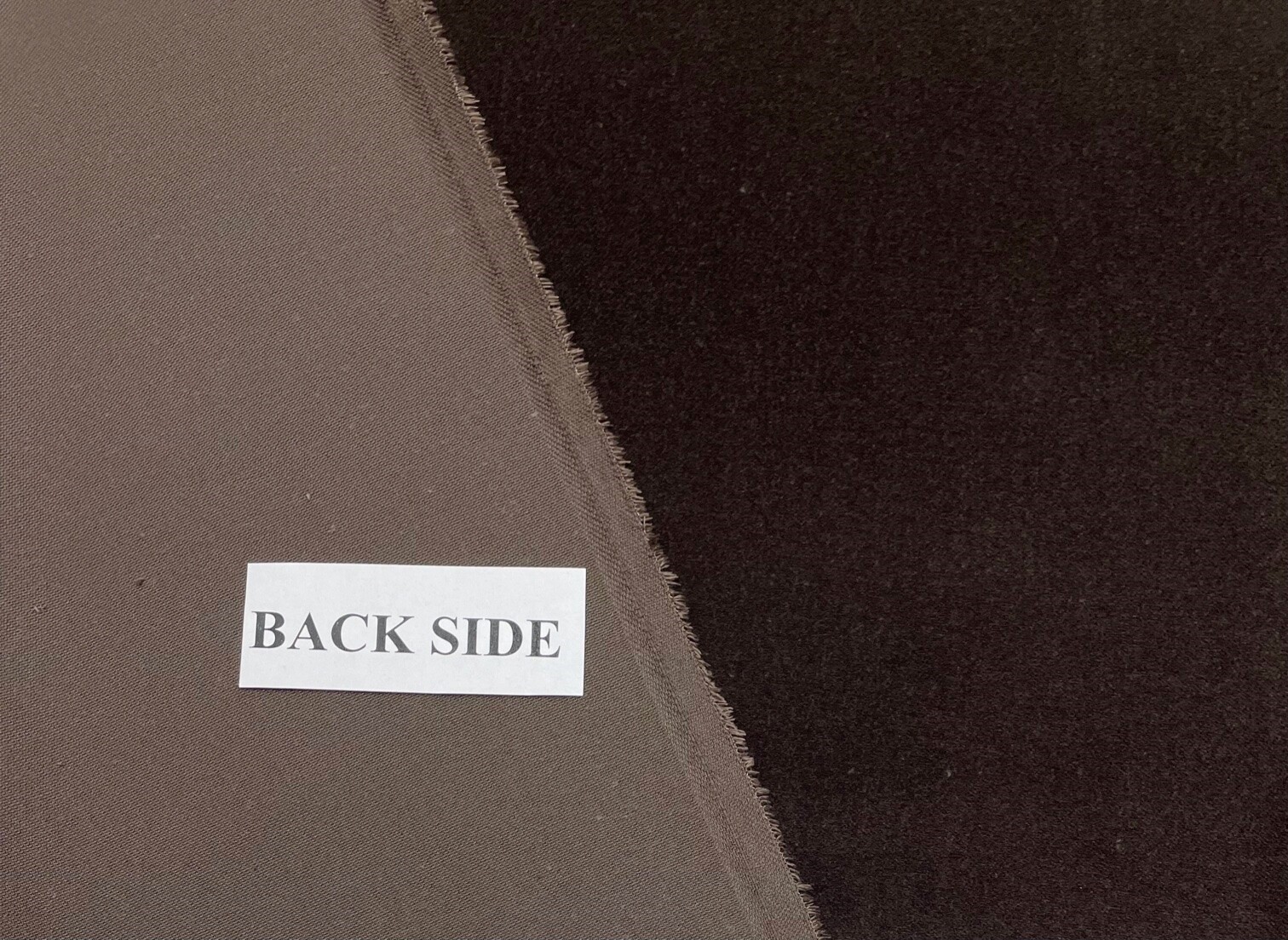
Turn the fabric over. A traditional velvet shows a woven ground. Many modern apparel stretch velvets reveal a knitted backing.
Next, bend a cut edge tightly. The raised surface opens enough to expose the ground underneath, which helps separate structural pile from a simple brushed finish.
A garment depending on a particular surface depth needs pile height recorded in millimeters. A fitted design needs measured stretch in the direction used by the pattern.
For dresses, skirts or wide trousers, hang a larger length vertically. Several feet of fabric reveal fold depth and drape much more clearly than a small hand swatch.
What Velvet Does Once It Becomes a Garment
A long velvet dress gives the pile a large uninterrupted area to interact with light.
As the skirt folds, each part of the surface sits at a new angle. Dark zones and highlights move through the garment even when the cloth has been dyed one solid color.
The ground construction controls the shape of those folds. A flexible ground produces deeper movement through the skirt. Greater bending stiffness gives the garment more body.
Fit adds another layer. Stable woven velvet relies heavily on pattern shaping around the bust, waist and hip. Stretch velvet can contribute extension through the cloth, which changes how closely a pattern can follow the body.
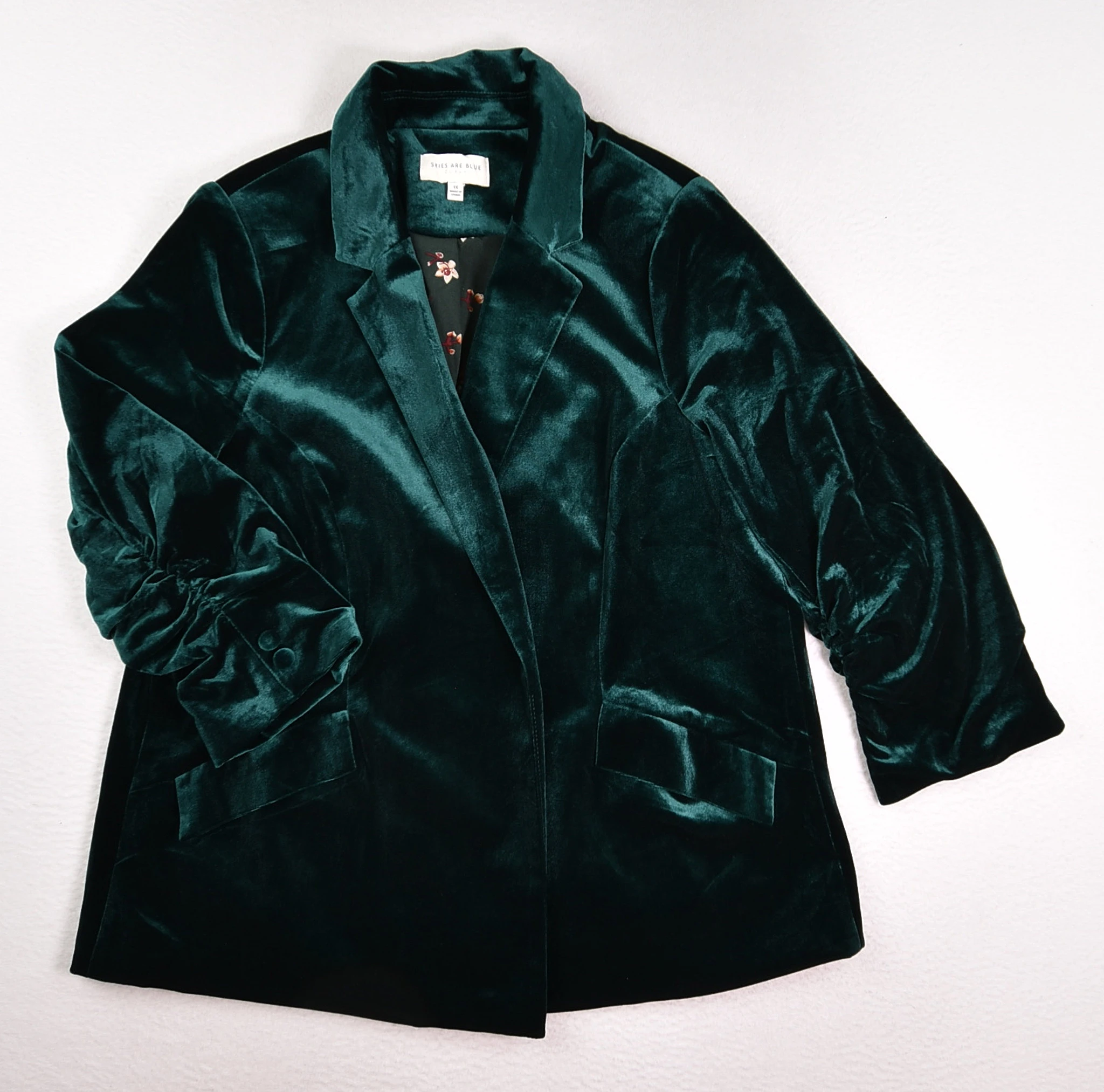
On a jacket, the same pile responds to lapel shaping, seam allowances, interfacing and pressing. Small ridges underneath the shell become visible because the pile above them catches the light differently.
Velvet Can Shift During Sewing
Put two velvet faces together along a seam.
The pile surfaces come into contact before the seam enters the machine. As the layers travel under the presser foot, small feed differences can build over a long distance.
A production trial can turn that movement into a measurable result.
Mark a 600 mm seam at 100 mm intervals. Sew the sample with the machine settings intended for bulk production. Measure the alignment afterward.
A trial might produce:
0 / 0 / 1 / 1 / 2 / 3 / 4 mm
The last pair of marks has moved by 4 mm.
The factory can then change presser-foot pressure, feeding equipment or temporary stabilization and repeat the same marked trial.
The acceptable displacement can be fixed during garment development using the real style and fabric.
Pressing Has to Protect the Pile
Velvet responds strongly to pressure because the visible surface stands above the ground.
Heat and moisture can make compressed fibers settle into a new position. A polished patch then appears because the affected area reflects light differently.
The factory needs a press trial on the selected bulk fabric.
A useful record contains the temperature used on the sample, contact time, steam setting, applied pressure and the support placed under the pile face.
If a particular polyester velvet remains unchanged after a short reverse-side treatment at 120°C, that becomes a result for the tested fabric and production setup. A new velvet requires its own trial.
Inspection after cooling shows whether the pile has returned to the required appearance.
Wear Often Appears as a Change in Reflection
Repeated contact gradually alters small areas of the pile.
A bag strap rubs the same path across a shoulder. Sitting repeatedly loads the seat area of a skirt. Elbows receive pressure from desks and armrests.
The fibers in those areas can settle lower and begin reflecting more light.
Low-angle lighting makes the change easy to see because the polished zone separates visually from the surrounding pile.
For a garment where the velvet surface is central to the design, abrasion performance and visual pile condition deserve separate records during testing.
Washing Needs a Surface Inspection After the Measurement
Take a marked sample measuring 500 mm in one direction.
After the intended care cycle, it measures 485 mm.
(485 − 500) ÷ 500 × 100 = −3%
The dimensional change is −3%.
Place the washed piece beside an unwashed retained sample under the same light. Clumping, flattened pile, directional streaks and changes in hand become easier to see in a side-by-side check.
The completed garment needs the same care route because interlining, zippers, sewing thread, lining and decoration can alter the finished result.
What a Velvet Specification Should Record
A line reading black velvet, 250 GSM identifies weight and little else.
For production, the construction needs a precise name such as woven warp-pile velvet or a confirmed knitted velvet construction. Fiber percentages belong beside it.
Usable width is measured on finished relaxed fabric. Pile height can be recorded in millimeters when surface depth affects the design. Finished thickness needs the pressure condition used during measurement.
Stretch data becomes necessary when the pattern depends on extension, and recovery or growth can be added for fitted garments.
Nap direction is fixed before the marker is finalized. Color is compared with the confirmed lab dip. The sealed finished-fabric sample carries the reference for hand, pile level and surface appearance.
A long-seam trial provides the sewing-machine result for layer movement. The accepted pressing sample supplies the production settings. Bulk fabric can then be checked against the same physical surface reference.
What Is Velour?
What Is Velour?
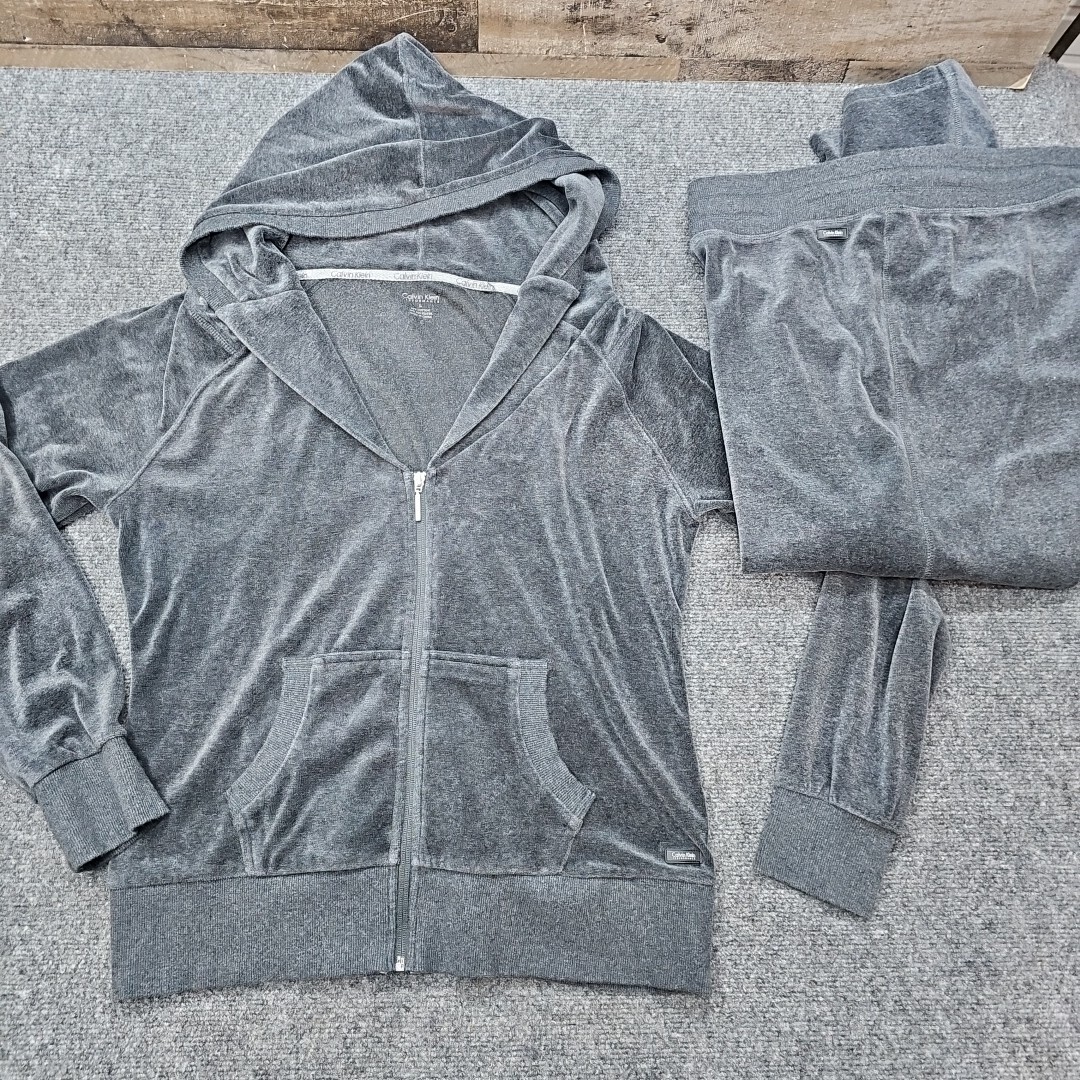
Velour is a soft pile fabric with a dense, velvety surface. The raised fibers create the smooth hand and changing sheen people usually associate with the name. Clothing, tracksuits, robes, dresses, upholstery and interior textiles all appear in velour.
The term covers more than one exact construction. Textile dictionaries use velour for fabrics with a soft nap or velvet-like finish, and the fiber may be natural, manufactured or blended. In modern apparel, knitted velour is especially common.
A velour label therefore tells you what kind of surface to expect. Composition, weight, stretch and ground construction still depend on the individual fabric.
What Is Velour Fabric?
The easiest place to start is the surface.
Velour belongs to the pile-fabric family. A pile fabric contains yarn or fiber deliberately projecting above the main cloth surface. The projecting material can remain as loops or be cut to form individual pile ends. CottonWorks: pile fabric.
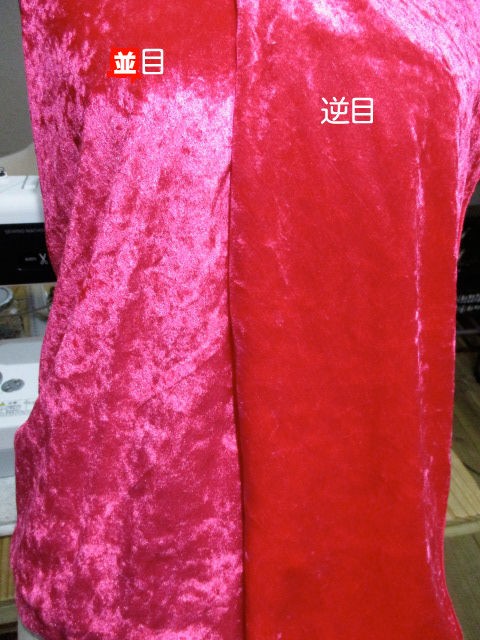
On velour, the pile is usually short and dense enough to produce a continuous plush face. Running a hand across it changes the direction of the fibers. Light then reaches the surface at another angle, producing the familiar shift between deeper and brighter areas.
Part the pile with two fingers and the underlying textile becomes easier to see. Apparel velour frequently has a knitted ground, which gives many garments some natural flexibility and makes the material suitable for relaxed clothing.
Why Velour Changes Shade When You Touch It
Take a solid black velour swatch and place it under one lamp.
Smooth one section toward the top edge. Brush the area beside it downward. The two areas can appear to be different blacks even though they were dyed together because the visible change comes from pile orientation.
This directional surface is called the nap. Each pile end has an angle, and when thousands of them lean in a similar direction they reflect light in a predictable way. Moving the pile changes that angle across the surface.
Hand marks can remain visible for a short time, folds can look darker along one side, sitting can temporarily flatten the pile, trouser legs change sheen as the wearer walks, and large panels show pile direction more clearly than small pieces. The effect is part of the fabric rather than a printed or dyed pattern.
How Knitted Velour Gets Its Plush Surface
A common knitted velour construction begins with raised loops.
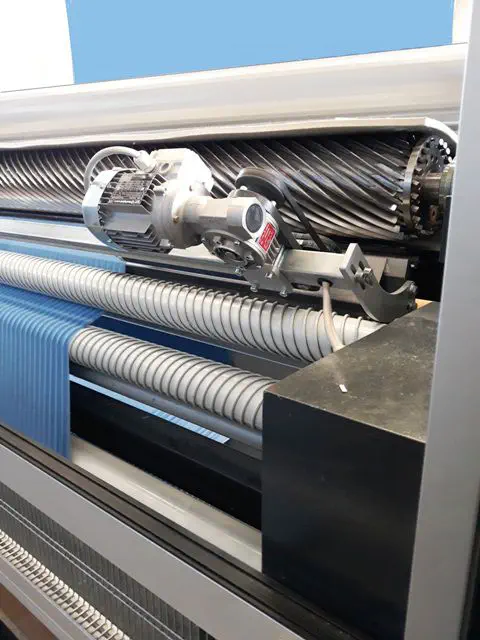
CottonWorks describes knitted velour as a terry-looped fabric that goes through shearing. During shearing, protruding loops are presented to rotating cutting blades, which trim the loop tops and leave yarn ends at a controlled height. The process produces the even, lustrous pile associated with the finished fabric. CottonWorks: mechanical finishing.
The surface already looks very different once those loops have been cut. Pile height affects the apparent depth, pile density affects how easily the ground can be seen, the yarn itself influences softness, sheen and fullness, and shearing accuracy shows up visually because an uneven cutting height changes how the fabric reflects light.
Special shearing equipment can also create sculptured areas with deliberate variation in pile height.
What Velour Feels Like
A typical apparel velour feels plush when stroked across the face. Pressing a fingertip into the surface compresses the short pile before reaching the ground underneath.
The exact hand changes considerably between fabrics. Fine yarn and a close pile can produce a smooth surface with a clean sheen, a fuller yarn creates a bulkier touch, longer pile increases the amount of material felt above the ground, and dense constructions hide more of the base fabric when the pile is separated.
Knitted grounds also contribute to drape and flexibility. CottonWorks notes that knitted structures are formed from intermeshed loops and naturally conform to changes in shape, which helps explain the mobility found in many apparel velours. CottonWorks: knit basics.
A fabric swatch gives far more information about these characteristics than the word velour by itself.
What Is Velour Made From?
There is no required fiber composition for velour.
Cotton
Cotton velour is associated with a soft, absorbent hand. Cotton-rich constructions appear in robes, loungewear, children's clothing and casual apparel. The pile can have a relatively matte appearance depending on yarn and finishing, and washing behavior follows the actual cotton construction, including its knit density and dimensional finishing.
Polyester
Polyester velour is widely used for garments that need a smooth pile surface, strong color and easy-care characteristics. Filament yarn can give the face a pronounced sheen, and textured polyester can create a fuller textile-like hand. Polyester also responds to heat, which becomes relevant around pressing and heat-applied decoration.
Cotton-polyester blends
Blends are common in casual clothing and tracksuits. Changing the ratio alters absorbency, drying behavior, surface character and laundering response. The finished fabric may also use different fibers in separate parts of the construction, so the overall percentage alone does not describe the pile.
Velour with elastane
Elastane is added to some apparel velours for fitted dresses, dancewear, leggings and other garments that need greater extension and recovery. Stretch also comes from knit geometry, leaving actual fabric testing useful even when the fiber label already lists elastane.
How Heavy Is Velour?
Velour has no universal GSM.
Light styles can be used for dresses and fashion garments. Medium and heavier constructions appear in hoodies, pants, robes and upholstery.
Two velours carrying the same GSM can still feel visibly different because the total mass is distributed through the ground and pile in different ways. A fabric weighing 250 GSM might have a compact ground with a low pile, and another 250 GSM article may use a fuller pile that creates more apparent thickness.
For sourcing, GSM works best alongside pile appearance, composition, finished width, stretch and a physical reference swatch.
Common Types of Velour
Knitted velour
This is the form most closely associated with modern casualwear. A knitted ground gives the fabric flexibility, and the cut pile produces the velvety face. Tracksuits, hoodies, pants, dresses and children's garments commonly use this family.
Cotton velour
The name usually refers to a velour containing cotton as the dominant or important fiber. It can range from relatively light apparel material to fuller robe and leisurewear fabric.
Stretch velour
Stretch velour contains a construction intended to extend more readily, often with elastane. It appears in fitted garments, costumes and dancewear where the fabric has to follow body movement.
Crushed velour
Crushed velour has pile arranged in irregular directions to produce a deliberately mottled sheen. The surface looks textured even when the underlying color is uniform.
Terry velour
Terry velour keeps loop pile on part of the fabric and uses a cut surface on another face. FabricLink describes terry velour as a cotton pile fabric combining an uncut pile surface with a cut pile surface and lists towels, robes and apparel among its uses. FabricLink textile dictionary.
This construction is particularly useful where softness and absorbency belong in the same product.
Why Velour Is Used for Tracksuits
Velour has enough visual activity to make a simple garment look richer without relying on an elaborate fabric pattern.
A plain zip jacket gains depth from the pile. Movement across the shoulders and sleeves changes the sheen throughout the day. Matching pants create large vertical surfaces where the nap becomes especially noticeable.
Knitted velour also suits the shape of casual garments. The looped ground supplies useful flexibility for sitting, walking and bending. Hoodies and pants have broad pattern pieces that show the pile clearly.
The material became strongly associated with tracksuits because these features all appear in one garment category: softness, movement, drape, visible sheen and a comfortable knit structure.
Velour Dresses and Fashion Clothing
A dress uses velour differently.
Long panels emphasize the direction of the nap. Folds create gradual changes in reflected light. Areas close to the body compress the pile, and looser sections retain more visible depth.
Stretch velour is particularly common in fitted silhouettes because the knitted base can follow curves without requiring the stiffness found in some traditional pile fabrics.
Color also carries more visual variation on velour than it would on a flat matte textile. Burgundy, black, navy, emerald and other deep shades often show pronounced highlights where the pile changes direction.
Velour in Robes and Loungewear
Softness has an obvious role in clothing worn directly around the body for long periods.
Robes can use cotton-rich velour or terry velour, especially when some absorbency is wanted. Loungewear uses the plush surface primarily for touch and appearance.
The inner face depends on the construction. Some garments expose a knit reverse. Terry velour can retain loops on one face. Other products may use a separate lining or another inner surface.
Checking both faces of a swatch is useful before assuming how a finished garment will feel against the skin.
Velour in Upholstery and Interiors
Velour also appears on furniture, curtains, vehicle interiors and decorative surfaces. Dictionaries have long included upholstery among the established uses of the material.
Interior velour can differ considerably from apparel material. A sofa requires abrasion resistance and dimensional stability across a fixed upholstered surface, curtains place the pile vertically across long drops, and automotive interiors expose the textile to repeated contact and long service periods.
These materials may use heavier constructions and specialized finishing selected for their end use.
Velour and Velvet
Velour and velvet are easy to confuse because both belong to the pile-fabric world and can show a smooth, directional sheen.
Traditional velvet has a specific woven construction. CottonWorks defines velvet as a warp-pile fabric with a woven cut pile, where pile yarns are cut to a uniform height. CottonWorks: velvet.
Many apparel velours use knitted grounds and a sheared pile. CottonWorks documents knitted velour produced from terry loops whose tips are cut during shearing.
The fabric reverse usually gives the quickest clue when an unfamiliar sample arrives. A clear knitted loop structure points toward knit velour. A woven pile ground belongs to another construction family.
Commercial names are not perfectly standardized across every supplier, so construction information is more reliable than judging from sheen alone.
Velour and Velveteen
Velveteen is a woven pile textile with its own construction.
CottonWorks defines velveteen as a filling-pile fabric whose cut pile is created from filling yarns. The dense pile gives it a surface resembling velvet. CottonWorks: velveteen.
Velour is a broader commercial term, and knitted apparel velour has a different structural route. The face of each fabric can look similar enough in a photograph to hide these differences.
Velour and Terry Cloth
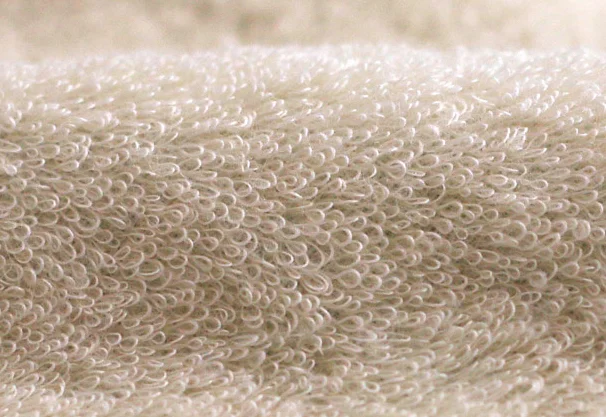
Terry cloth is identified by loops projecting from the surface. Those loops provide a large amount of exposed yarn, which is why terry constructions are closely associated with towels and absorbent products.
Knitted velour can begin with a looped surface too. Shearing opens the loop tops and creates a cut pile. CottonWorks uses this exact relationship when explaining knitted velour production.
A magnified face makes the distinction easy to see. Terry presents intact loops. Sheared velour presents cut yarn ends.
Velour and Fleece
Fleece develops its soft surface through a different route.
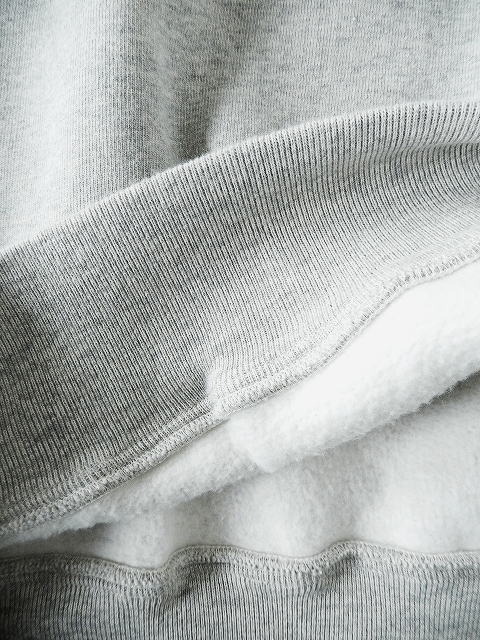
CottonWorks describes common sweatshirt fleece as a knit where yarns on the technical back are napped. Wire-covered rollers raise fibers from those yarns to create the familiar fleecy interior. CottonWorks: single and double knits.
Velour presents a pile face with a more uniform, directional appearance. Fleece surfaces usually look fuzzier and less polished. Sweatshirt fleece also commonly keeps a smooth jersey-like outer face with the raised surface inside the garment.
These differences become easy to recognize once the pile is viewed close up.
Why Velour Has a Direction
Nap direction matters before a garment reaches the sewing machine.
Imagine cutting one trouser leg facing toward the top of the fabric roll. Rotating the second pattern piece can reverse the way its pile lies.
After assembly, light reaches each leg from the same room and meets pile running in different directions. The visual shade can change enough to make the pieces appear mismatched.
Velour markers often keep visible pattern pieces oriented consistently along the fabric length. This can require more fabric than a marker for a non-directional knit because fewer pattern pieces can be rotated into empty spaces.
What Happens When Velour Is Compressed
Pile contains physical height above the ground, and pressure pushes that height down.
Sitting on velour pants compresses the seat. Folding a hoodie presses pile along the fold. A packed garment can develop flat areas where layers remain under pressure inside a carton.
Some pile gradually lifts after the pressure is removed. Persistent marks depend on fiber, pile construction, heat and the amount of compression involved.
This is also why pressing velour requires care. A hard surface underneath the garment can leave impressions through the pile when heat and pressure are applied.
Does Velour Stretch?
Many apparel velours stretch because the ground is knitted. The amount varies widely.
A loose knit structure can extend through loop movement. Elastane can provide additional extension and recovery. Fabric direction affects the reading as well.
A simple development measurement starts with two marks 100 mm apart. If the marks reach 130 mm during the specified test, the measured extension is 30%.
The distance after release records how closely the material returns toward its starting size. This information is especially useful for fitted dresses, tracksuit pants, leggings and costumes.
Does Velour Pill?
Velour can develop surface wear, including fuzzing, matting and pilling, depending on its fiber, yarn and construction.
Frequent rubbing concentrates the effect around areas such as inner thighs, cuffs, elbows, pocket edges and seats. Laundry introduces additional mechanical action.
The appearance of wear is especially noticeable on pile fabrics because surface texture controls so much of the way they reflect light. A wash test reveals both dimensional change and the condition of the pile after repeated care.
Does Velour Shrink?
Shrinkage depends on the actual construction and fiber content.
Cotton-rich knitted velour can change dimensions as the knit relaxes during laundering. Finishing processes such as compaction are used in cotton knits to reduce later length shrinkage by mechanically shortening the fabric during production. CottonWorks: mechanical finishing.
Polyester-rich styles have another dimensional profile. The useful number comes from washing the specific finished fabric under the intended care conditions and measuring length and width again afterward.
A garment maker working from a new velour article normally needs those results before grading patterns or setting finished measurements.
How to Wash Velour
Start with the care label because velour composition varies.
For washable apparel velour, turning the garment inside out reduces direct rubbing on the pile during laundering. Zippers should be closed so exposed teeth and pulls do not repeatedly strike the surface.
Cool or moderate washing conditions are common for many casual velour garments, subject to the actual fiber composition and finish. Heavy pressing across the face can flatten pile. Drying conditions also need to follow the garment label, especially when polyester, elastane or special finishes are present.
Once dry, lightly smoothing the pile in one direction can restore a more even appearance after handling.
How to Identify Velour
Start by running a hand over the face. A directional sheen should become visible as the pile moves.
Part the pile next. Short raised yarn ends or fibers should sit above the ground.
Turn the sample over and inspect the construction underneath. Many apparel velours reveal a knitted structure.
Gently stretch the fabric across the width to see how the ground behaves. Looking at the cut edge can also reveal pile height and the relationship between the surface and base fabric.
For sourcing, the physical observations can be recorded with composition, GSM, usable width, stretch, pile direction and a retained swatch from the confirmed development fabric.
Velour vs Velvet in Clothing: Structure, Stretch, Drape, and Wear
Velour vs Velvet in Clothing: Construction, Stretch, Pile, and Production Differences
Velour vs Velvet in Clothing: Construction, Stretch, Pile, and Production Differences
Velour and velvet can look almost identical from the face. The difference becomes much clearer when the fabric is turned over and measured.
Traditional velvet is a woven warp-pile fabric. CottonWorks defines velvet as a woven cut-pile fabric whose pile is formed from warp yarns. The Association for Contract Textiles uses a broader definition for velour: the term can cover cut-pile materials and can also refer to napped knitted fabric. In apparel sourcing, knitted velour is common enough that the backing should be confirmed on the actual swatch instead of inferred from the product name.
The practical difference is visible in real commercial fabrics. Stonemountain & Daughter lists a 250 GSM polyester/spandex Kitty Velour at 95% polyester / 5% spandex, 57 inches wide, with 60% crossgrain stretch and 10% lengthwise stretch. Its Lady McElroy stretch velvet, also 250 GSM and 57 inches wide, is 92% polyester / 8% spandex and is listed at 20% crossgrain stretch. The same weight and nearly the same fiber family produce very different extension.
Start With the Backing
Lay the swatch flat with the pile facing down.
A knit velour can reveal loops or knit columns on the reverse. CottonWorks describes knitted velour specifically as a terry-looped fabric that has been sheared: the projecting loop tips are cut to a controlled height, creating the lustrous pile surface.
Traditional velvet uses a woven ground. CottonWorks describes the pile as a warp system. In double-cloth velvet production, two ground fabrics can be woven together and separated by cutting the pile yarn that connects them.
A quick hand stretch already reveals useful information, though production decisions need an actual percentage. Mark 100 mm across the fabric, extend it under the chosen test condition, and measure the new distance. A result of 160 mm means:
Stretch = (160 − 100) ÷ 100 × 100 = 60%
That 60% figure matches the published crossgrain stretch of Stonemountain’s 250 GSM Kitty Velour. The same retailer’s 250 GSM Lady McElroy stretch velvet reaches 20% across the grain.
What Is Actually Inside Woven Velvet
Velvet contains a ground fabric and a pile system.
CottonWorks describes velvet pile as warp pile and notes that a high number of pile yarns per inch increases the fullness of the surface. Its weaving guide also describes V-shaped and W-shaped pile bindings. W-shaped pile uses additional interlacing with the ground and holds the pile more securely.
CottonWorks gives one useful dimensional boundary: velvet pile is generally less than 1/8 inch high in its woven-fabric guide. One eighth of an inch is 3.175 mm. Pile taller than that is described there as plush.
Actual apparel suppliers often work far below that limit. Juncheng Textile publishes a 95% polyester / 5% spandex one-way stretch velvet at 250 GSM, 58/60 inches wide, with a stated 1.0 mm pile height.
If surface depth matters to the design, the specification needs a measured millimeter value from the confirmed production fabric.
Knitted Velour Gets Its Surface From Shearing
Knitted velour starts with loops.
CottonWorks explains the finishing process directly: loops or protruding yarns are presented to a rotating cutting cylinder and fixed shearing blade. The blades cut the surface to an even height. Knitted velour is given as an example of a terry-looped fabric finished this way.
The ground knit continues to control much of the stretch after the pile is cut.
This is visible in the Kitty Velour example: 95% polyester / 5% spandex, 250 GSM, 57 inches wide, 60% crossgrain stretch and 10% along the grain. That five-percentage-point spandex content does not produce the same extension in both directions because the knitted structure contributes to the result.
A composition line such as 95% polyester / 5% spandex therefore cannot substitute for an extension test.
Stretch and Growth Need Separate Numbers
ASTM D2594/D2594M-21 is the active ASTM method for low-power stretch knitted fabrics. The standard separates two properties: stretch is measured under a known load; growth is evaluated after a known extension is applied and removed. ASTM specifically links growth to prolonged stresses such as sitting in form-fitting clothing.
Use a 100 mm original length for a simple calculation.
The sample reaches 160 mm during the stretch test:
Stretch = (160 − 100) ÷ 100 × 100 = 60%
After the extension cycle and recovery period, the same gauge marks sit 104 mm apart:
Growth = (104 − 100) ÷ 100 × 100 = 4%
A fabric can therefore reach 60% stretch and still leave a bagged knee if growth is too high.
Retail buyers often put an actual limit on this. A publicly posted 2024 Target materials manual uses modified ASTM D2594 for weft knits. For elastomer content below 10%, it reports growth after a two-hour extension and a 60-minute measurement period. The stated maximum is 5% growth for non-sweater knits and 7% for sweaters. For elastomer content above 10%, the same manual switches the pass/fail focus to recovery and specifies minimum 85% recovery. These are Target buyer requirements, not universal textile law.
Gap’s publicly available 2021 protocol gives another real buyer example. For fabrics with at least 5% elastomer, its modified D2594 growth setup uses 35% length extension and 60% width extension, with 5% maximum growth and a 60-minute time-dependent measurement.
For a velour track pant, writing only “good recovery” leaves the factory with no pass/fail target. A usable buyer requirement can state growth ≤5% under the nominated modified D2594 procedure when that limit suits the product.
Woven Stretch Velvet Uses a Different ASTM Route
A woven stretch velvet should not automatically inherit a knit test protocol.
ASTM D3107-26 covers woven fabrics made wholly or partly from stretch yarns. Its stated scope is high-stretch woven fabric showing more than 12% stretch with good recovery under low tension. The standard allows two tension options used by the industry: 1.35 kg and 1.8 kg. It measures fabric stretch, growth and recovery.
ASTM D7507-23 is the active specification for woven high-stretch apparel fabrics. Its table sets dimensional change after three home-laundering cycles at ±3% for one-way stretch fabrics and ±5% for two-way stretch fabrics. One dry-cleaning cycle is listed at ±2%. The standard also states that purchaser and supplier can modify requirements by agreement for a specific product.
Construction
Woven stretch pile
Stretch test
ASTM D3107-26
Test tension
Record whether 1.35 kg or 1.8 kg was used
Home-laundering dimensional change
ASTM D7507-23 lists ±3% for one-way stretch and ±5% for two-way stretch
A report that says only “20% stretch” is incomplete if the applied tension is missing.
250 GSM Can Hide Very Different Fabrics
Real products make this point clearer than a general statement.
90% polyester / 10% spandex · 250 GSM · 58 in · 4-way stretch · 1.03 mm finished thickness
Juncheng stretch velvet
95% polyester / 5% spandex · 250 GSM · 58/60 in · one-way stretch · 1.0 mm pile height
These are supplier-specific examples. They show exactly why 250 GSM cannot stand in for stretch, pile height or thickness.
Thickness Needs a Pressure Condition
ASTM D1777-26 covers textile thickness, including knitted, woven, napped and pile fabrics. The standard states that apparent thickness changes substantially with the pressure applied during measurement. Thickness must therefore be reported with the measurement pressure.
That matters more with pile because the surface compresses.
A supplier may report 1.03 mm thickness. Another mill may report 1.20 mm. Those numbers cannot be treated as a clean comparison when the pressure conditions are missing.
A spec line should read in this form:
Finished thickness: 1.03 mm, measured under [specified pressure] using the nominated test method
The exact pressure comes from the buyer’s chosen procedure or laboratory method. The important point is that it is recorded on every submission.
Pile height is a separate number. Juncheng’s 1.0 mm pile height does not mean the complete fabric is 1.0 mm thick.
Nap Changes the Cutting Marker
Velvet and velour pile is directional. Turning a panel 180 degrees changes how the pile reflects light.
Seamwork’s velvet guidance requires pattern pieces to be cut in the same nap direction and recommends single-layer cutting because pile fabrics can shift.
There is no universal “velvet uses 12% more fabric” rule. The increase comes from the marker.
If a non-directional layout uses 1.60 m and the one-way nap marker uses 1.74 m:
That 8.75% belongs only to that marker. A different garment, fabric width or size ratio produces a different result.
The production sheet should therefore carry the actual marker length and nap direction, not a generic allowance copied from another style.
Layer Creep Needs a Measured Sewing Trial
Velvet is known for layer creep: two pile faces can slide against each other during sewing. Seamwork attributes this to the pile slipping when the right sides are placed together and recommends test sewing, reduced presser-foot pressure and hand basting for difficult seams.
A factory trial can make the problem measurable without inventing a universal standard.
Mark a 600 mm seam at 100 mm intervals. Sew it with the nominated needle, stitch length, presser-foot pressure and feeding system. Measure the final mismatch at every mark.
Record the result as millimeters of displacement.
Example result: 0 / 1 / 1 / 2 / 2 / 3 / 3 mm
If the brand decides that 3 mm maximum at 600 mm seam length is acceptable for that style, that becomes an internal production criterion. It should be written as a project limit, not described as an ASTM velvet standard.
The same trial should be repeated after any change to feed system or presser-foot pressure.
Pressing Needs an Actual Press Card
A sentence such as “use low heat” is too vague for production.
Velvet pile can flatten under a combination of pressure, heat and moisture. Seamwork recommends avoiding direct heavy pressing and working from the reverse, with a velvet scrap, towel or purpose-built pile surface supporting the face.
The factory should lock the production setting through a test card.
Temperature
Record soleplate or press-head temperature
Steam
Record on/off and duration
Contact time
Record in seconds
Pressure
Record machine setting
Support
Record whether pile face is supported
Inspection
Check immediately and again after cooling
If development establishes 120°C, 2 seconds, reverse-side contact, no direct face pressure as the safe setting for a nominated polyester velour, those exact values belong on that style’s press card. They are a project result, not a general temperature for every polyester velvet.
A Knee Can Fail Two Different Tests
A velour trouser knee can become larger and shinier after wear.
The size change comes from growth in the backing.
Use two fixed points across the knee. If the relaxed garment measures 240 mm before wear and 249 mm after the specified recovery period:
Growth = (249 − 240) ÷ 240 × 100 = 3.75%
Under a buyer limit of 5%, that result passes the dimensional criterion used in the Target and Gap examples cited earlier.
The pile still needs separate inspection. A knee can pass the 5% growth criterion and show an obvious polished patch from pile crushing.
Record the two results independently:
Knee growth
3.75%
Pile appearance
Compare with sealed sample under low-angle light
Combining them into “knee looks worn” gives the factory no useful failure mode.
Wash Testing Needs Numbers and a Surface Check
Take a 500 × 500 mm marked specimen.
After the nominated wash and drying cycle it measures 485 × 490 mm.
For a woven one-way stretch fabric judged against ASTM D7507-23’s three-cycle home-laundering value of ±3%, −3.0% sits exactly at that published limit. A two-way stretch fabric has a ±5% value in the same specification.
The pile inspection happens after the measurement.
Check crushed zones, clumping, directional streaks, surface harshness and shade change against the unwashed control under fixed lighting.
Care instructions can differ even among similar 250 GSM fabrics. Stonemountain lists the 250 GSM Kitty Velour as machine wash cold with no tumble drying. Its 250 GSM Lady McElroy stretch velvet is listed as machine wash cold and tumble dry low, with no ironing. Category name and GSM are not enough to write the care label.
Read a Real Supplier Listing Line by Line
Take Stonemountain’s Kitty Velour listing:
95% polyester / 5% spandex — 57 in — 250 GSM — 60% crossgrain stretch — 10% along grain
That is already much better than “polyester stretch velour.”
A production developer still needs more information before bulk approval.
The 57-inch figure should be checked as usable finished width after relaxation. Stretch needs a documented test condition if the mill result is being used for fit approval. Growth is missing. Pile height is missing. Finished thickness is missing. Dimensional change after the intended care cycle is missing.
The seller gives a useful care direction: machine wash cold and no tumble dry. That becomes a starting point for garment testing, not a substitute for testing the completed garment.
A Production Spec Can Be Written Without Fake Precision
Use actual test results from the nominated fabric and keep buyer limits visibly separate from industry standards.
Construction
Knitted cut-pile velour
Composition
95% polyester / 5% spandex
Finished GSM
250 GSM
Finished usable width
145 cm after relaxation
Crossgrain stretch
60% under nominated test condition
Lengthwise stretch
10% under nominated test condition
Growth limit
Maximum 5% under the buyer’s modified ASTM D2594 procedure
Pile height
1.0 mm target if confirmed during development
Thickness
Report in mm with ASTM D1777 measurement pressure recorded
Nap direction
One-way marker, direction shown on cutting sheet
Home-laundering dimensional change
State length and width limits separately
Care cycle
Exact wash temperature, drying route and number of cycles used in approval
Long-seam creep trial
600 mm seam, result recorded in mm
Press card
Actual temperature, contact time, steam and pressure setting
Color
Match confirmed lab dip
Surface
Match sealed finished-fabric sample under fixed inspection lighting
The 5% growth limit in that example comes from real buyer protocols such as the publicly available Target and Gap manuals. The 1.0 mm pile height is a real published supplier value for a 250 GSM 95/5 stretch velvet and becomes valid for a velour project only after the selected fabric is actually measured at that value.
What Is Mesh Fabric? Applications of Mesh Fabrics
What Is Mesh Fabric? Applications of Mesh Fabrics | FashionMe
What Is Mesh Fabric? Applications of Mesh Fabrics
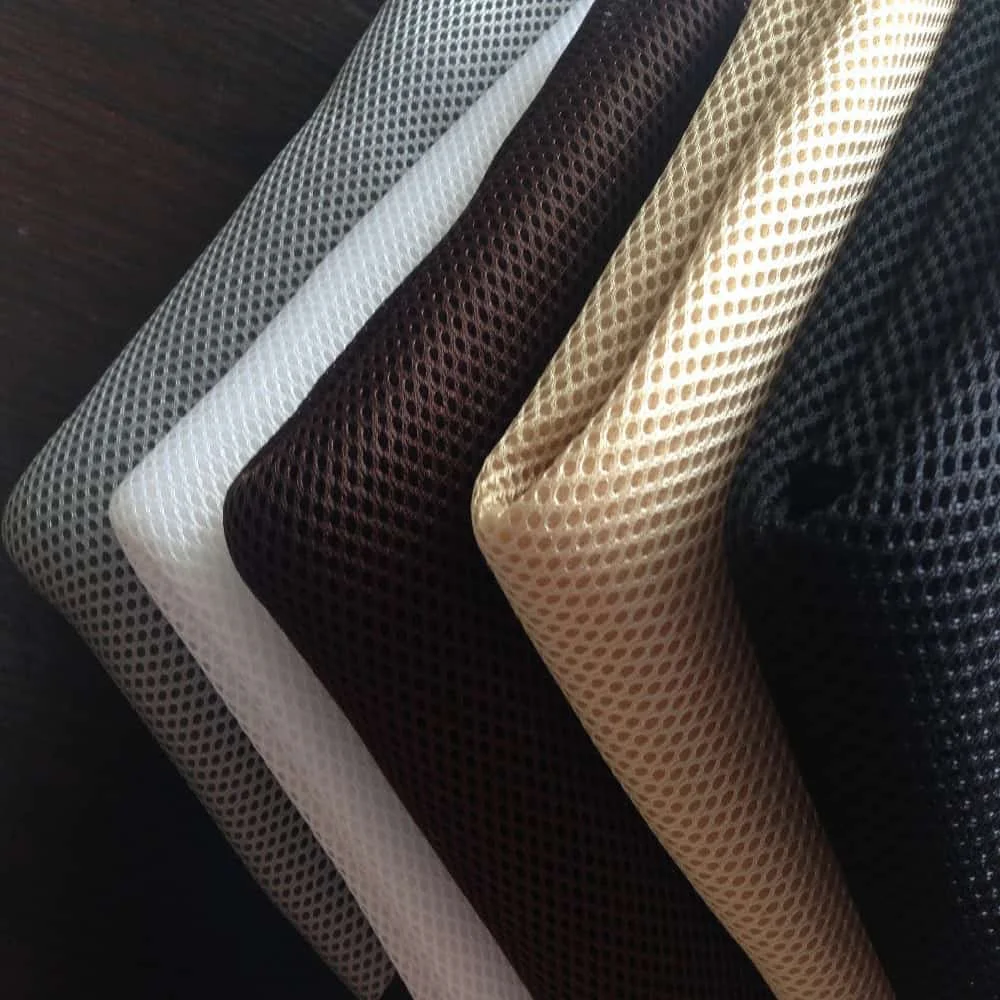
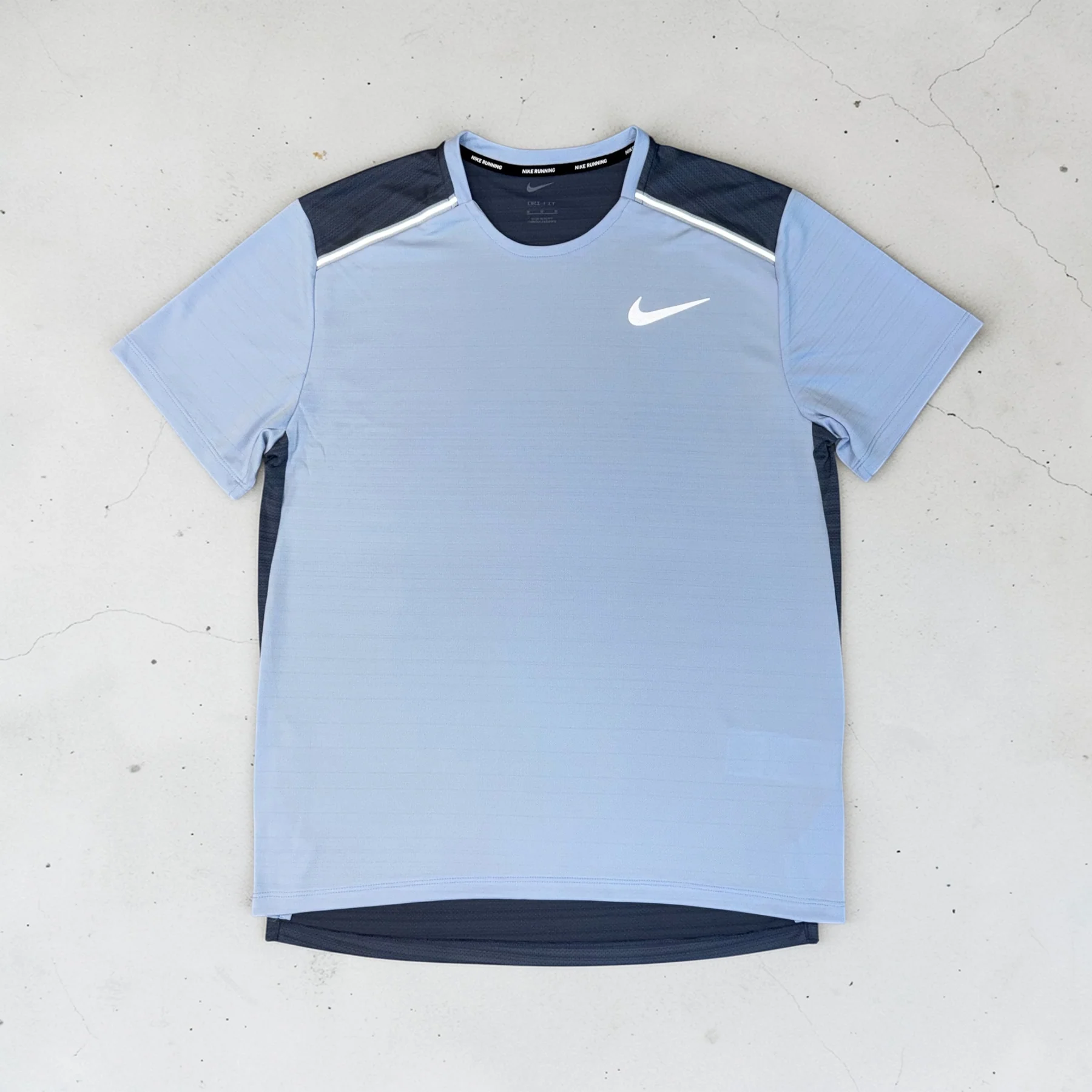
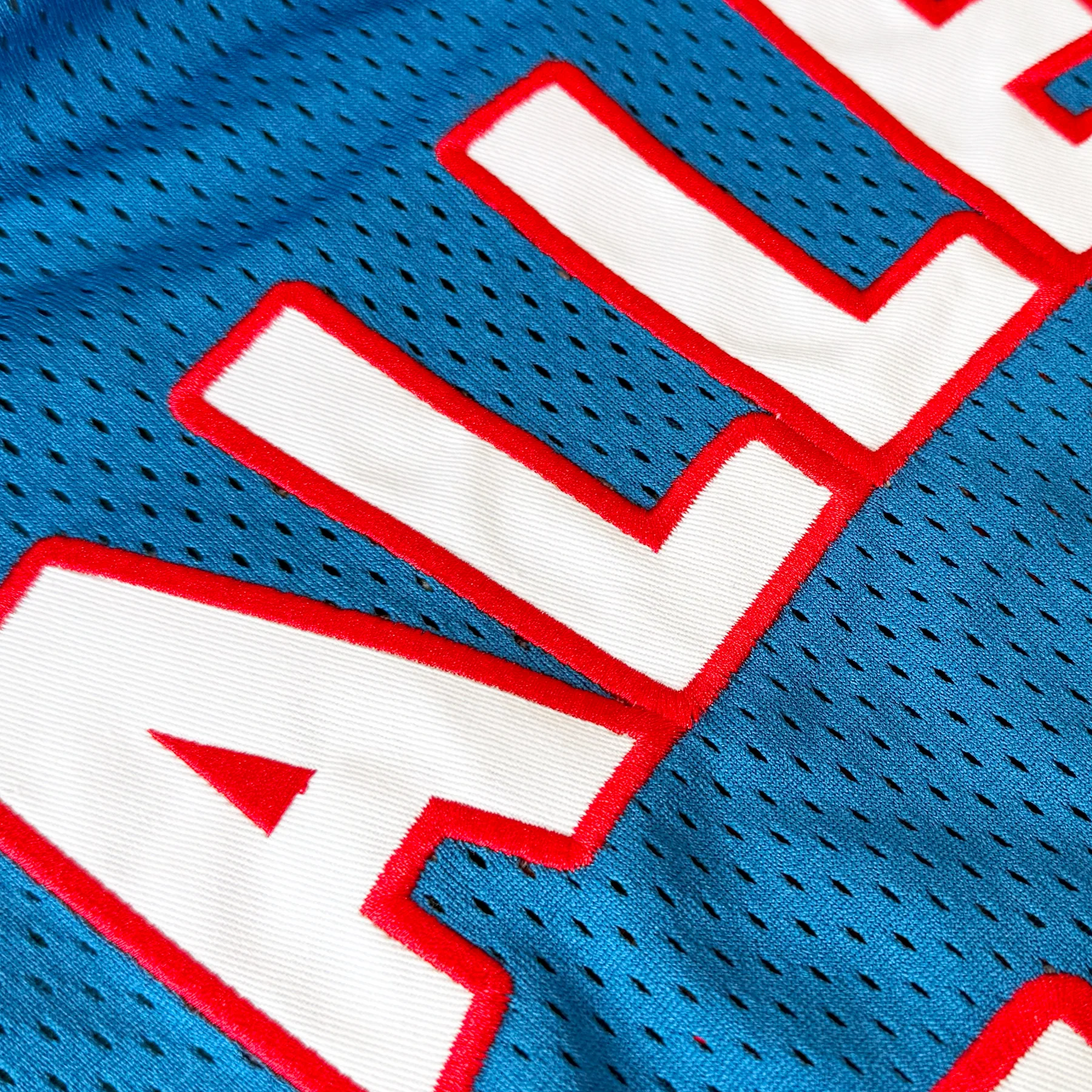
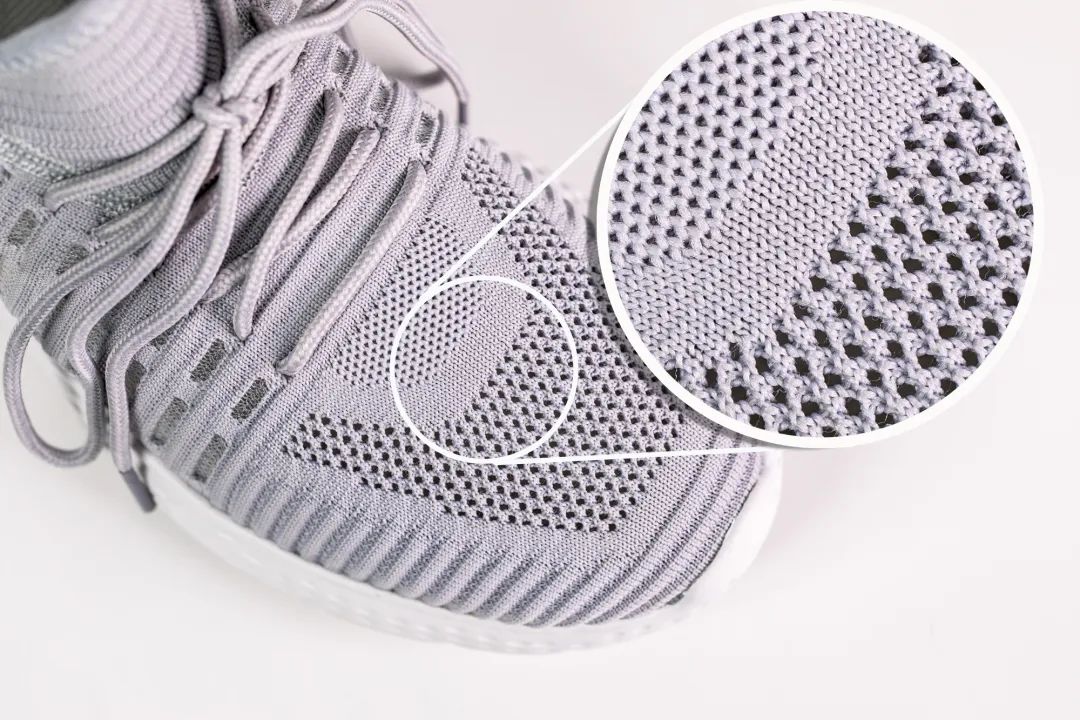
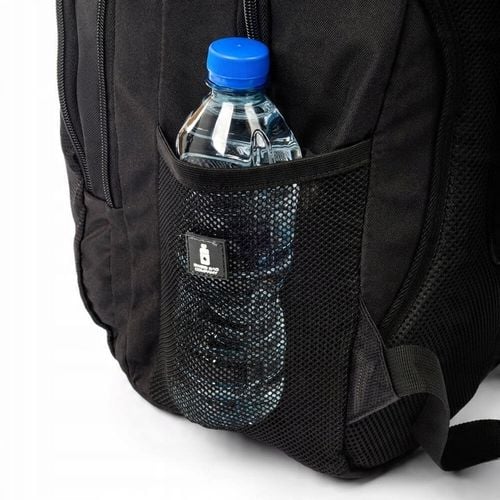
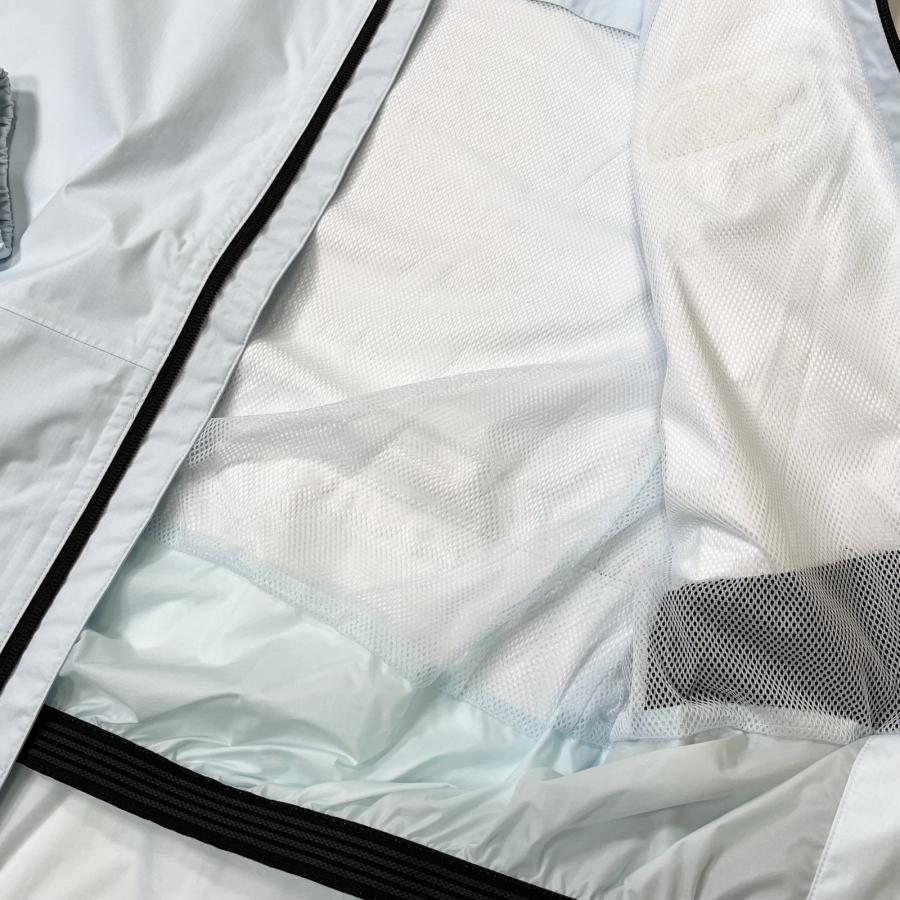
Mesh fabric shows up in places that seem unrelated: the back panel of a running shirt, a bra wing, a football jersey, the upper of a running shoe, a backpack bottle pocket and the padded surface of a mattress.
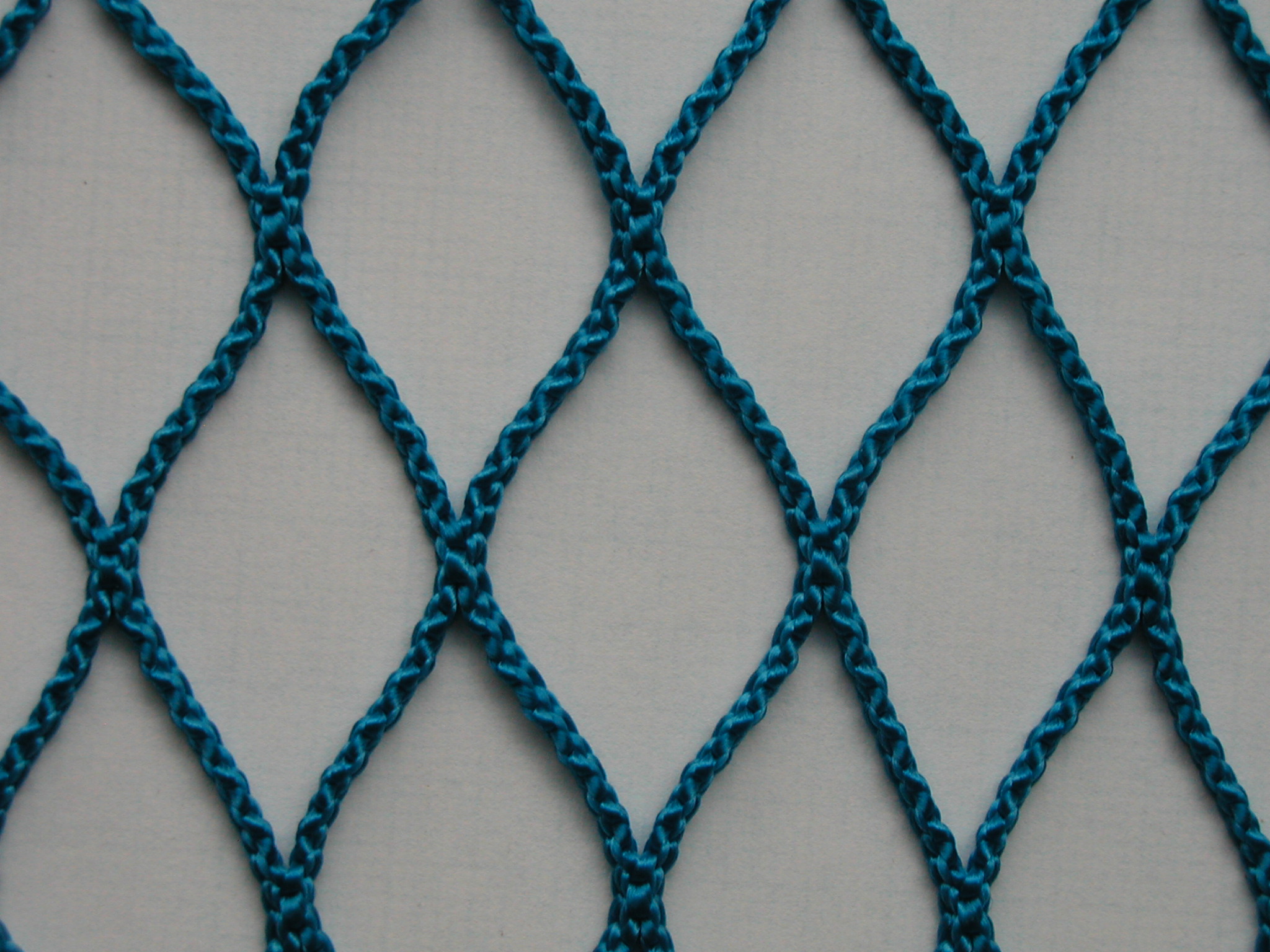
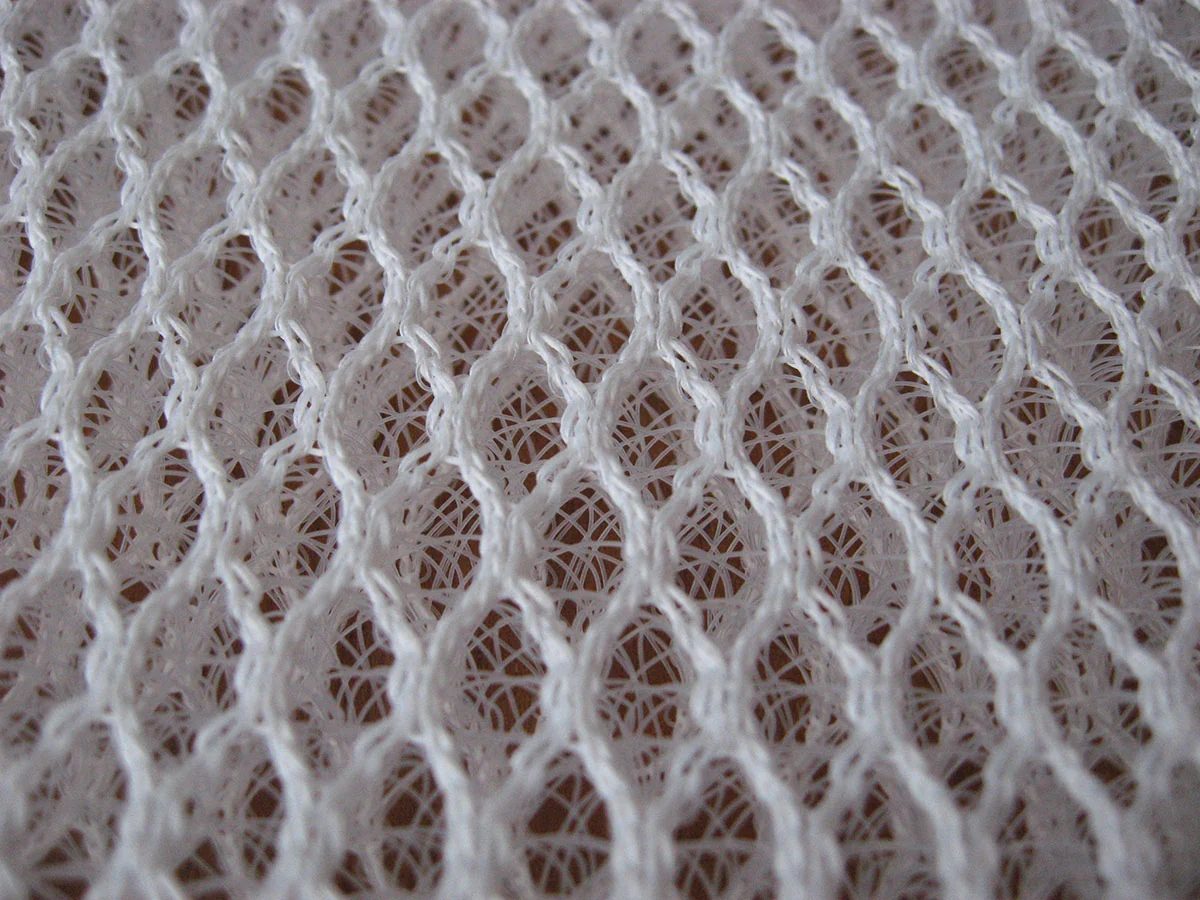
They share an open textile structure. Yarn surrounds deliberate spaces that are created during knitting, weaving, net making or another forming process. Some openings are almost invisible until the fabric is held toward light. Others are several millimetres wide.
Polyester and nylon are common in clothing, footwear and technical mesh. Elastic constructions may include elastane. Cotton and other fibers appear in lighter fashion and apparel uses. The same fiber can produce several completely different meshes once yarn size, opening geometry and construction change.
What Is Mesh Fabric?
Put a mesh swatch on a sheet of white paper.
Look through one opening and trace the yarn around its edge. On a knitted mesh, that yarn belongs to loops or knitted paths connected to the surrounding structure. The opening already exists when the fabric leaves the knitting machine.
The shape may resemble a diamond, circle, hexagon, rectangle or an irregular pattern. Fine lingerie mesh can contain openings that are difficult to measure with an ordinary ruler. Bag and footwear meshes may show the complete repeat clearly to the naked eye.
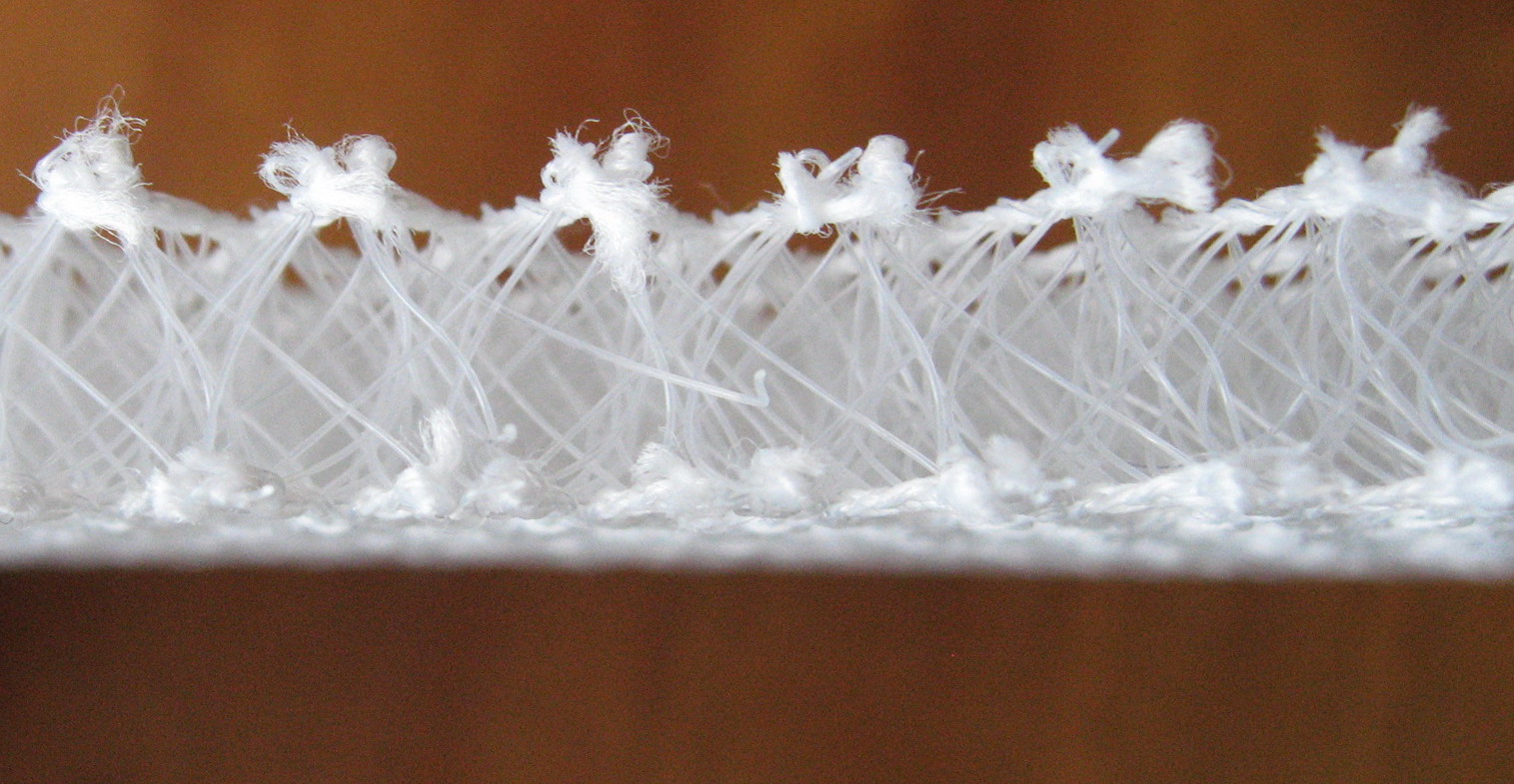
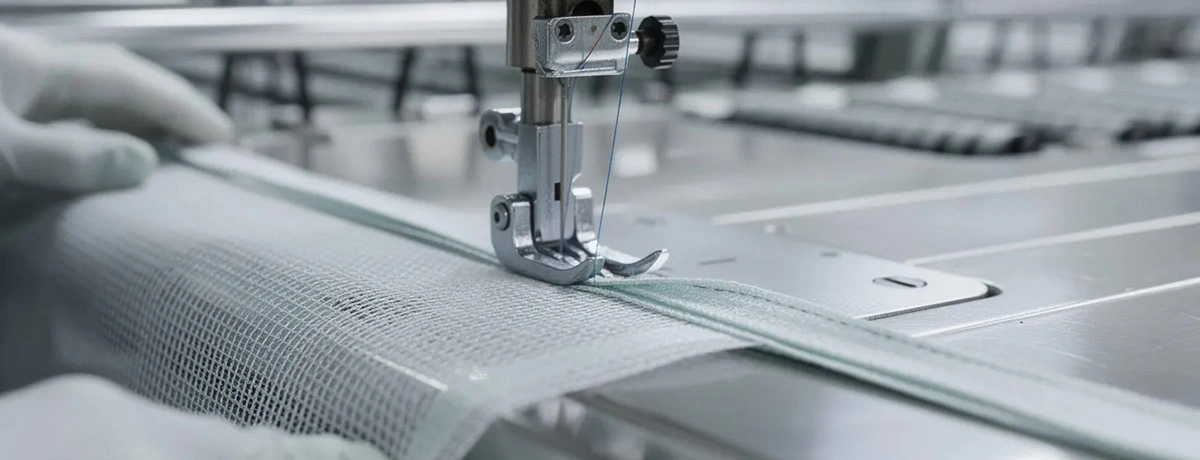
Warp knitting produces a large share of the mesh used in apparel and technical textiles. Raschel machines can make fine elastic nets, patterned mesh and much larger open constructions. Double-needle-bar machines create spacer fabrics containing two textile surfaces separated through the thickness. Current commercial equipment covers applications including shoe fabrics, outerwear, nets, medical textiles and mattresses. KARL MAYER
The Word “Mesh” Leaves a Lot Unsaid
A supplier sends five black polyester swatches.
Every label says mesh.
One has tiny closely spaced pores. Another has 4 mm diamond openings. A third stretches considerably across the width. The fourth feels rigid around each yarn junction. The last sample is thick enough for its internal spacer yarns to be seen from the cut edge.
The fiber name remains polyester across all five pieces.
A fabric card becomes much more useful when it identifies the construction name, opening size, pattern direction, yarn scale, finished width and the dimensions that matter for the product using it.
Terms such as fine mesh, air mesh, sports mesh and heavy mesh are commonly used in sourcing, and mills can attach those names to visibly different structures.
Mesh Count Does Not Mean the Same Thing Everywhere
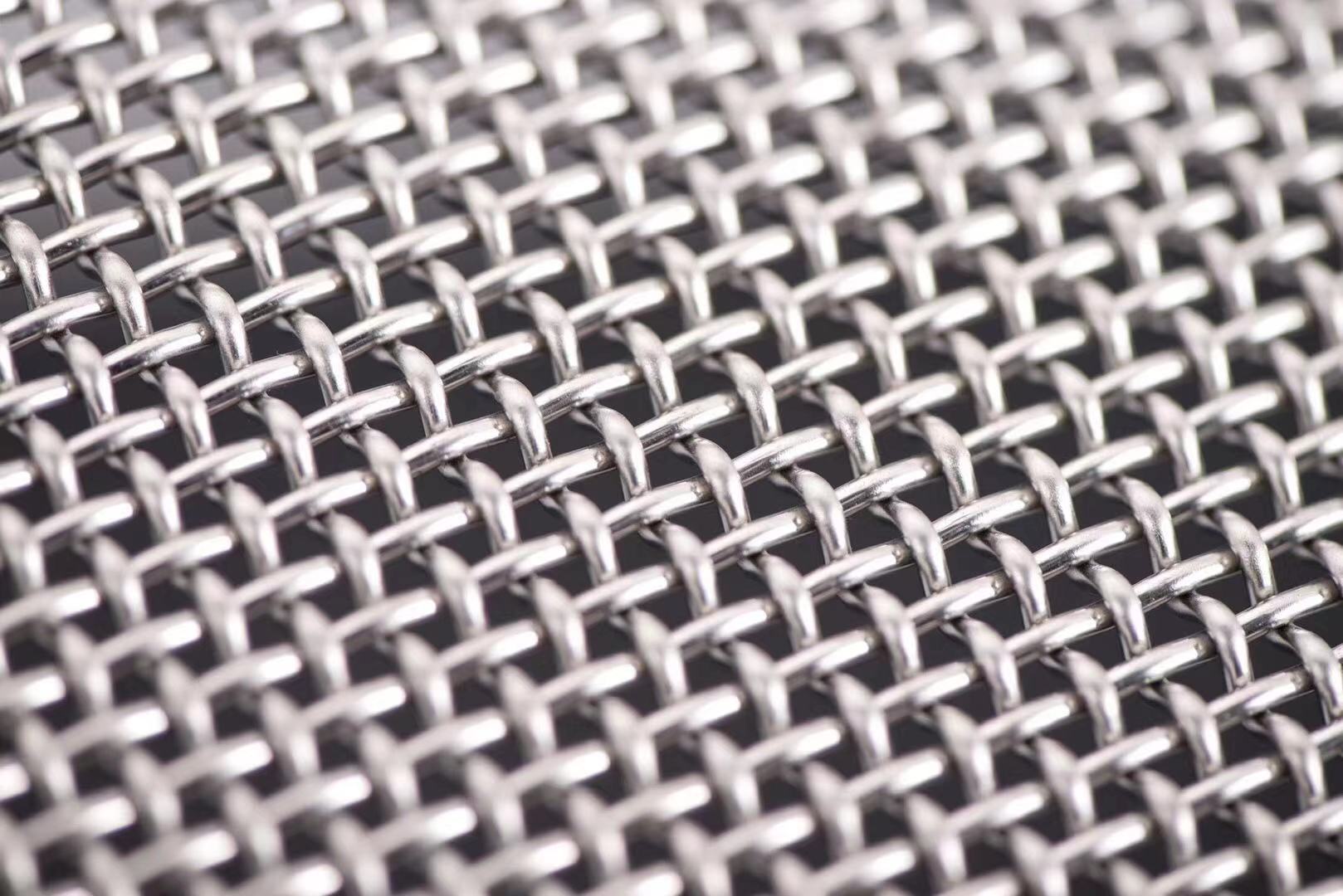
The phrase mesh count appears frequently in industrial screens and woven wire or textile mesh.
In those products, the number may refer to the quantity of openings or threads within a stated distance, often one inch.
Apparel suppliers do not use one universal mesh-count system for every knitted mesh. A warp-knitted sports fabric may be identified through machine construction, gauge, article number, yarn specification or physical reference instead.
This becomes important when someone requests “20 mesh” from a clothing supplier after seeing the term on an industrial screen specification. The number requires its original measurement definition before it can be matched to a textile.
Openings Change the Route Air Takes Through Fabric
Imagine a square measuring 100 × 100 mm.
A fine mesh can place hundreds of small openings inside that square. A coarse mesh may contain fewer openings, each surrounded by a larger amount of yarn. Measuring one hole gives no measurement for all of the open space across the 10,000 mm² area.
Textured yarn occupies the perimeter differently from smooth filament yarn. Finishing can flatten parts of the structure. Coatings, prints and laminated layers alter the passages again.
ASTM D737 covers measurement of air permeability for knitted, woven, layered and treated textile fabrics. ASTM also identifies fabric construction and finishing as factors capable of changing airflow. ASTM D737
The test places a defined fabric area under specified pressure conditions and measures the air passing through it.
Running Shirts Use Mesh as a Map
Lay a performance top flat.
The back panel occupies a broad area across the torso. Under the sleeve is a narrow section that repeatedly folds as the arm moves. Side panels follow the body through twisting and running motion. The chest may carry a logo, number or transfer.
A garment developer can assign different structures to those areas.
An open knit across the upper back exposes more surface to airflow. A side insert can use a construction with useful transverse extension. The chest fabric can carry more continuous surface for printed detail.
Some garments create those zones from several separately cut fabrics.
Engineered warp knitting can place different structures within one textile. KARL MAYER's current technical material includes engineered sports panels and Jacquard constructions with integrated functional zones. KARL MAYER Virtual Showroom
A Team Jersey Gives the Printer Thousands of Small Gaps
Place a solid number over a coarse jersey mesh.
The wide center of the number crosses many yarn paths. Small lettering around it encounters individual openings more frequently. Fine edges can sit partly on yarn and partly over empty space.
Screen ink stays on the textile surface.
A heat-applied transfer brings a film and adhesive layer into the construction.
Sublimation used on suitable polyester mesh colors the fibers through a different process.
A real jersey panel can also contain a seam running through the graphic. Number edges may cross from a denser body fabric into a ventilation panel. Pressing introduces heat and pressure to the mesh at the same time as the decoration.
Sampling departments often discover these details only after the finished-size artwork is placed on the actual garment panel.
Power Mesh Can Change Size Twice in One Test
Mark two points 100 mm apart.
Stretch the sample until those marks reach 150 mm.
The marked section has extended by 50%.
Release the load.
After the chosen recovery period, the marks may sit at 102 mm, 105 mm or 110 mm depending on the construction.
That second measurement is especially relevant to lingerie, bra wings, shapewear and close-fitting support panels. The fabric remains extended during wear and repeatedly returns toward its relaxed dimensions after removal.
Powernet and elastic Raschel mesh remain active commercial constructions for shapewear and related uses; current KARL MAYER sample ranges include elastic Raschel mesh for shapewear and E32 powernet structures. KARL MAYER Virtual Showroom
Length and width can produce different extension values from the same swatch.
Shoe Mesh Changes as You Move Around the Foot
Begin at the forefoot of a running shoe.
The material bends every time the foot rolls forward.
Follow the upper toward the laces and the textile enters an area connected to eyestays, reinforcement and lace tension.
Move toward the quarter and another part of the fabric wraps the side of the foot.
Engineered shoe mesh can place pore zones in selected locations and use denser structures elsewhere within the same knitted piece. Current E32 double-needle-bar Raschel development produces fine spacer surfaces with integrated mesh areas for sports and casual footwear. KARL MAYER
The knitted upper later passes through bonding, reinforcement and assembly operations. Films and overlays may cover selected zones before the shoe reaches lasting and sole attachment.
A Bottle Pocket Is Loaded From the Top Down
An empty backpack pocket sits close to the side panel.
Push a bottle through the opening.
The top edge stretches first.
The body of the mesh expands around the diameter of the bottle.
Weight settles toward the lower portion.
Walking causes the bottle to move against the yarns. Removing it lets the fabric contract again. Repeating the same action hundreds of times puts rubbing around the opening and the seam where the mesh meets the bag.
A pocket intended for coins faces another problem entirely: an opening can be large enough for the corner of a key, earbud or small object to work into the structure.
Bottle pockets are often easy to inspect after wear because abrasion becomes visible near the upper binding and lower contact area.
Spacer Mesh Has Something Flat Mesh Does Not: Depth
Turn a spacer fabric sideways.
Two textile surfaces become visible.
Yarns connect one face to the other through the space between them. Their length and arrangement establish the physical thickness of the textile.
Press the sample.
The faces move closer together as the internal structure deforms.
Current double-needle-bar Raschel machines are built specifically for these fabrics. KARL MAYER's RD 6/1-12 lists a 1–12 mm thickness adjustment range and applications that include sports shoes, sports gear, automotive interiors and mattresses. KARL MAYER RD 6/1-12
A separate KARL MAYER mesh-spacer sample uses a 5 mm machine setting for a construction intended for footwear or upholstery. Strip-like mesh spacer
The cut edge of either fabric shows the connecting yarns directly.
Jacket Lining Mesh Lives Among Zippers, Labels and Seam Allowances
Turn a lined jacket inside out.
Zipper tape runs beside the mesh.
A care label projects from one seam.
Pocket bags create extra layers.
Overlocked seam allowances sit behind the lining.
The wearer's shirt slides across the surface every time the jacket goes on or comes off.
Fine openings reduce the space available for small edges and objects to enter the structure. Yarn texture is noticeable when the fabric touches the neck or arm. A loose lining construction can also distort around pocket openings or attachment points.
Color shows through more locations than the cutting table suggests. Pale lining mesh can be visible through perforated shells, ventilation openings, open pocket structures and loosely constructed outer fabrics.
Inside a zipped pocket, the same mesh may have to retain coins, keys or small accessories.
Sewing a Large Mesh Opening Is a Geometry Problem
Take mesh with an 8 mm repeat and mark a straight seam line across it.
At the first stitch position, the needle may pass through a dense junction.
Several millimetres farther along, it can meet one narrow strand around an opening.
The next penetration lands near another junction.
The seam line remains straight even though the amount of textile underneath each stitch changes.
Binding encloses an open edge with another strip of material. Reinforcement can sit around a zipper end, strap attachment or other concentrated load point. On transparent mesh, the construction remains visible through the face.
A broken filament beside an existing hole can blend into the original opening pattern during a fast inspection.
Layering Can Turn an Open Mesh Into a Much Less Open Assembly
Start with one shoe mesh under a lamp.
The openings are clear.
Place a backing fabric behind it.
Add a reinforcement film across the eyestay.
Bond a logo to the quarter.
Apply another component along the lower edge.
Each layer occupies part of the route that previously passed straight through the loose mesh.
The same sequence occurs in clothing when mesh receives lining, transfer graphics, patches, padding or bonded support.
ASTM D737 includes layered fabrics within its scope, which allows airflow measurements to be taken on constructions containing more than one textile layer. ASTM D737
Shade Net Moves Mesh Onto a Much Larger Scale
An agricultural shade structure can cover a greenhouse, crop row or outdoor growing area.
The mesh is exposed continuously to light, heat, wind and weather. Its openings repeat over a surface far larger than an apparel panel.
Yarn may be supplied in forms suited to outdoor net construction, including monofilaments or tape-like materials. Raschel technology is widely used for net production alongside other technical applications.
At this scale, a local distortion in one part of the net can sit metres away from the next attachment point.
Material choice also has to account for the outdoor exposure period expected from the installation.
Filtration Turns the Opening Into a Functional Dimension
Take a mesh designed around a specified aperture.
Most openings fall close to that size.
One distorted section contains a noticeably larger gap.
A decorative fabric may show that difference as a visual irregularity. A filter places material directly against the openings, giving the aperture a physical role in what can pass through the textile.
Gas-filter textiles are among the applications ASTM lists when discussing the significance of air permeability. ASTM D737
Liquid filtration introduces another operating environment. Chemical exposure, pressure, temperature and cleaning can all become part of the material conditions surrounding the mesh.
Mesh Also Exists Outside Knitted Fabric
A woven mesh forms openings through the spacing and interlacing of warp and weft yarns.
Knotted nets connect yarns or cords at repeated junctions.
Extruded polymer mesh is formed through a polymer-processing route used for various industrial and packaging applications.
Warp-knit mesh creates openings through knitted yarn paths.
Double-needle-bar warp knitting adds a second surface and the yarns joining it to the first.
The same broad word therefore appears on textiles made through fundamentally different manufacturing systems.
Protective Products Use Open Structures in Their Own Way
Camouflage netting covers a large area with an intentionally interrupted surface.
Helmet liners fit open textile structures around curved forms.
Protective vests can place mesh next to padding, attachment systems and reinforcement.
Technical warp-knitting portfolios currently include nets, shoe fabrics, medical textiles and other semi-technical products alongside clothing and mattress constructions. KARL MAYER
A 12 mm mesh-spacer sample produced on an E22 double-needle-bar Raschel machine uses polyester and retains approximately 8 mm spacing after finishing. 12 mm mesh spacer
What Is Waffle Knit? Waffle Knit Texture and How It Is Woven
What Is Waffle Knit? Waffle Knit Texture and How It Is Woven
What Is Waffle Knit? Waffle Knit Texture and How It Is Woven
Waffle knit is a textured knitted fabric with small recessed cells across the surface. Those cells are usually square or slightly rectangular, with raised yarn defining the edges. Thermal shirts, Henleys, lounge pieces and casual long-sleeve tops often use this structure.
Most garment waffle is knitted from interconnected loops. Waffle weave is a separate textile construction produced with warp and weft yarns on a loom.
The finished result depends on more than the visible grid. Yarn size, stitch length, cell dimensions, knitting density, fiber content, GSM and finishing all change how the fabric looks and behaves.
What Is Waffle Knit?
A garment application makes the scale of the waffle surface visible across the body and sleeves.
Waffle knit belongs to the textured knit family. Its loop structure creates recessed areas directly in the fabric, so the texture is present from the moment the material is knitted.
The name covers a wide range of fabrics. A light cotton thermal may use very shallow cells. A heavier casual top can use thicker yarn and much deeper relief. Fiber content also varies across products.
The common feature is the cellular knitted surface.
What Does Waffle Knit Texture Feel Like?
Knitted waffle surface at close range. Photo: RAJIVVASUDEV / Wikimedia Commons, CC BY-SA 4.0.
A fine waffle feels lightly uneven under the fingertips. The ridges become easier to detect when a hand moves slowly across the surface. Lightweight versions can still fold and drape easily.
Depth changes the experience. Larger cells create more noticeable high and low points. Thick yarn gives the ridge a fuller shape, and tighter knitting makes the cloth feel firmer in the hand.
Finishing can alter that first impression again. Cotton may feel less dry after softening. Compaction changes the dimensions of the cells. Enzyme treatment can reduce loose surface fibers.
Is Waffle Knit Woven?
This is woven waffle fabric, a different construction from garment waffle knit. Photo: Alexandra.birenbaum / Wikimedia Commons, CC BY-SA 4.0.
Waffle knit is knitted.
Its yarn forms interconnected loops arranged through courses and wales. This structure gives the fabric the movement associated with knitted cloth.
Waffle weave is made on a loom from warp and weft yarns. It appears frequently in towels, bathrobes, blankets and some shirts.
For apparel sourcing, wording such as 100% cotton waffle knit, 220 GSM identifies the construction clearly.
How Waffle Knit Is Made
The loop structure is formed on knitting equipment before dyeing and dimensional finishing.
A typical production route starts with fiber and yarn selection.
The mill chooses the required composition.
Yarn count is matched to the target weight and machine gauge.
The stitch repeat is set on the knitting equipment.
Stitch length and yarn feed are adjusted.
Greige fabric is knitted.
The material rests so part of the knitting tension can relax.
Dyeing and other wet processing are carried out where required.
The fabric is dried.
Compaction or another dimensional finish may be applied.
Finished width, GSM and wash behavior are measured.
The measurements used for production come from the finished fabric.
What Is Happening Inside One Waffle Cell?
Needle position, yarn feed and stitch setting control the loops that build the cellular surface.
A waffle cell is built from the same loop system that forms the rest of the fabric.
Courses run horizontally across the knit.
Wales form vertical columns.
Stitch length controls how much yarn sits in each loop.
Tuck stitches may be used in certain cellular and thermal structures to build extra depth.
The recessed area appears where the loop arrangement draws part of the surface inward. Yarn around that area remains more prominent.
Machine gauge, yarn count and stitch settings all affect the final dimensions of the cell.
What Cell Size Looks Like on a Garment
Finished garment dimensions provide the scale needed to judge how often the cell repeat appears across a panel.
Take a shirt front that measures 60 cm across.
A finished cell width of 5 mm gives roughly 120 repeats across that distance. Increase the cell to 10 mm and the same panel carries about 60.
That change is visible immediately on a full garment. Fine cells create dense surface texture. Larger cells become easier to distinguish across the chest, sleeves and shoulder folds.
A development sheet that records 6 × 6 mm finished cell gives the mill a measurable target.
What GSM Tells You About Waffle Knit
A known fabric area is weighed to calculate grams per square meter.
GSM records the weight of one square meter of fabric.
A 240 GSM waffle can feel bulky when the yarn is thick and the cells are deep. The same weight can feel much flatter with a compact surface.
Thickness, loft, compressibility, cell depth and drape need separate evaluation.
For development from a reference garment, a physical swatch gives information that the GSM figure leaves open.
Why Waffle Knit Appears in Thermal Clothing
The raised surface changes how much of the fabric sits directly against the skin. Contact is concentrated along the higher parts of the texture, leaving small recessed spaces nearby.
The amount of warmth depends on the full construction. A light mini-waffle can work as an indoor layer. Greater fabric weight, thicker yarn and a denser knit produce a more substantial garment.
Moisture behavior also comes from the yarn. Cotton readily absorbs water into the fiber. A blend containing polyester can dry differently because the synthetic portion retains far less water internally. Wool introduces more loft and changes the way the fabric handles moisture and warmth.
What Happens at the Elbow During Wear?
The elbow area stretches every time the arm bends.
Knitted loops open under that movement. Once the arm straightens, the fabric begins returning toward its earlier dimensions.
Some growth can remain after repeated wear. A sleeve that looked flat in the morning may show a rounded elbow later in the day.
Recovery depends on the construction, yarn and fiber content. Elastane can reduce residual growth, and stitch density also changes how the fabric reacts to repeated movement.
How Much Can Waffle Knit Shrink?
Dimensional-change testing relies on fixed marks measured before and after the specified wash cycle.
Use a finished sample measuring 50 cm long × 50 cm wide.
After the intended wash and drying cycle, the sample measures:
The cell shape should be checked at the same time. Unequal dimensional movement can make a previously square-looking grid appear slightly rectangular.
How Fiber Choice Changes the Result
Composition is fixed at yarn level before the fabric structure and finishing route are developed around it.
A fabric developer may begin with a brief asking for a soft waffle top that holds its shape through regular wear and dries reasonably quickly after washing.
Using only cotton gives the fabric a familiar hand and strong absorbency. Adding polyester changes moisture retention and can improve drying behavior. A small elastane content becomes useful when the garment needs better recovery around areas that stretch repeatedly.
A sweater-style product can call for more loft. Wool or a wool blend may suit that type of fabric.
The stitch setting is adjusted around the chosen yarn because different yarn systems fill the same waffle repeat differently.
What Does “Mini Waffle” Actually Tell You?
Waffle and mini-waffle can be visibly different, so the supplier name still needs a finished cell measurement. Photo: RAJIVVASUDEV / Wikimedia Commons, CC BY-SA 4.0.
A supplier quote says:
Cotton mini waffle, medium weight
Several details are still missing.
Finished GSM
Finished cell dimensions
Fiber percentages
Usable width
Wash shrinkage
Stretch and recovery
Yarn count where controlled
Finishing method
Terms such as large waffle, heavy waffle and double waffle can also vary between mills.
A production description such as 95% cotton / 5% elastane, 230 GSM, 6 × 6 mm finished cell, 165 cm usable width removes much of that ambiguity.
How Decoration Behaves on Waffle Knit
Printing directly on the waffle garment panels tests how the artwork crosses the raised and recessed areas.
A finished decoration sample can reveal problems that are hard to predict from the fabric alone.
On a deep waffle, a fine screen-printed line may lose definition as the artwork crosses ridges and recesses. Dense embroidery can pull nearby cells inward when the stabilizer and stitch settings do not suit the cloth. Heat-applied graphics bring pressure into the process, so the uneven surface needs to be checked for consistent contact.
A small chest design may work cleanly on a fabric that gives trouble with a large front graphic.
Sampling on the finished production waffle gives the most useful result.
Where Waffle Knit Is Used
A finished long sleeve shows how waffle scale, garment shape and decoration meet in one product.
The same waffle fabric can behave differently once the pattern pieces change.
A Henley places the texture next to a placket, buttons, neckline and cuffs. On lounge pants, movement through the knees and seat makes recovery more noticeable. An oversized top exposes a large uninterrupted area of fabric, so cell scale becomes easier to see across the body.
Heavier sweater-style pieces give thicker yarn and deeper cells more room to work visually. Lightweight children's garments usually call for a softer, finer construction with wash behavior checked against the intended size range.
How to Read Quality Problems in Waffle Knit
A roll with cells that change size across the width may have uneven knitting or finishing tension.
Width measured under roll tension can drop once the fabric relaxes.
Wash testing may reveal spirality, directional shrinkage or a shift in cell proportions.
Poor recovery shows up when a stretched area remains visibly enlarged after the load is removed.
Raised loops that pull easily during mild abrasion point to higher snag sensitivity.
Comparing more than one roll can expose batch differences in hand, surface height or cell dimensions.
How Finishing Changes Waffle Knit
Compaction is one of the finishing stages used to control residual dimensional movement in knit fabric.
Fresh greige waffle still contains tension left from knitting. Once the fabric enters wet processing, the loop structure begins to settle.
Dyeing exposes the cloth to water, heat and chemicals. Drying establishes another dimensional state, and compaction can reduce part of the remaining lengthwise movement.
Softening affects how the fabric feels in the hand. Enzyme treatment may alter loose surface fibers when it is included in the finish.
By the time the roll reaches cutting, its dimensions and hand may have moved significantly from the greige state.
Waffle Knit Specification Example
A reference sheet gives the visual target; the production specification records the measurable limits.
Construction
Waffle knit
Composition
95% cotton / 5% elastane
Finished weight
230 GSM ±5%
Usable width
165 cm
Finished cell size
6 × 6 mm
Stretch direction
Width
Length shrinkage
Maximum 5% after specified wash
Width shrinkage
Maximum 4% after specified wash
Color
Match confirmed lab dip
Hand feel
Match sealed sample
Surface appearance
Match sealed sample
Finish
Softener + compaction
Garment wash
None
What Is Interlock Fabric? Interlock Fabric Body and Stability
What Is Interlock Fabric? Interlock Fabric Body and Stability | FashionMe
What Is Interlock Fabric? Interlock Fabric Body and Stability
Interlock fabric is a double-knit fabric produced with two sets of needles. Both sides show a clean knitted surface, and the finished cloth commonly has more thickness and body than a basic single jersey made from a comparable yarn.
The term interlock refers to the knit construction. Cotton, polyester, viscose, modal and blended yarns can all be used. The finished result depends on fiber content, yarn size, machine gauge, stitch length, fabric density and finishing.
Interlock appears in T-shirts, polos, dresses, children's clothing, underwear, uniforms, base layers and sportswear.
What Is Interlock Fabric?
Interlock belongs to the weft-knit family and is made on two needle beds. Circular knitting machines commonly use cylinder needles and dial needles for this construction.
The loops from both needle systems intermesh into a double-knit structure. Knit stitches appear on each surface.
Single jersey is produced on one needle bed and has a clearly identifiable technical face and reverse. Interlock contains another knitted system through the fabric thickness, which adds yarn and changes the way the structure moves under tension.
The fabric still stretches through changes in loop geometry.
What Interlock Body Feels Like
Drape a lightweight jersey over the back of your hand and notice how closely it follows the gaps between the fingers.
Place a medium interlock over the same area. Broader folds usually form, and the cloth tends to bridge more of the small contours underneath.
That physical fullness is generally described as body.
Several construction choices contribute to it. A fine yarn on a dense gauge can produce a compact surface. Bulkier yarn creates more apparent thickness. Short stitch length packs the loops more closely. Compacting and softening alter the final hand after knitting.
A soft surface can still sit on a fabric with substantial body.
GSM Leaves Important Construction Details Unknown
A label reading 220 GSM cotton interlock gives only the finished mass per square metre.
The fabric could have been made from a fine yarn or a much bulkier one. The machine gauge may also differ. Stitch length can be tight or relatively open. Finished width and compacting level may vary from one mill to another.
Those variables change the hand even when the scale reads the same value.
A compact fine-gauge interlock often feels denser. Another fabric at 220 GSM may feel thicker because the yarn is bulkier and the loops occupy more space through the fabric depth.
GSM belongs on the specification sheet alongside construction data.
Stability Starts With the Shape of the Loops
A knitted loop contains curved sections of yarn.
When force is applied, those curves begin to change shape. The loop head narrows, the side limbs straighten and adjacent loops shift within the structure.
Interlock has two knitted systems connected through the fabric, which limits part of this movement.
Stitch length affects the amount of room available inside the structure. Larger loops allow more geometric change. A tighter setting reduces that room.
The finished fabric is then altered further during wet processing, drying, compacting or heat setting.
Stretch, Growth and Recovery Need Separate Measurements
A sample starts with a marked length of 100 mm and reaches 120 mm during the stretch test.
That gives an extension of 20%.
After the load is removed, one fabric may settle at 101 mm. Another may settle at 106 mm after the same recovery period.
Those readings describe residual growth after extension.
A useful report records the test direction, original gauge length, maximum extension, applied load or test method, recovery period and final length.
Cotton interlock receives much of its extension from loop movement. Elastane changes the return behavior because the elastic yarn adds another source of recovery.
Reading a Shrinkage Result
A marked fabric sample measures:
Direction
Before washing
After washing
Change
Length
500 mm
485 mm
-3%
Width
500 mm
490 mm
-2%
These values need the wash conditions attached to them. Temperature, drying method, number of cycles and conditioning time all influence how the result should be interpreted.
Dimensional change can come from tension introduced during knitting, dyeing, extraction, drying, compacting or rolling.
Testing length and width separately gives a clearer picture of how the interlock relaxes in laundering.
What Cutting Reveals About Interlock
A roll carries tension while it is wound and stored.
Once the fabric is opened, spread and relaxed, the usable width can move. The cutting room needs that relaxed measurement for marker planning.
After cutting, interlock pieces usually remain relatively flat around the edges. Narrow neck components, bindings and smaller panels are easier to stack when edge curl is limited.
Dense interlock creates another practical issue through the depth of the lay. A thick stack increases compression on lower plies, and cutting accuracy can be affected by excessive lay height or poor blade condition.
Sewing Problems Can Be Traced From the Defect
Production symptom
Areas to inspect
Wavy seam
Differential feed, handling tension, feed balance
Skipped stitches
Needle size, needle point, machine condition
Damaged loops
Needle wear and point selection
Tunneling at hem
Coverstitch tension
Stretched neckline
Binding ratio and feeding
Thick placket corner
Layer count and seam allowance
Puckering
Thread tension and fabric compression
The number of fabric layers changes from one garment area to another.
A side seam may contain two layers. A polo placket can include folded shell fabric, reinforcement and crossing seam allowances.
Sewing trials need to reproduce the actual construction used in those areas.
Decoration Changes the Load on the Fabric
Screen printing adds material mainly to the surface. Surface smoothness, ink deposit and curing influence print definition and local stiffness.
Embroidery works through the full fabric thickness. A dense filled design introduces many needle penetrations and a large amount of thread into one area. Backing, hoop tension and stitch density affect how flat the surrounding interlock remains.
Heat transfer exposes the cloth to pressure and temperature. Polyester-rich and elastane-containing interlocks need testing at the production press settings because heat can affect surface appearance and dimensions.
Decoration samples should use the finished bulk fabric whenever possible.
Fiber Content Changes the Finished Interlock
Cotton interlock is common in T-shirts, children's clothing, underwear and sleepwear. It usually has an absorbent hand, and combed yarn can produce a cleaner surface with less visible hairiness.
Polyester interlock appears frequently in sportswear, teamwear and uniforms. Filament polyester can give a smoother surface and faster drying, and spun polyester produces a more textile-like hand.
Cotton-polyester blends shift according to the blend ratio. A cotton-rich construction keeps more of the cotton character, and increasing the polyester percentage changes drying behavior and dimensional response.
Elastane is added when stronger recovery is needed. Final performance still depends on yarn placement, stitch setting and finishing temperature.
Interlock, Single Jersey and Rib
Feature
Single jersey
Interlock
1×1 rib
Needle beds
One
Two
Two
Face and reverse
Different
Similar
Ribbed
Edge curl
Common
Low
Low
Relative thickness
Lower
Higher
Varies
Width stretch
Moderate
Construction-dependent
Usually high
Common use
Basic tees
Tees, polos, dresses
Cuffs, collars
Surface
Smooth face
Smooth on both sides
Visible vertical ribs
Rib opens strongly across the width because of its wale arrangement.
Single jersey is easy to identify from the different appearance of the two surfaces.
Interlock presents a smooth double-faced structure with relatively low edge curl.
Stitch Length Changes the Fabric in Several Places
Stitch length controls the amount of yarn used in the loop structure.
Increasing it creates larger loops and more space within the knit.
This can affect fabric density, relaxed width, stretch, drape, air permeability and wash behavior. The degree of change depends on the yarn, gauge and finishing process used with it.
Finishing can move the final GSM closer to a previous target even after the original knitting settings have changed.
For repeat production, keeping the approved stitch-length record helps the mill reproduce the original construction more closely.
Width Affects Fabric Consumption
Consider an approved interlock with a usable width of 180 cm.
The bulk fabric arrives at 172 cm.
A marker designed for 180 cm may no longer place the same garment panels in the original arrangement.
The revised layout can require more marker length, which increases fabric consumption per garment.
This change can occur with no movement in GSM or price per kilogram.
Usable width needs its own production tolerance.
What Belongs on an Interlock Specification
Structure: Interlock
Composition: 100% combed cotton
Finished GSM: 220 GSM ± agreed tolerance
Usable width: 175 cm ± agreed tolerance
Yarn count: __________
Yarn type: __________
Machine gauge: __________
Stitch length: __________
Finish: __________
Width stretch: __________
Length stretch: __________
Recovery: __________
Length shrinkage: __________
Width shrinkage: __________
Spirality / skew: __________
Pilling requirement: __________
Wash colorfastness: __________
Rubbing colorfastness: __________
Wash method: __________
Hand reference: sealed physical swatch
An approved unwashed swatch can be kept with the specification. A washed reference from the same development lot is also useful for repeat comparison.
How a Bulk Lot Can Drift From the Approved Fabric
Construction changes can appear in the yarn, machine gauge or stitch length.
Finished dimensions can move through GSM, width or shrinkage.
Hand feel can shift after changes in yarn bulk, softening, compacting or other finishing settings.
Sewing performance may reveal differences that are difficult to detect from a flat swatch. Necklines, hems, plackets and zipper areas place different loads on the fabric.
Print, embroidery and heat transfer can expose changes in local stability.
Measurements, retained swatches, sewn samples and decorated samples provide separate records for these checks.
What Is Ribbed Fabric? Stretch, Shrinkage and Cuff Uses
What Is Ribbed Fabric? Stretch, Shrinkage and Cuff Uses
Ribbed fabric has raised, parallel lines separated by recessed channels. In clothing, the term usually refers to rib knit, a fabric made with alternating columns of knit and purl stitches. The columns spread apart when pulled across their width, giving the material room to stretch around the body.
That flexibility makes rib knit useful for fitted T-shirts, tanks, dresses, underwear and sweaters. At garment edges, ribbing forms cuffs, neckbands and hem bands that expand during dressing and draw back toward their resting size afterward.
Rib describes the fabric’s construction. Its fiber content may be cotton, wool, viscose, polyester or a blend, often with elastane added. Construction, fibers and finishing all influence how far the fabric stretches, how well it recovers and how its dimensions change in the wash.
Recognizing Rib Knit: 1×1, 2×2 and Wider Ribs
Look closely at the raised part of a rib and you can see small V-shaped knit stitches stacked in columns. The purl columns sit in the channels between them. On fine, relaxed ribbing, those channels can close so closely that the fabric initially looks almost smooth. A gentle sideways pull reveals the recessed stitches.
Raised stitch columns and the channels between them. Image: Seamwork.
A vertical column of stitches is called a wale. A row running across the fabric is a course. The numbers in a rib description count the repeating knit and purl columns:
Wider stitch groups at a comparable yarn size and gauge
Basic machine-knitted rib uses two needle beds. Balanced constructions such as 1×1 and 2×2 have a similar appearance on both sides and generally lie flat at the cut edges. Single jersey has a knit face, a visibly different reverse and a tendency to curl. Interlock has smooth, similar faces; its intermeshed structure restricts the movement of neighboring columns. These differences help identify the common knit constructions.
Rib width also depends on yarn thickness and machine gauge. A fine 2×2 rib can have smaller ridges than a chunky 1×1 sweater rib. Unequal repeats, such as 2×1, give different proportions of raised and recessed stitches on each face. Variegated ribs combine several widths in a larger repeat. The numbers describe this arrangement; stretch performance comes from measuring the finished fabric.
How Much Does Rib Fabric Stretch?
A cotton rib can stretch even with an all-cotton fiber composition. Pulling across the ribs opens the channels and changes the shape and position of the knitted loops. Lengthwise extension involves a different movement of those loops, so the two directions can give different results.
Elastane adds an elastic component to the yarn system and helps the fabric recover after extension. Spandex and elastane are names for the same fiber category; LYCRA® is a brand. A label reading “95% cotton, 5% elastane” gives composition by weight. The stretch percentage is measured separately on the fabric.
For example, a 10 cm span extended to 15 cm has increased by 5 cm:
The effort needed to reach 15 cm also matters. Two samples may reach that distance with noticeably different resistance. In a cuff, that resistance affects the pressure around the wrist; in a fitted top, it affects how the garment feels across the chest and shoulders.
Recovery describes the return after the pull is released. The remaining increase in size is fabric growth. A sleeve pushed up the forearm or a knee bent during sitting holds the fabric under tension for longer than a quick hand stretch. ASTM’s description of stretch and growth testing distinguishes these effects and explains why prolonged loading matters in clothing.
For a practical home comparison:
Lay the swatch flat and relaxed. Mark two points 10 cm apart, leaving space between the marks and the cut edge.
Pull evenly to a comfortable resistance. Record the distance between the marks and how long the pull is held. A reading of 15 cm gives the 50% extension above.
Release the swatch and leave it flat for one minute. If the marked span measures 10.5 cm, its remaining growth is (10.5 − 10) ÷ 10 × 100 = 5%. Record the one-minute rest with the result. Further recovery may occur during a longer rest.
This hand check gives an approximate comparison. A laboratory method specifies the load or extension, specimen preparation and measurement conditions.
Repeat the check across the ribs and along them. Fabric sold as “four-way stretch” extends along both axes, and each direction needs its own measurement. A bodysuit uses lengthwise extension between shoulder and crotch as well as widthwise extension around the torso. A rib suitable for a loose T-shirt may therefore behave quite differently in a close-fitting bodysuit.
Does Ribbed Fabric Shrink?
Yes. Rib knit can shrink during washing and drying. The amount depends on the fibers, loop structure, processing history and care procedure. Length and width are separate measurements: a sample can shorten more than it narrows, and some constructions or conditions produce growth in one direction.
Cotton knit can retain tension from knitting, dyeing, finishing and handling. Washing wets and swells the fibers; the yarns and loops gain an opportunity to move toward a more relaxed arrangement. During drying, moisture leaves the structure and the fabric can consolidate further. Tumbling adds mechanical movement that promotes this relaxation.
The delivered fabric’s dimensions also reflect decisions made at the mill. Yarn size, stitch length and finished width influence its dimensional behavior through processing. Pulling a knit lengthwise during processing can lengthen it and reduce its width.
Mills use relaxation drying and compaction to reduce the shrinkage remaining before cutting. Compaction mechanically brings the structure into a shorter, more consolidated state. A fabric sold as preshrunk has undergone shrinkage-control processing; its wash test establishes the residual change under the stated conditions.
Wool has an additional mechanism. Agitation in water can cause the surface scales of untreated wool fibers to interlock, producing felting and contraction. Shrink-resist treatments for wool modify that surface behavior. The care label identifies the washing and drying procedures suitable for the particular garment.
A cotton-elastane rib combines stretch recovery with the dimensional behavior of its whole construction. The starting measurement changes after laundering. Consider this calculated example, using assumed readings from the same marked span:
Measurement stage
Distance between marks
Comparison
Before washing, relaxed
10.00 cm
Original dimension
Washed, dried and rested
9.60 cm
4% shrinkage from the original dimension
Stretched after washing, then released and rested for one minute
10.00 cm
4.2% growth from the washed dimension
The final growth calculation is (10.00 − 9.60) ÷ 9.60 × 100 = approximately 4.2%. The two 10 cm readings occur at different stages. Measuring recovery from the washed 9.60 cm baseline reveals the growth produced by subsequent stretching. Keep a separate baseline for each laundering stage and record the stretch duration and recovery interval with it.
For a home wash trial, mark a 25 cm square inside a larger swatch, leaving fabric beyond each side. Measure it flat and relaxed. Wash and dry it using the care procedure intended for the finished garment, then let it rest under the same conditions used for the starting measurement.
The width result is (25 − 24) ÷ 25 × 100 = 4%. Along the ribs, (25 − 23.5) ÷ 25 × 100 = 6%. These figures describe the example sample. A sample that finishes larger is recorded as growth, with its direction identified.
Record wash temperature, cycle, drying method and number of laundering cycles beside the measurements. Repeated cycles reveal whether the dimensions continue to change. For professional testing, AATCC specifies TM135 for fabrics and TM150 for garments, with defined preparation, laundering and measurement conditions.
Body fabric and rib trim also need to work together after washing. On a sweatshirt, compare their directional changes under the same care procedure, then launder a sewn sample. Sleeve length, cuff height, relaxed cuff circumference and the joining seam show how the combination behaves. Greater contraction in the trim can gather the sleeve more tightly; greater contraction in the sleeve can change the fullness above the cuff.
Why Ribbing Works for Cuffs
A sweatshirt cuff passes through several shapes during wear. It opens around the hand, rests at the wrist and may stay stretched around the forearm when the sleeve is pushed up. The material needs enough extension for dressing and enough recovery to return toward the intended wrist size after those movements.
Ribbing achieves this through the movement of its columns and the recovery of its yarns. Cuffs are usually cut with the ribs running along the sleeve, placing the widthwise stretch around the arm. Folding the fabric gives a smooth outer edge and a double layer. That extra layer changes the feel and resistance of the band.
Cuff height influences fit too. A tall cuff reaches farther up the arm, where the circumference may be larger. A narrow band concentrates its contact in a smaller area. The intended wrist fit, cuff height and ease of pulling it over the hand therefore belong in the same fitting trial.
Fabric sold specifically as ribbing often has a firmer handle than a light rib intended for a draped top. A sweatshirt cuff needs enough substance to sit comfortably against the sleeve fabric and retain its shape after wear. A fine T-shirt sleeve can use a lighter band. Wool sweater cuffs may be knitted directly into the sleeve, with the stitch pattern changing where the sleeve body begins.
The supply format affects construction:
Flat ribbing is cut to size and joined into a loop. The pattern controls both circumference and folded height.
Ready-made cuffs have established dimensions and construction. The sleeve pattern is matched to the selected trim.
Tubular ribbing can form a cuff with no lengthwise joining seam when the tube has the required circumference. A 10 cm laid-flat tube measures approximately 20 cm around. Wider tubes can also be cut into separate pattern pieces.
Tubular ribbing supplied as a continuous knitted tube. Image: Seamwork.
These ribbing formats are used for sweatshirt and jacket trims as well as other garment edges. On joggers, ankle cuffs have to open over the heel during dressing. Their resting circumference is selected for the desired ankle fit, with heel passage included in the sewn trial.
Working Out a Folded Cuff Size
For a trial cuff measuring 17 cm around and 6 cm high when finished, a flat pattern piece measures 19 × 14 cm with 1 cm seam allowances. This example uses a rectangle joined at its ends and folded in half.
Pattern dimension
Calculation
Cut measurement
Around the cuff
17 cm finished circumference + 1 cm at each joining end
19 cm
Through the height
Two 6 cm layers + 1 cm on each raw attachment edge
14 cm
Joining the ends takes up 2 cm of the rectangle’s circumference. Folding the height produces a 7 cm double layer; the attachment seam uses 1 cm, leaving 6 cm visible. For an existing sewing pattern, use its stated seam allowance and check whether the supplied piece already includes it.
Suppose the sleeve opening measures 20 cm along the stitching line. The 17 cm cuff is 85% of that opening. This is a trial proportion for the sample. The rib’s resistance, recovery and thickness determine how that proportion feels in the finished garment.
During attachment, the cuff has to reach the sleeve’s 20 cm opening:
Both calculations start from the cuff’s relaxed 17 cm circumference. The second describes hand passage, so it is the more demanding extension in this example. A comfortable fit also depends on the force needed to reach that opening. Check the finished loop with its joining seam and folded layers, then check it again after attachment.
The relationship between wrist size and relaxed cuff size is often described as ease. A cuff smaller than the wrist has negative ease and remains stretched during wear. A cuff with positive ease sits more loosely. Desired fit can vary between a light top, a sweatshirt and an outerwear sleeve.
Use fabric prepared with its intended care method for the trial. Include pushing the sleeve up the arm and returning it to the wrist. If the cuff circumference changes during fitting, recalculate both the attachment extension and the opening needed for the hand. Finished height can be adjusted separately through the rectangle’s other dimension.
Following the Same Cuff Through a Wash
The 17 cm cuff in the cutting example needs approximately 41.2% extension to reach a 24 cm hand opening. Its resting circumference after laundering sets the extension needed the next time it is worn.
Assume that separate swatches show 4% contraction around the cuff and 2% contraction around the sleeve opening under the same laundering procedure. These are illustrative inputs. Applying them to the 17 cm cuff and 20 cm sleeve gives the following planning calculation:
Quantity
Before washing
Estimate from the separate swatch changes
Relaxed cuff circumference
17.00 cm
17 × 0.96 = 16.32 cm
Sleeve opening at the stitching line
20.00 cm
20 × 0.98 = 19.60 cm
Cuff circumference as a share of sleeve opening
85.0%
16.32 ÷ 19.60 = 83.3%
Cuff extension to reach the sleeve opening
17.6%
(19.60 − 16.32) ÷ 16.32 = 20.1%
Cuff extension to reach the 24 cm hand opening
41.2%
(24 − 16.32) ÷ 16.32 = 47.1%
Percentages in the final two rows use the cuff circumference as their denominator. The sleeve contracts by 0.40 cm and the cuff by 0.68 cm in this example, changing their attachment relationship. The hand opening remains 24 cm, so more extension is required during dressing.
The general relationship is washed cuff-to-sleeve ratio = original ratio × cuff retained fraction ÷ sleeve retained fraction. Here, 0.85 × 0.96 ÷ 0.98 = approximately 0.833. Matching the two contraction percentages would preserve their proportion in this calculation, and the smaller cuff would still need additional extension over the same hand.
This model applies separately measured, freely relaxing swatch changes to each component. A sewn seam couples the materials, so the washed garment establishes their actual dimensions and fit.
The hand-opening calculation can also be worked backward. Suppose a washed, folded and sewn trial cuff reaches 45% extension at an acceptable dressing force and recovers within the fit requirements set for that sample. With a 24 cm hand opening, the corresponding washed circumference is 24 ÷ 1.45 = approximately 16.55 cm. Allowing for the assumed 4% residual contraction gives a starting circumference of 16.55 ÷ 0.96 = approximately 17.24 cm, before adding joining seam allowances.
In symbols, starting circumference = hand opening ÷ [(1 − s) × (1 + e)], where s is residual circumferential shrinkage and e is usable extension, both expressed as decimals. The 45% value belongs to this assumed trial; it represents the behavior of the washed cuff assembly. Wrist comfort and the resulting sleeve fullness set the remaining fitting decisions.
For prewashed yardage, use the dimensional change still measured after that preparation. Each measurement record should identify the rib lot, body fabric, care procedure and stage at which the cuff circumference was taken.
Calculate cuff fit after washing
Follow a cuff from its starting circumference to the opening needed for dressing. The calculation combines directional shrinkage with a chosen usable extension.
The starting values are an illustrative example. Replace them with measurements from the same material lots and care procedure. Enter residual shrinkage if the material has already been prewashed.
Calculated dimensions and extension
Quantity
Starting state
After-wash estimate
Relaxed cuff circumference
17.00 cm
16.32 cm
Sleeve opening
20.00 cm
19.60 cm
Cuff as a share of sleeve opening
85.0%
83.3%
Extension to sleeve opening
17.6%
20.1%
Extension for hand passage
41.2%
47.1%
At 45.0% usable extension, the estimated washed cuff opens to 23.66 cm. The entered hand opening is 24.00 cm.
A starting cuff circumference of 17.24 cm corresponds to a 24.00 cm hand opening at that extension, with the same shrinkage assumption.
The circumference calculation excludes joining seam allowances. Wrist comfort, cuff height and sleeve fullness are established during fitting.
The estimates apply freely measured swatch contractions to the cuff and sleeve separately. Joining the two materials constrains their movement; actual after-wash measurements come from the sewn garment. All inputs should describe the same care stage. The entered usable extension describes the washed assembly.
Rib Neckbands, Waistbands and Hem Bands
On a zip-front jacket, the rib hem meets the zipper at two front edges. Closing the zipper makes their alignment visible. Around the body, a shorter band draws the fabric into a smaller circumference, creating fullness above the seam. Its finished height is measured from the joining seam to the folded edge.
A sweatshirt hem band forms a continuous loop. Its fit depends on where it sits on the body and how much of the sweatshirt is intended to gather above it. The band also extends during dressing as the garment passes over the shoulders.
Neckbands follow a curved opening. Their length is developed from the neckline’s stitching-line measurement, finished band width and the recovery of the rib. A wider band reaches farther inward across that curve, affecting how it lies against the body. After dressing, the sewn neckband should settle smoothly around the neckline. The required head opening belongs in the fit check alongside its resting shape.
At a trouser or jogger waist, ribbing can form a soft outer band around inserted elastic. The elastic supplies additional holding force, and a drawcord may provide adjustment. The pattern determines how those components are secured and how far the complete waistband opens over the hips. Any topstitching through the band becomes part of that opening’s stretch behavior.
Choosing Rib Knit for Tops, Dresses and Loungewear
A ribbed tank, a flowing dress and a winter sweater place different demands on the material. A tank uses relatively little fabric and often fits close to the torso. A long dress hangs from the shoulders and stretches across the bust and hips. In a sweater, yarn bulk and the weight of the whole panel contribute strongly to the way the garment sits.
Cotton rib is common in soft, absorbent tanks, underwear and casual tops. For a closely fitted style, cotton-elastane blends add recovery at areas such as the neckline and elbows. Polyester appears in blends used for everyday clothing and activewear, contributing properties such as wrinkle resistance. These fiber choices affect feel and performance, together with the knit structure and finish.
Viscose, often labeled rayon, is used for ribs with a fluid drape. It suits tops and dresses that fall closely around the body. Modal is another regenerated cellulose fiber used in soft clothing. Lenzing describes the softness and moisture absorption of its modal fibers; the finished knit’s weight and structure further shape how it hangs. Wool ribs are used in sweaters, cardigans and other warm knitwear, from fine layers to bulky pieces.
Weight specifications help describe these choices. 220 GSM means 220 grams per square meter. Two fabrics with that weight can have different thicknesses, stiffness and opacity because their yarns and loop arrangements differ. Ribbing also changes appearance as its channels open across the body.
Shrinkage can change the GSM reading because it changes the area occupied by the fabric. Using the earlier example of 4% width contraction and 6% length contraction, the retained area is 0.96 × 0.94 = 0.9024, or 90.24% of the original area. If the conditioned fabric mass stays constant, a 220 GSM rib would then measure 220 ÷ 0.9024 = approximately 244 GSM. That is an increase of about 10.8% in mass per unit area.
This is an area-and-mass calculation using assumed dimensional changes. An actual postwash GSM result also reflects any mass change from removed finish or lint and the sample’s moisture condition. Compare supplier weights at the same preparation and conditioning stage; record delivered and washed values separately when both matter to the garment specification.
For a fitted garment, hold the swatch at approximately the extension it will experience over the bust or hips. Place it over the intended underwear color in daylight to assess coverage. A larger piece suspended from its upper edge shows its drape more clearly than a small swatch held in the hand. For a dress, the length of the panel adds weight to that observation.
Pattern fit then connects the material to the garment. A design with negative ease has a finished circumference smaller than the body and uses the fabric’s stretch to reach the wearing size. Follow the pattern’s required extension in each direction. In loungewear, a seated trial puts the seat and knees under sustained tension; after standing, the shape in those areas shows how the rib recovers during use.
Cutting and Sewing Rib Fabric
Prepare the yardage with the intended care method, then let it relax flat before laying out the pattern. Support the full piece on the cutting surface so hanging fabric adds little tension. Align the rib columns with the pattern grainline. For pieces cut on the fold, check that the columns on both layers run parallel; a single-layer layout makes that alignment easier to see.
A rotary cutter and pattern weights on rib knit. Image: Seamwork.
At the machine, the seam needs to accommodate the movement expected in that part of the garment. Overlocking and suitable stretch stitches provide extensibility. Knitwear thread selection also considers seam elongation, strength and comfort. Shoulder seams on a heavy or fluid rib garment may use the stabilizer specified by the pattern to help carry the hanging fabric’s weight.
Feed the fabric through the machine with its weight supported. On a serger, differential feed changes how the front and rear feed dogs move the fabric. Increasing the ratio can help a stretchy seam lie flat; Brother’s explanation of differential feed shows how this adjustment controls rippling.
For cuff attachment, mark corresponding points on the cuff and sleeve opening. Distribute the difference evenly between those points, extending the cuff to meet the sleeve. The attachment stitches need to extend far enough for the finished opening to pass over the hand.
Washing and Drying Ribbed Clothing
Use the temperature and cycle stated on the garment’s care label. For machine-washable ribbed tops, turn them inside out before washing; fine items can go in a mesh laundry bag. Close exposed zippers on other items in the load. Wool garments require the washing method and detergent appropriate to their care instructions.
When lifting out a wet garment, support its body and sleeves together. Water adds weight, and an unsupported section can lengthen as it hangs. Smooth the rib columns gently and return cuffs and bands to their normal shape.
Wool sweaters are dried flat unless the label permits tumble drying. A towel or drying mesh supports the body and sleeves; keep the full garment on that surface. For any ribbed garment labeled for tumble drying, use the stated setting. Let it cool and relax before comparing its dimensions with earlier measurements.
Allow the fabric to dry completely before storing it. Heavy ribbed sweaters are stored folded, with the sleeves supported and cuffs at their resting dimensions.
What Is Jersey Fabric? Why T-Shirts Default to It
What Is Jersey Fabric? Why T-Shirts Default to It e
What Is Jersey Fabric? Why T-Shirts Default to It
Jersey fabric is a knit formed from interconnecting loops of yarn. The familiar fabric in a plain T-shirt is usually single jersey, with fine V-shaped stitches on the outside and a different, more rounded stitch texture on the inside. Its loops can change shape under tension, giving the cloth the flexibility needed for a pullover worn close to the body.
A cotton jersey T-shirt combines cotton fibers with this knit construction. Mills also knit jersey from polyester, viscose, modal, and blends containing elastane. The chosen yarn and the way it is knitted and finished determine much of the fabric’s weight, surface feel, and behavior.
Single jersey suits the garment at several stages: it accommodates movement during wear, forms a relatively even face for decoration, and can be knitted continuously on productive circular machines. The finished fabric can become a thin undershirt, a fitted stretch tee, or a substantial casual T-shirt.
Recognizing the Structure
Cotton jersey fabric surface.
At a T-shirt’s bottom hem, the outer face and reverse can be seen together. On the face, the legs of each stitch form a small V. These stitches stack into vertical columns called wales. The reverse shows the curved portions of the loops, which give it a more horizontal, bumpy appearance. Fine yarn can make this difference difficult to see without magnification.
Jersey belongs to the weft-knit family. New loops are drawn through existing loops as the yarn travels across the fabric; each horizontal row is called a course. One set of needles repeats the plain knit stitch to produce single jersey.
In a woven cotton shirting, lengthwise warp yarns cross with widthwise weft yarns. That interlacing holds the yarns in a comparatively fixed grid. A typical plain woven cotton shirt therefore gets much of its movement allowance from its cut, including the room across the shoulders and chest. Stretch yarns and other woven constructions can change that behavior.
A folded, stitched hem contains single jersey’s tendency to curl at a cut edge.
Why T-Shirts Default to Jersey
Reaching forward changes the distance across the upper back. In jersey, the curved yarn paths can open and rearrange to accommodate that movement. A plain cotton tee gets some of its stretch from this geometry, even with a 100% cotton composition.
Single jersey generally gives more across its width than along its length. With the stitch columns running down a T-shirt body, that widthwise movement follows the chest and waist. The amount of give depends on the yarn, loop dimensions, and finishing, so the same basic construction can serve a loosely knitted undershirt or a firmer casual tee.
A T-shirt can therefore accommodate movement with a simple body and sleeves. Its pattern supplies room through the chest and armhole, and the knit can extend locally as the wearer bends or raises an arm. In a fitted tee, the cloth may already be under slight tension when the wearer is standing still. Raising an arm asks it to extend further, making the fabric’s resistance to pulling part of how restrictive the sleeve feels.
Recovery describes how closely the fabric returns to its resting dimensions after stretching. A sleeve may pull easily over the upper arm and then remain slightly enlarged. Its stretch has made dressing possible, and its recovery affects the fit afterward. Elastane can increase the fabric’s ability to return after extension. It is also sold under the generic name spandex.
The neckline concentrates these demands into a small area. It has to expand as the shirt passes over the head, then settle around the neck. The neckband’s dimensions and recovery contribute to that fit, and the seam attaching it has to allow the required extension. Sewing thread and stitch formation therefore influence how stretchy the finished opening feels.
Under an overshirt, a thin jersey tee can settle into small folds around the waist and underarms with relatively little bulk. The cloth bends around the body and the garment above it. This makes a supple, lightweight jersey useful for an undershirt as well as a tee worn on its own.
How Much Stretch a Fitted Tee Uses
Chest width measured with the T-shirt laid flat.
A fitted knit pattern can have a finished circumference smaller than the corresponding body measurement. Patternmakers call this negative ease. The fabric stretches across the body as the garment is put on.
For a worked sizing example, use a body chest circumference of 100 cm and a relaxed T-shirt width of 48 cm, measured flat at the same chest level. Doubling that flat width gives a garment circumference of 96 cm. The cloth has to extend by 4 cm to reach the body measurement:
An assumed 3% reduction in chest width after laundering leaves the shirt measuring 46.56 cm flat, giving a circumference of 93.12 cm. Reaching the same 100 cm body measurement requires approximately 7.4% extension from its new resting dimensions.
These figures are a sizing calculation using chosen inputs. They describe extension around the chest at rest. Reaching, sitting, and breathing add movement, and the force needed to extend the fabric affects the sensation of tightness. A jersey that reaches 7.4% extension under a light pull will feel different from one that needs a stronger pull to reach that point.
How Mills Produce Jersey at Scale
Multiple yarn feeds around a circular knitting machine.
On a circular knitting machine, needles arranged around a cylinder form loops in sequence. Yarn arrives from packages through multiple feeding points, and the cloth emerges as a continuous tube.
Each active feeder can form a course during a revolution of the machine. A machine running with 60 active feeders can produce 60 courses in one revolution. This arrangement gives plain jersey a productive manufacturing route: the same stitch repeats across the fabric, and multiple feeds build its length continuously.
Mayer & Cie. publishes an unfinished-fabric production example for its Relanit 4.0: 36.59 kg of single jersey per hour. The stated conditions are a 30-inch cylinder, 28-gauge machine, 50 rpm, 85% efficiency, and 125 GSM fabric. Those conditions define the example. The company also identifies body-size fabric for white T-shirts as an application of the machine.
The tube gives a T-shirt manufacturer two useful cutting routes. A tube finished to the appropriate body width can supply the shirt body with its sides already connected. The garment still needs its neckline, shoulders, sleeves, and hems assembled. For open-width production, the tube is slit lengthwise and spread flat, allowing separate front and back panels to be cut. Side seams then provide room for shaping those panels.
T-shirt assembly consists of a relatively small group of repeatable operations, including joining shoulders, attaching the neck trim and sleeves, and finishing the hems. Fabric production and garment construction fit together around a simple product.
This production efficiency helps explain jersey’s commercial appeal. The price of a particular tee also includes its yarn, dyeing, finishing, cutting yield, and sewing. A fine combed yarn and several finishing treatments add processing to the same basic jersey construction. Heavier fabric increases material consumption for a given pattern, which helps account for the wide price range among jersey T-shirts.
Cotton, Polyester, and Jersey Blends
A fiber label helps explain how the cloth responds to moisture and how its surface feels. The knit construction then determines how that yarn behaves as a sheet of fabric.
Jersey composition
Contribution from the fibers
Effect in a T-shirt
100% cotton
Cotton absorbs moisture into the fiber. The yarn can be prepared and spun in several ways.
An absorbent fabric whose surface can range from relatively dry and textured to smooth and soft.
Cotton/polyester
Polyester lowers the proportion of highly absorbent cotton in the blend. Yarn structure and finishing also affect water retention.
A way to adjust the moisture response of a cotton-containing tee; the blend ratio is part of the specification.
Polyester
Polyester has low moisture absorption within the fiber. Liquid can still travel through spaces in the yarn and fabric.
Sports jerseys can be engineered for spreading moisture and drying through their yarns, construction, and finish.
Viscose or modal blends
These regenerated cellulose fibers can produce soft, fluid fabrics. Finer fibers in Lenzing’s modal range allow delicate, lightweight constructions.
Useful for tees intended to fall into soft folds against the body.
Cotton/elastane
Elastane supplies additional elastic stretch and recovery.
Useful when the body or sleeves are designed to remain close fitting through repeated movement.
Cotton jerseys can also be finished for a particular moisture response. Cotton Incorporated’s TransDRY technology uses treated yarns to alter absorption and spreading. How those yarns are incorporated into the fabric influences the result.
A label reading “95% cotton, 5% elastane” states the proportions by mass. Actual stretch is measured on the finished fabric under an applied force. Two jerseys with that composition can have different resistance to pulling because the elastic yarn, knitting settings, and finishing differ.
Airflow and Moisture During Wear
Air passes through the spaces within a fabric. Their size and arrangement affect air permeability, the amount of air that can flow through the cloth under specified conditions. A dense knit restricts that passage. A more open jersey construction can allow greater airflow, which helps explain the use of light jerseys in warm-weather tees.
Perspiration moves through the cloth as liquid enters absorbent fibers and spreads through spaces between fibers and yarns, exposing more moisture to evaporation from the surface. The amount of water held in a shirt affects how long it stays damp. Air movement, humidity, and the area over which the moisture spreads also influence drying.
A fabric description such as “breathable cotton jersey” covers only part of this behavior. For example, a dense cotton jersey can absorb perspiration and offer limited airflow through its tightly packed stitches. An open construction changes the passage of air even when its fiber content stays the same. Garment fit adds space around the body, allowing air to circulate through the neck, sleeves, and hem.
Why Two Cotton Jersey Tees Can Feel So Different
The description combed ring-spun cotton jersey starts with decisions made before knitting. Combing removes shorter cotton fibers during yarn preparation, making it possible to spin finer yarns and influencing the finished fabric’s feel. Ring spinning draws and twists prepared fibers into yarn. These processing stages affect the yarn from which every stitch is formed.
Yarn size changes the scale of the stitches. In the English cotton count system, Ne 30/1 identifies a finer single yarn than Ne 20/1. Using a finer yarn gives the knitter different possibilities for the fabric’s weight and surface. The result also depends on the amount of yarn fed into each stitch and the number of stitches occupying a given area.
Reading GSM in the Finished Garment
GSM means grams per square meter. At 180 GSM, one square meter of fabric weighs 180 grams. A 240 GSM jersey contains one-third more mass over the same area.
Stanley/Stella’s published product sheets identify the shell of each of these T-shirts as single jersey. Their main cotton specifications include different yarn routes and weights.
Published style
Fabric weight
Yarn preparation and spinning
Size M half-chest
Size M body length
Crafter STTU170
155 GSM
Combed, ring-spun cotton
52 cm
72 cm
Creator 2.0 STTU169
180 GSM
Combed, ring-spun cotton
53.5 cm
73 cm
Freestyler STTU788
240 GSM
Carded, open-end cotton
58 cm
76 cm
These published examples span 155–240 GSM within the same knit construction. The 240 GSM style uses a carded, open-end yarn, showing one of the yarn choices available for a substantial tee. Specifications were checked on September 19, 2026; color-specific composition notes remain part of each product sheet.
Doubling the size M half-chest measurements gives 107 cm for Creator 2.0 and 116 cm for Freestyler. That is 9 cm of additional garment circumference. The wider pattern changes the room around the body alongside the heavier fabric.
In a comparison using the same pattern, an increase in GSM adds fabric mass to the garment. How the outline changes also depends on how easily the cloth bends. A supple, heavier jersey may hang in deep folds. A firmer construction can hold a broad sleeve opening away from the arm and give a boxy body a more pronounced shape.
Fabric handle includes how the cloth feels against the fingers and how it bends or compresses when held. A jersey can have a soft surface over a substantial, firm body. Thickness and bending resistance help explain that combination alongside its GSM.
Opacity also changes with the way the cloth is used. Stretch across a fitted upper arm opens the spaces between loops, making a pale fabric more transparent in that area. The same jersey can provide greater coverage where it hangs loosely. Yarn coverage, color, and the intended amount of stretch all contribute to the result.
Finishing Changes the Hand
After knitting and dyeing, the mill can alter the surface and flexibility of the cloth. An enzyme treatment can reduce surface fuzz. Silicone softeners can give a smoother, more lubricated feel. Mechanical sanding produces a different surface by abrading it, creating a fine, soft texture.
Compaction changes the fabric’s dimensions by compressing the structure lengthwise. More of the fabric’s mass then occupies each meter of finished length, and the GSM can rise. A specification for a tee therefore uses the finished weight after the agreed processing. The unfinished cloth coming off the knitting machine may have a different weight per square meter.
The Surface Behind a Graphic Tee
A plain jersey face offers a relatively even background for a chest logo or a full-front design. Fine stitch columns give printers a surface on which small lettering and edges can be reproduced clearly, provided the yarn surface and printing process suit the artwork. Visible fuzz and pronounced yarn irregularities can change the appearance of fine detail.
Fiber content becomes important when choosing inks and preparation. In the direct-to-garment workflow documented by Epson, printing white ink on cotton requires the appropriate pretreatment. Polyester uses its specified polyester pretreatment. The preparation and curing instructions belong to that printing system and the selected fabric.
A broad, heavily deposited print can also stiffen the front panel. That changes the drape across the chest even when the jersey underneath matches the sleeves and back. Where the artwork crosses an area that stretches during wear, the printed layer has to accommodate that extension.
Where Rib, Interlock, and Piqué Fit
Rib at a crew neck gives the opening widthwise extension around a single jersey body.
Construction
Structure or surface
Use around T-shirt design
Single jersey
Fine stitch columns on the face, curved loops on the reverse; cut edges can curl
Flexible bodies and sleeves
Rib
Alternating face and back stitch columns that open across the width
Extensible neckbands, cuffs, fitted tops, and tanks
Interlock
Two rib structures interlocked during knitting, with similar faces on both sides
Smooth tops with a more stable fabric body
Piqué
Knit and tuck stitches create a textured surface
Polo shirts and casual tops with visible texture
Interlock belongs to the double-knit group and may appear in listings as “double jersey.” Its connected structure adds stability, including resistance to edge curling. Two sets of needles form the cloth during knitting.
What Wear and Washing Change
A jersey tee can change dimensions as stresses introduced during production relax. Knitting, dyeing, and finishing move the cloth under tension; washing and drying give the yarns and loops an opportunity to settle into a different arrangement. The resulting shrinkage depends on the fabric and its processing history.
A small percentage can be visible in the fit. If a body length of 70 cm becomes 67.9 cm after laundering, the reduction is 2.1 cm, or 3%. On a cropped tee, that moves the hem noticeably. Chest width and sleeve length can change by different amounts, so the garment may acquire different proportions as well as becoming smaller.
Mills use relaxation drying and compaction to reduce the dimensional change left for subsequent laundering. “Preshrunk” describes a treatment intended to limit that remaining change. A useful wash result includes the temperature, drying method, and number of cycles, because each is part of the conditions under which the dimensions were measured.
Rotation can appear independently of a shorter body. A side seam may move toward the front as the knit relaxes. Yarn torque, the orientation of the stitches, and finishing affect this behavior; the result is often called spirality or garment twist.
Over repeated wear, friction can raise surface fibers and entangle them into small pills. The blend, fiber dimensions, yarn structure, and finishing influence how readily this happens. Contact beneath the arms or against another garment can expose particular areas to repeated rubbing.
How Shrinkage Changes the GSM Reading
Shrinking reduces the area occupied by a piece of cloth. Mechanical compaction can increase the weight per unit area by compressing the fabric lengthwise. The same mass-to-area relationship helps explain a GSM change after laundering.
Take a 1 m by 1 m panel weighing 180 g under consistent dry measurement conditions. For this calculation, assume it loses 5% in each direction and retains its mass. Its new dimensions are 0.95 m by 0.95 m, giving an area of 0.9025 m².
Calculated GSM after shrinkage = 180 g ÷ 0.9025 m² = approximately 199.4 GSM.
The panel has become smaller and carries the same mass over less area. This example explains how a shirt can feel more compact after washing. The calculation holds mass and measurement conditions constant; actual measurements also reflect any fiber loss, finish removal, and differences in moisture content. A reported GSM therefore needs its measurement stage, such as finished fabric before laundering or conditioned fabric after a specified wash.