Types of Hoodies: 18 Styles, Fits, Fabrics, and Outfit Ideas
A hoodie can be classified by closure, body shape, length, fabric, lining, surface treatment, hood construction, and intended use. These categories overlap. An oversized hoodie can also be heavyweight, washed, graphic, and fleece-backed. A cropped hoodie can use a full zipper. A technical hoodie can have either a pullover or zip-front construction.
The easiest way to identify a hoodie type is to look at the parts that change its actual shape: where the shoulder seam sits, how wide the body is, where the hem lands, how the front opens, how much structure the fabric holds, and how the hood sits around the neck.
| Hoodie Type | Main Identifying Feature | Typical Silhouette |
|---|---|---|
| Pullover | Closed front | Continuous sweatshirt body |
| Full-Zip | Zipper from hem to neckline | Adjustable open front |
| Half-Zip | Short upper-front zipper | Pullover body with adjustable neck |
| Oversized | Wide chest, dropped shoulder, roomy sleeve | Large relaxed shape |
| Boxy | Wide body with shorter length | Broad, compact torso |
| Cropped | Raised hem | Exposed waistband and higher visual waist |
| Slim-Fit | Reduced body and sleeve volume | Close, narrow shape |
| Heavyweight | Dense substantial fabric | Structured folds and fuller hood |
| Lightweight | Thin jersey or light terry | Softer drape |
| French Terry | Loopback interior | Midweight, flexible body |
| Fleece | Brushed interior | Soft, fuller sweatshirt shape |
| Sherpa-Lined | Pile lining | Thick cold-weather silhouette |
| Graphic | Printed or embroidered artwork | Artwork-led design |
| Washed | Garment wash or faded surface | Broken-in color and texture |
| Sleeveless | Open armholes | Layered shoulder shape |
| Technical | Performance fabric and functional details | Utility or athletic profile |
| Cross-Neck | Overlapping high neckline | Full neck and hood structure |
| Hoodie Dress | Extended body length | Hoodie silhouette carried below hip |
1. Pullover Hoodie
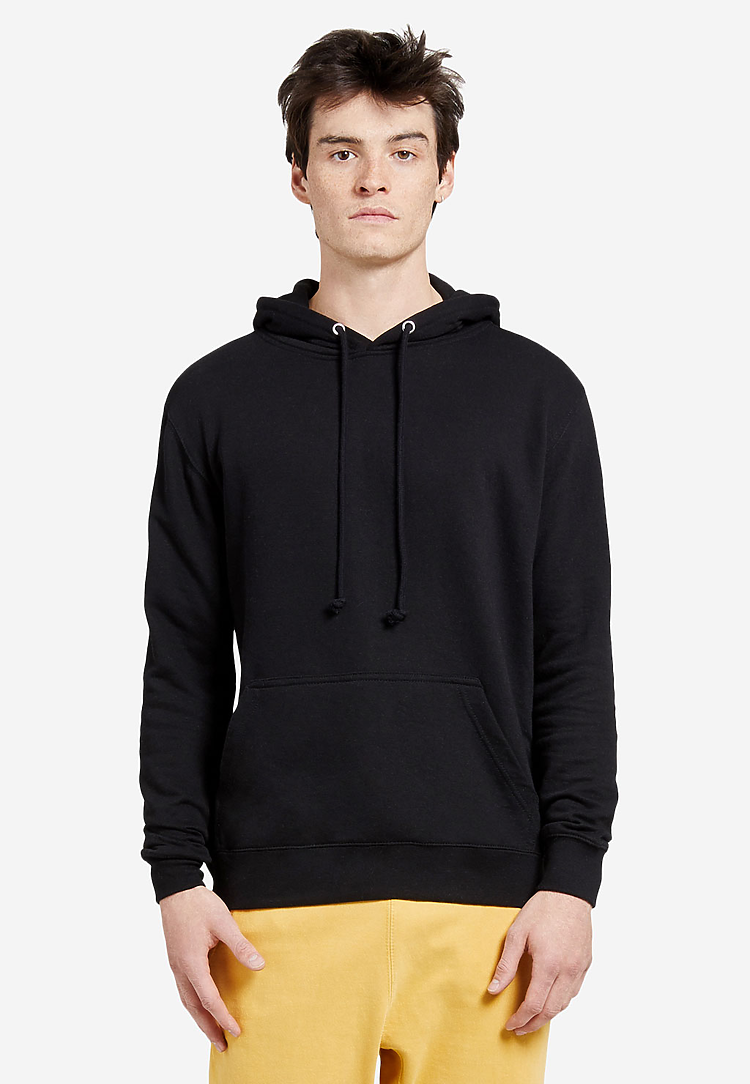
The pullover is the form most people picture first when they hear the word hoodie. It has a closed front and is pulled over the head. Most versions use a fixed hood, ribbed cuffs, a ribbed lower hem, and a kangaroo pocket across the front.
The absence of a center-front zipper leaves one uninterrupted fabric panel from chest to hem. That surface works particularly well for large screen prints, embroidery, collegiate lettering, band graphics, and oversized streetwear artwork.
The body shape changes considerably from one pullover to another. A standard sweatshirt version sits around the hip with moderate room through the chest. Streetwear versions commonly use dropped shoulders, longer sleeves, wider bodies, and heavier fabric.
The kangaroo pocket also affects the front visually. Its horizontal upper edge adds a second line across the lower torso and creates extra thickness around the stomach and hip area.

A classic streetwear combination uses a charcoal pullover hoodie over a white tee, loose medium-wash jeans, and black skate shoes. A few centimeters of white T-shirt below the hoodie creates a separate line between the dark sweatshirt and denim. The broad upper body continues naturally into the loose legs.

2. Full-Zip Hoodie
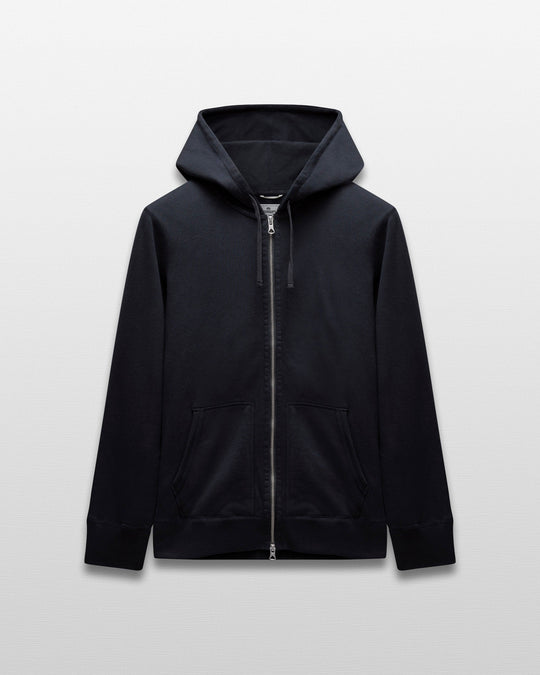
A full-zip hoodie has a zipper running from the lower hem to the neckline. The center front becomes two separate panels, so the garment changes shape according to how far the zipper is opened.
- Fully open: the hoodie behaves like a casual jacket and exposes most of the layer underneath.
- Partially zipped: the upper chest stays open and the lower front remains connected.
- Fully zipped: the front becomes compact, with the zipper forming a straight vertical line through the torso.
The hood usually sits slightly differently from a pullover because the center front opens all the way to the neck. When the zipper is open, the neckline spreads farther across the chest and the hood falls toward the shoulders.
A washed black zip hoodie can sit over a fitted grey tank with low-rise loose denim and dark sneakers. The narrow tank is visible between the two front panels, giving the oversized outer layer a clear center line.
Full-zip hoodies also work easily under outerwear. A lightweight zip hoodie underneath a leather jacket, work jacket, or bomber adds the hood around the collar with relatively little bulk through the front.
3. Half-Zip Hoodie
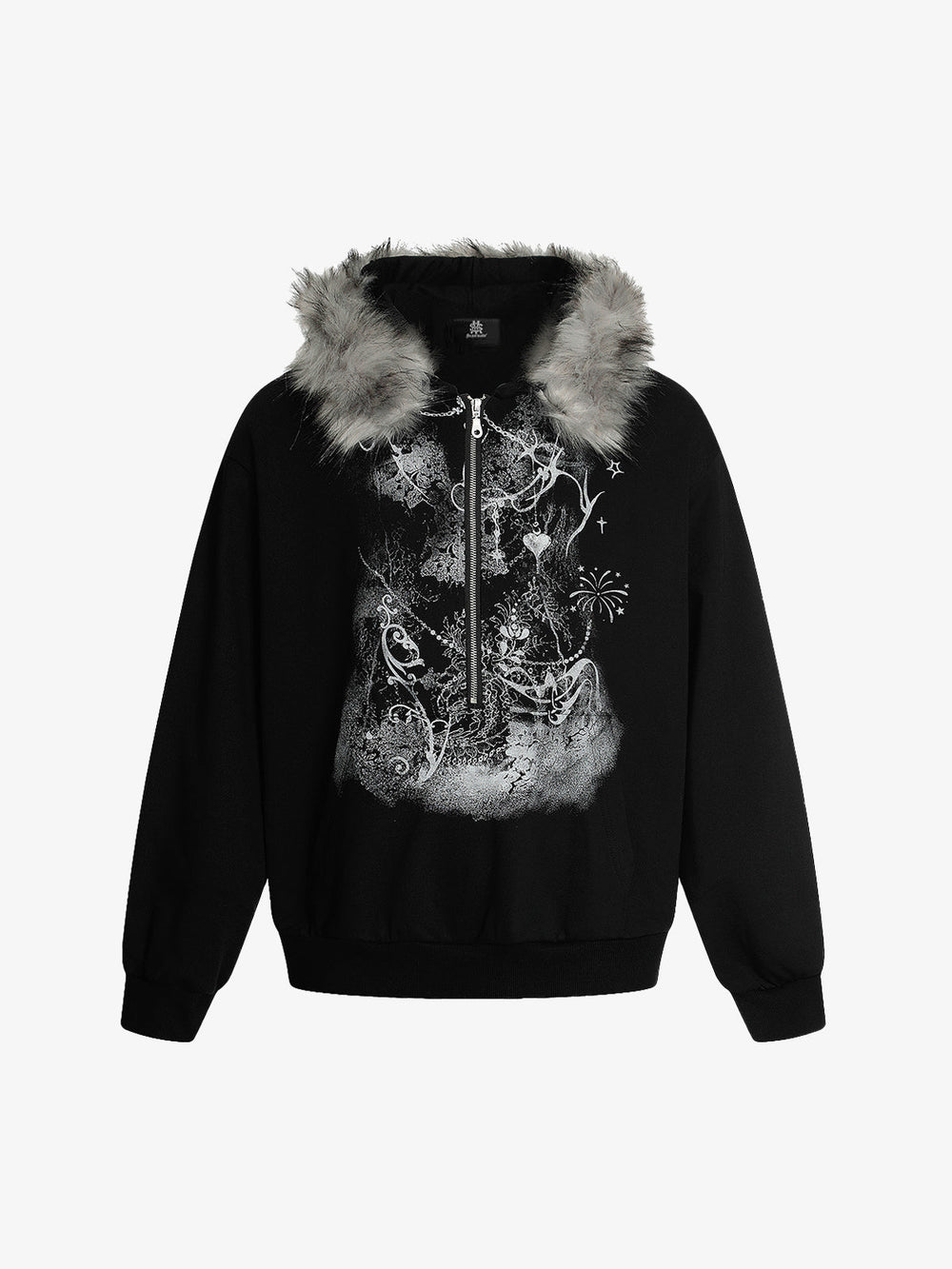
The half-zip hoodie keeps the lower body of a pullover and adds a zipper around the upper chest.
The zipper length varies by design. Some stop near the upper sternum. Deeper versions extend toward mid-chest. This changes the amount of neckline that opens when the zipper is lowered.
Opening the zipper lets the hood and collar spread across the upper body. Closing it creates a taller neck area and gathers more fabric around the base of the hood. Versions made from heavyweight fleece can develop a substantial collar shape because several layers of fabric meet around the zipper and hood.
A half-zip hoodie suits outfits built around visible neck layers. A cream thermal under a dark olive half-zip leaves a small section of the base layer visible above the zipper. Relaxed black cargos and dark trail shoes continue the utilitarian shape through the lower body.
4. Oversized Hoodie
An oversized hoodie gets its size from several pattern changes working together.
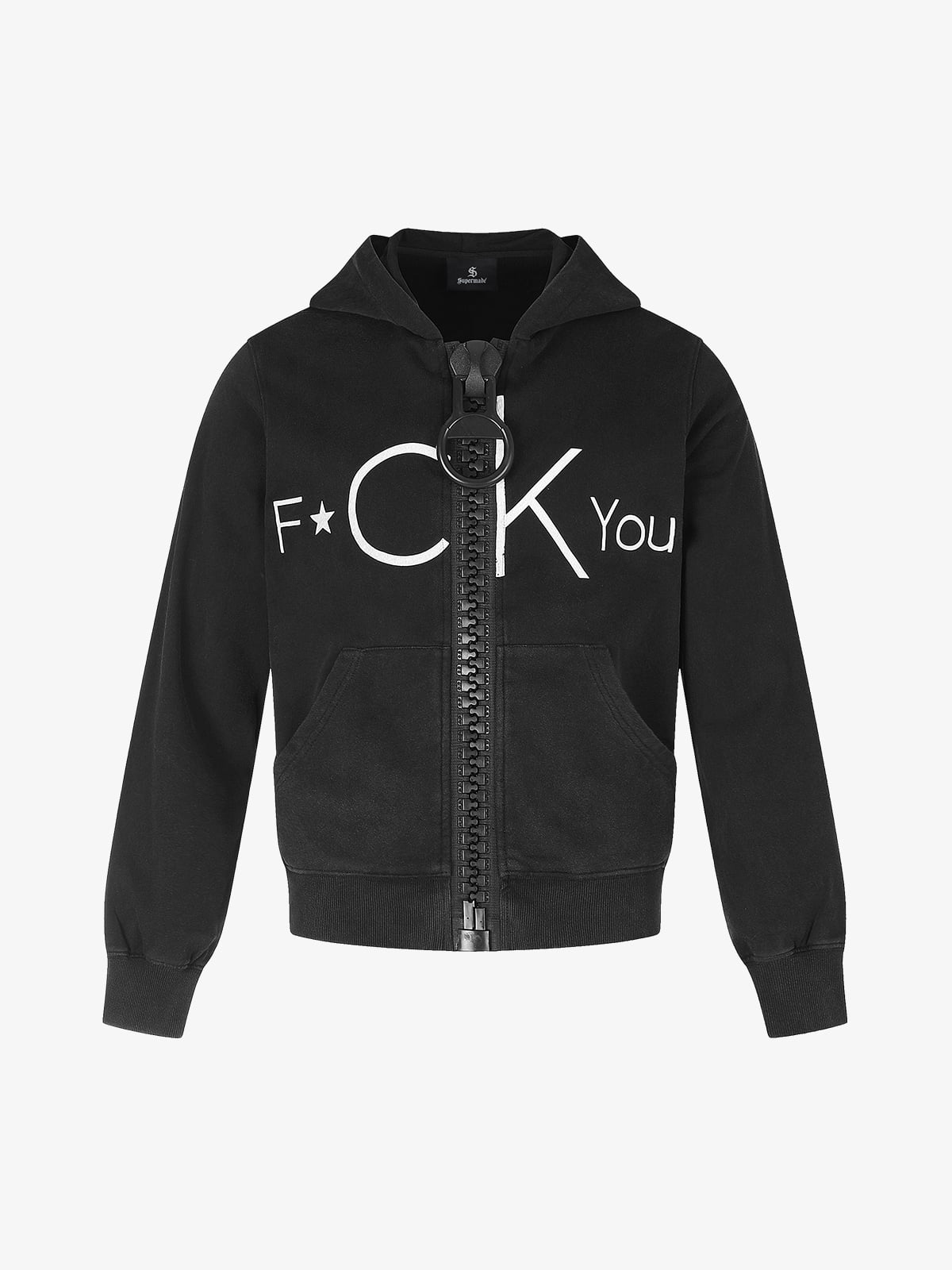
A truly oversized hoodie therefore looks large before the wearer simply chooses a bigger tagged size. The shoulder position and sleeve shape are already built into the pattern.
Fabric weight changes the final appearance. Dense fleece keeps the dropped shoulder and wide sleeve clearly visible. A softer lightweight knit falls closer to the body and produces longer folds.
For a complete loose streetwear silhouette, an oversized navy hoodie can finish around the upper hip over faded baggy jeans. Wide jeans keep the lower body on the same scale as the sweatshirt. Thick skate shoes create enough visual weight at the feet for the long sleeves and broad chest.
The same hoodie looks very different over a mini skirt and tall boots. The hoodie supplies most of the volume above the thigh, and the exposed leg creates a sharp change in proportion below the hem.
5. Boxy Hoodie
A boxy hoodie combines width with a compact body length.
Its outline is easy to recognize from the side seams. They fall relatively straight from the chest toward the hem, creating a squarer torso. The sweatshirt may still have dropped shoulders and wide sleeves, though the hem reaches the waist or upper hip sooner than it does on a long oversized hoodie.
That shorter body changes how trousers appear.
With high-rise wide-leg jeans, the waistband sits close to the hoodie hem. More of the trouser length remains visible, so the legs occupy a larger share of the full silhouette.
A good boxy outfit can be very simple: heather-grey hoodie, dark indigo wide jeans, slim black belt, and low-profile sneakers. The width stays concentrated around the chest and shoulders, and the shorter sweatshirt length leaves the denim shape clearly visible from the waist downward.
Boxy hoodies are especially useful with very wide trousers because the compact hem creates a clear transition into the waistband.

6. Cropped Hoodie
The defining feature of a cropped hoodie is the hem position.
Some finish directly at the natural waist. Shorter versions end above it. Longer cropped cuts may reach the upper hip and still expose more of the trouser rise than a conventional hoodie.
Loose cropped versions keep wide sleeves and a roomy chest. The raised hem concentrates that volume around the upper torso. Fitted versions bring the body closer to the ribs and usually create a much narrower outline.
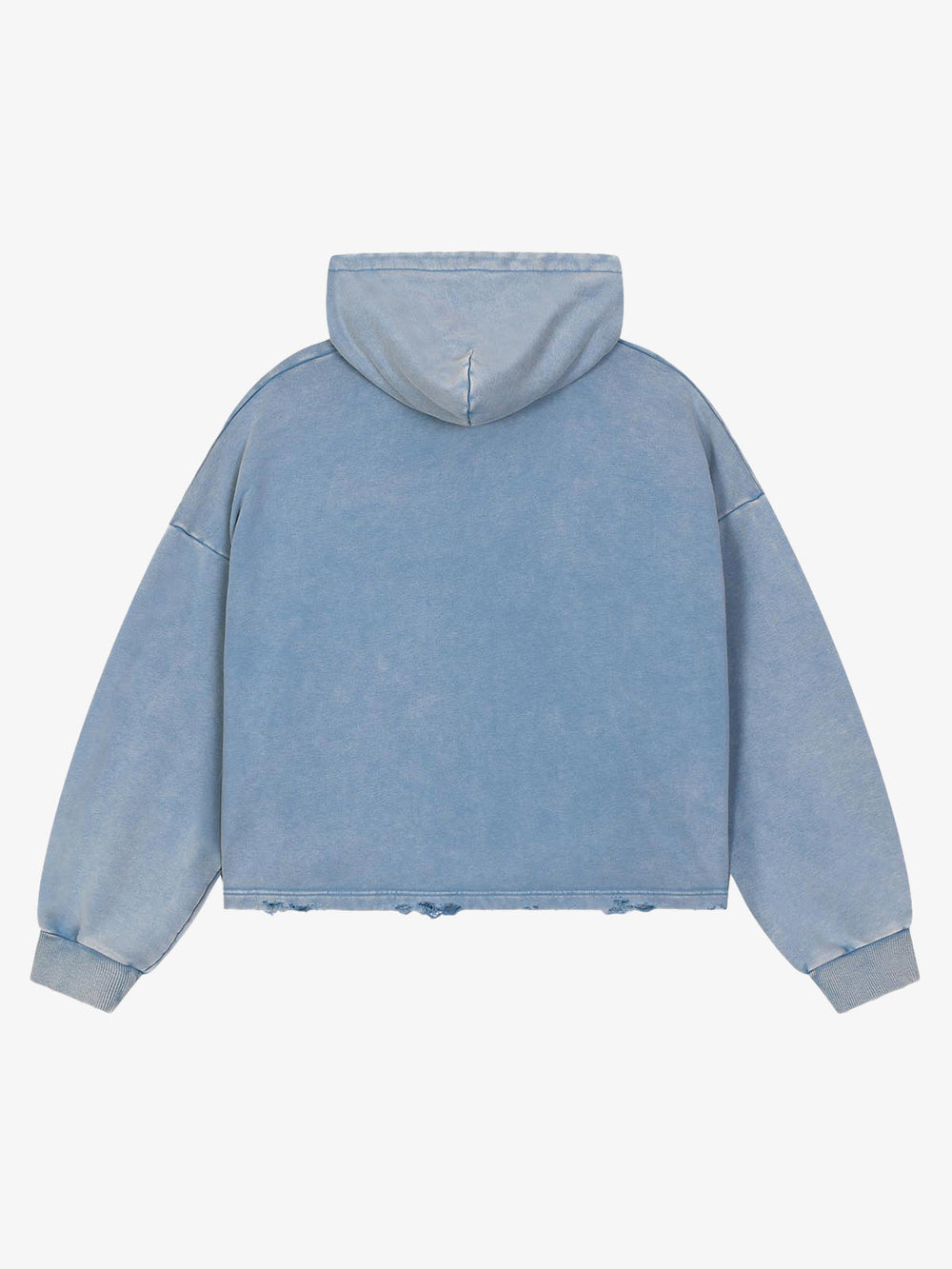
A loose cropped hoodie and high-waisted parachute pants produce a strong streetwear proportion. The short upper body leaves the waistband visible, and the trousers expand immediately below it. Platform sneakers or thick running shoes give the broad trouser leg a firm endpoint.
A fitted cropped zip hoodie works differently with baggy jeans. The upper torso stays close to the body, then the jeans widen from the hip. That sudden change in volume makes the waist more visible.
Cropped hoodies can also be layered over longer tanks and tees. The exposed lower layer creates an additional horizontal line below the hoodie hem.
7. Slim-Fit Hoodie
Slim-fit hoodies keep the sweatshirt construction and reduce the amount of fabric around the torso and arms.
The fit is easiest to see at the side seam and sleeve:
Shoulder: usually stays near the natural shoulder point.
A lighter fabric supports this shape especially well because it follows the body closely and fits under another garment.
A black slim hoodie underneath a dark denim jacket creates a clean two-layer upper body. Straight charcoal trousers and leather sneakers keep the outfit narrow from shoulder to foot.
Slim hoodies also work as midlayers under wool coats, puffer jackets, overshirts, and work jackets because the sleeves occupy less space inside the outer layer.
8. Heavyweight Hoodie
Heavyweight hoodies feel different before any styling begins. The fabric has enough mass to give the hood, sleeve, pocket, and hem a stronger three-dimensional shape.
A large hood can stand higher behind the neck. Dropped shoulders create deeper folds at the upper arm. Sleeves stack more visibly above the cuffs. The ribbed waistband can gather a heavy body into a pronounced lower edge.

Heavyweight fabric is especially noticeable in oversized cuts. Extra body width stays suspended farther from the torso, creating the broad silhouette associated with many contemporary streetwear hoodies.
A dark brown heavyweight hoodie can carry an entire outfit with only washed blue jeans and suede sneakers. The dense sweatshirt creates the main visual mass. Denim brings a different surface underneath it, and the suede footwear continues the softer texture.
For colder weather, put the same hoodie underneath a long wool coat. The thick hood remains visible above the coat collar and gives the outerwear a more casual street shape.
9. Lightweight Hoodie
Lightweight hoodies use thinner knit fabrics that produce smaller folds and a flatter hood.
A thin cotton jersey hoodie can behave almost like a long-sleeve T-shirt with a hood. Light French terry has slightly more body and still fits comfortably underneath jackets.
This makes lightweight hoodies useful across several seasons.
In spring, a pale grey hoodie can sit over a white tank with loose nylon shorts and running shoes. The thin fabric falls softly around the waist and arms.
In early fall, the same type can go under a chore jacket with straight jeans. The hood appears above the jacket collar, and the torso stays relatively smooth underneath the outer layer.

Lightweight zip hoodies are especially useful for layered outfits because opening the front exposes the base layer with very little extra fabric around it.
10. French Terry Hoodie
Turn a French terry hoodie inside out and the fabric becomes easy to identify. The back of the knit shows small loops instead of a brushed fuzzy surface.
Those loops give the fabric a different hand from fleece. French terry can absorb moisture, bend easily, and sit relatively flat against the body. It is common in hoodies designed for transitional weather, travel, casual sportswear, and softer streetwear.
The outside usually has a smooth knitted face, so solid colors look clean and prints sit on an even surface.
For a relaxed warm-weather outfit, an oatmeal French terry hoodie works with faded denim shorts, ribbed socks, and retro running shoes. The sweatshirt still provides a full long-sleeve upper layer, and the lighter fabric keeps the silhouette softer than a dense winter hoodie.
A French terry zip hoodie also works well with matching sweatpants for a coordinated set because the fabric drapes naturally through both garments.
11. Fleece Hoodie
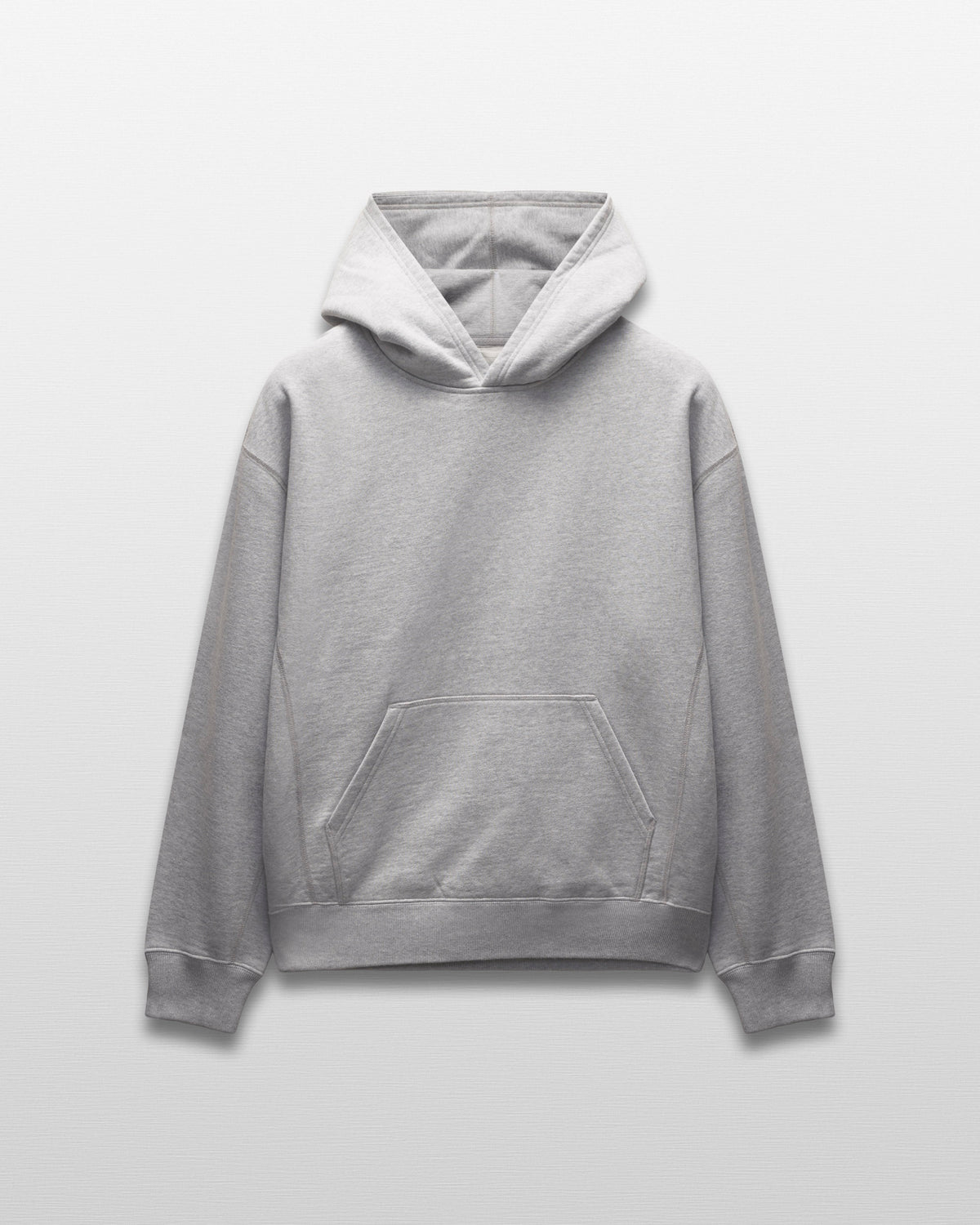
Fleece-backed sweatshirt fabric has a brushed interior. The brushing lifts fibers from the inner surface and creates the soft texture associated with classic cold-weather hoodies.
The extra loft also affects the outside shape.
A fleece hoodie usually appears fuller around the sleeve and hood than an equally thin jersey hoodie. Thick versions form substantial folds around the elbow. The kangaroo pocket adds another layer of fleece across the front and makes the lower torso slightly heavier.
The brushed side normally stays inside the garment, touching the body or the base layer underneath.
A heather-grey fleece hoodie, black carpenter pants, white crew socks, and black skate shoes create a practical everyday streetwear outfit. The sweatshirt has enough volume to sit clearly above the straight trouser shape.
12. Sherpa-Lined Hoodie
Sherpa-lined hoodies add a pile lining inside part or all of the garment.
Common placements include the hood and body. Some versions use smoother sleeve lining so the arms slide into the sleeves more easily.
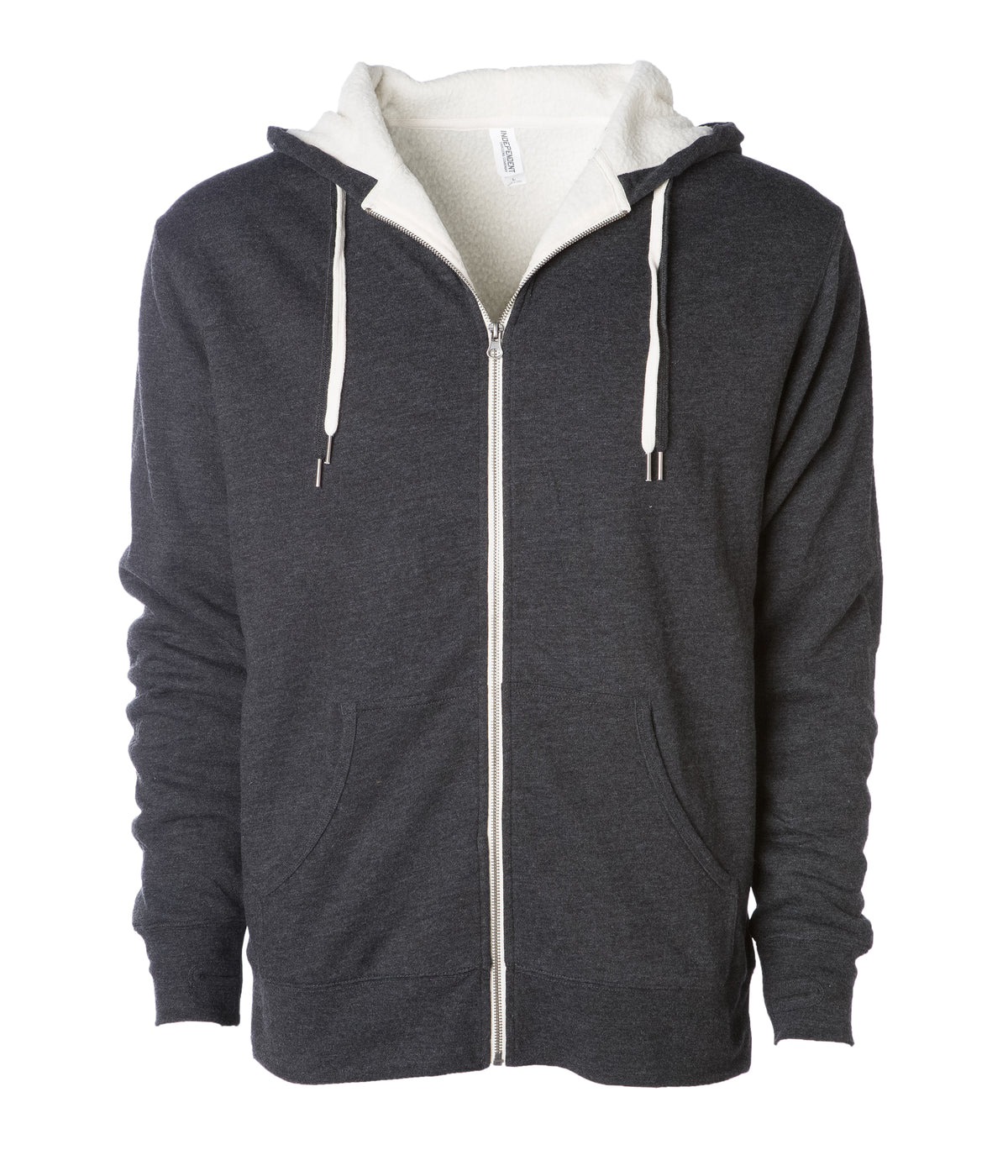
The lining makes the hood visibly thicker. When sherpa is exposed around the hood opening, it also creates a second texture against the outer sweatshirt or woven shell.
A brown zip hoodie with cream sherpa lining works naturally with straight indigo jeans and suede shoes. The cream pile remains visible around the face and along the open front. Blue denim keeps the outfit grounded in familiar workwear colors.
A sherpa-lined hoodie also carries enough thickness to function as outerwear during cooler transitional weather.
13. Graphic Hoodie
Graphic hoodies are defined by artwork placement as much as the sweatshirt underneath it.
Several placements produce very different results:
- Center chest
Keeps attention around the upper torso and remains visible under an open jacket. - Full front
Uses the uninterrupted body area of a pullover for larger artwork. - Large back print
Turns the back panel into the main graphic surface. - Sleeve print
Carries artwork along the arm and stays visible from the side. - Small left-chest graphic
Leaves most of the sweatshirt visually clean. - All-over print
Extends the artwork through multiple panels and changes the entire surface of the hoodie.
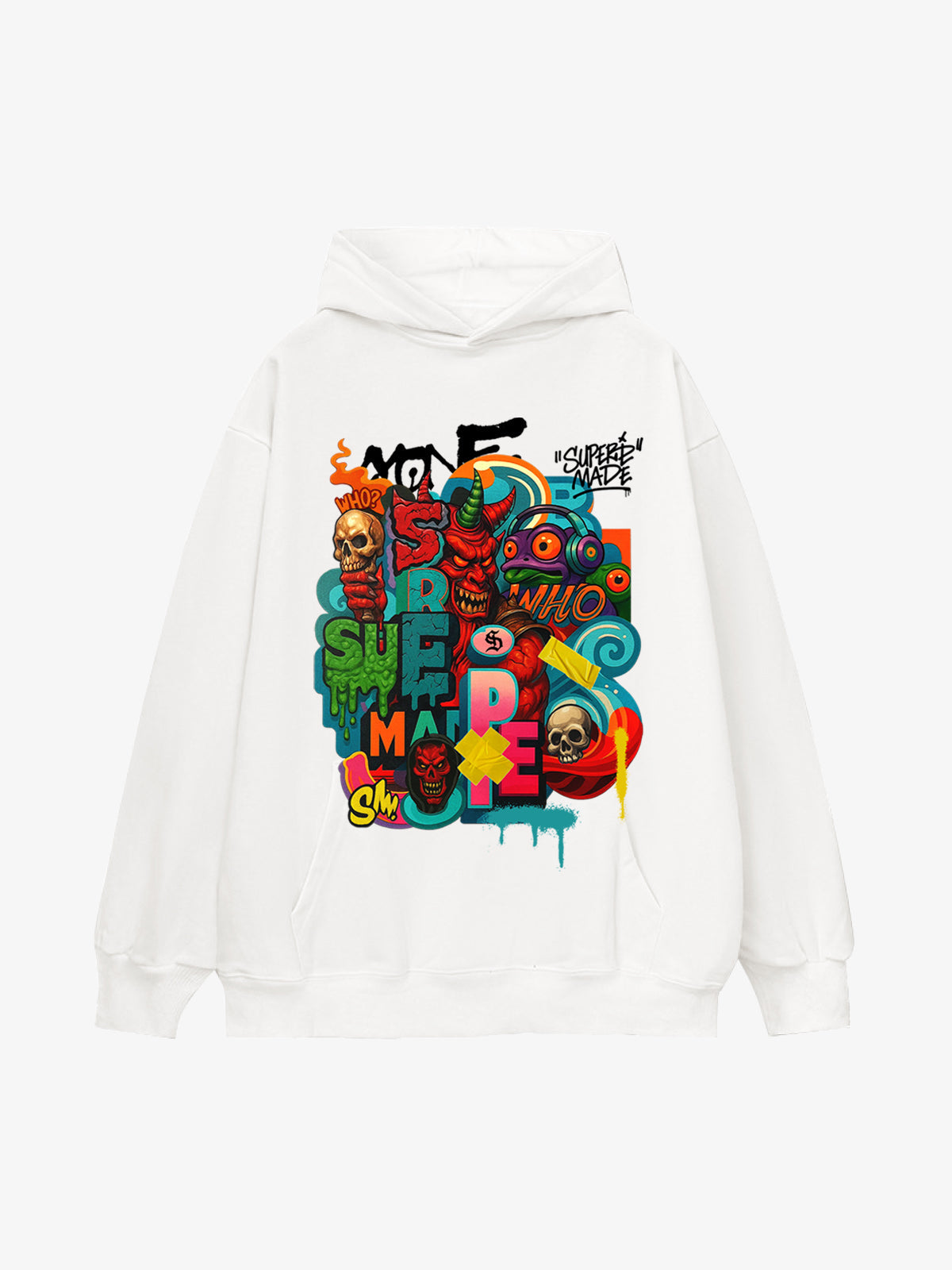
A black hoodie with a large red and cream back graphic works well with faded charcoal jeans and plain black sneakers. The muted trousers keep the artwork dominant.
For a front-heavy multicolor print, loose solid-color cargos keep the lower half quieter and leave a clear area around the graphic.
Embroidery produces a different surface from printing because the thread adds thickness and catches light around the stitched edges.
14. Washed Hoodie
A washed hoodie shows intentional color variation created through garment finishing.
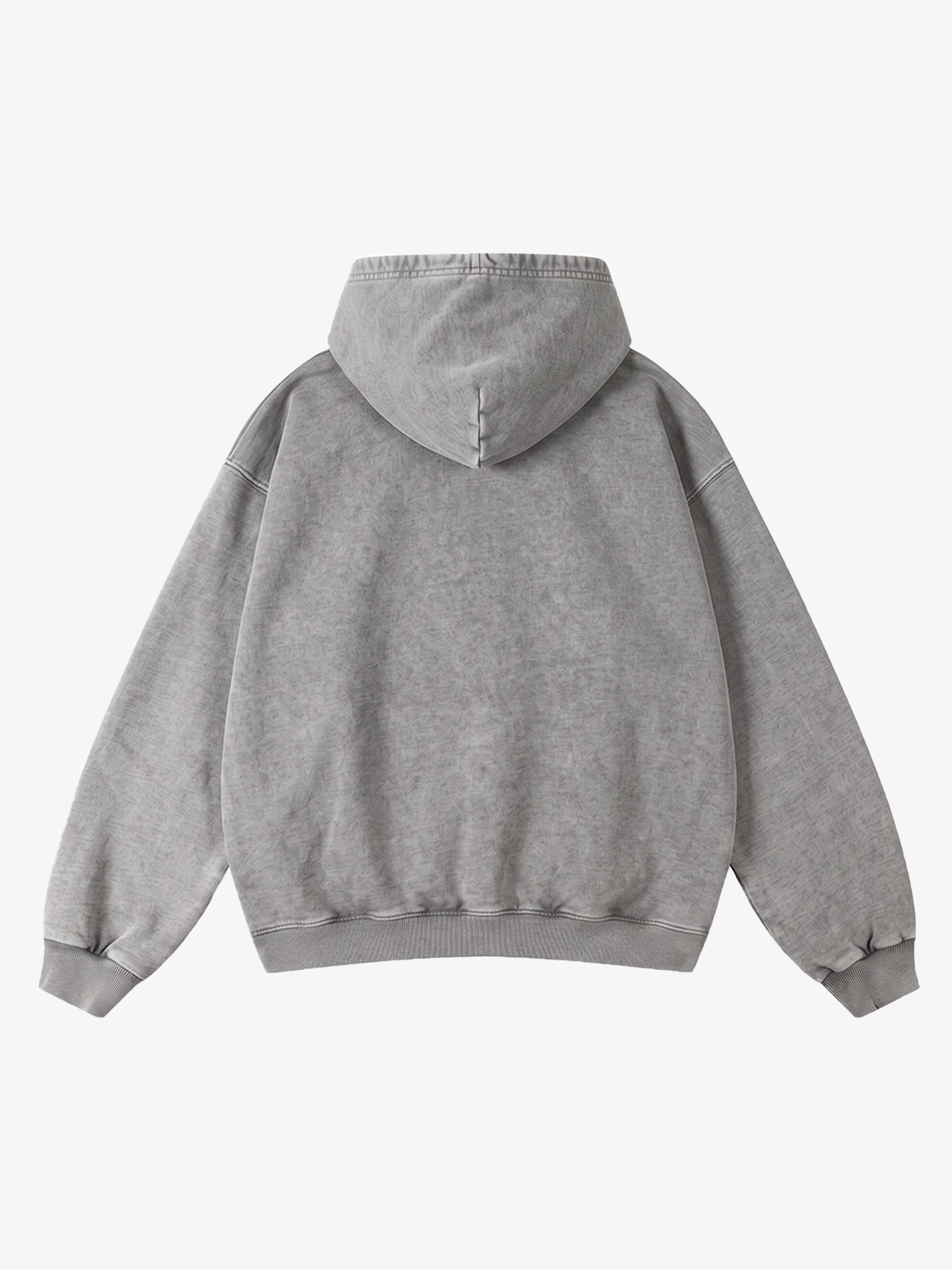
The exact appearance changes according to the treatment. Pigment-dyed hoodies often develop softer, faded color around seams and raised areas. Acid-style washes can create larger mottled light and dark zones. Vintage-inspired washes produce more gradual variation across the body.
Seams become especially visible after washing because thicker stitched areas can take or lose color differently from broad flat sections.
Black is one of the clearest examples. A washed black hoodie may shift through charcoal, grey, and slightly brown tones across one garment.
That finish works particularly well with denim. Try a faded charcoal hoodie with dirty-blue loose jeans and off-white sneakers. Both garments carry surface variation, so the outfit has texture even though the colors remain subdued.
A washed hoodie with clean black nylon cargos creates another useful combination. The matte faded cotton stands out clearly against the smoother trouser fabric.
15. Sleeveless Hoodie
Removing the sleeves changes a hoodie far beyond temperature.
The armhole becomes a visible design line. Some sleeveless hoodies follow the natural shoulder. Streetwear versions often extend the shoulder farther outward and use deep armholes that reveal the garment underneath.
A deep armhole makes layering part of the design.
Wear a faded sleeveless hoodie over a fitted white long-sleeve thermal. The white sleeves appear from the shoulder to the wrist, leaving the dark hoodie concentrated around the torso. Baggy black jeans and high-top sneakers continue the skate-influenced shape.
For warmer weather, a sleeveless hoodie can sit over a rib tank with long denim shorts and low sneakers.
Longer sleeveless hoodies create a completely different proportion because the body can extend past the hip even though the shoulders remain open.

16. Technical Hoodie
Technical hoodies bring performance and utility details into the hooded silhouette.
The fabric may use smooth synthetic jersey, double knit, nylon panels, stretch woven fabric, or combinations of several materials.
Construction details often include:

- zipped chest or side pockets
- adjustable hood cords
- elasticated hems
- articulated sleeves
- thumbholes
- mesh sections
- bonded details
- reflective print
- water-resistant outer fabric
- multiple cut-and-sew panels
Panel placement is a major visual feature. A black body with grey shoulder panels makes the upper torso look broader. A contrast chest pocket creates a separate block of color around the front. Curved sleeve panels can follow the movement of the arm.
A dark technical hoodie with loose nylon cargos and trail sneakers creates a complete utility outfit. Zippers, toggles, panel seams, and textured footwear provide the detail, so the color palette can stay restrained.
17. Cross-Neck Hoodie
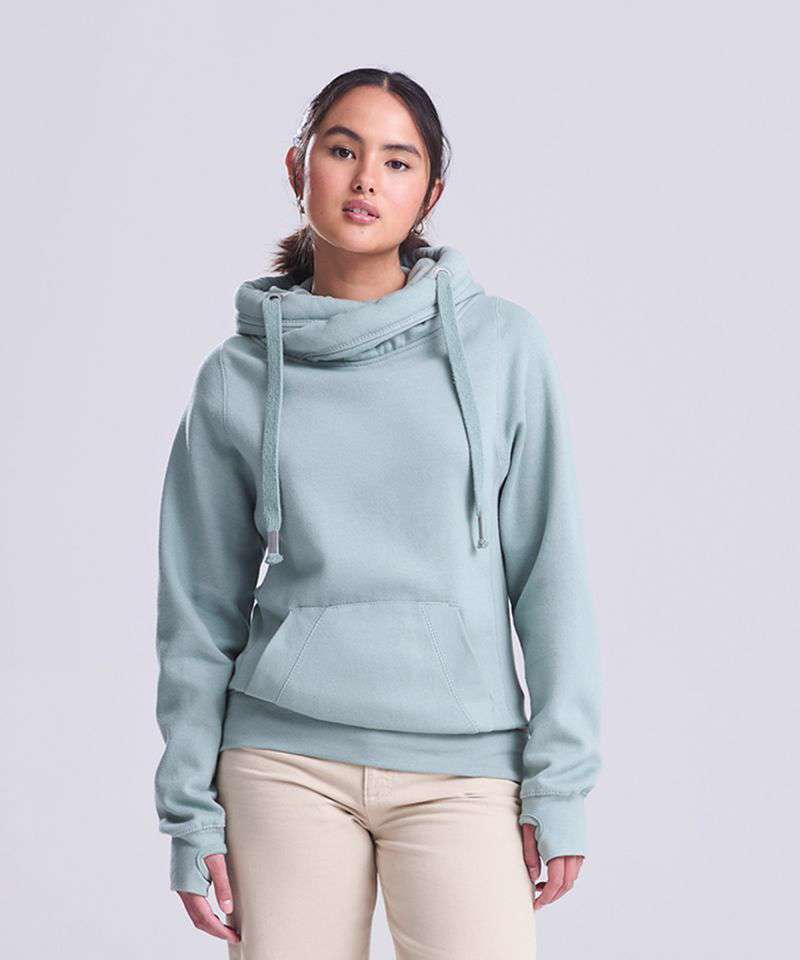
A cross-neck hoodie changes the area where the hood joins the front body.
Instead of a simple round neckline, the fabric overlaps across the upper chest and creates a higher neck opening. Drawcords may emerge from the overlapping section, or the hood may stay clean with no visible cord.
The extra fabric around the neck gives the hood a fuller base. Heavy fleece versions can create a substantial shape around the jaw and collarbone.
This construction works especially well in cold-weather streetwear. A charcoal cross-neck hoodie with loose black wool trousers and leather sneakers keeps most of the outfit dark and lets the raised neckline define the upper body.
Under a coat, the crossed neck remains visible even when most of the sweatshirt body is covered.
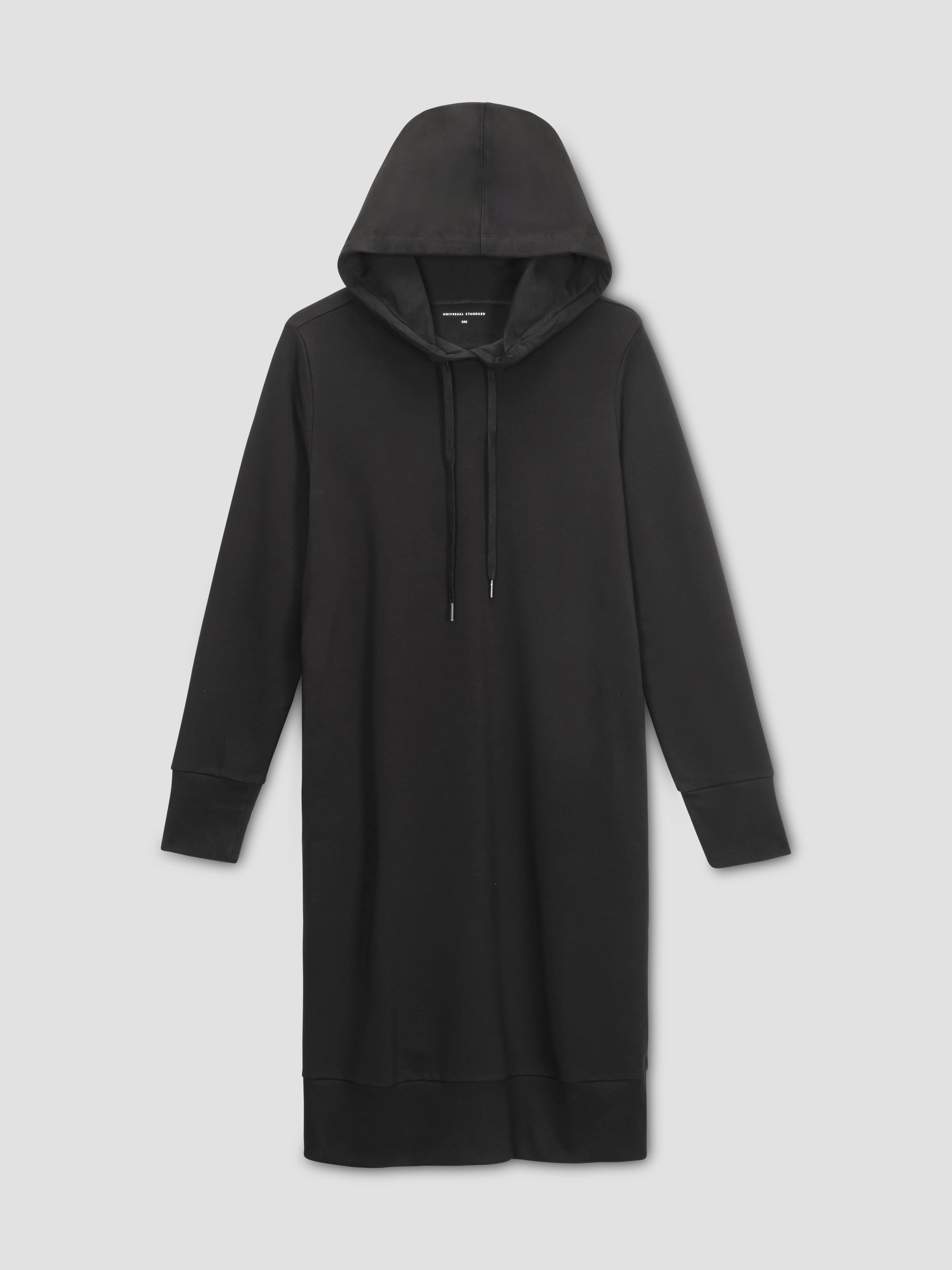
18. Hoodie Dress
A hoodie dress extends the sweatshirt body below the conventional hip-length hem.
Lengths range from upper-thigh styles to versions reaching the knee or lower. The shoulder and sleeve can stay close to a regular hoodie, or the entire garment can use an oversized pattern.
The length determines the rest of the outfit.
An oversized hoodie dress finishing around mid-thigh works with crew socks and chunky sneakers for a casual streetwear proportion. Knee-high boots give the same garment a heavier lower edge and place more visual weight around the leg.
A fitted hoodie dress creates a narrower continuous torso. A loose version produces larger folds from the chest down through the hem.
Longline zip versions can also be worn open over a fitted tank, shorts, or a mini skirt, allowing the long front panels to frame the shorter layer underneath.