Swimwear Manufacturing
FashionMe supplies one-piece swimsuits, bikini sets and swim shorts to clothing brands through a network of more than 120 audited factories. Whether your style is matched to one a factory already makes or made to your design, one FashionMe team handles its production, branding, inspection and delivery.
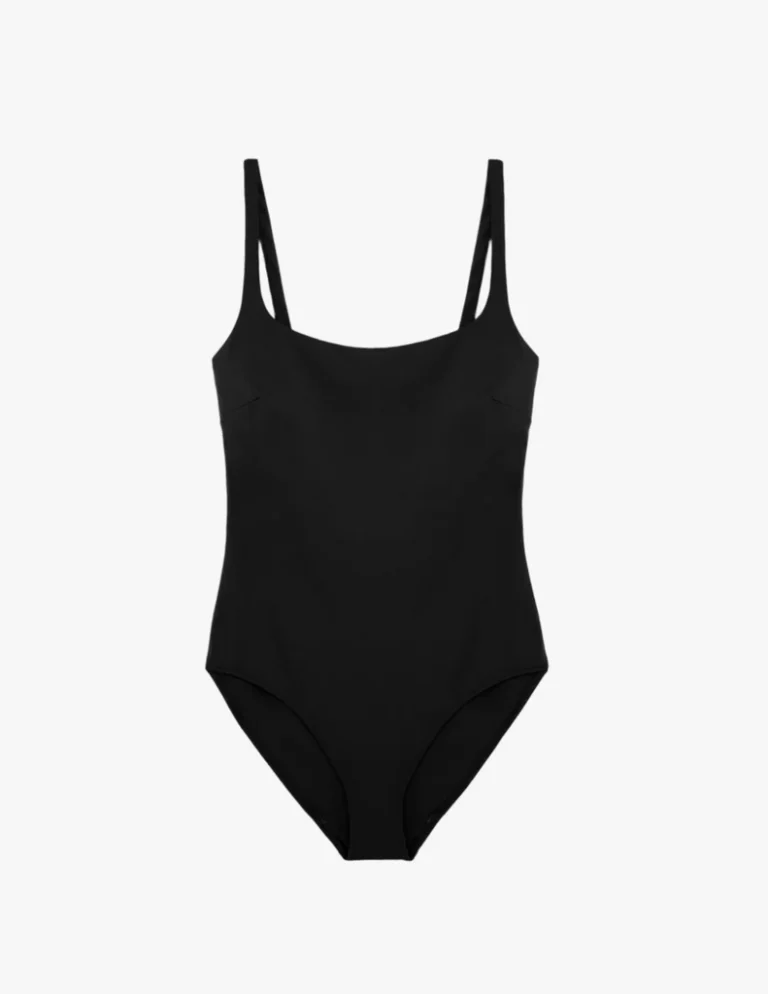
Existing styleStock Match
MOQ 10
Your label from 50 per style
7–10 days to ship
Sample-pull inspection
FashionMe matches your reference to a style that a factory in the network already makes and has in stock. That stock decides the colors and sizes of your first order. Fit and fabric can’t be changed on this route.
Private Label Swimwear →Your own styleMade to Order
MOQ 50
7–12 days sampling
15–20 days production
100% inspection
Your design can start from a full tech pack, or from photos, a sketch, measurements or a garment you send in. Sampling is quoted separately from the order, which already includes your labels and branded packaging.
Made to Order →Unless the quote says otherwise, a style has to reach the MOQ by itself. If the MOQ is set per color, a 50-piece minimum means 250 pieces across five colors. The quote lists the quantity per color next to the order total. A bikini set counts as one piece, and on Stock Match its top and bottom can be in different sizes, as long as both are within the style’s size range.
Swim Fabric and Lining
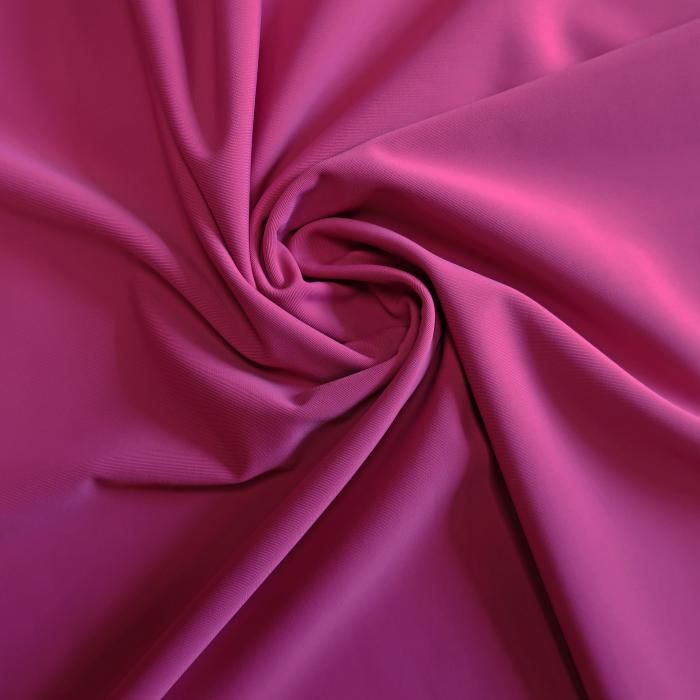
If you want a Stock Match style for a pool line, ask in the quote for a lab test of its fabric before committing to the order. How a suit holds up in a pool comes down to that fabric, which on this route is 80/20 nylon-spandex as standard. The route’s checkpoint for colorfastness to chlorine and salt water is a visual check with photos. A suit can pass it on inspection day and still fade once it has been worn in chlorinated water.
Made to Order lets you choose the fabric, and FashionMe sources the shell to the blend, weight, finish and color you approve. Stretch direction and recovery are recorded on the spec next to the knit and usable width. A mill’s data sheet gives you the blend and weight to start from. Carvico’s sheet for its Vita fabric, for instance, lists 78% recycled nylon and 22% spandex at 5.6 oz/yd² (190 g/m²), in a 59 in (150 cm) width. You choose the lining the same way, whether it’s a full lining across the front and back of a one-piece or the regular lining or power mesh inside a bikini top.
Ask the lab for ISO 105-E03 to check color loss in chlorinated water; for swimwear it runs at 50 or 100 mg/l of active chlorine. Results are graded on the gray scale in ISO 105-A02, from 5 for no visible change down to 1. A pool-line spec names the lowest grade you’ll accept. SATRA TM254 measures how far the spandex itself degrades after 24 hours in chlorinated water. Seawater is covered separately by ISO 105-E02.
A US label that claims a UPF (ultraviolet protection factor) follows ASTM D6603. Before the measurement, that method puts the fabric through laundering, simulated sunlight and chlorinated pool water as set out in ASTM D6544. All of these reports can be added to the quote on either route.
Printed Swimwear
A custom print has to go Made to Order, since Stock Match styles only come in the prints the factory already runs. Printing also carries a process minimum on top of the garment MOQ, as embroidery and washing do. Ask for that number in the quote before you plan a small printed run.
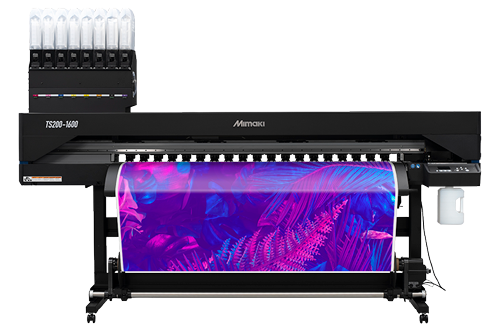
Sublimation printing only works on a polyester-rich fabric, like a poly-spandex swim knit. A nylon-spandex shell such as an 80/20 blend is printed with acid-dye inks instead. An engineered print is laid out on the pattern pieces from a fixed point such as center front or the cup center. It can be printed on the whole length of fabric before cutting or on panels that are already cut.
A repeat print runs in the direction and color lot chosen for the order. Both pieces of a bikini set are printed in one colorway. At final inspection, inspectors check custom-printed pieces for motifs that have shifted from their place on the approved sample and for color that doesn’t match across a seam.
Patterns, Grading and Sampling
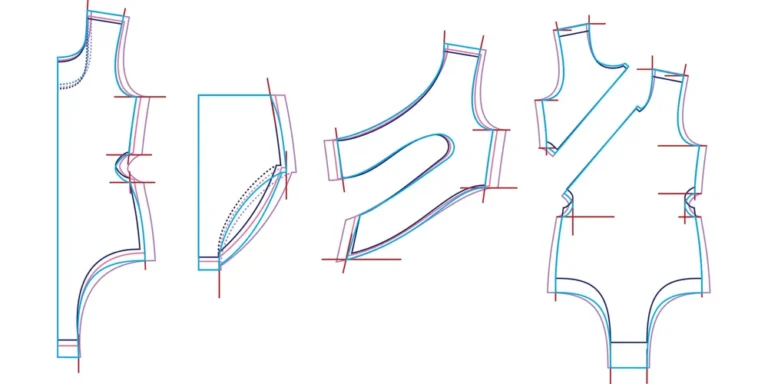
Grading a Made to Order style’s production pattern into your size range doesn’t move every measurement by the same amount. QVC’s published spec for one of its women’s swim briefs, in missy sizes 2–18, has the relaxed waist growing 1 1/2 in (3.8 cm) a size and the leg opening 3/4 in (1.9 cm), but the front rise only 3/16 in (0.5 cm). The brief’s crotch width stays at 3 1/2 in (8.9 cm) in all nine sizes. The waist is measured both relaxed and extended, at 28 in (71 cm) and 36 in (91 cm) for size 8.
Every point in the table below gets a plus-or-minus tolerance on the size chart. For a Made to Order style, you agree those tolerances when you approve the sample.
| Garment | Points measured |
|---|---|
| One-piece | Front and back body length, bust, waist, hip, front and back rise, crotch width, leg opening and its height, neckline width and depth, armhole, strap position and length |
| Bikini top | Cup width and height, underbust, band or wing length, strap position and length, closure position |
| Bikini bottom | Waist, front and back rise, side height, crotch width, leg opening, back coverage |
| Swim shorts | Waist, front and back rise, inseam, outseam, leg opening |
Made to Order sampling takes 7–12 days, after which production runs 15–20 days from the day you approve the sample. If the first sample is approved, that comes to 22–32 days of factory time. Add the sample’s trip to you, your review time and a second round if the first sample needs changes.
Cutting
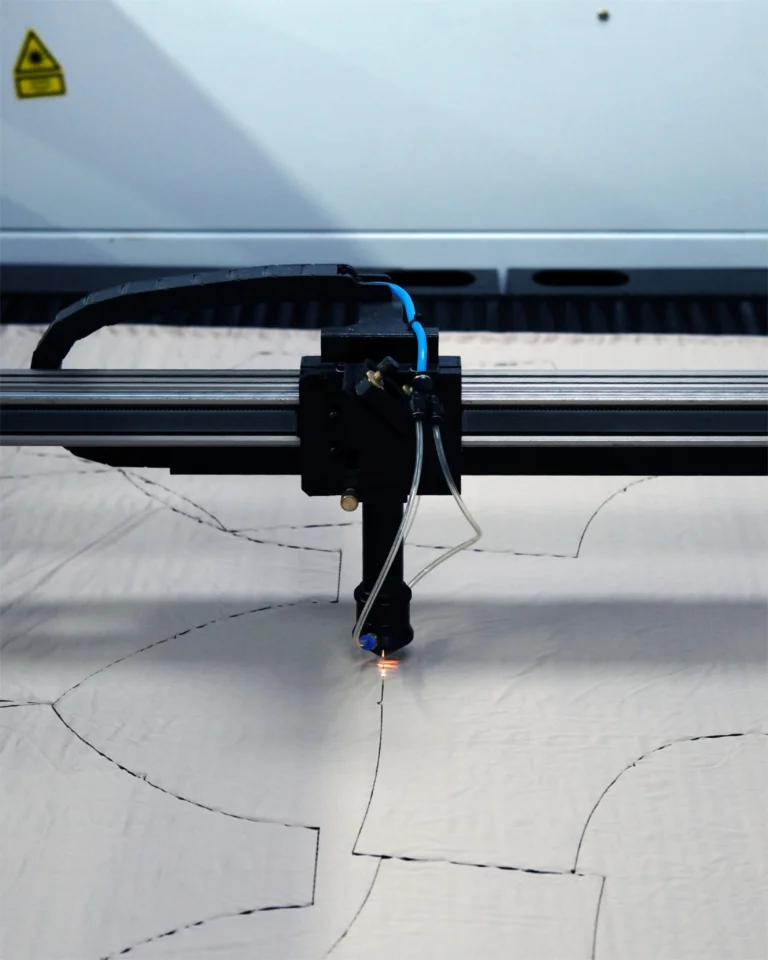
Knit fabric cut while it’s still under tension from the roll can spring back or change size afterward. The fabric-preparation machine maker Oshima advises relaxing it before spreading and puts the usual time at 12–24 hours left alone, or 6–8 hours with steam if the knit can take it.
Before anything is cut, FashionMe compares the bulk fabric with the fabric used for the approved sample. Shell, lining and any power mesh are cut from separate markers. Left and right cups are cut as matched pairs. Because small parts stay bundled by fabric lot, pieces from different dye lots don’t end up in the same garment.
Elastic
Elastic type, width and cut length are worked out per opening and per size along with the graded measurements. Both leg openings of a symmetrical style get the same length. For a closed opening such as a leg, the elastic is joined into a loop before it’s spread along the edge. After that the edge is turned or enclosed over the elastic, or the elastic is topstitched in place.
Seams and Stitching
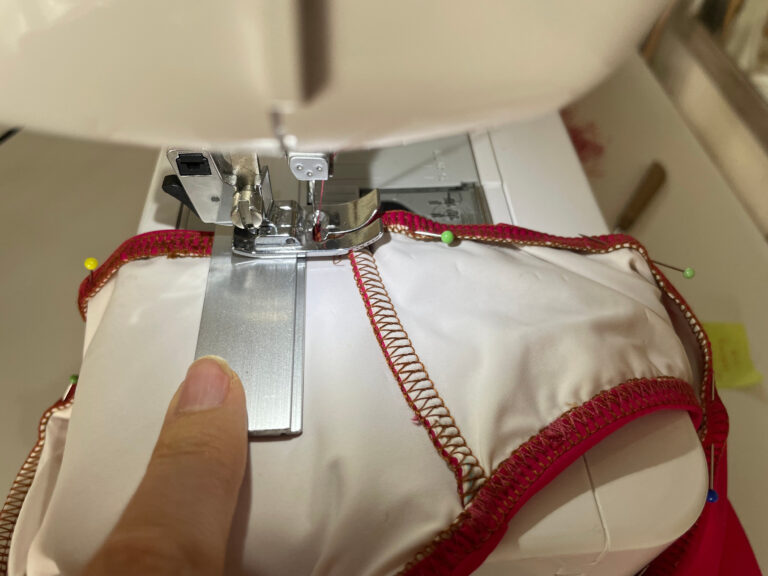
FashionMe overlocks the seams inside the garment and finishes elastic and edges with zigzag or coverstitch. During sewing, the line check covers stitch formation and seam stretch. It also catches any raw edge the overlock has left showing.
Brands writing a sewing spec in-house can work from the swimwear guidance Coats publishes for its threads. Its basic rule is to engineer enough thread into a seam for the stretch it has to take without overstressing the thread.
| Where | Recommendation |
|---|---|
| Attaching elastic | Stitch type 503, a two-thread overedge |
| Coverseams | Stitch type 406, twin-needle |
| Flat seams | Stitch type 607 flatseam, with Epic Tex 30 or 35 as the top cover thread because it can be subjected to severe abrasion |
| Load-bearing seams | Tex 30, now the common size, where Tex 40 and Tex 35 were used before |
| Needles | Ball point needles generally recommended for knits, Nm 80–90 for most stitches with Epic thread |
| Thread color | Made to hold its color in chlorinated water |
One-Piece Swimsuits
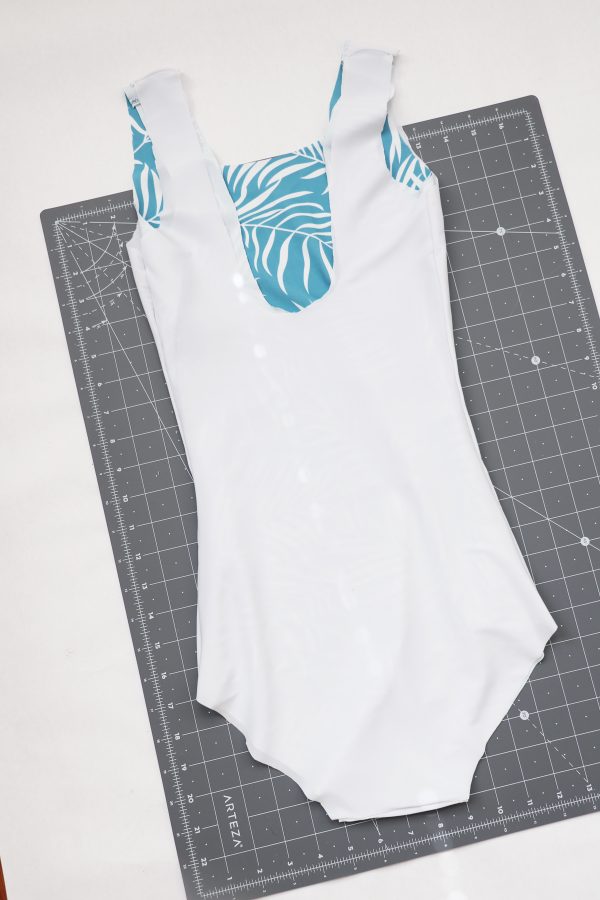
Cups or support layers go into a one-piece before anything is closed up, at positions marked on the front pattern. Then the shell and lining are sewn together at the openings, side seams and crotch. The straps go on at measured points.
Bikini Tops and Underwire
- Triangle cups
- The cup is cut as a shell piece plus a separate lining piece. The pattern marks where the straps attach.
- Seamed cups
- Seams drawn on the production pattern shape the cup.
- Removable cups
- The cups slip into internal pockets through an insertion opening.
- Fixed cups
- Stitched inside the lining at a position marked on the pattern, the cup can’t move or come out.
- Bandeau
- The top is a single band, sized by its finished width.
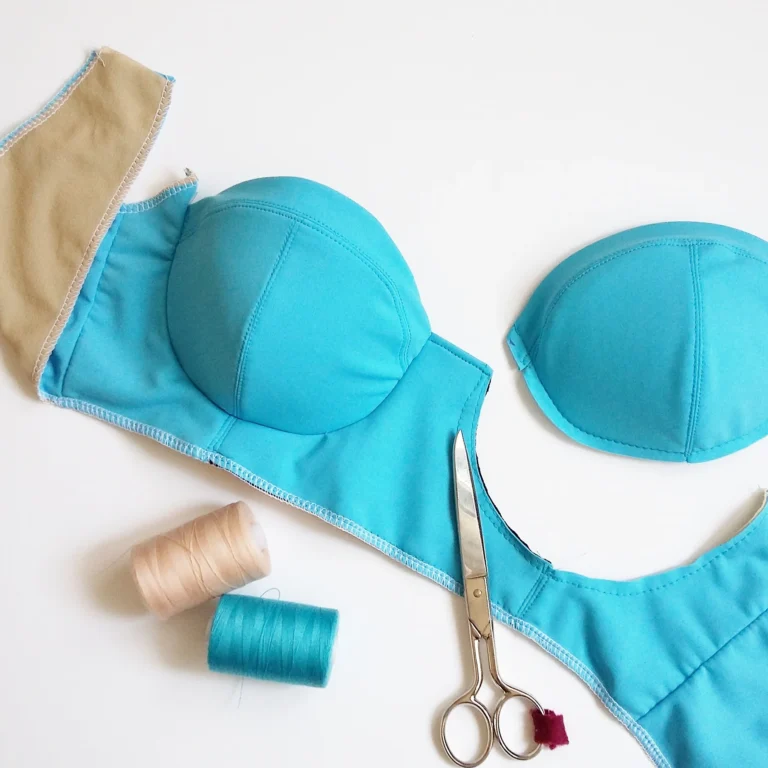
An underwire top holds the wire in a channel sewn along the line where the cup meets the underbust. The wire has to match both the cup pattern and the channel length. The top also needs a bridge at center front and side wings that fasten at the back. Because the wire will sit in water, ask what it’s coated with. Bekaert galvanizes its bra wire and then extrudes PET (polyester) over it. The company describes the two coatings together as a barrier against water and moisture.
Bikini Bottoms
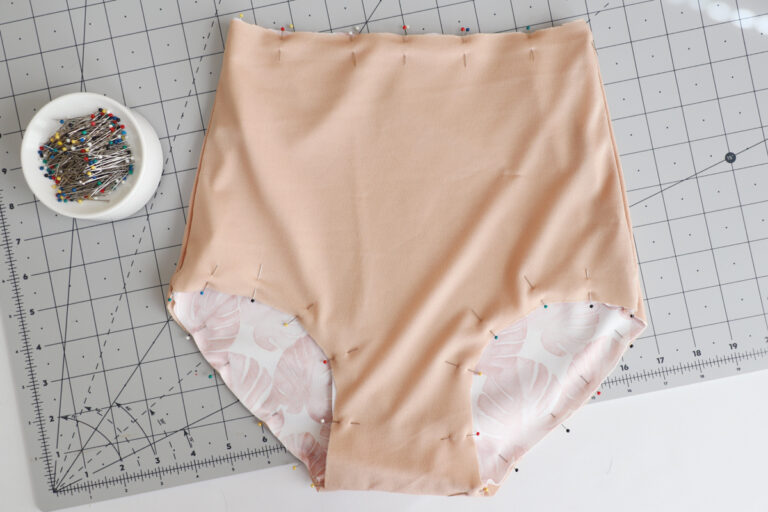
A bikini bottom that isn’t fully lined still gets a crotch lining, stitched in at its front and back ends once the panels are joined at the sides and crotch. The waist and leg elastic go on before the edges are finished.
High-waisted, low-rise, full-coverage, cheeky and Brazilian bottoms are drafted on separate patterns. A new cut changes the rise, side height, leg curve and back coverage.
Swim Shorts
Swim shorts made to your pattern need four questions answered before sampling:
- Waistband. Elastic with a drawcord, or a fixed band with a front fly?
- Liner. Built in, or none?
- Shell. What fiber and weight, and does it stretch?
- Pockets. How many and where? How do they close and drain?
Straps, Rings, Sliders and Clasps
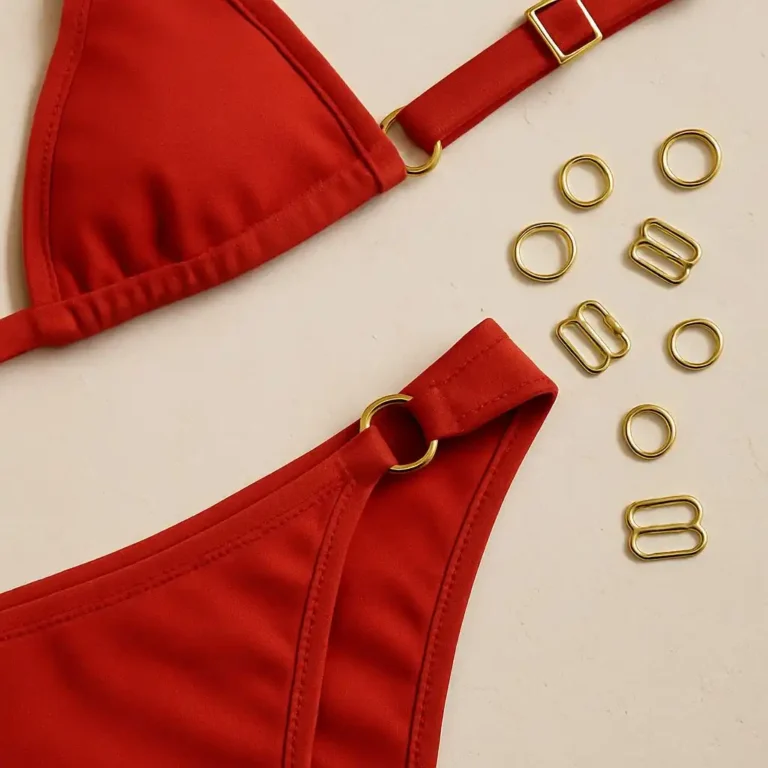
Strap width and finished strap length are fixed per style and size. The rings and sliders are then sized to that width. On the trim list, hardware is recorded by material, finish, color and quantity.
Corrosion resistance on Stock Match hardware is checked by eye and recorded in photos, the same as colorfastness. For a lab report on metal trims, ask for the neutral salt spray test in ISO 9227 alongside any fabric reports.
Inspection
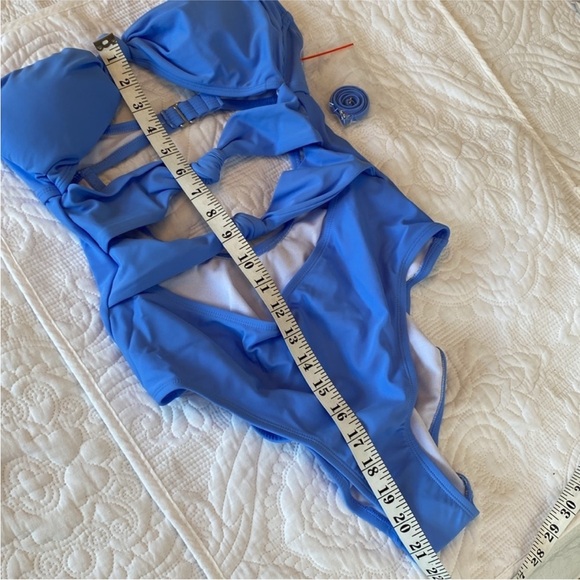
Inspectors take the measurements in the points-of-measure table once the garment is fully assembled and has relaxed. A style that gets a production wash or heat finishing is measured after that process. Left and right are compared on all paired points. Inspectors also run the sliders along the straps and fasten the closures to check they line up. Where straps are sewn on, they check that the stitching is secure.
A Stock Match order is checked on a sample pull under ISO 2859-1, General Inspection Level II, at AQL 2.5 for major defects and AQL 4.0 for minor ones, unless you add full inspection. Made to Order skips the sample pull because every piece is inspected.
| Area | Faults |
|---|---|
| Seams and edges | Open seams, broken or skipped stitches, exposed elastic, twisted edges, loose threads |
| Fabric | Holes, snags, stains, print faults, visible shade differences |
| Pieces in the order | Major defects (AQL 2.5) | Minor defects (AQL 4.0) | ||
|---|---|---|---|---|
| Checked | Allowed | Checked | Allowed | |
| 10–25 | 5 | 0 | 3 | 0 |
| 26–50 | 5 | 0 | 13 | 1 |
| 51–90 | 20 | 1 | 13 | 1 |
| 91–150 | 20 | 1 | 20 | 2 |
| 151–280 | 32 | 2 | 32 | 3 |
| 281–500 | 50 | 3 | 50 | 5 |
| 501–1,200 | 80 | 5 | 80 | 7 |
Below 91 pieces, the standard’s table sends major and minor defects to different sampling plans. That’s why the counts differ in the first three rows. On a 40-piece order, a single major defect among 5 pieces fails the pull; for minor defects inspectors check 13 pieces and allow 1. A 120-piece order is checked on 20 pieces and passes with up to 1 major and 2 minor defects. One more of either kind fails it.
Labels and Packing
The FTC’s textile rules require a US label to show fiber content by generic name and percentage by weight, the country of origin and the company name or its Registered Identification Number (RN). Care instructions fall under the separate Care Labeling Rule. The country of origin goes on the front of the label. On a garment with a neck, that label sits at the inside center of the neck. For swim shorts and bikini bottoms, which have no neck, the label only has to be easy to see and reach. The FTC’s example for skirts and slacks puts it inside the waistband.
Swapping a factory label for yours is allowed as long as the new label keeps every required disclosure and carries your company name or RN. Whoever substitutes the label has to keep a record of the original for three years. Two things are exempt from fiber disclosure: elastic added in small amounts to hold the garment’s shape, and a lining used only for structure. Spandex knitted into the shell is another matter: as a constituent fiber it is listed with its percentage, as in “80% nylon, 20% spandex.”
Stock Match add-ons are billed per piece, in addition to the garment price.
| Add-on | Per piece |
|---|---|
| Your woven or printed label in place of the factory label, from 50 pieces per style | $0.35 |
| Hang tag printed with your artwork | $0.25 |
| Branded polybag, mailer or box | $0.45 |
| Full inspection in place of the sample pull | $0.18 |
Putting your label and a hang tag on 60 pieces of one style, for example, adds $36.00. Stock Match bikini tops always ship with the bottom of the same style and color, even when the two are in different sizes.
Request a Swimwear Quote
Upload up to six files of the style you want, whether photos, videos, sketches or a tech pack. Within 24 hours you get back a tiered quote that gives a price, MOQ and lead time for each option.