Sweaters Manufacturing
Sweaters are produced through knitting, assembly, washing, finishing and inspection. Before bulk production starts, the yarn, gauge, measurements, stitch structure, neckline, sleeves, rib construction, colors and finishing requirements are confirmed for the style.
FashionMe’s Stock Match starts at 10 pieces. Made to Order starts at 50 pieces.
Production Sample Release
The approved sample closes the base-size measurements, yarn, color, gauge, knit structures, neckline, sleeve shape, rib dimensions, artwork position and trims.
Corrections made during sampling update the knitting instructions before bulk production.
Yarn Approval
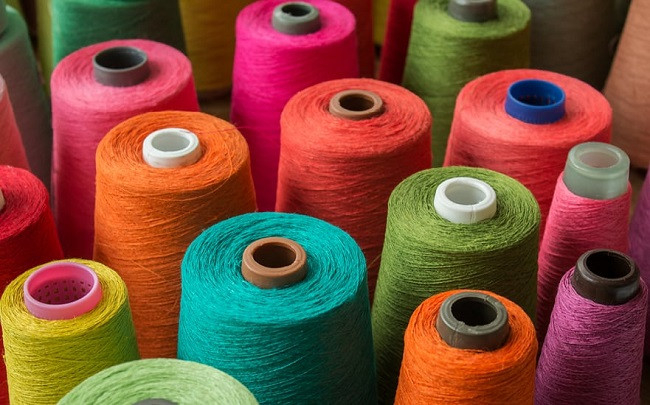
The production record identifies yarn composition, color and lot. Yarn count, ply and supplier article are added when specified for the style.
A knit-down uses the production yarn, gauge and stitch structure. It receives the planned wash or steam treatment before color, surface, hand and finished density are approved.
A new yarn lot is checked before use in the same order.
Stripe, jacquard and intarsia styles keep separate references for each yarn color.
Gauge and Knit Density
Machine gauge is recorded with the style. FashionMe’s current knitwear information gives 7gg chunky knit through 12gg fine knit as examples.
Finished stitch and row density are measured from the approved knitted construction after finishing.
Bulk width is checked against stitch count and finished stitch density. Bulk length is checked against row count and finished row density.
A repeated width or length error sends the knitting settings back for correction before the remaining panels are produced.

Front and Back Panels
Front and back knitting instructions specify stitch count, row count and shaping for each size.
Bulk checks cover:
- chest width
- body length
- shoulder width
- bottom width
- armhole shape
- neckline shape
- left-right symmetry
- artwork position
Dropped stitches, holes, broken yarn, missed transfers and incorrect pattern repeats are removed at panel inspection.
Sleeves
Sleeve production fixes sleeve length, upper-arm width, cuff opening and upper-sleeve shape.
Set-in sleeves carry a shaped sleeve cap.
Dropped-shoulder styles use the sleeve shape assigned to the extended shoulder.
Raglan styles use corresponding diagonal joining edges on the body and sleeve.

Neck Rib, Cuffs and Bottom Rib
The specification records finished dimensions for each ribbed component.
| Component | Checked Measurement |
|---|---|
| Neck rib | finished depth, opening, joining length |
| Cuff | finished depth, relaxed opening, joining width |
| Bottom rib | finished depth, relaxed width, joining width |
A waving neckline triggers checks of neck-rib length, density and linking tension.
A bottom rib that pulls the body inward triggers checks of rib stitch count, finished width and shrinkage.
A cuff that finishes too open triggers checks of stitch count, density and yarn recovery.
Cardigan Closures
Button cardigans carry finished front length, button diameter, button spacing and buttonhole positions.
Left and right front edges are checked at the same finished length before closure positions are marked.
Zip cardigans carry the approved zipper length and finished front-opening length. Both measurements are checked together before bulk zipper attachment.
Reinforcement behind knitted buttonholes, snaps or zippers follows the approved sample.
Cable and Pointelle Panels
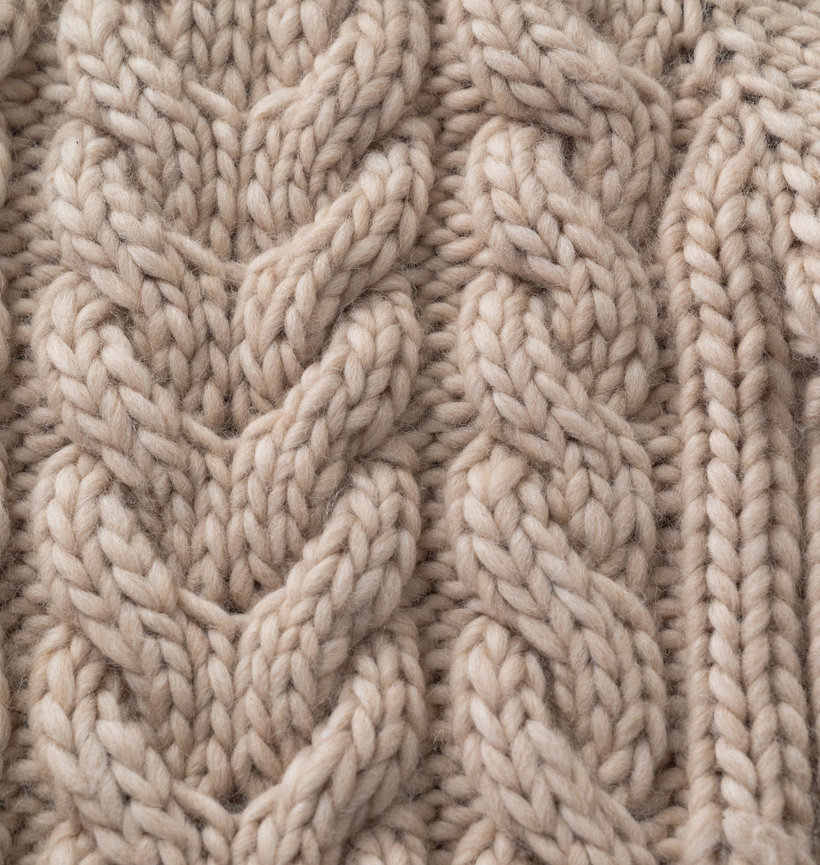
Cable knitting instructions contain cable position, repeat and crossing direction.
Finished cable panels are checked for width, length, motif position and symmetry.
Pointelle panels are checked for irregular openings, missed transfers, broken stitch columns and unintended holes.
Neckline, armhole and side-seam edges retain the solid knit area required for assembly.

Jacquard and Intarsia
Jacquard motifs are checked against fixed garment points such as center front, neckline and hem.
Inspection covers motif position, color order, incomplete knitting and the reverse structure used for that specific program.
Intarsia panels are checked at each color join for open stitches, loose yarn ends and distortion.
Panels using different yarn colors or yarn types are checked again after finishing for width, length and shape.
Linking
Fully fashioned front, back, sleeve and trim pieces reach linking as matched size components.
Linking checks include:
- missed loops
- open seams
- loose seam ends
- shoulder-seam alignment
- sleeve attachment
- underarm alignment
- neck-rib position
- side-seam hem alignment
The linking machine setup must match the knitted edge and garment gauge.
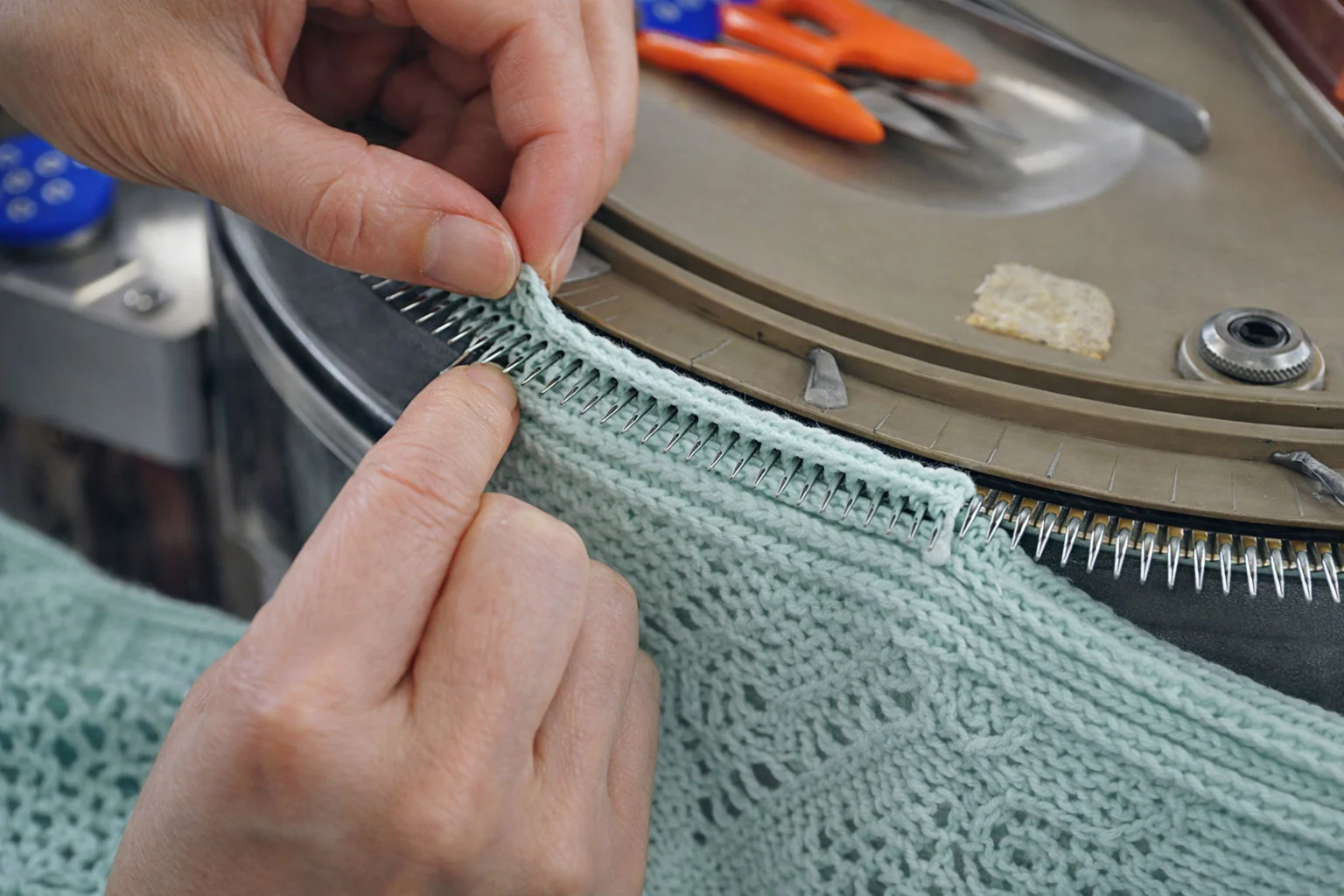
Open or incomplete seams return to linking before final finishing.
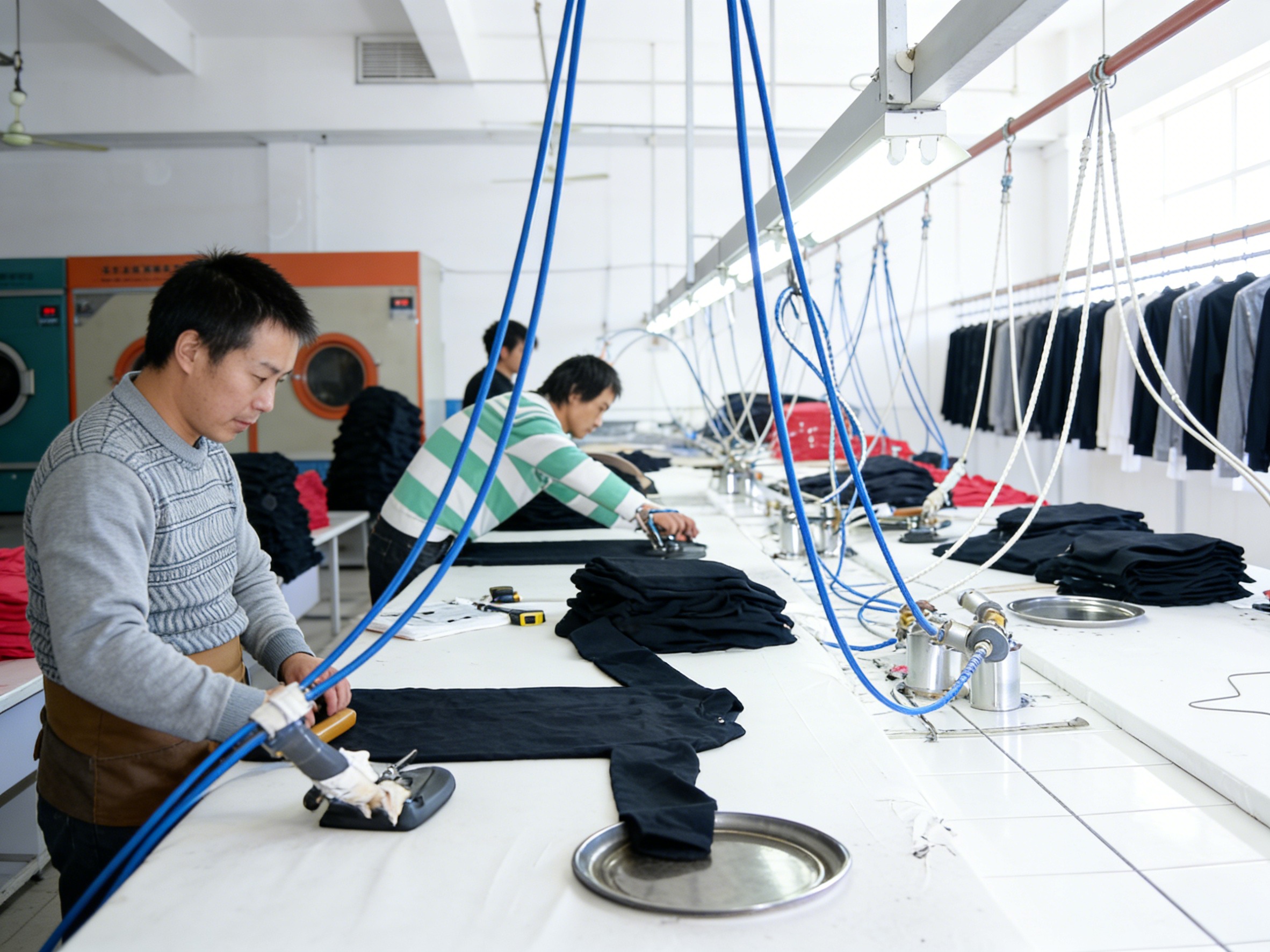
Washing and Finishing
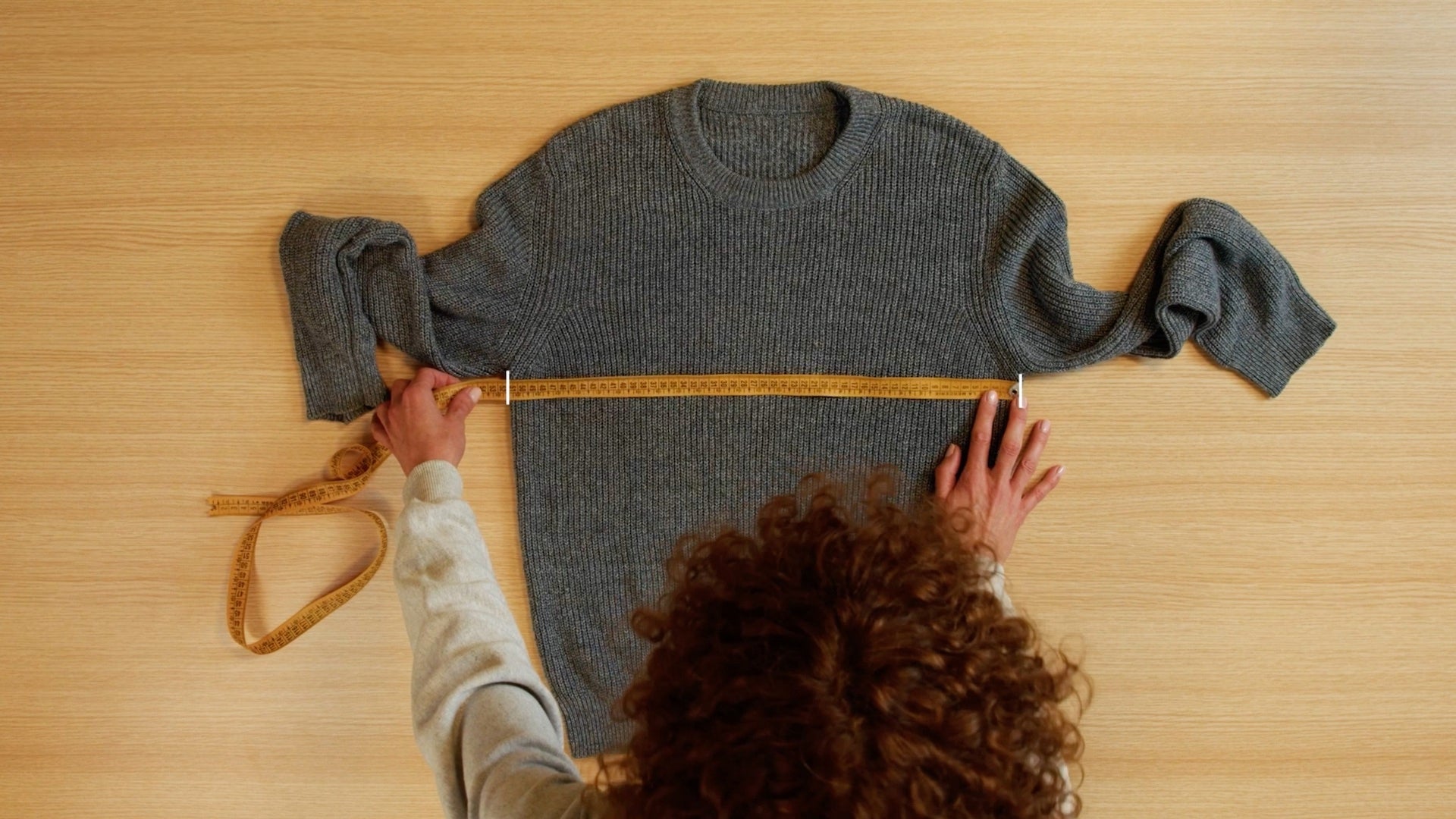
Finished Measurements
Each point of measurement follows the method and tolerance stated in the production specification.
| Measurement | Production Check |
|---|---|
| Body length | approved upper reference to finished hem |
| Half chest | straight across the stated chest level |
| Shoulder | between approved shoulder points |
| Sleeve length | stated upper reference to cuff |
| Upper arm | across the specified bicep position |
| Cuff opening | relaxed finished opening |
| Bottom width | relaxed finished hem |
| Neck opening | completed neckline |
| Rib depth | completed rib section |
A measurement outside its approved tolerance is checked against the operation that controls that area.
Short body length: row count, row density and finishing shrinkage.
Excess chest width: stitch count, knitting tension and stitch density.
Loose neckline: neck-rib length, rib density and linking tension.
Size Grading
Each size receives separate stitch counts, row counts and shaping instructions.
Grading covers body width, body length, shoulder, armhole, neckline, sleeve width, sleeve length, cuff and bottom rib.
Corresponding body and sleeve joining edges are checked after grading.
Neck ribs, cuffs and bottom ribs are graded with their matching garment openings.
Bulk Knit Inspection
Panels are inspected before linking for:
- incorrect dimensions
- dropped stitches
- holes
- broken yarn
- unwanted tuck stitches
- missed transfers
- incorrect stripe sequence
- incorrect motif position
- visible yarn-lot variation
A hole repeating in the same panel position triggers checks of the needle, yarn feed and transfer operation at that position.
A motif repeatedly finishing too high or too low triggers correction of its position in the knitting instructions.
Shrinkage and Pilling
FashionMe currently includes wash-shrinkage tolerance and pilling resistance in knitwear QC.
Shrinkage checks record body width and body length before and after the specified wash and drying procedure.
The acceptance limit follows the individual project specification.
Pilling requirements also follow the approved project specification. FashionMe’s public knitwear information does not publish one universal pilling rating or one shrinkage percentage for every sweater order.
Final Sweater Inspection
Finished sweaters are checked against the approved measurements and tolerances.
Inspection covers:
- body and sleeve measurements
- neckline symmetry
- shoulder alignment
- cuff and hem-rib recovery
- linking seams
- holes
- broken yarn
- stains
- color consistency
- surface defects
- motif position
- labels and trims
- cardigan closures where used
Cable styles add cable position and symmetry. Pointelle styles add opening consistency. Jacquard and intarsia styles add motif and color-placement checks.
FashionMe’s Made to Order uses 100% final inspection. Stock Match uses sample-pull inspection as standard, with full inspection available as an additional service.
Repairable units return to the affected production operation and are inspected again before packing.