Coats Manufacturing
Coats manufacturing brings the garment pattern, shell fabric, internal structure, lining, trims, pressing requirements, grading and inspection standard into one production file. The approved sample fixes the body shape, coat length, shoulder structure, sleeve hang, front overlap, collar, lapel, pockets, vent and internal construction used for bulk production.

Fashionme's Stock Match starts at 10 pieces with an existing production coat and its available size range. Published lead time: 7–10 days.
Made to Order starts at 50 pieces with project-specific pattern development, measurements, material and construction. Published lead times are 7–12 days for sampling and 15–20 days for production.
Brand labels, hang tags and packaging can be added within the confirmed Stock Match scope. For Made to Order, they are written into the production specification.
Finished Coat Specification
| Production area | Information fixed for production |
|---|---|
| Body | chest, waist, hip, shoulder, body length, bottom opening |
| Front | single or double breasted, overlap, button line, lapel |
| Collar | neckline, collar length, collar shape, undercollar |
| Sleeves | sleeve type, pitch, upper arm, sleeve length, cuff |
| Pockets | pocket type, size, angle, position, reinforcement |
| Back | center seam, center vent, double vents or plain back |
| Shell | supplier article, composition, weight, construction, color, finish |
| Internal structure | fusible, chest support, shoulder support, stay tape |
| Lining | body lining, sleeve lining, internal pockets, movement allowance |
| Trims | buttons, buckles, zippers, snaps, labels, hang tags |
| Finishing | pressing sequence, hem construction, surface standard |
Double-Breasted Fronts
A double-breasted coat contains additional front width for the approved overlap. The front pattern records the working button column and the second visible column.
- front overlap
- button diameter
- horizontal distance between columns
- vertical button spacing
- inside fastening position
- lapel break point
- front-edge shape
- facing width
Bulk inspection checks the double-breasted coat with the front fastened. Front-edge level, overlap, button-column alignment and lapel balance are evaluated in the closed garment state.
Shell Fabric
Bulk fabric enters the order with a supplier article or equivalent material reference. The fabric record contains:
- fiber composition
- fabric weight
- woven or knit construction
- usable width
- color
- finish
- directional surface where applicable
- approved lot or bulk material reference

A wool coating fabric used with fusible interlining is tested as that shell-and-fusible combination. Bond strength, surface appearance and finished hand establish the production setting.
A new shell article produces a new material approval because the response to heat, pressure, steam and interlining changes with the material.
Custom-dyed fabric, custom hardware and outside finishing may carry supplier minimums above the garment quantity.
Directional Coating Fabric
Brushed wool, pile coating and other directional surfaces carry a cutting-direction mark in the production pattern. Visible shell pieces follow the same approved direction:
- front panels
- back panels
- sleeves
- collar
- pocket flaps
- belts
- storm flaps
Fabric consumption is established after the directional rule has been applied to the complete pattern set.
Plaid and Stripe Matching
A typical coat matching map can identify:
- center front
- center back
- pocket flap against front panel
- front-to-back side seam
- sleeve reference line
- belt or storm flap
The patternmaker places matching references directly on the production pattern. The marker then positions the corresponding pieces against the repeat in the fabric.
Wool Overcoat Interlining
The approved construction can contain separate zones for:

- front fusible
- chest reinforcement
- lapel reinforcement
- stay tape
- shoulder reinforcement
- hem reinforcement
Each support material has a material reference and a placement area. The front panel moves through these operations before final front assembly.
Collar, Lapel and Front Edge
The collar assembly combines upper collar, undercollar and neckline. The lapel combines the front shell, facing and internal structure.
| Finished result | Production point checked |
|---|---|
| Lapel break position | roll line and internal front construction |
| Gorge level | collar/front pattern transfer |
| Collar fit | neckline and collar length |
| Front-edge stability | shell/facing balance |
| Left-right lapel balance | sewing and pressing |
| Surface condition | interlining and pressing process |
Sleeves and Shoulders
A coat using shoulder pads, sleeve heads or chest support is fitted with those components installed.
For two-piece sleeves, upper sleeve and under sleeve remain paired by size through grading, cutting and sewing. The pattern controls upper-arm width, elbow shape, sleeve length, cuff opening and sleeve pitch.
Bulk line control observes the sleeve while the coat hangs naturally.
Sleeve tabs and cuff belts are positioned from documented seams or finished edges so left and right sleeves use the same reference.
Welt and Flap Pockets
A welt-pocket package records:
- finished opening length
- welt width
- pocket angle
- position from fixed body references
- reinforcement
- pocket-bag dimensions
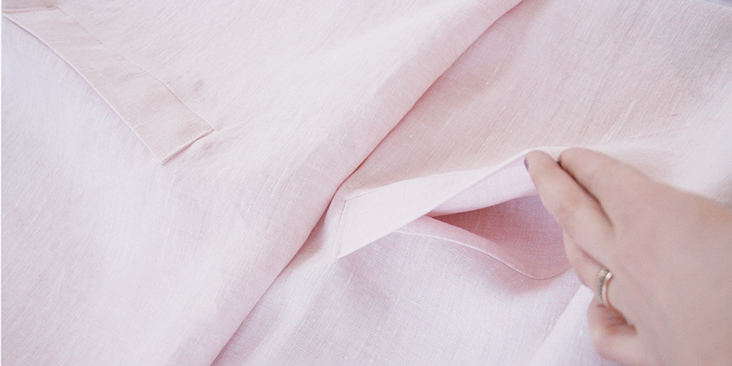
A flap pocket adds the flap pattern, finished flap dimensions and flap placement. The front panel receives the pocket location before the opening operation starts.
Reinforcement is applied at that location. The pocket opening is constructed. Left-right position is checked while the front remains accessible. The pocket bag is completed before later front assembly closes the area.
Center Vents and Double Vents
A center vent uses back-pattern extensions that create the finished overlap. The pattern fixes:
- vent opening point
- vent length
- overlap width
- hem relationship
- lining relationship
Double vents use the corresponding extensions on both sides. The completed vent is inspected while the coat hangs freely. The shell overlap lies flat and the lining leaves enough movement for the vent to open during wear.
Lining Patterns
Body lining and sleeve lining are separate production patterns. The lining pattern contains the movement allowance needed inside the finished coat. This can include:
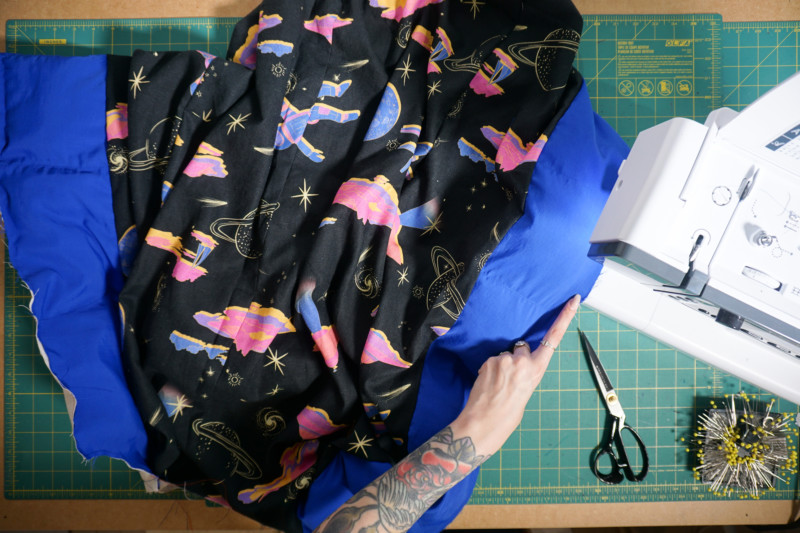
- center-back ease
- sleeve ease
- hem allowance
- vent allowance
- facing connection
- internal pocket position
A finished lining inspection checks the coat with the front open and closed and the sleeves in movement. The exterior shell remains free through the back, sleeve and hem while the internal lining stays inside the finished garment boundaries.
Trench Coat Components
One style may contain:
- left and right epaulettes
- storm flap
- throat latch
- two sleeve straps
- belt
- belt loops
- buckle
- keeper
- front buttons
- cuff hardware
- lining
- pocket components
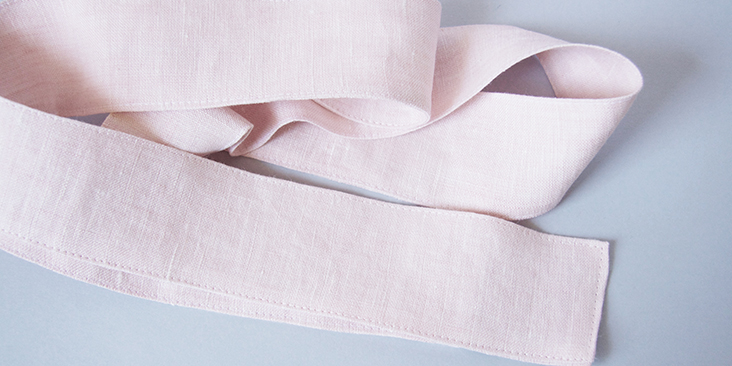
Finishing and packing reconcile the removable components with each garment.
Belt length and width have their own finished specification. Sleeve straps receive left-right placement measurements. Epaulettes receive their own length, width and attachment position.
Quilted Panels
The quilting specification records:
- quilt-line spacing
- quilt geometry
- insulation
- backing
- thread
- stitch setting
- finished panel dimensions
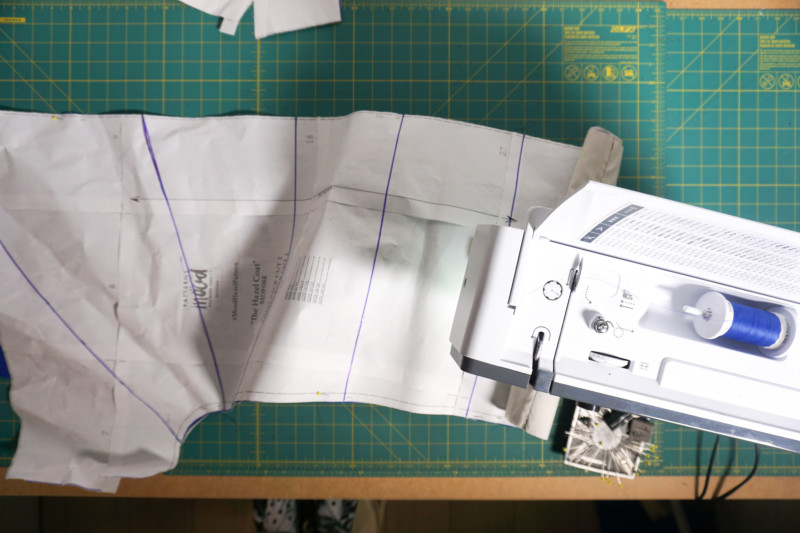
Quilt lines that intersect pockets, front plackets or closures are positioned in the pattern and quilting plan before assembly.
Bulk control checks panel dimensions after quilting and before those panels progress into the main sewing line.
Padding Inspection
Padding is checked before lining closure. The inspection checks:
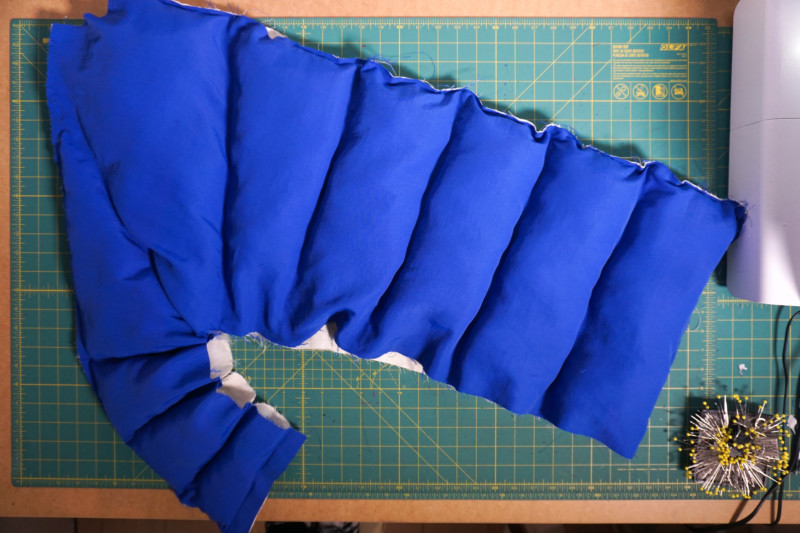
- insulation coverage
- distribution
- thickness consistency
- seam areas
- pocket areas
- front edges
- collar or hood areas
Increased internal bulk affects finished circumference and edge construction.
Double-Face Seams
The sample establishes seam construction, seam allowance and finished edge thickness.
The visible inside of the coat becomes part of the inspection standard alongside the exterior shell.
Pressing Sequence
Front seams and darts are pressed while the inside of the front remains accessible. Welt pockets receive their shaping before later front assembly.
Sleeve seams receive their pressing before final sleeve setting. Collar and lapel areas receive progressive pressing during their own assembly. Vents and hems receive their finishing press before final inspection.

Surface shine, seam impressions, distortion and scorching are inspection defects. Lapel roll, front-edge flatness and hem level are compared with the approved sample.
Pattern Revisions
| Pattern change | Components updated or rechecked |
|---|---|
| Coat length | body, pocket height, lower button placement, belt position, vent length and lining hem |
| Shoulder width | body and sleeve relationship |
| Lapel shape | front, facing and collar connection |
| Collar shape | collar pieces and neckline relationship |
| Pocket size | pocket components and location |
| Vent length | back and lining relationship |
| Front overlap | front, facing and closure positions |
Size Grading
The approved base-size version becomes the source for grading and production. Each ordered size receives the required:
- front pattern
- back pattern
- sleeve pattern
- collar pieces
- facing
- pocket components
- vent construction
- lining pieces
The grade rules control chest, waist, hip, shoulder, armhole, sleeve, upper arm, cuff, bottom opening and body length. Size-dependent pocket and closure positions follow the approved grade rules for the style.
Shell and lining remain paired by size.
Bulk Cutting
The cutting package records pattern revision, sale sizes, quantities and material references before marker release.
Shell, lining, interlining and contrast materials are identified separately.
Directional instructions and plaid-matching references remain attached to the relevant shell pieces. Bundles preserve size and component identity after cutting.

First-Off Inspection
The first completed coats are checked against the approved sample while most of the order remains in process.
| Repeated result | Production action |
|---|---|
| Low pocket position | reset the pocket-location operation |
| Sleeve rotation | check sleeve pitch and sleeve setting |
| Vent opening | inspect back, vent and lining |
| Double-breasted front shift | check front overlap and closure positions |
Final Inspection
Fashionme currently lists 100% final inspection for Made to Order and sample-pull inspection as standard for Stock Match.
A wool overcoat inspection covers measurements, front balance, lapels, collar, sleeves, pockets, vent, lining, buttons, hem and surface condition.