Jeans Manufacturing
Jeans Manufacturing
A custom jeans order is released from the finished garment specification. The production file fixes the denim article, wash, waist, hip, front and back rise, thigh, knee, inseam, leg opening, pockets, fly, topstitching and hardware before bulk cutting.
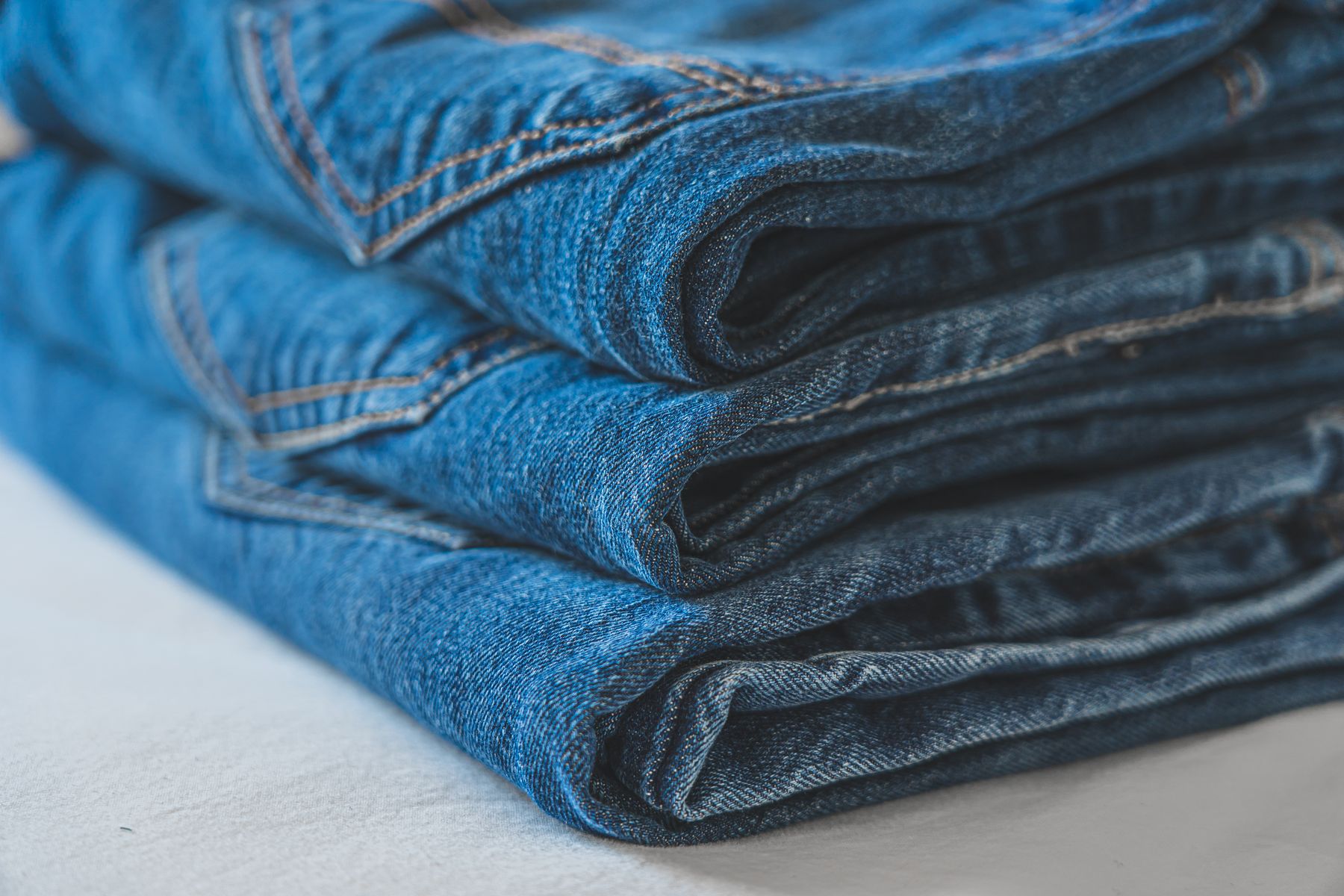
Denim Release
Lock the Bulk Denim Article Before Pattern Release
The jeans pattern is developed against one identified denim article. Record fiber composition, fabric weight, twill construction, stretch behavior and supplier article number before the fit sample is treated as a production reference.
The wash trial belongs to that same fabric. Changing the denim article after fitting introduces a new shrinkage and skew result, so the affected jeans sample is washed and measured again before bulk cutting.
For stretch denim, recovery is checked at the finished garment stage. Permanent growth at the waist, hip or knee changes the fit even when the pair passed its measurements immediately after washing.
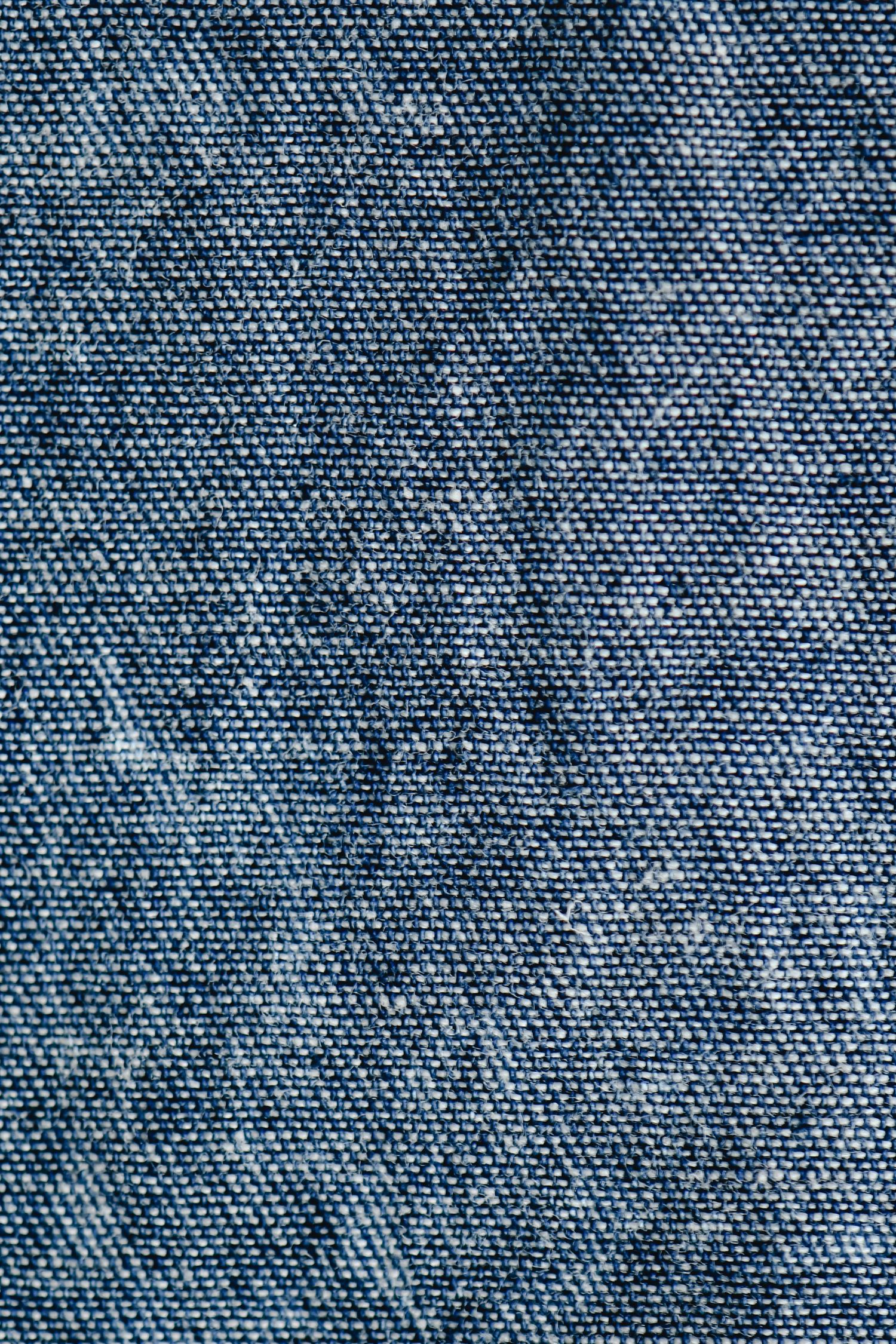
Article ID
Exact bulk denim reference from the selected supplier or mill.
Composition
Fiber percentages used in the jeans body.
Weight
Record in oz/yd² or gsm. 12 oz/yd² is approximately 407 gsm.
Twill
Record the selected weave construction for bulk.
Wash result
Finished shade and dimensional change from the production wash trial.
Skew result
Measured fabric skew used to set the pre-skew treatment before cutting.
A denim substitution after wash approval triggers a new shrinkage test, skew check and finished-jeans measurement round with the replacement article.
Pattern Compensation
Build the Jeans Pattern from the Washed Target
Garment washing changes the dimensions that reach the customer. The sample therefore records the same measurement points before and after the production wash. Pattern correction uses that measured change.
Shrinkage % = (before wash − after wash) ÷ before wash × 100
82.0 cm inseam before wash → 80.0 cm after wash
Length loss = 2.0 cm
Shrinkage = 2.44%
With the same denim, seam construction and wash recipe, an 82 cm finished target requires approximately 84.1 cm as the next pre-wash garment target:
82 ÷ (1 − 0.0244) ≈ 84.1 cm

Waist
Calculate the wash change from the closed waistband measurement. Revise the upper pattern when the finished waist falls outside target.
Rise
Measure front and back rise separately before and after washing. Their corrections remain separate because the two paths carry different pattern lengths.
Inseam
Use the actual garment shrinkage measured along the finished inside-leg seam. Fabric-roll shrinkage alone does not replace the garment measurement.
Leg opening
Confirm the hem after washing because seam bulk and finishing can change the final flat opening.
Jeans Block
Set Rise, Crotch and Seat Balance Before Working Down the Leg
Front rise, back rise, front crotch extension, back crotch extension and hip width divide the available room through the upper jeans block. The yoke adds shaping between the waistband and back hip.
A sample showing strong tension through the seat together with the center-back waistband being pulled downward is treated as an upper-block balance failure. Back rise and crotch room are revised, then the jeans are washed and fitted again.
Loose fabric collecting directly below the seat points to excess room in that area. The correction is made in the back block before the leg width is changed.
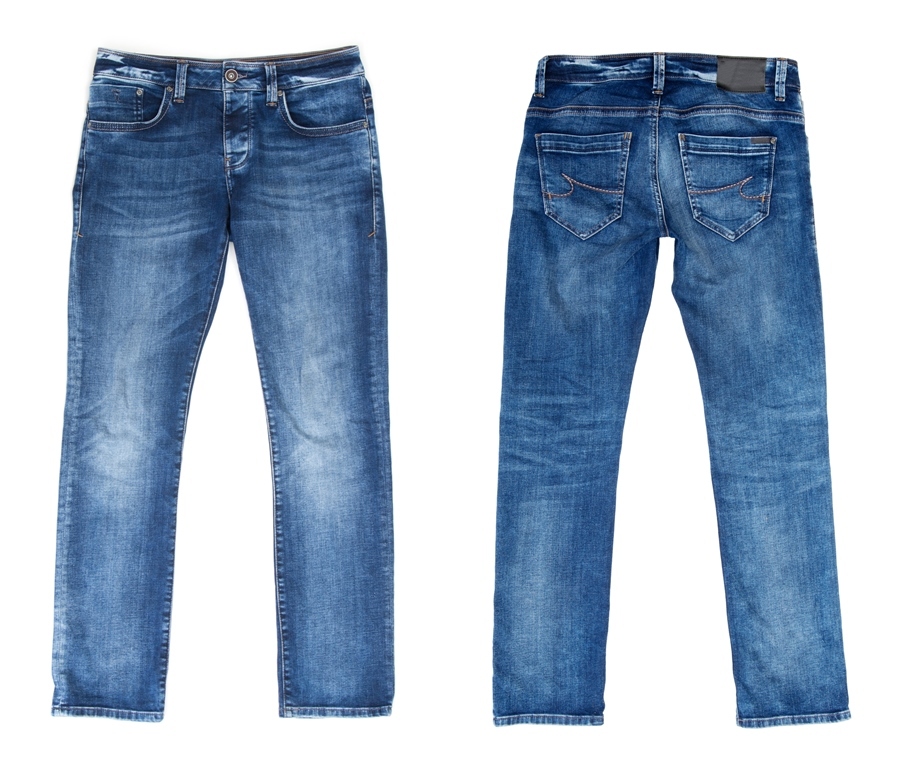
Front
Front rise and front crotch curve meet the fly and front-pocket area. Revise these pieces together when the front balance changes.
Back
Back rise, crotch extension, yoke and hip width create the seat volume. Back-pocket position is reset after any yoke change.
Revise back rise and back crotch balance. Wash the revised sample again before fit approval.
Remove excess back-block volume at the pattern stage and recheck the washed sample.
Keep the approved upper block and add width through the required knee and hem points.
Reduce the knee point and redraw the leg line into the existing hem measurement.
Production Measurements
Measure Jeans from Fixed Production Points
Finished washed measurements control bulk release. The sample and bulk use the same start point, end point and laid-flat preparation.
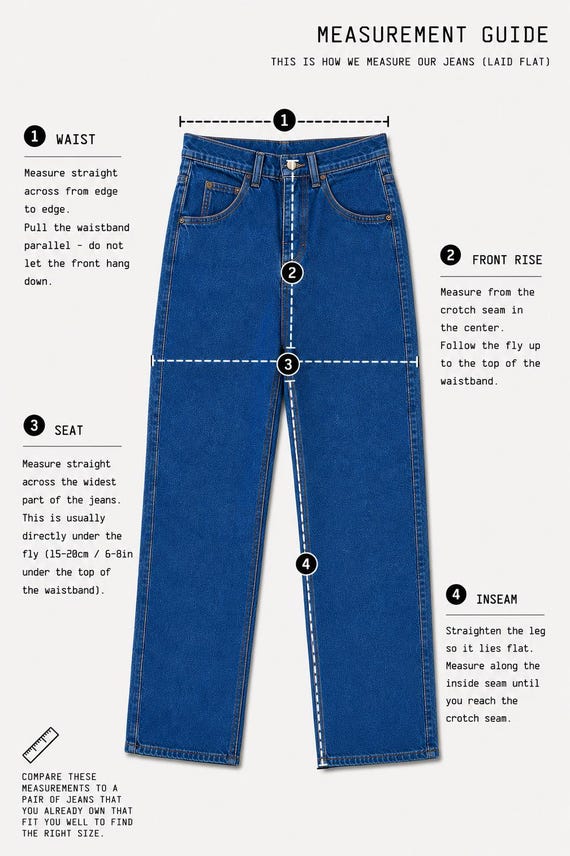
Close the waistband and measure using the stated laid-flat waistband method.
Measure straight across at the stated distance below the top edge of the waistband.
Measure from the crotch seam intersection along center front to the top edge of the waistband.
Measure from the crotch seam intersection along center back to the top edge of the waistband.
Measure across the leg at the stated distance below the crotch intersection.
Measure at the fixed production distance from crotch or hem.
Follow the inside-leg seam from the crotch intersection to the finished hem.
Lay one finished hem flat and measure straight across the opening.
Five-Pocket Construction
Set Pocket Placement Before Sewing the Jeans Body
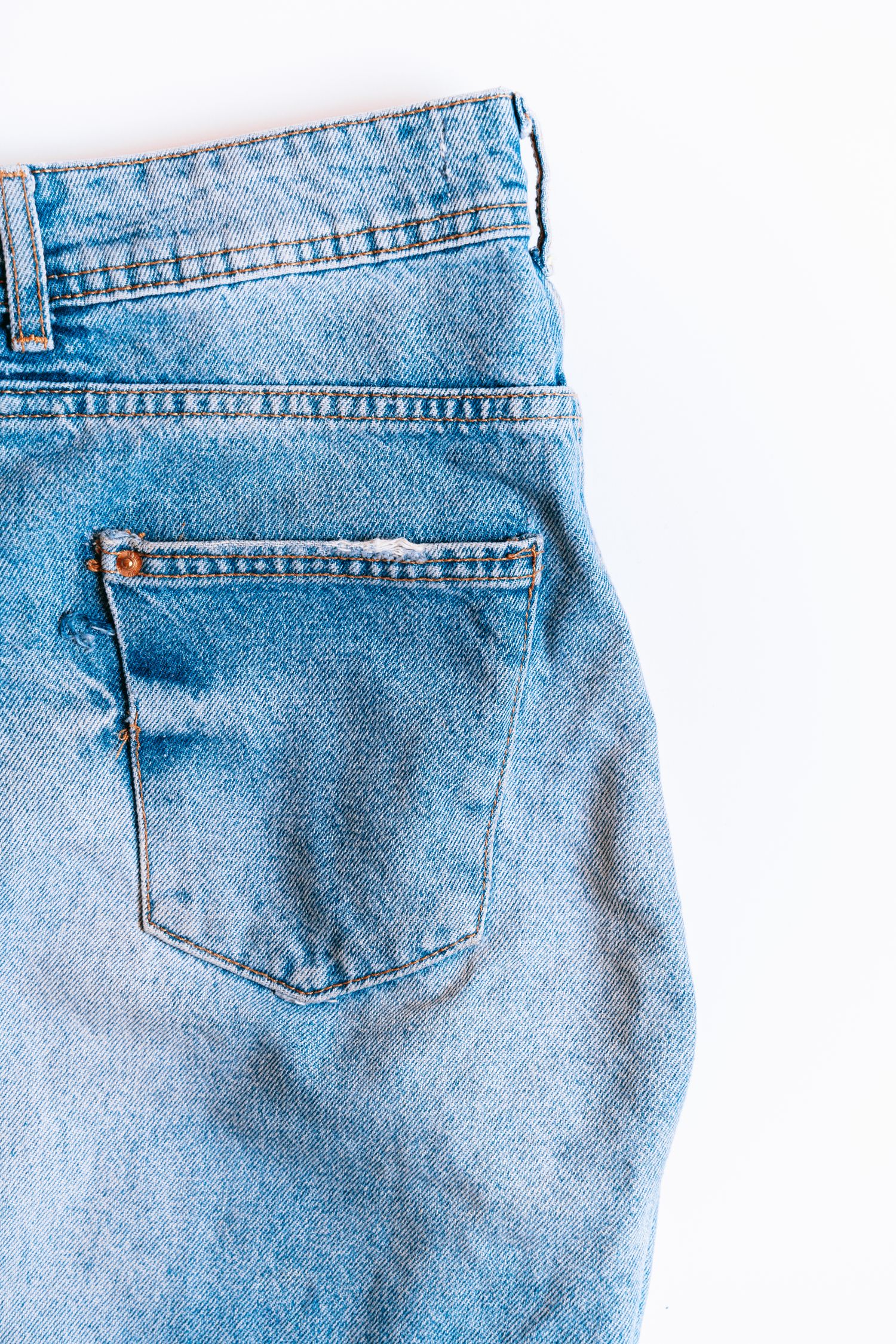
The front-pocket opening is part of the front-leg pattern. Pocket facing and pocket bag are cut to fit that opening. Back pockets are positioned on the back panels before the major leg seams close the garment.
Front-pocket opening
Record the finished opening length and curve. The pocket-bag depth is measured from the finished opening to the lowest internal point.
Back-pocket position
Use the yoke and center-back seam as fixed references. Measure both pockets independently for width, height, angle and location.
Pair spacing
Moving each back pocket 1 cm farther from center back increases the distance between the two pockets by 2 cm. The seat therefore changes visually even when the pocket itself stays the same size.
Finished width, depth and location inside the front-pocket area.
Fixed at specified reinforced pocket points after the seam layers are assembled.
Reposition the back pockets from the revised yoke reference before producing the next sample.
Fly, Seams & Hardware
Freeze the Jeans Assembly Before the Wash Sample
The wash acts on the actual seams, thread, folded hems and hardware installed in the garment. The final wash sample therefore carries the same fly construction, seam types, topstitching and hardware intended for bulk.
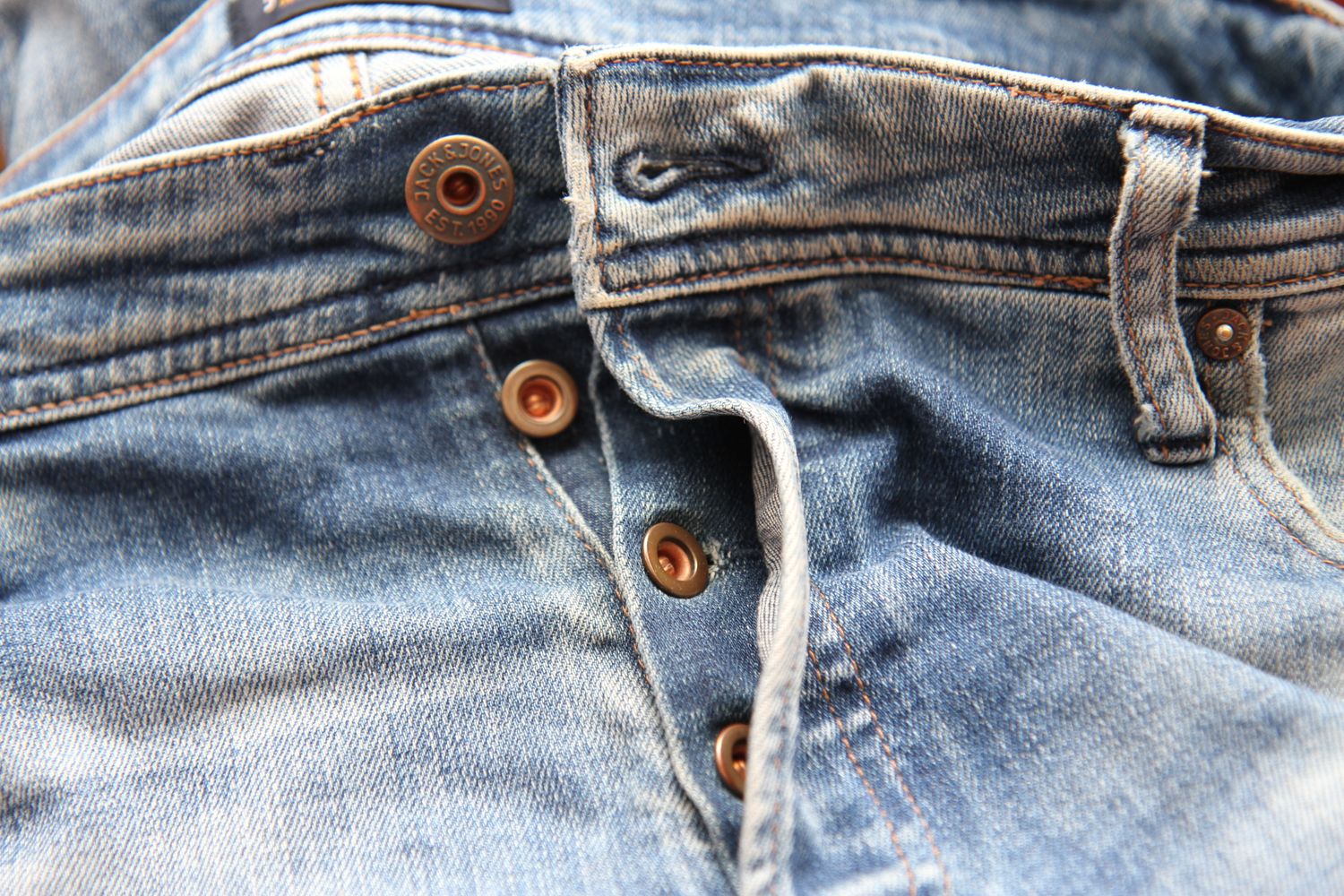
Set the fly depth from the front pattern. Match the zipper or button-fly length to that opening before ordering bulk closures.
Install the button at the specified center-front waistband point. Measure the finished waist with the button fully closed.
Fix seam construction and allowance in the sewing file. Changing the allowance changes finished thigh, knee or hem width on the affected seam.
Lock thread color, thread size, stitch density and distance from the seam edge for the waistband, fly, pockets, yoke and specified leg seams.
Use the intended hem depth and stitch construction on the wash sample. Bulk uses the same structure so the wash develops the same seam puckering and roping behavior.
Set loop count, loop position and rivet locations before wash approval. Loose hardware or failed attachment is held for repair before shipment.
Denim Finishing
Run the Production Wash Before Final Jeans Approval
The released jeans specification records the actual finishing sequence used for that style. Final dimensions and final shade are checked after this sequence.
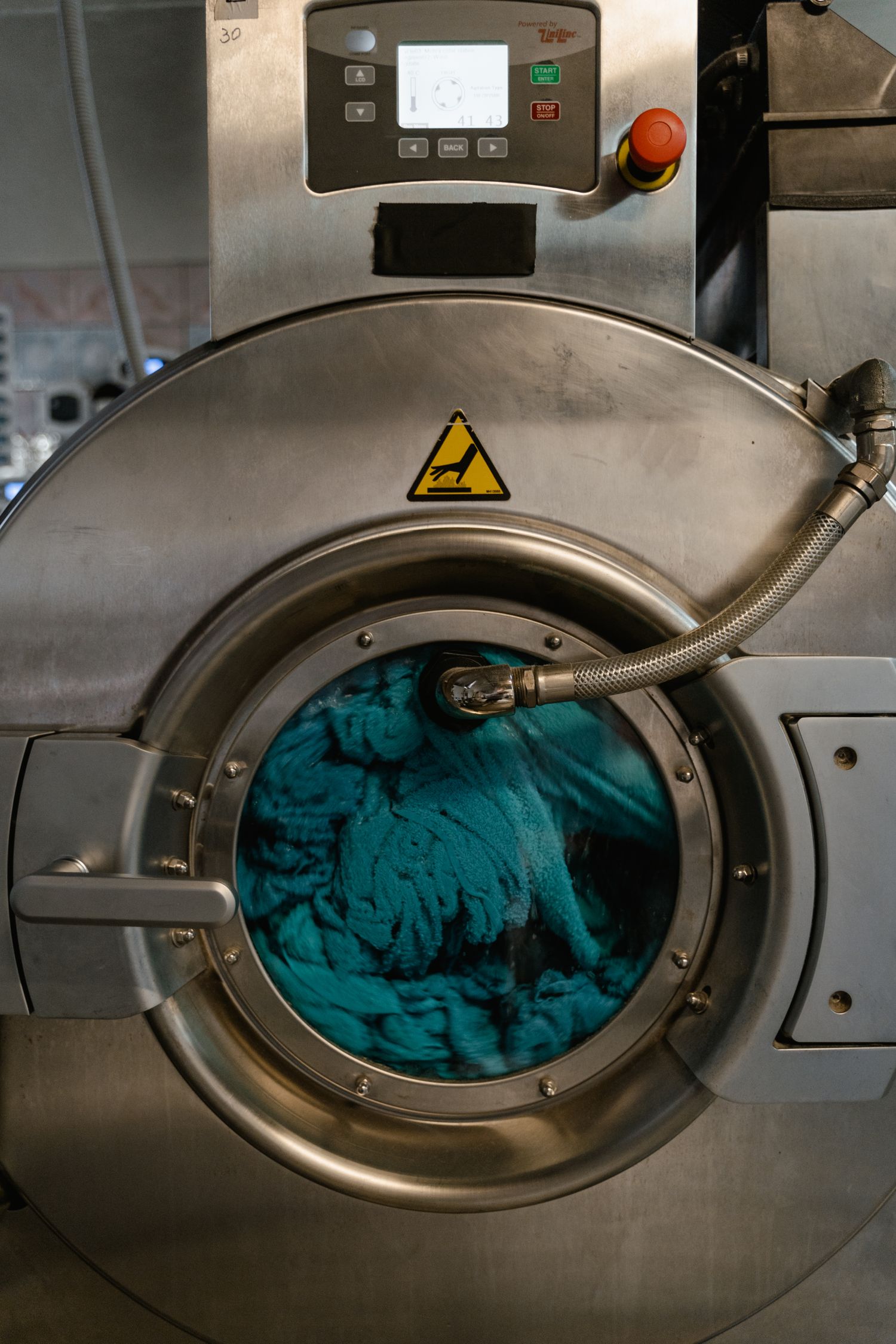
Remove the sizing compounds applied to denim warp yarns for weaving before subsequent wet treatments.
Run the specified enzyme, stone, laser, sanding or other abrasion process used to create the approved surface effect.
Run the specified color-removal, tinting or other wash treatment required by the final sample.
Complete the assigned drying and relaxation stage before dimensional inspection.
Measure waist, hip, front rise, back rise, thigh, knee, inseam and leg opening again in the finished state.
Compare finished shade, abrasion, whiskers, distressing and visible seam effects against the final washed sample.
Skew & Leg Twist
Test Denim Skew Before Cutting and Leg Twist After Washing
The selected denim article is tested for skew before garment cutting. That test establishes the amount and direction of pre-skew applied during fabric finishing.
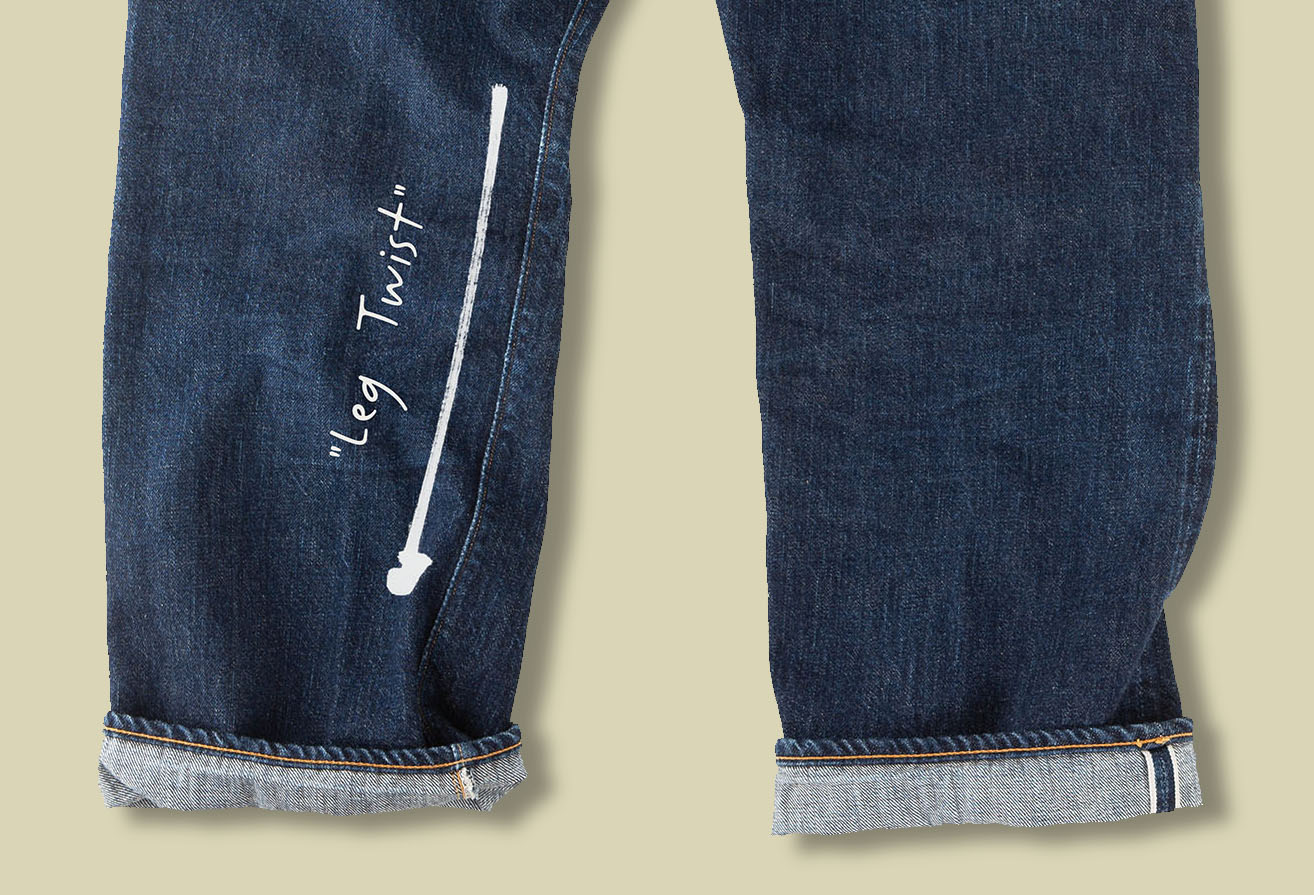
The finished jeans are checked again after washing and drying. Lay the pair flat in its relaxed position. Record rotation of the inseam and outseam around the lower leg.
Residual twist after washing means the fabric correction and finished-jeans result require review before bulk release. A replacement denim article starts with a new skew test.
Judge leg twist on the relaxed washed pair. The unwashed cut panel does not establish the final seam position.
Bulk Release Gate
Release Bulk Cutting Only After the Washed Jeans Sample Passes
The following items need recorded pass results before a Made to Order jeans run moves into bulk cutting.

Supplier article, composition, weight and construction match the material used for the final wash and fit checks.
Waist, hip, rises, thigh, knee, inseam and leg opening reach their final-sample targets inside the written tolerances.
Seat, front crotch, back crotch and waistband balance pass the fit review on the finished sample.
Front pockets, coin pocket and both back pockets match the recorded dimensions and positions.
Closure operates through its full travel. Button, rivets and belt-loop attachments remain secure after washing.
Shade, abrasion, distressing and seam effects match the final washed reference within the accepted production range.
Both legs pass the recorded post-wash seam-rotation requirement.
Size Grading
Grade the Jeans Shape Point by Point

Give waist and hip separate increments. A 2 cm increase in flat hip width adds approximately 4 cm to full hip circumference at that measurement level.
Grade the two rise measurements independently. The back block retains the additional length and shape required over the seat.
Assign a target to all three points in every size. Their relationship preserves the straight, tapered, wide or flared leg profile.
Reposition pockets from the graded yoke and center-back references. A pocket location copied unchanged across all sizes will shift relative to the larger or smaller back panel.
Check fly depth and zipper or button-fly length against the graded front rise before releasing the bulk trim quantity.
Bulk Jeans Inspection
Inspect Bulk Jeans in Their Finished Washed State
A bulk pair is compared with the written jeans specification after the assigned production finish. A measurement outside the written tolerance is segregated from passing stock for rework or rejection.
Made to Order: 100% final inspection
Stock Match: sample-pull inspection as standard; full inspection is available
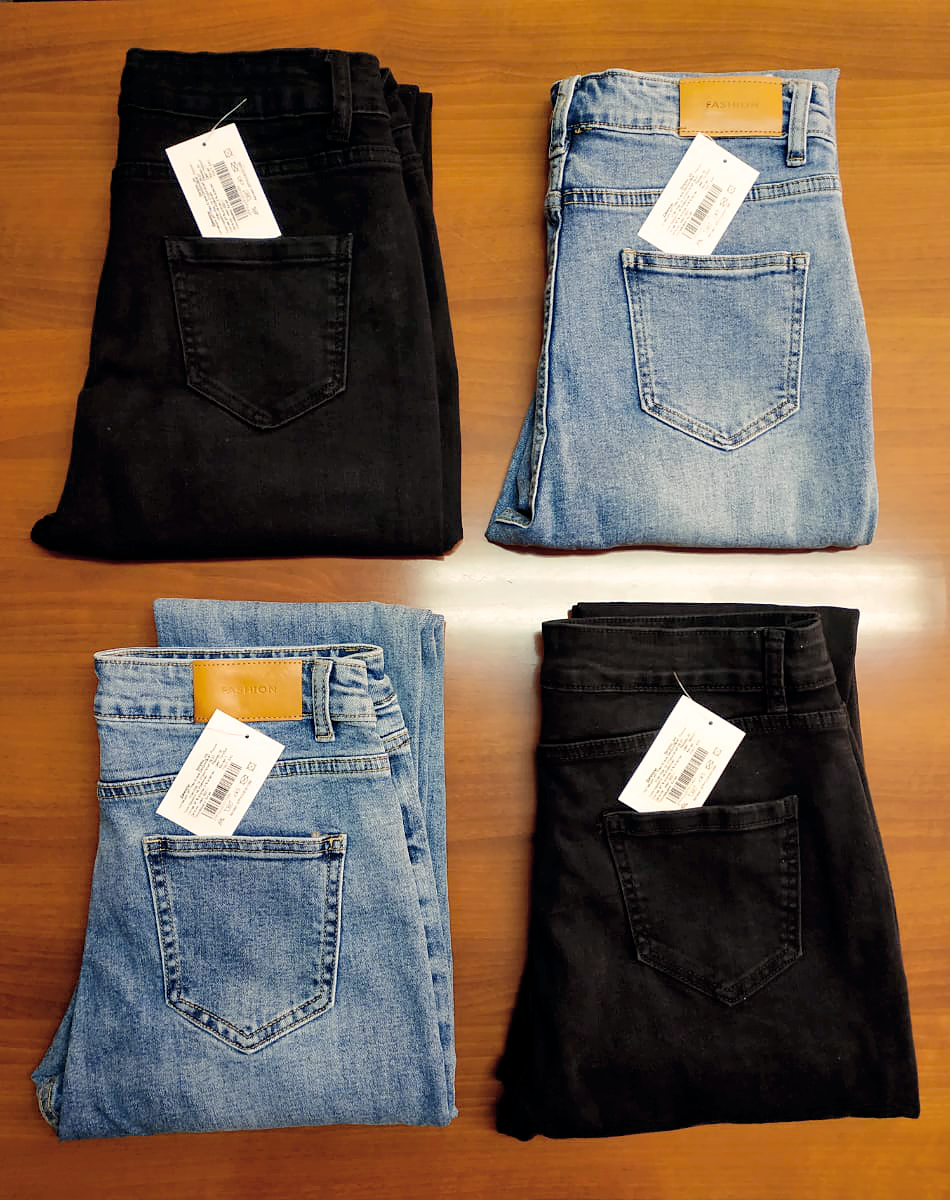
Finished size
Method: Measure waist, hip, rises, thigh, knee, inseam and leg opening with the production measurement method.
Pass requirement: Every checked point remains inside its written tolerance.
Leg balance
Method: Lay both legs flat and compare inseam length, hem level and seam rotation.
Pass requirement: Left and right legs meet the specified dimensional and twist limits.
Back pockets
Method: Measure both pockets for size, angle and location from yoke and center back.
Pass requirement: Both sides stay inside the written placement tolerances.
Fly
Method: Open and close the zipper or button fly through its full travel and close the waistband.
Pass requirement: The closure operates cleanly and center front aligns at the closed waistband.
Hardware
Method: Check tack button, rivets and belt-loop attachments after the production wash.
Pass requirement: All specified components remain secure and usable.
Wash
Method: Compare shade, abrasion, whiskers, distressing and seam effects with the final washed sample.
Pass requirement: The finished pair remains inside the accepted wash range for the lot.
Production Route
Stock Match and Made to Order Jeans
Stock Match
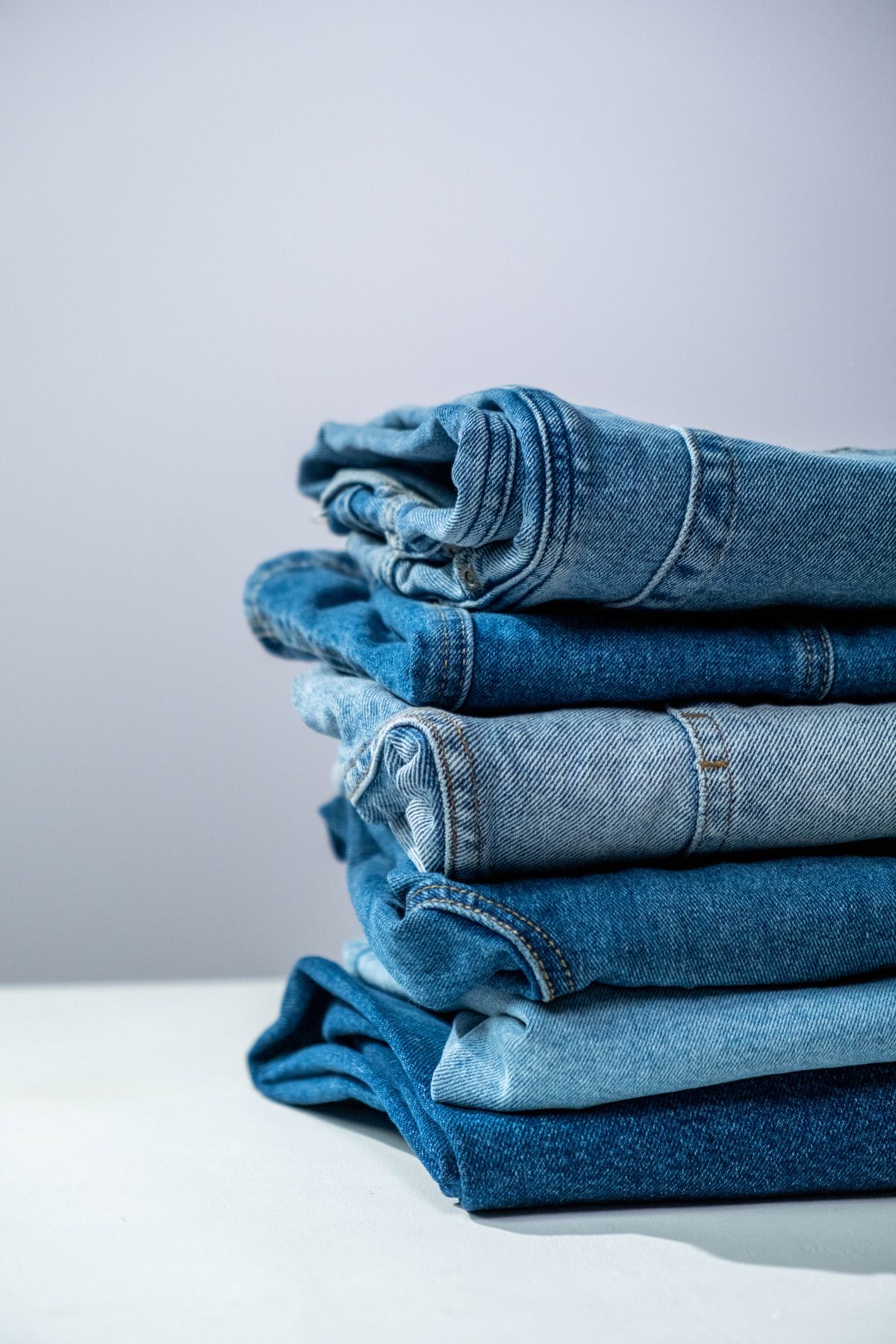
Production starts from an existing pair of jeans with an existing pattern, denim article, wash and construction.
Current inventory sets the available sizes, colors and washes.
A new rise, new leg profile, different denim article, changed pocket construction, custom hardware or a new wash moves the jeans into Made to Order production.

Made to Order
The pattern is developed around the required finished waist, hip, rises, thigh, knee, inseam and leg-opening measurements.
Bulk cutting follows the released denim article, five-pocket construction, fly, seam specification, topstitching, hardware and wash.
A custom denim lot, zipper, tack button, rivet or finishing process may carry an additional supplier or process minimum.
Jeans Project
Request a jeans manufacturing quote
Send the jeans reference and quantity. A photo, video, sketch or tech pack can start the quote. For Made to Order jeans, send the finished measurement targets, denim requirement, wash reference, pocket construction and hardware details already fixed for the style.