What Is Satin Fabric?
Satin is a woven fabric construction with long yarn floats covering much of the visible surface. Those floats give the cloth its smooth hand and the moving highlights that appear when satin bends under light.
The word satin describes the way the fabric is woven. Silk, polyester, acetate, viscose rayon, nylon and blended yarns can all be used in that construction. Once the fiber, yarn size, density, weight and finishing change, the finished cloth can feel completely different.
A lightweight silk charmeuse may weigh around 68–70 GSM and fall close to the body. Polyester crepe-back satin commonly sits around 150–160 GSM. Heavy stretch duchess satin can reach 240–250 GSM and hold the shape of a formal skirt.
That range is normal for satin.
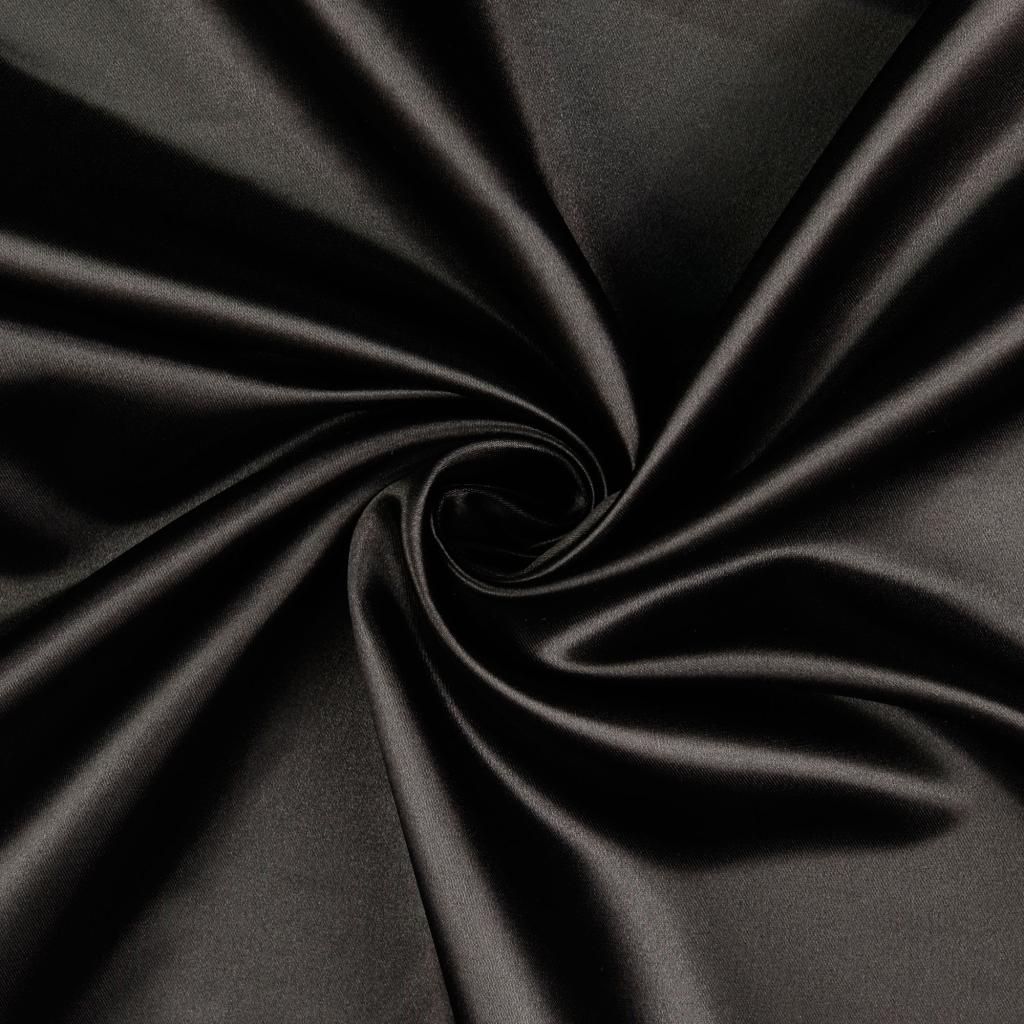
How the Satin Surface Is Made
A woven fabric is held together where warp and filling yarns cross and interlace.
Satin spaces those binding points farther apart so longer sections of yarn remain exposed on the face.
In a basic five-harness warp satin, one warp yarn can pass over four filling yarns before it enters the structure again. The next binding point moves to another position in the five-by-five repeat.
An eight-harness satin gives the surface yarn even more room. A basic warp-faced version can expose a yarn across seven filling crossings before the next binding point.
Those exposed sections are the floats.
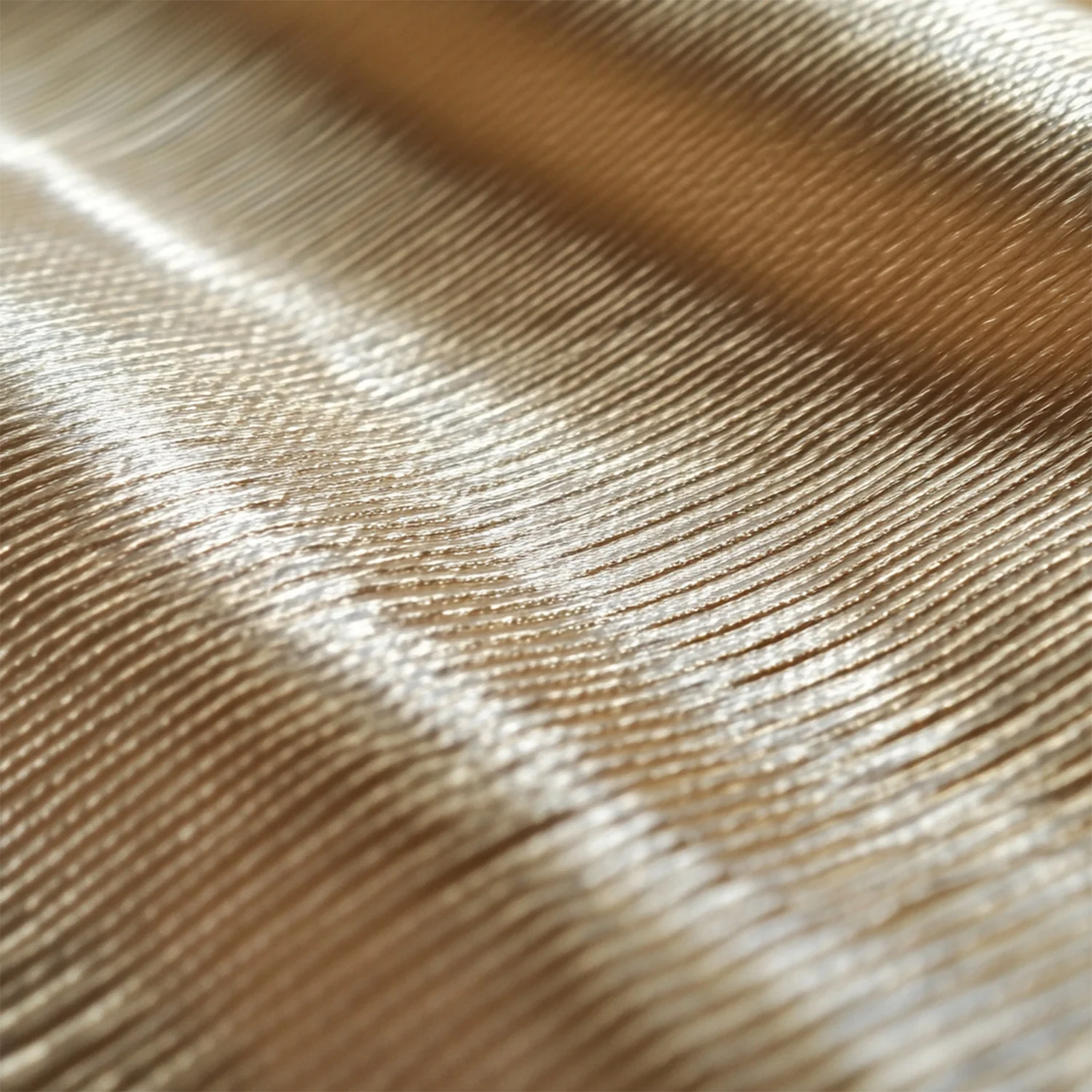
A smooth filament yarn gives the floats a clean surface for light to travel across. Silk filament produces a soft natural luster. Polyester filament can create a sharper reflection. Yarn twist, filament shape, dye and finishing alter the final appearance.
The same long floats also explain why satin needs careful handling. More yarn sits exposed at the surface, so rough hardware, damaged pins and sharp table edges have more opportunity to catch it.
Look at the Back
Turn a warp-faced satin over and the construction becomes easier to read.
The front is dominated by long warp floats. More of the filling yarn and binding points appear on the reverse.
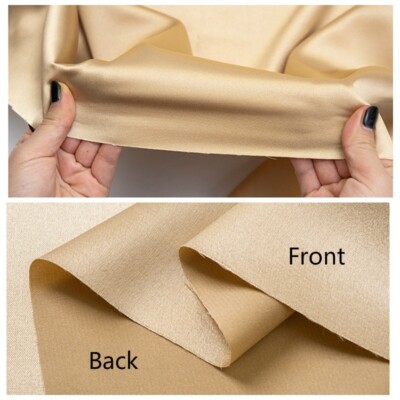
Some satin structures use filling yarns to create the dominant face.
The textile trade also uses the word sateen in several ways. Cotton fabrics made with a satin-type weave are commonly sold as sateen, and the term also appears in technical descriptions of filling-faced constructions.
For production, the actual weave description is more useful than relying on the fabric name alone.
5-harness warp-faced satin, 100% polyester filament, 160 GSM, 150 cm usable width.
That tells the factory what the fabric actually is.
Charmeuse Has a Very Light, Fluid Hand
Silk charmeuse is one of the easiest satin fabrics to recognize once it is in your hand.
Lift one corner and the fabric drops immediately into narrow folds. That movement works well for slip dresses, robes, camisoles, bias skirts and soft blouses.
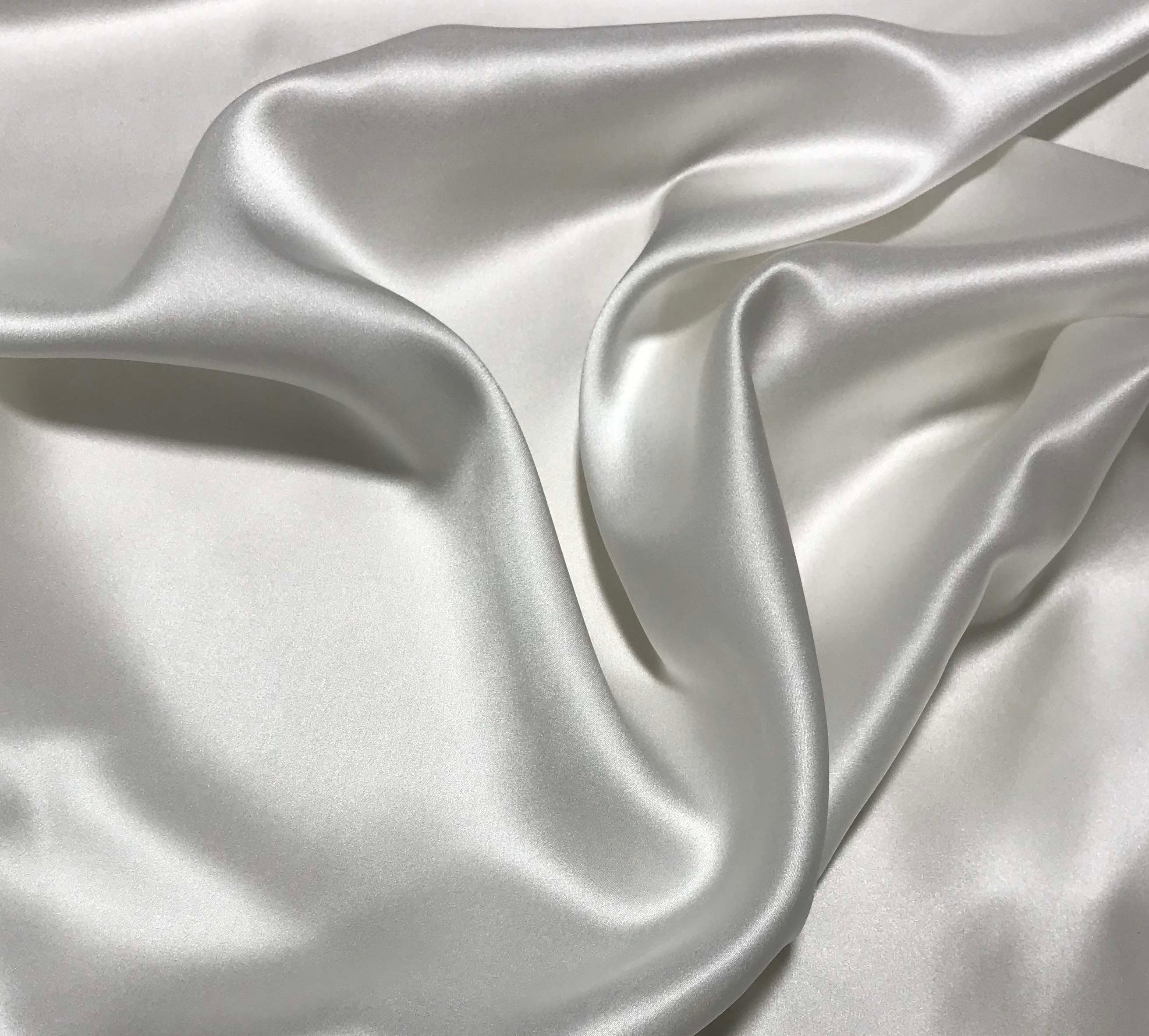
Silk charmeuse is commonly specified in momme, abbreviated mm.
One momme is approximately 4.34 grams per square meter.
| Silk weight | Approximate GSM |
|---|---|
| 16 momme | 69.4 GSM |
| 19 momme | 82.5 GSM |
| 22 momme | 95.5 GSM |
| 25 momme | 108.5 GSM |
Current 16-momme silk charmeuse can be found around 68 GSM and 137 cm wide.
As the momme rises, more silk is present in each square meter. A 22- or 25-momme charmeuse generally feels fuller in the hand and gives more coverage than a comparable 16-momme cloth.
The reverse often has a softer, slightly crepe-like character.
Duchess Satin Has Enough Body to Shape a Garment
Duchess satin sits at a very different weight.
Current polyester versions are sold around 180 GSM and 220 GSM, commonly near 150 cm wide. Stretch duchess can reach 240 GSM with 96% polyester and 4% elastane, and some commercial qualities sit around 250 GSM.
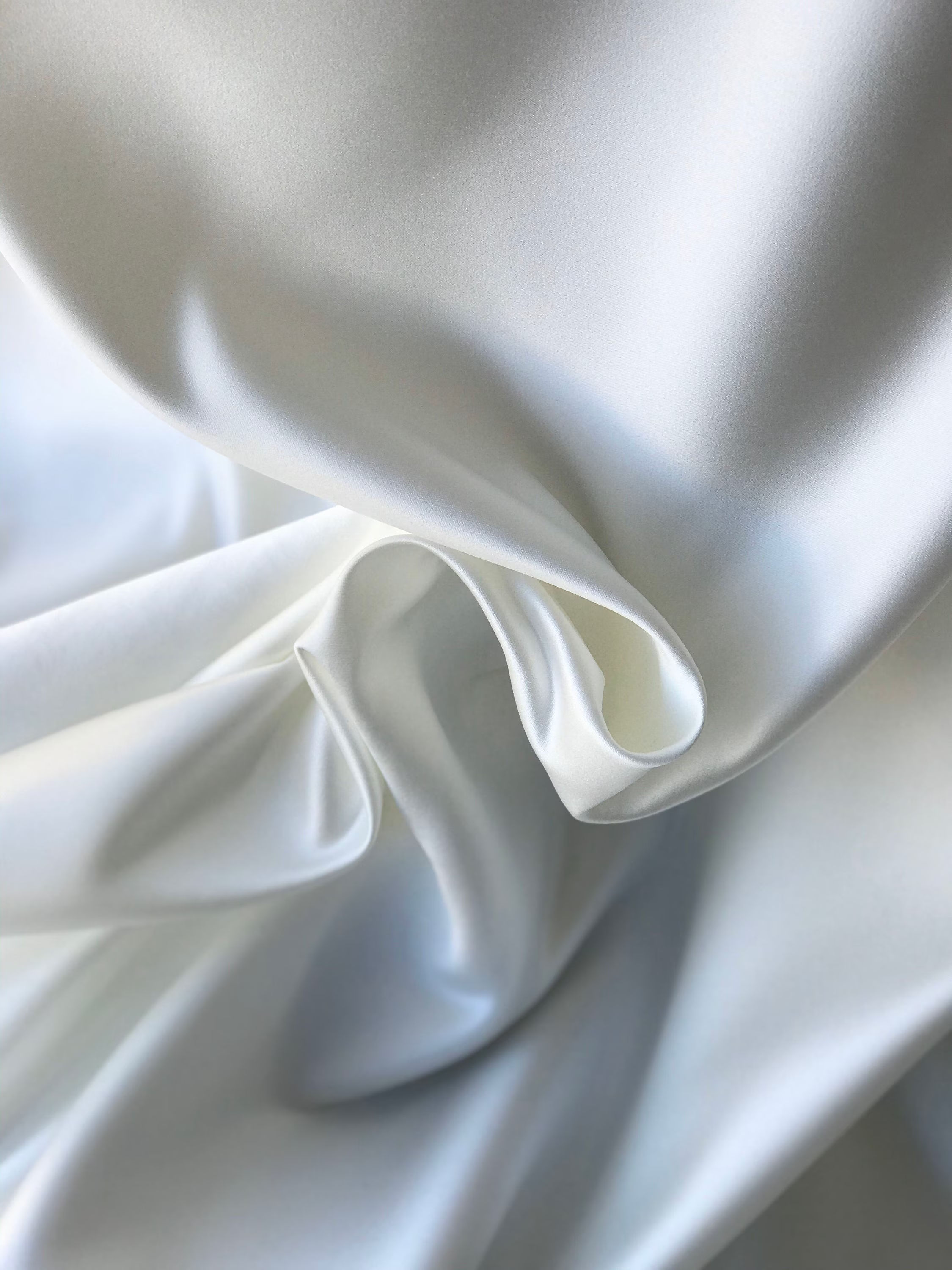
At 220 GSM, a deep fold remains broad after the fabric is released. A full skirt holds space around the body. Bridal and eveningwear use this body to create shape without relying entirely on internal support.
Weight also becomes obvious at construction points.
A waist seam can contain the satin shell, seam allowances, lining and interfacing. Pleats add more layers. A deep hem carries enough mass to affect how the lower edge hangs.
The satin surface is still present. The garment behaves nothing like lightweight charmeuse.
Crepe-Back Satin Sits Between Those Extremes
Polyester crepe-back satin is commonly available around 150–160 GSM with widths close to 150 cm.
The face is smooth and lustrous. The reverse has a granular crepe texture.
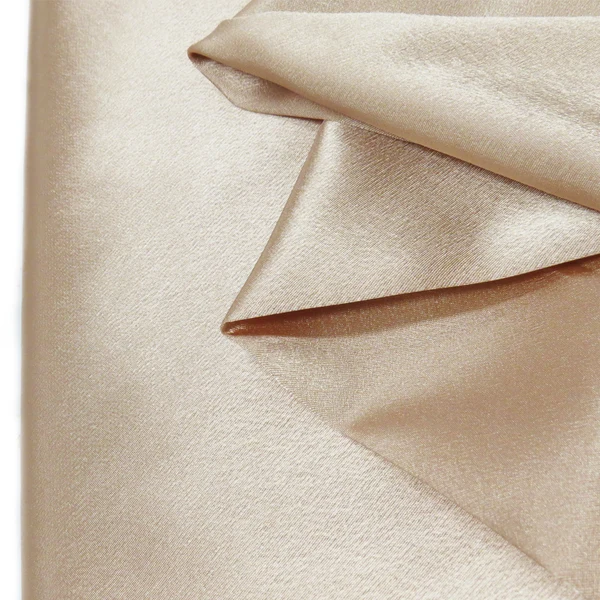
That reverse can become part of the design. Turned cuffs, scarf edges, draped necklines and unlined sections sometimes expose it naturally as the garment moves.
Stretch crepe-back satin is also available in the mid-150 GSM range with elastane incorporated into the yarn system.
Why Satin Feels Smooth
Run a fingertip across the face.
The skin stays in contact with long exposed sections of yarn before reaching another strong interlacing point.
Continuous-filament yarn makes that surface even smoother because very few fiber ends project from the yarn body.
This low-friction hand is one reason satin is widely used for linings. A satin-lined jacket sleeve moves easily over a shirt, sweater or bare arm.
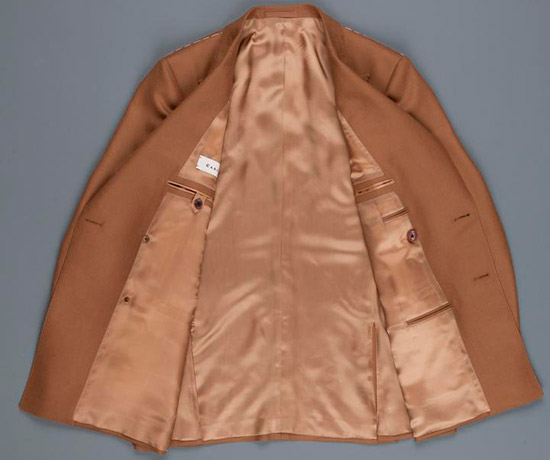
The amount of shine can be changed through finishing without removing that smooth surface. A muted satin can still slide easily across another layer of fabric.
Fiber Choice Changes the Way Satin Feels on the Body
A satin weave does not determine moisture behavior by itself.
Typical moisture-regain values under standard textile conditioning conditions are approximately:
| Fiber | Typical moisture regain |
|---|---|
| Silk | About 11% |
| Viscose rayon | About 11.5–15% |
| Cellulose acetate | About 5.4–6.5% |
| Polyester | About 0.2–0.8% |
Polyester absorbs very little atmospheric moisture into the fiber. A dense polyester satin worn close to the skin can feel clammy in hot conditions because perspiration remains close to the skin-fabric interface.
Low moisture content also encourages static. A skirt may cling to tights, lining can stick to the leg, and lint can collect on the surface.
Silk and viscose take up much more moisture. The finished comfort still depends on fabric density, GSM, lining and finishing.
Airflow through satin is a separate property. ASTM D737-18(2023) measures the rate of air passing through a defined fabric area under a controlled pressure difference. Dense yarn packing can reduce airflow even in a relatively light cloth.
Stretch Satin Needs an Actual Stretch Number
A composition line such as 97% polyester / 3% spandex does not tell the pattern maker how far the fabric will move.
Commercial satin using that same 97/3 ratio can be found around 90 GSM, 160 GSM and 175 GSM.
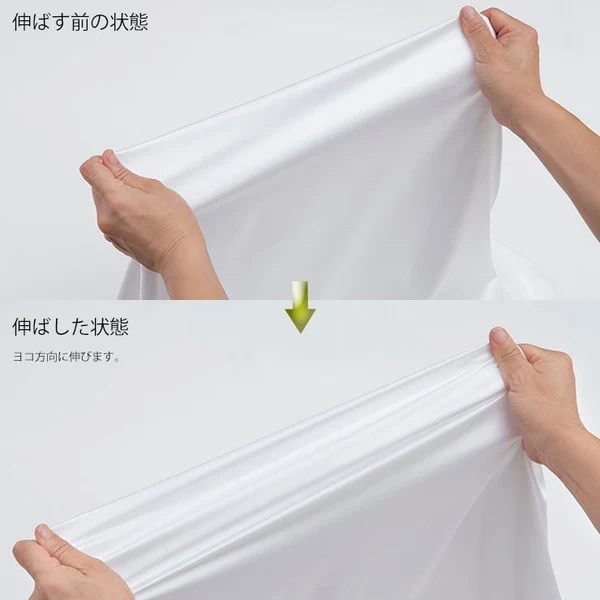
Take a 100 mm gauge across the filling direction.
If the marked distance reaches 118 mm under the chosen test condition, the fabric has:
18% stretch
After recovery, suppose the marks settle at 102 mm.
The residual growth is:
2%
That second number matters in a fitted garment. A skirt can feel fine during the first fitting and develop extra length around the seat after repeated sitting if recovery is poor.
ASTM D3107-26 covers stretch, growth and recovery in woven fabrics containing stretch yarns. The method includes tension options of 1.35 kg / 3 lb and 1.8 kg / 4 lb.
A usable stretch result records the direction and test condition beside the percentage.
Bias Movement Comes From the Woven Grid
Satin does not need elastane to move around the body.
Take a square of woven satin and pull it diagonally at roughly 45 degrees to the warp and filling directions. The yarn grid rotates. The square lengthens and narrows.
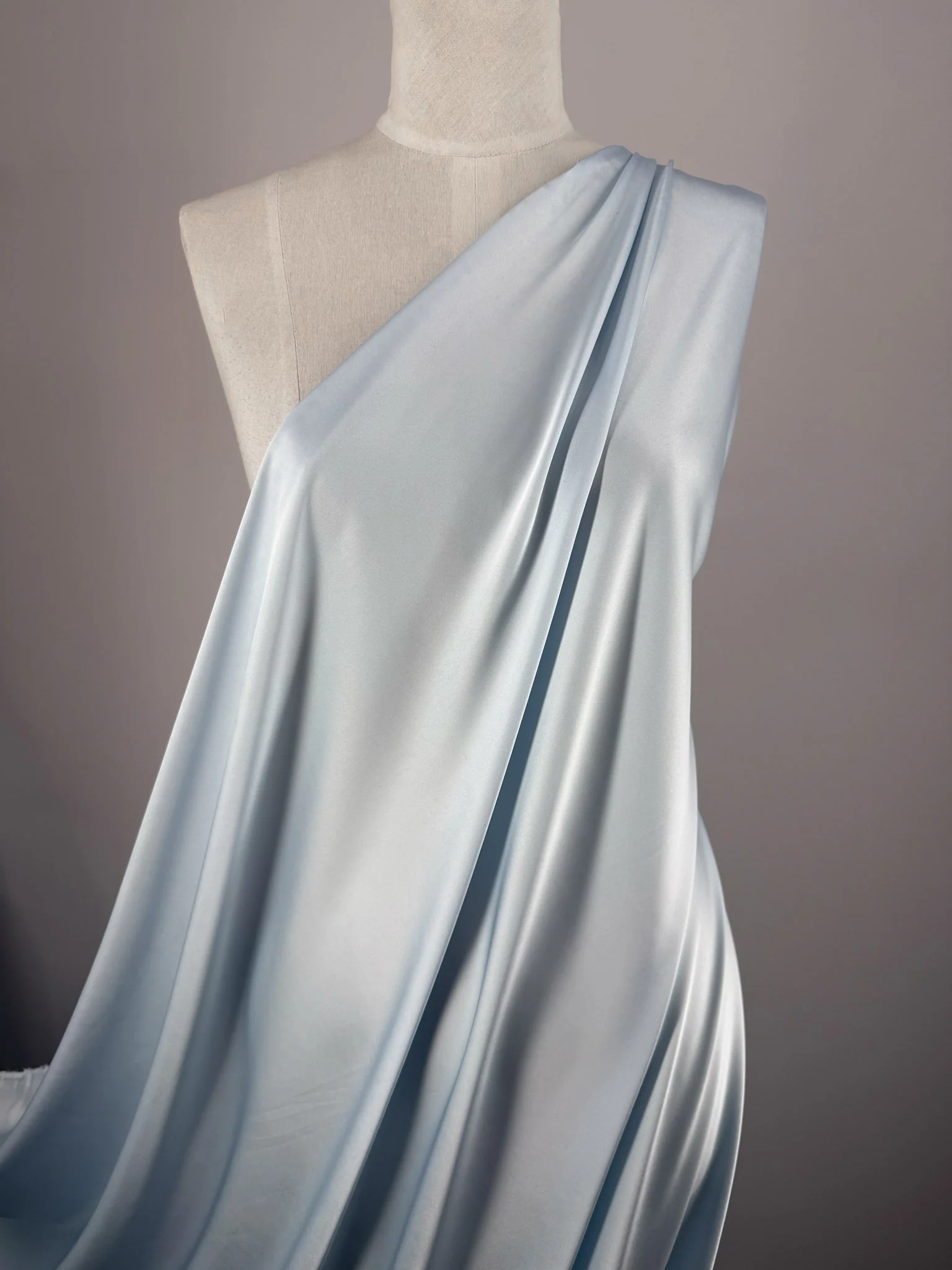
That movement is what gives bias-cut satin dresses their fluid fit.
A long skirt panel continues settling after it has been cut. Gravity slowly redistributes the yarn angles, and the length can change before the garment is hemmed.
For a bias dress, a full-size panel can be marked, hung vertically and measured again after the development room's chosen settling period.
Snags Show Up Quickly on a Smooth Face
A small disturbance can become surprisingly visible on satin.
A rough zipper component or damaged pin catches one surface float. The yarn shifts slightly. Under angled light, that displaced filament may appear as a narrow bright line.
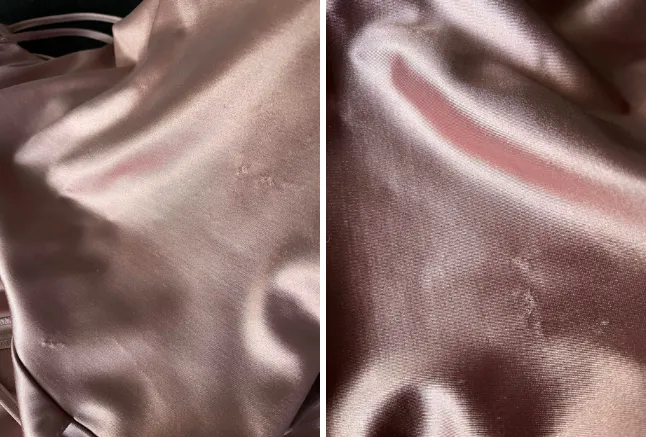
Dark satin makes the effect particularly obvious.
ASTM D3939/D3939M-26 is the current Mace test used for snagging evaluation in many woven and knitted fabrics. It is useful for comparing candidate materials under the same conditions.
Care history matters too. Washing or dry cleaning can change the way a particular satin responds, so development teams sometimes compare the same fabric before and after its intended care process.
Raw Edges Can Lose Yarn Fast
Freshly cut satin no longer has the original woven structure holding the outermost yarns in place.
Light filament satin can begin fraying during ordinary handling.
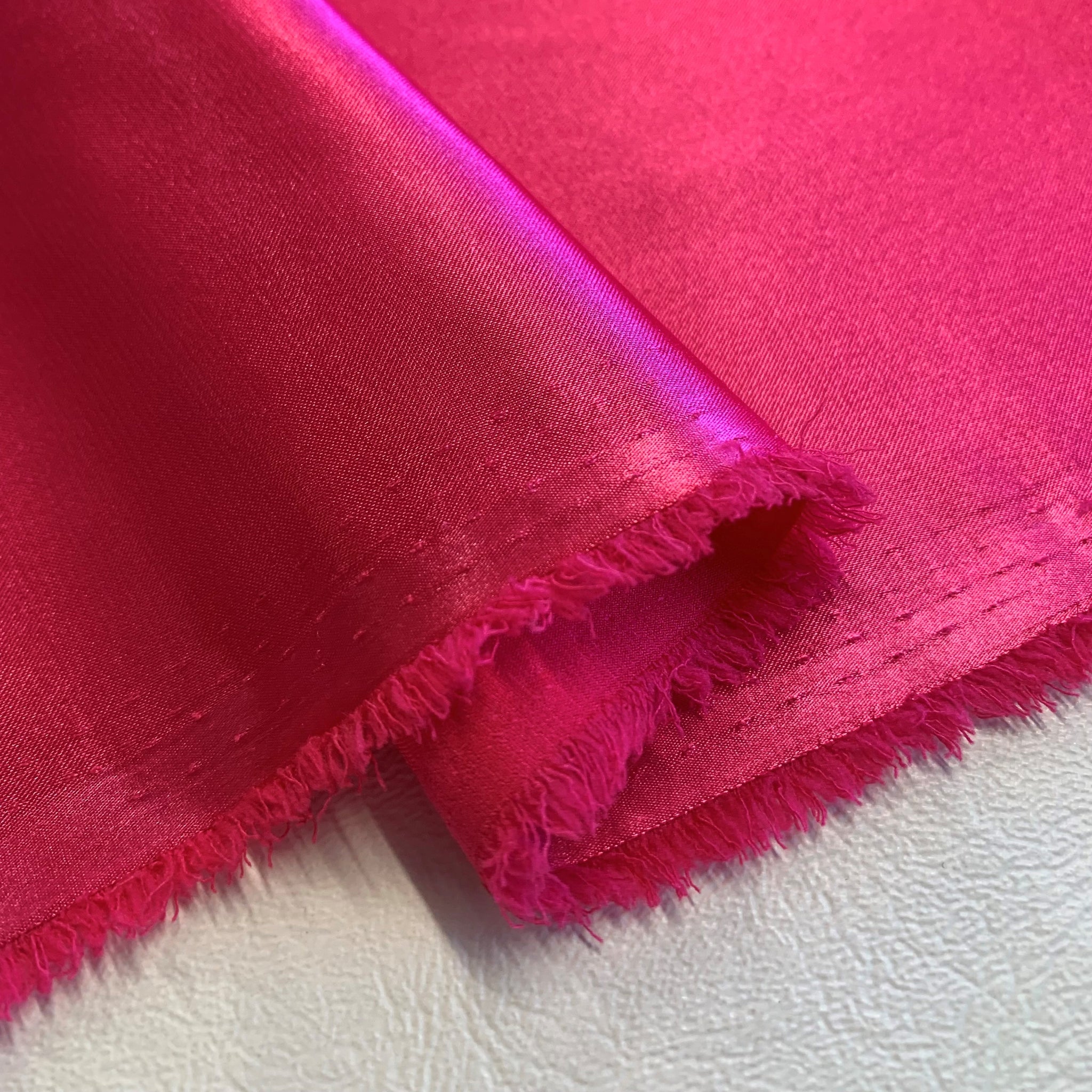
A simple internal comparison can use a 100 mm cut edge with a reference line placed 10 mm from the cut. Each candidate swatch receives the same written handling sequence.
If the deepest yarn loss reaches 4 mm, only 6 mm remains before the reference line at that location.
That makes the effect on seam allowance easy to see.
A lightweight garment may use French seams to enclose the raw edge. Overlocking and binding are common on other satin constructions.
Needle Choice Depends on the Actual Fabric
Light silk charmeuse is commonly sampled with 60/8 or 70/10 Microtex or sharp needles.
A straight stitch around 2.0–2.5 mm gives a useful starting point.
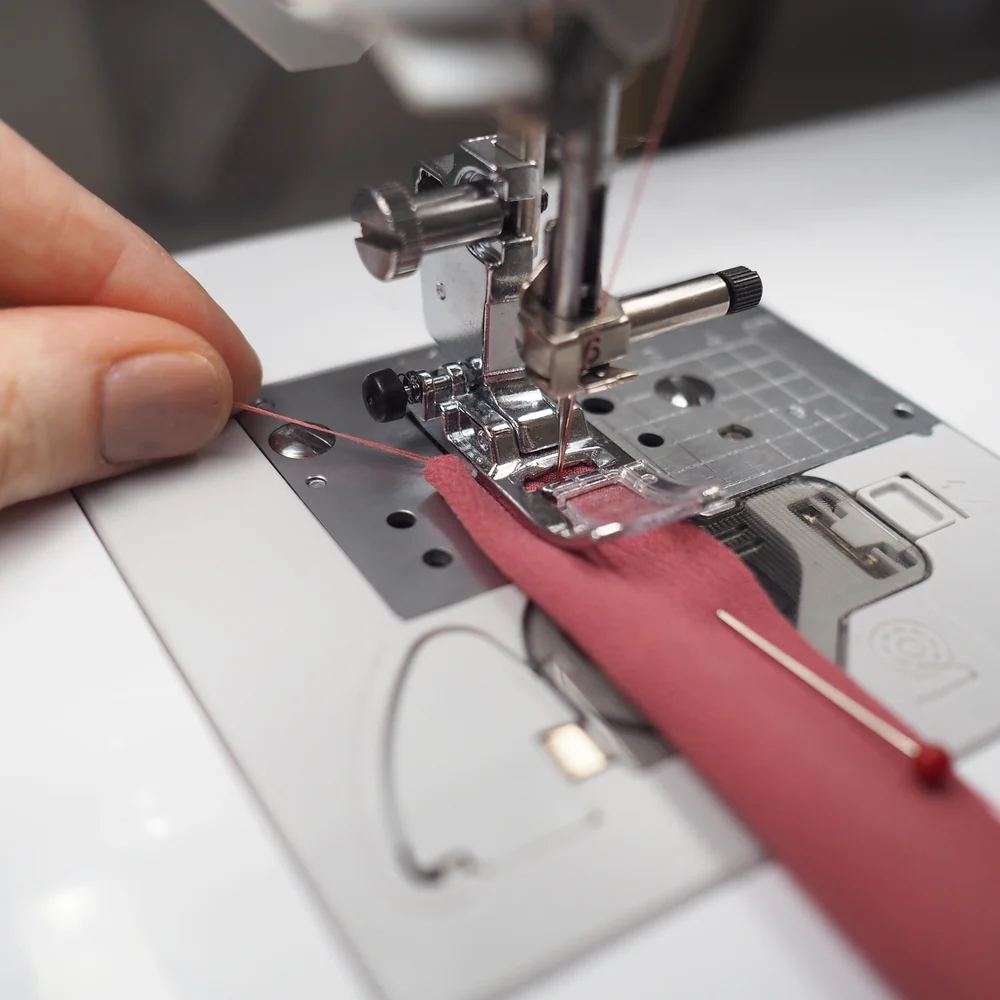
Medium-weight silk and crepe satin often move into the 70/10 to 80/12 range.
Heavy duchess satin may also begin around 70/10 or 80/12, depending on the thickness of the seam.
A real production seam can contain satin, lining, interfacing and folded allowances at the same location. Testing that full stack gives a more useful result than sewing one isolated layer.
Seam Slippage Happens Beside the Stitches
Put a fitted satin seam under lateral load and watch the fabric immediately beside the thread.
The yarns can begin moving away from the seam. A narrow opening develops even though the stitch line remains intact.
This is seam slippage.
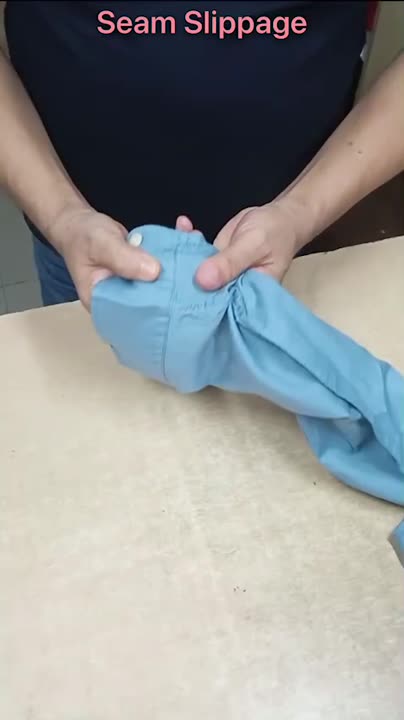
Long satin floats leave fewer interlacing points holding the yarn system in position, and smooth filament yarns can move easily under stress.
ISO 13936-1:2004, confirmed by ISO in 2023, measures resistance to yarn slippage at a sewn seam using a fixed seam-opening procedure.
ASTM D1683/D1683M-22 is another woven-apparel seam test used to examine failure around sewn seams.
A buyer may set a limit such as 6 mm maximum seam opening under an agreed load. That value only becomes meaningful once the test method, seam construction and fabric direction are written into the requirement.
Fitted hip seams deserve particular attention because that area is repeatedly loaded during walking and sitting.
Puckering Has to Be Diagnosed From the Seam
A wavy satin seam can come from several different mechanisms.
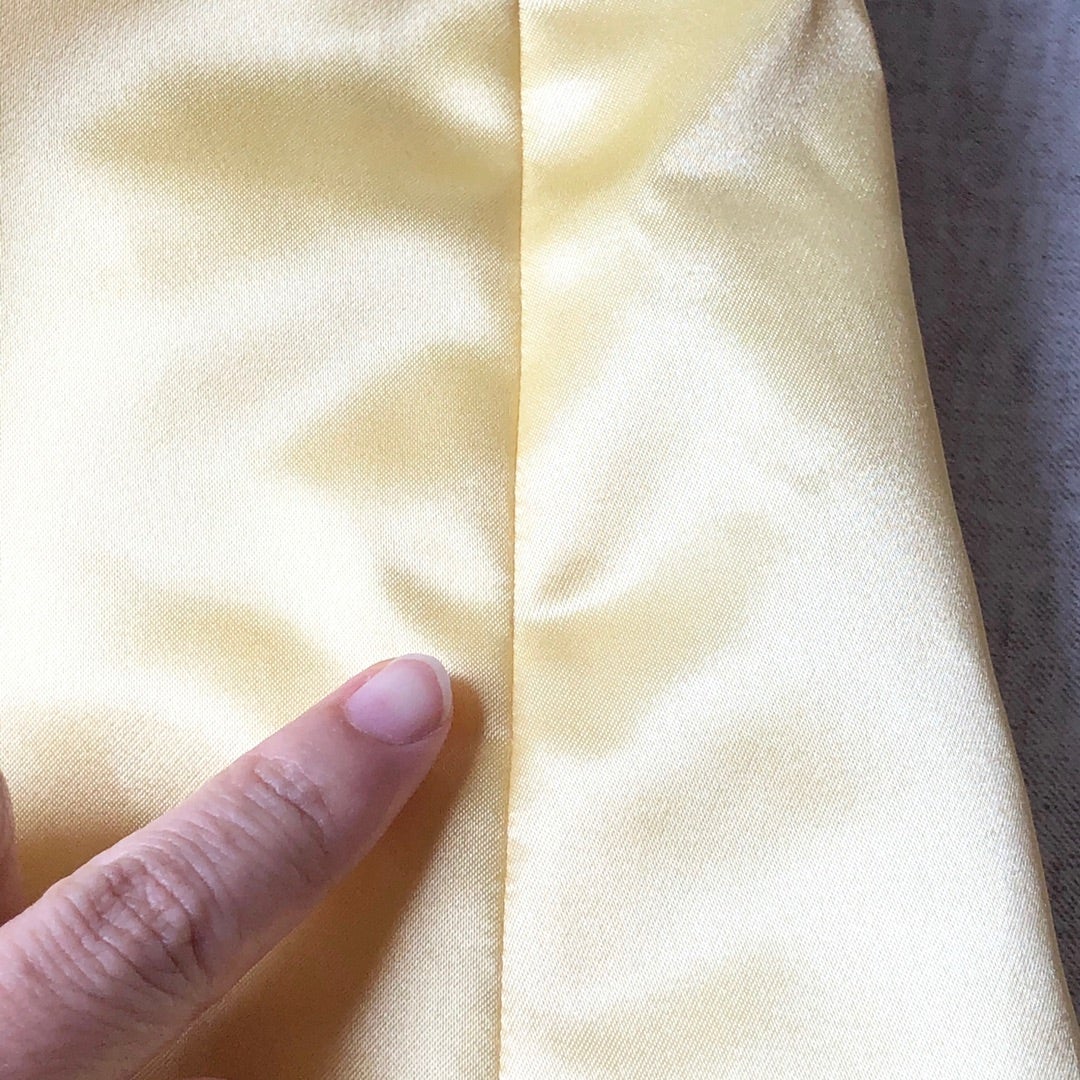
If cutting a short section of sewing thread allows the ripples to relax, thread tension is involved.
On a dense satin, the needle and sewing thread can displace the woven yarns around each stitch. Finer thread, a finer needle or lower stitch density may reduce that structural jamming.
Feed problems leave another clue. Remove the stitches from a measured section and compare the free lengths of the two fabric plies. Extra length in one layer shows how much differential feeding entered the seam.
Some puckering appears only after laundering because one component has changed size. Fabric, sewing thread, lining, tape and interfacing can all contribute.
Pressing Needs a Test on the Finished Satin
Published safe-ironing reference temperatures for common fibers include approximately:
| Fiber | Reference temperature |
|---|---|
| Silk | 149°C / 300°F |
| Polyester PET | 163°C / 325°F |
| Acetate | 177°C / 350°F |
| Spandex | 149°C / 300°F |
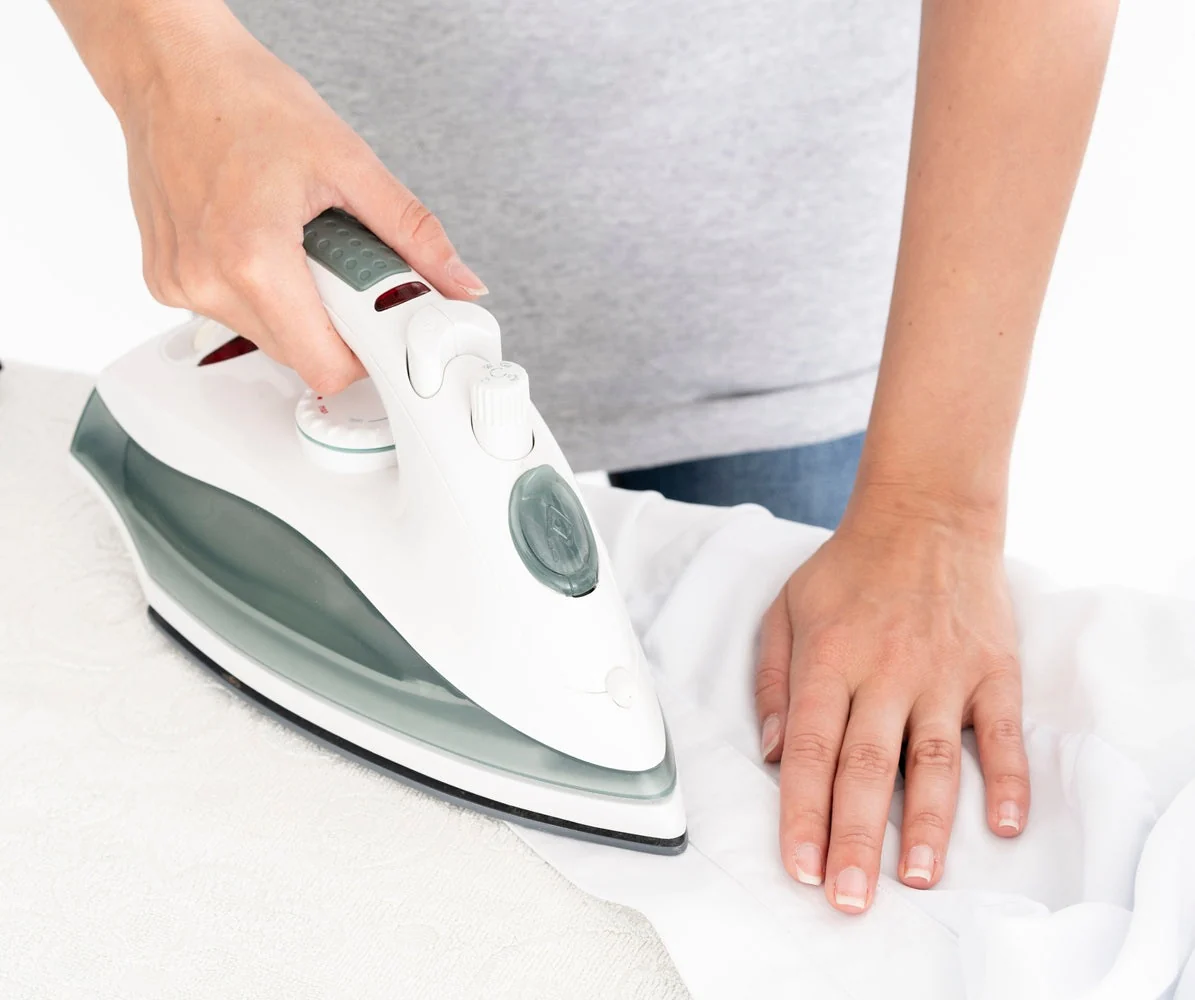
The finished fabric may contain dye, elastane, fusible materials or surface finishes that change its heat response.
A pressing trial records temperature, contact time, pressure, moisture condition and press-cloth use on the actual bulk fabric.
AATCC TM133 is used to evaluate colorfastness to hot pressing under dry, damp and wet conditions.
Once the specimen has cooled, turning it under side light reveals glazing, flattening and seam impressions that can disappear when viewed straight on.
Water Can Leave a Visible Mark
A drop of water may dry into a ring or dull patch on some satin surfaces.
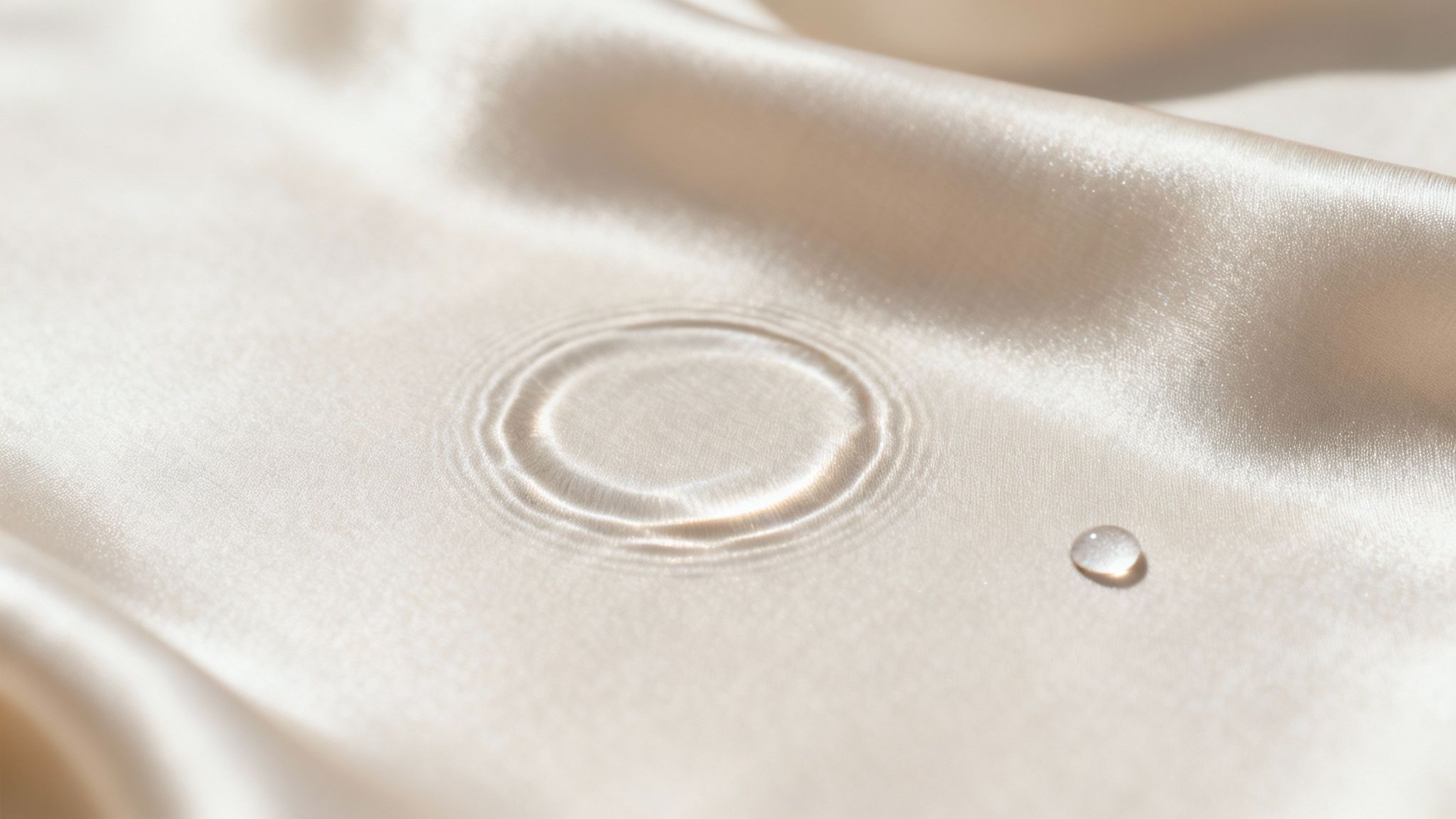
AATCC TM104-2025 evaluates resistance to water spotting on colored textiles and can also reveal visible changes on white material.
High-luster cloth makes a small local disturbance easy to notice because the affected area reflects light differently.
This matters for silk formalwear, dark satin and other garments that are likely to be steamed, spot-cleaned or handled during finishing.
Shrinkage Has to Be Recorded by Direction
Suppose a marked warp length starts at 500 mm.
After the selected laundering procedure, it measures 490 mm.
The change is −2.0%.
A separate filling-direction gauge might finish at 497 mm from the same 500 mm starting length, giving −0.6%.
AATCC TM135-2025 measures length and width changes in fabrics after home laundering. The method provides several washing temperatures, agitation cycles and drying procedures.
The exact laundering condition belongs with the reported result.
Rayon satin needs close wet-dimensional control because viscose absorbs substantial moisture. Silk also responds strongly to wet treatment depending on construction and finishing. Polyester usually has low moisture absorption, with heat setting and previous processing influencing its final stability.
Satin Color Changes With the Angle of the Cloth
Black satin makes this easy to see.
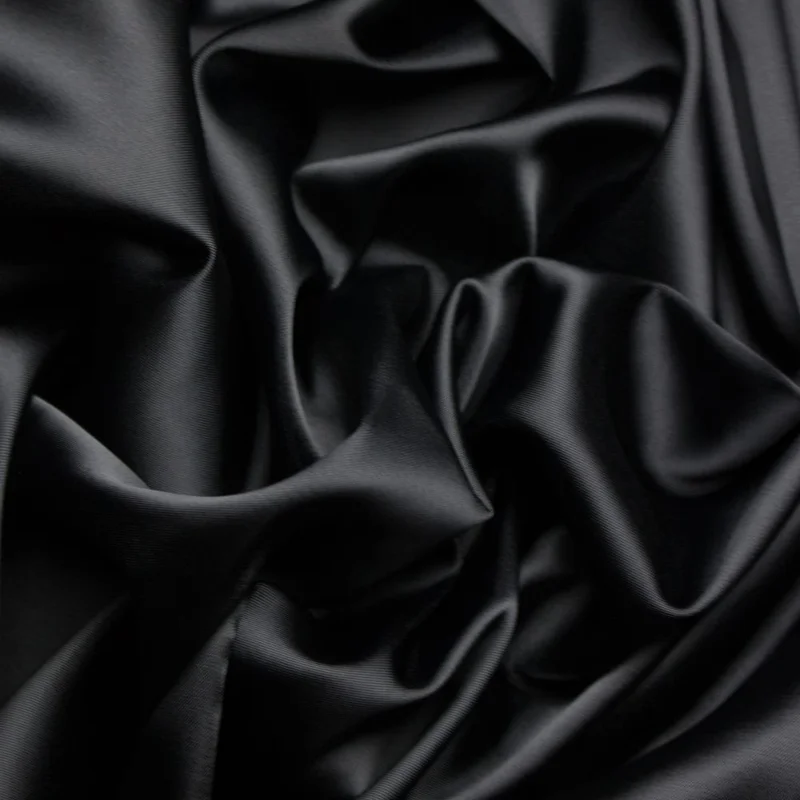
Curve one section toward the light and a bright gray band appears.
A deep fold in the same fabric looks much darker.
The difference comes from reflected light reaching the eye at another angle.
For color approval, a larger swatch gives a better view of this behavior than a tiny flat cutting. It can be folded and draped under the chosen light source.
Dye-lot differences also become easier to see after adjacent panels are sewn into one reflective garment surface.
What to Check on the Actual Swatch
A satin selected for a fitted dress can be evaluated directly through the garment it is meant to become.
Start with the physical roll information: composition, GSM or momme, usable width and available yarn specification.
Hang the fabric to see how the folds form. Place it over the intended lining or underwear color if opacity matters. Check the surface under side light for irregular shine and existing snags.
Stretch is measured in the direction the pattern will use. Bias garments need a full-length hanging sample because the panel itself can continue settling.
Sew the actual side-seam construction with the production needle and thread. A longer seam makes feed puckering easier to see. Load the seam in the direction expected around the hip and watch the yarns beside the stitches.
A fresh cut edge shows how quickly seam allowance starts disappearing during handling.
The pressing sample records the chosen temperature and contact time.
Marked laundering specimens keep their original measurement points so length and width changes can be calculated after care.
At that point the team has data from the exact satin that will be cut into the garment.