Making a complex reference work: Camo Raglan Long-Sleeve Graphic Tee
This long sleeve combined camouflage sleeves with lime accents, a light body, an oversized green graphic and a distressed hem. The sleeve cut and artwork scale were developed around the body’s proportions so the design would look balanced on the finished garment.
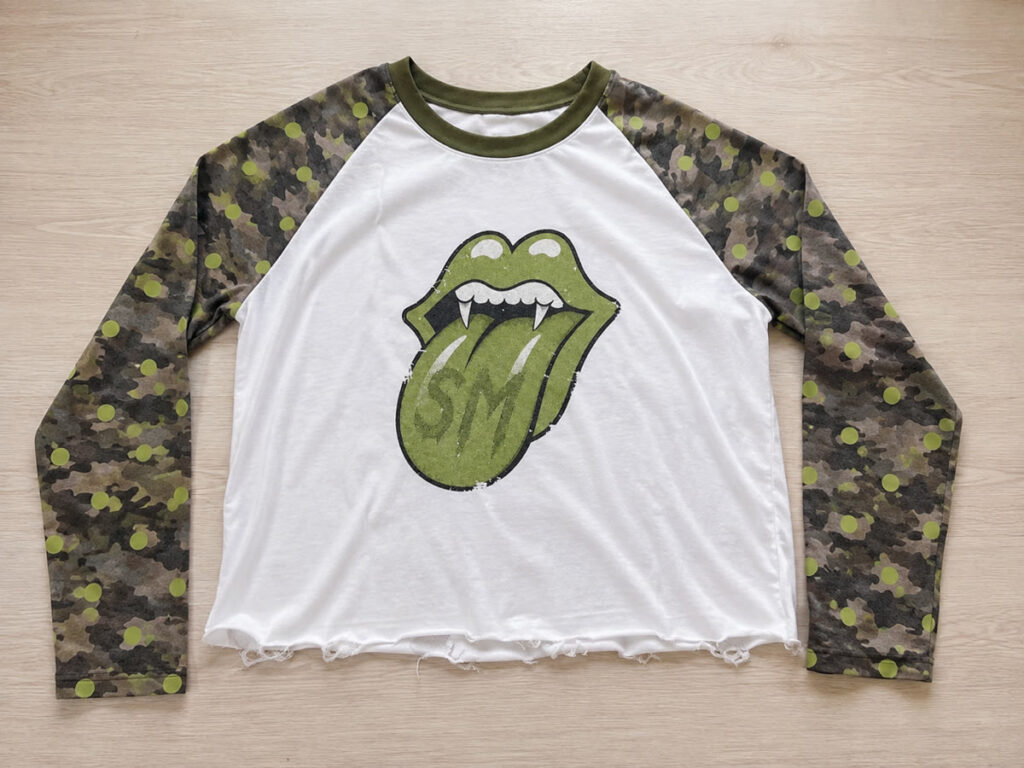
The seams change how the design reads
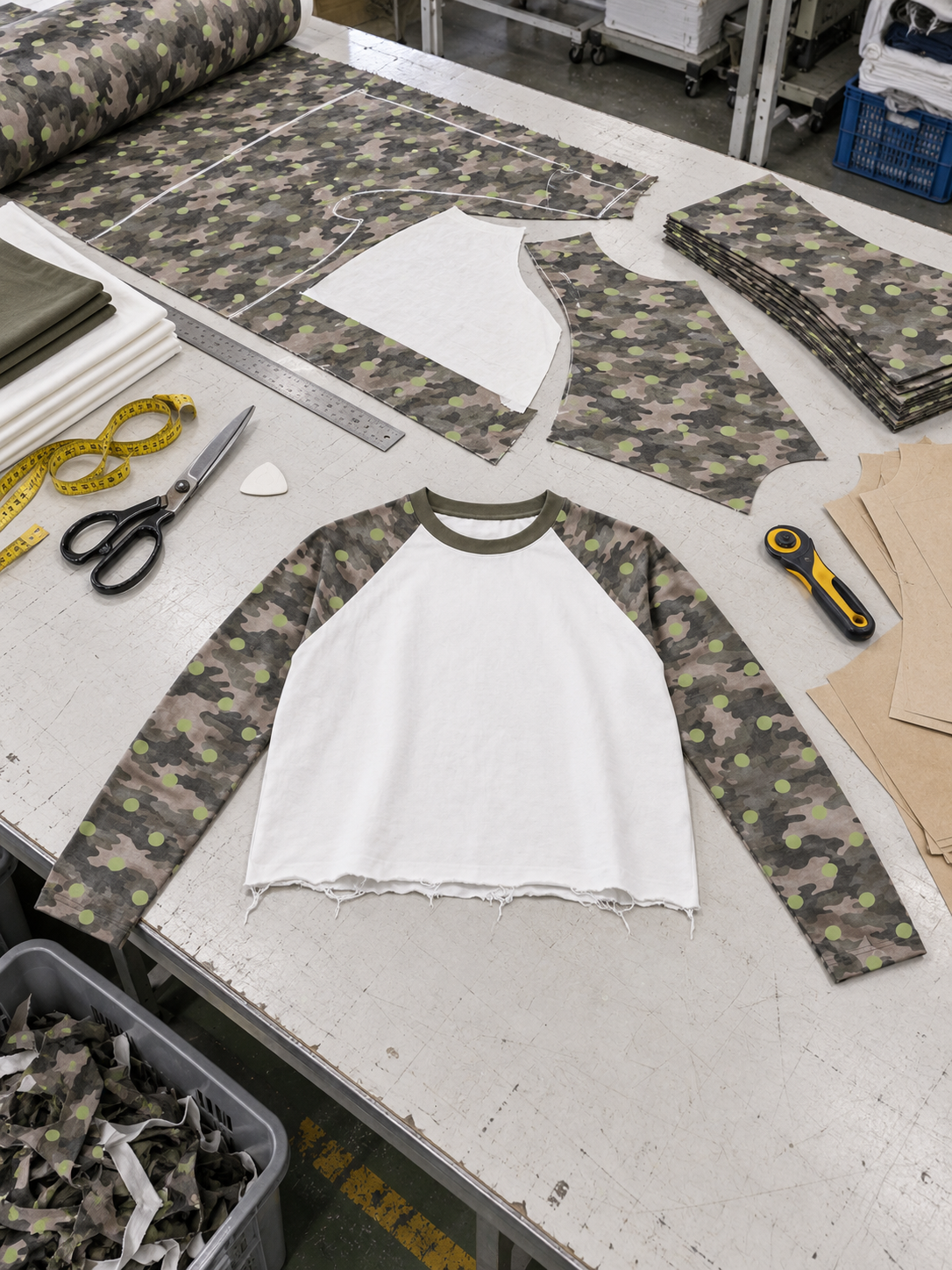
Raglan seams ran toward the neckline, so the sleeve pattern sat close to the front graphic. The sleeve cut determined how much of the camouflage pattern visible in a fabric swatch appeared across the shoulders. Sleeve coverage and body width then defined the light area around the artwork.
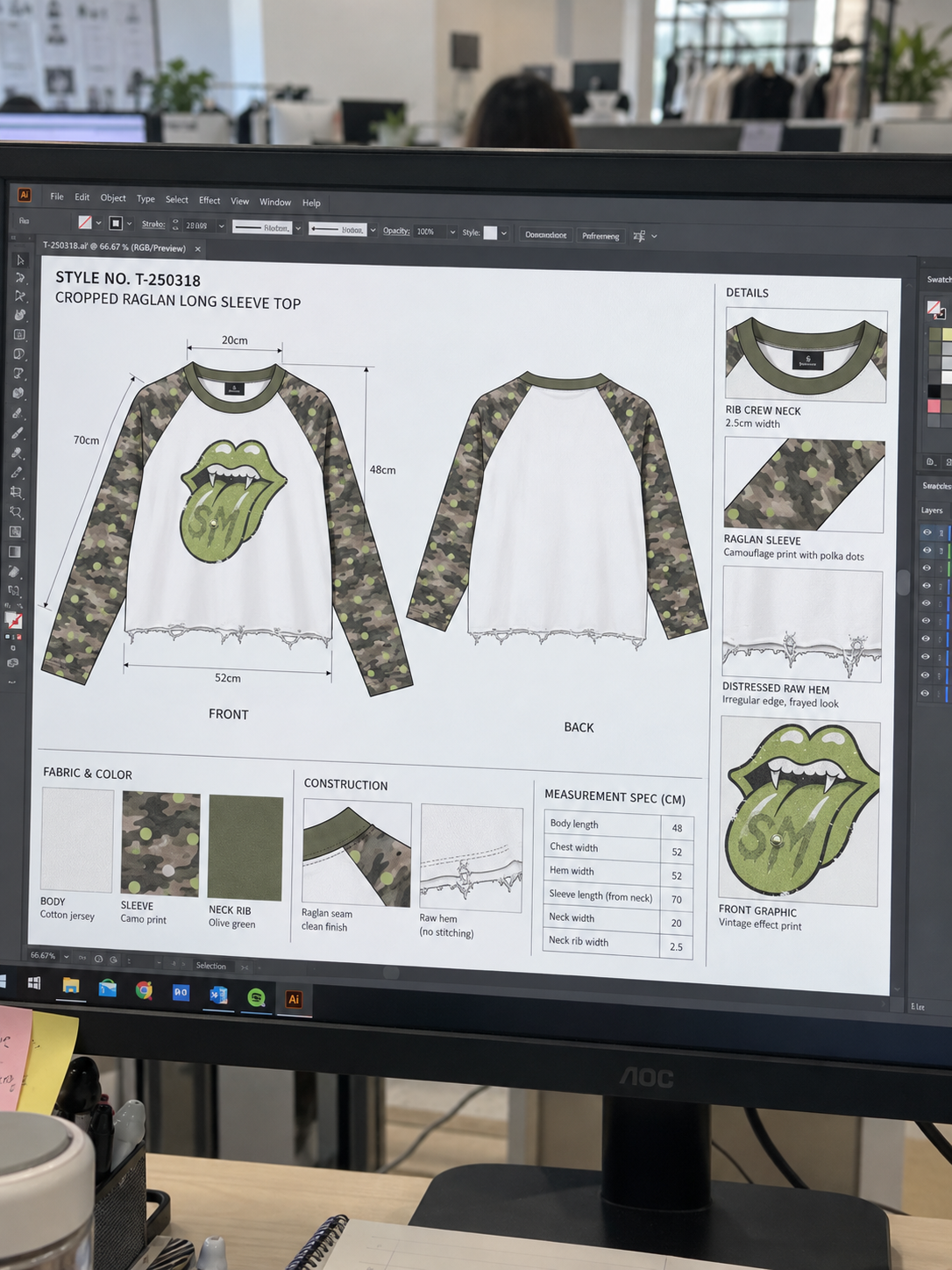
The development drawing specified a 48 cm body length and a 52 cm chest width. On the assembled top, the graphic’s scale could be judged against the cropped body and the camouflage coverage on both sides. This showed the proportions of the full design beyond the pattern visible in a fabric swatch.
Coordinate material and artwork decisions
The supplied reference showed a light body with camouflage sleeves. Workshop footage recorded the camouflage fabric being pressed and the front artwork being screen-printed.
Fashionme coordinated the fabric specifications and graphic placement around the same cropped raglan silhouette. The development sheet listed cotton jersey for the body and olive-green rib for the neckline alongside the front-and-back drawings. The sleeve-cutting plan called for pairing the panels before cutting to check the camouflage direction and the distribution of lime dots across both sleeves.
Design communication
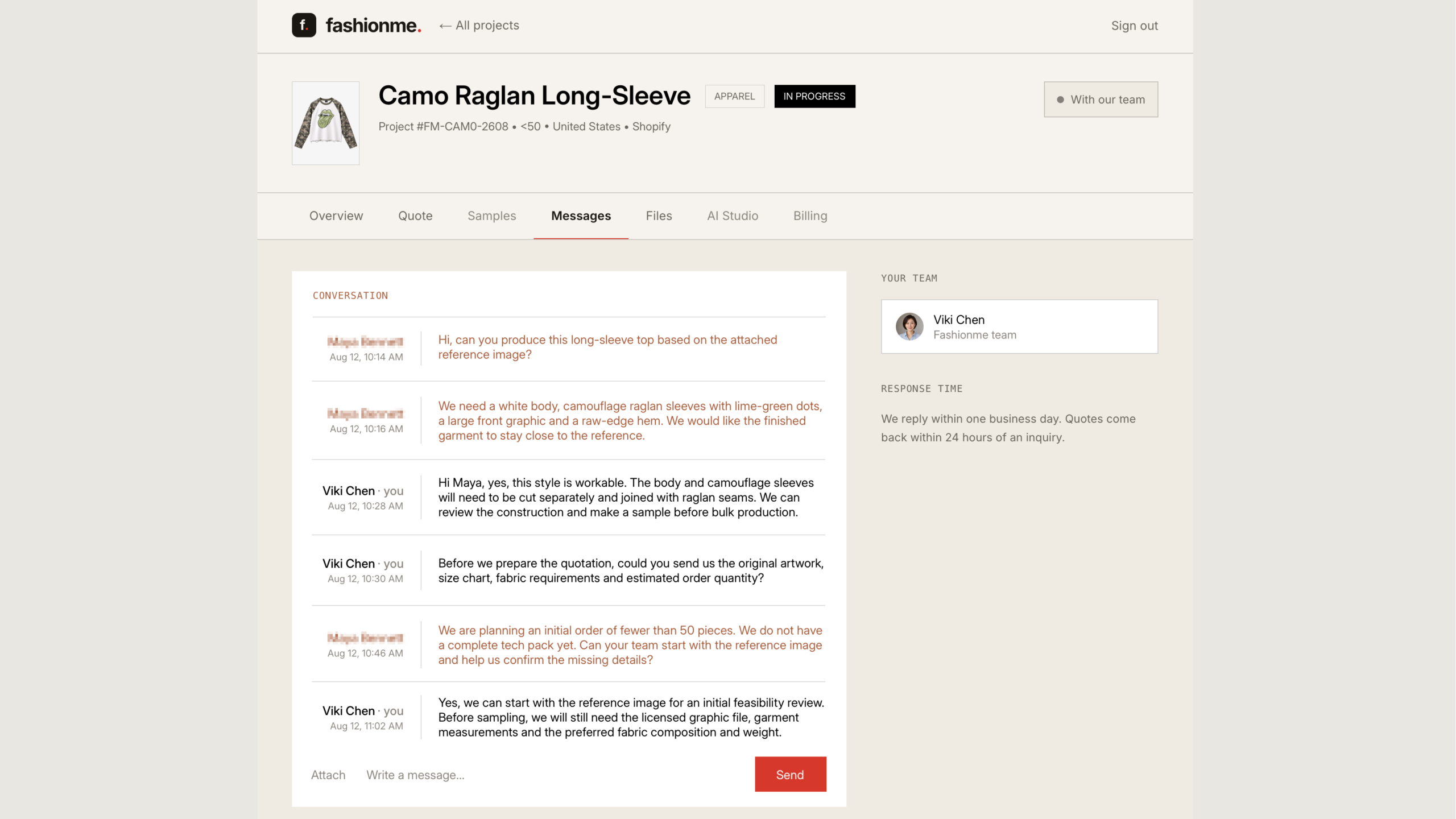
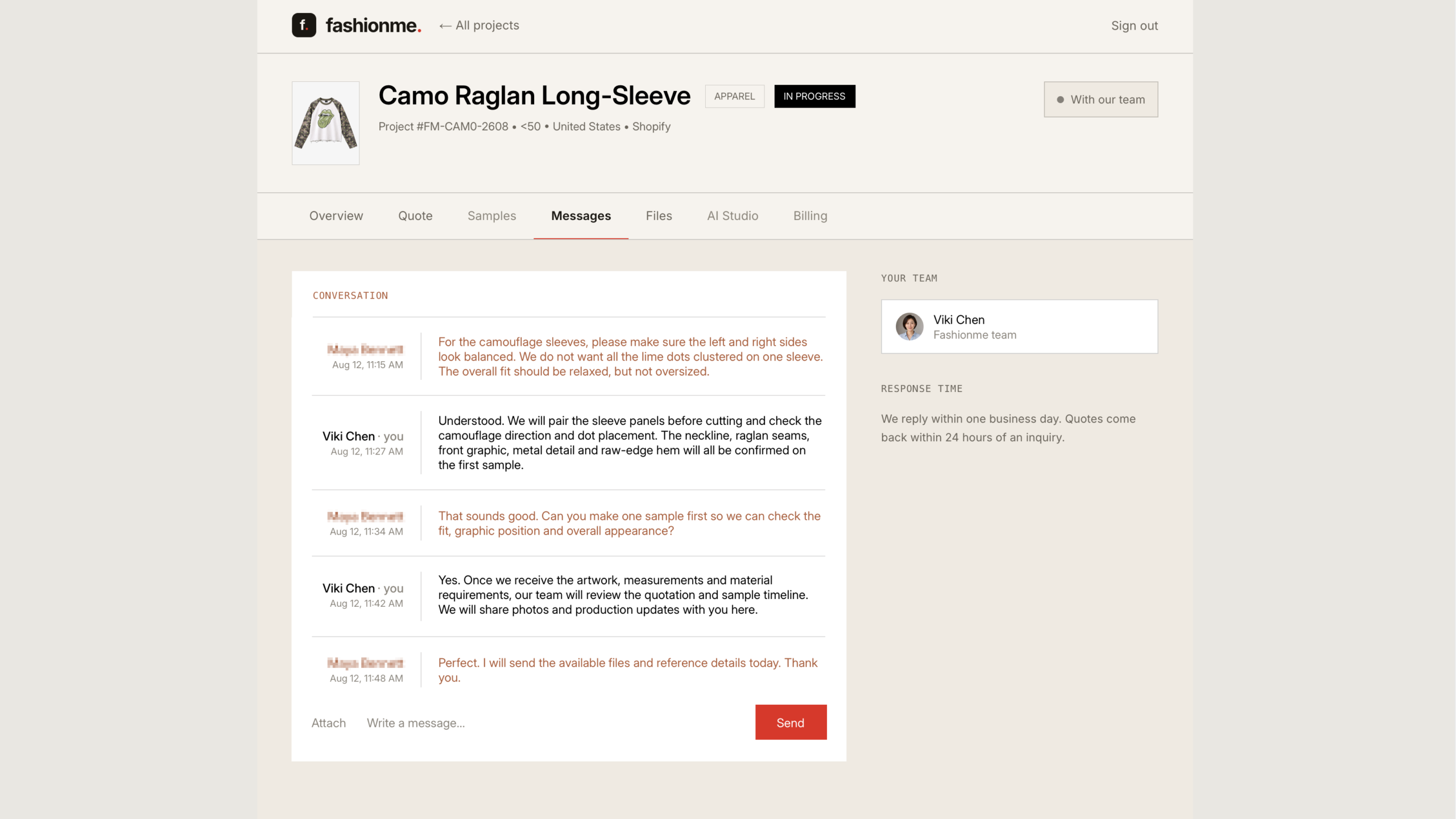
Design development
Keep development footage distinct from the final color
The print-development clip included an intermediate blue version of the front artwork. The finished garment used green. The final color combination was visible in the garment footage, where the front graphic sat beside the lime accents and camouflage sleeves.
Check the complete visual balance
The finished-garment video showed the raglan construction, green front graphic and distressed lower edge in one view. The sleeve coverage and print size could be compared with the body width, including how much of the light front panel the graphic occupied.
The finished top retained the reference’s main design features through material and print development. A brand starting from an image could review their scale and placement on the complete garment, comparing the sleeves, body and artwork with the original reference.
Your reference could be next
Send your reference and tell us which details define the design. We’ll help identify the material, placement and construction decisions behind them.
Discuss your product with Fashionme or explore more case studies.
Project scope: product development and finished-garment review. Photos and clips document selected stages; they do not establish bulk-delivery results or certified performance tests.