Private Label and Other Clothing Manufacturing Models
Eight arrangements One piece minimum on a blank $9.07 on a Gildan 64000 Three years of records
Private label clothing is a garment cut on a factory's own pattern and sold under your name. The style is in production before you arrive. Your part is the fabric weight, the color, the neck and cuff construction, and the labels.
The models run from supplying artwork alone up to owning the spinning frames.
What Private Label Clothing Means
Private label runs on a base garment the factory already produces. The factory has cut it before and knows how the cloth behaves through it. That single fact sets the minimum order, the sampling time and the price per unit.
Retailers running the same arrangement at scale call it owned brands. Target keeps more than 45 of them, Cat & Jack among them in kids' apparel. The neck label on one of those carries Target's name.
The name gets stuck on three other things as well.
The shirt itself never changes under white label. Only the ink is yours.
Under cut and sew you pay for the block and keep it.
A licensing deal moves a royalty to whoever owns the name on the label.
Who Supplies What
CMT and FOB sit inside cut and sew here.
| Model | Pattern | Materials | Minimum | Name on the neck | Who certifies |
|---|---|---|---|---|---|
| White label | Mill's | Mill's | One piece | Mill's, until you relabel | You, once you decorate it |
| Print on demand | Blank supplier's | Blank supplier's | One piece | Yours, on an added inside label | The shop that prints it |
| Private label | Factory's | Factory's | Dozens to low hundreds | Yours | You, as importer |
| ODM | Factory's | Factory's | Whatever the factory has set | Yours | You, as importer |
| Cut and sew, quoted FOB | Yours | Factory sources them | A fresh dye lot | Yours | You, as importer |
| Cut and sew, quoted CMT | Yours | Yours | A fresh dye lot | Yours | You, as importer |
| Licensing | Licensee's | Licensee's | Whatever the licensee has set | Licensor's | The licensee |
| Owning the factory | Yours | Yours | Your own line | Yours | You, as manufacturer |
Read down the last column. Six of the eight rows still leave the certificates with you.
What You Can Change and What You Cannot
The development sample shows up as the factory's shirt. A private label program hands you everything a sewing line can vary without redrawing it.
- Fabric weight. A 180 gsm jersey and a 240 gsm jersey run through the same pattern. The 240 stands off the shoulder.
- Color. Whatever the mill already has dyed. Before bulk runs, the factory sends a lab dip, a swatch of your actual cloth in the shade you picked. Approve it under the light the garment will hang in. A shade that matches in daylight can go off under a store's ceiling.
- Neck and cuff construction. Rib depth in fractions of an inch, whether a tape runs across the back neck, single or double needle at the hem. The tape is a strip of woven binding sewn over the shoulder-to-shoulder seam. It takes the load when the collar goes over a head. That load pulls an untaped neck opening out of round.
- Labels. Woven main label, size label, care label, hang tag. On a damask label the letters are woven in. That weave leaves a texture the wearer feels at the back of the neck. Brands that want nothing there at all print the size straight onto the fabric instead.
- Packaging. Polybag, tissue, folding, carton marks. The size sticker goes on the outside of the bag. A warehouse picks an order off that sticker without opening anything. How the garment is folded decides how many go in a carton. Freight gets charged on the space those cartons take up.
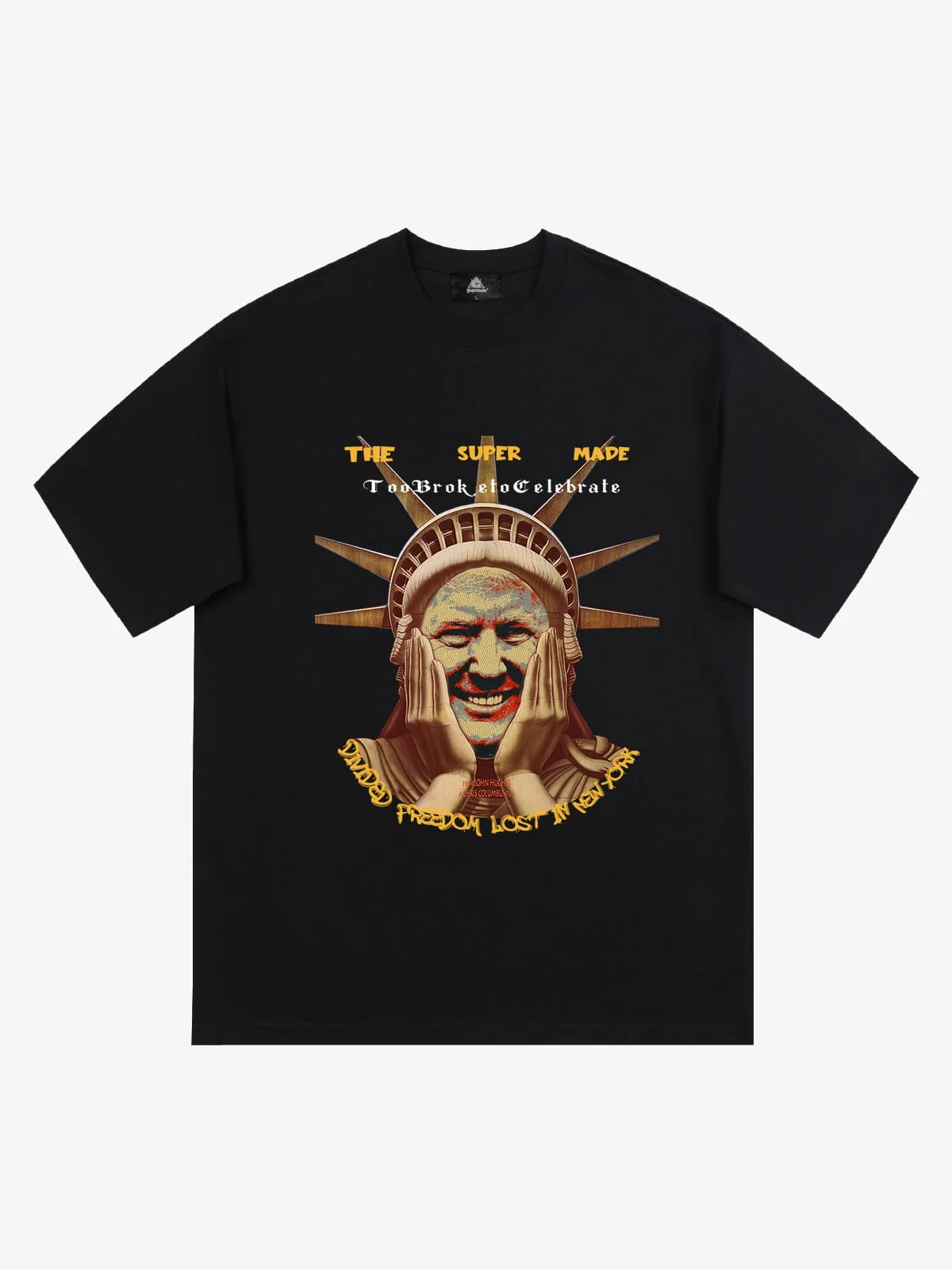
The block stays with the factory. Shoulder slope, armhole depth, the ratio of body length to chest width, the pitch the sleeve is set at. They decide why two boxy cotton tees at the same 240 gsm sit differently on the same body.
Whose Name Goes on the Label
Pick up a shirt you own and turn it inside out.
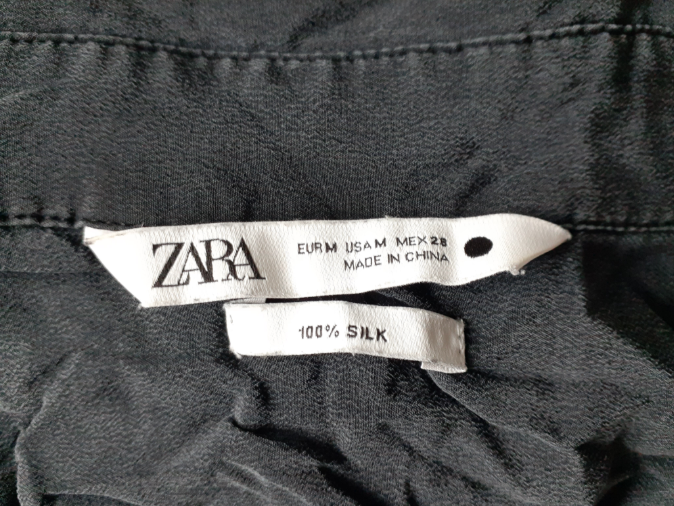
Find the label at the back of the neck. Federal rules enforced by the FTC require three pieces of information on most clothing. Fiber content. Country of origin. The identity of the manufacturer, importer, or other firm handling the product.
Read that third one. It is either a company name or a number beginning with the letters RN.
Type the number into the FTC's RN database. The result does not have to match the name on the front of the shirt.
RNs go only to firms based in the United States. A mill in Ningbo or a sewing floor in Dhaka cannot hold one, so on an imported garment the number belongs to the importer, the wholesaler, or the retailer, and the store that ends up selling the shirt can have its own name there as long as it has agreed to it.
Country of origin has to sit on the front of a label at the inside center of the neck. Fiber content and the company identity can go on the back of the same label.
A processor or finisher working under contract to a manufacturer is exempt from the labeling requirements. That exemption depends on sticking to the fiber content the contract names.
The FTC's 2013 enforcement policy statement says it will not pursue retailers who cannot legally obtain a guaranty, who do not embellish the manufacturer's claims, and who do not market the goods as private label products.
Where the Minimum Order Comes From
A United States private label factory quotes its minimum somewhere between a few dozen and a few hundred pieces per style. Your own pattern raises that figure.
Factories quote it per style and per colorway. The dye house sets the one that binds. Fabric is dyed in lots, and a lot run at a fraction of the vat's volume comes back with the shade drifting across the batch, which is why mills quote a minimum of their own in meters or kilos per color and hand it to the factory to pass on to you unchanged.
Private label cloth is dyed and paid for against an order another buyer placed.
Ask for the mill minimum and the dye lot size in the same conversation as the factory minimum. A custom Pantone hands you the mill's minimum instead. Now the mill has to run enough cloth to fill a vat.
Which country you quote in moves the floor as well. The United States Fashion Industry Association surveys 30 leading American fashion companies every year. Its 2026 study records buyers rating Chinese suppliers highest on minimum order quantity requirements.
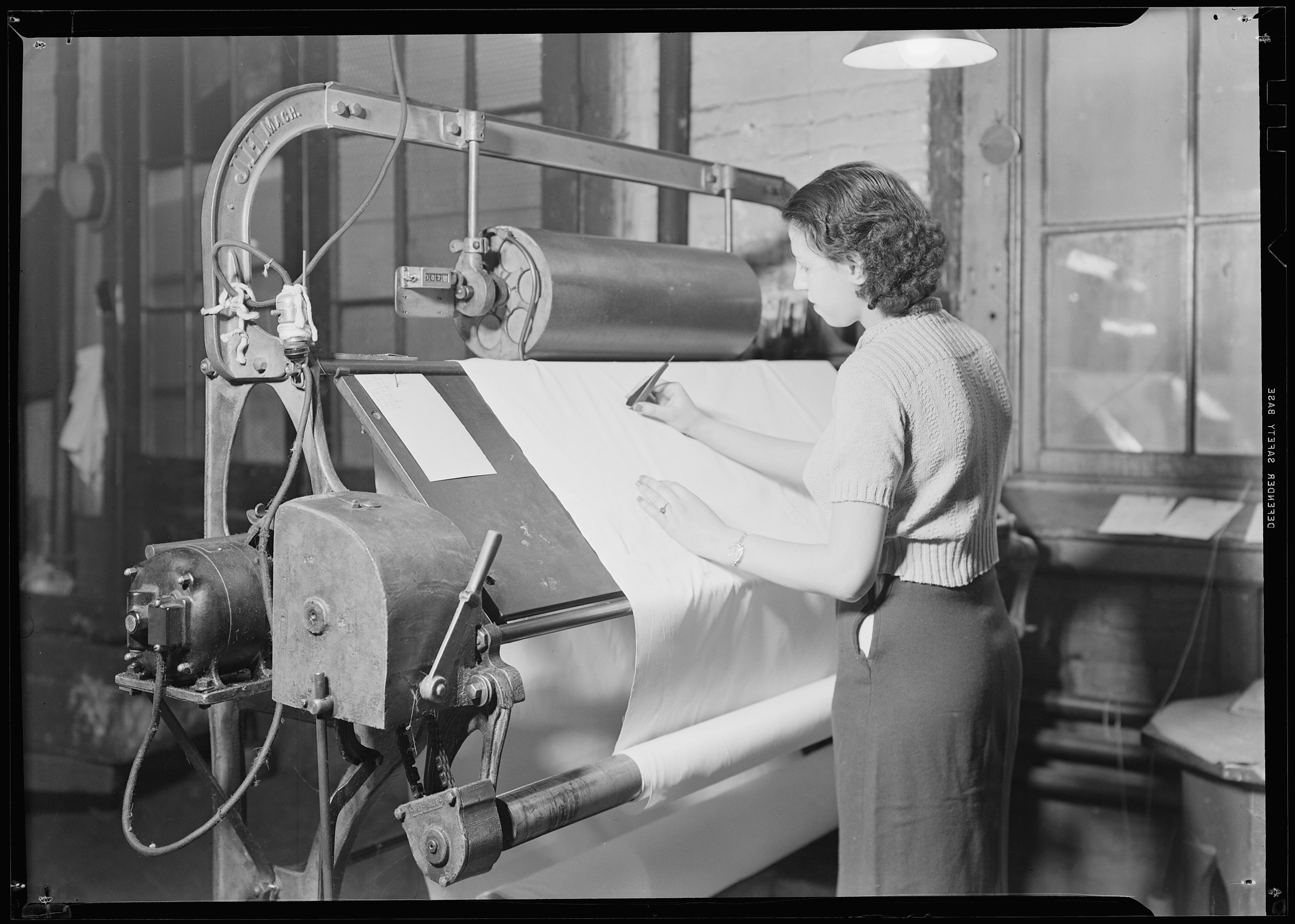
The lowest minimums in the trade run on a network of factories. Shein sells to more than 273 million active shoppers across roughly 160 markets. A new product goes into production there at 100 to 200 units. Anything selling gets restocked in as few as five days. The company's Hong Kong IPO filing calls the arrangement large scale automated test and reorder. Spread across a five size run, 150 pieces put thirty garments in each size.
Shein worked with 7,500 contract manufacturers in 2025, most of them small and medium sized firms, and the filing states they are free to supply other companies. Cutting thirty garments per size and then scaling the winner inside five days takes that many rooms with spare machines standing idle in them.
White Label Starts From a Shirt That Already Exists
A blank tee arrives sewn and labeled with its fiber content and origin. Gildan 64000. Bella+Canvas 3001. Comfort Colors 1717. Each of those publishes a weight, a body width and length for every size, and a color card. Every color on that card is already dyed and sitting in a warehouse. The minimum on a blank is one piece.
The shirt is ready to print the day it reaches you. Screen print, direct to garment, embroidery, a heat pressed neck label.
Picking a style number is picking a fit. No round of corrections follows it. Compare the published measurements at the size you expect to sell most of before committing to one. A brand that switches blanks a year later sends every returning customer a different shirt under the same name. The mill's own neck label is already sewn in. Printers sell removable tear away labels and relabeling as their own line items.
The mill runs one style for every buyer at once. That is where the price comes from. The same 64000 goes to a merch table at a music venue, a corporate uniform program, and a streetwear brand in the same week.
Cut and Sew Starts From Your Own Pattern
Set the two programs side by side for the same hooded sweatshirt.
Private label: the factory's block. Sampling starts from a fit that has been on bodies before. The rounds go on corrections. The standing colorway sets the minimum. The fit is shared with every other buyer on that block.
Cut and sew: your pattern, drafted by a patternmaker you hire or by the factory's patternmaker under your instruction. The first prototype has to be sewn before it can be looked at. You pay for a fresh dye lot. The factory sets up a line for a garment it will not run again for another buyer.
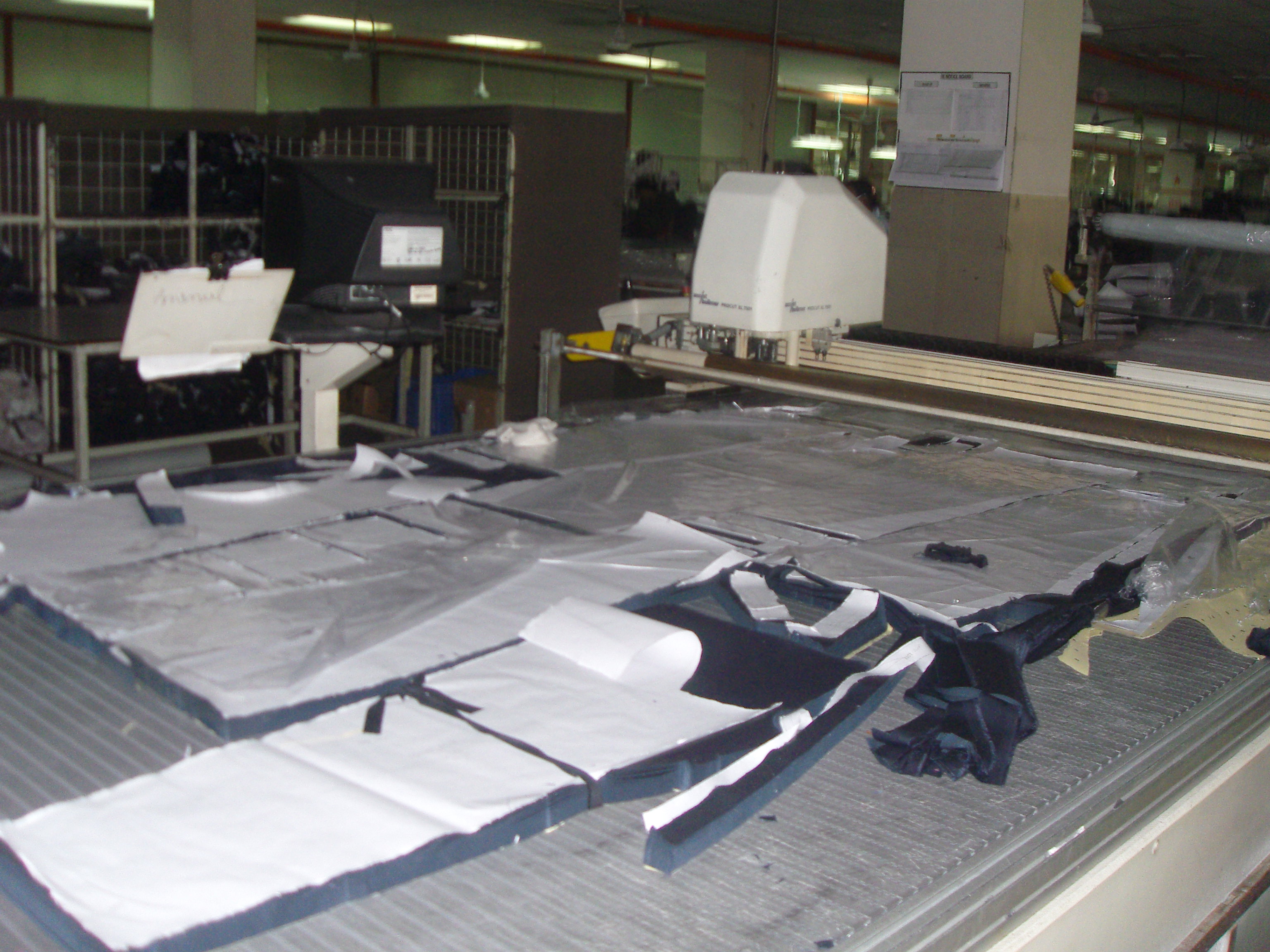
All of it goes into a tech pack. Flat sketches in vector, a full measurement spec with points of measure and tolerances for every size, a bill of materials naming main fabric, trims, labels and packaging with codes and colors, and construction notes calling out stitch types and seam finishes.
Full Package and CMT Are Two Different Quotes
CMT stands for cut, make, trim. The factory sells labor. A CMT quote for a hoodie covers sewing labor, cutting and trim attachment. You buy the fabric, the trims, the labels and the packaging, then get all of it to the factory door on time. Full package, quoted FOB, comes back as one number per unit covering fabric, cutting, sewing, trims, labels, packaging, quality inspection and export documentation.
The CMT number comes in lower every time. The fabric invoice, the trim invoice and the freight bill to the factory door are sitting on your desk instead. CMT gives you control over exactly which mill's cloth and which brand of zip goes in.
The same structure decides what you can declare at customs. The First Sale rule lets an importer declare the price paid in an earlier sale as the customs value. A 2009 study by the United States International Trade Commission found apparel importers reaching for it at more than twice the rate of importers overall.
The rule needs a middleman somewhere in the chain. Direct from the factory there is only one sale to point at.
When the Factory Does the Designing
A sourcing hall is full of garments no brand has ordered yet. ODM stands for original design manufacturer. A factory develops styles on its own account, puts them on a showroom rail or a line sheet, and sells the finished designs to whichever brands want them. The cloth is in your hand before you commit to a unit.
Print on Demand Makes Them One at a Time
Printful prints and ships one garment at a time. Its custom tees start at $9.07 on a Gildan 64000. The blank and the printing are quoted as one base cost. The company puts most finished tees at $11 to $15 once production, shipping and transaction fees are counted. It puts the seller's net at $3 to $8 a shirt.
Nothing is bought before it sells. You are buying a label slot on another company's garment. You pay that $9.07 on the first shirt and on the ten thousandth.
When the Brand Owns the Factory
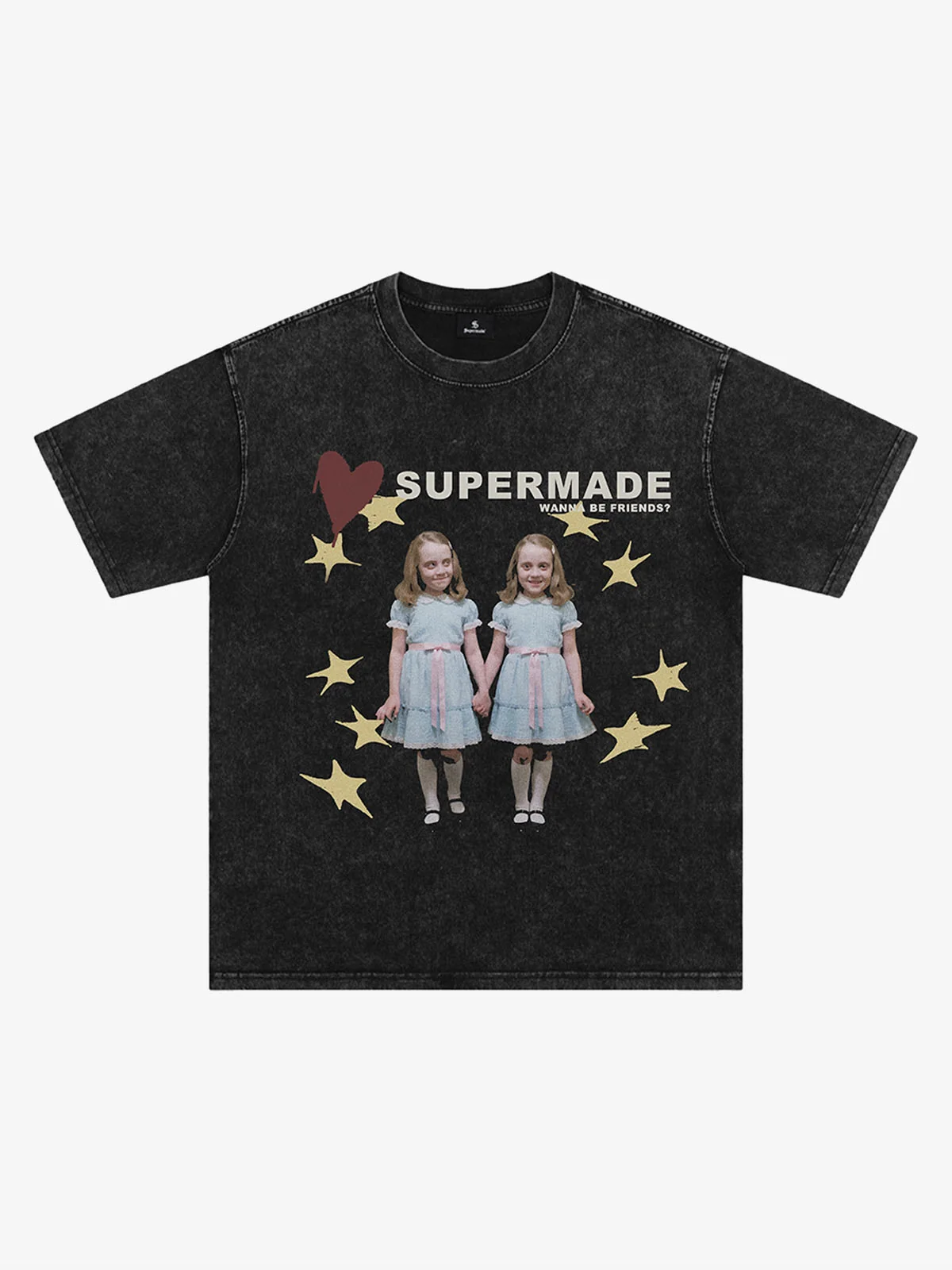
The 64000 tee in that list has a company behind it that owns every step upstream. Gildan's annual filing traces the cotton from a spinning mill in the United States, through knitting and dyeing and cutting at a textile plant with the biggest of those in Honduras, out to sewing floors across Central America, the Caribbean and Asia. Third party contractors fill in behind that, mostly for sewing in Central America and Haiti and for some of the yarn feeding Bangladesh. About 80,000 people work somewhere on that line. The head office signing for all of it sits in Montreal.
Owning the chain also lets Gildan pick where the color goes in. Most of what Gildan makes is dyed as cloth at the textile plant. Comfort Colors is dyed after the garment is sewn, under a process the filing names Pigment Pure.
The company sells that output two ways at once. Blanks go to wholesale distributors, screenprinters and embellishers. Gildan also manufactures for global lifestyle brand companies who market the goods under their own names.
One integrated operation supplies white label, its own retail brands, and other people's private label off the same spinning frames.
The filing credits that ownership with short production and delivery cycle times and tighter control over cost and quality. It costs capital on a scale that rules the model out for a brand at the starting line. The Bangladesh complex alone runs two textile plants and three sewing plants. A second textile facility on that site is expected to start production in the latter part of 2027.
Licensing Puts Someone Else's Name On It
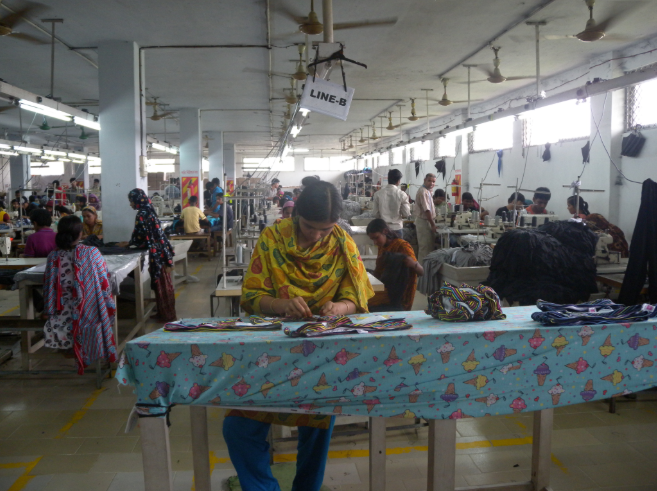
The licensor owns the trademark. The licensee manufactures the goods, puts them in front of buyers, and pays a royalty on what moves. The licensor is renting out the wordmark on the chest and the label in the neck.
Licensors carve these up by channel and by territory. Gildan's filing lists Champion under an exclusive license for the printwear channel in the United States and Canada. It lists Polo Ralph Lauren under a separate exclusive license covering the United States, Canada, Mexico and Japan.
For a brand owner the arrangement runs in reverse. You license your name to a manufacturer with a category you cannot serve yourself, take a percentage, and hand over control of how the product is made.
Who Owns the Pattern
Copyright law in the United States treats a printed tee as two things at once. Clothing is a useful article. Useful articles fall outside protection.
The Supreme Court set the current test in Star Athletica in 2017. A design feature on a useful article can be copyrighted only where it can be perceived as a work of art separate from the article and would qualify as a protectable work on its own.
A chest print clears that test.
A factory can lawfully offer the same block to fifty brands. Copyright also lets that factory draft the block off a garment already hanging in a store.
The contract decides who owns the pattern, the tech pack and the graded spec. A fit block the factory's patternmaker develops during sampling belongs to whoever the production agreement names.
Put three clauses in before sampling starts.
- Every design, pattern, tech pack and derivative assigned to you.
- A confidentiality clause over the tech pack itself.
- The patterns, samples and files returned or destroyed when the work ends.
A brand producing 200 units per style needs it more and has less room to ask.
The Paperwork Each Model Leaves You
Which papers land on your desk depends on which model put your name on the neck.
Private label and owned brands put your identity on the label. Three years of records, tracing raw materials through to the finished garment.
The Care Labeling Rule reaches every importer on every route. It demands a reasonable basis for every instruction and every warning, so Dryclean Only calls for evidence that washing harms the garment, and a jacket built from a shell, a lining and a contrast trim needs proof that all three come through the cleaning method printed on its label. Ask the factory for the test report behind it.
A two inch by six inch swatch cut from your cloth gets burned. The Consumer Product Safety Commission standard at 16 CFR part 1610 sorts the result into three classes and keeps the third out of clothing. Adult apparel needs a general certificate of conformity. Anything for ages 12 and under needs a children's product certificate based on third party testing at a CPSC accepted laboratory.
CPSC's own worked example is written around a screenprinting shop. A blank supplier may have tested and certified the blank as a component part. The certificate for the finished garment is still yours to issue.
No quote sheet under any of these models carries a line for it.
Which One Fits What You Are Making
Print on demand suits a graphic you are not sure about.
A first small run of basics goes to private label. Order into a stock color, put your own labels in, and move the development money into trims and packaging. Cut and sew is for the silhouette that is the point of the brand. If the shape of the jacket is the thing that sells the jacket, a shared block puts that shape inside every other brand's sample room.
Scaling something already selling starts on full package and moves to CMT once you know exactly which cloth you want and have a place to hold it between deliveries. Licensing covers the category you have no way of making.
Running two or three at once is ordinary. A basics program on private label, a hero piece on cut and sew, and merch on demand is one working combination.
Questions People Ask
Do I need an RN number?
No. The label can carry your company's full legal name instead. It cannot carry your brand name unless the brand is the name the company trades under.
Does my product page have to say where the garment was made?
The Textile Rules reach mail order advertising. The FTC counts a description on a website as mail order advertising. Your listing has to state that the item was made in the U.S.A., imported, or both, in wording that agrees with the label.
Can I put Made in USA on it?
Only when both the garment and the materials in it are American. Sewing in the United States from imported cloth is labeled Made in USA of imported fabric.