Velour vs Velvet in Clothing: Construction, Stretch, Pile, and Production Differences
Velour and velvet can look almost identical from the face. The difference becomes much clearer when the fabric is turned over and measured.
Traditional velvet is a woven warp-pile fabric. CottonWorks defines velvet as a woven cut-pile fabric whose pile is formed from warp yarns. The Association for Contract Textiles uses a broader definition for velour: the term can cover cut-pile materials and can also refer to napped knitted fabric. In apparel sourcing, knitted velour is common enough that the backing should be confirmed on the actual swatch instead of inferred from the product name.
The practical difference is visible in real commercial fabrics. Stonemountain & Daughter lists a 250 GSM polyester/spandex Kitty Velour at 95% polyester / 5% spandex, 57 inches wide, with 60% crossgrain stretch and 10% lengthwise stretch. Its Lady McElroy stretch velvet, also 250 GSM and 57 inches wide, is 92% polyester / 8% spandex and is listed at 20% crossgrain stretch. The same weight and nearly the same fiber family produce very different extension.
Start With the Backing
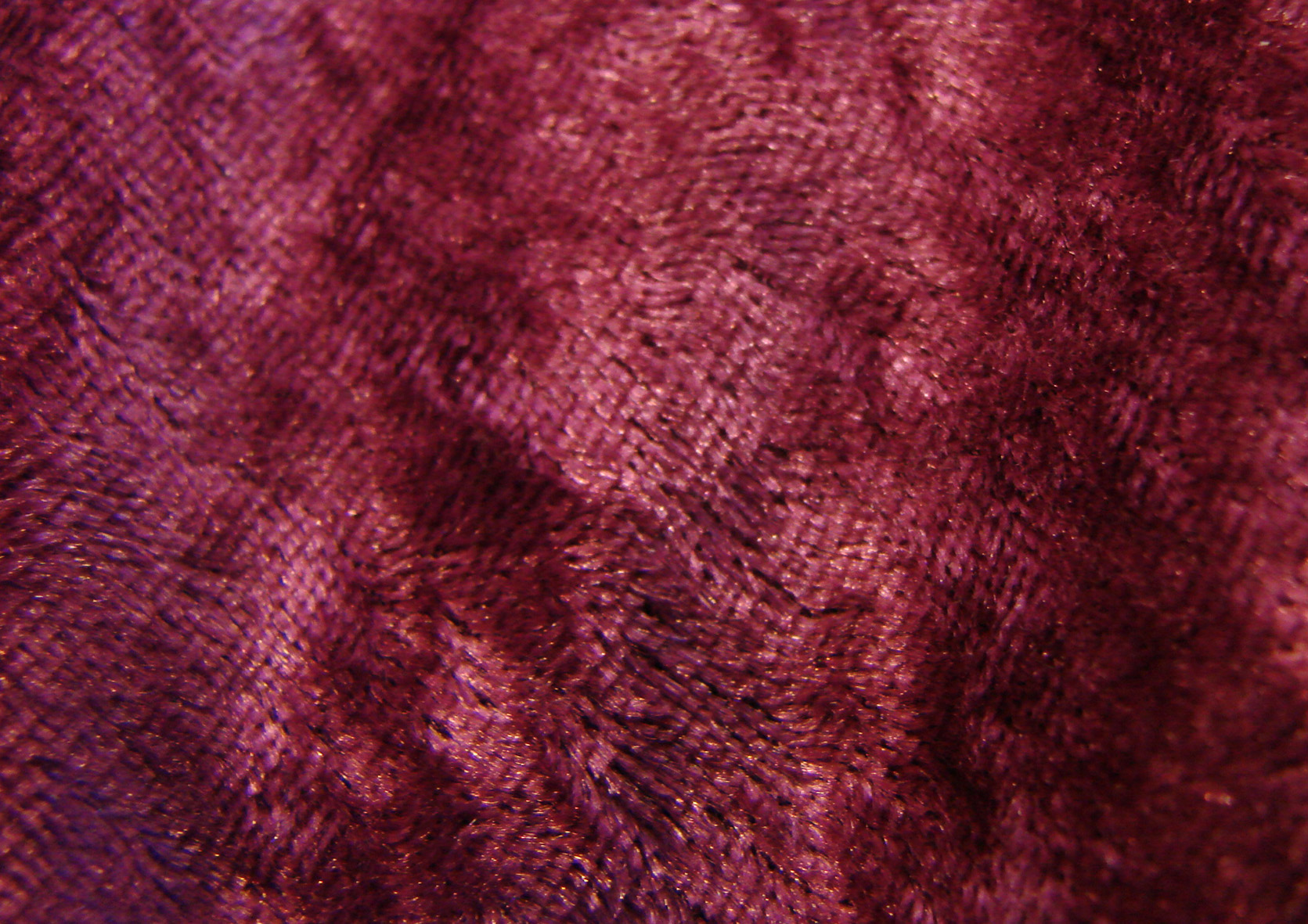
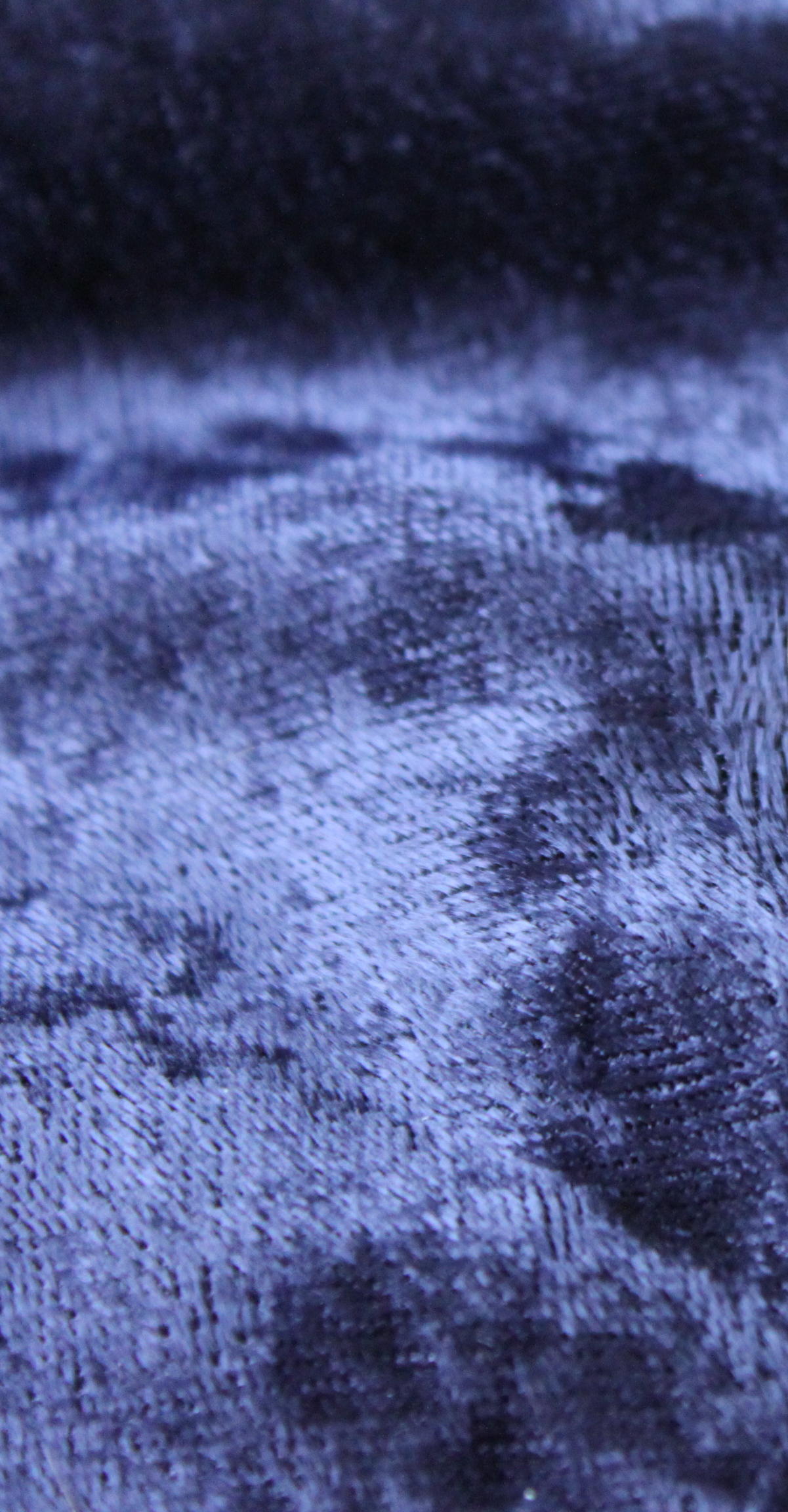
Lay the swatch flat with the pile facing down.
A knit velour can reveal loops or knit columns on the reverse. CottonWorks describes knitted velour specifically as a terry-looped fabric that has been sheared: the projecting loop tips are cut to a controlled height, creating the lustrous pile surface.
Traditional velvet uses a woven ground. CottonWorks describes the pile as a warp system. In double-cloth velvet production, two ground fabrics can be woven together and separated by cutting the pile yarn that connects them.
A quick hand stretch already reveals useful information, though production decisions need an actual percentage. Mark 100 mm across the fabric, extend it under the chosen test condition, and measure the new distance. A result of 160 mm means:
Stretch = (160 − 100) ÷ 100 × 100 = 60%
That 60% figure matches the published crossgrain stretch of Stonemountain’s 250 GSM Kitty Velour. The same retailer’s 250 GSM Lady McElroy stretch velvet reaches 20% across the grain.
What Is Actually Inside Woven Velvet
Velvet contains a ground fabric and a pile system.
CottonWorks describes velvet pile as warp pile and notes that a high number of pile yarns per inch increases the fullness of the surface. Its weaving guide also describes V-shaped and W-shaped pile bindings. W-shaped pile uses additional interlacing with the ground and holds the pile more securely.
CottonWorks gives one useful dimensional boundary: velvet pile is generally less than 1/8 inch high in its woven-fabric guide. One eighth of an inch is 3.175 mm. Pile taller than that is described there as plush.
Actual apparel suppliers often work far below that limit. Juncheng Textile publishes a 95% polyester / 5% spandex one-way stretch velvet at 250 GSM, 58/60 inches wide, with a stated 1.0 mm pile height.
If surface depth matters to the design, the specification needs a measured millimeter value from the confirmed production fabric.
Knitted Velour Gets Its Surface From Shearing
Knitted velour starts with loops.
CottonWorks explains the finishing process directly: loops or protruding yarns are presented to a rotating cutting cylinder and fixed shearing blade. The blades cut the surface to an even height. Knitted velour is given as an example of a terry-looped fabric finished this way.
The ground knit continues to control much of the stretch after the pile is cut.
This is visible in the Kitty Velour example: 95% polyester / 5% spandex, 250 GSM, 57 inches wide, 60% crossgrain stretch and 10% along the grain. That five-percentage-point spandex content does not produce the same extension in both directions because the knitted structure contributes to the result.
A composition line such as 95% polyester / 5% spandex therefore cannot substitute for an extension test.
Stretch and Growth Need Separate Numbers
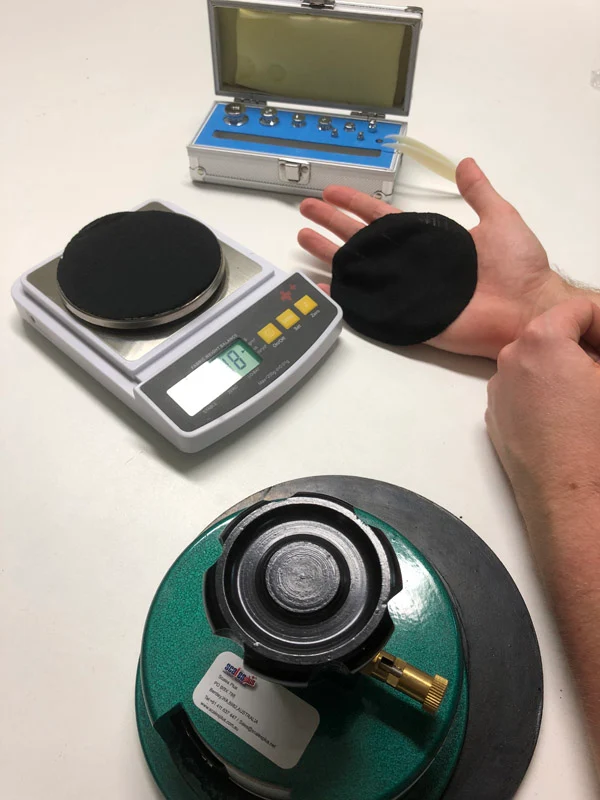
ASTM D2594/D2594M-21 is the active ASTM method for low-power stretch knitted fabrics. The standard separates two properties: stretch is measured under a known load; growth is evaluated after a known extension is applied and removed. ASTM specifically links growth to prolonged stresses such as sitting in form-fitting clothing.
Use a 100 mm original length for a simple calculation.
The sample reaches 160 mm during the stretch test:
Stretch = (160 − 100) ÷ 100 × 100 = 60%
After the extension cycle and recovery period, the same gauge marks sit 104 mm apart:
Growth = (104 − 100) ÷ 100 × 100 = 4%
A fabric can therefore reach 60% stretch and still leave a bagged knee if growth is too high.
Retail buyers often put an actual limit on this. A publicly posted 2024 Target materials manual uses modified ASTM D2594 for weft knits. For elastomer content below 10%, it reports growth after a two-hour extension and a 60-minute measurement period. The stated maximum is 5% growth for non-sweater knits and 7% for sweaters. For elastomer content above 10%, the same manual switches the pass/fail focus to recovery and specifies minimum 85% recovery. These are Target buyer requirements, not universal textile law.
Gap’s publicly available 2021 protocol gives another real buyer example. For fabrics with at least 5% elastomer, its modified D2594 growth setup uses 35% length extension and 60% width extension, with 5% maximum growth and a 60-minute time-dependent measurement.
For a velour track pant, writing only “good recovery” leaves the factory with no pass/fail target. A usable buyer requirement can state growth ≤5% under the nominated modified D2594 procedure when that limit suits the product.
Woven Stretch Velvet Uses a Different ASTM Route
A woven stretch velvet should not automatically inherit a knit test protocol.
ASTM D3107-26 covers woven fabrics made wholly or partly from stretch yarns. Its stated scope is high-stretch woven fabric showing more than 12% stretch with good recovery under low tension. The standard allows two tension options used by the industry: 1.35 kg and 1.8 kg. It measures fabric stretch, growth and recovery.
ASTM D7507-23 is the active specification for woven high-stretch apparel fabrics. Its table sets dimensional change after three home-laundering cycles at ±3% for one-way stretch fabrics and ±5% for two-way stretch fabrics. One dry-cleaning cycle is listed at ±2%. The standard also states that purchaser and supplier can modify requirements by agreement for a specific product.
A report that says only “20% stretch” is incomplete if the applied tension is missing.
250 GSM Can Hide Very Different Fabrics
Real products make this point clearer than a general statement.
These are supplier-specific examples. They show exactly why 250 GSM cannot stand in for stretch, pile height or thickness.
Thickness Needs a Pressure Condition
ASTM D1777-26 covers textile thickness, including knitted, woven, napped and pile fabrics. The standard states that apparent thickness changes substantially with the pressure applied during measurement. Thickness must therefore be reported with the measurement pressure.
That matters more with pile because the surface compresses.
A supplier may report 1.03 mm thickness. Another mill may report 1.20 mm. Those numbers cannot be treated as a clean comparison when the pressure conditions are missing.
A spec line should read in this form:
Finished thickness: 1.03 mm, measured under [specified pressure] using the nominated test method
The exact pressure comes from the buyer’s chosen procedure or laboratory method. The important point is that it is recorded on every submission.
Pile height is a separate number. Juncheng’s 1.0 mm pile height does not mean the complete fabric is 1.0 mm thick.
Nap Changes the Cutting Marker
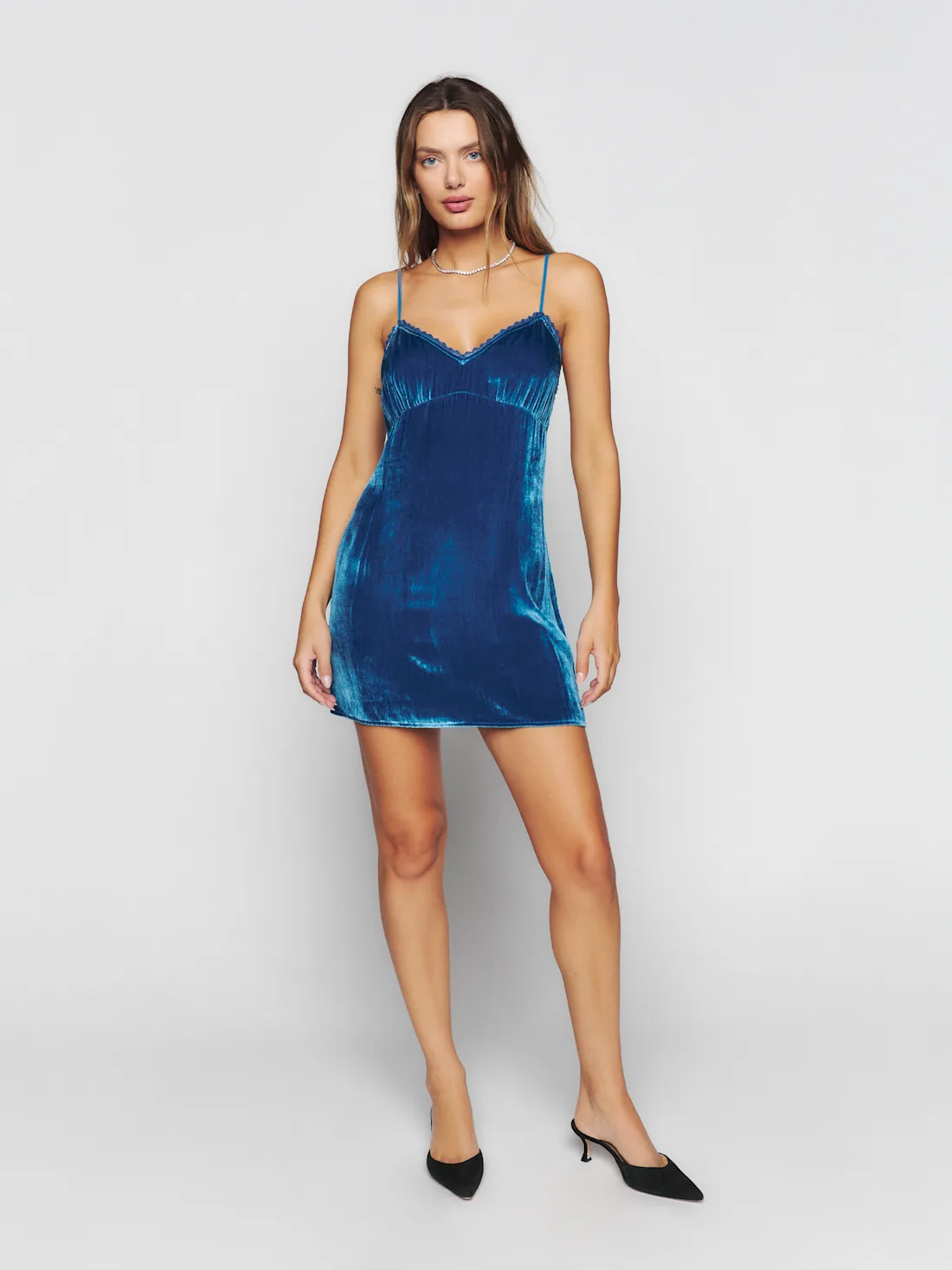
Velvet and velour pile is directional. Turning a panel 180 degrees changes how the pile reflects light.
Seamwork’s velvet guidance requires pattern pieces to be cut in the same nap direction and recommends single-layer cutting because pile fabrics can shift.
There is no universal “velvet uses 12% more fabric” rule. The increase comes from the marker.
If a non-directional layout uses 1.60 m and the one-way nap marker uses 1.74 m:
Extra consumption = (1.74 − 1.60) ÷ 1.60 × 100 = 8.75%
That 8.75% belongs only to that marker. A different garment, fabric width or size ratio produces a different result.
The production sheet should therefore carry the actual marker length and nap direction, not a generic allowance copied from another style.
Layer Creep Needs a Measured Sewing Trial
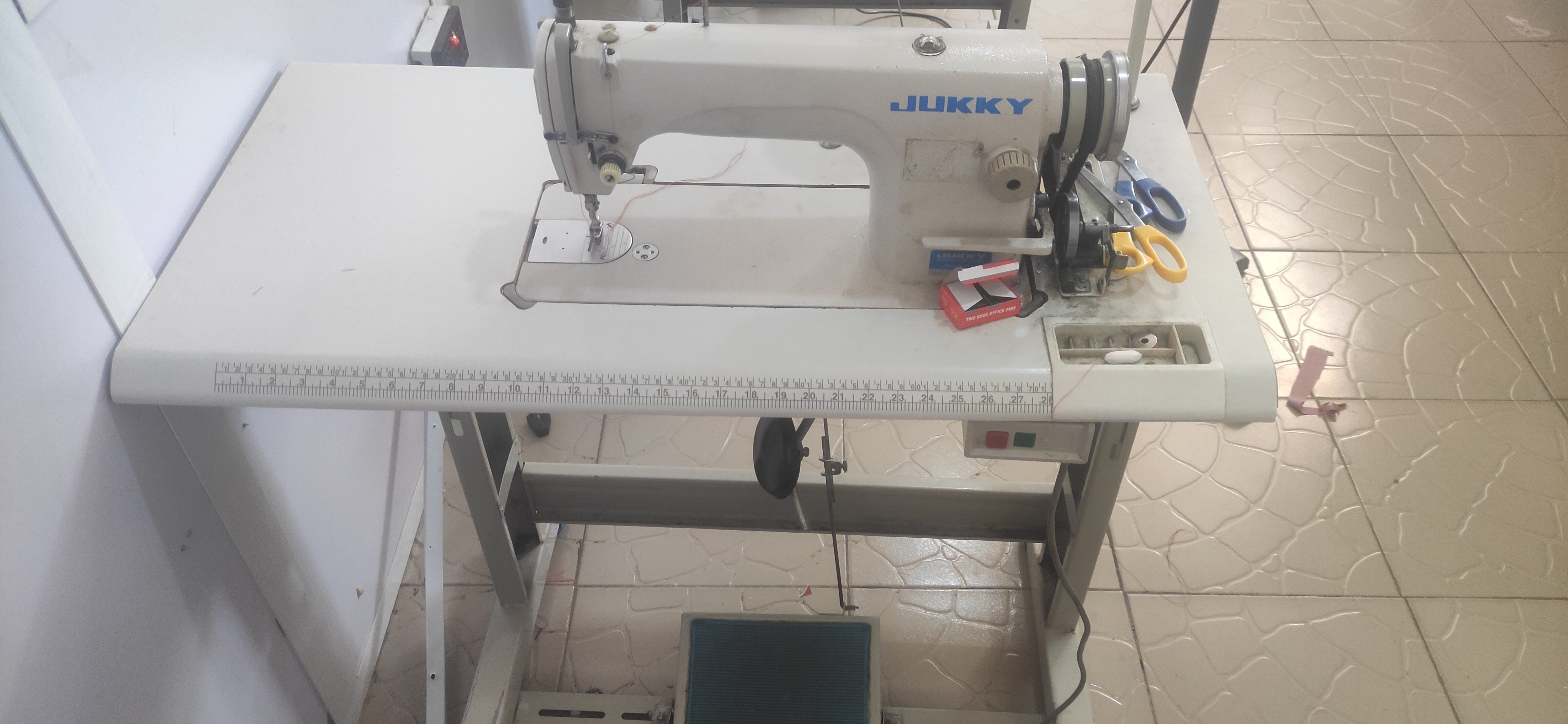
Velvet is known for layer creep: two pile faces can slide against each other during sewing. Seamwork attributes this to the pile slipping when the right sides are placed together and recommends test sewing, reduced presser-foot pressure and hand basting for difficult seams.
A factory trial can make the problem measurable without inventing a universal standard.
Mark a 600 mm seam at 100 mm intervals. Sew it with the nominated needle, stitch length, presser-foot pressure and feeding system. Measure the final mismatch at every mark.
Record the result as millimeters of displacement.
Example result: 0 / 1 / 1 / 2 / 2 / 3 / 3 mm
If the brand decides that 3 mm maximum at 600 mm seam length is acceptable for that style, that becomes an internal production criterion. It should be written as a project limit, not described as an ASTM velvet standard.
The same trial should be repeated after any change to feed system or presser-foot pressure.
Pressing Needs an Actual Press Card
A sentence such as “use low heat” is too vague for production.
Velvet pile can flatten under a combination of pressure, heat and moisture. Seamwork recommends avoiding direct heavy pressing and working from the reverse, with a velvet scrap, towel or purpose-built pile surface supporting the face.
The factory should lock the production setting through a test card.
If development establishes 120°C, 2 seconds, reverse-side contact, no direct face pressure as the safe setting for a nominated polyester velour, those exact values belong on that style’s press card. They are a project result, not a general temperature for every polyester velvet.
A Knee Can Fail Two Different Tests
A velour trouser knee can become larger and shinier after wear.
The size change comes from growth in the backing.
Use two fixed points across the knee. If the relaxed garment measures 240 mm before wear and 249 mm after the specified recovery period:
Growth = (249 − 240) ÷ 240 × 100 = 3.75%
Under a buyer limit of 5%, that result passes the dimensional criterion used in the Target and Gap examples cited earlier.
The pile still needs separate inspection. A knee can pass the 5% growth criterion and show an obvious polished patch from pile crushing.
Record the two results independently:
Combining them into “knee looks worn” gives the factory no useful failure mode.
Wash Testing Needs Numbers and a Surface Check
Take a 500 × 500 mm marked specimen.
After the nominated wash and drying cycle it measures 485 × 490 mm.
Length dimensional change = (485 − 500) ÷ 500 × 100 = −3.0%
Width dimensional change = (490 − 500) ÷ 500 × 100 = −2.0%
For a woven one-way stretch fabric judged against ASTM D7507-23’s three-cycle home-laundering value of ±3%, −3.0% sits exactly at that published limit. A two-way stretch fabric has a ±5% value in the same specification.
The pile inspection happens after the measurement.
Check crushed zones, clumping, directional streaks, surface harshness and shade change against the unwashed control under fixed lighting.
Care instructions can differ even among similar 250 GSM fabrics. Stonemountain lists the 250 GSM Kitty Velour as machine wash cold with no tumble drying. Its 250 GSM Lady McElroy stretch velvet is listed as machine wash cold and tumble dry low, with no ironing. Category name and GSM are not enough to write the care label.
Read a Real Supplier Listing Line by Line
Take Stonemountain’s Kitty Velour listing:
95% polyester / 5% spandex — 57 in — 250 GSM — 60% crossgrain stretch — 10% along grain
That is already much better than “polyester stretch velour.”
A production developer still needs more information before bulk approval.
The 57-inch figure should be checked as usable finished width after relaxation. Stretch needs a documented test condition if the mill result is being used for fit approval. Growth is missing. Pile height is missing. Finished thickness is missing. Dimensional change after the intended care cycle is missing.
The seller gives a useful care direction: machine wash cold and no tumble dry. That becomes a starting point for garment testing, not a substitute for testing the completed garment.
A Production Spec Can Be Written Without Fake Precision
Use actual test results from the nominated fabric and keep buyer limits visibly separate from industry standards.
The 5% growth limit in that example comes from real buyer protocols such as the publicly available Target and Gap manuals. The 1.0 mm pile height is a real published supplier value for a 250 GSM 95/5 stretch velvet and becomes valid for a velour project only after the selected fabric is actually measured at that value.