Best Hoodie Manufacturers: 10 Suppliers and Their Order Requirements
Choosing a hoodie manufacturer involves the garment a brand plans to sell and the quantity it can order. A washed zip-up with chest embroidery brings fabric selection, hood construction and artwork placement into development. The first quotation also needs to account for color minimums, sample charges and the time between confirming the sample and receiving the finished hoodies.
FashionMe
FashionMe develops original hoodies through Made to Order, starting at 50 pieces, with a published production time of 15–20 days. Its hoodie service covers 350–500 GSM cotton and cotton-polyester fabrics, including loopback and brushed constructions. Custom patterns can incorporate dropped shoulders and double-layer hoods. Washing treatments, screen printing, direct-to-film transfers, flat embroidery and three-dimensional puff embroidery are available for the design.
Projects can begin with photographs, videos, sketches or tech packs. FashionMe’s buyers source fabrics and trims, and production is assigned through its factory network according to the garment specification and available capacity. Made to Order includes 100% inspection, with photographs of the actual order provided before shipment. Hoodie checkpoints include hood structure and lining, cuff recovery, kangaroo-pocket alignment and drawcord quality.
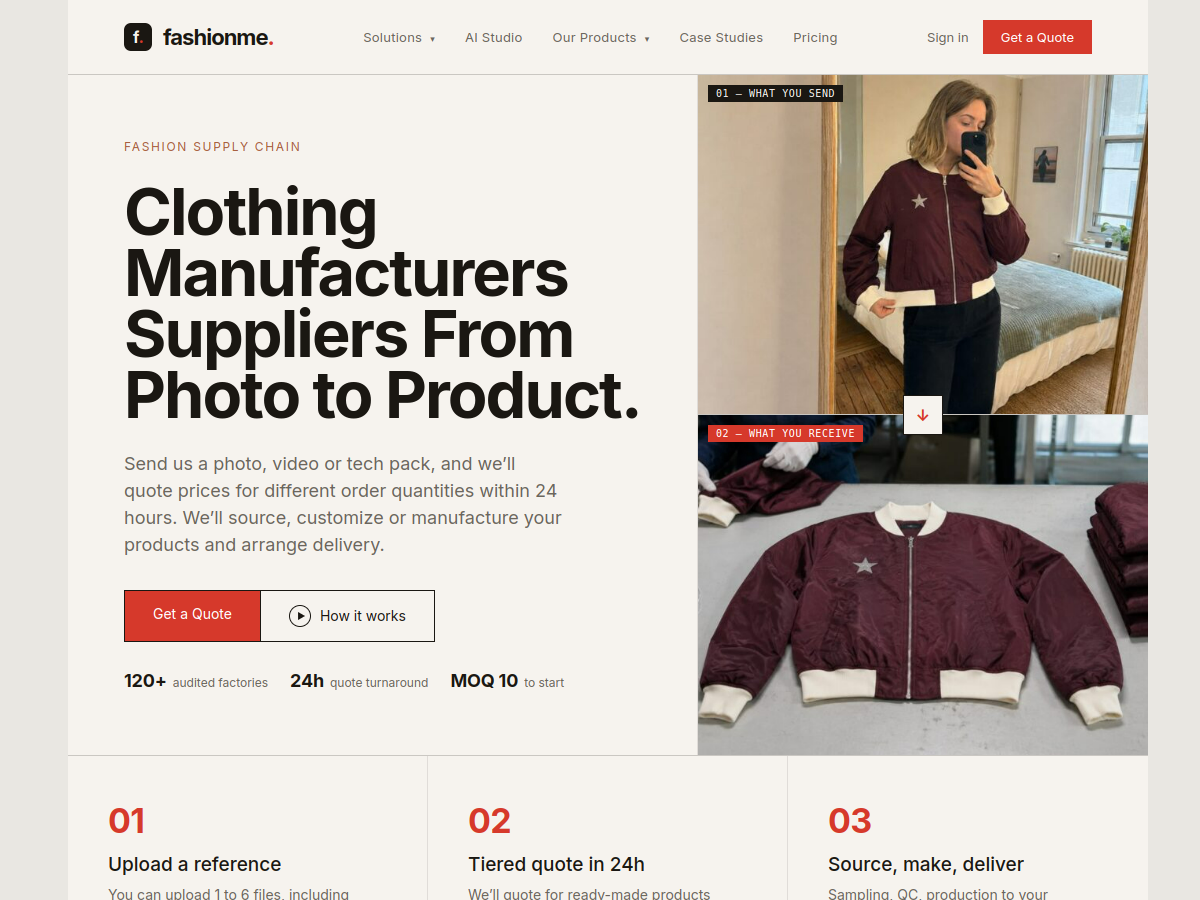
Stock Match sources existing garments from 10 pieces, with a published 7–10-day lead time. Its standard inspection checks a sample of the order, and full inspection is available as an additional service.
Independent Trading Company
The 60–90-day custom-production period at Independent Trading Company ends when the garments leave China. It begins after pre-production sample confirmation, with international transport following that factory schedule. Custom orders start at 600 pieces per style and color, subject to the design and fabric. The company can consolidate these orders with stock garments traveling to its warehouses, and its team arranges ocean or air freight and customs documentation.
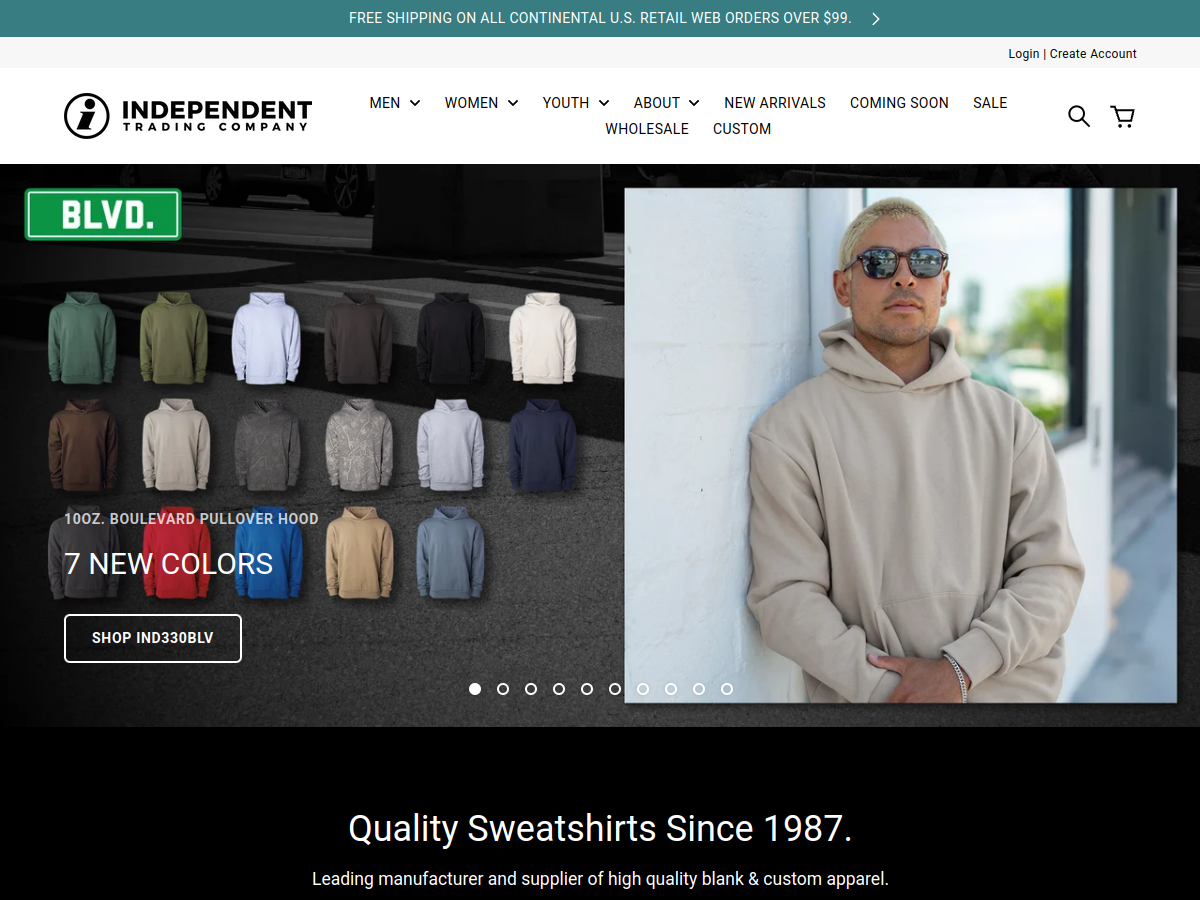
Production managers in California and overseas work from an archive of garment shapes, fabrics and decoration references. Development options include French terry, sherpa, polyester fleece, marled yarns, slub textures and garment washes. Orders are assigned to factory partners working in the relevant product category. Zipper pulls, patches, labels, drawcords and hang tags are available within the trim library.
Create Fashion Brand
Create Fashion Brand’s Portuguese-made blank collection includes a 480 GSM oversized, garment-dyed organic-cotton hoodie that can be purchased individually. Existing styles can receive printing, embroidery and further finishing. The customization service includes chain-stitch and chenille embroidery, puff and reflective printing, patchwork, enzyme washing and garment dyeing.
The quantity for decorated blanks needs confirmation against the chosen product. CFB advertises 50 pieces per model and color on its homepage. Its general FAQ contains a 100-piece requirement for blank customization, so the quotation needs to resolve the applicable minimum.
An original design enters the full-custom service at 150 pieces per style and color. At that starting minimum, one hoodie in three colors requires 450 garments, with sizes allocated within each color. Development accepts sketches, material preferences, a bill of materials and physical garment references, and includes custom patterns and fittings.
The published schedule is 4–6 weeks for samples and 8–10 weeks for final production, subject to complexity and season. A further sample request restarts development and may carry an additional charge.
White Cotton
White Cotton publishes an indicative factory price of €28–38 per garment for 100 embroidered hoodies in 380 GSM organic cotton. Its minimum is 100 pieces per color and fit, with 75 pieces per colorway available when ordering at least two colors.
A sample round takes 7–10 working days. The pre-production sample uses the intended bulk fabric and trims, and manufacturing is listed at 3–5 weeks after sample confirmation. White Cotton states that each garment is inspected before packing.
Its Barcelos, Portugal range includes a 520 GSM washed organic-cotton hoodie with run-stitch embroidery and a 440 GSM marble-dyed hoodie with raised embroidery. Custom patterns are available for pullover and zipped bodies. Decoration extends to chenille embroidery and water-based, plastisol, puff and discharge printing.
Royal Apparel
Royal Apparel’s private-label quantities account for the fleece color and the number of garments within each size. For original styles made from stocked fleece, it publishes these requirements.
| Fleece used for the custom style | Minimum per color | Minimum per color and size |
|---|---|---|
| Stocked fleece in an existing color | 400–1,200 pieces | 40 pieces |
| Stocked fleece dyed to a custom color | 600–1,200 pieces | 40 pieces |
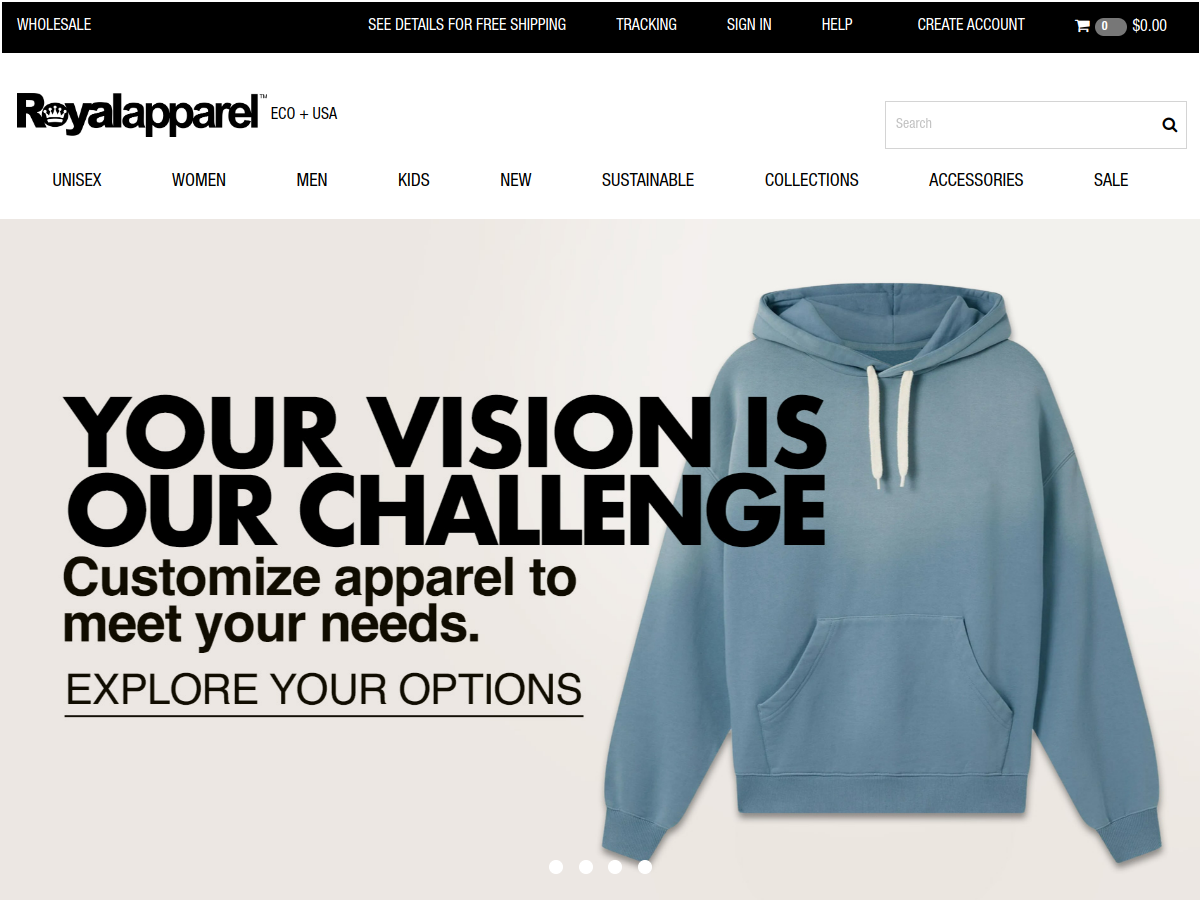
The private-label production estimate is 8–10 weeks from sample confirmation. Samples are charged at 2.5 times the production cost, with pattern work and grading listed among the development charges.
Royal also dyes existing garment styles, including the 13555GD cotton pullover hoodie at a 180-piece minimum. Color sampling takes approximately 1–2 weeks. The charge comprises a US$75 lab-dip fee plus 2.5 times the garment unit cost; the US$75 is credited against a bulk order. A sample dye batch may contain several garments to meet the required fabric weight. Production is listed at approximately four weeks after sample confirmation, provided the garments are in stock.
The finished catalog includes the U.S.-made 13555PD pigment-dyed pullover in 7.2 oz/yd² combed ring-spun cotton. Its construction has a single-layer hood, drawcord, pouch pocket, ribbed cuffs and hem, and a tear-away label.
Velour Garments
Payment starts Velour Garments’ published 8–12-week wholesale turnaround. Busy periods can add 1–2 weeks, and orders exceeding €2,000 require bank transfer. Wholesale garments are produced to order, usually from 25 pieces per style and color, with mixed sizes permitted. Product-specific exceptions require 50–100 pieces. Pullover and zipped hoodies are available in 450 and 600 GSM ranges.
The Barcelona company develops cotton and cotton-polyester fabrics to a specified weight and finish. Its pattern makers can modify an existing body or develop a new shape, and the dyeing service includes Pantone color matching and aged finishes. Decoration covers screen printing, direct-to-garment printing, direct-to-film transfers, puff effects, flocking, chain-stitch embroidery and chenille. Sewn and printed labels can be positioned according to the garment specification.
DSA Manufacturing
Printing and embroidery enter DSA’s production process at the cut-panel stage. The fabric is cut from graded patterns, decorated and sent to sewing. The bulk-order form carries the composition, colors, size quantities and sample comments used for that work. Finished garments are pressed and tagged, then checked for stitching, measurements and artwork. The packing list records the styles and sizes in each carton.
Sample charges cover pattern work, fabric, artwork preparation and delivery from the manufacturing facility. DSA publishes 2–4 weeks for sampling and 4–8 weeks for bulk production. Manufacturing starts with a 50% deposit, and the balance is due after completion and before dispatch.
Most garments start at 100 pieces per style and color with mixed sizes. Organic cotton and certain other categories have higher requirements. DSA sources the materials through its full-package service, with fabric references available to view at its Swansea headquarters. Manufacturing takes place principally in China, where DSA has staff following production.
Billoomi Fashion
An embroidered or printed hoodie carries a 100-piece minimum per style at Billoomi Fashion, including mixed sizes. The Indian factory’s decoration work includes hand embroidery, beadwork, sequins and patchwork, along with machine embroidery, ombré and tie-dye. Its hoodie range covers cropped, oversized, color-block and zipped designs. Fabrics and trims are sourced for individual projects, with published hoodie fabric weights of 200–450 GSM. Development includes patterns, grading and samples.

Plain, single-color orders start at 25 pieces per style and color, allowing mixed sizes. The stated schedule is 2–3 weeks for sampling and 6–8 weeks for production, continuing through finishing, custom labels and packing for export customers.
Stylus Apparel
Stylus Apparel retains prepared artwork for repeat production. Its reorder policy generally waives previously paid digitizing, vector-conversion and screen-setup fees when the same work is reused. Clients can request copies of their digitized artwork files.
The New Jersey operation develops original garments through pattern making, grading and sewing. Its decoration work includes tackle-twill appliqué, embroidered patches and three-dimensional puff embroidery. Cut-and-sew manufacturing starts at 72 pieces per style and color. Screen printing and garment embroidery each carry a 24-piece minimum per design for those services.
A project can begin with a paid standalone sample. For a production order, the deposit is required before work begins on the included pre-production sample. Written confirmation of the order proof precedes manufacturing. The published cut-and-sew turnaround is 3–6 weeks from processed payment, followed by shipping.
Hawthorn
Sampling with Hawthorn is commissioned within a production order that meets its minimum. Eligible designs can start at 50 garments per design and color. The company aims to produce a prototype 2–4 weeks after order placement. Customers review sample photographs or receive the physical garment, with minor amendments possible before manufacturing. Sample confirmation starts the approximately 4–6-week bulk-production period, subject to design complexity and workload.
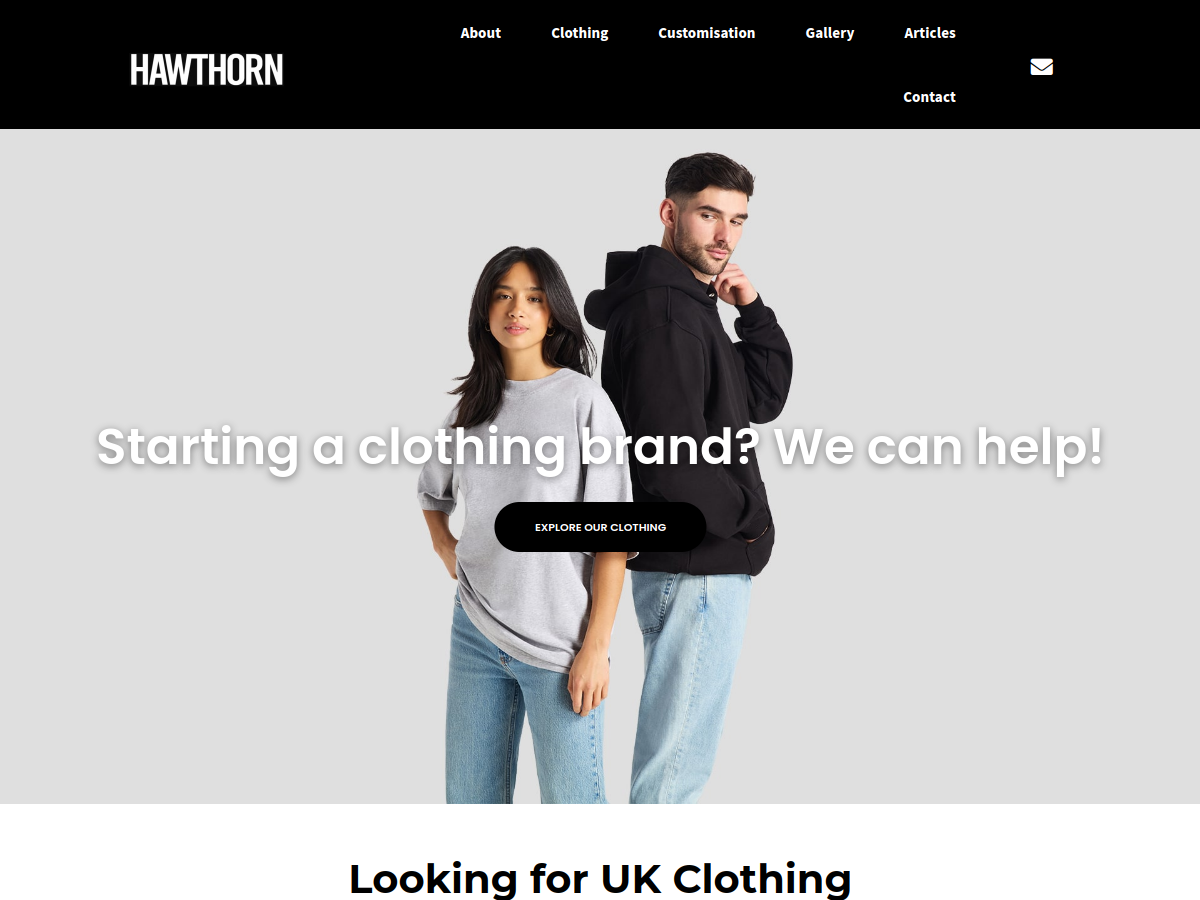
The London-based business uses overseas manufacturing facilities and sources fabrics to the project’s requirements. Standard quotations include a branded neck label, a wash-care label and an individual plain protective bag. Custom packaging, swing tags and customized care labels are separately quoted additions.
Preparing a Hoodie Production Enquiry
A reference hoodie can accompany the front-and-back drawings, with its labeled size and requested changes recorded on the measurement chart. Pattern makers use measurements, technical sketches and detail placement to develop the garment. Stylus includes these materials in its pattern-development requirements.
For a washed zip-up, the enquiry can identify the body fabric’s composition, weight and finish, followed by the hood lining and rib. The zipper, drawcord, eyelets and labels need their own references. The factory can then quote the complete garment and specify when each component will be attached in relation to dyeing.
Artwork dimensions and placement belong on the technical drawing. A graphic crossing the zipper needs a reference on each front panel, showing its intended position with the fastening closed. A body-length alteration also needs a named measurement point, such as the high point of the shoulder, so the sample room can apply the change consistently.
Cost the Actual Color Breakdown
For quotation comparison, use the same style, color and size allocation with each supplier. A separate row for every style–color combination shows which quantity the unit price covers. A per-size minimum can then be checked against the planned allocation, including quantities at the ends of the size range.
The sample price should identify the work included and the number of revision rounds covered. Pattern making, grading, embroidery digitizing and print setup can be recorded as separate charges where applicable. Decoration, washing, labels and packaging also need a stated cost or confirmation that they are included in the garment price. Any sample credit should specify the production order to which it applies.
For delivery planning, Independent Trading Company’s published schedule illustrates an important boundary: its production period ends when the goods leave China. The launch calendar still needs the onward freight, receiving and preparation time after that departure.
Review the Hood and Finished Garment
A pre-production sample made in the intended bulk fabric and trims allows the fitting to assess the actual garment construction. White Cotton includes this sample stage before manufacturing. The fitting record can note the hood opening around the face, its position when lowered and the neckline’s comfort during movement.
On a zip-up, the closed fastening provides a reference for examining the center front and any artwork crossing it. Pocket position can be assessed with the wearer’s hands inside. Body length, chest width, shoulder position and sleeve length should use the measurement points established for the design, with comments attached to the sample’s size and revision date.
For a wash evaluation, record the same measurements before and after the agreed care procedure. A hypothetical body length changing from 70 cm to 67.9 cm represents a 3% decrease. The result needs the washing temperature, cycle, drying method and measurement conditions beside it. The permitted dimensional change is agreed for the order.
Decoration can be examined on the finished sample at its intended size. Relevant details include embroidery backing, the stitched edges of appliqué and printing beside pockets and seams. Marked photographs give the sample room the location of each requested adjustment.
The production release should identify the final sample revision and measurement tolerances. Packing instructions can specify folding, size stickers, individual bags and carton quantities. Fabric reserved for reorders should be recorded by article, color, dye lot and retained quantity.