Best Fabrics for Making Hoodies: Material Selection and GSM
For an everyday printed pullover, a practical starting specification is cotton-faced sweatshirt fleece at 300–350 GSM, with a brushed interior. This is a proposed sampling range for a conventional casual hoodie. The finished fabric specification also needs to account for the garment's season, fit, decoration, and hood construction.
Cotton Sweatshirt Fleece
A hoodie fabric can contain 70% cotton and 30% polyester overall, with a 100% cotton face yarn. Independent Trading Company uses this construction in the solid and pigment-dyed colors of its 330 GSM Boulevard hoodie. The overall composition includes all the yarns in the cloth, with cotton forming the face presented to the printer. Heather colors in the same range contain 52% cotton and 48% polyester.
Three-end fleece contains a face yarn, a tie-in yarn, and a backing yarn. The tie-in yarn connects the structure, and the backing forms the reverse that will be raised during finishing. An all-cotton version uses cotton throughout these yarn systems.
Brushing lifts fibers from the backing to produce the soft interior. Napping rollers control how the fibers are raised and arranged, affecting the depth and texture of the surface. Shearing can trim the raised fibers to an even pile height.
French Terry
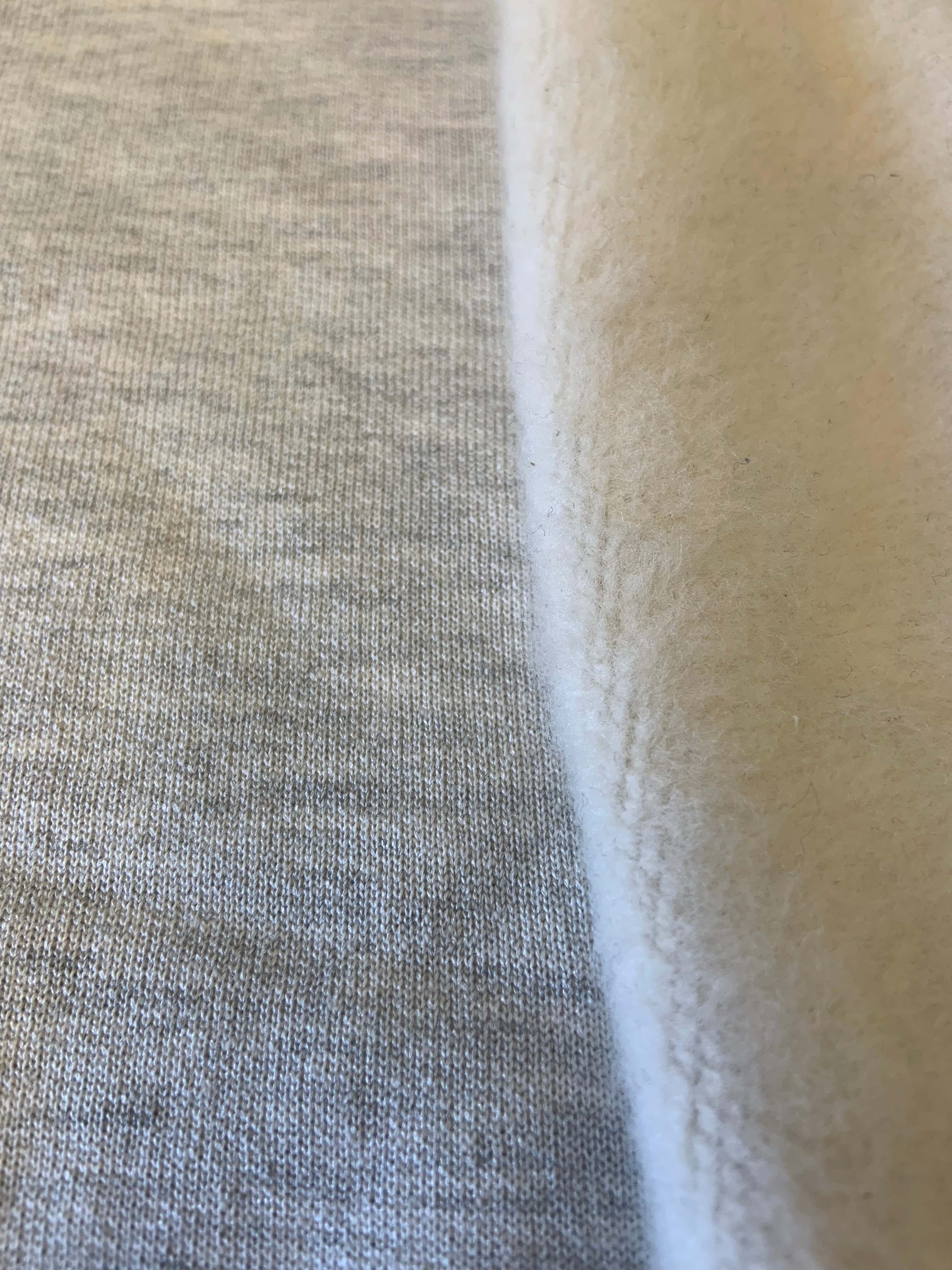
An unlined French-terry hoodie shows small loops around its hood opening and inside the body. The outer face has the smooth knitted surface associated with sweatshirts. The loopback construction is available in different weights.
Independent Trading Company's PRM90HTZ provides a lightweight garment reference: 250 GSM French terry, an unlined hood, and ribbed cuffs and waistband. Its main composition is 70% cotton and 30% polyester. Black and charcoal heather are specified at 55% cotton and 45% polyester.

Choosing the Finished GSM
GSM measures fabric mass in grams per square meter. A proposed purchasing requirement of 320 GSM ±5% permits a finished range of 304–336 GSM.
These sampling bands apply to cotton and cotton-rich sweatshirt fabrics:
| Finished Fabric Weight | Proposed Application |
|---|---|
| 220–280 GSM | Lightweight casual hoodies and French-terry zip styles. |
| 280–350 GSM | Everyday pullovers with a conventional sweatshirt weight. |
| 350–450 GSM | Substantial streetwear hoodies and heavier zip-through garments. |
| 450–550 GSM | Extra-heavy designs with considerable material weight through the body and hood. |
The target refers to cloth after the specified dyeing and finishing. Compaction shortens the fabric by compressing its structure, increasing its mass per unit area. A weight measured before this process can therefore differ from the finished GSM.
For an illustrative cutting area of 1.8 square meters, 350 GSM cloth contributes 630 grams of fabric. Increasing the weight to 450 GSM brings that area to 810 grams, adding 180 grams to those components.
Yarn selection and knitted structure affect how the material bends through the sleeves and folds around the body.
Jersey for a Lightweight Hoodie
Cotton single jersey suits a hooded top with the light construction of a long-sleeve T-shirt. A proposed 180–240 GSM range gives the first sample a defined weight target. Single jersey stretches across its width, and its cut edges tend to curl. A turned hem or binding can finish the hood opening. With a single-layer hood, the knitted reverse remains visible inside, and the fabric adds little bulk around the neckline.

Modal Blends for Loungewear
Modal is a regenerated cellulose fiber used in fabrics with a soft handle. A hoodie blend can combine it with cotton and elastane to provide stretch through a sweatshirt-weight material.
Independent Trading Company's LUX hoodie uses 57% cotton, 38% modal, and 5% spandex at 320 GSM. The manufacturer specifies four-way stretch, meaning the fabric extends along its length and width. The garment has a generous boxy body, dropped shoulders, and a jersey-lined hood.
Moisture-Wicking Knits for Training Hoodies
A training-fabric comparison needs separate results for liquid transport and drying behavior. One proposed development screen is to measure these properties on the supplied material and repeat the assessment after five specified wash-and-dry cycles. The comparison should use the same test methods, specimen orientation, and conditioning. Five cycles is an illustrative screening choice; the product requirement establishes the exposure and acceptance limits.
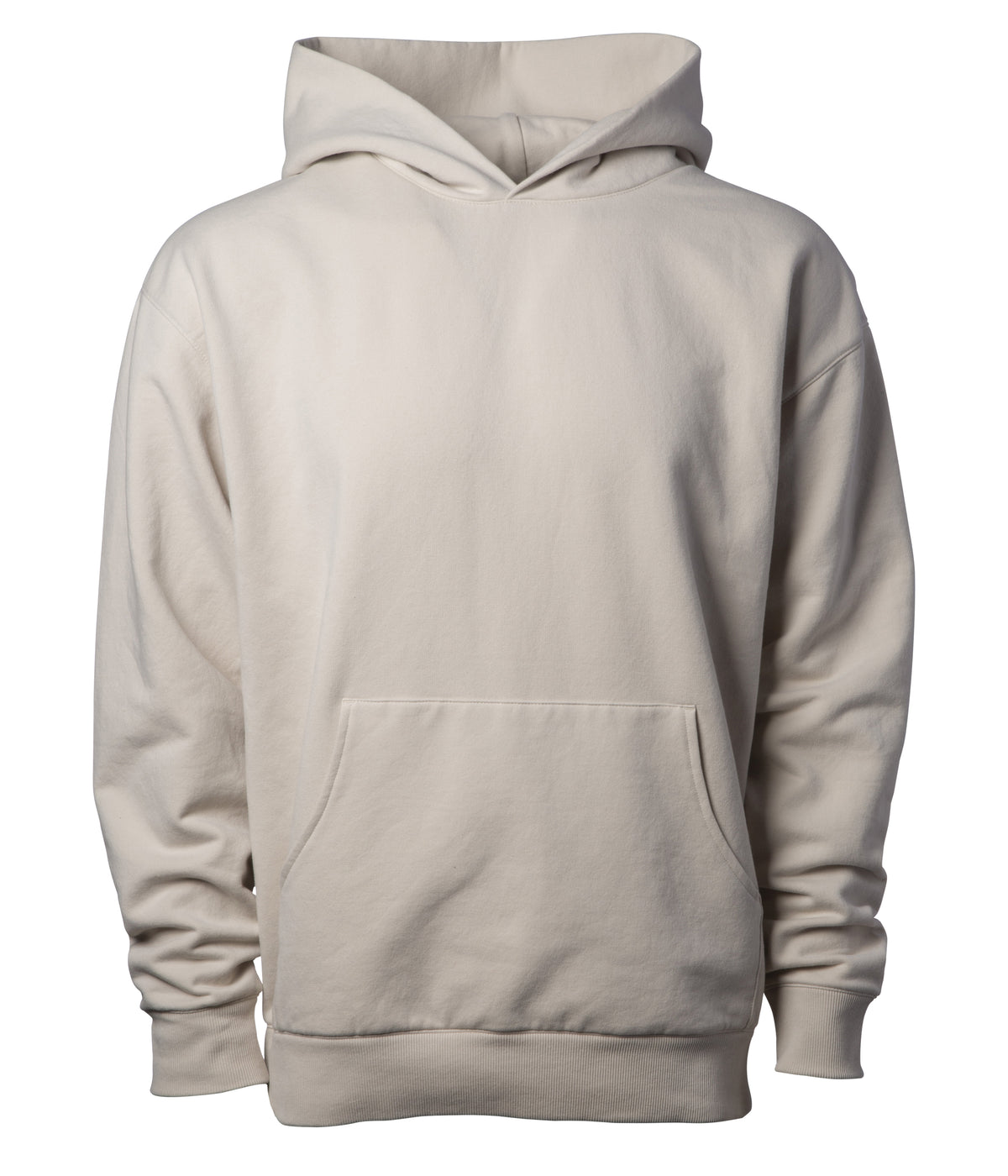
The fabric structure determines how perspiration travels through a running hoodie. Polartec Power Dry uses two yarn types within one knit, creating more surface area for water uptake on the outside. This encourages liquid to move away from the skin and spread across the outer face for evaporation. The construction is intended for clothing worn close to the body.
Polar Fleece and Sherpa
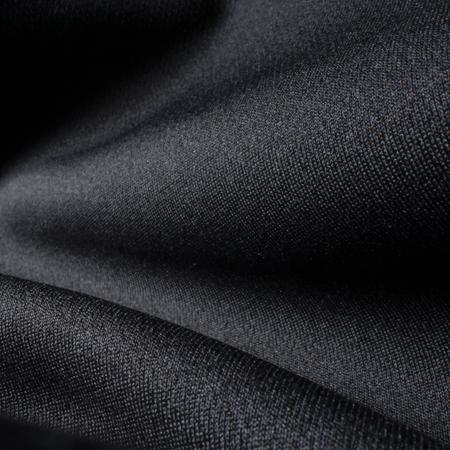
Sherpa-style fleece has a curled, clustered surface that becomes a visible part of a hoodie's design. Thermal-fleece ranges include shearling-like textures with different pile structures, suitable for use as an exterior fabric or lining.
Polar fleece holds air within its raised pile, contributing insulation in a hooded outdoor layer. The base is knitted and then finished to develop the surface. Polyester is commonly used, producing a fabric with substantial volume relative to its mass.

Merino Wool for Outdoor Layers
A machine-washable merino hoodie needs a defined drying procedure in its care specification. Suitable wool garments can be washed on a wool cycle, and many require flat drying. The selected fabric treatment and proposed care label need to be developed together.
Merino absorbs and releases water vapor within the fiber. Liquid-moisture performance can be developed through additional processing. Woolmark documents a hydrophilic softener applied after dyeing by padding or exhaustion, followed by heat treatment. In a double-jersey construction containing a hydrophobic yarn, that treatment can improve liquid transfer through the material.

Selecting the Surface for Printing
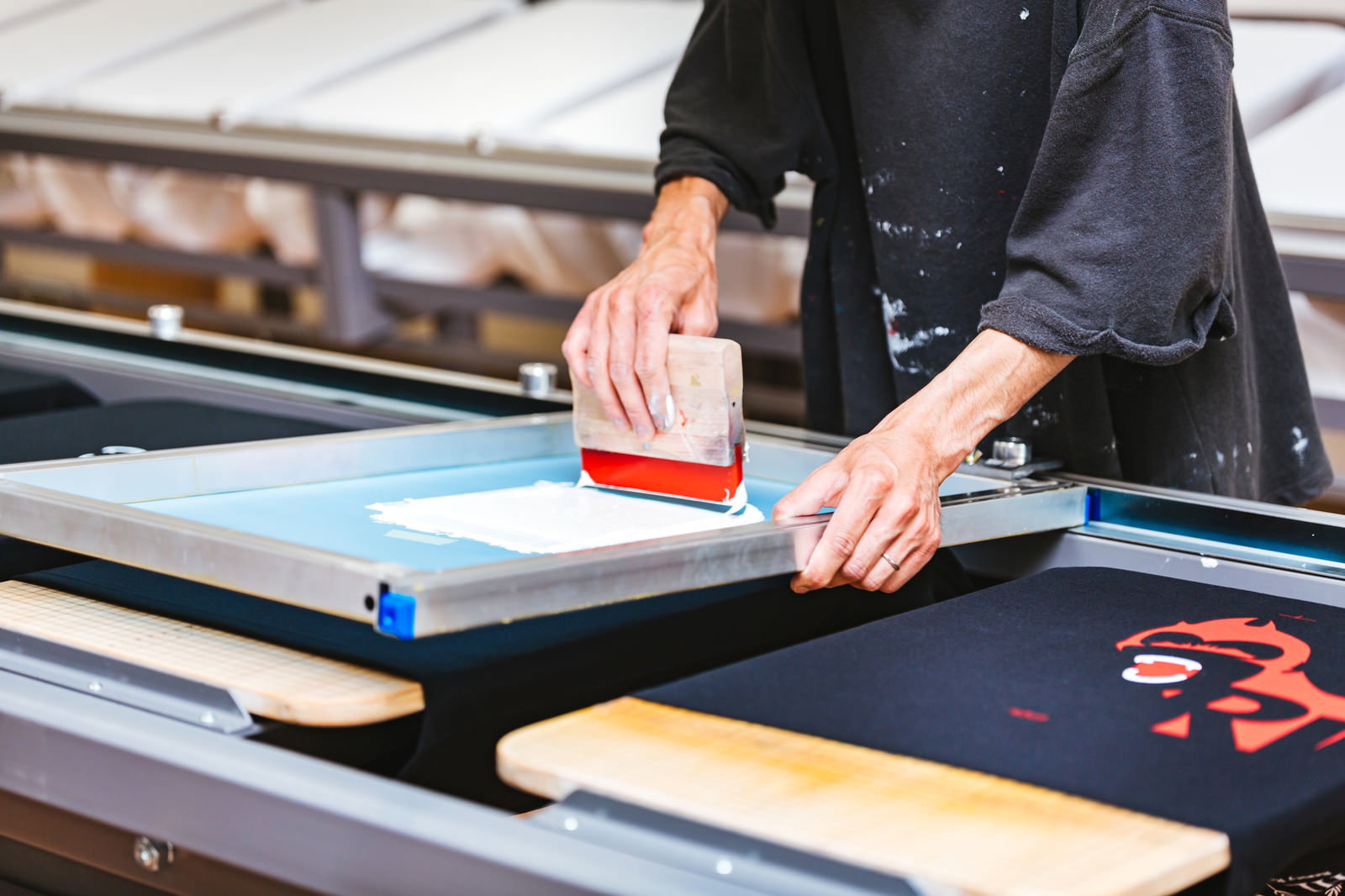
A smooth cotton face provides an established surface for screen printing and direct-to-garment printing. The selected color and finish belong in the print trial, including any pigment-dye or mineral-wash treatment used on the garment.
Polyester-containing and specially dyed fabrics may require a dye-blocking underbase and a suitable low-cure system. Dye movement can change the color of the printed layer after curing, making light-colored ink useful in the trial. Independent Trading Company's printing guidance includes checking for changes that develop several days after printing.
Direct-to-garment pretreatment follows the printer and ink system. Epson's SureColor F1070 guidance specifies a pretreatment process for supported 50/50 cotton-polyester and tri-blend garments, including the solution and dilution.
The trial should carry the artwork at its intended size, including the smallest lettering and a solid printed area. Record edge definition, ink coverage, and appearance after laundering. The retained sample should identify the fabric color, ink system, pretreatment or underbase, and curing conditions.
Embroidery on Stretch Fabric
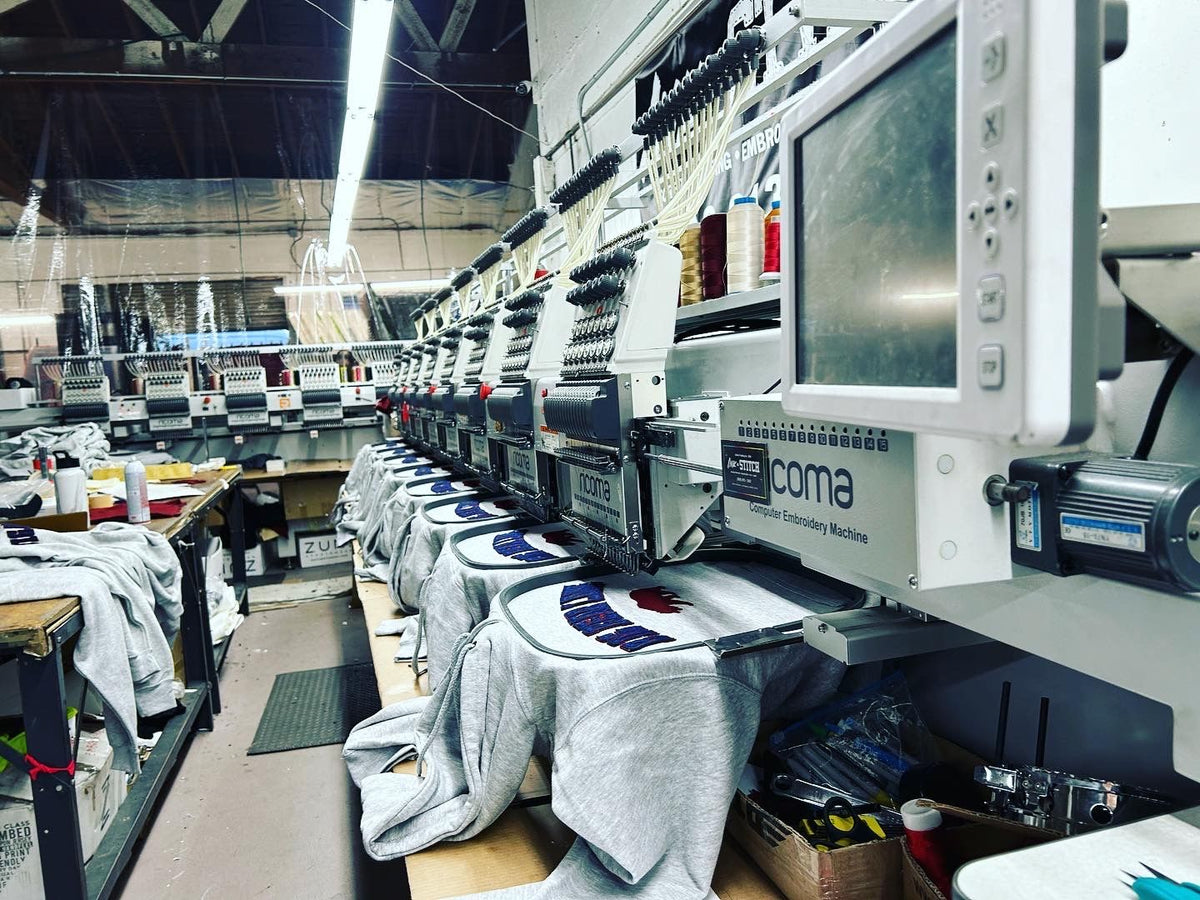
The intended artwork size needs to be established before choosing the embroidery backing. Stitch density and the area covered by the design influence how much support a flexible knit requires. Madeira specifies cut-away stabilizers in different weights for applications ranging from lighter knits to dense designs on substantial sweatshirts.
Cut-away backing remains beneath the embroidery after the excess is trimmed. On a light jersey or soft lounge fleece, its thickness and trimmed edge are felt from inside the garment. The sewn sample should therefore include the final backing at the actual logo size, with lettering clarity and the flatness of the surrounding fabric checked before production.
Cuffs and Hood Linings
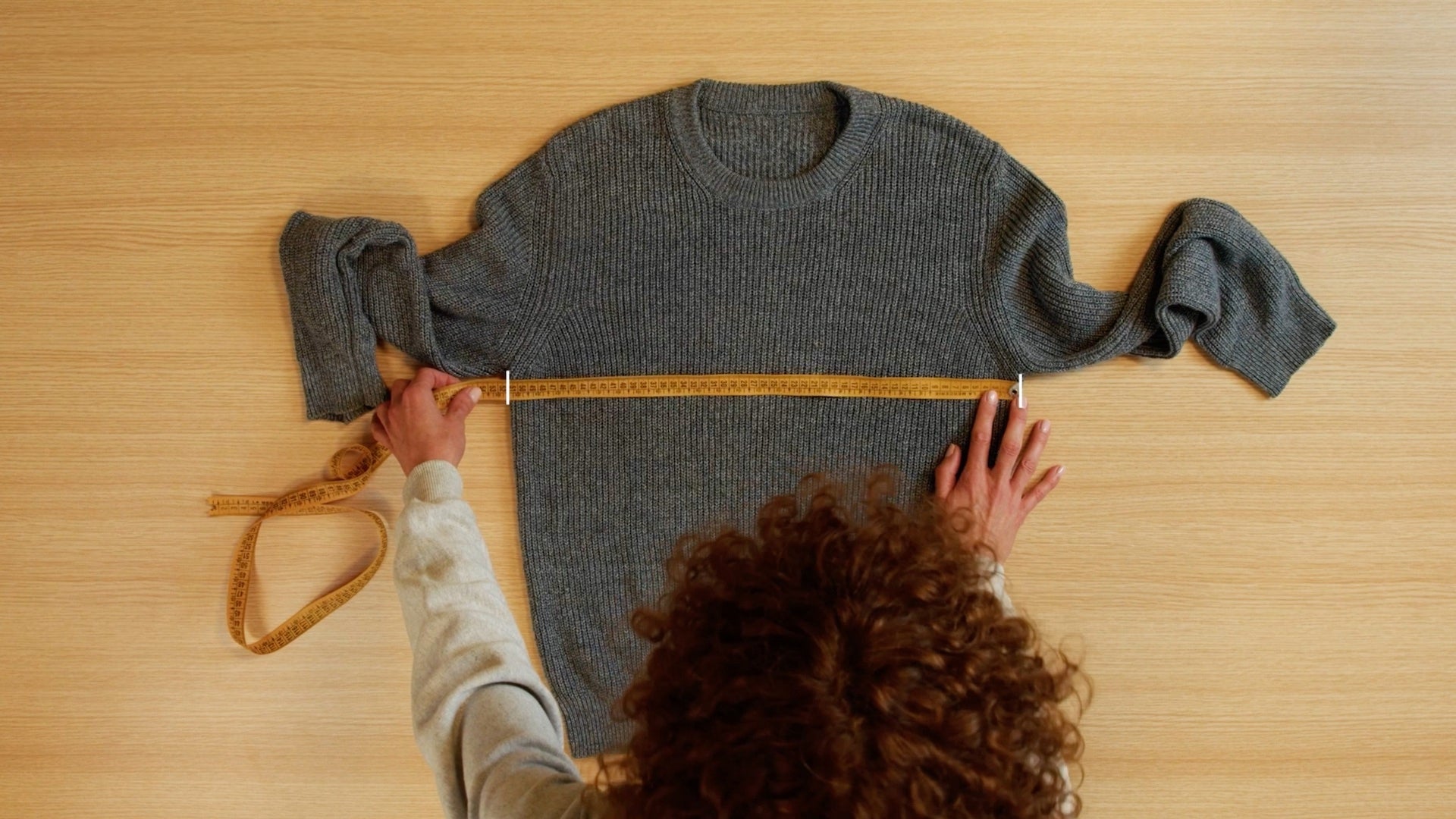
A cuff measurement needs to identify whether it is a flat width or a complete circumference. For a simple tubular cuff laid flat, 10 centimeters across represents approximately 20 centimeters around. The measurement is taken with the rib relaxed.
Rib stretches across its width to pass over the hand, and cotton-elastane constructions can assist recovery around the wrist. The trim has its own composition and weight. Its finished opening is developed in relation to the sleeve opening, which determines how much sleeve fabric gathers above the cuff.

A self-lined hood repeats the main material inside the hood. AS Colour's Heavy Hood uses 400 GSM fleece containing 80% cotton and 20% recycled polyester, with self-fabric lining and 2 × 2 rib at the cuffs and hem.
For an illustrative hood using 0.30 square meters of 400 GSM outer fabric and 0.30 square meters of 180 GSM jersey lining:
Hood fabric mass = (0.30 × 400) + (0.30 × 180) = 174 grams.
The assumed areas include seam allowances. Thread, drawcords, eyelets, and other components are additional.
A deep-pile lining increases the thickness enclosed around the hood opening. The sewn edge contains the outer fabric, lining, and turned seam allowances, so this part of the hood should be assessed in the intended materials.
Measuring Shrinkage After Washing
A hoodie body measuring 70.0 centimeters before laundering and 67.9 centimeters afterward has shortened by 2.1 centimeters.
Length shrinkage = 2.1 ÷ 70.0 × 100 = 3%.
If its chest width changes from 60.0 to 58.8 centimeters, the reduction is 2%. Length and width can change by different amounts as knitted loops relax from manufacturing tensions. Fabric construction and finishing affect this dimensional change.
An initial in-house development screen could use three complete wash-and-dry cycles following the proposed care instructions. This is an example procedure; a formal requirement needs an agreed method and allowable change.
The measurement sheet should record body length, chest width, sleeve length, cuff opening, and hem width at the same points before and after laundering. Include the garment size, washing conditions, drying method, and conditioning before measurement.
For a zip hoodie, assess the flatness of the front opening after washing. The completed sample includes the body fabric, rib, zipper, and stitching in their sewn positions. A decorated sample can carry the production print or embroidery through the same care procedure.
Pilling and Surface Appearance
ASTM D4970/D4970M assesses pilling and related surface changes using a Martindale tester. Specimens are compared with visual references to assign a grade. The test record identifies the fabric's condition, including any laundering before assessment. ASTM places a caution on shipment acceptance under this method because interlaboratory data are unavailable.
For a fabric-development comparison, agree on the laboratory, exposure, specimen preparation, and assessment procedure. Each report should identify the fabric article, tested face, and production finish. A sweatshirt's outer face and brushed reverse require clear specimen identification.
The assessment can record fuzzing, color change, and loss of surface cover alongside the pilling grade. Fiber characteristics, yarn construction, and finishing all affect these results. Keep the comparison swatch in the same dyed and finished condition as the tested material.

Writing the Fabric Request
An example specification for an everyday printed pullover:
Supply three-end sweatshirt fleece containing 80% cotton and 20% polyester overall, with a 100% cotton face yarn. Target finished weight: 320 GSM ±5%. Brushed reverse.
Identify the fabric article and composition for each colorway. State the supplied width and usable cutting width. Quote matching 2 × 2 rib separately, including its composition, weight, and color reference.
Provide sample-yardage availability, minimum quantity per color, price unit, and production lead time. Include dimensional-change and pilling reports with the test methods, specimen preparation, exposure, and results. State any differences between the offered fabric and the requested specification.
Quote a separate hood lining as its own material. For a self-lined hood, include the lining pieces in the main-fabric consumption.
Converting Fabric Prices Into Garment Cost
This fabric-only example assumes a quotation of $6 per kilogram, a supplied width of 1.8 meters, and a finished weight of 320 GSM.
One linear meter contains 1.8 square meters of cloth:
Weight per linear meter = 1.8 × 320 ÷ 1,000 = 0.576 kilograms.
At the assumed kilogram price:
Cost per linear meter = 0.576 × $6 = $3.456.
A cutting allocation of 2.0 linear meters per hoodie gives:
Main-fabric cost = 2.0 × $3.456 = $6.912, or approximately $6.91 per garment.
The two-meter allocation includes the assumed cutting allowance. Actual consumption comes from the cutting layout at the usable width and the order's size mix.
Usable cutting width determines the space available for arranging pattern pieces. Excluded edge areas remain part of the purchased cloth. Rib, separate lining, labels, fastenings, decoration, and freight receive their own entries in the garment costing sheet.