How to find and work with a clothing manufacturer.
From picking the kind of maker you need to the day your first order clears US customs.
66 shirts per color from one 100 m mill roll at 1.5 m a shirt 50 pieces pulled for inspection from a 300-piece order 20% extra US tariff on most China-made clothing, over the normal duty $11.46 landed cost of a $7.50 cotton tee from China in the worked example
There are four ways in: a sourcing service, a B2B platform such as Alibaba, a trade show, or US customs records naming who supplies a brand you already know. Most of the work comes after that, in the purchase order, the inspections and the customs entry.
A first order of a few hundred pieces usually goes in a shared container, and the sea leg is the longest part of the job: 28 to 42 days door to door from China to the US West Coast, or 45 to 60 to the East Coast. On FashionMe's Made to Order schedule the steps before it are a quote within 24 hours, 7 to 12 days of sampling with one or two revision rounds, and 15 to 20 days of bulk production. Added up from the first inquiry, that is 51 to 75 days to the West Coast and 68 to 93 to the East. Courier time for samples, 2 to 3 weeks for a lab dip if the color is custom, any wait for bulk fabric and the days you spend on approvals add to those totals.
Which kind of manufacturer you need.
Ready-made stock, full package or CMT.
The three arrangements differ in how much of the garment you design and who buys the cloth.
- Ready-made stock with your labels. The supplier sews your labels into garments it already makes and packs them to your instructions.
- Full package, also called FPP. The factory develops the pattern and buys the fabric and trims, then sews to your spec.
- Cut, make and trim (CMT). You buy the fabric and have it delivered to the factory, then pay the factory for cutting and sewing. The mill and its minimums are yours to deal with.
FashionMe calls the first kind Stock Match: 10 units minimum, shipped in 7 to 10 days, or 50 per style with your own labels sewn in. Made to Order is the full-package route, from 50 pieces.
A CMT price looks lower than a full-package one until you add the fabric, the trims and the cash tied up in them.
Maker's Row lists US factories by product. One within driving distance can be visited whenever a sample needs checking. Its price has no ocean freight or import duty in it. An overseas quote compares with it only after being turned into a landed cost.
Where to find factories.
Four sources of leads, and three checks to shorten the list.
Sea freight arriving in the United States is listed on a vessel manifest, and CBP releases manifest data under 19 CFR 103.31. Panjiva, ImportGenius and ImportYeti index it. A search on a brand that sells the kind of garment you want to make returns the shipper's name and address, with how much it sends and how often.
The shipper on a bill of lading isn't always the factory; often it is a trading company, a freight forwarder or the brand's own buying office in Asia. A search in the company register tells you whether the name belongs to a factory or a trader.
The same regulation lets an importer ask CBP to keep its name and address, and its suppliers', out of the released data. A request lasts two years, renewable. Brands that file one come up with no suppliers at all.
Only sea shipments are in the data; goods flown in, or trucked across a land border, never show up.
A garment's care label names the business responsible for it or gives a registration number (RN), issued by the FTC only to US businesses. Older pieces sometimes show a WPL number. The FTC stopped issuing those, but existing ones still identify a company. Looking up either number gives the name of the US brand or importer to run through the manifest search.
Alibaba gives a Verified Supplier badge to companies a third-party inspection firm has checked. The equivalent marks are Audited Supplier on Made-in-China and Verified Manufacturer on Global Sources. A search for "women's linen shirt" turns up more of the right suppliers than "clothing" does. The product catalog is a better guide than the company profile to what a supplier actually makes.
The useful test at a trade show booth is to hand over a finished sample and a swatch and ask how they'd sew it; the contacts worth keeping answer without fetching a colleague. The Canton Fair's autumn 2026 session has more than 32,000 exhibitors, with clothing in the third phase, October 31 to November 4.
- Canton Fair, Guangzhou (clothing in phase 3)
- May, November
- Intertextile Shanghai (fabric only)
- March, August
- MAGIC, Las Vegas
- February, August
- Texworld New York City, Javits Center
- January, July
A sourcing service or agent does the searching and checking for a fee. FashionMe charges a sourcing fee of 12 percent of the supplier invoice on orders under $5,000, stepping down to 5 percent above $50,000; on Stock Match it is built into the price. Other agents bill a flat fee or take their cut as a markup on the factory price or a commission from the factory.
Three quick checks shorten the list: location, the company register and fit with your product.
Garment making in China clusters along the coast, often in towns devoted to one product. Plenty of good factories have moved inland. With one of those, the thing to ask is where the fabric and trims come from and how long they take to arrive.
Every registered Chinese company has an 18-character Unified Social Credit Code. Entered into GSXT, the government's free register, it brings up the company's name, registered capital and licensed business scope, with a note of whether the company is still active. The site is in Chinese only, behind a captcha that can be slow to load from abroad. Manufacturing should appear among the licensed activities. A scope that lists only sales belongs to a trader.
To test fit with your product, ask for photos of a similar garment the factory has made in bulk. A catalog full of jersey basics says little about how the same workshop would handle a structured jacket.
Working out your fabric minimum.
The mill's minimum divided by the fabric in one garment.
Any order where cloth is bought for your run, full package or CMT, has a floor set by the fabric. Your first email should quote at least that quantity.
The calculation starts with how much fabric one garment uses. A pattern maker or the factory's cutting room gives the exact figure. Until you have it, a published range will do: a shirt takes about 1.3 to 1.6 meters of 54-inch cloth (1.4 to 1.75 yards), and less on wider cloth.
Mill minimums apply color by color, and many mills won't sell less than one full roll per color, about 100 meters. A custom shade needs a separate dye lot. At one North American fabric supplier a custom dye lot is about 400 pounds of fabric: 300 to 400 yards of a heavy cloth, or 800 to 1,000 yards of a light one. The gap between a mill's stock-color and custom-color minimums, divided by the fabric in one garment, is the number of extra units a custom shade commits you to. In a light shirting at 1.5 meters a shirt, that dye lot comes to roughly 490 to 610 shirts in one color, against 66 from a stock-color roll.
- Mill minimum, one color
- 100 m
- Fabric per garment
- 1.5 m
- Shirts one roll yields
- 66
An order of 40 in that color leaves the rest of the roll paid for and sitting at the factory. Smaller runs are possible when the factory buys further down the chain. Converters buy unfinished greige fabric from mills, then dye, print or finish it, and offer more colors without the mill's large minimum. Jobbers sell surplus from converters and mills in small quantities. A jobber fabric that sells out is usually gone for good. Reordering the style then means finding a new fabric.
The cutting room's marker, the layout of pattern pieces across the width of the cloth, decides how much of the fabric ends up in garments. CAD markers on woven garments typically use 85 to 92 percent of it. Say a better marker takes your shirt from 1.5 meters to 1.38. Fabric cost per shirt falls by 8 percent, and a 300-piece order needs 36 fewer meters. At the floor you still buy the whole roll. It now yields 72 shirts. An order of 66 leaves about 9 meters paid for and unused, and the saving reaches your unit cost only once the order rises to 72.
Jersey mills usually quote prices and minimums by the kilogram. Converting a minimum to garments takes the width and the weight per square meter (GSM). One garment's fabric weight in kilograms is meters per garment times width in meters times GSM, divided by 1,000. The mill's minimum divided by that figure is your floor.
Trims have separate minimums: a woven label, a branded zipper pull or a custom snap needs a setup that the supplier spreads over a minimum run. Your order has to clear whichever minimum is highest, the fabric's, a trim's or the factory's.
A factory that quotes a custom-color run well under your fabric floor may have the shade in stock. If not, either it hasn't checked the fabric yet or it plans to buy the full dye lot and keep the leftover cloth for other orders. In that last case you pay for holding the cloth through your unit price.
How big the first order should be.
Order size for a first run with a factory you haven't used before.
Keep the first order to the smallest quantity your floor allows. It is where you learn how the factory works. A big run of an untested design can leave the slow sizes and colors in a warehouse for months.
A factory may set two minimums, one per order and one per style. With 300 per order and 75 per style, four single-color styles of 75 meet both and clear a 66-unit fabric floor.
A ready-made test order tells you whether a style sells before anything is spent on development. The budget for a custom first order needs room for one extra sample round, in case the pre-production sample needs changes.
What to put in the first email.
What the sales desk needs to quote, and what to ask in return.
A request for quotation (RFQ) needs a subject line a busy sales desk can sort at a glance, for example "RFQ: women's linen shirt, 300 pcs, 2 colors, FOB Ningbo." In the body, cover:
- Who you are, where you sell and the date the goods need to arrive.
- The garment in a sentence or two, with photos or a sketch. Detailed drawings can wait.
- Your quantity per style and per color, starting from your floor, with the yearly volume you expect if the first run sells.
- Your target price per unit, on a named delivery term and port.
Then the questions:
- The minimum order quantity (MOQ) per style, per color and per size.
- Whether they're a factory or an agent, and if an agent, which factory would sew the order.
- The registered Chinese company name and its Unified Social Credit Code.
- The sample fee and sample lead time, and whether the fee comes off the bulk invoice.
- The bulk lead time, and what starts the clock: the deposit, fabric arrival or sample approval.
- Two brands making a similar garment with them that you can contact.
A reply that skips a question needs a follow-up before the supplier goes on the shortlist. Note how long the answers take. The person who replies is usually the one who will handle your sample comments later.
Reading the replies.
Warning signs in the answers, and checks you can run without a visit.
A reply might read: "MOQ 100pcs no problem, price depends on fabric, add my WhatsApp for faster communication, we need 100% payment before production."
It gives the minimum as one number and ignores the per-color question. Moving to a chat app is fine if prices, decisions and approvals still go into email or an order system you can search later. Full payment up front on a custom run is the term to push back on: until the goods ship, the whole risk is yours.
A minimum that rises after you've agreed to it is a renegotiation. At this stage walking away costs nothing. Many factories quote from a sales office in a big city, away from the plant. If the quote comes in another company's name, that company may be the factory's own trading arm or an intermediary; a register search on both names settles which.
The golden-sample swap puts premium fabric into the sample you approve and a cheaper substitute into the bulk. The defense is one approved piece, sealed and signed as the reference, with the fabric's composition and weight written into the tech pack.
Undisclosed subcontracting surfaces once production starts: the company you signed with passes your order to a workshop you never approved and blames the workshop when the goods come back wrong.
A live video call gives a first look at a factory you can't visit: the cutting table and a sewing line with another customer's order on it say more than the showroom does. The two reference brands from your first email can tell you whether their bulk matched the approved sample.
Certificates and test reports can be checked with the body that issued them, using the report number. Some schemes run public lookups: OEKO-TEX Label Check for STANDARD 100 labels and WRAP's list of certified facilities. A certificate the issuer can't find is a reason to drop the supplier.
"We are certified" doesn't say which scheme, or when. Audit reports and certificates expire on different schedules:
- amfori BSCI full audit, graded A to E
- 2 years
- SMETA audit report, with no grade or pass mark
- 2 years
- SA8000 certificate, with surveillance audits in between
- 3 years
- WRAP certificate, single level since March 2026
- 1 year
- OEKO-TEX STANDARD 100 certificate
- 1 year
A report older than those periods has lapsed under the scheme's rules. The first four in the table look at working conditions. ISO 9001 is about the quality management system. GOTS and GRS certify organic and recycled content, and OEKO-TEX STANDARD 100 tests the fabric for harmful substances.
Inspection firms charge from $500 for a one-day audit with travel and a written report. QIMA's price is $649. TÜV and SGS start at $800. For an order of 300 tees at $7.50, worth $2,250, that adds 22 to 36 percent. Where a sourcing service assigns the factory, the audit questions go to the service: what it audits, how often and against which standard.
Protecting the design and writing the tech pack.
An NNN agreement before the drawings go out, then the document everything is checked against.
A factory that has your design can make it for itself or sell around you to your customers. A US-style NDA covers disclosure only. The NNN agreement used in China adds clauses against using the design and going around you, and it should be signed while the factory has seen nothing more than photos and a sketch. To hold up, the agreement needs to name the factory by its registered Chinese name and bear the company's official seal, called a chop. The Chinese text should normally control, with disputes going to a court in China, which can reach the factory's assets.
China registers trademarks on a first-to-file basis. The US Commerce Department advises brands to file there early, ahead of anyone who might register the name in bad faith.
The tech pack is the document the factory prices from and the inspector checks against. A complete one includes:
- Flat sketches of the front and back, with callouts.
- A measurement chart for every size, with a tolerance on every point of measure.
- A bill of materials: fabrics by composition, weight and width; trims by supplier and part number.
- Construction notes giving the seam and stitch types, with stitch length in stitches per inch.
- The positions of the brand label and the care label.
- Packing instructions, down to the fold, the polybag and the carton marks.
A note that says only "topstitch here" leaves the line to decide. You might get one row of stitching or two. Spell out single-needle or twin-needle, 10 stitches per inch, 1/4 inch from the edge. On twin-needle work the gap between the rows, in millimeters, is a separate measurement from the stitch length.
Compared point by point with the pack, the first sample exposes every place the factory had to guess, and those gaps become the edits for the next version.
Comparing quotes.
Getting quotes onto the same terms, then down to a landed cost per unit.
Quotes compare only when the finalists itemize them the same way, with fabric and trims priced apart from the sewing charge and the extras, from decoration and packaging to sampling, testing and freight, on separate lines. A split price lets you drop a color later, or change the size mix, and reprice only what changed.
The delivery term changes what a price includes. EXW means you collect from the factory door: the goods aren't loaded or cleared for export, and everything from there on is yours to arrange. FOB adds export clearance, the truck to the port and loading onto the vessel. Once the goods are on board, you pay for the ocean freight, insurance, import clearance and duty. Under DDP the seller delivers to your door with the duty paid. FashionMe ships on DDP or FOB.
The ICC's guidance on Incoterms 2020 recommends FCA for container cargo: the seller hands the goods to your carrier at a named place such as the container terminal, and the risk passes there. FOB moves the risk only once the goods are on the ship, days after the container left the seller's hands. On an FOB order, cargo insurance that starts at the handover closes that gap.
A DDP quote raises one question: who is the importer of record, the party customs holds responsible for the entry, the duty owed and any detention?
Every quote then needs turning into a landed cost per unit. US duty is charged on the value of the goods, with freight and insurance left out of the customs value. For 400 cotton knit T-shirts from China quoted FOB, at the October 2026 duty rate and with an example freight bill:
- Goods, 400 tees at $7.50 FOB
- $3,000.00
- Shared-container freight and insurance (example)
- $450.00
- Duty, 36.5% of $3,000
- $1,095.00
- Merchandise processing fee (minimum)
- $34.58
- Harbor maintenance fee, 0.125%
- $3.75
- Landed cost, before broker and bond
- $4,583.33
- Per tee
- $11.46
Duty in this example costs more than twice the freight. The broker's fee and the bond are extra, as is the interest on a deposit paid weeks before the goods arrive.
Sampling.
From the first color swatch to the sample cut from bulk fabric.
A custom color starts with a lab dip, a small swatch dyed to match your color standard. Nothing is dyed in bulk until you approve it. The North American supplier with the 400-pound dye lot quotes 2 to 3 weeks for a Pantone lab dip. A re-match takes longer.
The proto sample tests the pattern. Once that's right, a fit sample is tried on a person of your base size and measured against the chart. Last comes the pre-production (PP) sample, cut from the bulk fabric with the bulk trims; the factory cuts the bulk only after you sign it off. FashionMe charges $80 to $150 for pattern and sample development on a T-shirt and $250 to $450 on a coat or jacket, with approval from photos or from a shipped piece.
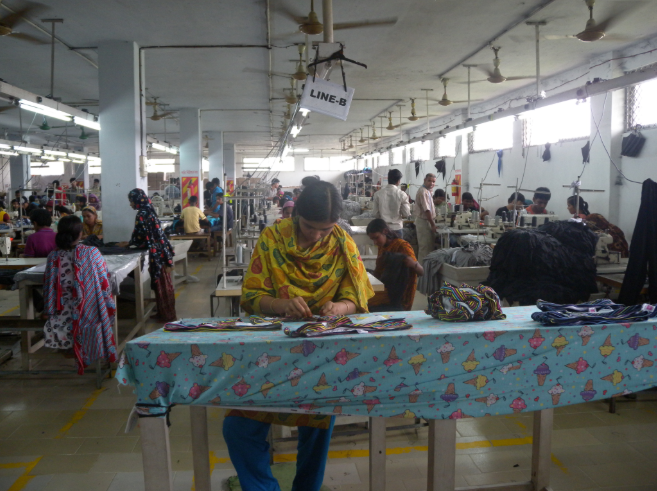
Many factories sew the PP sample in the sampling room, where the most skilled machinists work. A PP sample made on the production line, by the operators who will sew your order, is a truer preview of the bulk.
Put fit comments in measurements: "sleeve 2 cm long at size M, correct across the size run." A pattern maker can work from that without writing back. Even when photos settle the construction, shade and fit need the shipped piece, seen in daylight.
Contract terms.
What the purchase order has to settle before the deposit.
Name the governing law and the forum for disputes in the purchase order. With no arbitration clause, a dispute with a Chinese supplier ends up in a local Chinese court, in Chinese. Enforcing a foreign court's judgment there depends on a treaty or reciprocity between China and the other country. Two bodies hear foreign commercial disputes: CIETAC in Beijing and the Hong Kong International Arbitration Centre (HKIAC). HKIAC awards are enforced in mainland China under a 1999 arrangement between the mainland and Hong Kong.
The order should name the factory that will sew it, with the company you sign with answering for quality and no subcontracting without your written consent.
A factory that digitizes your pattern keeps the graded file on its computers, and without a clause it can cut your garment for someone else. The clause you want says the patterns, markers and tech pack belong to you and can't be used for another buyer.
Put the lead time in the order as a number of days from a named event, such as approval of the PP sample. The same clause should say what happens if it slips: a discount per day late, or the factory paying the difference between sea and air freight.
Payment terms.
When each payment is due and how to send it safely.
Ready-made stock is normally paid in full at order. FashionMe works that way on Stock Match and takes a deposit on Made to Order, with the balance due before shipment.
A small buyer ordering custom production usually pays a 30 percent deposit and the other 70 percent before shipment; many long-standing customers still pay the full amount ahead of loading. Several private-label makers publish a 50 percent deposit.
Tie the deposit to a signed order and an approved fit sample. The balance should follow a passed final inspection. Paying it after shipment, against a copy of the bill of lading, is something to negotiate when you have a track record.
Some buyers ask to hold part of the money back: 30 percent deposit, 50 percent before shipment and 20 percent within 10 days of receiving the goods. The last 20 percent covers bad pieces slipped into the cartons after the final inspection. Factories seldom accept it.
Most factory payments go by bank wire (T/T). Wires are cheap enough to split an order into several payments. A letter of credit protects the buyer better but costs more in bank fees. It suits orders of $30,000 to $50,000 and up with a supplier you haven't tested. At least half of suppliers refuse it. Trade Assurance, Alibaba's order protection, covers orders paid through the platform and gives access to its dispute process.
Payments should go only to an account held in the registered company's name; a different name on it is a reason to stop and ask. New bank details sent by email are worth a phone call to the factory, on a number you already had.
A rework clause belongs next to the payment terms. A batch that fails the agreed inspection is reworked or replaced at the factory's cost within a stated number of days, without moving the ship date.
Inspections.
Checking the cloth before it's cut, then the finished goods.
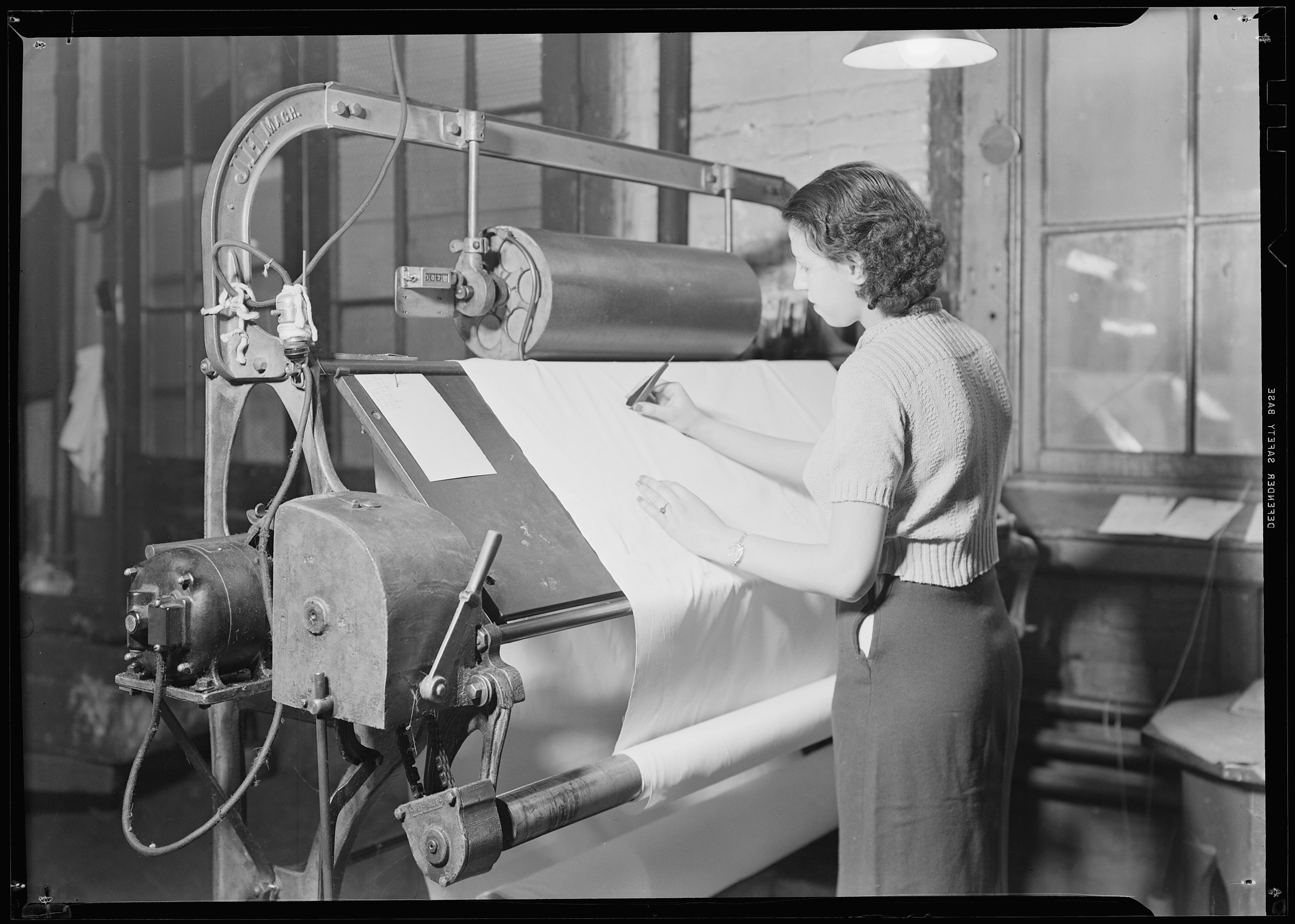
An inspection at the end of production can only report on finished goods. By then any problem in the cloth has been cut and sewn into 300 garments. A check while the fabric is still on the roll can stop the run: if the shade is off, the rolls go back to the mill before a panel is cut.
Common practice is to inspect at least 10 percent of the rolls, measuring shade, width and weight against the approved standard. Visible defects are scored by length on the 4-point system:
- Up to 3 inches
- 1 point
- Over 3, up to 6 inches
- 2 points
- Over 6, up to 9 inches
- 3 points
- Over 9 inches
- 4 points
No linear yard is charged more than four points. A common pass mark is 40 points per 100 square yards. Your order can set a stricter one.
The final inspection uses the sampling tables in ANSI/ASQ Z1.4 or the matching ISO standard, ISO 2859-1. The lot size and the inspection level set how many pieces the inspector pulls. The acceptable quality limit (AQL) sets how many defects that sample can contain before the lot fails. Clothing is commonly checked at General Inspection Level II, the standard level, with zero critical defects, AQL 2.5 for major defects and 4.0 for minor ones. On a 300-piece order the inspector pulls 50. The lot can have up to three major defects and five minor ones; a fourth major defect fails it.
Small orders can be checked piece by piece. FashionMe does this on every Made to Order run. Stock Match orders get a sample pull unless you pay $0.18 a unit for a full check. Third-party inspectors are welcome on FashionMe orders, at the buyer's expense. A factory you contract directly should agree to one in the purchase order; once the deposit is paid you have little leverage to add it.
Production and shipping.
What to watch between the deposit and the ship date, and what has to be filed before loading.
What the factory sends is all you see of the work between deposit and shipment. Agree in advance on what it sends and when:
- Photos of the bulk rolls when they arrive, held next to the approved fabric swatch.
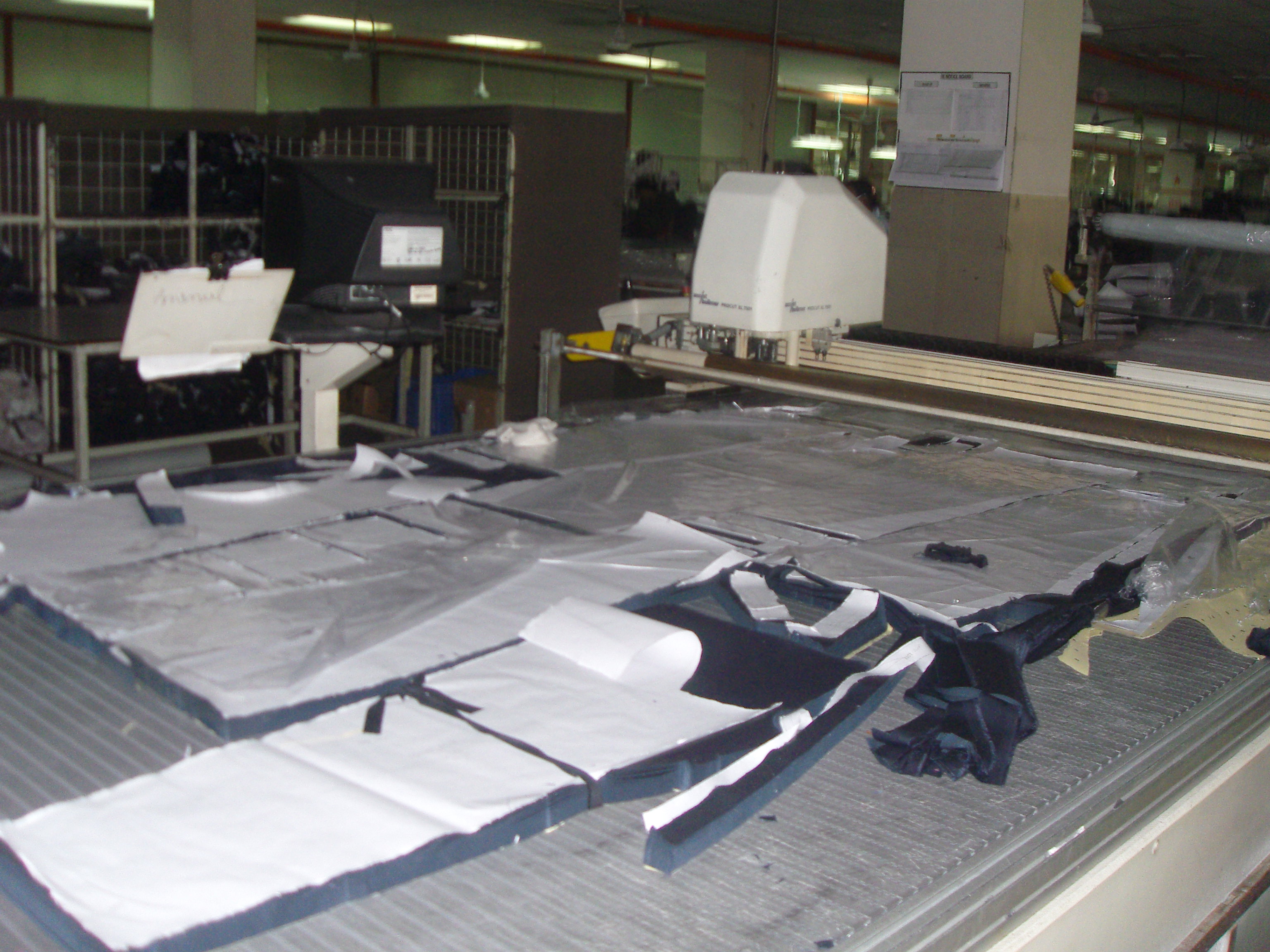
- A photo of the cutting table, where shade, fabric and the layout of the pieces all show days before sewing starts.
- Photos of the first finished pieces off the line, laid next to the PP sample.
- The final inspection report.
- Photos of the cartons or container being loaded.
Agree on one named contact at the factory and one on your side. A one-line email after every call, confirming what was agreed, leaves a written record if a dispute comes up later.
Ocean freight is normally booked 3 to 4 weeks ahead of departure, or 4 to 5 in the rush before Lunar New Year. Samples and small top-ups go by courier or air.
A sea shipment to the US needs an Importer Security Filing (ISF), lodged by the importer or its broker with the factory's and forwarder's details no later than 24 hours before the cargo is loaded onto the US-bound ship. A late or missing filing can cost $5,000 per violation. The factory's part is the commercial invoice and packing list for your broker, then the bill of lading or air waybill.
Clearing US customs.
What a formal entry needs, and what a China-made T-shirt pays in October 2026.
Shipments worth up to $2,500 can clear on a simpler informal entry, but the ceiling drops to $250 for goods under a Section 301 tariff. That puts almost any China-made order through a formal entry, filed by a licensed customs broker and backed by a customs bond: a single-entry bond for one shipment or a continuous bond covering a year of imports.
A formal entry comes with two fees: the merchandise processing fee, 0.3464 percent of the goods' value with a minimum of $34.58 and a maximum of $670.86 per entry in the fiscal year that began October 1, 2026, and for ocean cargo the harbor maintenance fee, 0.125 percent.
Duty depends on the garment's code in the Harmonized Tariff Schedule (HTS). The code turns on fiber and on whether the fabric is knit or woven. Men's and women's cuts often have different codes. Normal rates on clothing go as high as 32 percent: a cotton knit T-shirt (6109.10.00) pays 16.5 percent, a synthetic one (6109.90.10) 32.
Most China-made clothing pays a further Section 301 tariff, imposed by the US Trade Representative in 2019 and set at 7.5 percent since February 2020. The 2025 emergency-powers (IEEPA) tariffs are gone. The Supreme Court struck them down on February 20, 2026. Since July 24, 2026, a new Section 301 tariff adds 12.5 percent for goods from China and Vietnam and 10 percent for Bangladesh, Cambodia, Indonesia and Malaysia.
- Cotton knit T-shirt from China, normal rate
- 16.5%
- Section 301 tariff, 2019 list
- 7.5%
- Section 301 tariff since July 24, 2026
- 12.5%
- Duty on the customs value
- 36.5%
A synthetic tee, at 32 percent normal duty, comes to 52. Textiles and apparel from Bangladesh, Cambodia, Indonesia and Malaysia are due to get tariff-rate quotas, and goods inside a quota won't pay the new tariff. The quotas are to run for an initial three years, with volumes based on the countries' imports of US inputs. Until the volumes are set, the full rate applies.
The $800 duty-free allowance for small parcels ended for goods from China on May 2, 2025, and for every other country on August 29, 2025. The Court of International Trade upheld the suspension on August 13, 2026; Congress had already repealed the allowance in the One Big Beautiful Bill Act, effective July 1, 2027. A box of samples no longer gets through on value alone and owes duty unless another exemption or a zero rate applies.
Rates have moved several times since 2025. A separate Section 301 investigation into China is still open. A customs broker can confirm your code and the current rate when you price an order.
Forced labor and UFLPA.
How the law treats cotton goods, and what to ask before you order.
CBP lists apparel, cotton and cotton products among its top priorities in enforcing the Uyghur Forced Labor Prevention Act. Cotton supply is the reason: Xinjiang grew 6.165 million of China's 6.641 million metric tons in 2025, about 93 percent. Its fiber is spun and traded through mills across Asia, and CBP's 2023 apparel detentions included goods made in Vietnam and Cambodia.
The law presumes that anything made wholly or partly in Xinjiang was made with forced labor, and it bars those goods from entry. To get a detained shipment released, you have to show by clear and convincing evidence that the presumption is wrong. That's a higher bar than the "preponderance of the evidence" standard in most US civil cases; in practice it takes paperwork tracing the garment through every supplier back to the raw fiber. Goods with no Xinjiang link at all go through an applicability review, where you show the law doesn't apply to the shipment.
The UFLPA Entity List names companies whose goods are barred wherever they are made, even with no Xinjiang material in them. The August 3, 2026 update was the first since January 2025 and the largest so far, adding 43 companies. Apparel and cotton firms are among the 187 entities now listed.
Before the purchase order is signed, a US-bound cotton order needs two answers from the supplier: who spun the yarn, and where the cotton was grown. The answers go into the order as a warranty. Every company in the chain, from the spinner to the fabric mill, is checked against the current list. If a cotton style can't be traced back to the fiber, the detention risk sits with the importer of record, which on FOB or EXW terms is you.
Labels and product testing.
The US label rules and product tests, with a note on selling into Europe.
The Textile Fiber Products Identification Act requires most clothing sold in the US to show its fiber content by generic name and percentage by weight. The label must give the country of origin and the name or RN of the business responsible. On a garment with a neck, the country of origin goes on a label at the inside center of the neck, between the shoulder seams. Goods without a proper origin marking can be held at the port until they are re-marked. Care instructions are covered by a separate rule, 16 CFR Part 423. The care label has to stay readable for the life of the garment.
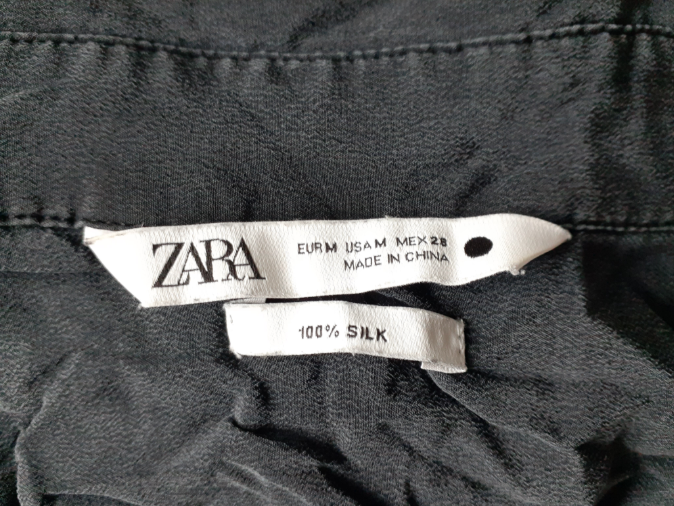
Most sewn garments take the country of origin on that label from where they were assembled, under 19 CFR 102.21. Yarn and fabric origin start to matter when you claim a trade-agreement rate: under USMCA's yarn-forward rule they decide whether a garment moves duty-free between the US, Canada and Mexico.
Every clothing textile sold in the US must meet 16 CFR 1610, the CPSC flammability standard for wearing apparel. A 45-degree flame test sorts fabric into three classes. Class 3 can't be used. Plain-surface fabrics of 2.6 ounces per square yard or more are exempt whatever the fiber. Fabric made entirely of acrylic, modacrylic, nylon, olefin, polyester or wool is exempt at any weight. Brushed or napped cotton is not a plain surface and gets no weight exemption. For non-exempt adult clothing the importer issues a General Certificate of Conformity, whose data has had to be filed electronically at entry since July 8, 2026, for shipments of any size. The mill's test report for your color and finish is easiest to get at fabric approval.
Children's sleepwear has stricter standards, 16 CFR 1615 and 1616, under which the seams and trims are tested with the fabric. Anything for children 12 and under has to meet the lead limits in the Consumer Product Safety Improvement Act (CPSIA): 100 parts per million in the material and 90 in paint and surface coatings. Testing goes to a CPSC-accepted lab. The goods need a Children's Product Certificate and permanent tracking labels. Dyed or undyed natural-fiber textiles are among the materials CPSC has found never exceed the lead limits. Those skip third-party lead testing. The phthalate limits reach clothing only where it counts as a child care article. For garments that means sleepwear for children 3 and under. Hood and neck drawstrings are banned on children's upper outerwear in sizes 2T to 12.
California's Proposition 65 requires businesses with 10 or more employees to warn California buyers about exposure to listed chemicals. Lead, cadmium and some phthalates are on the list. Test reports should cover the metal trims and any plastisol (plastic-ink) prints.
EU sales follow Regulation (EU) 1007/2011 for fiber names and composition, with care symbols left voluntary. Since December 13, 2024, the General Product Safety Regulation has required the manufacturer's and importer's names and contact addresses on the product, its packaging or an accompanying document. France and the Netherlands charge a producer-responsibility fee on every garment sold, and every EU country has to run such a scheme by April 17, 2028.
Common questions.
Do I need a finished tech pack before asking for a quote?
A first price can come from photos or a sketch. Some services develop the tech pack and graded pattern with you before sampling. A photo quote assumes the fabric and the construction. It stays a range until the factory has priced your actual spec.
Do I need my own freight forwarder?
On FOB or FCA terms, yes. The factory's job ends at the port or the terminal. Booking the ocean freight, filing the ISF and getting the paperwork to a customs broker are then your jobs. A forwarder can take on all of them. On DDP the seller arranges the whole chain.
When is the worst time to have an order in production?
The weeks around Lunar New Year (February 6 in 2027). Factories start slowing 3 to 4 weeks before it, and most close from January 30 to February 14. Output may not be back to normal until March. Up to a quarter of workers don't return to the same employer afterward. An order meant to ship before the break needs its production plan final by late November or early December.
How do I move to another factory later without starting over?
Keep everything a second factory would need to make the same garment. Most important is the graded pattern, saved as DXF files in the AAMA/ASTM layout that pattern software uses to exchange files. The tech pack, the approved sample and the names of your fabric and trim suppliers complete the set. A new factory can then sample straight from your pattern.