Top 10 Private Label Apparel Manufacturers
Private label production covers several kinds of factory work. Some orders use a garment that is already being made. Other projects begin with measurements, a fabric reference and a sketch that still has to become a production pattern.
The smallest quantity published on a manufacturer's website does not describe every cost attached to that order. Fabric mills can impose their own minimum. Labels may be ordered in larger quantities than the garments. Sampling, grading, dyeing and packaging can each add a separate commitment before bulk sewing starts.
The manufacturers below publish enough information to examine those conditions. MOQ is included where it is available, along with sampling, material responsibility, production location, payment timing, quality control and shipping details.
1. FashionMe
A reference image can enter FashionMe through Stock Match when a close existing garment is available. The published starting quantity is 10 units, with a normal lead time of 7–10 days. The sourced garment already has a pattern, fabric, available color range and size set. Branding can be added within the limits of that product. [1]
A new body shape, specified fabric weight, custom pocket, wash treatment or construction change requires a Made-to-Order project. FashionMe currently starts that work at 50 pieces. Sampling is listed at approximately 7–12 days. One or two revision rounds are included in the published cut-and-sew program. Bulk production usually takes another 15–20 days after development. [2]
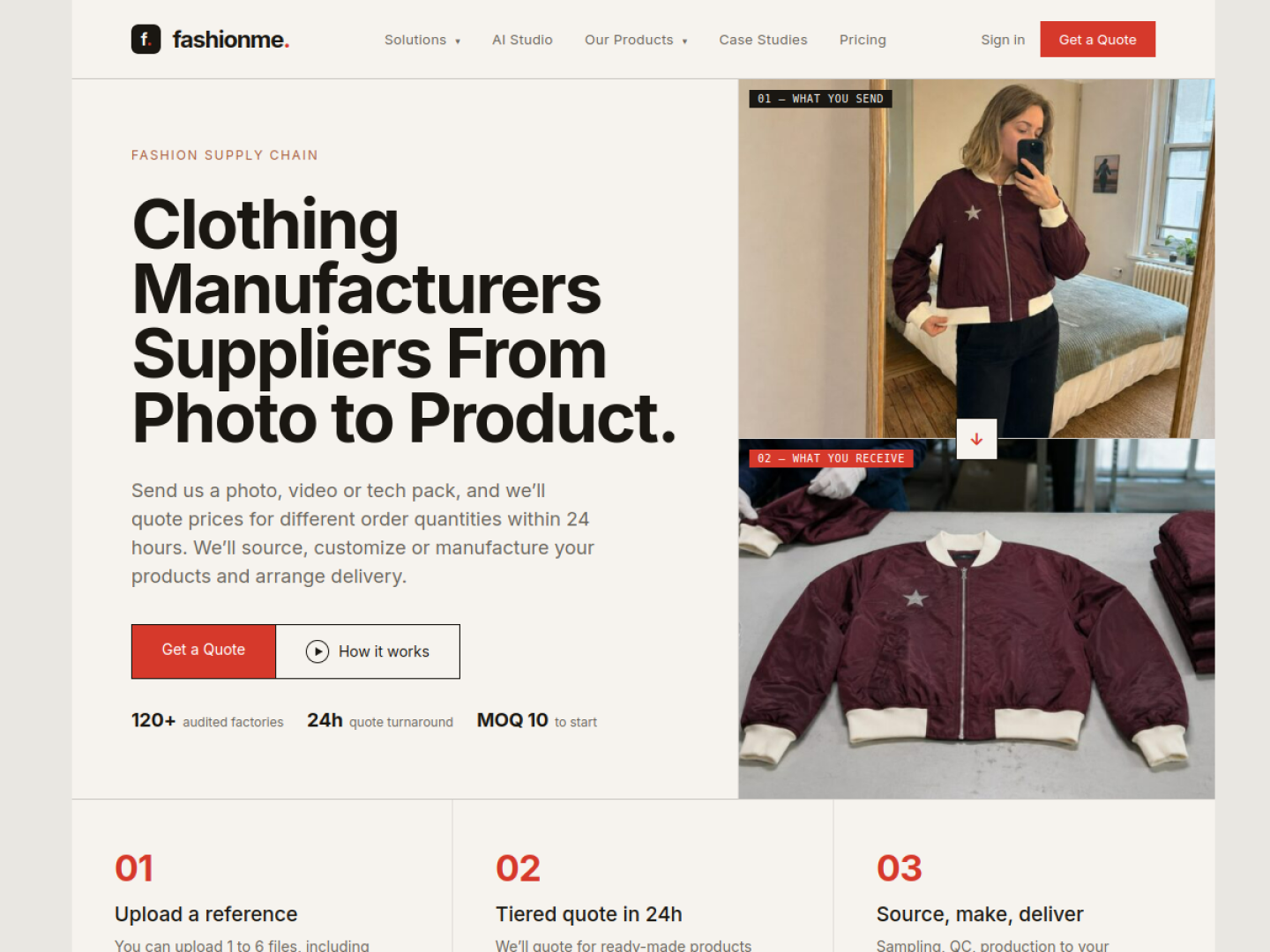
Pattern making and grading are included in the Made-to-Order workflow. Full-package production lets FashionMe coordinate the fabrics and trims. A buyer with its own material supply can use CMT. Photos, sketches, videos and existing samples can be used to begin development when a finished tech pack is unavailable.
Made-to-Order bulk goods receive 100% final inspection. Stock Match normally uses sample-pull inspection. The current pricing page lists full inspection for Stock Match as an additional per-unit service. The same page places woven or printed relabeling at a higher component minimum than the basic Stock Match garment quantity, so a ten-piece garment order does not automatically mean ten-piece custom label production. [3]
FashionMe says its production workflow covers more than 120 audited factories. Factory assignment varies with product type and process. DDP and FOB shipping are available for international orders.
2. The Evans Group
The Evans Group uses a top-of-production garment as a control point before a small run is completed. TEG refers to this garment as the TOP. Client approval is followed by production checks during sewing and another review after the run is finished. Factory Level Production also uses third-party final inspection. [4]
Its Los Angeles studio handles low-volume work. The main manufacturing material lists 10–50 pieces per style for Studio Level Production. Other TEG pages state that cuts below ten can also be handled in specific projects because the studio works with production runs extending down to single units.
A normal studio schedule is approximately 4–8 weeks. Rush production can shorten that period to roughly 1–4 weeks when studio capacity is available. Larger factory work begins around 50 pieces per style, with additional quantity bands published above that level. [5]
Development services include pattern making, sample sewing, fitting, grading, marking and material sourcing. TEG states that qualifying development clients can receive a production credit when the project moves forward into manufacturing.
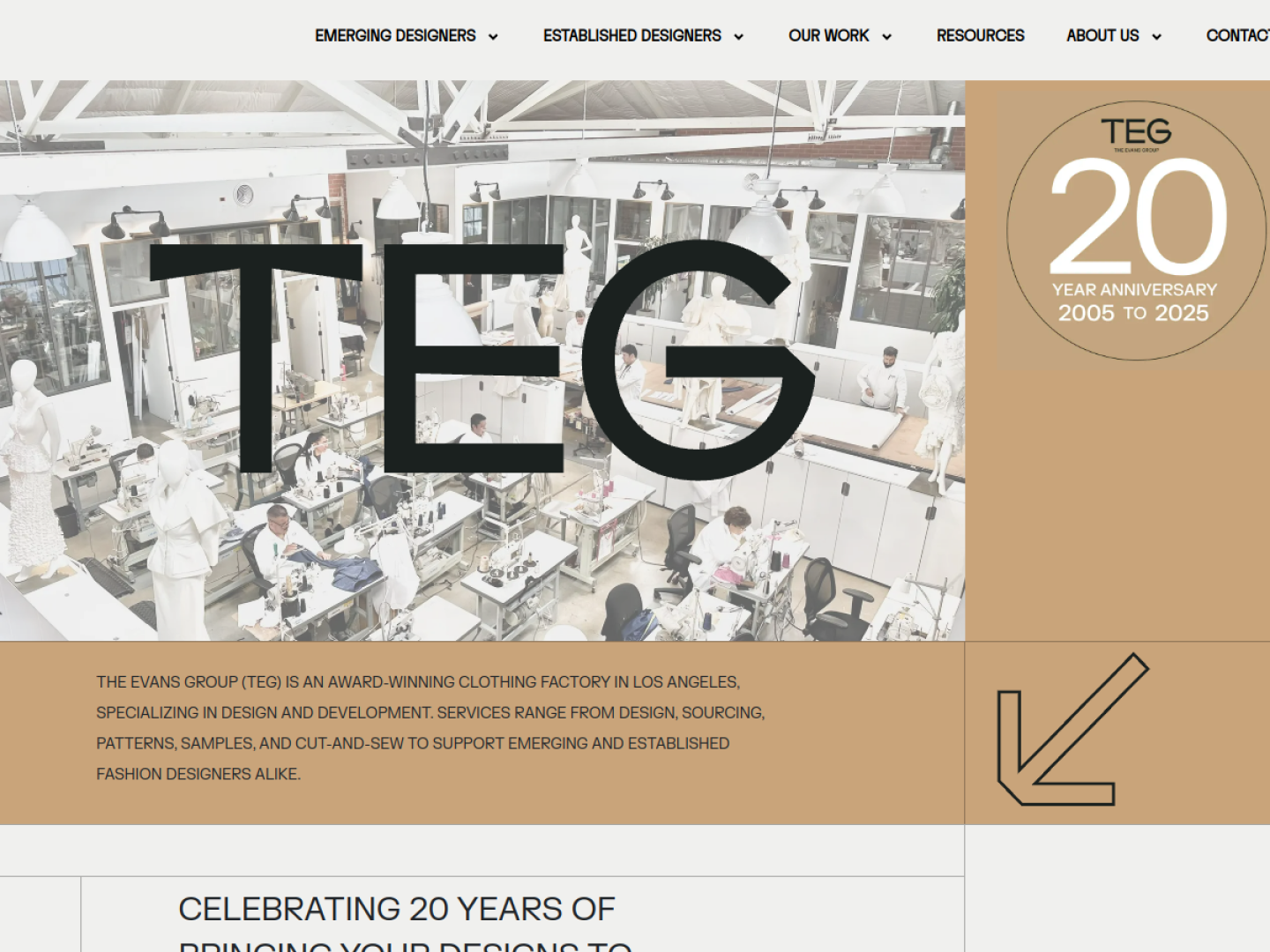
The company regularly works with leather, eveningwear, specialty fabrics, detailed knits and garments that require more handling than a basic jersey product. Unit prices and payment terms are issued by project.
3. Essentials Made
Color is added late in the production sequence at Essentials Made. Its Los Angeles garment-dye program uses cotton garments prepared for dyeing. A current heavyweight fleece specification uses 360 GSM 3-end cotton fleece. The sewn garment can then go through reactive dyeing, enzyme treatment and silicone finishing. [6]
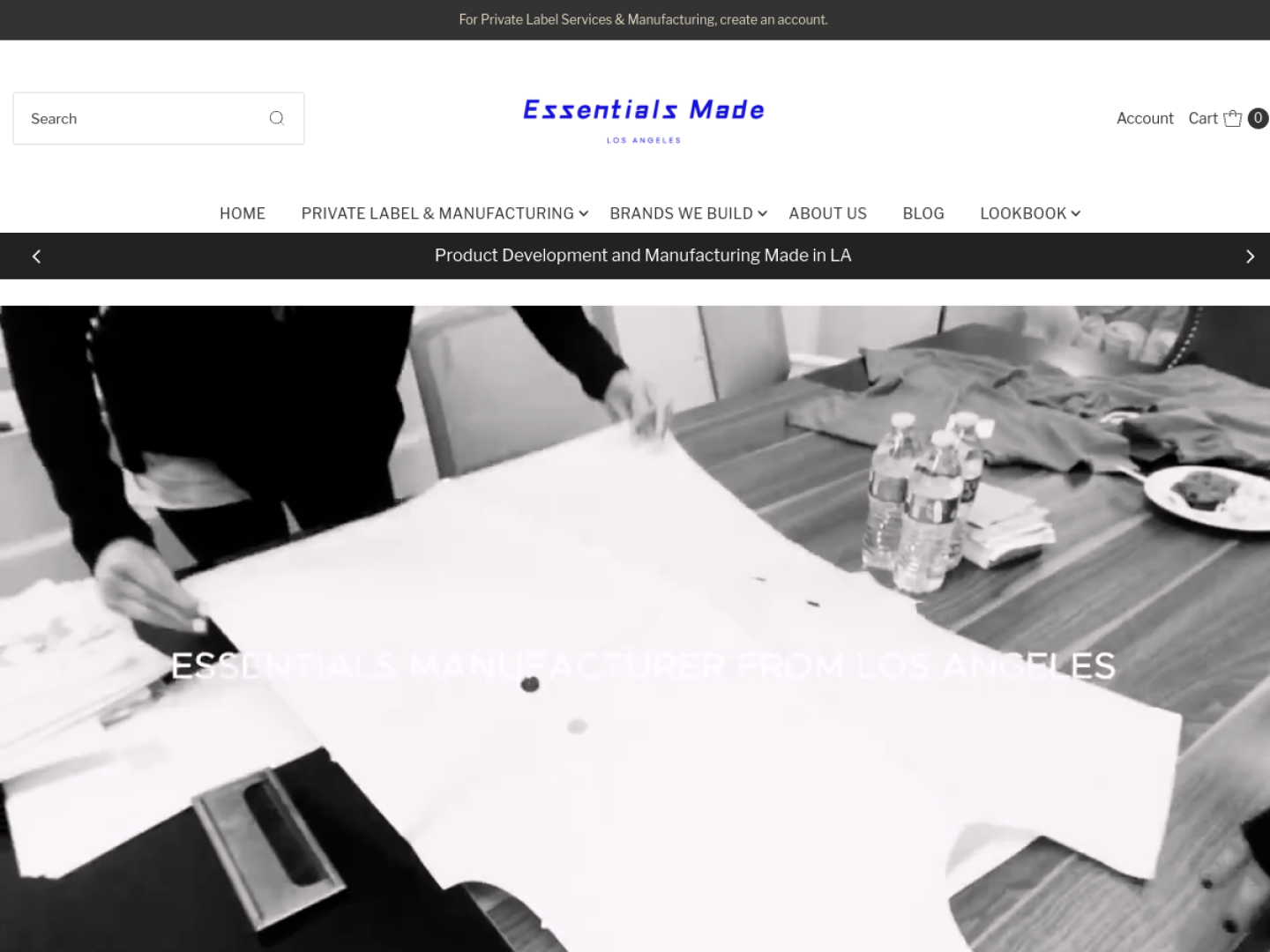
The main Capsule Run is currently listed at 72 pieces per style when at least two styles share one fabric and dye lot. Separate product pages show a 50-piece threshold on certain garment-dyed programs. That lower quantity belongs to the product-specific offer shown on those pages and should be confirmed in the quote for the style being developed. [7]
Pattern and sample work is charged before production. Published starting prices are approximately $600 for a T-shirt, $800 for a crewneck, $900 for a hoodie or sweatpant, and $1,200 for a more complex garment. Essentials Made currently allows half of the development fee to be credited against the first qualifying production invoice. [8]
The production deposit is 50% after pre-production sample approval. The remaining 50% is due before delivery. The standard development-to-finished-goods timeline is published at about 6–7 weeks.
Specific programs also define size and wash boundaries. One current matching-set specification includes up to five sizes, with specialty pigment and potassium-wash treatments priced separately.
4. Create Fashion Brand
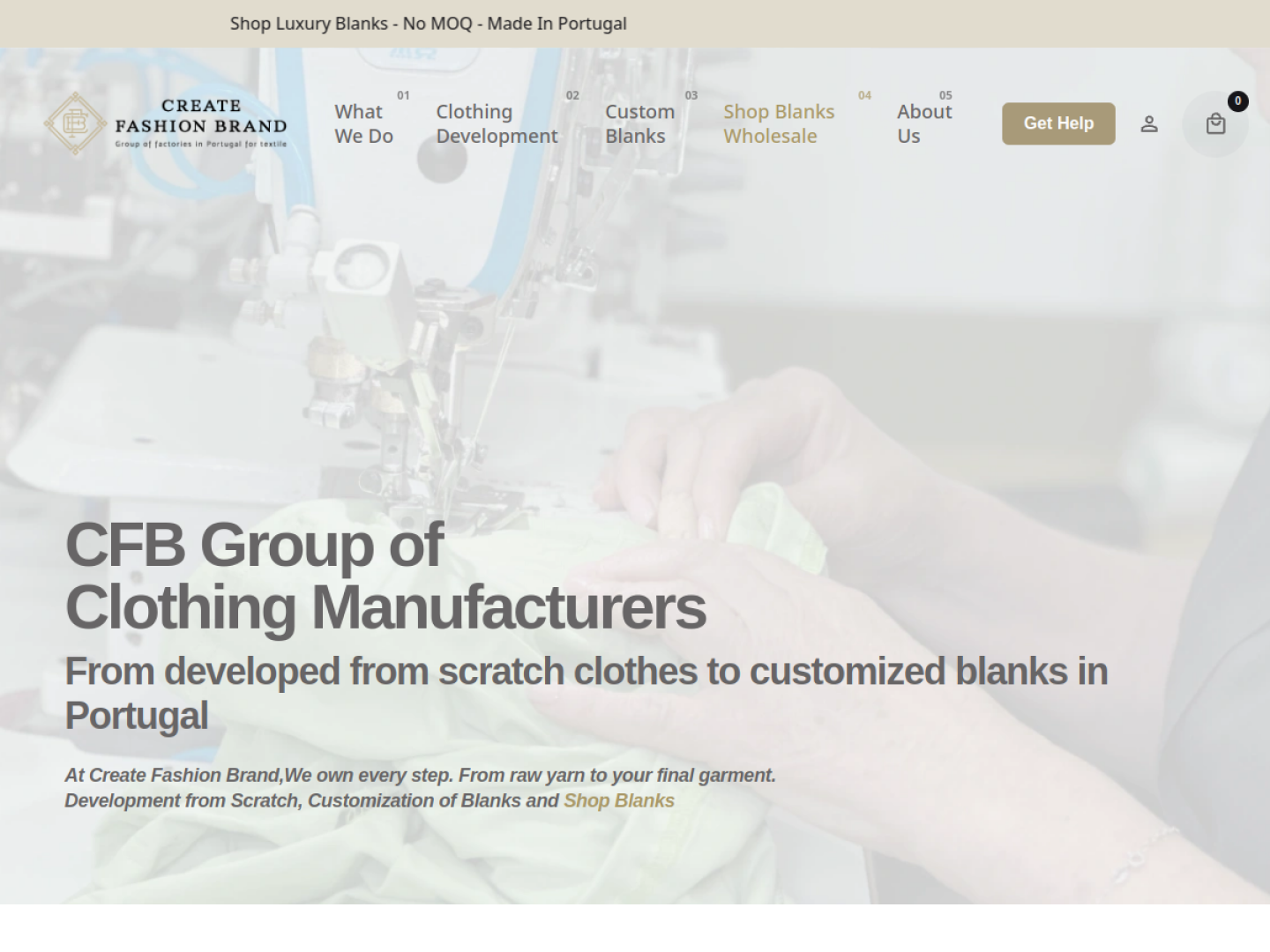
Create Fashion Brand expects a detailed production file. Its current terms ask for measurements, stitching instructions, fabric composition and weight, artwork placement, labels, hang tags, color quantities and the required size breakdown. A garment or fabric sample can be supplied when a technical material reference is missing. [9]
The standard custom-production quantity is 150 units per model and color, with four sizes included in the cited terms. A fabric developed specifically for the order can push the material commitment much higher. CFB currently gives a range of roughly 300–1,000+ units per color for custom-made fabric, depending on the specification.
Available stock blanks can be bought without a production MOQ. The current general terms put blank customization at around 100 units per model and color. Individual blank pages can carry their own conditions.
A new non-stock color requires a lab dip. The current charge is €50 per color. A change in fabric weight, structure or composition can require new color development because the material itself has changed.
Sample development is currently published at about 6–10 weeks. A project involving fabric development, unusual finishing or more complicated construction can occupy a broader 10–15 week development window. Newly developed fabric can add approximately six to eight weeks before the PP sample is made.
Standard production is listed at roughly 10–15 weeks after the required approvals and production-slot confirmation. First-time production customers are required to prepay in full under the current terms. Larger repeat orders can qualify for staged payments.
CFB also publishes a production tolerance that can reach 15%. The order documents need to state how any acceptable overproduction or shortage is invoiced.
5. BOMME STUDIO
BOMME's CMT program assumes that the buyer has already secured the material. Fabric and trims have to reach the production operation before the bulk schedule can begin. The published starting quantity is 150 units per style. [10]
Cutting and quality control are handled through the Los Angeles operation on the cited activewear program. Sewing can take place in Los Angeles or at an audited Tijuana facility assigned to that project.
The number of fabric or print variants is controlled at lower volumes. A 150-piece style currently includes up to two colors or prints. At 300 pieces, three are allowed. BOMME publishes a $500 setup surcharge for each additional fabric beyond the normal allowance because the marker and production setup have to be changed. [11]
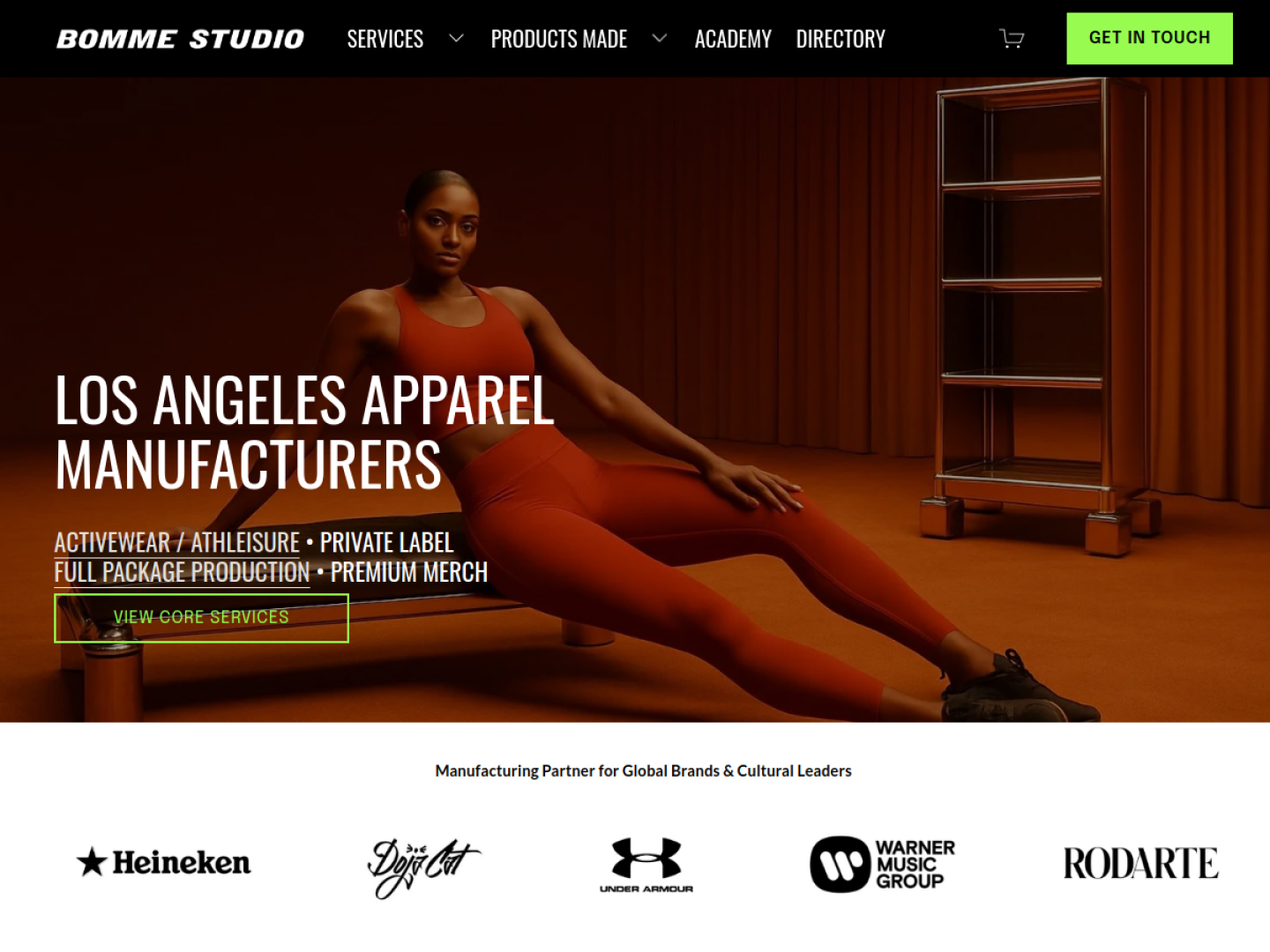
Full-package work starts at 600 units per style. BOMME sources the materials for this program, and its current activewear information places that production in Vietnam or another facility selected for capacity. Development fees are waived on qualifying 600-piece full-package programs.
Development invoices are paid before the work starts. Production uses a 50% deposit, with the remaining balance due on completion. Freight, handling and materials purchased by BOMME on the buyer's behalf can appear on the final invoice.
The current CMT activewear schedule is approximately 6–8 weeks after sample approval and receipt of all client-supplied materials. The standard grading allowance on the cited program runs from XS through XL.
6. Affix Apparel
A woven label can become the largest leftover inventory item on a small Affix production run. The current cut-and-sew minimum starts at 72 pieces per design, yet fully custom woven labels are published at around 1,000 pieces. [12]
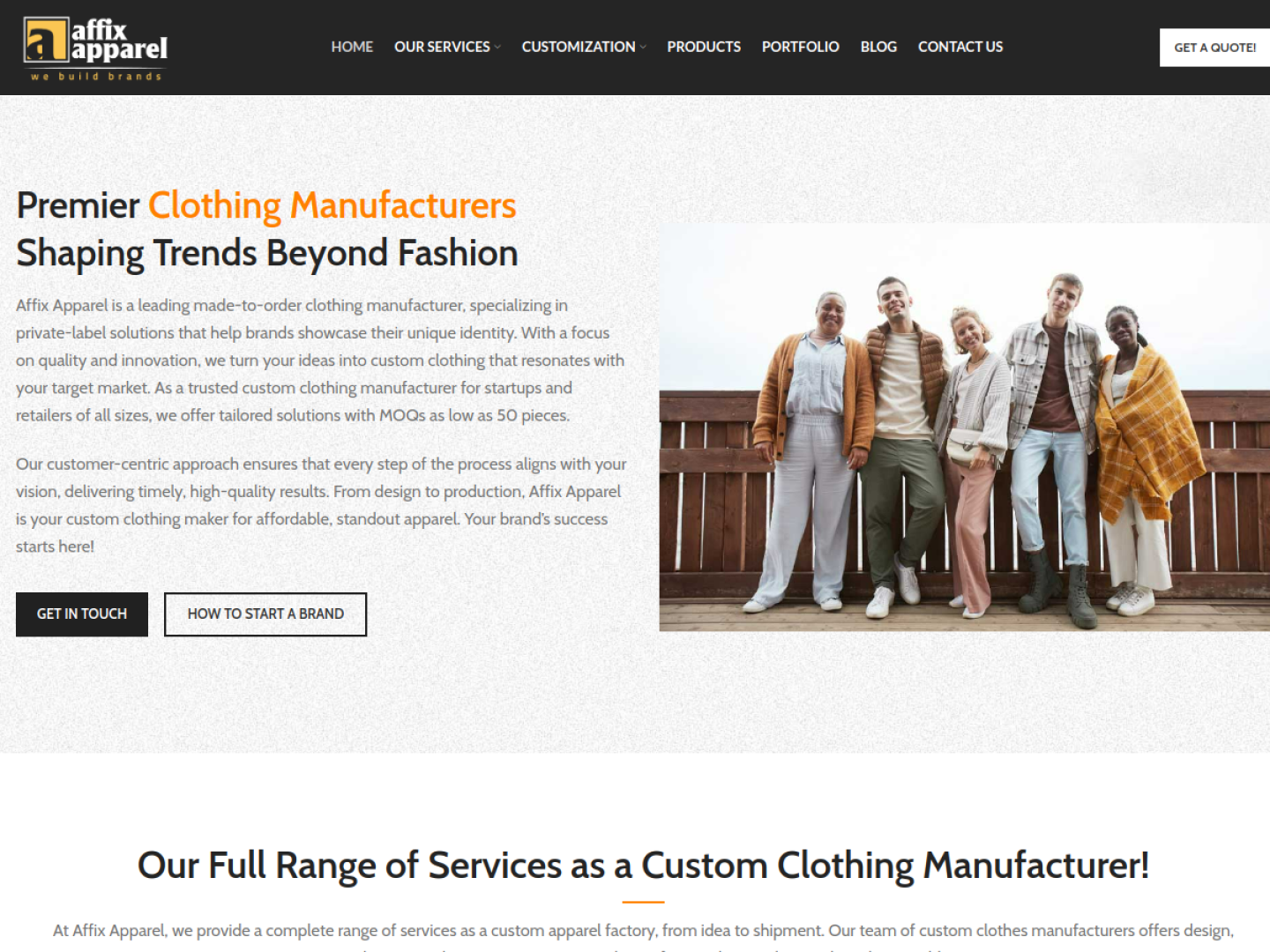
Screen printing, embroidery and sublimation on existing blanks currently begin at 50 pieces per design. Those jobs do not require the pattern-development stage used for original cut and sew.
Affix lists its American office in Los Angeles and its manufacturing facility in Karachi, Pakistan. Cut-and-sew production is currently quoted at approximately 3–6 weeks from processed payment, before transit time is added. The company does not list rush manufacturing for this route.
A pre-production sample is included after the buyer has committed to production and paid the required deposit. A sample requested before that commitment is charged separately. Written proof approval is required before the relevant decoration or production work proceeds. [13]
Pantone matching is available for screen-printing inks and sublimation colors. Embroidery uses the available thread palette. Digitizing, vector conversion and screen setup are treated as setup work that can be reused on later orders using the same files.
7. Zega Apparel
Zega applies its quantity to each design and color. A hoodie produced in four colors therefore requires 800 units when the published minimum is 200 pieces per design/color. [14]
The company describes a 50,000 sq ft facility in Karachi. Pattern development, grading, cutting, sewing, printing, embroidery, labeling and packaging are listed inside the production operation.
Quality checks begin when the material arrives. Fabric receives a four-point inspection. Sewing is checked in line. Finished goods go through an AQL 2.5 inspection before final review and photo documentation.
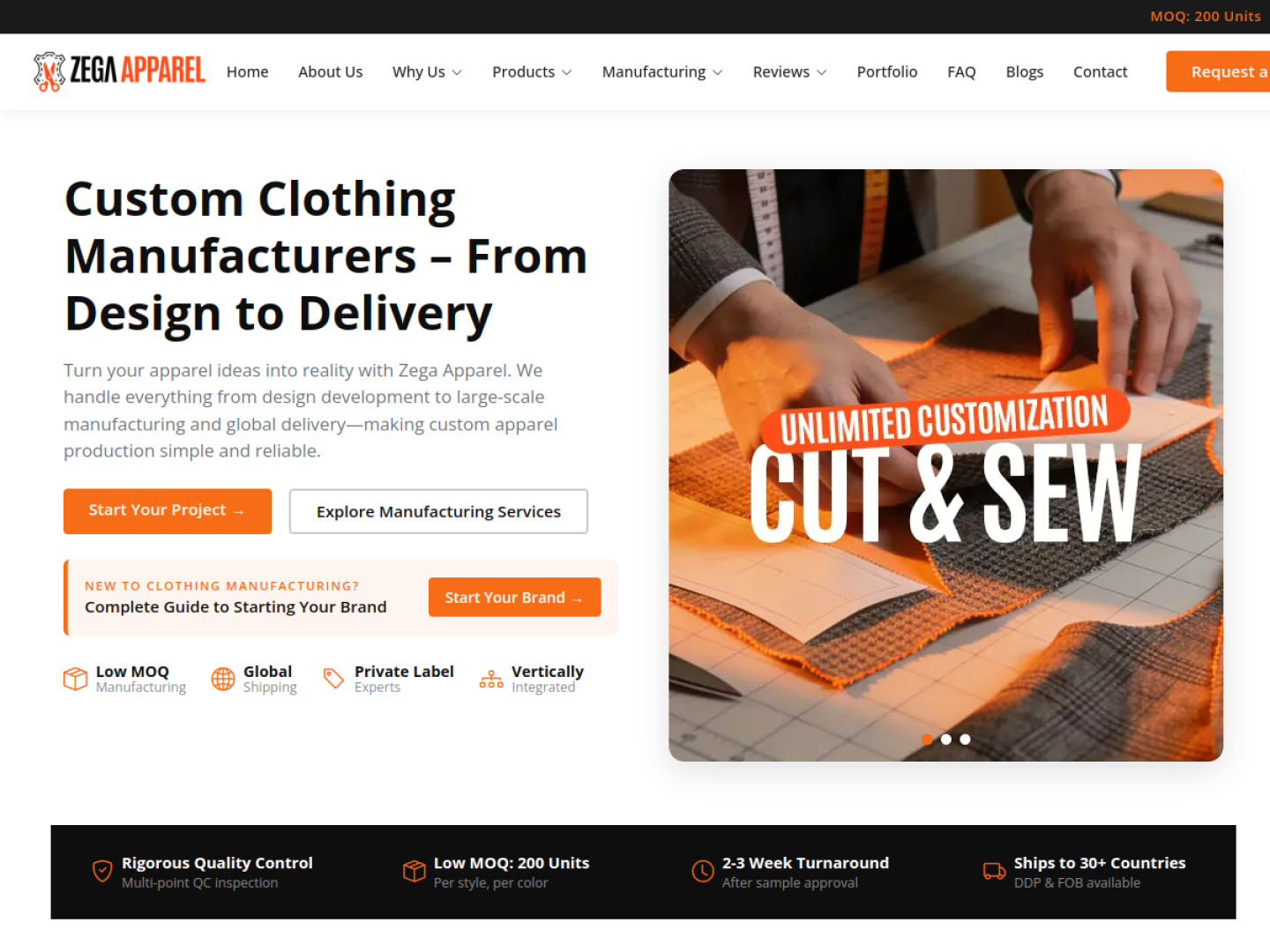
Sample orders use a much smaller quantity. Zega currently lists one to three sample pieces and approximately 7–10 business days for development. Sample charges are credited if the project continues into bulk production.
Bulk production is currently published at around 2–3 weeks after approval. Payment is split into 50% before production and 50% before shipment. DDP, FOB and express shipping are available. Quotes are normally returned within 24–48 hours. [15]
A reference image can be used for the initial inquiry. Zega's current information also states that its team can help prepare the technical package needed to turn that reference into a sample.
8. ARGYLE Haus of Apparel
ARGYLE publishes development as a paid professional service rather than bundling it into a low-cost sample. Its current Brand Development Center lists base program fees with an additional charge for each style. The client retains ownership of the patterns and samples created during development. [16]
No MOQ is attached to that development stage. The quantity changes when the project reaches bulk manufacturing. ARGYLE says growing e-commerce clients commonly produce around 500 pieces per style or more. Its stated capacity also covers much larger national-brand programs.
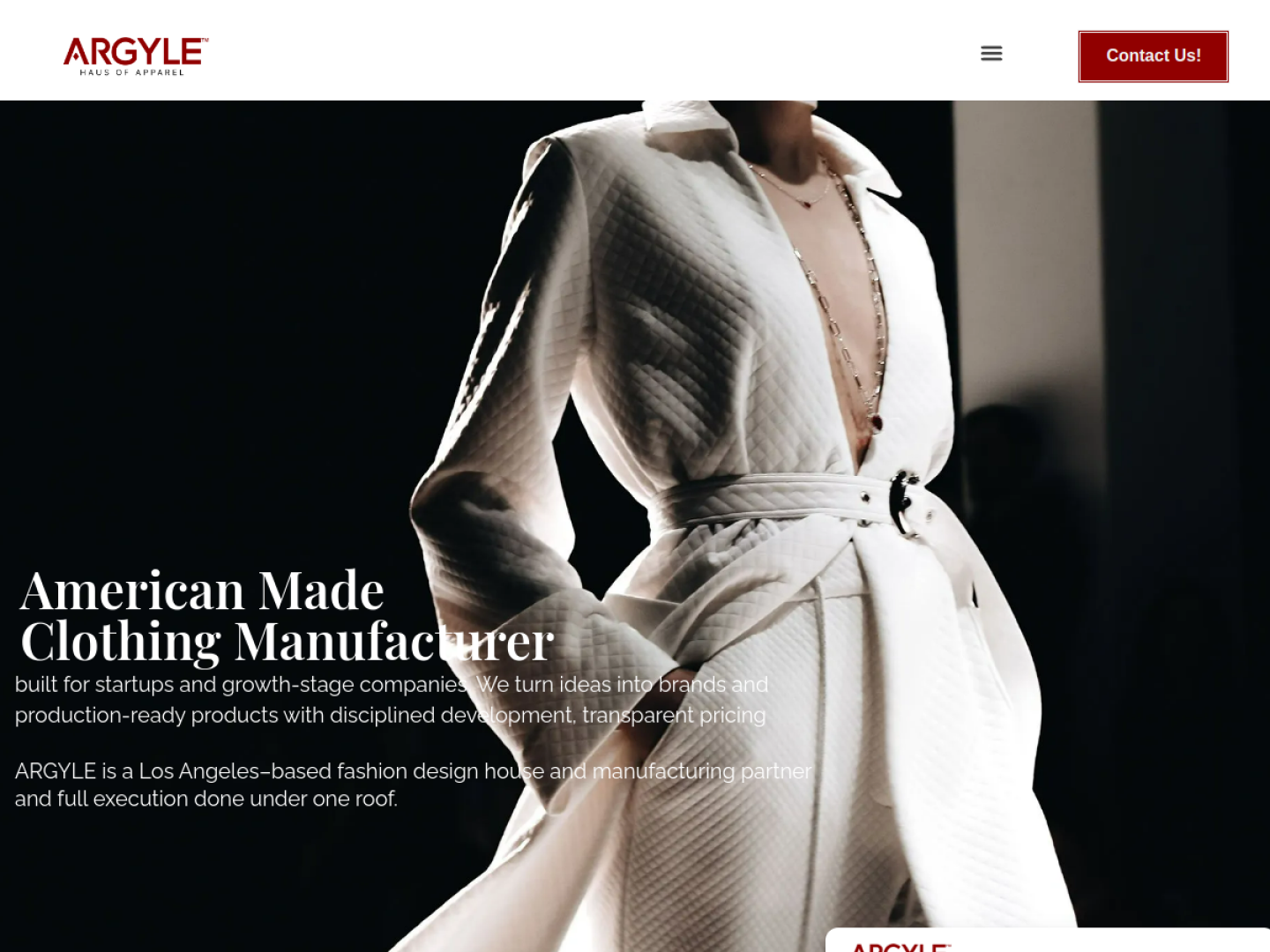
Fabric ownership stays with the client under the cited development terms. ARGYLE can guide sourcing, but the buyer purchases the materials. Its production facility is listed in San Fernando, California, with a showroom in Downtown Los Angeles.
Menswear, womenswear, athletic apparel, lingerie, outerwear, uniforms and swimwear appear among the categories on its current manufacturing pages.
The pages used here do not provide one standard bulk lead time, color minimum, universal sample turnaround or fixed production-deposit percentage.
9. Lefty Production Co.
Before Lefty cuts production fabric, the company can calculate yield and build the marker. Yield determines the amount of cloth needed for the order. Marking places the graded pattern pieces across the usable width so the cutting plan can be priced and prepared. [17]
Other pre-production services include duplicate samples, grading, size testing, raw-material coordination and production coordination. Pattern making, fitting and revisions can be handled earlier in the same Los Angeles workflow.
The current production page describes large and small batches and mentions low minimums for clients who develop through Lefty. It does not publish a single numerical MOQ for all products. Quantity is quoted against the garment and the amount of production work required. [18]
Routine inspections take place during manufacturing. Lefty's production material describes checks on construction and materials before the order is complete, followed by review of the finished garments. Units that require correction are handled inside that production process. [19]
Its current service range covers womenswear, menswear, children's garments, swimwear, activewear, lingerie, accessories, leather goods and home products. The production pages cited here do not publish a universal unit-price table, deposit percentage or standard lead-time chart.
10. Full Speed 100
A Full Speed cut-and-sew calendar can begin several weeks before a sewing line is used. Pattern development is currently listed at roughly 1–3 weeks. Sampling commonly adds another 2–4 weeks. Domestic stock fabric may arrive in one or two weeks, and a custom or imported material can require approximately 4–8 weeks. [20]
The pre-production sample fixes the garment that will be copied in bulk. Fit, fabric hand, fabric weight, seam construction, finishing and trim position are approved before the production run is released. Incoming bulk material is checked for defects, shade consistency and weight. [21]
Cutting, sewing and finishing commonly occupy another 3–6 weeks after the required approvals and materials are ready.
Full Speed does not publish one fixed cut-and-sew MOQ. Its own pricing explanation puts one to ten pieces at sample costing. Quantities in the 10–100 range use duplicate pricing. Production economics generally become stronger around 150–200 pieces per style. [22]
The company also handles private-label programs built from ready-made wholesale garments. Printing, embroidery, transfers, relabeling and packaging can be added without creating a new pattern or buying raw fabric for the garment body.
Trim sourcing is handled through a network of more than 40 suppliers. Woven labels, zippers, buttons, elastic, hardware and packaging can be quoted through that system. The buyer approves the trim sample, cost and delivery schedule before the supplier order is placed. [23]
What Needs to Be Written Into the Quote
The purchase order should identify what the MOQ is attached to. A factory may apply it to one style. Another number may be tied to each color. Fabric can carry a mill minimum that is larger than either figure.
Material responsibility needs to be written down before the deposit is sent. The quote should identify the fabric composition, finished weight, usable width and color. It should also state who buys the cloth and who pays for any unused yardage. Custom labels, hardware, elastic, zippers and packaging can have separate supplier quantities.
Sampling terms need dates and approval points. The document should show how many revisions are included, whether a pre-production sample is required, and which approval releases bulk cutting. Lead time should begin from a named event such as material arrival or PP approval.
The factory location should identify where cutting and sewing occur. The inspection method also belongs in the order record. An AQL plan, sample-pull inspection and 100% inspection do not describe the same amount of checking.
Payment terms should state the development payment, bulk deposit and final balance. Freight terms such as FOB or DDP need to be named. Any allowed production overage or shortage should be agreed before manufacturing starts.
A 200-piece garment order can still require enough fabric for 600 garments when that is the mill minimum for the selected material. That quantity belongs in the cost calculation before bulk production is authorized.
Sources
- FashionMe: Custom Clothing Manufacturer
- FashionMe: Cut and Sew Manufacturer
- FashionMe: Pricing
- The Evans Group: Manufacturing
- The Evans Group: Los Angeles Manufacturing
- Essentials Made: Cut & Sew Manufacturing
- Essentials Made
- Essentials Made: Pattern and Sample Making
- Create Fashion Brand: Terms and Conditions
- BOMME STUDIO: Activewear Manufacturing
- BOMME STUDIO: FAQ
- Affix Apparel: Manufacturing Information
- Affix Apparel: FAQs
- Zega Apparel
- Zega Apparel: Private Label Manufacturing
- ARGYLE Haus: Fashion Brand Development
- Lefty Production Co.: Pre-Production
- Lefty Production Co.: Production
- Lefty Production Co.: Production Quality Control
- Full Speed 100: Product Development
- Full Speed 100: Cut and Sew Manufacturing
- Full Speed 100: Manufacturing FAQ
- Full Speed 100: Trim Sourcing